6 min read

Moses Calls War That Hastens His Own Death

God ties Moses death to vengeance on Midian. Moses could delay and live. He arms Israel at once, then blesses the tribes with the Angel of Death overhead.

Curated by Arthur · Told by Maggid ·
Table of Contents
  1. The Word That Could Have Bought Him Years
  2. The Trumpets Went Out in Phinehas's Hand
  3. The Angel Took His Stand Overhead
  4. A Blessing With No Wound In It
  5. He Went Up
Moses Calls War That Hastens His Own Death Click for full size

The Word That Could Have Bought Him Years

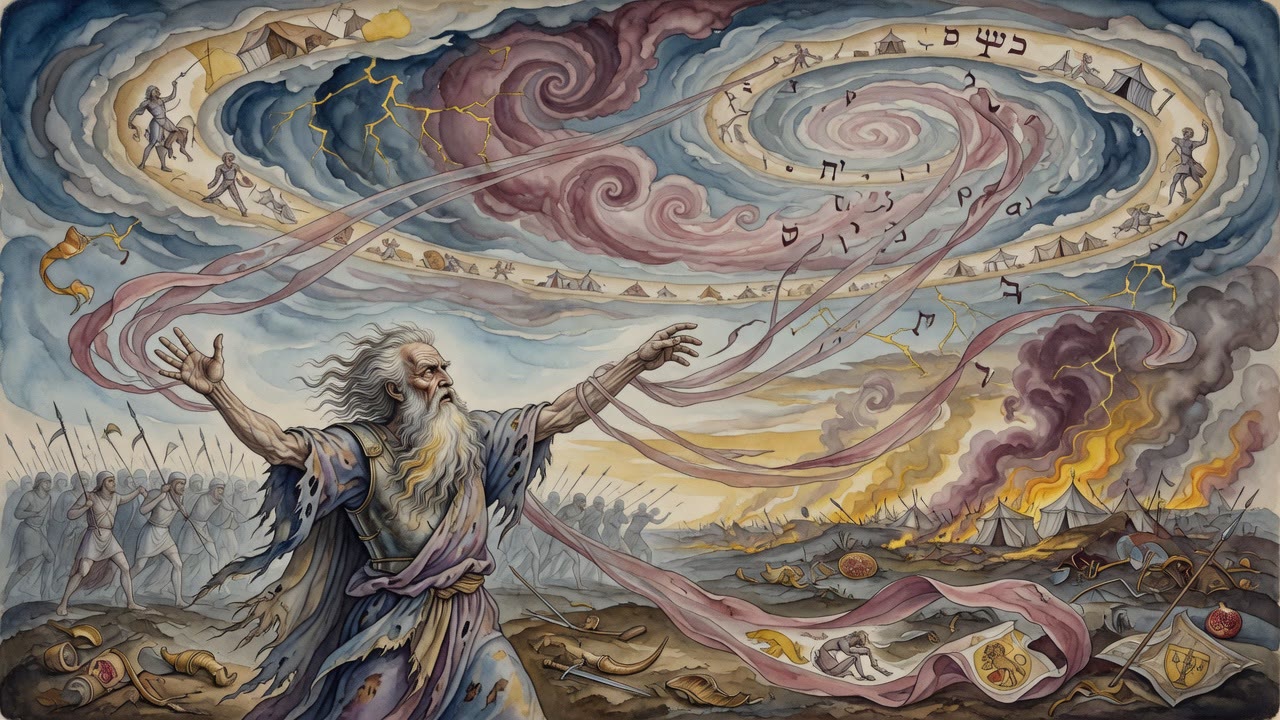
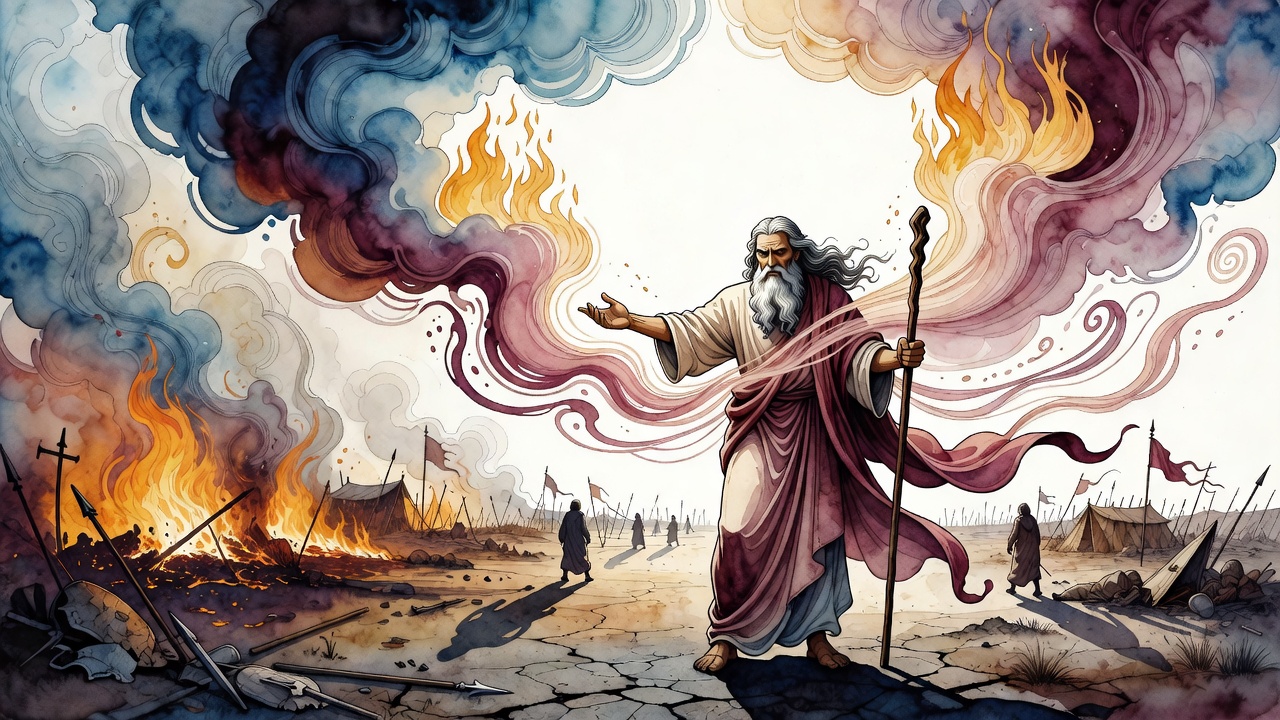
"Avenge the vengeance of the children of Israel against the Midianites," the Holy One told Moses, "and afterward you shall be gathered unto your people." Every man in the camp heard which word carried the weight, because it was the only one that set a date. Afterward. So long as Midian stood unpunished the muster could not close, and so long as the muster stayed open Moses went on breathing. His death was knotted to a war that had not started yet, and the loose end of the knot lay in his own hand.

Rabbi Judah put the temptation plainly. If Moses had wanted more years he had only to be slow. He could have sent for a fuller count of the fighting men, or waited on the barley, or found some fault in the order of the camps that needed a month to correct, and heaven would have waited with him, since the decree ran on his work and not on the calendar. Nobody would have called that cowardice. An old man taking his time over a campaign looks like prudence from any distance.

He stood there long enough for the arithmetic to finish. One more spring. Then another after it, if he was careful about the preparations. The smell of the camp at first light, which he had complained about for forty years and would not smell at all once the thing was done. Then he asked the question that ended the argument inside his own chest: shall I hold back the vengeance owed to Israel for the sake of my own life?

The verse leaves him no room to reconsider. Immediately Moses spoke to the people, "Arm men from among you." He had called his own death out loud, in front of witnesses, before fear could invent a reason to wait until the fall.

The Trumpets Went Out in Phinehas's Hand

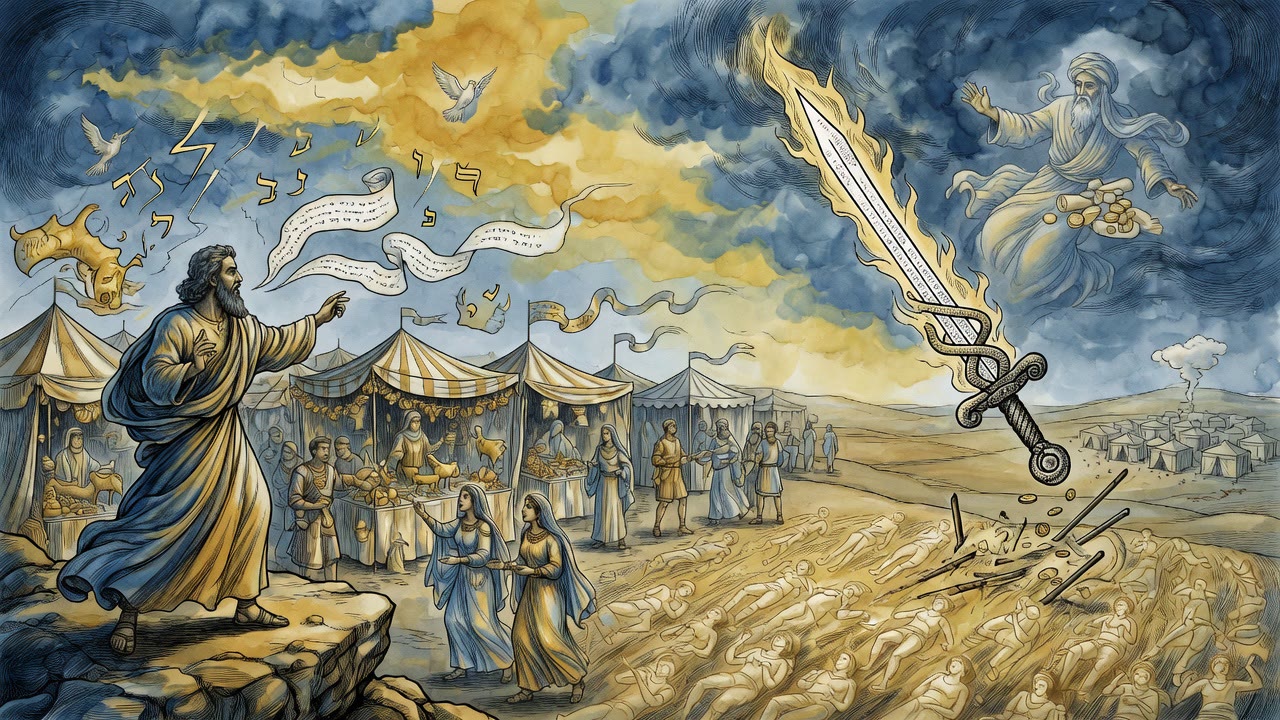
Into Phinehas's hand went the trumpets for the alarm, and the men marching behind him already knew that sound, because it was not a war sound. It was the sound that ended the week. Every Friday the hazzan of the congregation carried the trumpets up to the highest roof in the city and blew once, and whoever was far out in the fields put down his tools. He blew a second time, and the people close in hurried through the gates. He blew a third, and the hot food went into store while the lamps were kindled or set to rest. When the last blast died a woman still holding a lamp lowered it, a pot still on the stove came down onto the ground, and the Sabbath was in.

The same trumpets moved the camps when Israel traveled and gathered the assembly when Israel met, so nothing new had to be made for Midian. Israel went out to take a vengeance to the note their mothers had used to stop work by. The same silver did both.

The Angel Took His Stand Overhead

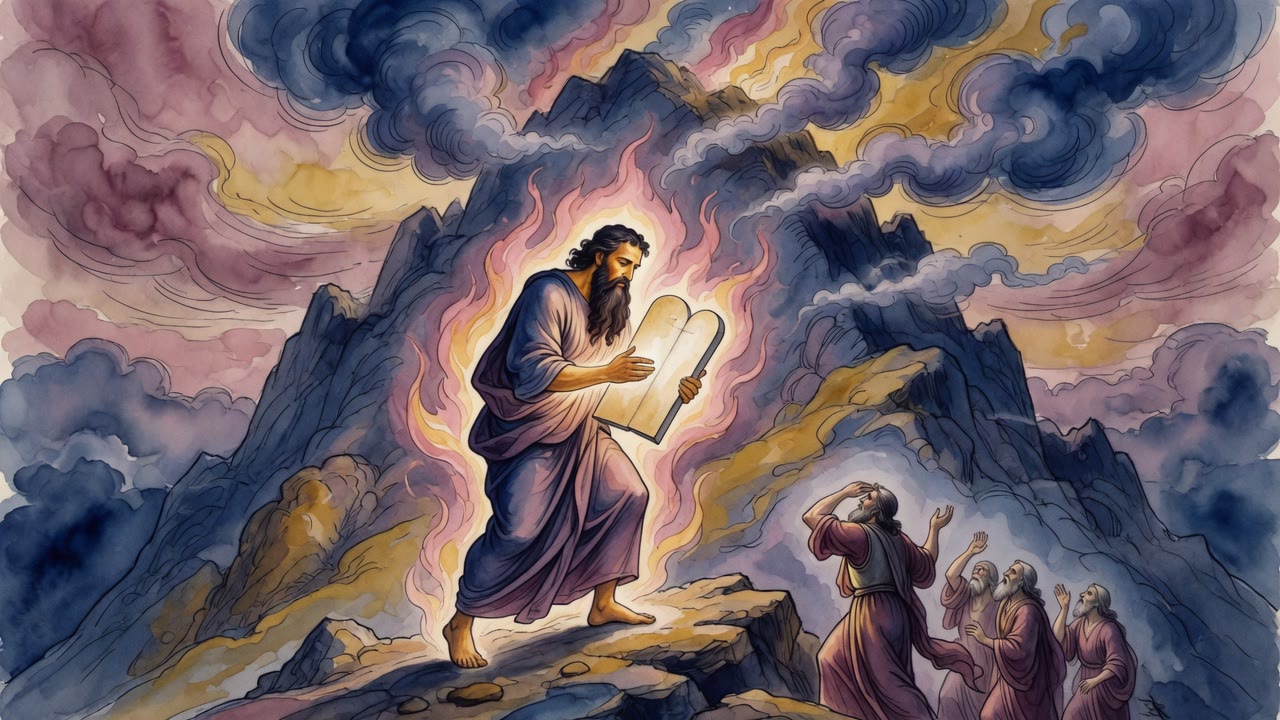
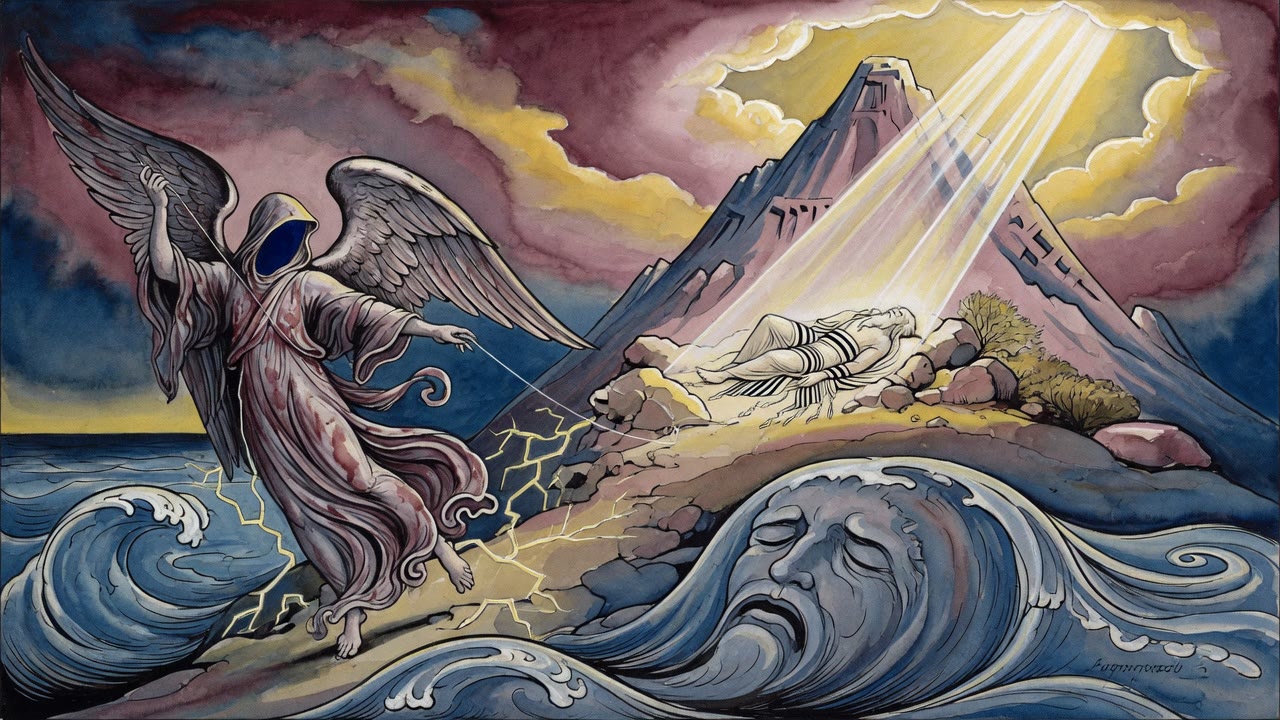
Afterward came, because he had made it come. "Ascend this mountain and die there," the Holy One said, and the Angel of Death overheard it and drew the wrong conclusion. He took the words for a handover. So he came down and stood directly above the prophet and waited there the way a bird waits over a field, certain that the soul underneath him had already been signed away.

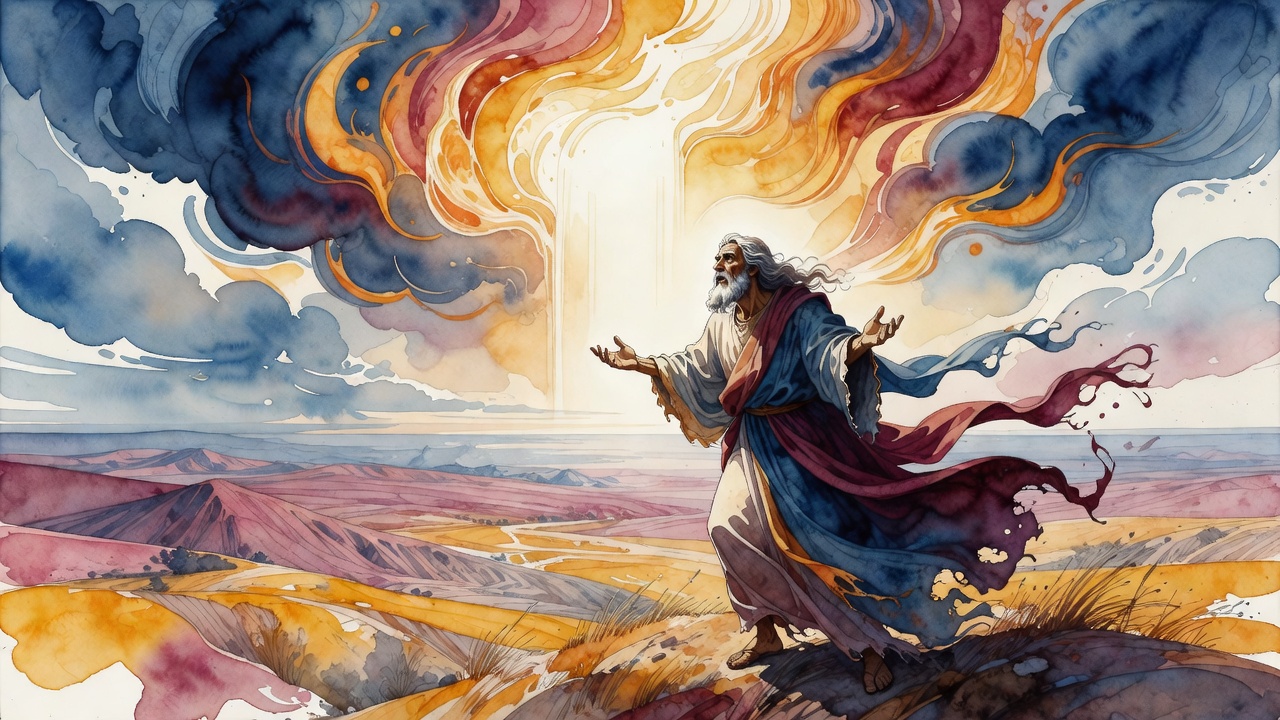
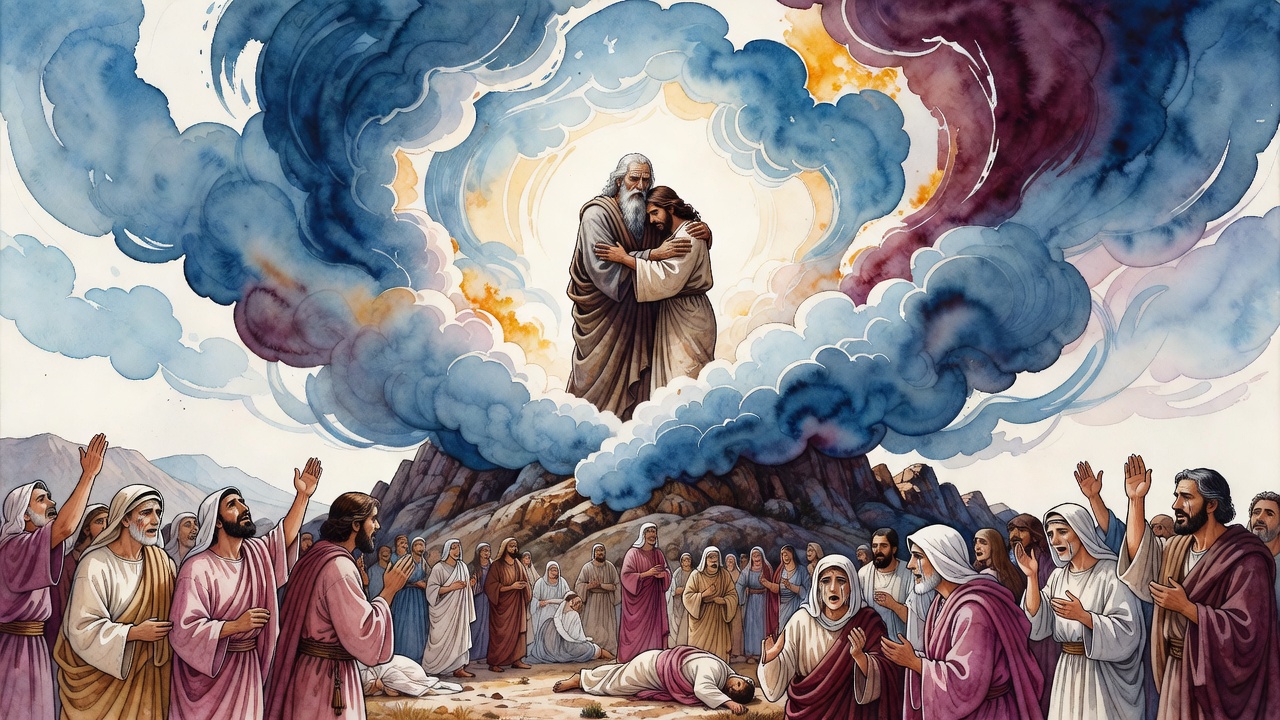
Moses looked up at the shape hanging over him and was not afraid, since he was holding a promise older than the angel's assumption. "The Holy One has already told me that He will not deliver me into your hand." Then he turned his back on it and called Israel forward, tribe by tribe, and began to bless them while it hovered there with nothing to take. He blessed Israel before his death, with death in the room.

A Blessing With No Wound In It

The tribes had reason to brace. Noah blessed and cursed Canaan in the same breath. When Isaac blessed Jacob, Esau walked out of the tent hating his brother, and Jacob himself, blessing these same tribes on his deathbed, stopped to rebuke Reuben and Simeon and Levi to their faces. Their fathers had never once been handed a blessing that came alone.

Balaam was fit to bless seven times over seven altars and managed three, because his eye was grudging and would not open any wider. Let Moses come, whose eye is generous. He added the seventh, and it arrived without the barb, no name singled out for shame, nothing held back for a later reckoning. The angel stayed where it was through all of it and took nothing.

He Went Up

The knot untied in the order he had chosen. The war moved, the trumpets cried, Midian's debt was paid, and so the last thing holding him in the world came loose. He had bought nothing for himself out of the whole arrangement. Another year was available at the price of a slow muster, and he spent it instead on other men's justice and on the names of twelve tribes said out loud under a waiting angel.

The last name went up into air the angel could not touch. Then Moses turned toward the mountain, and it was where it had been all along.


← All myths
From the tradition

Sources

4 sources

The texts behind this telling. Some cards carry a translation of the source; others are our own retelling of it, and each card says which. Every card links out to the original.

Midrash Tanchuma Buber, Matot 3:1Midrash Tanchuma Buber, Matot

Translation of the source text.Midrash Tanchuma (Buber), Public Domain, on Sefaria · CC-BY-SA

"Avenge the vengeance of the children of Israel against the Midianites; afterward you shall be gathered unto your people" (Numbers 31:2). Rabbi Judah said: Had Moses wished to live for some more years, he would have lived, for the Holy One, blessed be He, had made his death depend upon coming after the vengeance against Midian. Moses said: Shall I, in order that I may go on living, hold back the vengeance of Israel upon the Midianites? Immediately, "And Moses spoke unto the people, saying: Arm men from among you" (Numbers 31:3).

Full source
Midrash Tanchuma Buber, Matot 2:1Midrash Tanchuma Buber, Matot

Translation of the source text.Midrash Tanchuma (Buber), Public Domain, on Sefaria · CC-BY-SA

"And the LORD spoke unto Moses, saying: Avenge the children of Israel [of the Midianites... and the vessels of the sanctuary and the trumpets for the alarm in his hand]" (Numbers 31:1, 2, 6). Let our master teach us: How many blasts does one sound on the eve of the Sabbath to separate the people from labor? Thus our Rabbis taught: Three blasts does one sound to make the people cease from labor. How so? The synagogue attendant takes the trumpets and goes up to the high roof of the city and sounds a blast. Everyone who was far from the city ceases from his labor. He returns and sounds a second blast, and those who are near enter the city. He sounds a third, and they would store away the hot food and kindle the lamps. When he finished sounding, if a pot was upon the stove, they would set it down on the ground; and if there was a lamp in a woman's hand, she would set it down on the ground.

With trumpets is the Sabbath sanctified, and likewise the New Moons and the appointed festivals, as it is said: "And on the day of your gladness, and at your appointed seasons, and at your new moons, you shall blow with the trumpets" (Numbers 10:10). And when they would journey, they would sound the trumpets and journey, as it is said: "And when you blow an alarm a [second] time, then the camps that lie on the south side shall journey" (ibid. 10:6). And when they would assemble, they would sound the trumpets, as it is said: "But when the assembly is to be gathered together, you shall blow" (ibid. 10:7). And when the enemy oppresses, they sound the trumpets, as it is said: "And when you go to war in your land against the adversary that oppresses you, then you shall sound an alarm with the trumpets" (ibid. 10:9). And when they went to take vengeance upon Midian, with trumpets did they execute vengeance upon them, as it is said: "And the vessels of the sanctuary and the trumpets for the alarm in his hand" (Numbers 31:6).

Full source
Midrash Tanchuma Buber, V'Zot HaBerachah 2:4Midrash Tanchuma Buber, V'Zot HaBerachah

Translation of the source text.Midrash Tanchuma (Buber), Public Domain, on Sefaria · CC-BY-SA

"Before his death" (Deuteronomy 33:1). Now could it enter your mind that he blessed Israel after his death? Then what is the meaning of "before his death"? Before the Angel of Death. For at the moment when the Holy One, blessed be He, said to him, "Ascend [this mountain] and die on this mountain" (Deuteronomy 32:48-49), the Angel of Death supposed that the Holy One, blessed be He, had already given him authority over the soul of Moses. He came and stood above him. Moses said to him: The Holy One, blessed be He, has already promised me that He would not deliver me into your hand. And he blessed Israel before the Angel of Death. Therefore it is said, "before his death."

Full source
Midrash Tanchuma Buber, V'Zot HaBerachah 1:1Midrash Tanchuma Buber, V'Zot HaBerachah

Translation of the source text.Midrash Tanchuma (Buber), Public Domain, on Sefaria · CC-BY-SA

(Deuteronomy 33:1:) "AND THIS IS THE BLESSING." This is what Scripture says (Proverbs 31:29): "MANY DAUGHTERS HAVE DONE VALIANTLY, BUT YOU HAVE SURPASSED THEM ALL", this is the blessing of Moses. For the earlier generations each blessed his own generation, yet among them all there was none like the blessing of Moses. Noah blessed his sons, but there was division in it: he blessed one and cursed one. (Genesis 9:27:) "MAY GOD ENLARGE JAPHETH," but (Genesis 9:25:) "AND HE SAID, CURSED BE CANAAN." Isaac blessed Jacob, but there was quarrel in it, for he said to Esau (Genesis 27:35): "YOUR BROTHER CAME WITH DECEIT," and it is written (Genesis 27:41): "AND ESAU HATED JACOB." Jacob blessed the tribes, but there was quarrel among them, for he said to Reuben (Genesis 49:4): "UNSTABLE AS WATER," and likewise to Simeon and Levi (Genesis 49:5).

And from where did the patriarchs learn to bless each one his generation? [They learned] from the Holy One, blessed be He. When He created Adam, He blessed him, as it is said (Genesis 1:28): "AND GOD BLESSED THEM." [And the world was conducted by that blessing, until the generation of the Flood came and annulled it, as it is said (Genesis 6:7): "AND THE LORD SAID, I WILL BLOT OUT THE MAN WHOM I HAVE CREATED." When Noah went out of the ark, the Holy One, blessed be He, saw that this blessing had been annulled from them, and He went back and blessed Noah and his sons, as it is said (Genesis 9:1): "AND GOD BLESSED NOAH AND HIS SONS." And the world was conducted by that blessing, until Abraham came into the world, and the Holy One, blessed be He, added to him one blessing, as it is said (Genesis 12:2): "AND I WILL MAKE OF YOU A GREAT NATION," etc. When Abraham came, the Holy One, blessed be He, said: It is not a way of honor before Me that I should be required to bless My creatures; rather, behold, I am handing over the blessings to Abraham and to his seed, and whoever has a blessing fixed upon him by them, I will set My seal through their hands, as it is said (Genesis 12:2): "AND BE A BLESSING," (Genesis 12:3:) "AND I WILL BLESS THOSE WHO BLESS YOU," etc. What is "AND I WILL BLESS THOSE WHO BLESS YOU"? The Holy One, blessed be He, said: Behold, I am handing over the blessings to all whom you bless, and I will set My seal through your hand. And since the blessings were handed over to Abraham, why did he not bless Isaac? Because Abraham saw that Esau would issue from him. He said: If I bless Isaac, behold, Esau is blessed, and Jacob is found lacking. A parable: To what is the matter like? To a householder who had a vineyard and gave it to a tenant; and in that vineyard was a tree of life, and it was trained up upon a tree of deadly poison, and he did not know what to do. He said: If I hoe that vineyard, behold the tree of deadly poison grows up; and if I do not hoe that vineyard, behold the tree of life dies. Rather, what shall I do? I will leave this vineyard be, until the owner of the vineyard comes and does in his vineyard what he wishes. So too Abraham said: If I bless Isaac, Esau is found blessed and Jacob loses; rather, behold, I leave him be until the Holy One, blessed be He, comes and does what is His.]

Jacob came and received five blessings: two from his father, one of Abraham, one from the angel, and one of the Holy One, blessed be He. Two from his father, as it is said (Genesis 27:33): "AND ISAAC TREMBLED." Why "AND HE TREMBLED"? Rabbi Eleazar ben Padat said: Because he saw Gehinnom open for Esau. He sought to say "cursed," but he went back and added a blessing and said (Genesis 27:33): "HE ALSO SHALL BE BLESSED", behold, that is one. The second (Genesis 28:1): "AND ISAAC CALLED JACOB AND BLESSED HIM." [And the blessing of Abraham (Genesis 28:4): "AND MAY HE GIVE YOU THE BLESSING OF ABRAHAM," etc. And the blessing from the angel (Genesis 32:30): "AND HE BLESSED HIM THERE." And the blessing of the Holy One, blessed be He (Genesis 35:9): "AND GOD APPEARED TO JACOB AGAIN... AND BLESSED HIM."]

When Jacob came to bless the tribes, he blessed them with the five blessings that were in his hand, and added to them one blessing, as it is said (Genesis 49:28): "ALL THESE ARE THE TRIBES OF ISRAEL, etc., AND THIS IS WHAT THEIR FATHER SPOKE TO THEM AND BLESSED THEM; EACH ONE ACCORDING TO HIS BLESSING HE BLESSED THEM." Moses came to bless Israel and added to them a seventh blessing, as it is said: "AND THIS IS THE BLESSING", an addition to the blessings. For Balaam blessed Israel, who was fit to bless seven blessings, corresponding to seven altars, yet he blessed them only three, as it is said (Numbers 24:10): "AND BEHOLD, YOU HAVE ALTOGETHER BLESSED THEM THESE THREE TIMES." The Holy One, blessed be He, said to him: You are wicked; your eye is grudging to bless them. I too will not let it suffice through your hand that you should complete your blessing over Israel. Let Moses come, whose eye is generous, and bless Israel. And concerning him Solomon said (Proverbs 22:9): "HE WHO HAS A GENEROUS EYE SHALL BE BLESSED." Do not read "shall be blessed," but "shall bless", this is Moses our teacher, whose eye was generous in his blessing of Israel; and he blessed them four blessings,

Full source