Moses Walked Into a Cloud and Never Came Down
Moses climbed Abarim at a hundred and twenty and looked out at the country he would not enter. He was still speaking to Joshua when the cloud came down.
Table of Contents
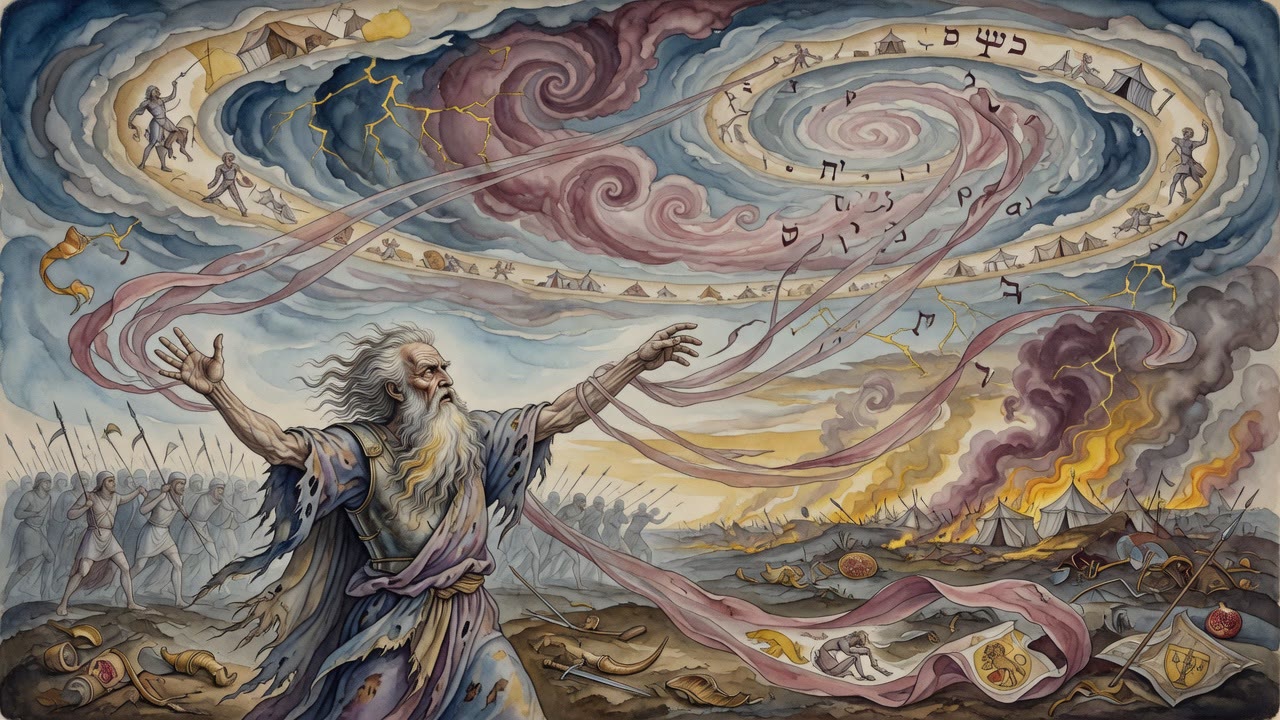
At one hundred twenty years, Moses stood on the plains near the Jordan where palm trees thickened the air, and he knew he would not cross. Forty years of wandering had ended for the people. For him the border was a wall of decree. So he did what a leader does when the last hour arrives. He tried to give them everything left in his mouth.
 Click for full size
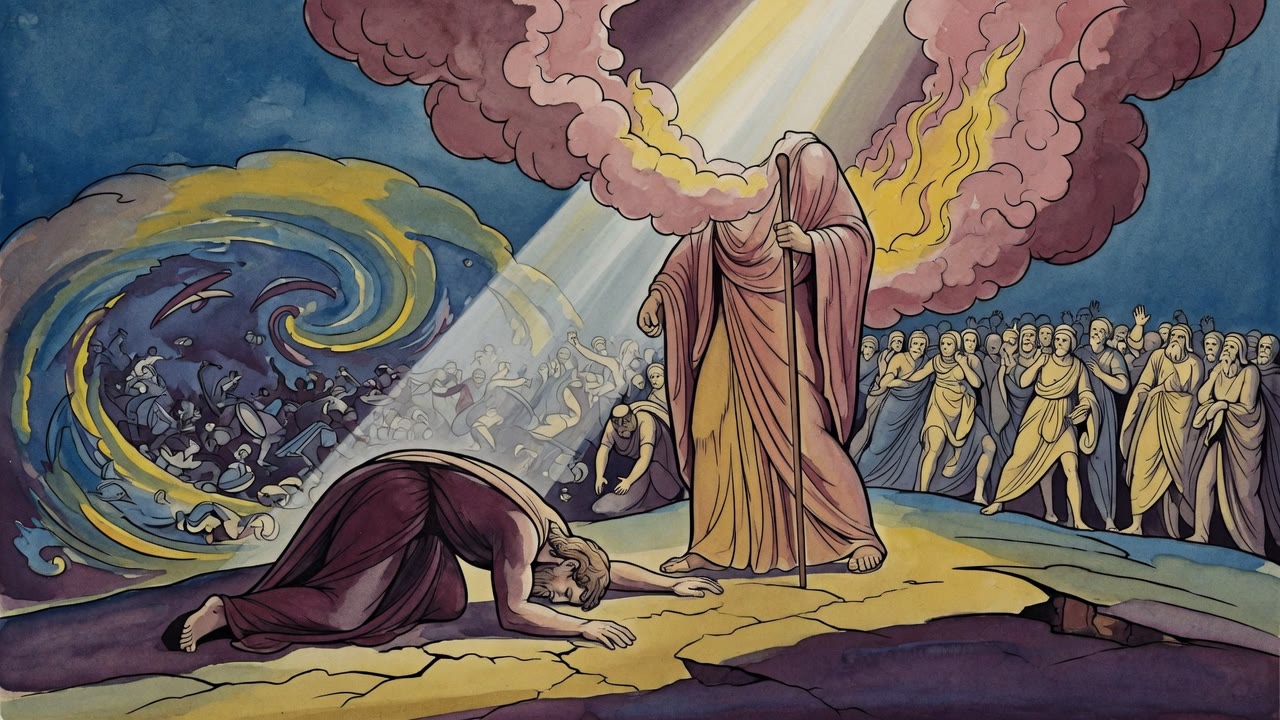
Obey the laws, he said, and no army on earth can defeat you. Abandon them, and you will lose everything. He walked through commandments of war and inheritance, kings and courts and harvests. He composed a song and wrote it into a book so they could never claim they had not heard. Then he blessed each tribe. Joshua stood beside him, and Eleazar the high priest. Soldiers, elders, women, children wept openly. Moses himself, who had faced Pharaoh and split the sea, broke down in tears.
The First Holy Ground
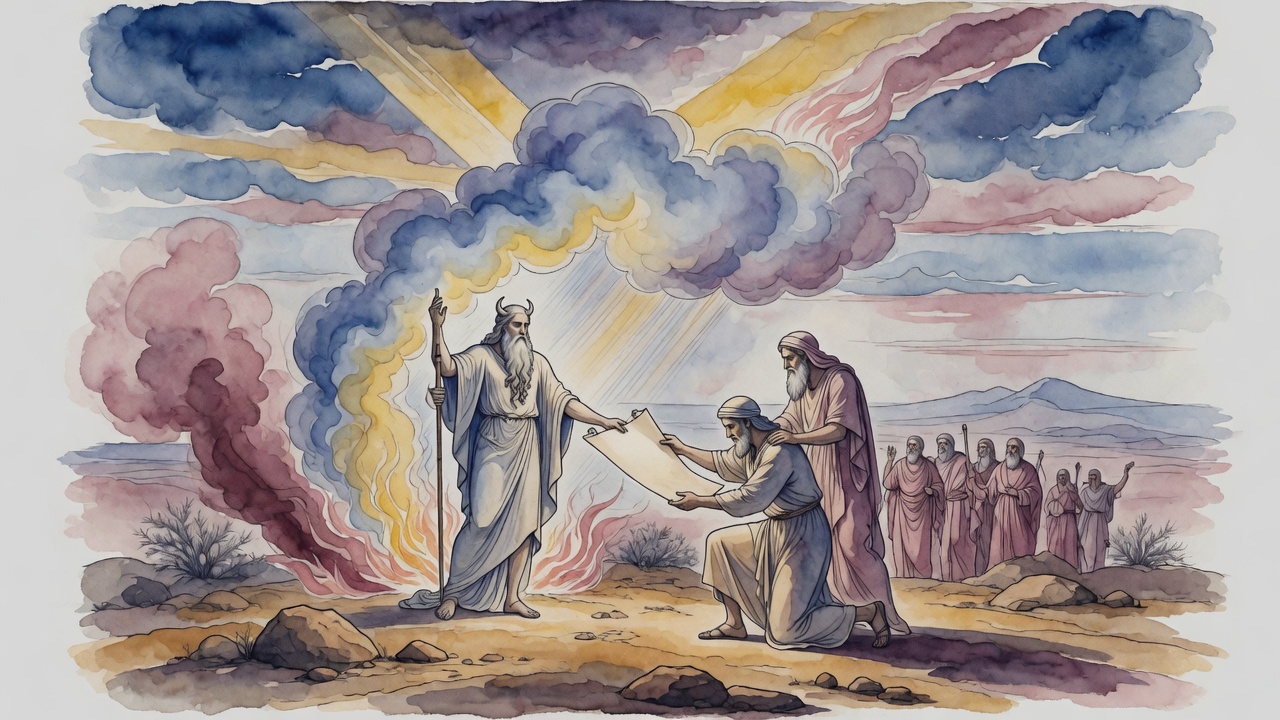
Long before that palm-thick plain, he had stood at Horeb before a bush that burned and was not consumed. A bush that needs water to grow, yet fire did not finish it. He turned aside to see what glory was in its midst. The Holy One called, Moses. Stand where thou art standing, for there in the future will I give the Torah to Israel. Put off thy shoes, for the place whereon thou standest is holy ground. From that command the custom followed that anyone who enters the Temple removes shoes. The first step of his mission was bare feet on ground that would one day receive the mountain of law.
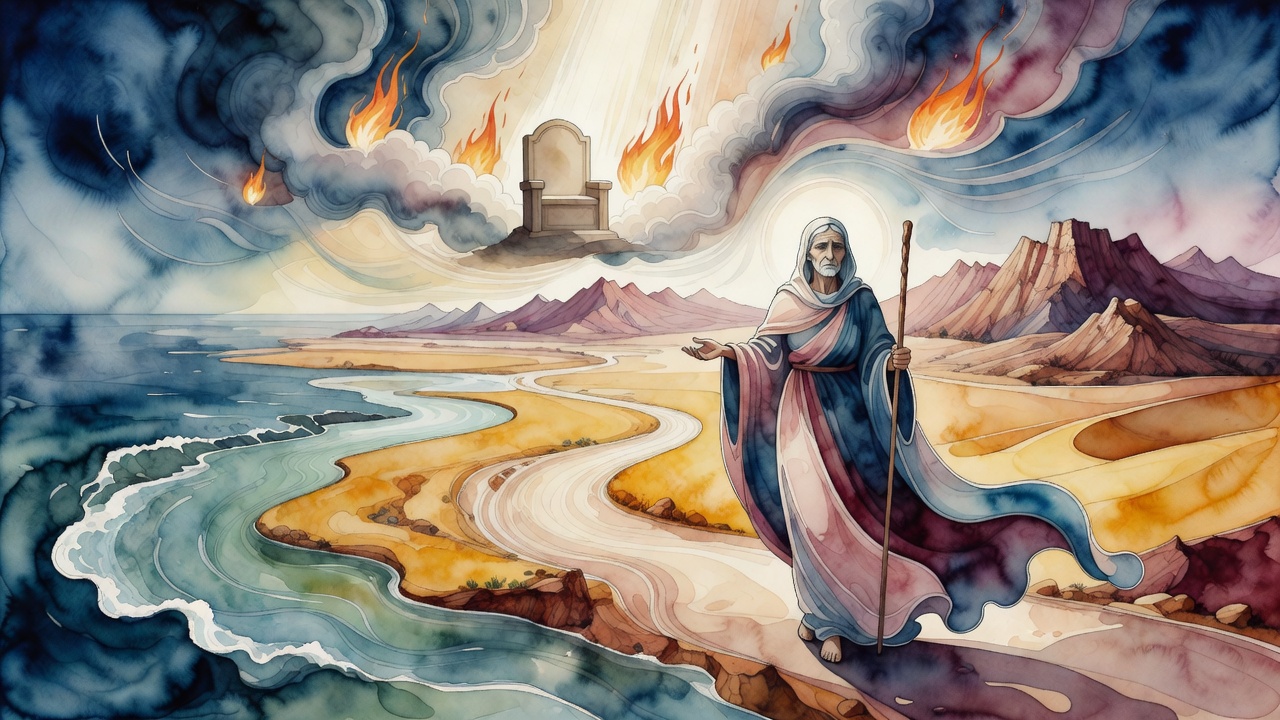
He had asked for the great and holy Name, that he might call and be answered. God said, I am that I am. Even the angels took notice and answered with blessing for the bestowal of knowledge. On the sixth of Sivan the Lord came down upon Sinai. The heavens opened. The summit of the mountain entered the heavens. Thick darkness covered the peak. The Holy One sat upon His throne, and His feet stood on the thick darkness. Moses had begun at a bush and stood under a mountain that became a bridge. He was ending on another height with a different kind of cloud.
Abarim and the Cloud
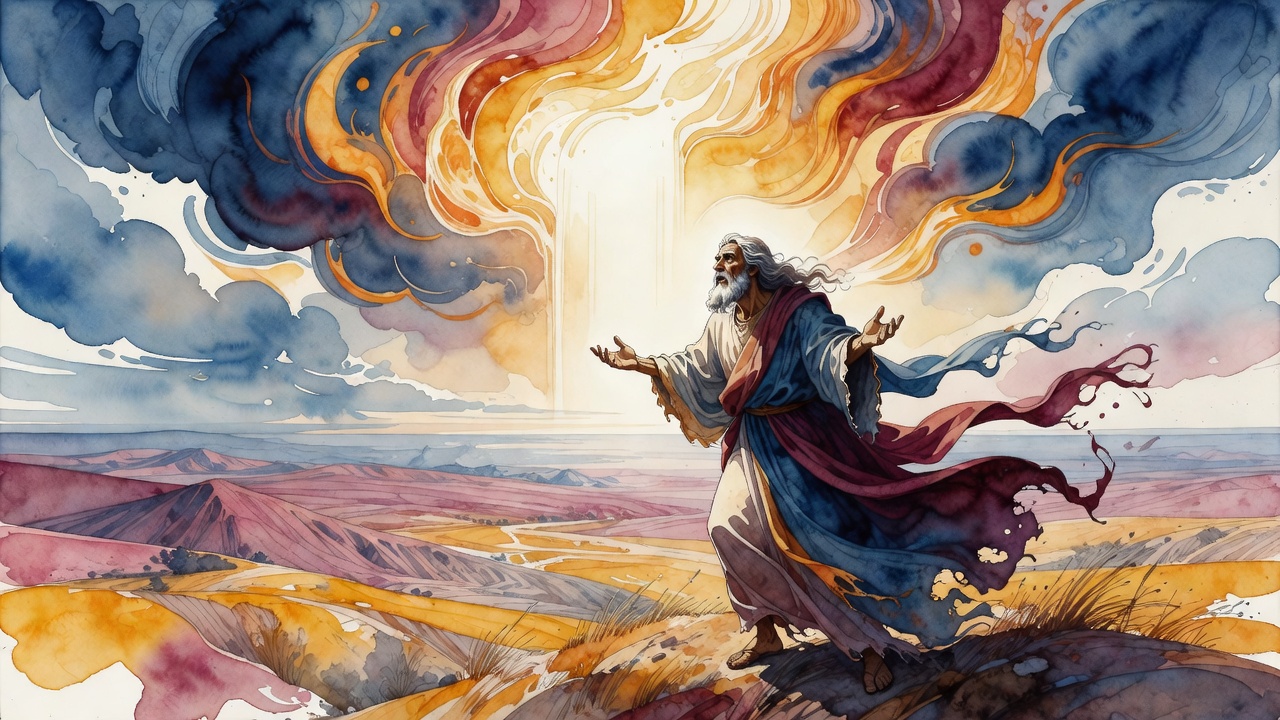
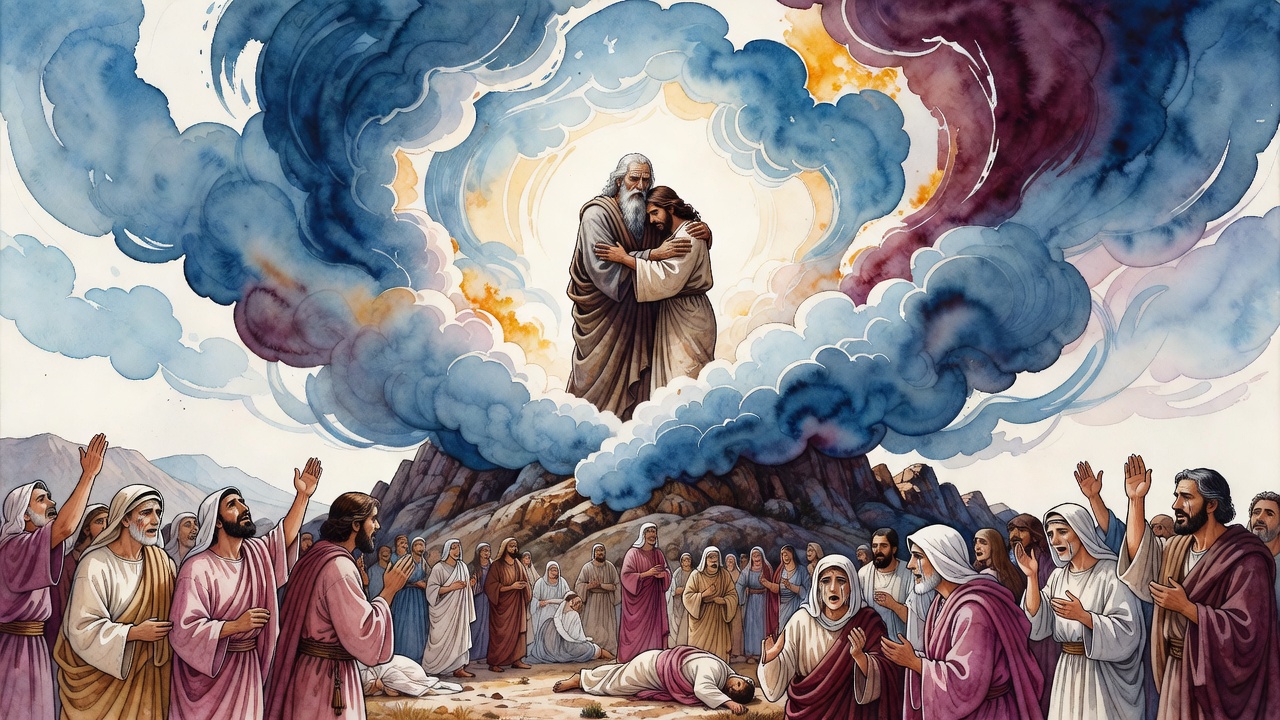
He climbed Mount Abarim, the high ridge overlooking Jericho, and from its peak he saw the full sweep of Canaan stretched out, the land he would never enter. He dismissed the elders. He embraced Joshua and Eleazar. While he was still speaking, a cloud descended and covered him. He disappeared into a certain valley. Gone.
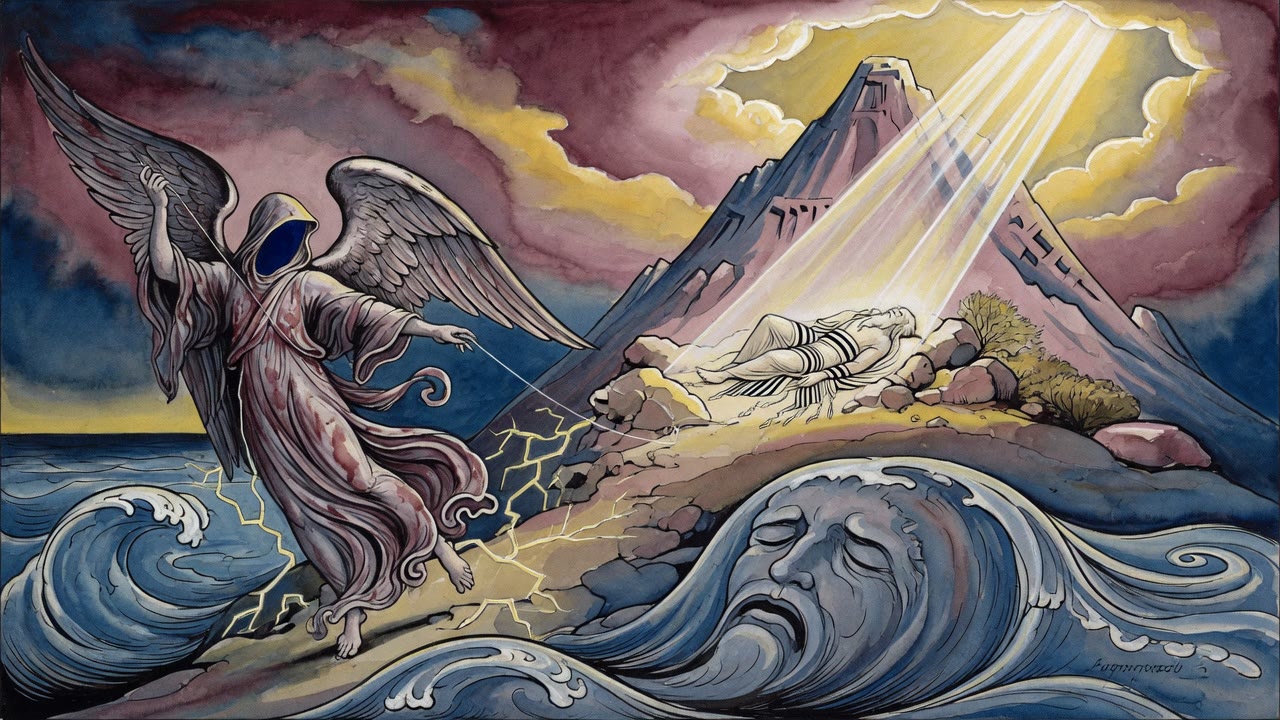
Josephus adds a detail that cuts both ways. Moses wrote in the Torah that he died, deliberately, so that no one would dare claim he had ascended to God because of his extraordinary virtue. The people mourned him for thirty days. No grief ever cut Israel so deeply, not before, not after. Whatever Moses pronounced, you would think you heard the voice of God Himself.
From Unburned Bush to Unfound Grave
The arc of his life is a series of places that refuse ordinary physics. A bush that will not burn. A mountain that enters heaven. A sea that stands. A rock that yields a river. At the end, a body that will not be found because a cloud took him mid-sentence. He began by removing shoes on holy ground. He ended by leaving the ground entirely while the nation below learned how to breathe without him.
Joshua remained. The book remained. The song remained. The blessings on the tribes remained like seeds packed for a land the sower would not walk. Israel had to enter without the man who made leaving Egypt possible. That is a harder miracle than water from stone. It is the miracle of a people that can still hear a voice after the mouth that carried it has vanished into mist on Abarim.
The nation that weeps for Moses is the nation he made possible. They have water, law, and a captain named Joshua, and still the grief is unmatched. Josephus's claim that no sorrow cut deeper is a historian's large sentence that feels true to anyone who has watched a founding teacher leave. The cloud on Abarim is not the same as the cloud on Sinai, yet both hide and reveal. At Sinai the cloud announced arrival. At Abarim it announced departure.
Writing his own death into the Torah is Moses's last act of teaching against myth-making about himself. He will not become a god in the mouth of later storytellers if he can help it. The man who received the Ineffable Name will not let his exit be misread as simple ascent without end. He vanishes into a valley under cloud, and he also dies on the page. Both can be held at once. Israel is left with a book that includes the author's end and a land that excludes the author's feet.
From the unburned bush to the unfound grave, his life is a series of places that refuse ordinary rules. He began by removing shoes on ground named holy in advance of the Torah. He stood under a mountain that entered the heavens. He ends by leaving the ground while still speaking. Joshua remains to cross. Eleazar remains to serve. The song remains. The blessings on the tribes remain like seeds packed for a soil the sower will only see from a ridge.
What the Camp Remembered
← All myths