Moses Cries Out With Ten Names of Prayer
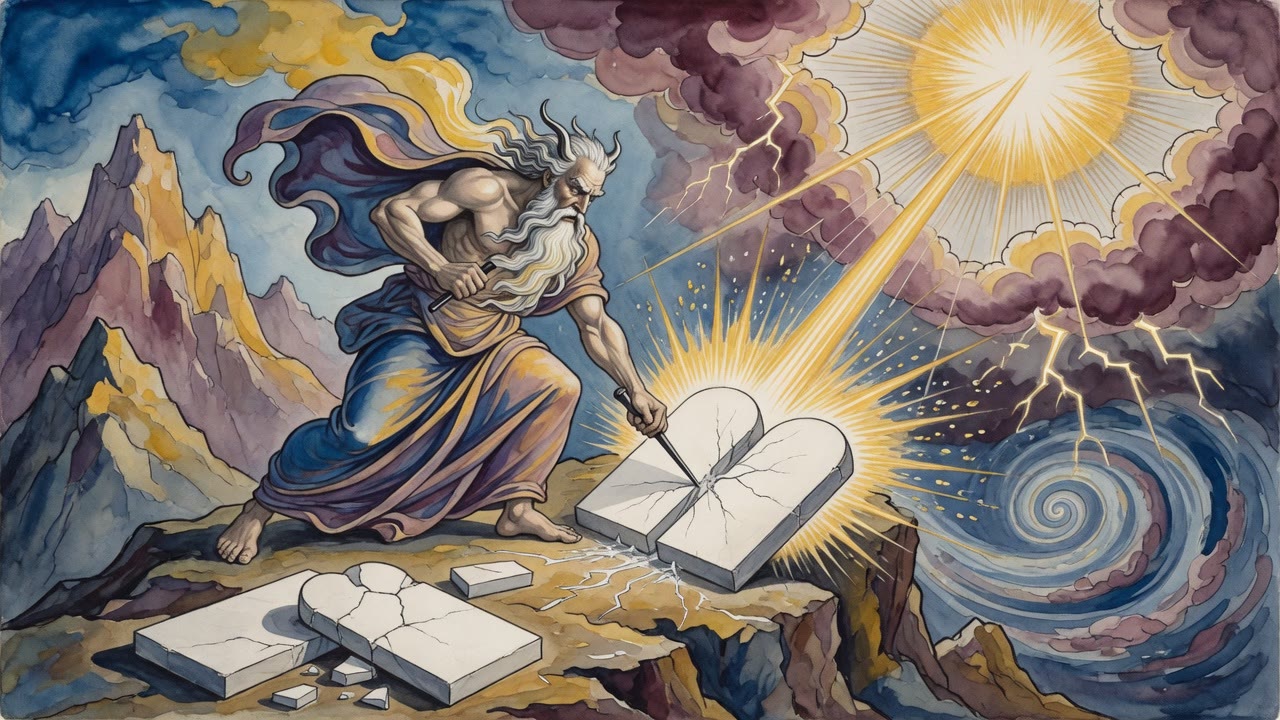
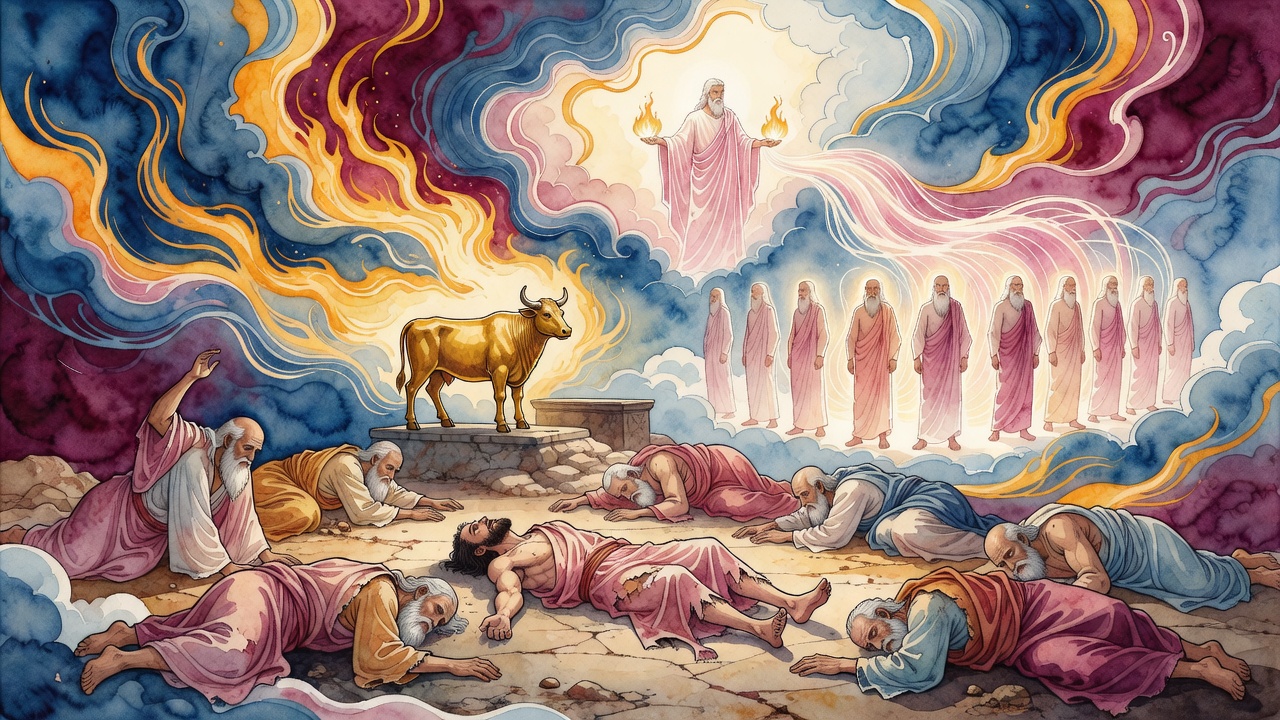
The tablets were already broken. Moses hit the ground with dust in his teeth and would not stand until the sentence on the camp softened.
Table of Contents
 Click for full size
Dust in His Teeth
Moses hit the ground hard enough to drive the dust into his teeth.
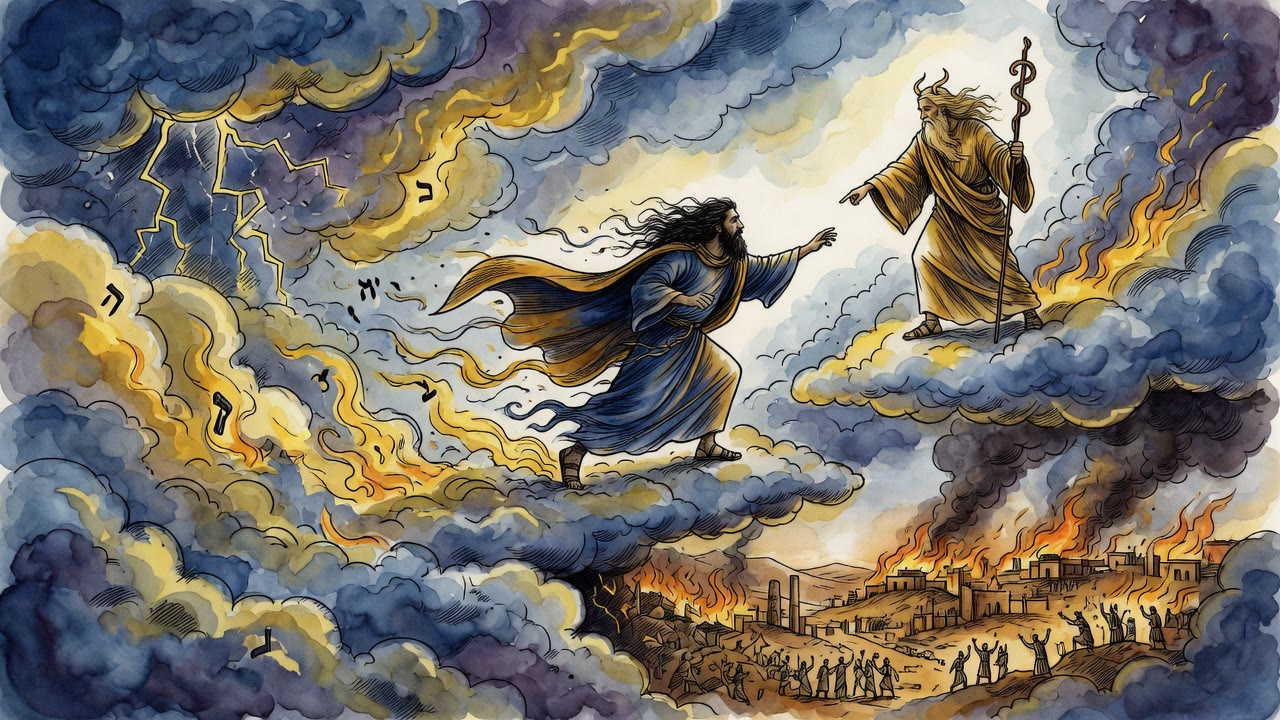
Below the mountain the camp still rang with the calf's noise. Gold that had been earrings now stood as a shape. Aaron's hands still smelled of fire. Moses had already broken the tablets. Now he had nothing left for his mouth but the old arsenal of a people who once screamed under Pharaoh.
He did not stand and lecture. He fell.
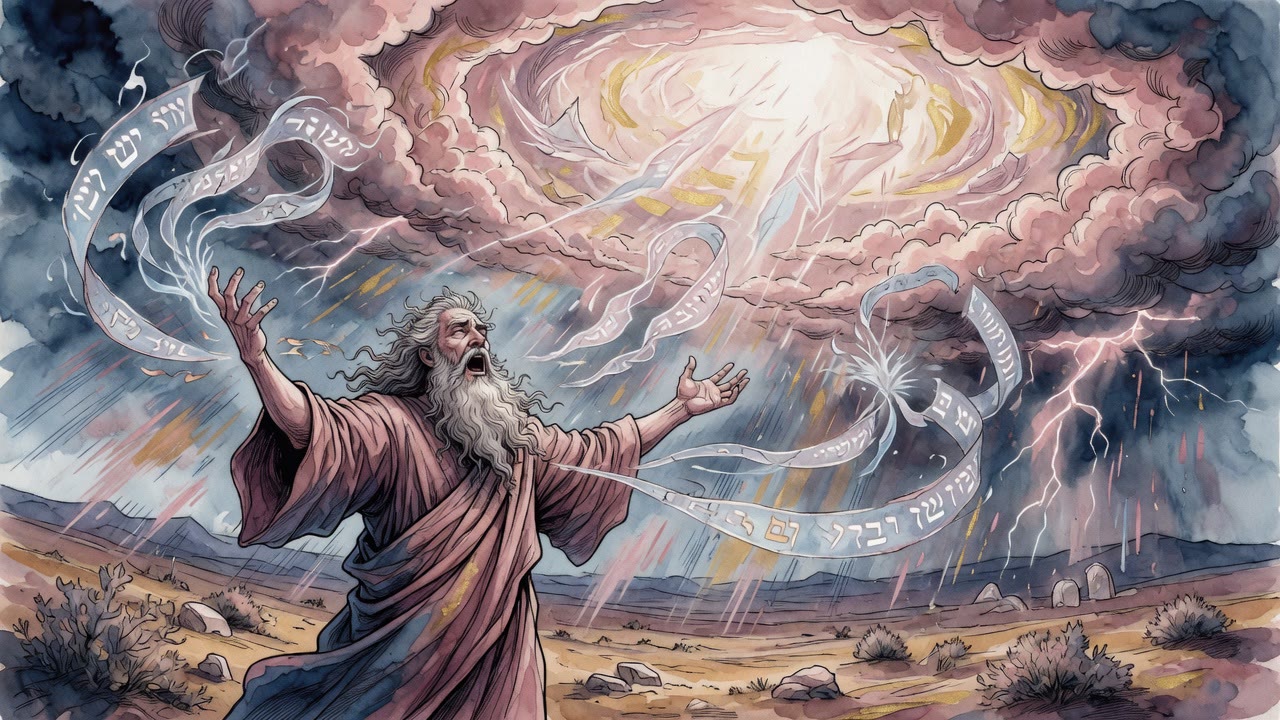
First came ze'akah (צעקה), the piercing cry. In Egypt the children of Israel had moaned under the toil and cried out, and that raw sound had a name (Exodus 2:23). Moses put that sound back into his throat for a nation that had just traded a living God for a statue. Then shav'ah, the outcry that climbs. Then ne'akah, the groan God had heard when their pain vibrated under the bricks (Exodus 2:24).
He was not performing a list. He was emptying a body. Dust stuck to the wet at the corners of his eyes. Forty days of prior closeness on the mountain did not make the ground softer. It made the betrayal sharper.
He Refused a Cleaner Nation
"Destroy them," the heat of heaven had offered, in the logic of a clean slate and a new nation from Moses's loins. Moses refused the promotion. He wanted the stiff-necked camp, not a cleaner pedigree.
Nipul came next, prostration, the full length of a man who had once stood before kings now flat before the King (Deuteronomy 9:18). He had fallen this way before. He fell this way again. Then pilul, supplication that names what will be lost if the plea fails (Deuteronomy 9:26). Then chilui, the pleading of Exodus, Moses begging while the calf still stood (Exodus 32:11).
His body on the ground was the argument. A man who will not rise until the sentence softens is not writing a treatise. He is staking his spine.
Wind moved over the ridge. Somewhere a goat bell rang in the wrong celebration. Moses kept his forehead in the grit until the grit answered with blood-taste and stone.
Joy had a name too, rinah, and he would not raise that cry for this hour. Jeremiah would later warn against a rinah offered for those who had strayed. Moses kept the song locked. This was not a festival throat.
The Names He Would Not Raise
Prayer is called by ten names. Cry, outcry, groan, song, entreaty, prostration, supplication, pleading, appeal, and grace. Egypt had taught the kit under whips. Sinai taught it under a broken covenant still warm from the calf's mold. Moses used what the hour demanded and left the festival names for another day.
Pegiah, entreaty that knocks and knocks. He knocked. He did not invent clever theology on the ridge. He asked for a people not to be finished.
When he finally rose, his knees shook. He went down toward the noise with a face that had already done the hardest work above the camp. The calf would still need grinding. The people would still need water bitter with powder. The prayer had not erased the crime. It had kept a future in which grinding and drinking were still possible.
Aaron met his eyes and looked away. The dust on Moses's forehead was a second set of tablets no one could shatter.
Not Eighty and Not Amram's Son
Years later, in the plains, Moses taught Israel how to survive him after he was gone. "A prophet from your midst, from your brothers, such as I, shall the Lord your God raise up for you" (Deuteronomy 18:15).
The camp wanted a checklist. Age of eighty. Son of Amram. Staff that became a serpent. The teaching cut those accidents away.
"Such as I" meant the core, not the biography. A true claimant must speak as Moses spoke: thus said the Lord, no hedge, no maybe dressed as revelation. Words must meet fulfillment, at least in the part heaven allows to be checked. The message must carry both breadth and grain, general principle and the detail that proves the speaker is not selling fog. A man could be twenty or ninety, from this tribe or that, and still stand or fall by those measures.
"If there arise in your midst a prophet..." the warning began (Deuteronomy 13:2). Arise is easy. Proof is hard. Signs that pull toward other gods are not proofs. They are traps with light on them. Israel was not told to be impressed. Israel was told to measure.
The Measure Left in the Plains
Hold the two hours together. On the ridge Moses used every name of prayer a slave people had learned under brick. In the plains he refused to let "prophet" mean costume, pedigree, or spectacle. The man who fell with ze'akah in his throat is the measure. The man who sells dreams without "thus said the Lord," without words that land, without depth under the shine, is not him.
A boy in the camp later would hear both teachings in one breath. When heaven must be moved, fall and cry with the old names. When a stranger claims heaven moves through him, refuse to fall for the staff alone.
Moses brushed dust from his beard one last time on that ridge of memory and walked toward a people who would need both the cry and the measure long after his grave was hidden. The calf still glittered in memory. The ten names still waited in the throat. The false prophet still waited in some future market with a smooth sentence and a sign that winked.
← All myths