Parshat Shemot5 min read

Moses Grew Outside So Israel Would Believe Him

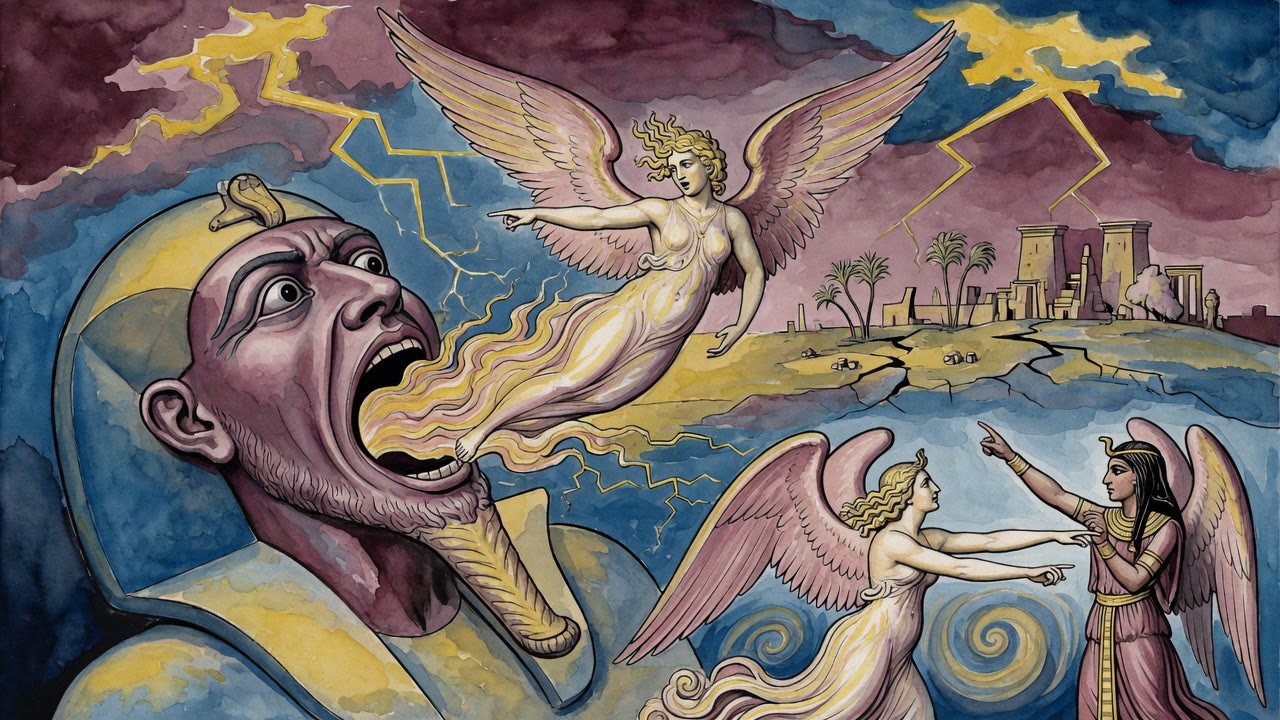
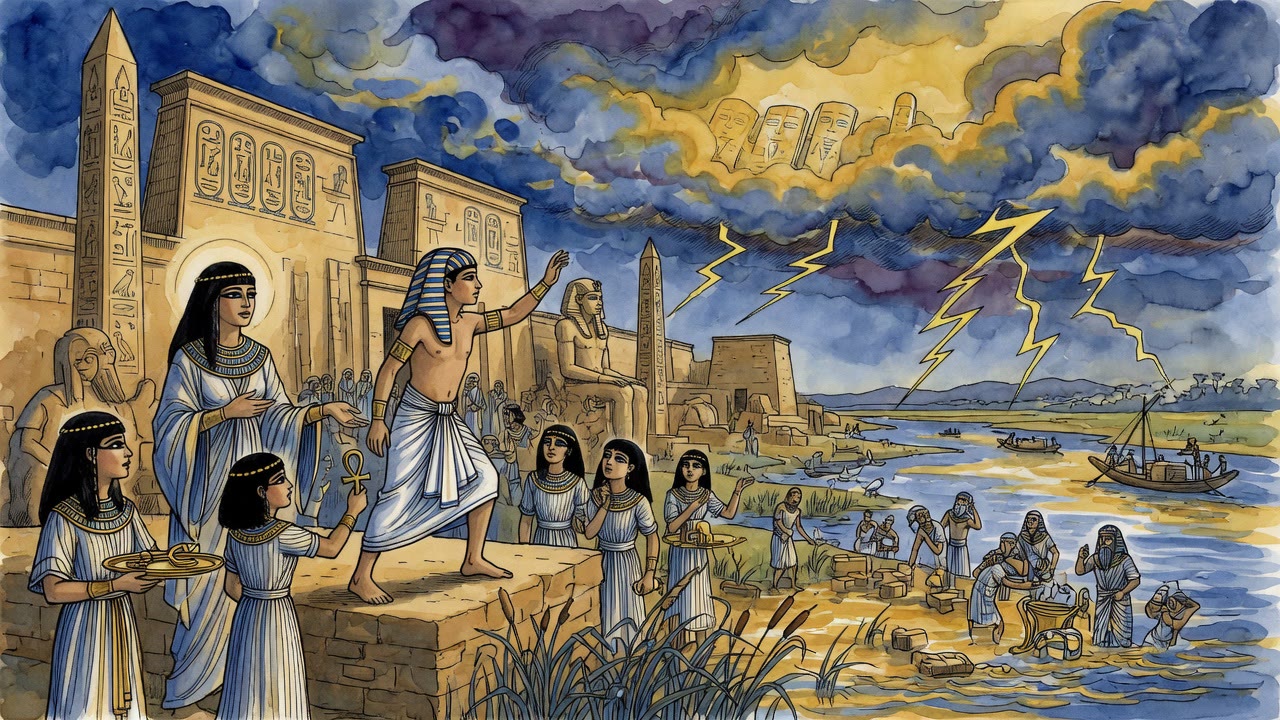
Moses slipped his royal guard and went to arrange the slaves' loads himself, pretending to help Pharaoh. Pharaoh wore a brick mold on his own neck.

Curated by Arthur · Told by Maggid ·
Table of Contents
  1. If He Had Stayed Home
  2. He Went Out to Their Burdens
  3. What Is His Name
  4. From Palace Distance to Bush Fire

Rabbi Hama said it was no quirk of fate that Moses grew up outside his father's house. Imagine the other story. Moses raised comfortably under Amram, learning family signs and whispers of promised redemption, then striding into the camp as a young man to proclaim, "I am here to save you. God has sent me."
Moses Grew Outside So Israel Would Believe Him Click for full size

If He Had Stayed Home

Would they have believed him? Probably not. Oh, it's just young Moses, they might have said. He learned it all from his father. Just as Joseph passed words to Levi, and Levi to Kehat, and Kehat to Amram. The signs would have seemed family tradition, a handed-down secret without the spark of authenticity.

So heaven raised him in Pharaoh's house, a stranger to the chain of private lore. When he later spoke in God's name, the words could not be dismissed as kitchen talk from Amram's tent. The outsider's mouth carried a message that had to be weighed as something new, or rejected as something foreign, but not waved away as inheritance gossip.

Distance became credential. Exile inside a palace became the proof that the commission was not a family script recited by a favorite son.

He Went Out to Their Burdens

"Moses grew." How old? Some say twenty, others forty. The midrash hears more than years. He grew in spirit, in empathy, in understanding of his people's suffering. He went out to his brethren not once but twice, and the Holy One wrote the goings one after another: he went out on the second day. Each visit deepened the wound of seeing.

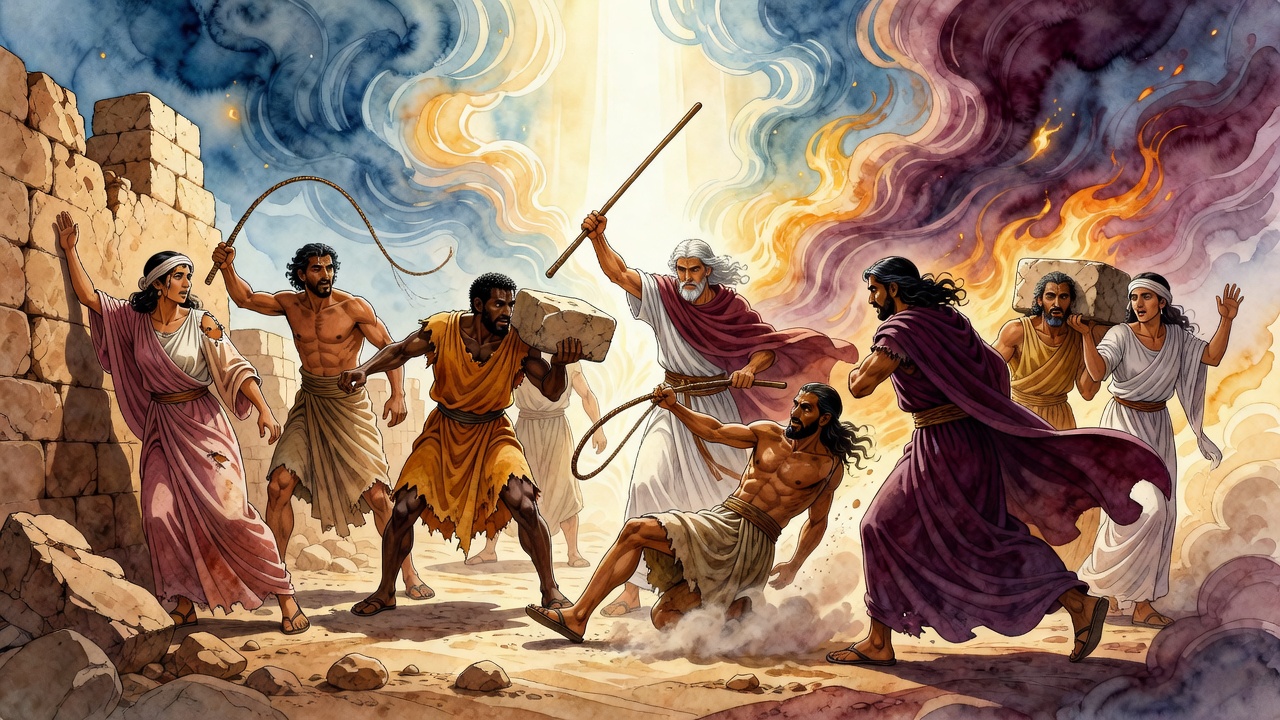
What did he see when he saw their burdens? He would cry and say, Woe is me over you; would that I could die for you. He left his royal guard and arranged their loads, feigning as though he helped Pharaoh, while his heart broke with the injustice. The system was broken, and Moses' heart broke with it.

Meanwhile Egypt had already perfected the trick of labor. Taskmasters to afflict them with burdens, storage cities Pitom and Raamses. The verse uses the singular "upon him" rather than "upon them." The school of Rabbi Elazar son of Rabbi Shimon said Pharaoh himself wore a brick mold on his neck, so that if an Israelite complained, they could answer, Are you more delicate than Pharaoh? The cities were called miskenot, which some read as endangering their owners, others as impoverishing them. The oppressor's system chewed its own builders. Moses saw the chewing and could not unsee it.

What Is His Name

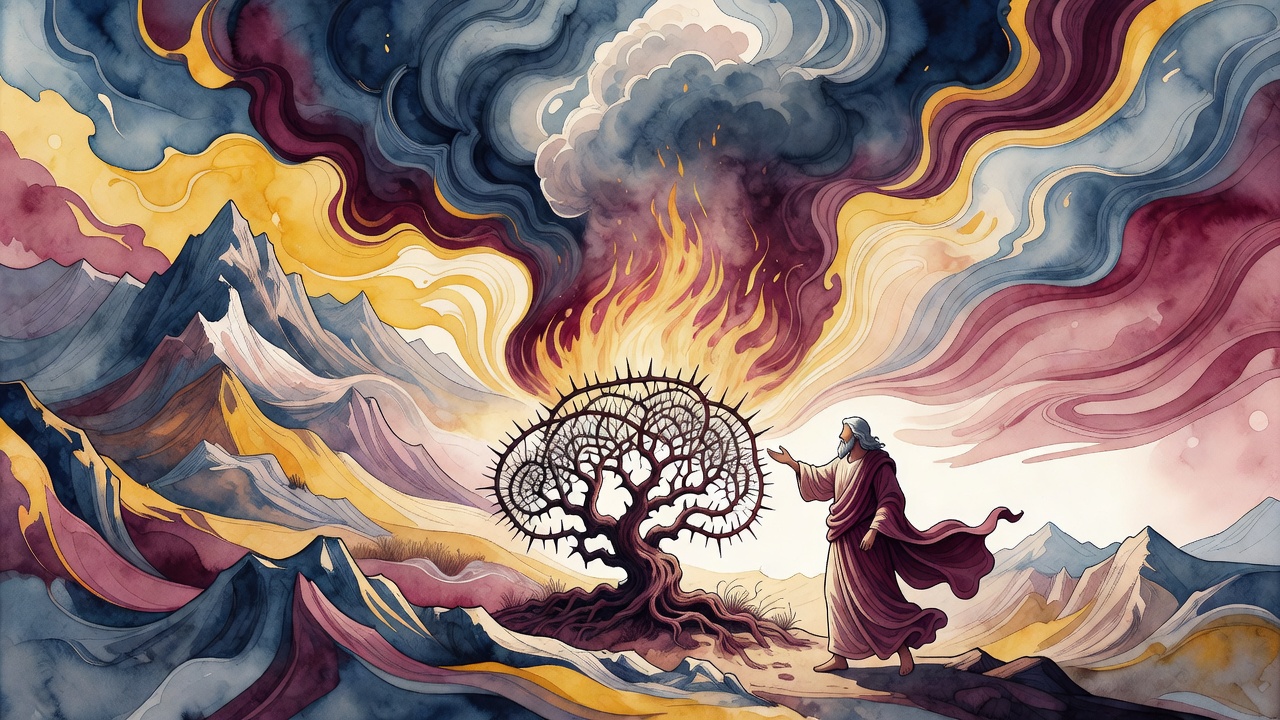
At the burning bush the commission fell. Moses said, When I come to the children of Israel and say the God of your fathers has sent me, and they say, What is His name, what shall I say to them? (Exodus 3:13).

Rabbi Shimon of Lod, quoting Rabbi Simon in the name of Reish Lakish, heard Moses thinking past the first meeting to Sinai itself, where God will proclaim, "I am the Lord your God" (Exodus 20:2). Moses would be a bridge between God and a people. How can a mouth convey an essence beyond human grasp? At that moment he asked the Holy One to make known to him His great name. He was not shopping for a label. He was asking how to carry the unspeakable into a camp that had only known bricks and the singular "upon him" of Pharaoh's mold.

The boy raised outside Amram's lore now demanded language adequate to a mission that could not lean on family whispers. The Name had to be more than a password passed from Kehat to Amram. It had to stand in fire that does not consume.

From Palace Distance to Bush Fire

Raised outside so they would believe. Going out twice so he would feel. Asking the Name so he could speak. The midrash draws a straight line through those three pressures. Credibility. Compassion. Vocabulary.

Pharaoh's brick mold still hung in the background, a king pretending to share the load while the cities endangered and impoverished. Moses' tears over the burdens answered that theater with something Egypt could not stage: a prince who wanted to die for slaves rather than stand above them with a mold around his neck for show.

When he finally returned with the Name and the signs, he would not be Amram's boy reciting kitchen tradition. He would be the man from outside who went out to the burdens, wept, fled, and met fire that taught him what to say. Israel would still doubt. Heaven had at least removed the cheapest doubt, the shrug that says we already heard this at home.

In the palace he learned Egyptian and power. In the fields of labor he learned Hebrew pain. The two educations did not cancel. They made him illegible to both sides until the bush burned a third language into him, the Name that is neither court title nor slave slang. That is why the question at the bush matters. He is not asking for a password to impress elders. He is asking how a man with two incomplete passports can speak for the God of the fathers.

When he arranges burdens as if helping Pharaoh, he is already rehearsing a double life: insider enough to move freely, outsider enough to grieve. The brick mold on Pharaoh's neck is propaganda. Moses' tears are not. Egypt can stage shared labor. It cannot stage a prince who wishes to die in place of the brick-makers. That wish is the true growth the midrash hears in "Moses grew."


← All myths
From the tradition

Sources

4 sources

The texts behind this telling. Some cards carry a translation of the source; others are our own retelling of it, and each card says which. Every card links out to the original.

Shemot Rabbah 5:2Shemot Rabbah

Retold in our words. Read the original at the link below.The Sefaria Midrash Rabbah, 2022 · CC-BY

It wasn't just a random event, a quirk of fate. According to Rabbi Ḥama, there was a very specific, almost divinely orchestrated reason.

Moses growing up comfortably in his father's house. He learns the family history, the secret signs, the whispers of a promised redemption. Then, as a young man, he strides into the Israelite community, proclaiming, "I am here to save you! God has sent me!"

Would they have believed him?

Probably not. As Rabbi Ḥama suggests, they would have likely dismissed him. "Oh, it's just young Moses," they might have said. "He learned it all from his father, Amram. Just like Joseph passed it to Levi, and Levi to Kehat, and Kehat to Amram." The signs, the words, would have seemed like nothing more than a family tradition, a handed-down secret, lacking the divine spark of authenticity.

This idea resonates with a beautiful passage in Shemot Rabbah (3:8, 5:13). It speaks of a tradition, an oral history passed down through generations. When Moses, in the name of God, declared, "pakod pakadti – I have surely remembered you" (Exodus 3:16), the elders recognized these words. They knew this phrase was a sign, a password almost, that the true redeemer of Israel would utter upon revealing himself.

So, Moses had to be "torn" from his father's home. This separation, this disruption, was necessary. It was a divine strategy to ensure that when he finally did appear before the Israelites, his words would carry the weight of undeniable truth. He couldn't be seen as simply reciting a family script. His message needed to be fresh, untainted, and clearly from God.

And it worked! As the verse says, when Moses went and told Israel all these matters, "the people believed" (Exodus 4:31).

What does that say to us? Perhaps it tells us that sometimes, the most authentic messages come from unexpected sources, from those who have been separated from the familiar, from those who carry the weight of experience rather than simply the echo of tradition. Maybe it reminds us to listen with open hearts, not just to those who fit our expectations, but to those whose words resonate with a deeper, undeniable truth.

Full source
Shemot Rabbah 1:27Shemot Rabbah

Retold in our words. Read the original at the link below.The Sefaria Midrash Rabbah, 2022 · CC-BY

Shemot Rabbah turns to Moses Leaves Egypt.

Shemot Rabbah unpacks this verse, revealing layers of meaning. "Moses grew..." How old was he exactly? Some say twenty, others forty. But the text immediately clarifies: it's not just about physical growth. “Moses grew." Doesn’t everyone grow? Rather, it is telling you that he grew in an atypical manner. It was a growth of spirit, of empathy, of understanding his people's suffering.

The text emphasizes that Moses went out to his brethren not just once, but twice. “And went out to his brethren,” this righteous one went out twice...and the Holy One blessed be He wrote them one after another; “he went out on the second day” (Exodus 2:13), these are two. Each visit deepened his connection, intensified his awareness of their plight. It wasn't a casual observation.

What did Moses see when he saw "their burdens?" According to Shemot Rabbah, it was visceral. "He would see their burdens and cry and say: ‘Woe is me over you; would that I could die for you. There is no labor more arduous than labor with mortar.’ He would shoulder [the burdens] and help each and every one of them." He didn't just witness their suffering; he felt it himself. He yearned to alleviate it, even to the point of wishing to take their place.

Rabbi Elazar son of Rabbi Yosei HaGelili elaborates further. He saw a large burden on a small man and a small burden on a large man; the burden of a man on a woman and the burden of a woman on a man; the burden of an elderly man on a lad and the burden of a lad on an elderly man. It wasn’t just the physical weight of the work, but the injustice of it all. The system was broken, and Moses's heart broke with it. He would leave his royal guard and would arrange their burdens, feigning as though he was helping Pharaoh. Imagine the scene: a prince, raised in luxury, secretly easing the suffering of slaves, under the guise of serving their oppressor.

And this, the text suggests, is what caught God's attention. The Holy One blessed be He said: ‘You left your affairs and went to observe the Israelite’s suffering, and you treated them in a brotherly manner; I will leave the upper and lower worlds to speak with you.’ Because Moses turned his attention to the suffering of others, God turned to him. That is what is written: “The Lord saw that he had turned to see” (Exodus 3:4); the Holy One blessed be He saw that he turned from his affairs to see their burdens; therefore, “God called to him from the midst of the bush” (ibid.).

That our actions, our empathy, our willingness to see and alleviate the suffering of others, can open us to something greater. It suggests that true leadership, true greatness, begins not with power or privilege, but with a profound sense of compassion. And perhaps, just perhaps, that's the kind of growth that truly matters.

Full source
Shemot Rabbah 3:5Shemot Rabbah

Retold in our words. Read the original at the link below.The Sefaria Midrash Rabbah, 2022 · CC-BY

In the Book of Exodus, we find Moses at the burning bush, tasked with the monumental mission of freeing the Israelites from slavery. He's understandably apprehensive. It’s a daunting task! In Shemot Rabbah (Exodus Rabbah), a classic compilation of rabbinic interpretations of Exodus, we find a fascinating insight into Moses’s mindset in this moment.

The text quotes (Exodus 3:13): "Moses said to God: Behold, when I come to the children of Israel, and say to them: The God of your fathers has sent me to you; and they say to me: What is His name? What shall I say to them?”

Moses is essentially saying, "When I go to the Israelites and tell them that the God of their ancestors sent me, what happens when they ask, 'Okay, but which God? What's His name?'" It's a pretty crucial question. Rabbi Shimon of Lod, quoting Rabbi Simon in the name of Reish Lakish, offers a profound interpretation. He suggests that Moses is thinking beyond just this initial encounter. He's envisioning the future, the giving of the Torah at Mount Sinai, where God Himself will proclaim, "Anochi Adonai Elohecha – I am the Lord your God" (Exodus 20:2).

Moses understands that he will be an intermediary, a bridge between God and the people. But how can he effectively represent a God whose very essence is beyond human comprehension? How can he convey the power and the glory of the Divine?

At that moment, Moses was clarifying his undertaking, because he feared if they asked him "What is His name?" what would he say to them? He worries, understandably, about how to convey God's essence to people who are suffering and questioning everything.

It was at that moment, Shemot Rabbah emphasizes, that Moses requested that the Holy One, Blessed be He, make known to him His great name. He wasn't just looking for a label. He was seeking a deeper understanding, a key to unlock the divine mystery. He needed something that would resonate with the Israelites, something that would inspire faith and hope. Something beyond just "the God of your fathers."

What is in a name? Especially when that name belongs to the ineffable. Perhaps the answer, like the burning bush itself, lies in the mystery, the wonder, and the courage to keep asking, "What is Your name?"

Full source
Shemot Rabbah 1:10Shemot Rabbah

Retold in our words. Read the original at the link below.The Sefaria Midrash Rabbah, 2022 · CC-BY

Take the story of the Israelite enslavement in Egypt. The familiar version gives us the basics, but the details… well, that’s where things get interesting.

The Torah tells us, "They imposed upon them taskmasters in order to afflict them with their burdens, and they built storage cities for Pharaoh, Pitom and Raamses" (Exodus 1:11). But did you know there's a subtle oddity in the Hebrew? The verse uses the singular "alav" – "upon him" – rather than the plural "aleihem" – "upon them." Why the singular?

The school of Rabbi Elazar son of Rabbi Shimon offers a rather startling explanation: Pharaoh himself became a part of the forced labor! They put a brick mold around his neck. The idea was, if an Israelite complained about the hard labor, they could be told, "Are you more delicate than Pharaoh?" Shemot Rabbah suggests that the Egyptians wanted to trick the Israelites into thinking that Pharaoh was working with them. It wasn't just about cruelty; it was about manipulation.

Those "taskmasters," the sarei missim? The commentary cleverly connects this term to "mesim," suggesting they were something upon which bricks were placed. A play on words, perhaps, but it paints a vivid image.

But here's the real kicker: the text goes on to suggest that the taskmasters weren't just afflicting the Israelites; they were afflicting Pharaoh through the Israelites' burdens! It’s a subtle shift, but it flips the script. Pharaoh isn't just the oppressor; he’s also, in a strange way, being oppressed by his own system.

Then there are the storage cities themselves, miskenot. Rav and Shmuel offer two interpretations, both equally bleak. One says these cities "endanger" (mesakenot) their owners. The other says they "impoverish" (memaskenot) them, because anyone involved in construction ultimately becomes poor. The Rabbis simply state that they were storehouses, referencing (Isaiah 22:15), which speaks of a steward entrusted with the keys to storehouses.

Finally, we get to the names: Pitom and Raamses. Again, Rav and Shmuel present contrasting views. One says Pitom was the original name, but it was called Raamses because the buildings would collapse (mitrossess) one by one. The other claims Raamses was the original name, but it was called Pitom because "the opening of the abyss" (pi tehom) would swallow the buildings one by one. Talk about a construction nightmare! Either way, the names themselves become symbols of futility and destruction.

What does all this tell us? It's more than just a historical account. It’s a lesson in leadership, in the dangers of unchecked power, and in the cyclical nature of oppression. Even the oppressor, in the end, can become a victim of their own creation. It's not just about then, it's about now. It's about us.

Full source