Four Quiet Merits Kept Israel's Hebrew Names in Egypt
They strangled Israelites inside their own walls. A mother still named her boy Reuven, and would not teach him the overseer's speech.
Table of Contents
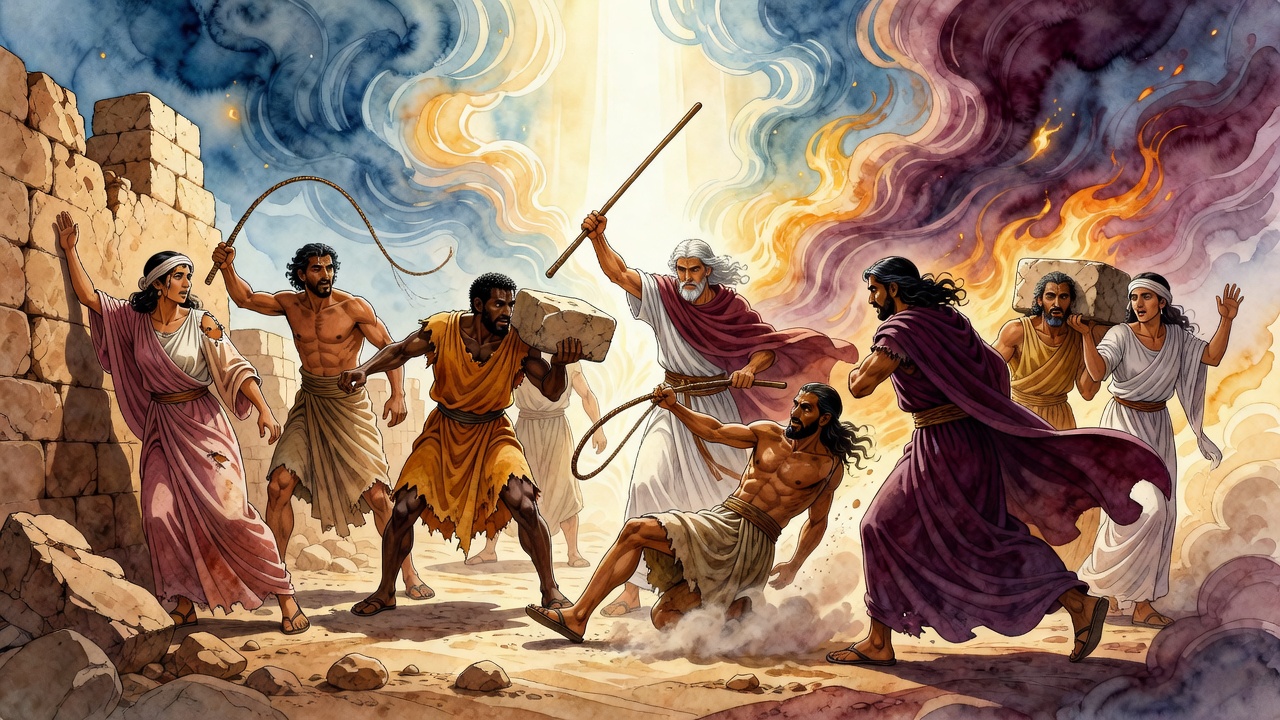
The executioner's hands were already at the throat when the child got his name. Israel lived in houses that killed from the inside. Pharaoh's men did not wait for the brick-yard. They strangled Israelites against their own walls until groans filled the rooms, and God heard the groaning and remembered Abraham, Isaac, and Jacob (Exodus 2:24).
 Click for full size
A mother still said Reuven. She did not sell the boy an Egyptian court name to buy a softer quota. The overseer spoke the masters' tongue at the yard. After dark, in the same rooms that had just been used for killing, the old sounds stayed.
Four Refusals No Lash Could Take
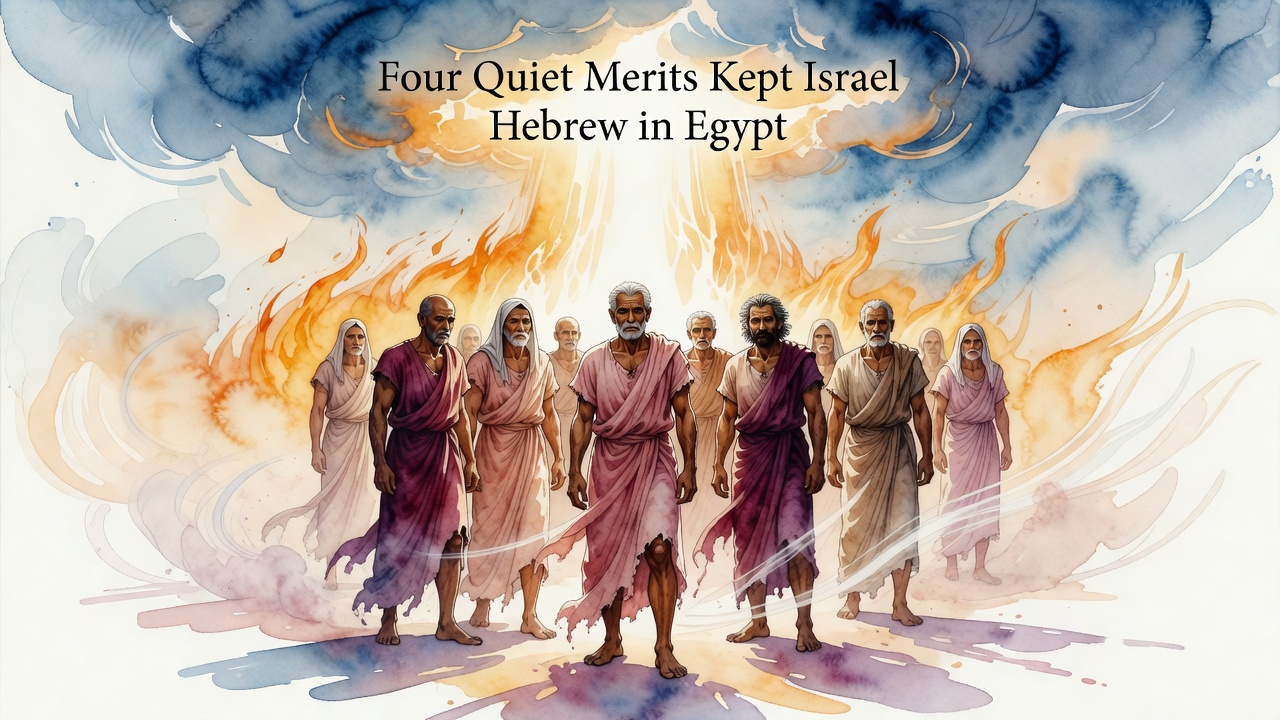
Rabbi Eliezer Hakappar Berebbi counted what the slaves still possessed. They were not suspected of illicit relations. They did not traffic in slander. They did not trade Hebrew names for Egyptian ones. They did not drop the Hebrew tongue for the speech that opened every gate.
Two hundred years and more under brick give a people every reason to dissolve. Other nations lose a language in a few generations of forced labor. Israel held four quiet lines when they still had no Shabbat system, no full kosher code, no tablets from Sinai.
Holding a Hebrew name in a house where the air itself kills is not a small piety. Speaking Hebrew while an overseer's language buys bread is a daily refusal. Guarding a bed and a mouth under a culture of ownership is warfare without swords.
Two Hundred Ten Years of Heat
Rabbi Akiva's stream pushed the heat further. Egypt was an iron furnace. Children burned in fire, the way a later verse named the country that had tried to melt them (Deuteronomy 4:20). Dust stuck to the walls. The groan had a schedule. A father who still answered to a Hebrew name did so with a throat that already knew the grip.
The promise had spoken of four hundred years of affliction (Genesis 15:13). Rabbi Elazar son of Azariah counted the body of the stay as two hundred ten. Joseph was seventeen when he went down and thirty when he stood before Pharaoh. Seven years of plenty. Two of famine. Levi, six years older than Joseph, lived one hundred thirty-seven years. Jochebed was born as they arrived and was one hundred thirty when she bore Moses. Promise and lived years sat in tension the way a long night sits against a clock.
Inside those years the people could have become Egyptians who once had Hebrew grandparents. The four merits blocked that ending. A boy called Reuven could still be called by the God who had spoken to Abraham. A boy called by an overseer's name would have been harder to find.
Locusts Rose from the Brine
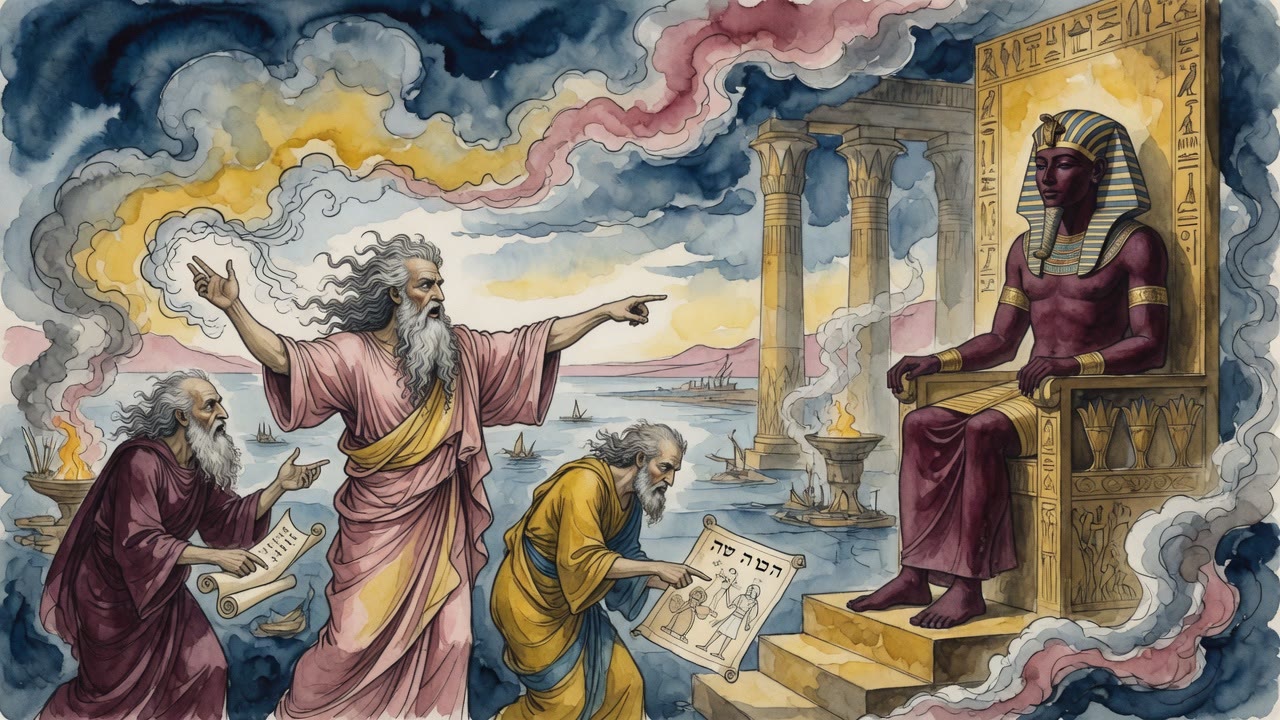
Even while plagues fell, Egyptian cleverness tried to profit. Locusts were caught and packed in brine as a delicacy. Moses had already been thrown out of the palace. Pharaoh summoned him back when no green thing remained (Exodus 10:15). He asked forgiveness. He confessed he had wanted to curse them.
Moses prayed for the plague's removal. Mercy answered. Mercy did not fund Egyptian kitchens.
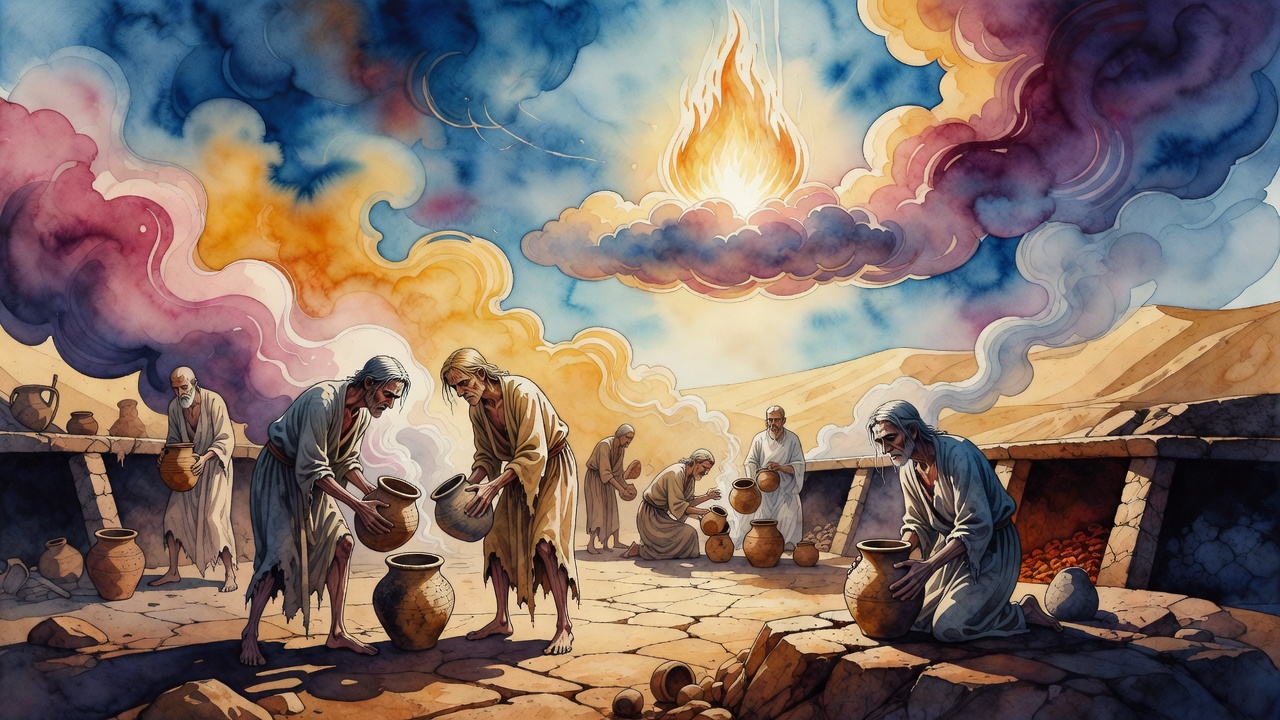
Then "the Lord turned an exceeding strong west wind" and drove the swarm into the Sea of Reeds (Exodus 10:19). The brined stores emptied as the insects rose from the pots and left. Lids jumped. Salt ran. None of the expected profit remained. Masters who had tried to salt a disaster learned that heaven can reclaim a pantry.
Israel watched from the slave streets. Hold your name. Do not build a future on someone else's ruin packed in salt.
They Walked Out Still Hebrew
When the Exodus tore them out, God also struck Egypt's gods, executing judgments on the abominations of the land (Numbers 33:4). Physical exit and the breaking of idols arrived together. A nation that kept its names could recognize the Name that shattered the idols.
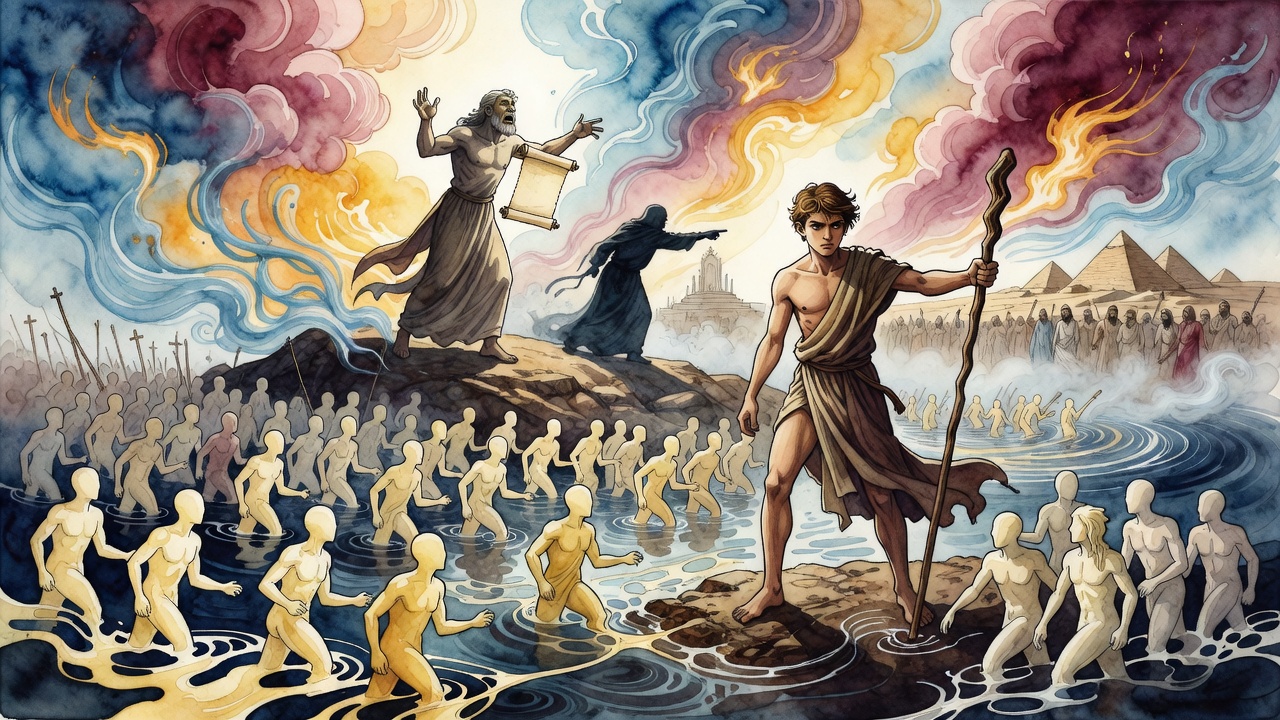
They walked out as the same people who had gone down, not as a new invention of the Nile. Mothers who had kept Hebrew names on children, fathers who had refused Egyptian gossip, houses that had guarded their boundaries, all of that quiet work rode out with the flocks and the dough.
Locusts leaving brine pots proved Egypt could not bank a plague. Four merits proved Israel could keep a face without a Temple or a crown. When Moses stood before Pharaoh, he spoke for a people who still answered to the old sounds.
← All myths