5 min read

Moses Refused the Chiefs Wagons at the Mishkan

The tribal chiefs brought six covered wagons and oxen to the mishkan. Moses would not take them until God spoke. Reuven then fought the order of offering.

Curated by Arthur · Told by Maggid ·
Table of Contents
  1. The Gift Moses Would Not Touch
  2. Reuvens Anger at the Order
  3. Yissachar and the Counsel That Counted as First
  4. Wheels Under the Holy Load

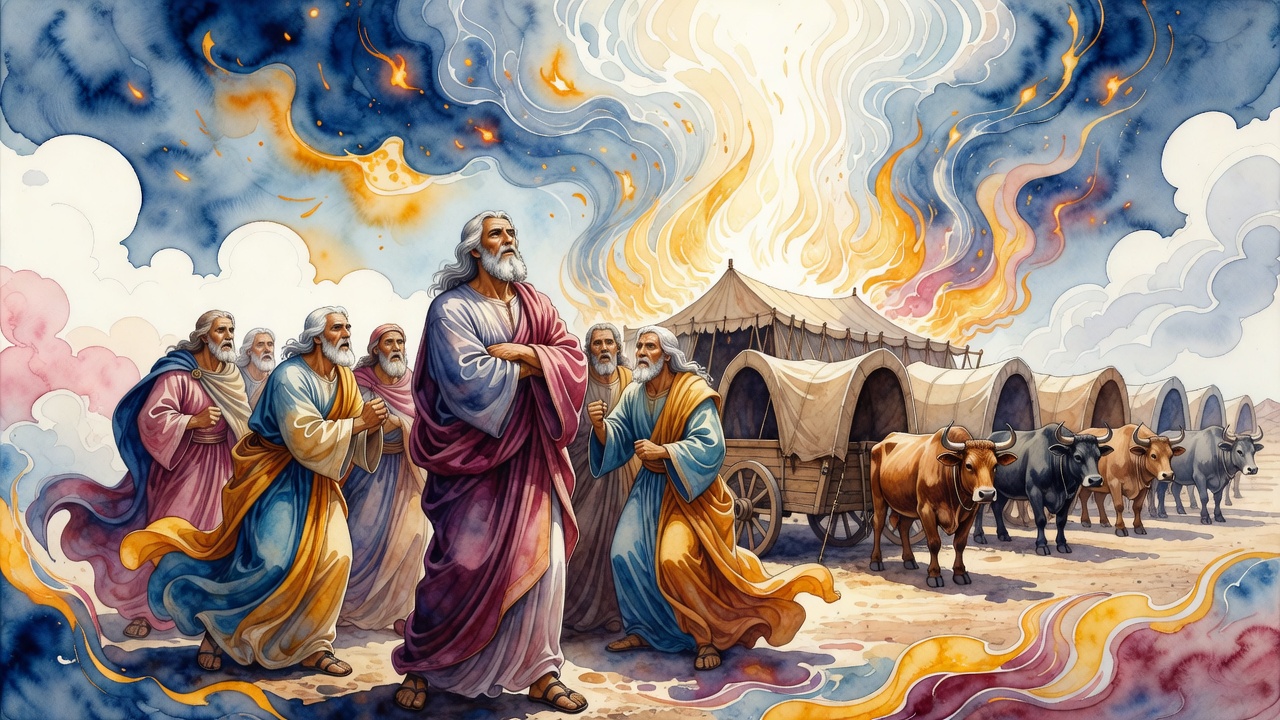
Six wagons rolled toward the mishkan (the portable sanctuary Israel carried through the wilderness) with a sound like slow thunder. Oxen pulled. Dust rose in soft columns. The chiefs of Israel walked beside the gifts they had decided to give before anyone commanded the shape of the giving.

Moses Refused the Chiefs Wagons at the Mishkan Click for full size

These were not new faces hired for ceremony. They were heads of fathers houses, chiefs of tribes, chiefs the sons of chiefs. In Egypt they had been the officers beaten when the brick tally failed (Exodus 5:14). Rods had found their shoulders so the peoples count would not fall only on the weak. The same backs that took those blows now brought covered wagons, tzav, fit for honor, not rickety carts for scrap wood.

The Gift Moses Would Not Touch

They stood before the mishkan and presented the offering. Six wagons for twelve chiefs, a wagon for every two, and an ox for each man. Shared timber. Individual beasts. No one chief owning the road alone, no one hiding behind another mans gold.

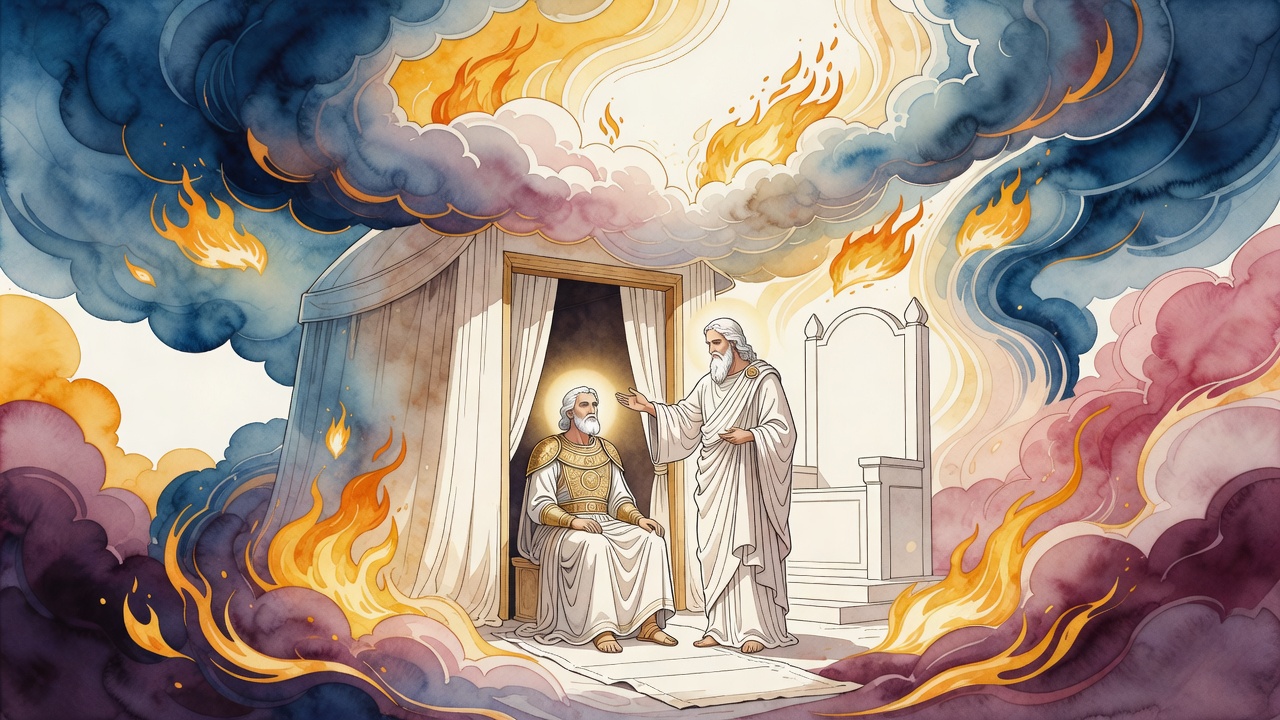
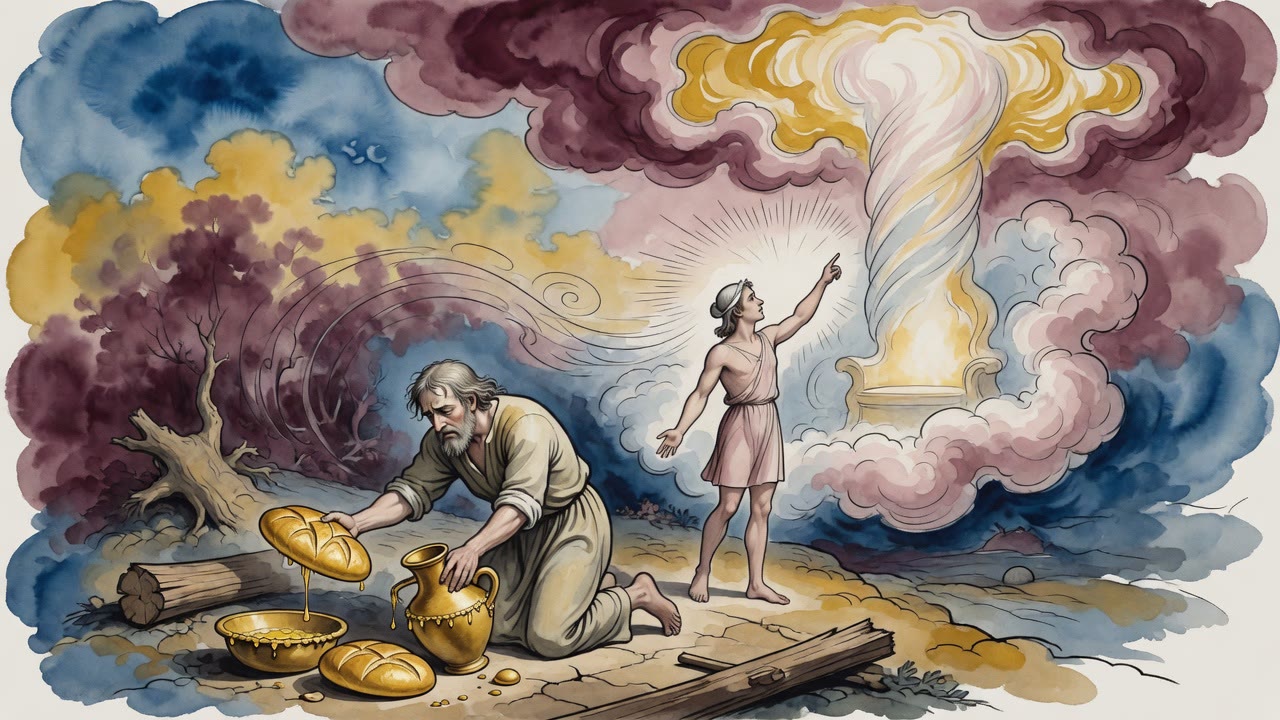
Moses looked at the wagons and did not take them.

The chiefs had moved first. Their hands were already open. Moses waited for a word from above. The mishkan was not a place where even proven leaders could invent service by enthusiasm and call it commanded. Silence held. A fly landed on an oxs ear. The covered wagons sat like a question with wheels, painted for dignity, heavy with unused purpose.

Then God spoke. Take it from them. The wagons and the oxen would be for the service of the Tent of Meeting, given to the Levites according to their work. Merari would take more of the load, the frames and the hard weight. Gershon would take curtains and coverings. Kehat would still carry the holy things on the shoulder. No wagon for the ark and the inward vessels. Some holiness refuses wheels.

Only then did Moses accept. He took the ropes and the yokes into the camps economy. The chiefs gift entered the system. Leadership earned under whips became timber and muscle for the road of the Presence.

Reuvens Anger at the Order

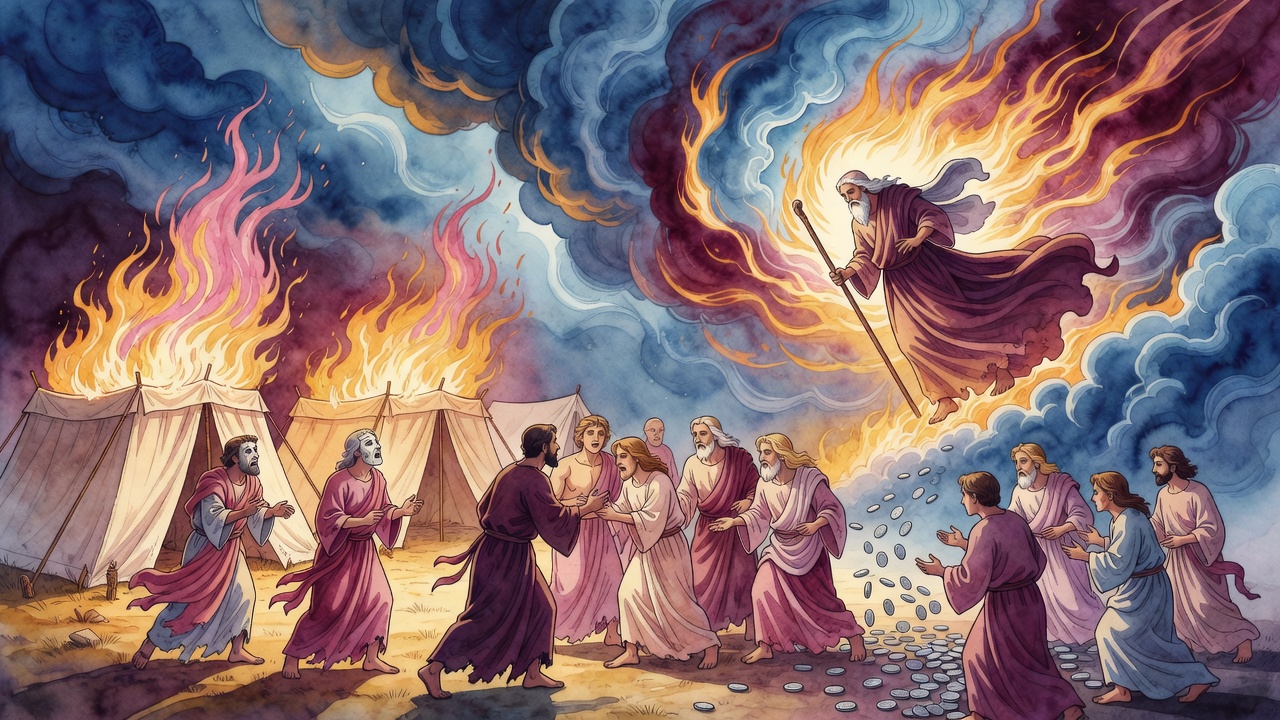
When the days of offering by tribe began, another fight opened under the same sky. Judah went first with silver and animals and the long list of the day. Reuven, firstborn, felt the old rank burn in his throat.

"It is enough that Judah went before me," he pressed. Let me present now according to birth. Age. Blood. The first womb. The right that had been his since the tents of Jacob.

Moses did not soothe him with soft rank or a private promise. The Holy One had fixed the order by the order of their journeying. When the cloud moved, Judahs standard moved in its place, and the altar would receive in that same pattern. The command was hakrev, Present, an imperative, not a suggestion open to family pride.

Reuven stood with his gift ready and his precedence denied. He swallowed the sentence. The line held. Firstborn blood did not override the road God had drawn through the desert sand.

Yissachar and the Counsel That Counted as First

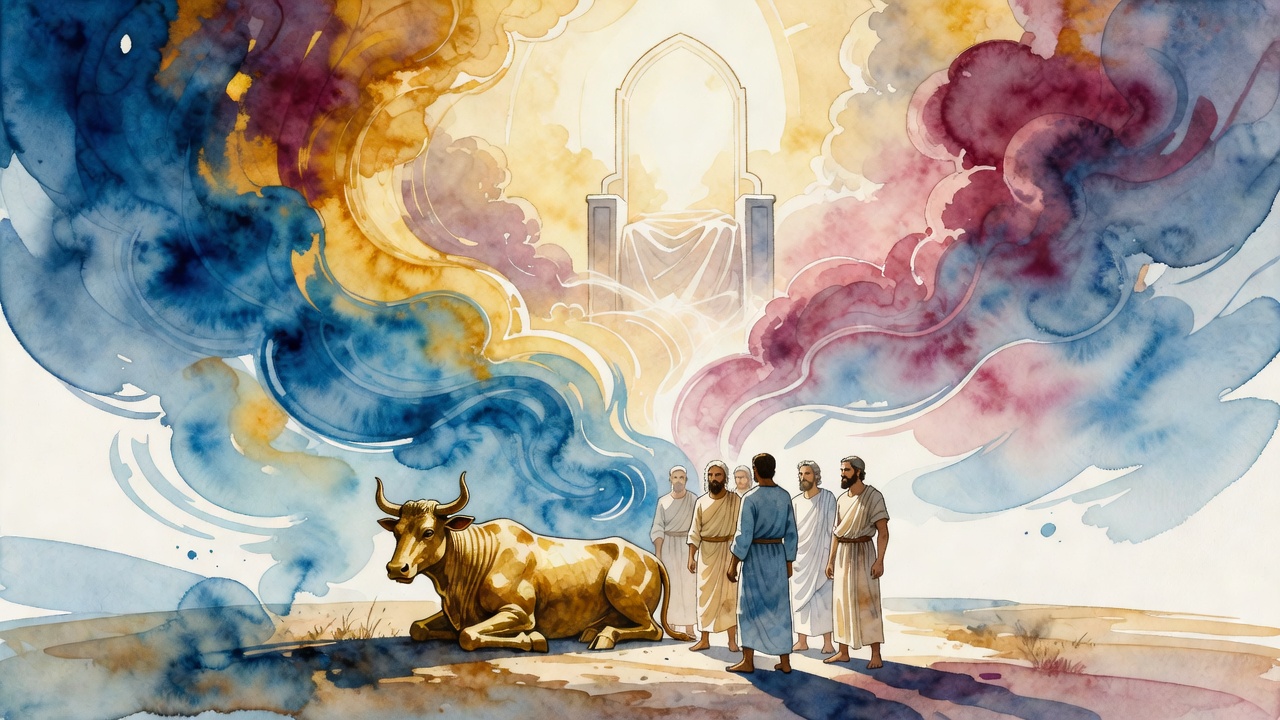
Nethanel son of Zuar, chief of Yissachar, brought his offering in the place the journey order gave him. His day is told with a double weight, as if heaven wanted his name heard twice. The reason is not timber or silver or a louder voice at the rope.

Nethanel had merited in counsel. He had helped shape how these offerings would be brought, the shared wisdom behind the wagons and the days, the plan that kept twelve chiefs from turning gift into contest. Because of that counsel, heaven counted it to him as if he had presented first. Understanding, binah, became a kind of precedence no birth order could cancel.

Yissachar already carried a name for knowing the times, for sitting in judgment, for standing with those who decide when a people should move or wait. Here that mind became an offering of its own. The chief who advised well stood near the front even when his body stood later in the line of animals and bowls.

Reuven had wanted firstness as blood. Nethanel received firstness as thought that served the whole camp. The difference lived in who got named twice when the days were written down.

Wheels Under the Holy Load

The wagons rolled again, this time under Levite hands. Boards, sockets, curtains, the heavy outer work found wheels and oxen and a road that no longer tore only human shoulders. The holiest core still rode on Kehat flesh. The chiefs who once took blows for Israels tallies now watched their wood carry the house of God across sand they had not chosen.

Moses, who had refused until spoken to, now lived with the gift inside the camp and felt the relief of a load shared. Reuven lived with a firstborn place that was not first at the altar. Nethanel lived with a double mention that outlasted the day of his animals.

The mishkan moved when the cloud moved. Six wagons creaked. Somewhere in the line, men who had been beaten in Egypt kept pace with oxen they had given away, and the Presence went before them all, light on wood that only entered service after a prophet said no, then yes.


← All myths
From the tradition

Sources

2 sources

The texts behind this telling. Some cards carry a translation of the source; others are our own retelling of it, and each card says which. Every card links out to the original.

Sifrei Bamidbar 45:1Sifrei Bamidbar

Retold in our words. Read the original at the link below.Sifrei by Rabbi Shraga Silverstein · CC-BY

It describes the offerings brought by the leaders of Israel: "And the chiefs of Israel presented (their offerings)."

Who were these chiefs? Were they just some random people appointed to the job? The text goes out of its way to clarify. It says, "the heads of their fathers' house." Okay, that's a little better, but it goes further: "the chiefs of the tribes." It's like the Torah is emphasizing their pedigree. The Sifrei Bamidbar asks, "What is the thrust of 'the heads of their fathers' house'?" And answers: "Chiefs the sons of chiefs." These weren't just leaders; they came from a lineage of leadership, a heritage of responsibility.

It adds a fascinating detail: "They who were appointed over them in Egypt." Remember those Israelite officers who were beaten by the Egyptians for the sake of their people, as we read in Shemot (Exodus 5:14)? The very same! These were leaders who had already proven their dedication, their willingness to suffer for their community.

The verse continues, "And they presented their offerings before the L-rd, six wagons tzav." Now, tzav is a word that can mean "opulent," suggesting these wagons were luxurious, top-of-the-line. These weren't rickety carts; these were offerings fitting for royalty. But tzav has another possible meaning. Rebbi says that tzav means "covered," like litters for transporting dignitaries. He finds support for this in (Isaiah 66:20), where the prophet speaks of bringing exiled Israelites back to Jerusalem "on horses, and in chariots, and in litters (tzavim) and on mules and on dromedaries." It paints a picture of honor and respect.

So, six wagons, but how were they distributed? Was it one wagon per chief? Nope. "A wagon for every two chiefs," the verse says. And "an ox for each." This detail emphasizes both individual contribution and shared responsibility. It's not just about individual glory; it's about working together.

But here's where the story gets really interesting. These chiefs came and stood before the mishkan (the Tabernacle), but Moses wouldn't accept their offerings! They're offering these incredibly generous gifts, and Moses hesitates. Why? Because it wasn't until the Ruach (spirit) Hakodesh (Holy Spirit) instructed him, "Take it from them. Their minds are at one with that of the Most High," that he finally accepted. This wasn't just about the physical offering; it was about the intention, the alignment of their hearts with God's will.

R. Nathan offers a compelling explanation for why these chiefs were so eager to give this particular offering first. Think back to the construction of the mishkan itself. At that time, the chiefs held back, thinking, "Let Israel offer what they will, and we will make up what is missing." They wanted to be the ones to fill in the gaps. But, as (Exodus 36:7) tells us, "And what they had was enough for all of the work and more!" The people were so generous that there was nothing left for the chiefs to contribute in that way. So, R. Nathan suggests, they asked themselves, "What is left for us to do?" The answer? They brought the onyx stones (Exodus 35:27) and, in this instance, these wagons. They wanted to be a part of something bigger than themselves. They wanted to contribute, to lead, to serve.

So, what does this all mean for us? It's about intention, about aligning ourselves with something greater, and about finding ways to contribute, even when it seems like everything is already taken care of. It's about recognizing that sometimes, the most meaningful offerings are the ones that come from a place of genuine desire to serve, to be a part of something holy. And sometimes, we need a little nudge from the Divine to recognize the true value of those offerings.

Full source
Sifrei Bamidbar 52:1Sifrei Bamidbar

Retold in our words. Read the original at the link below.Sifrei by Rabbi Shraga Silverstein · CC-BY

Sifrei Bamidbar turns to Yissachar's Offering.

The Sifrei Bamidbar tells us there was a bit of…well, let’s call it tribal enthusiasm! Reuven, the eldest, wasn't too pleased that Judah had gone first. He pipes up, "Hey, it's enough that Judah got to go before me! Let me present now, according to birth order!" Basically, "I'm the oldest! It’s my turn!"

Moses, our ever-patient leader, had to gently set him straight. The Holy One, Kadosh Baruch Hu, had instructed him to arrange the offerings according to the order of their journeying. And the text emphasizes this point with the command "hakrev" – "Present!" It was an imperative, a directive. Not about age, but about divine instruction.

So, where does Nethanel come in? Why is his offering mentioned twice? Because, the text explains, Nethanel merited in counsel. He was instrumental in advising about the presentation of these offerings. Because of his wise counsel, Scripture accounts it to him as if he had presented first. It's a reward for his insight and guidance.

And it gets even better! Nethanel, representing the tribe of Yissachar, also merited a bequest of binah (Understanding) – understanding. This is profound! We see this echoed in I Chronicles (12:33), "And of the sons of Yissachar, knowers of understanding for the times." They weren't just smart; they understood the deeper meaning of things. They had wisdom to discern the right course of action.

This quality of Yissachar is further highlighted in Judges (5:15) "And the leaders of Yissachar (the Sanhedrin (the supreme rabbinic court)) were with Devorah, and as Yissachar, so, Barak, in the valley." The Sanhedrin, the high court, were with Devorah, displaying leadership and understanding.

Even in Egypt, Scripture praises Yissachar for their role in the batei-din, the houses of judgment. The text mentions "Yashuv, the family of the Yashuvi," and connects "yishuv" to beth-din, citing Ezekiel (33:31) where people come to sit in judgment. Yissachar was associated with justice and wise counsel from the very beginning.

We even see this theme in Deuteronomy (33:18), "Rejoice Zevulun on your going forth (to trade), and Yissachar in your tents (of Torah)." Zevulun prospers through trade, while Yissachar finds joy and prosperity in the tents of Torah, in learning and understanding. This echoes the idea found in Genesis (25:27) where Jacob is described as a "whole" man, sitting in the tents of learning.

So, what’s the takeaway here? It’s not just about who goes first or birth order. It's about recognizing and valuing wisdom, understanding, and good counsel. Nethanel and the tribe of Yissachar are remembered not for demanding their place in line, but for their insightful contributions. True honor, it seems, comes from the wisdom we offer, not the position we hold. It's a reminder that sometimes, the greatest contributions are the ones that happen behind the scenes, guiding and shaping the actions of others. What kind of contribution are we making?

Full source