Moses Returned to Jethro to Loose His Oath
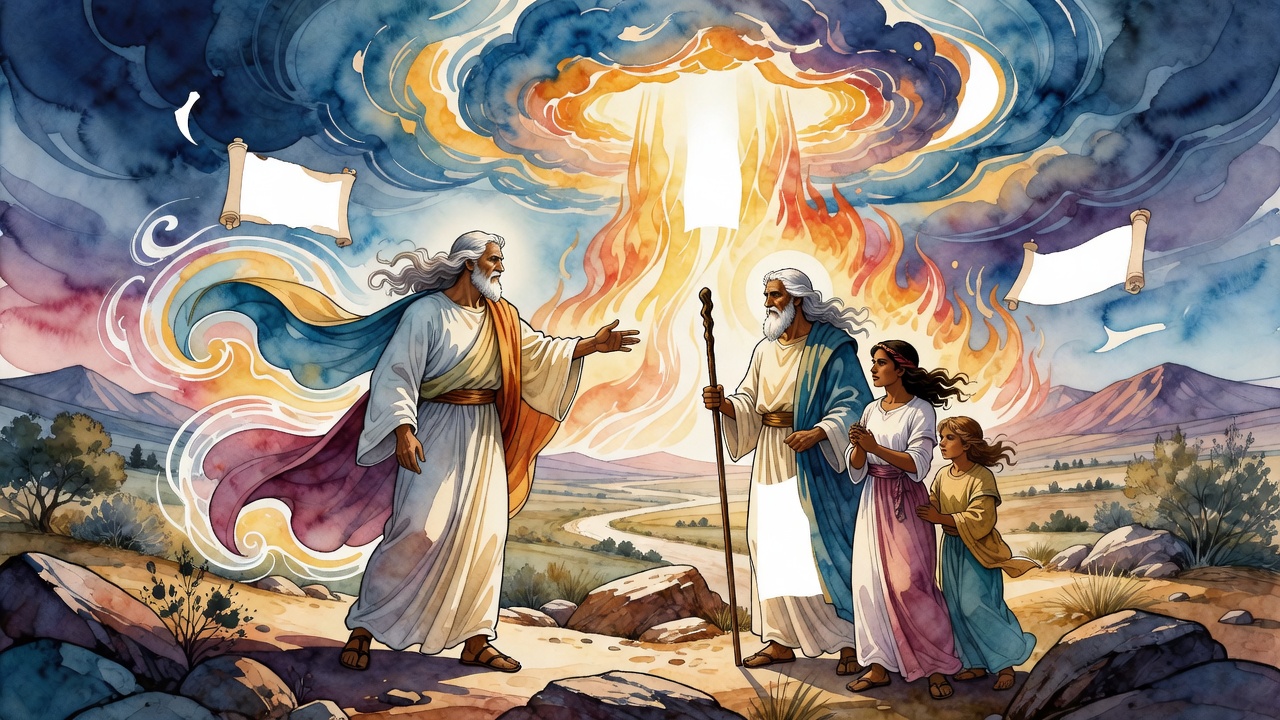
The bush sent Moses toward Egypt, but first he went back to Midian. He had sworn not to leave without leave, and Heaven itself helped untie the vow.
Table of Contents
 Click for full size
Arrows in the Mouth
At the bush the Holy One spoke words like arrows into Moses' mouth. Instruction that flies to the lips strikes like a loosed bolt. The verb of teaching and the language of shooting sit near each other in the midrash's ear. "I will be with you," and the road toward Egypt opened at once in his mind. Scripture still makes him turn.
"And Moses went and returned." Returned where? Not yet to the brick pits. Back to Jethro. He had sworn an oath to his father-in-law not to depart without leave. A redeemer bound by his own word will not begin freedom with a broken vow. The bush burned. The staff waited. First the table of the man who took him in when he was only a fugitive with dust on his feet.
Moses told Heaven the plain fact: I have sworn to Jethro. Holiness did not mock the smaller promise. Holiness made room for it. The mission could wait the length of an honest conversation. The midrash will not let the great story skip the small fidelity that makes a messenger trustworthy.
He walked the Midian path with the Name still ringing in his ears and an old oath still tight around his departure. Both were real. Both had to be handled.
The Cloud Over the Knot
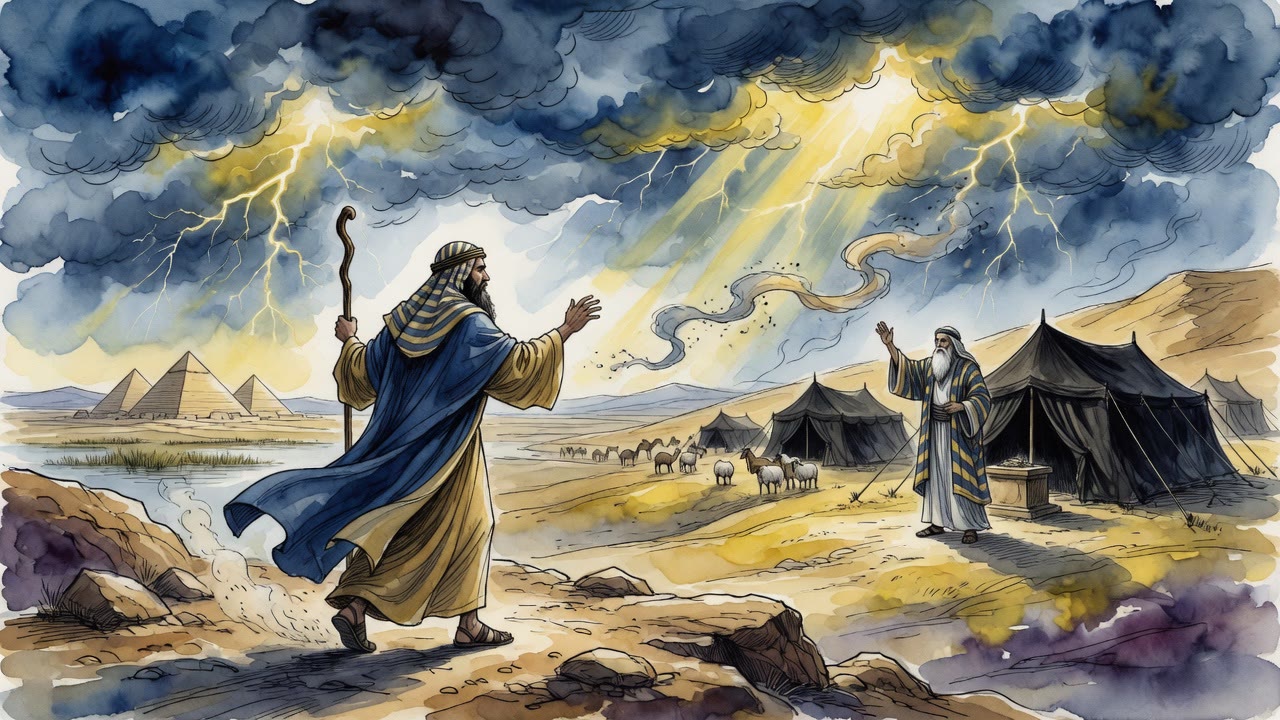
So he went to seek release. The midrash places a cloud over that place, as if the Maker of heaven Himself loosened the knot. The vow was not ignored. It was untied with honor, then the road to Egypt ran free. A man who will face Pharaoh must first face the promise he made in quieter days, when no bush burned and no staff turned to serpent.
Jethro heard him. Leave was given. The knot came open. Moses turned his face toward the Nile again, no longer a fugitive who steals his own departure, but a messenger whose word still means something when no angel is watching. Zipporah and the children felt the house change shape around a husband who had come back only to leave rightly.
Small fidelity is training for large confrontation. The midrash will not skip the Midian tent on the way to the Egyptian throne room. Heaven's arrows stay in the mouth only if the mouth still knows how to keep a human promise.
Three Kisses That Count
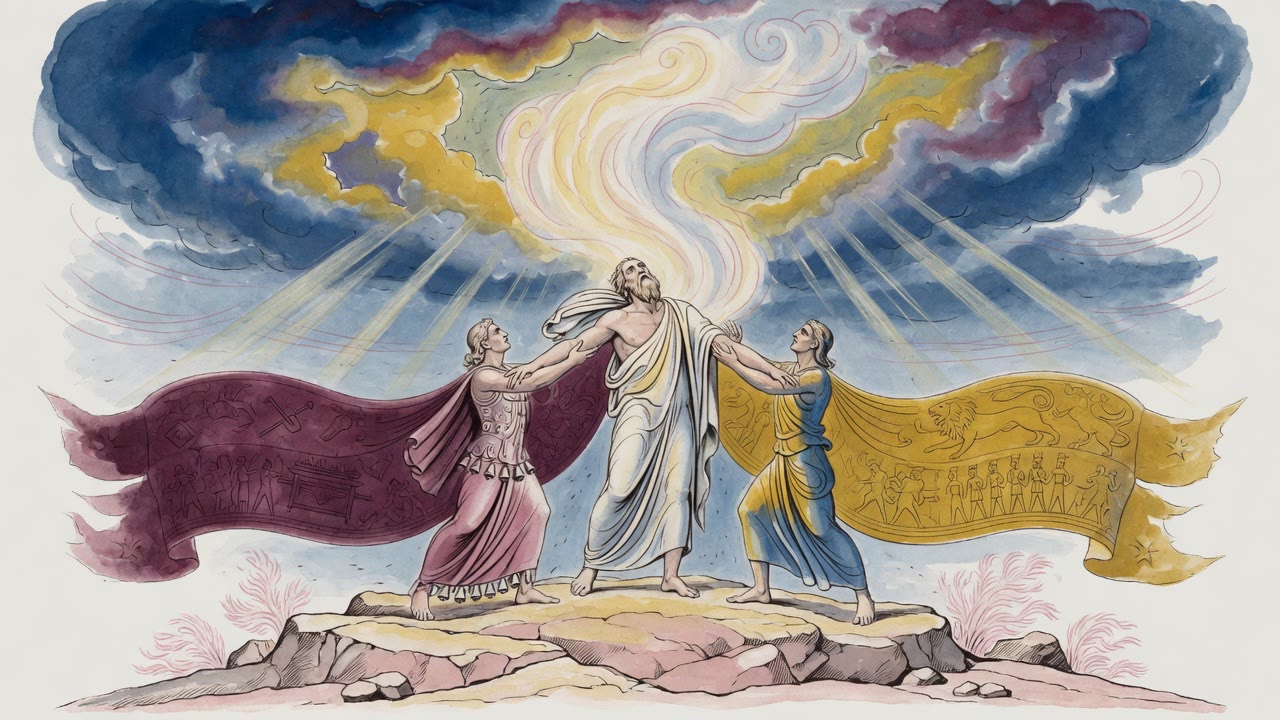
On the mountain of God, Aaron met him and kissed him. The sages sort kisses the way merchants sort coin. Most are empty, fit for folly and nothing more. Three alone are worthy in Israel.
There is the kiss of parting, when one soul must let another go. So Orpah kissed Naomi at the crossroads of farewell. There is the kiss of high office, the kiss that crowns. So Samuel poured oil on Saul and sealed a king with his lips. And there is the kiss of reunion, the kiss of those who meet again after long separation. This last was Aaron's. Egypt had held the brothers apart. Now the mountain held them together. Not folly. Restoration.
Moses, still smelling of desert and cloud, received that kiss as the first human seal on a mission Heaven had already sealed with fire. Two mouths that once shared a mother's house met again under a sky that had started talking.
Sparks Between Hebrews
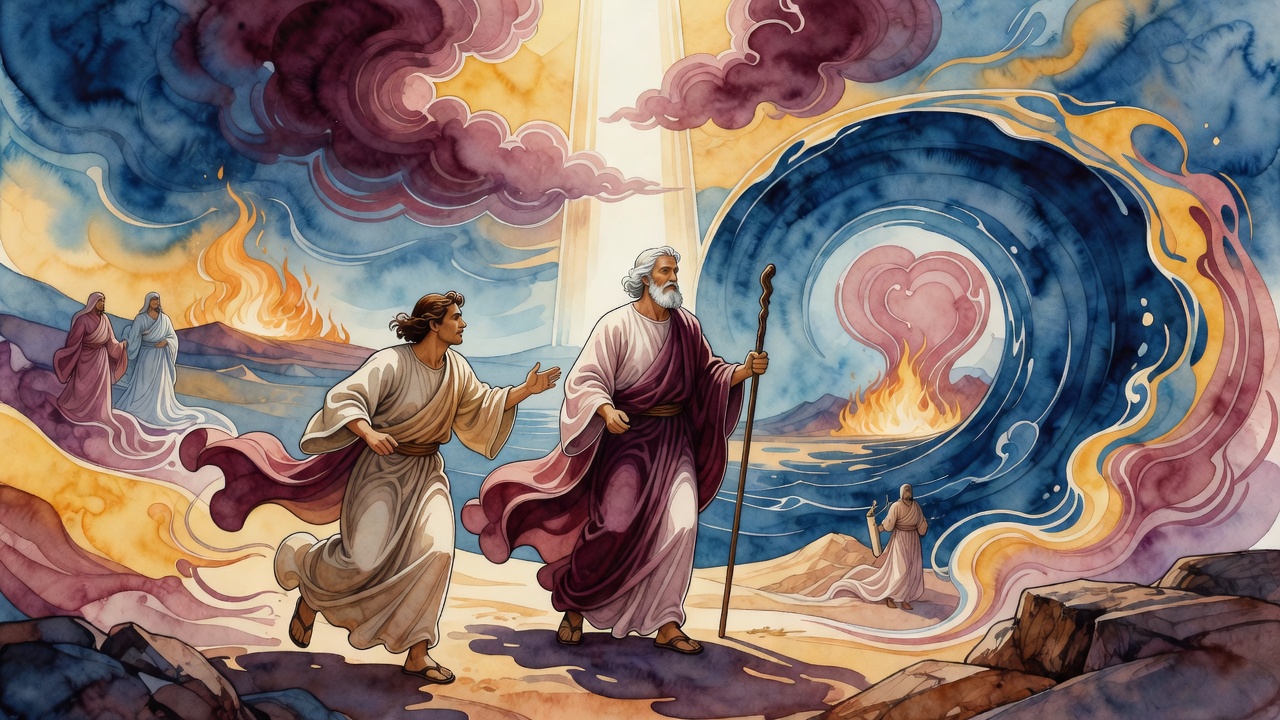
When Moses went out among his people he found two Hebrews locked so fiercely that their heels ground and struck off sparks. "Why do you strike your fellow?" he cried. Rabbi Abbahu heard the heat in that quarrel. Rabbi Isaac heard a lasting law in the word "fellow." The same man who untied a vow and received a holy kiss stepped into a fight that already tasted like empire's poison inside the camp of slaves.
Israel alone had been ground under Egypt's weight among the nations, and still brother could raise a hand against brother. Moses carried Heaven's arrows and human mess in the same hour. The road from Jethro's tent to Pharaoh's court ran through both. He would stand before kings. First he stood between two men who could not stop grinding their anger into light.
Redemption begins with a people who must learn, again, not to become their own overseers. The sparks on the ground are a warning as sharp as any plague. Moses saw them and spoke. The midrash keeps that speaking next to the vow and the kiss, because a redeemer who cannot face his own house will not free anyone else's.
Midian's dust took Moses' sandals again before Egypt could. Jethro's doorway held more weight than Pharaoh's gate in that hour, because a vow still sat across the threshold like a bar no prophet was free to kick aside.
When the cloud covered the place of release, Moses felt the knot go slack without shame. Leave was leave. The bush had not canceled the table. It had waited for the table to finish its work.
Later, sparks from Hebrew heels on Egyptian clay would prove the mission was never only against kings. The same mouth that carried Heaven's arrows had to stop a fight inside the people he was sent to free.
← All myths