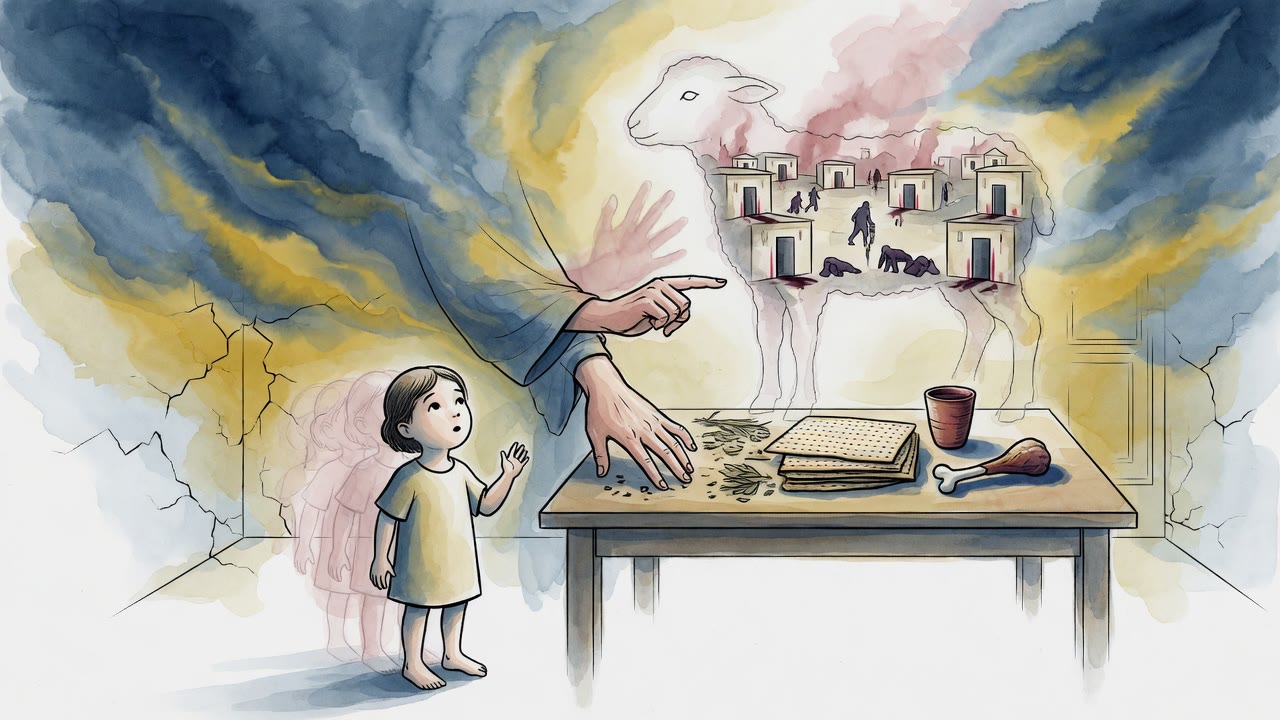
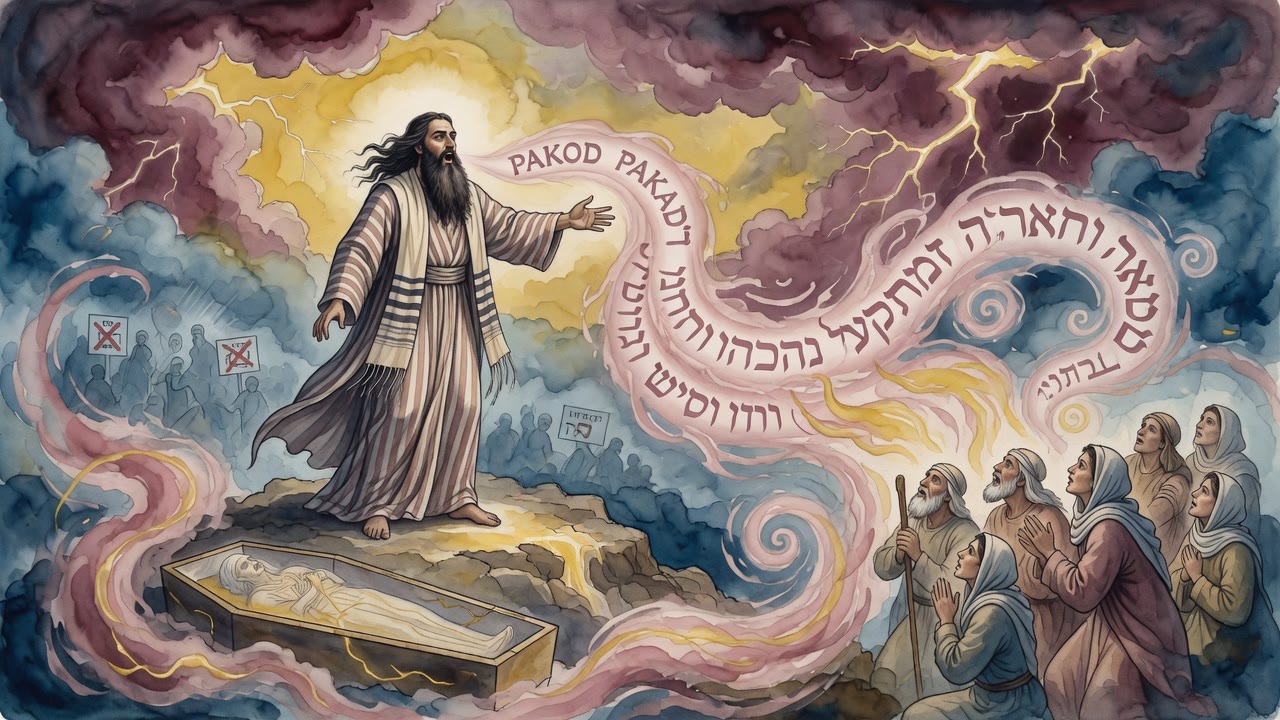
Moses Said Nissan and They Saw Only Mountains
Moses names Nissan for redemption. Israel points at Egypt's idol peaks. God leaps the mountains of their sin the way dew lifts a lily from Esau's shadow.
Table of Contents
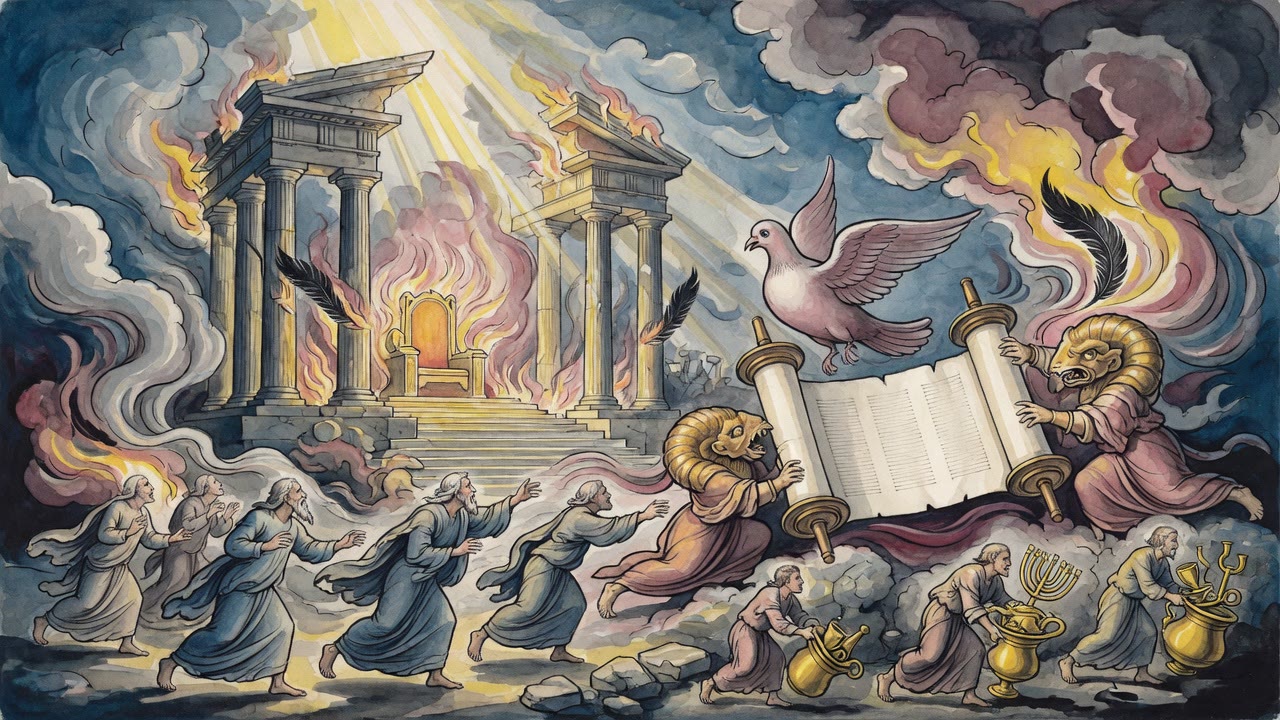
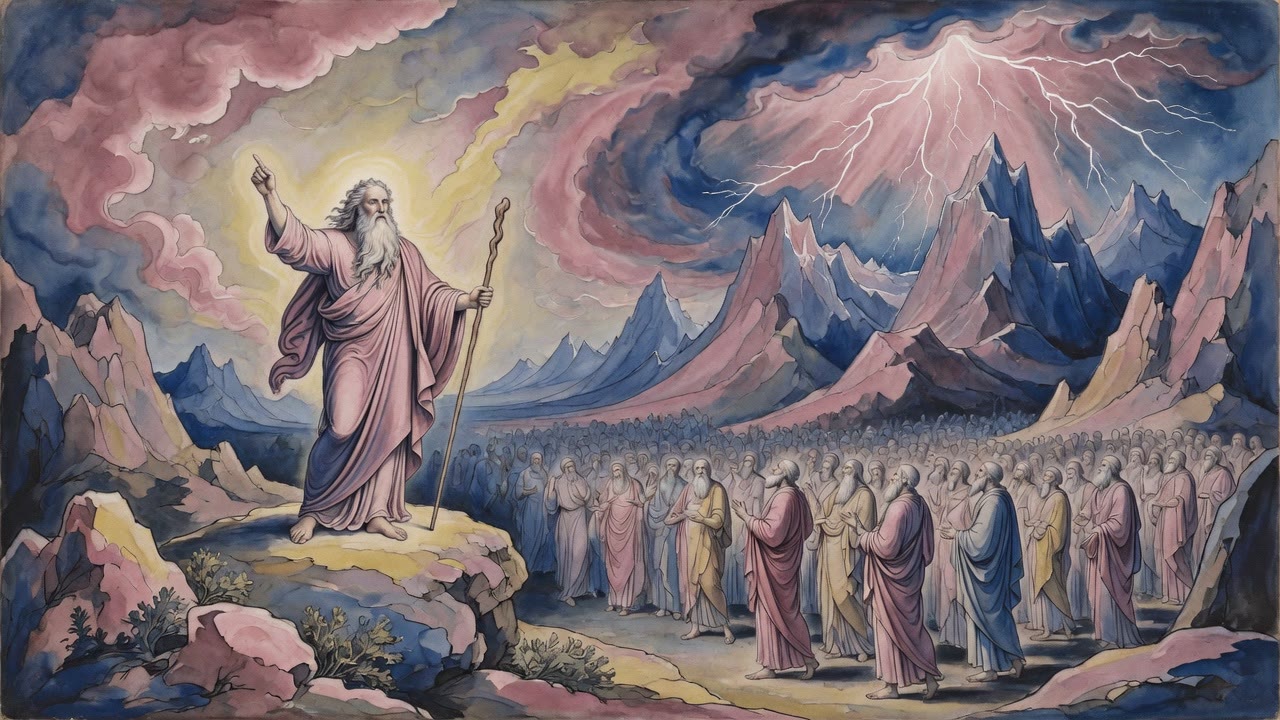
Moses stood in the heat of Goshen and named a month. "This month is for you the beginning of months" (Exodus 12:2). Nissan. The word left his mouth clean. The people around him did not answer clean. They looked past his staff toward the high places of Egypt, where incense still climbed and calves still took offerings, and they saw only mountains between themselves and any possible rescue.
 Click for full size
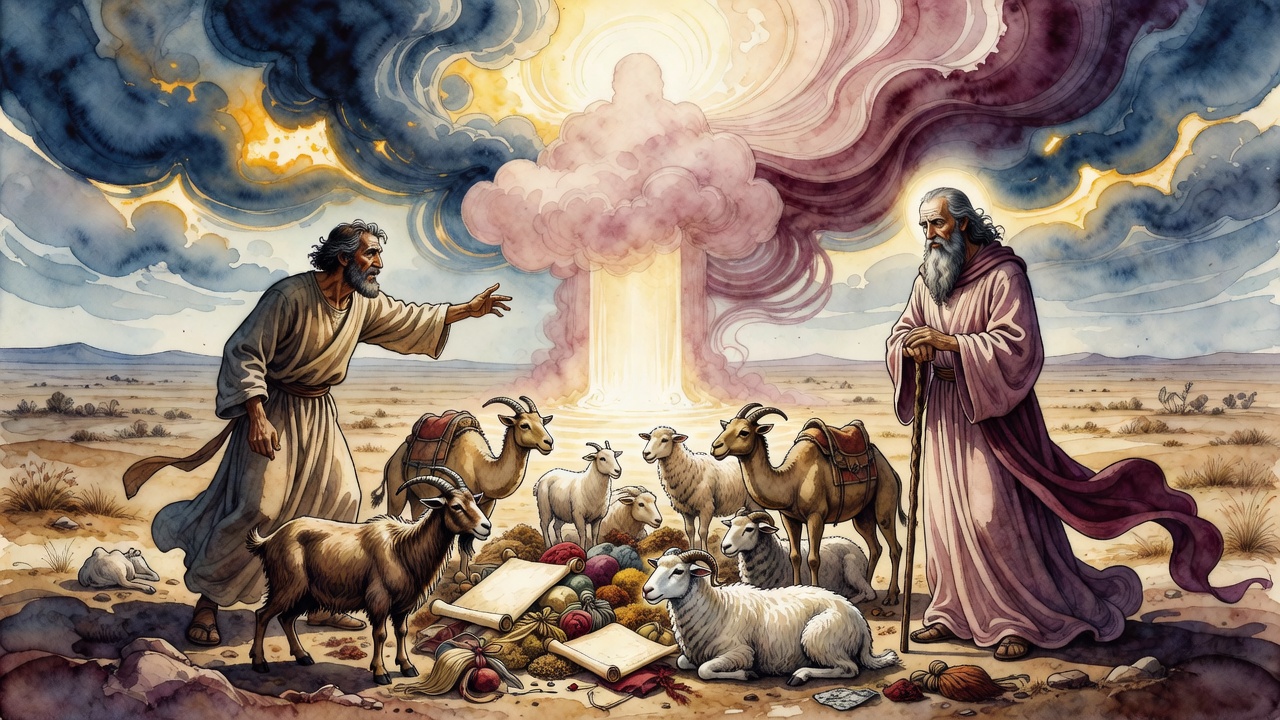
"How can we be redeemed?" a man near the front said. His hands were raw from brick. His eyes were raw from watching neighbors bow. "All of Egypt is contaminated with their idol worship. Those peaks are our record."
Moses did not lower the month. He held it up the way a man holds a lamp in wind.
Mountains of Incense and Sin
Song of Songs speaks of a beloved who comes leaping upon the mountains, skipping upon the hills (Song of Songs 2:8). In one reading the mountains are courts and hard vows, places where a daughter once sought a way down through legal loopholes. In another reading the mountains are Israel's own failings piled high enough to block the sky.
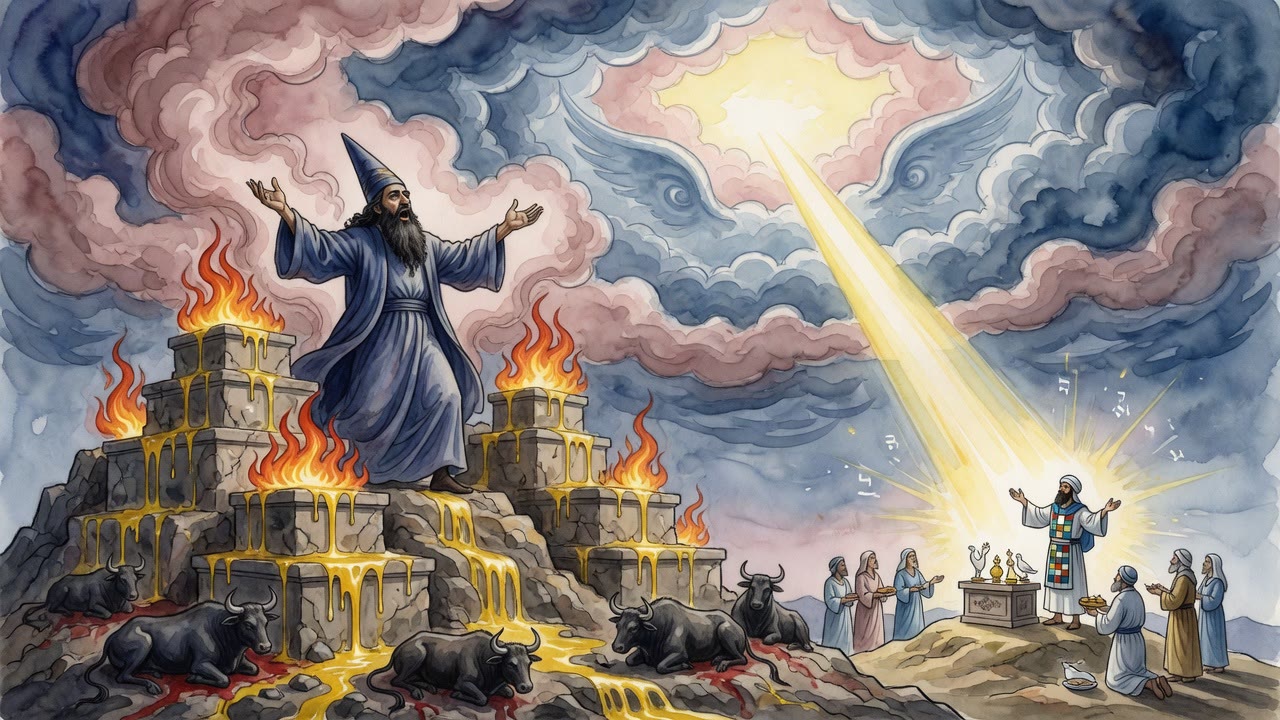
Hosea names the high places where slaughter and incense live (Hosea 4:13). That is what the people meant when they answered Moses. They did not mean geography. They meant the months of kneeling they had watched and the months some of them had shared. Idolatry has height. It throws a shadow. From the brick pits the shadow looked permanent.
Moses answered with a motion no staff could mime. God leaps over those mountains. He does not camp on their summits counting every wrong. Because He wants the redemption, He refuses to let the peaks of their past set the timetable. The month stands. The leap already belongs to heaven.
A Lily Under Esau's Shadow
Far from the brick pits, another image holds the same people. Rabbi Avun pictures Israel as a lily. When a scorching wind blows, the lily withers. When dew arrives, it opens again. As long as the shadow of Esau stretches across the field, Israel looks diminished, folded in on itself, small among the grasses. When the shadow moves, the lily fills with color.
What keeps the lily alive while it looks dead? Fragrance. Mitzvot and good deeds hold the scent even when the bloom collapses. The lily is not valued only at full open. It is valued for what it still carries under heat. Hosea promises dew to Israel and a blossom like a lily (Hosea 14:6). Dew does not argue with the scorch. It simply falls, and the plant answers.
In Goshen the people felt scorched. Esau's later empires had not yet taken their names, but the pressure of a foreign boot was already in the overseer's stick. They stood like a flower shut against wind, still smelling faintly of covenant, still unsure the dew would come on schedule.
The Leap and the Month
Moses walked the camps and repeated the month until children could say it. Elders shook their heads and pointed at the hills of smoke. Younger men asked whether leaping meant they could stop the work of leaving. Moses gave them neither soft comfort nor a new calendar. He gave them Nissan and the claim that God clears mountains of sin the way a runner clears a ridge without opening every stone.
Some nights the people dreamed of peaks that walked after them. Some mornings they woke ready. The leap was not their muscle. Their work was to pack, to mark doors, to trust a month that still looked ordinary on the wall of any Egyptian house. Ordinary is how rescue often first appears: a date, a meal, a staff raised, a sea not yet open.
When the night of leaving finally came, the mountains of incense did not shrink. God leaped them. Israel walked out under a sky that still held Egypt's stars, and the lily that had looked dead in the brick shadow began to straighten whether the people felt the dew or not.
When Another Mouth Names a Month
Ages later the same objection returns with a different speaker. The Messiah tells Israel, "This month you will be redeemed," and the people answer with a ledger. Did God not swear subjugation under seventy nations? Have we finished the count? Have we suffered enough hills?
The answer comes in two cuts. Even if only some were exiled to far provinces, it is as though all went. And the empire that seems to swallow the map can count as the full weight of the nations when heaven so judges. The leap over mountains does not wait for a perfect scorecard. It waits for the will that already moved at the first Nissan.
Moses on the brick plain and the Messiah at the edge of history share one stance: name the month, face the objection, refuse to let the peaks of failure cancel the path. The lily under Esau's shadow still holds its fragrance. The mountains still look impassable from below. God still runs the ridge as if the sin-stacks were already behind Him.
In the last light before the first Passover, a woman in Goshen pressed dough that would not have time to rise. She looked at the dark line of Egyptian hills and whispered the month Moses had given them. The hills did not answer. The dew that would open the lily was already on the way, whether her eyes could measure it or not.
← All myths