Parshat Vaera6 min read

Thirty-Eight Years God Would Not Speak to Moses

The foremen came out of Pharaoh's house with their backs opened and cursed Moses in the road. Moses turned around and said the same thing to God.

Curated by Arthur · Told by Maggid ·
Table of Contents
  1. May the Lord Look on You and Judge
  2. The Wise Man Turned Into a Fool
  3. Justice Came for Him
  4. All of Egypt Is Filthy With Our Idols
  5. The Rain Is Over and Gone
  6. The Blossoms Have Appeared
Thirty-Eight Years God Would Not Speak to Moses Click for full size

May the Lord Look on You and Judge

The foremen came out of Pharaoh's house with their backs opened and found Moses and Aaron standing in the road, waiting to hear how it had gone.

Datan and Aviram reached them first. "May the Lord look on you and judge. You have made us stink in front of Pharaoh and in front of his servants. You have put a sword in their hand to kill us."

The straw was gone. The count of bricks had not moved.

Moses turned and said the same thing upward. "Lord, why have You done evil to this people? Why did You ever send me? From the hour I went in to Pharaoh to speak in Your name he has done worse to them, and You have not delivered Your people at all."

The Wise Man Turned Into a Fool

Rabbi Yehuda bar Simon said the line about oppression turning a wise man into a fool was written for that hour, and he did not mean Pharaoh's oppression. He meant theirs. Datan and Aviram worked on Moses until his own judgment came apart in his hands.

It happens to smaller men all the time. Rabbi Yehoshua ben Levi said that Rabbi Yehuda ben Pedaya once taught him sixty rulings on one narrow question, a grave that had been plowed over and scattered through a field, and he lost all sixty because he spent his days on the needs of the community.

Moses had a nation for a community, and two men inside it who knew exactly which sentence to use on him.

Justice Came for Him

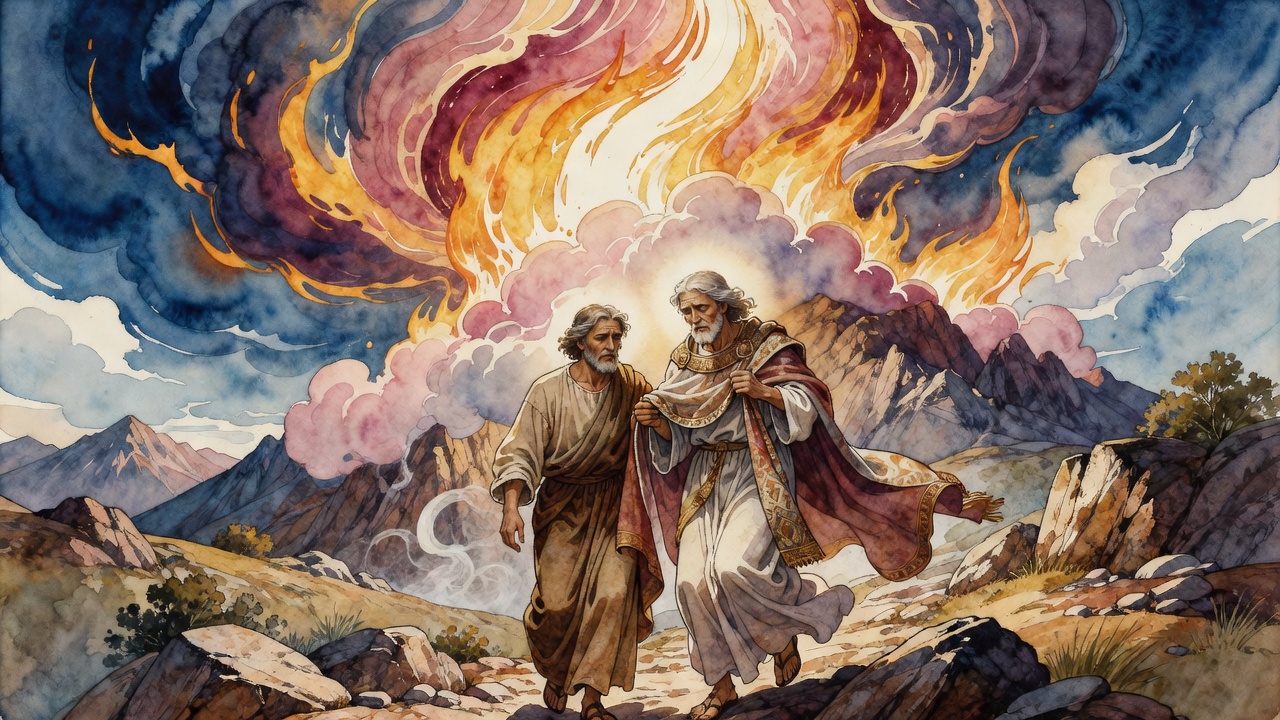
"I wrote it down about you that you were humble," God said. "And here you stand, angry, arguing with what I told you. By your life, you will find out. The end of a thing is better than its beginning."

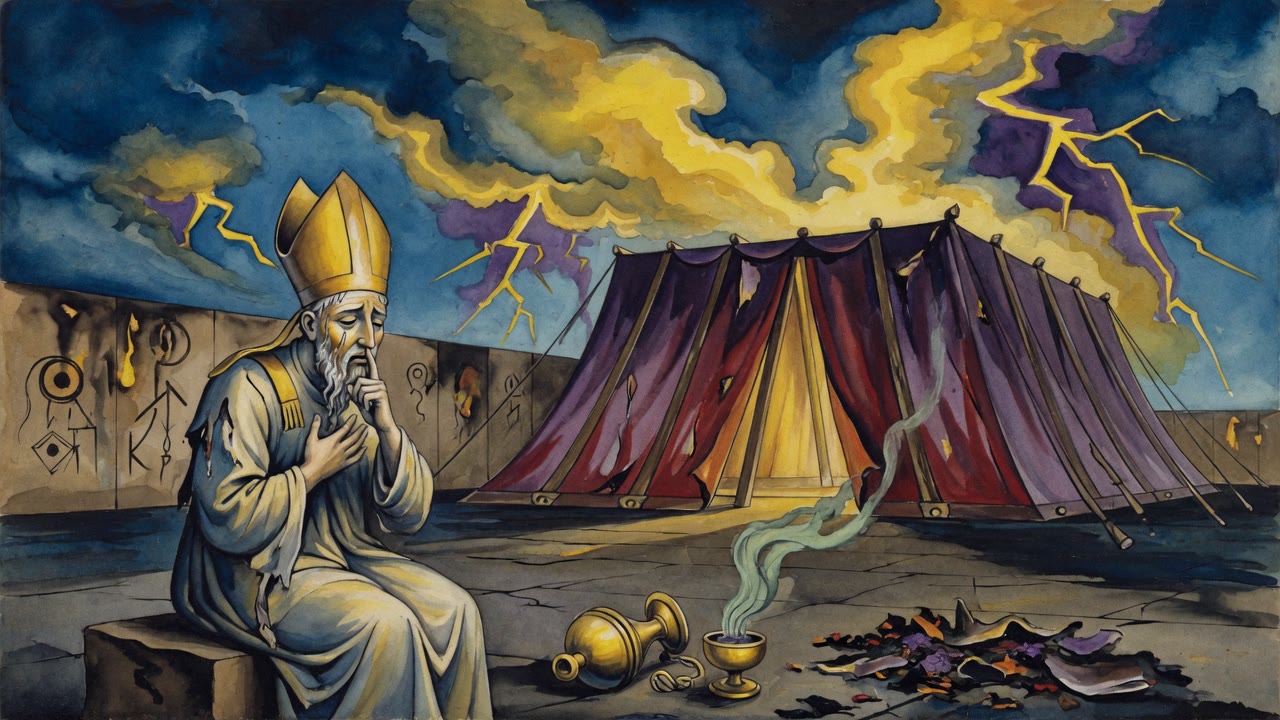
Then Justice moved on him. She had just heard a man accuse heaven of doing evil, and she came to collect, and her fingerprints stayed on the sentence, because the verse does not say the Lord spoke to Moses. It says God spoke to Moses, and God is the name He wears when He judges.

He turned her back with a question. "Am I flesh and blood, that I hold to My own measure and show no mercy?"

Then the other name. I am the Lord. Rabbi Yosei bar Rabbi Hanina said the two names sort themselves by who is standing in the room. God, toward the Egyptians. The Lord, toward Israel.

All of Egypt Is Filthy With Our Idols

Later Moses came into the camp with a month in his mouth. This month is the beginning of the months for you. In this month you are going out.

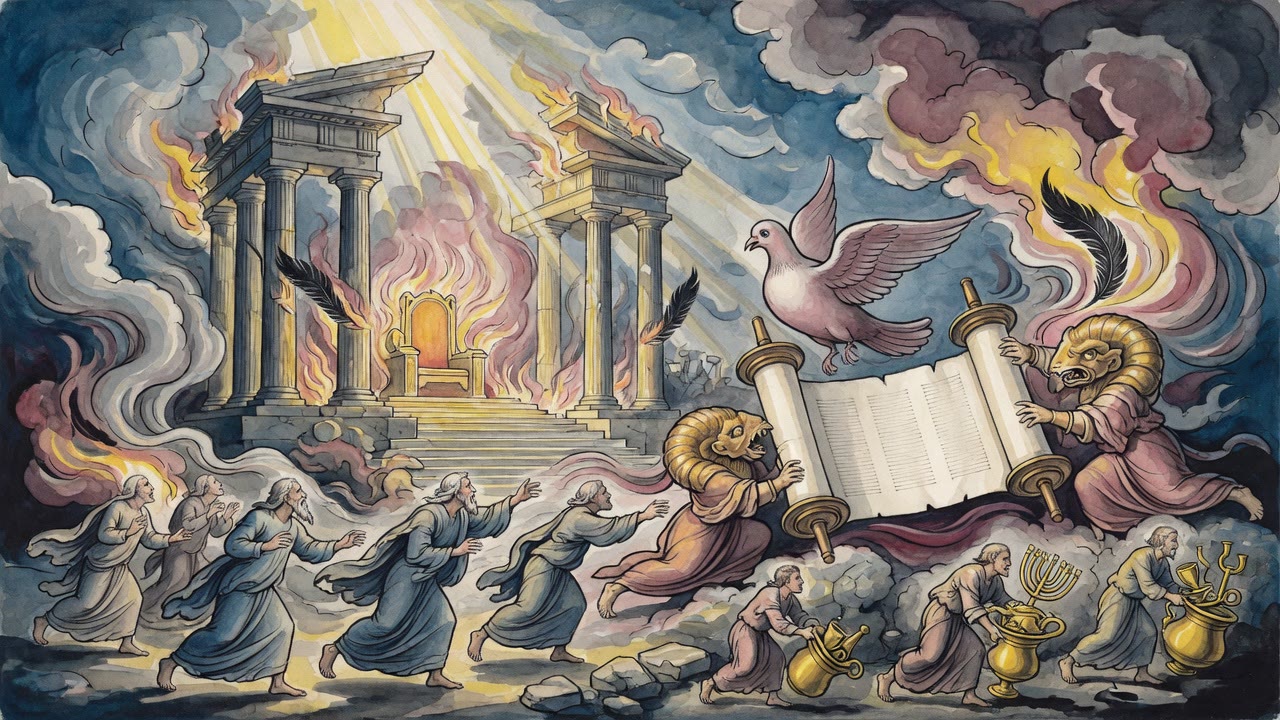
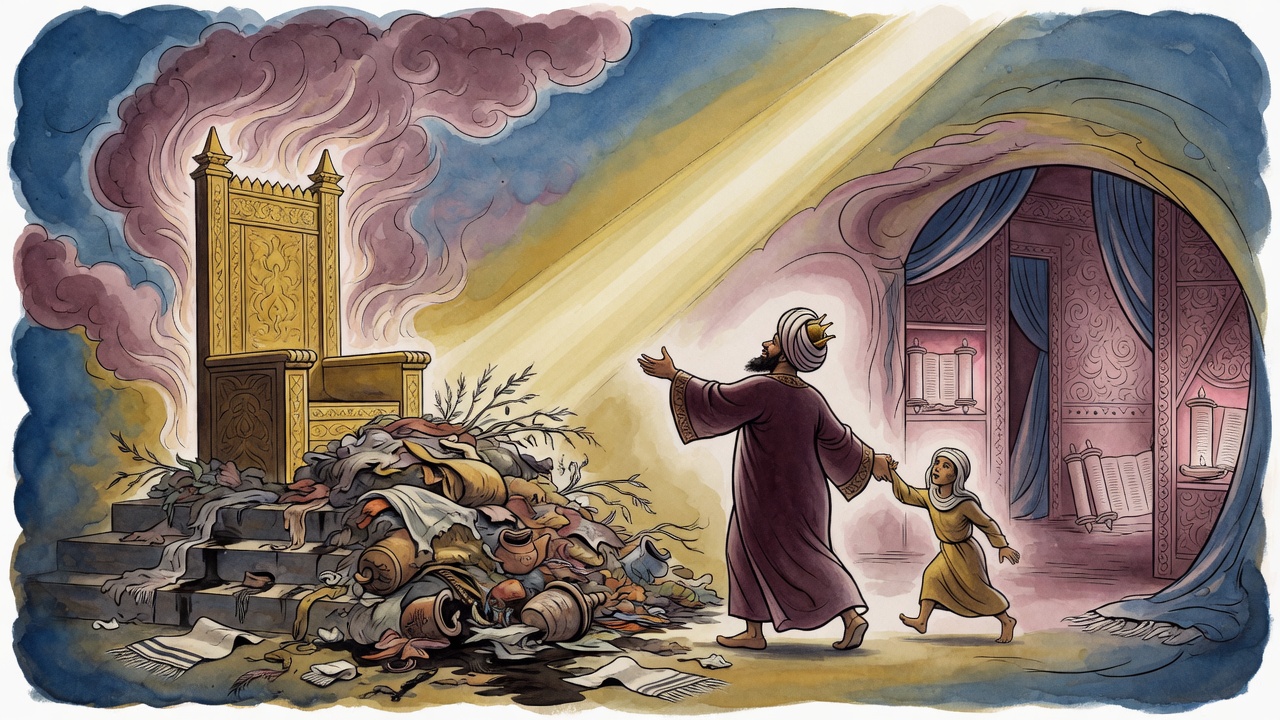
Nobody cheered. "Our master. How are we going to be redeemed? The whole of Egypt is contaminated with our idol worship, and so are we."

"Because He wants you," Moses said. "He is not looking at your idols. He leaps over the mountains."

Mountains meaning the high places, the tops where they slaughter and the hills where they burn incense. He does not go around them and He does not stop at them. He goes over.

The Rain Is Over and Gone

Then the wilderness, and the winter inside it.

Rabbi Azarya refused to read "my beloved answered and said to me" as one act. He answered me by means of Moses, and He said to me by means of Aaron. Two mouths for one voice, and what the voice said was rise up, my love, my fair one, for the winter is past.

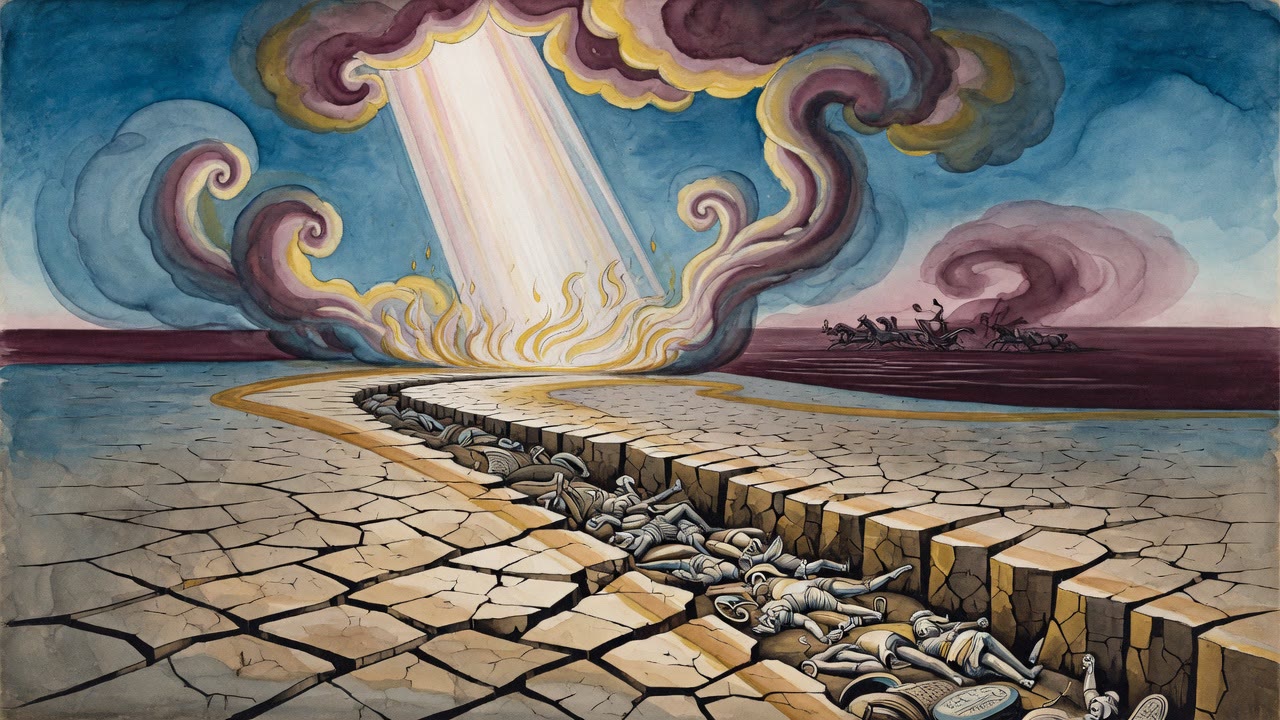
The winter is the forty years. The rain that is over and gone is the thirty-eight of them when Israel lay under a ban and the divine speech did not come to Moses at all, not once, until that whole generation was finished.

Deuteronomy keeps the count. The days from Kadesh Barnea until they crossed the brook Zered were thirty-eight years, and the hand of the Lord was against them until all the men of war were used up out of the middle of the camp. And then, with the last of them in the ground: the Lord spoke to me, saying.

He had led them the entire time. He set the camp and struck the camp and set it again, and the men who had walked out of Egypt went into the sand a year at a time, and the Voice that had argued with him out of a burning bush did not come.

The Blossoms Have Appeared

The thaw arrives as a list of small green things.

The blossoms have appeared in the land, and the sages hear administrators in the word, the princes, one out of every tribe, appointed to divide up what was coming. The time of the nightingale has arrived, and the word is a word for cutting. Time for the foreskin to be cut. Time for the Canaanites to be cut down. Time for the land itself to be cut into portions.

The voice of the turtledove is heard in our land, and Rabbi Yochanan heard a scout in it, a good one, and the scout is Joshua going through the middle of the camp telling them to get their food ready, because in three days they cross the Jordan.

The figs are the baskets of first fruits. The vines in blossom are the wine going onto the altar.

Moses heard the Voice come back, and he heard Joshua's carrying across the tents at the same hour. Thirty-eight years of silence, and the first thing the thaw handed him was the sound of the next man.


← All myths
From the tradition

Sources

3 sources

The texts behind this telling. Some cards carry a translation of the source; others are our own retelling of it, and each card says which. Every card links out to the original.

Shemot Rabbah 6:2Shemot Rabbah

Retold in our words. Read the original at the link below.The Sefaria Midrash Rabbah, 2022 · CC-BY

Even Moses, the great lawgiver, felt that way.

Shemot Rabbah, a collection of rabbinic interpretations on the Book of Exodus, offers us a fascinating glimpse into a moment where Moses, burdened by the plight of his people, almost loses his cool. It all centers around the verse, "God spoke to Moses" (Exodus 6:2). But the rabbis ask: why this specific phrasing at this specific time?

The passage begins by quoting (Ecclesiastes 7:7): "For oppression will turn a wise man into a fool, and a gift destroys understanding." Now, what does that mean? The Rabbis interpret that when a wise person gets bogged down in too many details, it clouds their judgment, hindering their wisdom. And, they say, the "gift" that destroys understanding refers to the Torah itself, given as a gift to humanity, but capable of being misunderstood.

Another interpretation suggests that "oppression" refers to being overly involved in the needs of the community. It's a beautiful thing to dedicate yourself to others, of course, but Rabbi Yehoshua ben Levi shares a poignant story. He says that Rabbi Yehuda ben Pedaya taught him sixty halakhot (Jewish laws) about a plowed-over grave, but he forgot them all because he was so busy with communal affairs. It’s a reminder that even the most noble pursuits can distract us from our core learning and understanding.

Then, Rabbi Yehuda bar Simon applies this verse directly to Moses. He says that the oppression Moses faced from Datan and Aviram, those notorious troublemakers, confused him. Remember when they challenged Moses’ authority? (Exodus 5:21). It really got to him.

And that "gift that destroys understanding?" The Rabbis suggest it wasn't that Moses would deliberately lose his wisdom. Rather, Datan and Aviram provoked him. They made him angry. They said, "May the Lord look upon you and judge!" And Moses, frustrated and feeling like his mission was failing, lashed out, saying, "Since I came to Pharaoh to speak in Your name, he has harmed this people, and You did not deliver Your people!" (Exodus 5:23). Ouch.

The text points out that Moses was being impertinent to God, all because of the instigation of Datan and Aviram. The Holy One, blessed be He, essentially says, "Hey! I had it written about you that you were the most humble person on earth (Numbers 12:3), and now you're getting angry and questioning My words?"

God then tells Moses, "By your life, you should know, as it is stated: 'The end of a matter is better than its beginning'" (Ecclesiastes 7:8). Meaning, the ultimate fate of Israel will be better than the difficult beginning they're experiencing in Egypt. "The Lord said to Moses: Now you will see" (Exodus 6:1).

At that moment, the text says, the attribute of justice sought to harm Moses. That's why it says, "Elohim [God, representing the attribute of justice] spoke to Moses." But the Holy One, blessed be He, asks, "Am I flesh and blood that I don't show mercy?" That’s why it's also written: "I am the Lord [Y-H-V-H, representing the attribute of mercy]."

Rabbi Yosei bar Rabbi Ḥanina explains this further: "Elohim vis-à-vis the Egyptians, Y-H-V-H vis-à-vis Israel." In other words, God's justice is directed toward those who oppress, while His mercy is directed toward His people.

So, what does all this mean for us? It's a powerful reminder that even the greatest leaders, the wisest among us, are susceptible to feeling overwhelmed, frustrated, and even losing their temper. It's evidence of the human condition. But it's also a message of hope. Even when we stumble, even when we question, there's always the potential for redemption, for a better "end" than the difficult "beginning." And like Moses, we can find solace in the knowledge that even in moments of doubt, God's mercy endures.

Full source
Shir HaShirim Rabbah 2:13Shir HaShirim Rabbah

Retold in our words. Read the original at the link below.The Sefaria Midrash Rabbah, 2022 · CC-BY

The verse Now, Rabbi Azarya raises a pretty good question: Isn't "speaking" the same as "saying?" What’s the difference?

His answer? God answered [ana] through Moses, and said [ve’amar] through Aaron. God communicating through different vessels, each with their own unique voice. But what did He say? "Rise up, my love, my fair one." A call to action, a promise of beauty.

Then, the text moves into a powerful allegorical interpretation of the verses that follow. "For, behold, the winter is past" (Song of Songs 2:11), A harsh, unforgiving time.

"The rain is over and gone" (Song of Songs 2:11)? That symbolizes the thirty-eight years when it was as if God's voice was silent to Moses. A period of estrangement, a divine cold shoulder. The commentary reminds us of (Deuteronomy 2:14-17), noting that God only spoke to Moses again after that entire generation, the generation that doubted and feared, had passed away.

But then, a shift. "The blossoms [hanitzanim] have appeared in the land" (Song of Songs 2:12). Here, hanitzanim is linked to the Hebrew word hanatzohot, meaning administrators or leaders. These are the princes of the tribes, those appointed to guide the people, just as we see in (Numbers 34:18): "And one prince from each [tribe]."

Next, "The time of the nightingale [hazamir] has arrived" (Song of Songs 2:12). This becomes a multi-layered metaphor. Hazamir is connected to the act of cutting off, or shetizamer. This signifies the time for circumcision, the time for vanquishing the Canaanites, and the time for dividing the Land of Israel amongst the tribes, as it is stated in (Numbers 26:53): "To these, the Land shall be divided." It's a time of new beginnings and fulfilling promises.

"The sound of the turtledove [hator] is heard in our land" (Song of Songs 2:12). Rabbi Yoḥanan offers that this symbolizes the voice of a good explorer [tayar], specifically Joshua, as he commands the people in (Joshua 1:11): "Pass through the midst of the camp." A voice of courage, of preparation, of imminent action.

And finally, "The fig tree has formed its unripe figs" (Song of Songs 2:13) represents the baskets of first fruits, the bikkurim, brought as offerings to the Temple. "The vines in blossom have emitted fragrance" (Song of Songs 2:13) are the libations, the wine offerings poured out as part of the Temple service.

So, what do we take away from this intricate weaving of text and interpretation? It's more than just a commentary on a love poem. It's a story of redemption, of overcoming adversity, of finding God's voice even in moments of silence. And perhaps, most importantly, it shows us the power of seeing the familiar in new ways.

Full source
Shir HaShirim Rabbah 8:2Shir HaShirim Rabbah

Retold in our words. Read the original at the link below.The Sefaria Midrash Rabbah, 2022 · CC-BY

Shir HaShirim Rabbah turns to Messiah, Moses at the Dawn of Creation.

What kind of mountains? Well, sometimes they represent legal hurdles. The text equates "mountains" with courts, referencing the story of Yiftach’s daughter in (Judges 11:37). Remember her? Yiftach made a rash vow, and his daughter sought a way out, a legal loophole – she sought to "descend upon the mountains," meaning she looked for a court to annul her father’s vow. So, the leaping over mountains can mean overcoming legal obstacles, finding a way through seemingly impossible rules.

The mountains can also represent something far more profound: our own failings. The Rabbis connect this verse to the coming of Moses. When Moses told the Israelites they would be redeemed in the month of Nissan – "This month is for you the beginning of the months" (Exodus 12:2) – they were skeptical. How could they be redeemed when all of Egypt was "contaminated with their idol worship"? Their sins felt like insurmountable mountains.

Moses, however, assures them that God "leaps over the mountains." In this interpretation, the mountains are the idol worship, echoing (Hosea 4:13): "On the mountaintops they slaughter and on the hills they burn incense." Because God desires their redemption, He doesn’t dwell on their past mistakes. He transcends them.

And it doesn't stop there. Shir HaShirim Rabbah also connects this verse to the coming of the Messiah. Rabbi Yudan and Rabbi Ḥunya, citing Rabbi Eliezer son of Rabbi Yosei HaGelili and Rabbi Eliezer ben Yaakov, see the verse as a prophecy. When the Messiah tells Israel, "This month you will be redeemed," they will raise a similar objection. "How can we be redeemed? Didn't God swear to subjugate us to seventy nations?" They worry they haven’t fulfilled the prophecy, haven't suffered enough.

The Messiah, however, offers two answers. First, he suggests that even if only some of them were exiled to distant lands like Barbary or Smatrya, it is "as though all of you were exiled there." Second, he points to the Roman Empire, which imposes levies on the entire world. If even a "Cuthean" (Samaritan) or "Barbarian" employed by Rome exerts authority over them, "it is as though you were subjugated to their entire nation, and thus it is as though you were subjugated to seventy nations." Thus, the condition has been met. Redemption is possible! Again, God leaps over the mountains.

What does this all mean for us today? God's desire for connection, for redemption, is powerful enough to overcome even the highest mountains. And maybe, just maybe, that gives us the strength to start climbing, too.

Full source