Moses Sealed the Books of Every Age on His Last Day
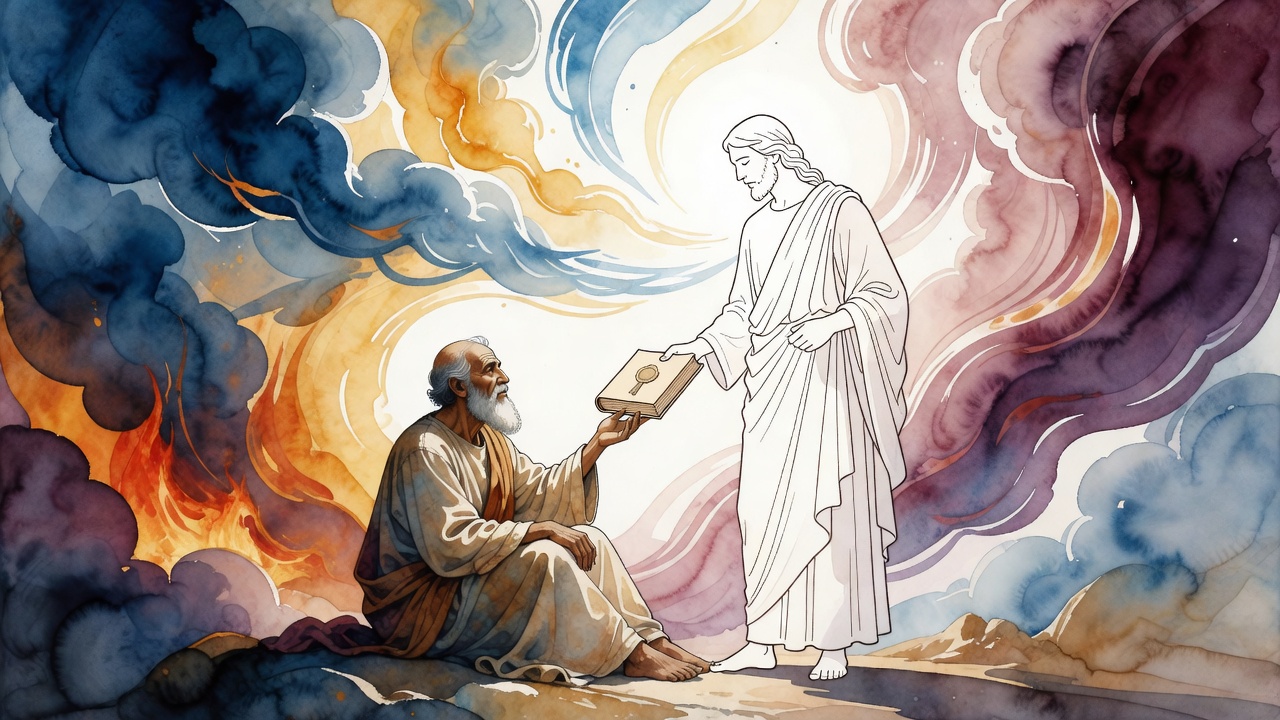
On his last day Moses tells Joshua he was made before the world to kneel between God and Israel, then seals the books of every age to come.
Table of Contents
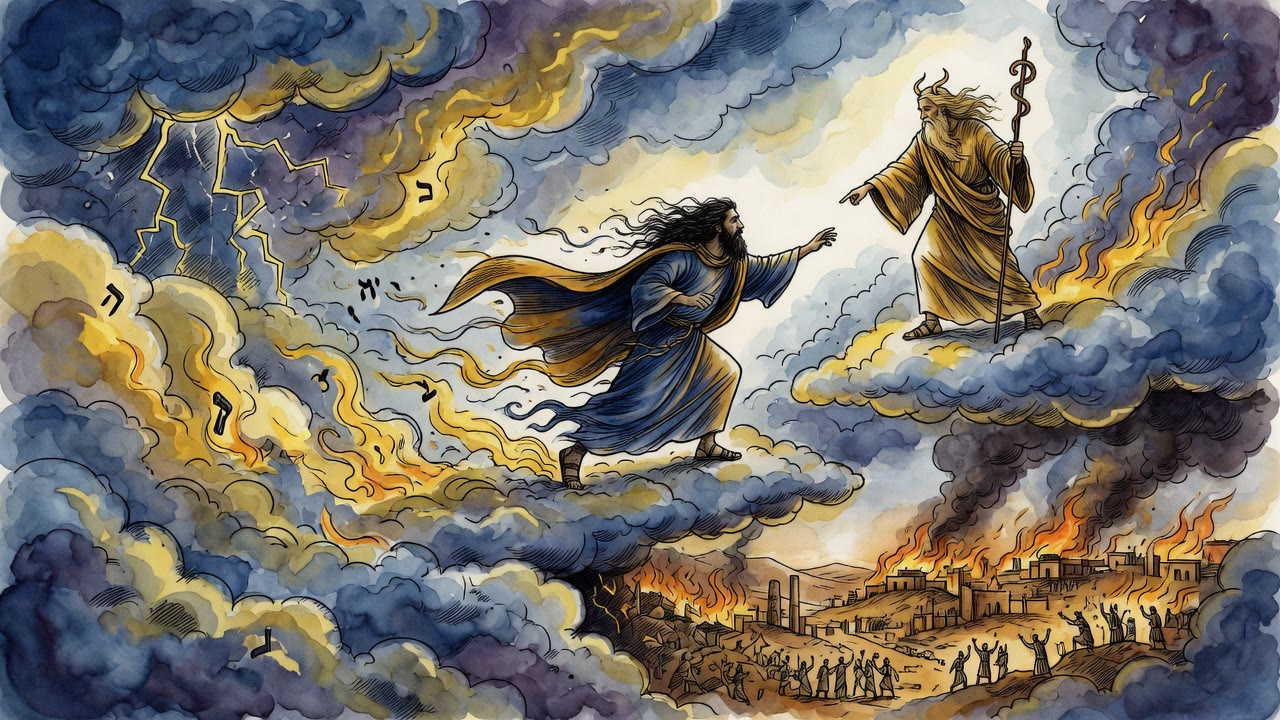
On the last morning of his life, Moses did not gather the elders and did not weep. He sent for one man. Joshua son of Nun ducked under the tent flap and found the old prophet sitting upright, clear-eyed, already talking, as though the conversation had started before anyone arrived to hear it.
 Click for full size
"I did not begin at the burning bush," Moses said. "I was fashioned and made ready before the world was founded, prepared from the first for one work, to stand as the go-between of God's covenant with Israel."
He said it the way a man names his trade. Not a shepherd who wandered up a mountain and caught fire. A thing shaped in advance and held in reserve across the ages, kept back until the day Israel would need a mouth to argue with heaven. Joshua had come expecting a blessing. He was getting a handover.
The Books Anointed with Cedar and Sealed in Clay
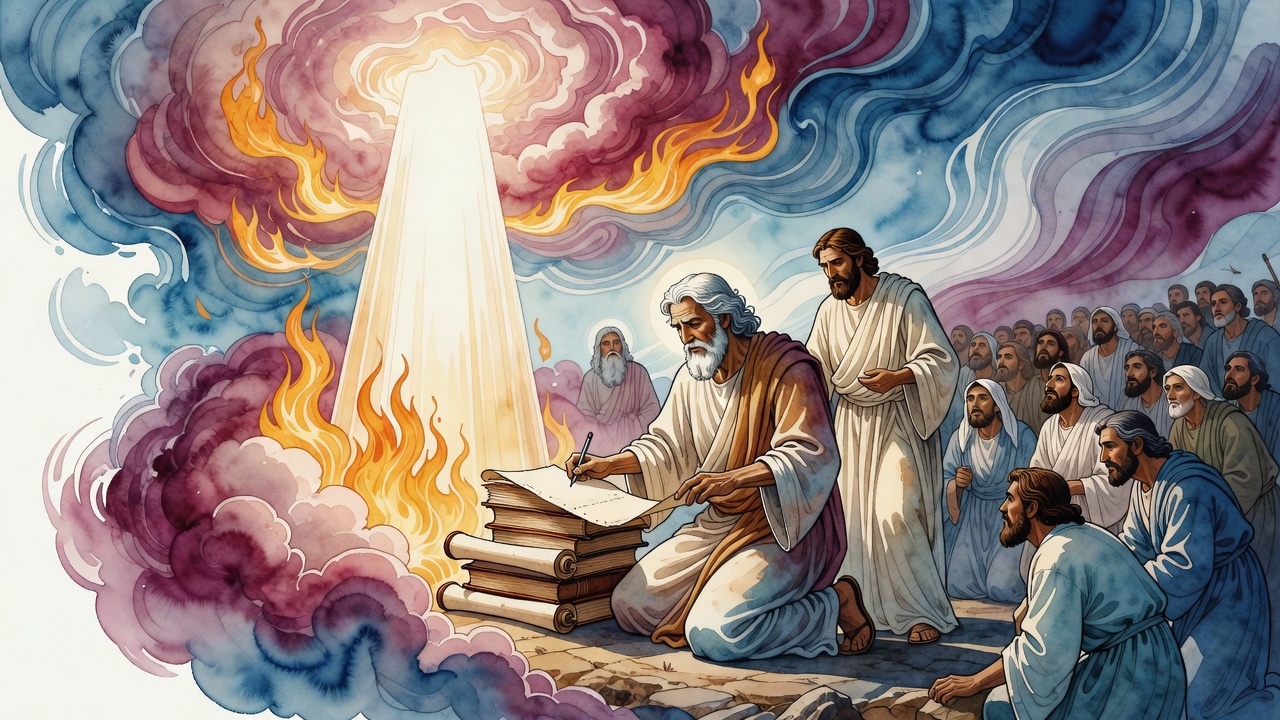
Moses turned to the writings stacked beside him. There were books in his keeping that outweighed the tent and the ark and every vessel in it, and Joshua's first lesson was not how to fight but how to bury.
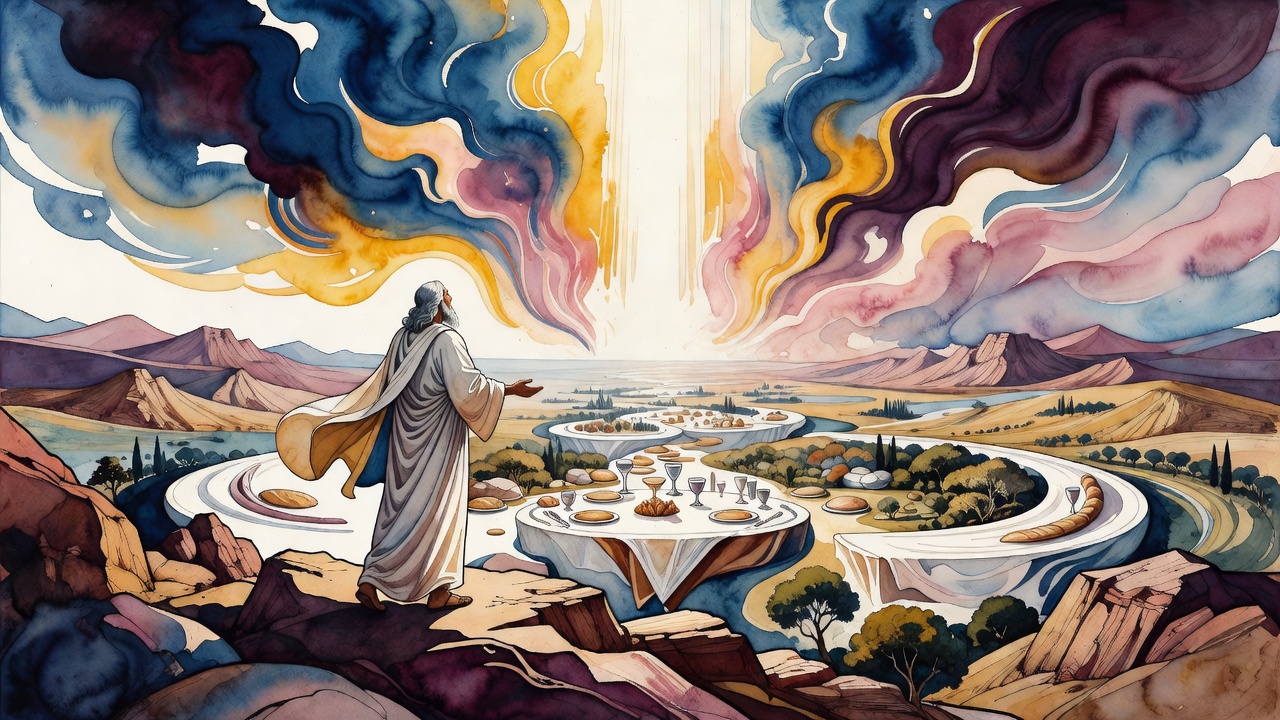
"Set them in order," Moses told him. "Anoint them with oil of cedar. Seal them in vessels of earth, in the place God prepared from the first day of the world." The cedar oil would hold off rot. The clay would hold off ruin. The hidden place would hold off the long grinding weight of the years.
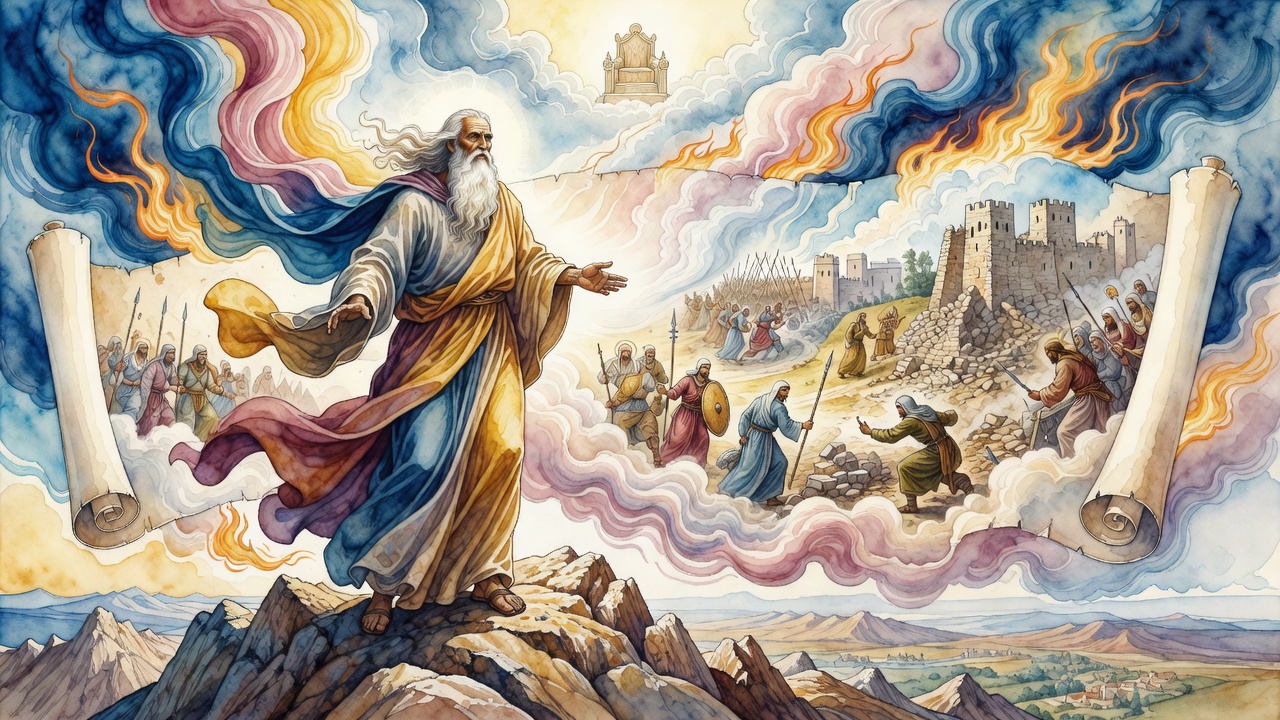
Joshua knew what he was being handed. The books foretold every age still to come, kings not yet born, exiles not yet decreed, the far day when everything would be brought to its end. None of it was meant for the people camped outside the tent. It was meant for a generation neither of them would live to see, one that would come to the buried jars in some ruined century and break the clay and read its own life written down before the mountains were set in place.
Joshua Counts the Wrong Enemy
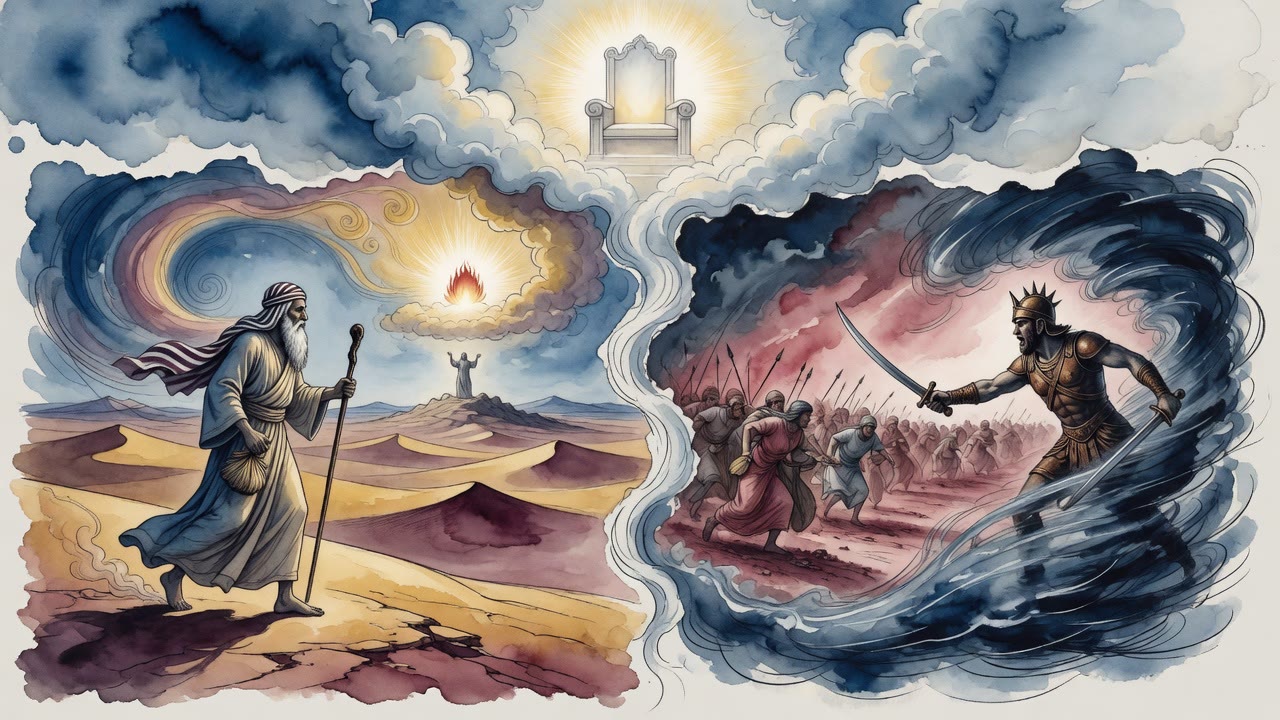
Joshua's mind ran first to the Amorite kings across the river. The moment they smelled that the prophet was gone, they would grow bold. He could already see the war coming, the walled cities and the long odds. He was a soldier. That fear he knew how to hold.
Then a colder fear arrived under it, and the war shrank to nothing beside it. The armies were not the thing that had kept Israel alive. Joshua had watched the real defense for forty years and had somehow never counted it as one.
The Shield Was Always a Man on His Knees
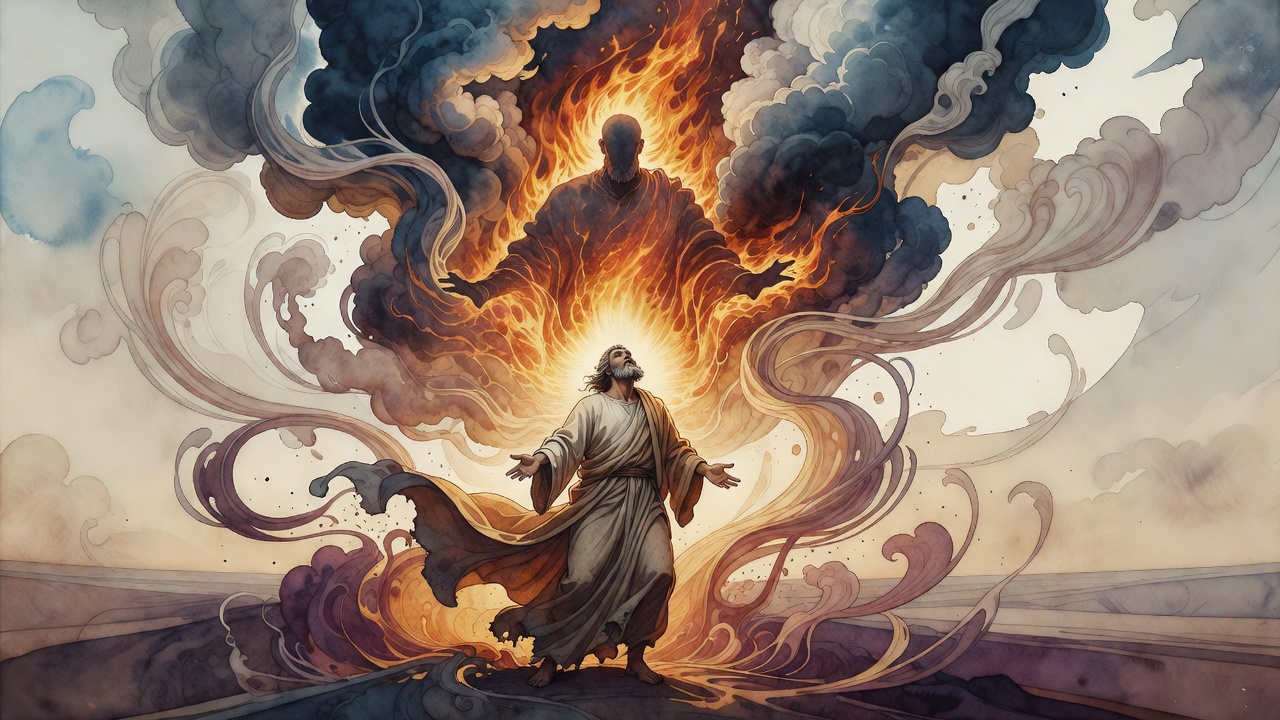
He had seen Moses pray. Not the way most men prayed, standing a while and then getting on with the day. Moses would fix his knees to the ground and stay there, hour into hour, night into day, calling up to the One who runs the whole world with mercy and with justice. When the people sinned, and they always sinned, Moses did not defend them. He reminded God instead. He named the oath sworn to the fathers, the covenant older than the wandering, and he would not rise and he would not let go until the wrath turned back.
That was the shield. Not the sea splitting, not the manna, not the plagues. A man on his knees who refused to move while a people who did not deserve rescue were rescued behind his bent back.
And that man was telling Joshua, calmly, that he was about to die where everyone could watch him do it, hiding nothing of his mortal end. The gap opened in front of him. When Israel sinned next, and they would, whose knees would be on the ground? He knew every name in the camp. Not one of them was Moses.
Be Strong and Keep Your Hands Clean
Moses did not soften it. He laid the whole weight of Sinai onto the younger man's shoulders in a few sentences and named him the one God had approved, set now to serve the people and the tent of meeting with all its holy things. Joshua was to carry Israel across the water into the land sworn to the ancestors, the land promised by covenant and by oath.
"Be strong and of a good courage according to your might," Moses said, "so that you do what has been commanded and remain blameless before God."
The charge was not only about nerve in battle. It was about keeping his hands clean, doing exactly what heaven asked and no less, staying faultless the way Moses had stayed faithful. The courage was for the fidelity, not only for the fight.
Then it was done. The teacher would be gone by nightfall, and the work would not pause for grief. Joshua walked out of the tent carrying two burdens no army could take from him. In his arms, the sealed books that already knew the end of the story. Under his ribs, the knowledge that the true wall around Israel was a set of knees, and that from now on the knees would have to be his own.
← All myths