5 min read

Moses Sat at Joshua's Feet and Tasted Replacement

Moses named Joshua, handed him a sealed book of prophecy, then stood while wisdom left him mid-lecture. Heaven said learn from the disciple.

Curated by Arthur · Told by Maggid ·
Table of Contents
  1. The Book Sealed Before the Crossing
  2. Peace at the Allotment and a Final Kiss
  3. When the Teacher Stood and the Disciple Sat
  4. Wisdom Leaves Mid-Sentence
  5. "It Is Enough for You"
Moses Sat at Joshua's Feet and Tasted Replacement Click for full size

The Book Sealed Before the Crossing

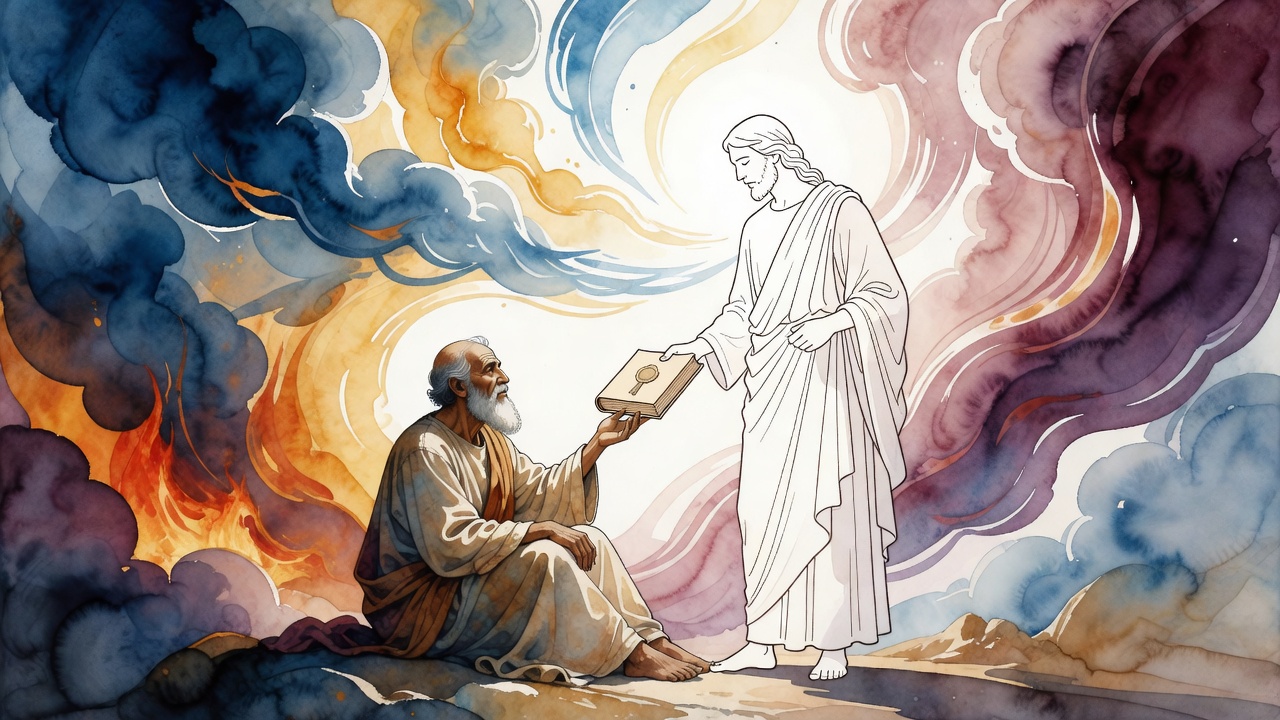
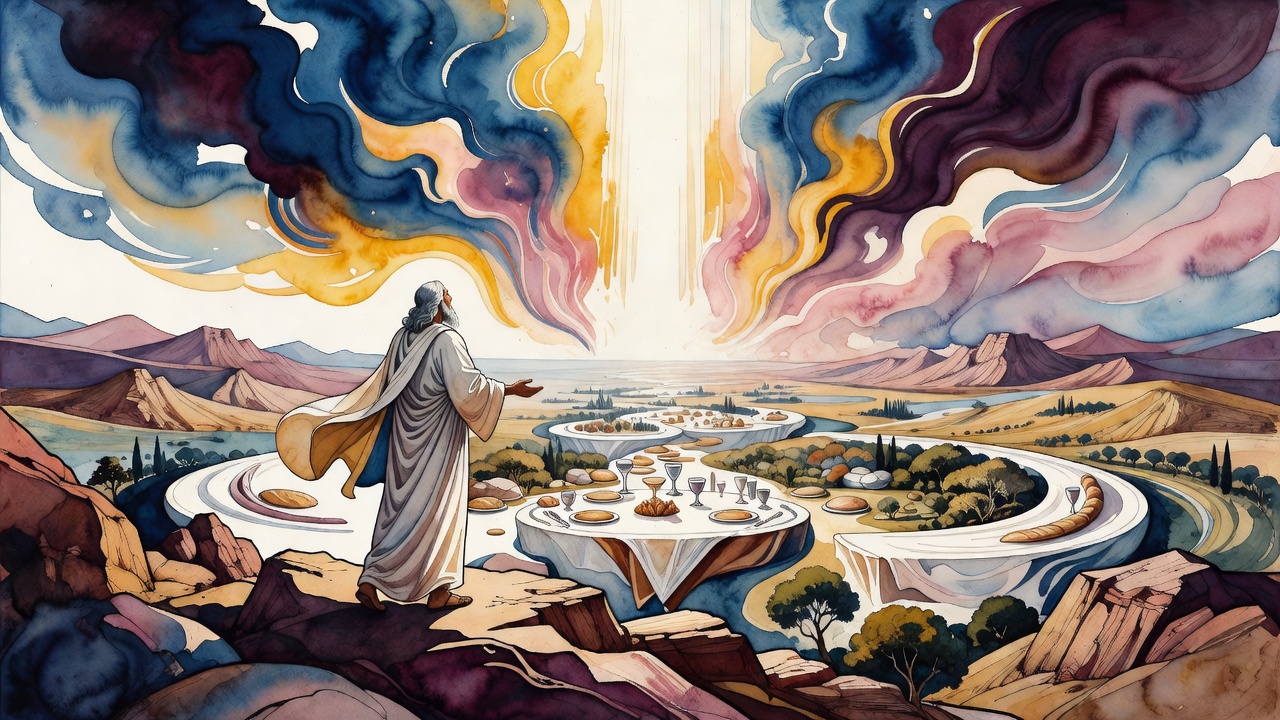
Moses did not leave Joshua only a title. After he named his successor in public, he told Israel that his own hour was near. He was going to his fathers. Into Joshua's hands he placed a sefer nevuah, a book of prophecy, and ordered it anointed with cedar oil, sealed in earthenware, and laid in a place God had set aside from the first days of the world for the invoking of the Name.

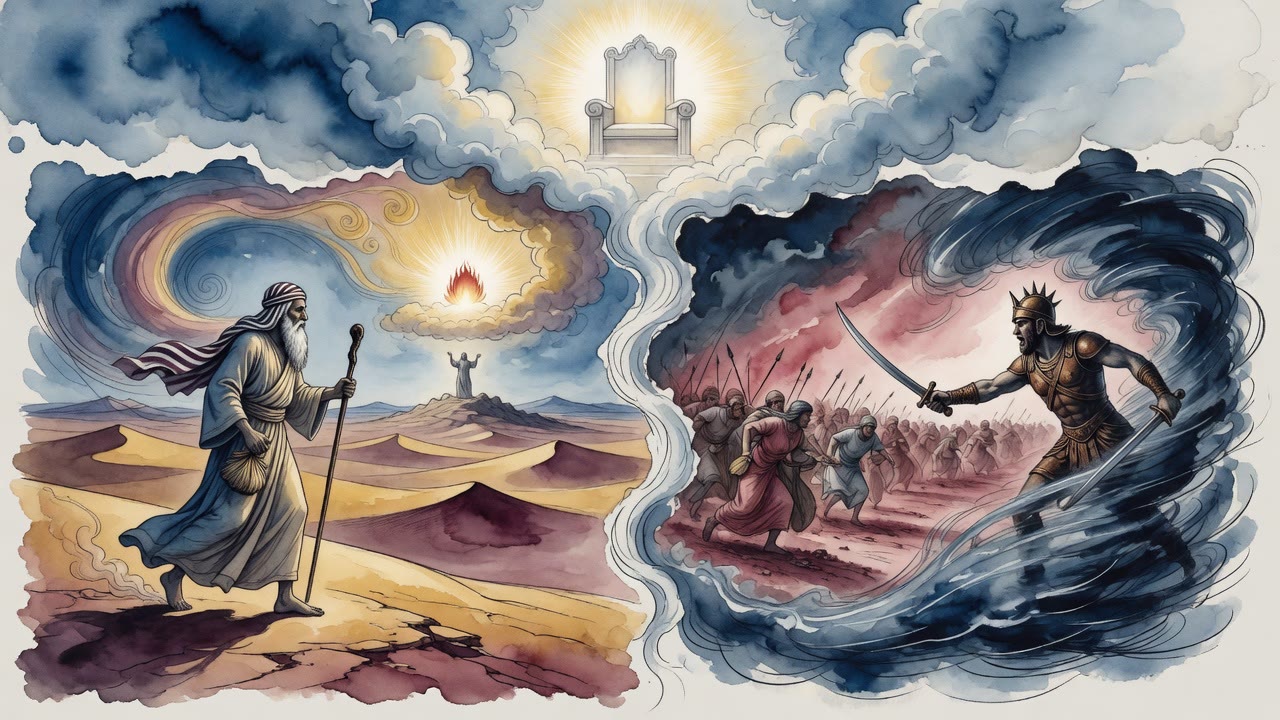
Inside that vessel lay Israel's road in brief: entry into the land, kings and failures, and a day when the Lord would rise from His throne in wrath on account of His children. Promise and warning shared one clay jar. Leadership without that double vision would have been only administration.

Peace at the Allotment and a Final Kiss

Joshua feared the work of dividing soil. Give a man a mountain and he will envy the valley. Give him a valley and he will ache for height. Moses answered without maps. "Be not afraid, for God hath assured me that there will be peace at the distribution of the land."

Then the teacher pressed the student for last questions. Joshua claimed he had never left Moses day or night, so no law stood unclear. Moses still called him close. "Even if thou hast no questions to ask to me, come hither, that I may kiss thee." He wept on Joshua's neck and blessed him twice: peace for the man, peace for Israel with him. The transfer was not only law. It was affection under sentence of death.

When the Teacher Stood and the Disciple Sat

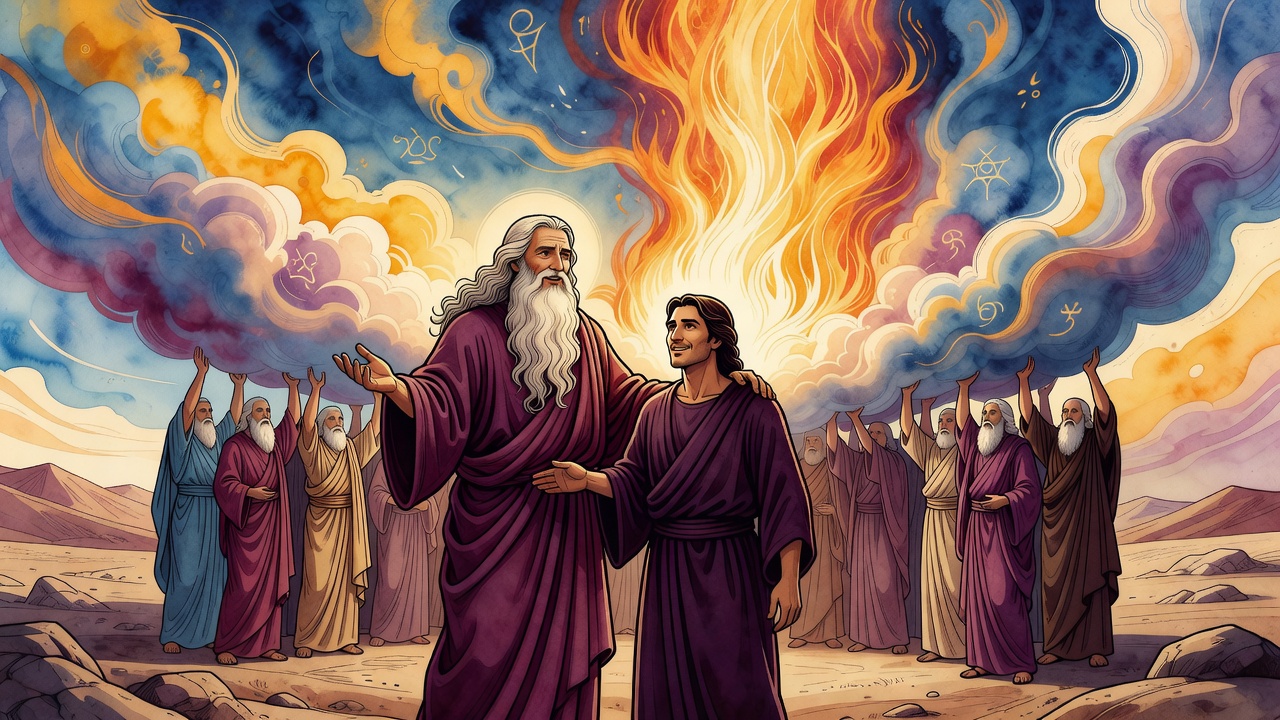
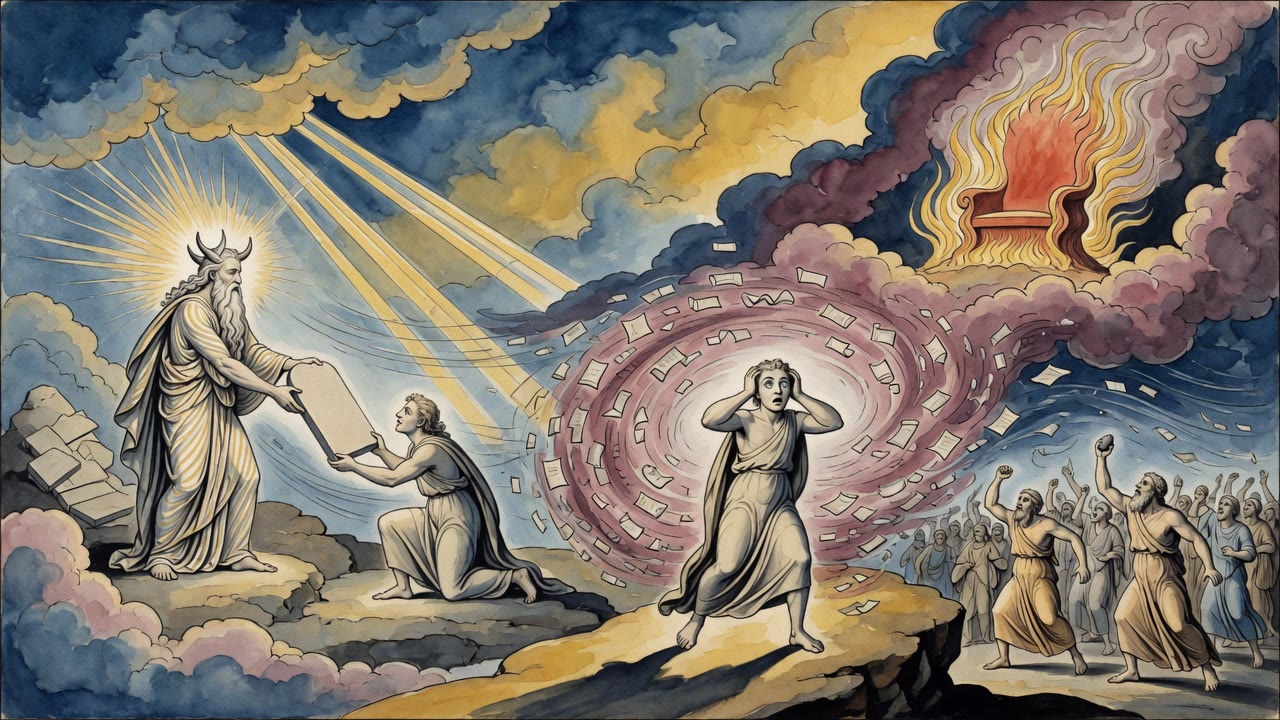
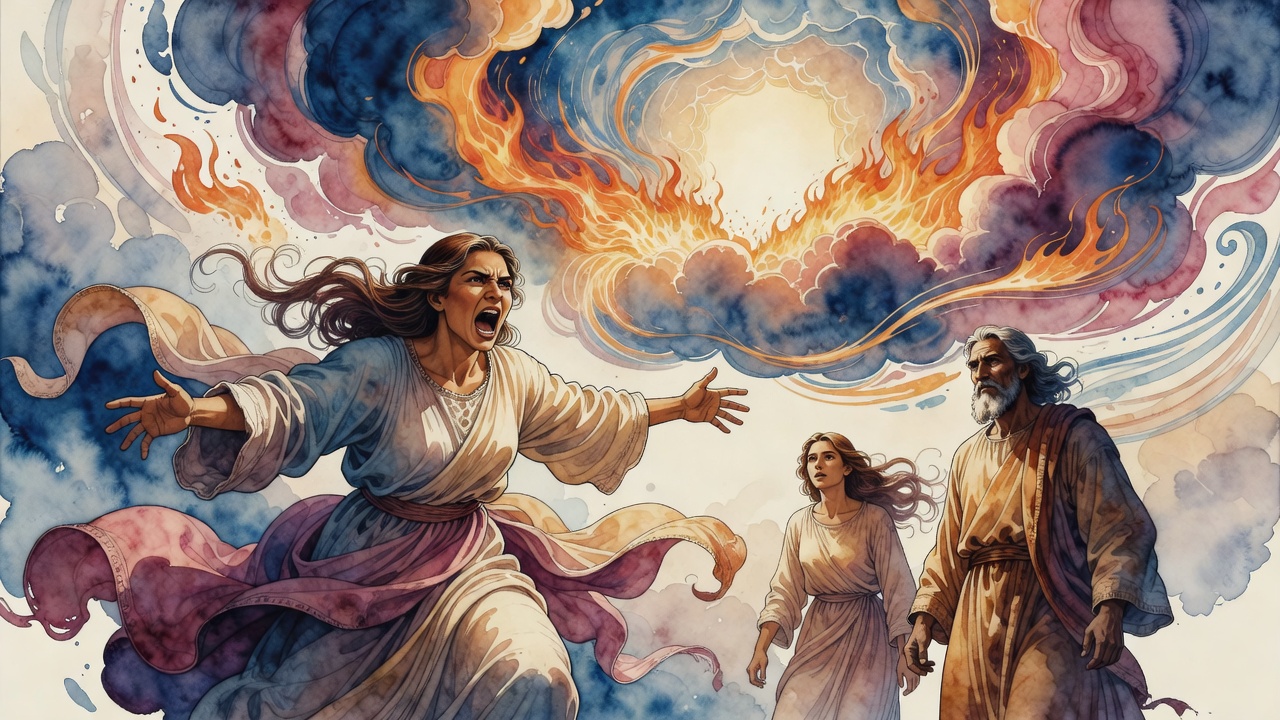
Israel went looking for Moses at the old tent and found him gone to Joshua. There the people saw the order of heaven inverted. Joshua sat. Moses stood with bowed head and folded hands. Rage rose like fire. Men would have struck Joshua down if a cloud had not covered him.

Joshua leaped up in horror. "My father, my teacher! You raised me, you taught me wisdom! Why are you doing this?" The people begged Moses to teach as before. Moses answered that he had no permission. A voice from heaven cut the argument short: "Learn from Joshua." The nation had to accept the seat of teaching had moved.

Wisdom Leaves Mid-Sentence

They arranged themselves: Joshua at the center, Moses at his right, Eleazar and Ithamar at his left. Joshua opened with praise of God who delights in the pious and their teachings. In that instant the treasures of wisdom left Moses and entered Joshua. Moses could not follow the lecture he had trained the speaker to give.

The prophet who had stood before kings now tasted replacement from the inside. Not mockery. Decree. Authority that once imprisoned rebels and freed tribes now asked leave like a governor whose term had ended at the city gate.

"It Is Enough for You"

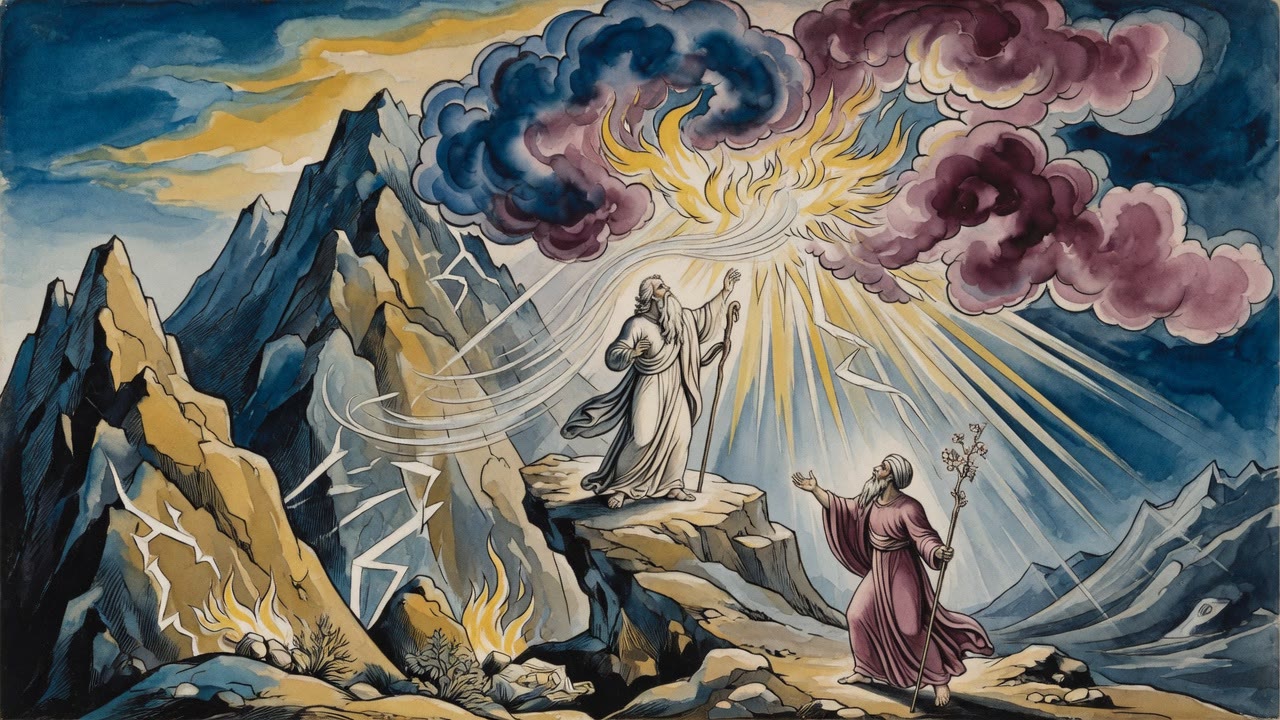
Devarim Rabbah frames the same hour with a hard image. While a governor rules, his word opens prisons and closes them. When a new governor is named, the old one must request entry like a stranger. God said Joshua's time had come. Moses pleaded to enter the land. Heaven answered, "It is enough for you" (Deuteronomy 3:26).

He who had sunk Korah and blessed Reuben now stood outside the one gate he most wanted. The book in the jar, the kiss on the neck, the standing teacher, and the locked border were one lesson: service ends when heaven says so, not when the servant feels finished.

Israel learned succession as theater of obedience. They had loved Moses enough to threaten Joshua for sitting. They had to love God enough to sit under Joshua anyway. The cloud that saved the disciple also saved the people from murdering the future to keep the past warm.

Joshua inherited more than a sword. He inherited a sealed history that already knew his victories and Israel's later wounds. He inherited a blessing of peace spoken through tears. He inherited a teacher who would stand while he taught. That last gift was the cruelest and the cleanest. It trained the nation to honor office without trapping the man who first filled it.

When Moses could not grasp Joshua's words, the loss was not private humiliation alone. It was public proof that Torah does not die with one throat. The same voice that once spoke from the bush now spoke through a younger mouth. Israel had to listen with new ears or go deaf out of loyalty.

The clay jar waited in its appointed hollow. The land waited with mountain and valley. Between them walked a man who had been kissed and a people who had been ordered to learn. Replacement, when heaven orders it, is not betrayal. It is the next chapter of the same book.


← All myths

From the tradition

Sources

4 sources

The texts behind this telling. Some cards carry a translation of the source; others are our own retelling of it, and each card says which. Every card links out to the original.

Legends of the Jews 6:92Legends of the Jews

Retold in our words. Read the original at the link below.The Legends of the Jews by Louis Ginzberg (1909) · Public Domain

It’s a moment packed with weight, the transfer of leadership for an entire people. – leading the Israelites after Moses?

The story goes that after Moses publicly named Joshua as his successor, he revealed that his own time was near. He was about to "depart to his fathers," as the old texts say. But what exactly did he pass on?

Well, more than just the keys to the kingdom, apparently. Moses bequeathed to Joshua a sefer nevuah, a "book of prophecy". According to Legends of the Jews, Joshua was instructed to anoint this book with cedar oil. Cedar oil, was often used for sacred purposes, for consecration and preservation.

The instructions didn't stop there. This precious book was then to be placed in an earthenware vessel – a simple clay jar. And here's where it gets really interesting. The jar was to be laid in a specific spot, a place, as Ginzberg's retelling in Legends of the Jews notes, that God had created from the very beginning of the world for this very purpose. A place specifically designated for invoking God's name. Think about the implications! A place predestined for divine connection.

What kind of prophecies were inside this book? What secrets did it hold?

The text gives us a glimpse. It contained, in brief, the entire history of Israel, from their entry into the Promised Land all the way to the establishment of God's kingdom on Earth. A sweeping overview of their destiny!

But it wasn't all sunshine and roses. The prophecy also spoke of a time of great tribulation, a time when, "in wrath and indignation on account of His children, the Lord will rise from His Throne of power and proceed from His holy dwelling." It paints a picture of divine anger, a response to the failings of the people.

This book of prophecy, hidden away in its earthen vessel, waiting in a spot ordained since creation. It serves as a constant reminder of both the promise and the potential pitfalls of the Israelite journey. Perhaps it's both. A guide, a roadmap, and a cautionary tale all rolled into one.

These stories, these legends, they aren’t just ancient history. They're a mirror, reflecting our own struggles, our own hopes, and our own relationship with the Divine.

Full source
Legends of the Jews 7:52Legends of the Jews

Retold in our words. Read the original at the link below.The Legends of the Jews by Louis Ginzberg (1909) · Public Domain

The Legends of the Jews, that incredible compilation of rabbinic stories and folklore assembled by Louis Ginzberg, gives us a glimpse into a truly human moment for the greatest prophet of them all. It's a story of succession, humility, and maybe even a touch of jealousy.

The Israelites, accustomed to gathering before Moses's tent to receive God's word, are bewildered. Moses is nowhere to be found. They learn he's gone to Joshua, his loyal disciple. So, naturally, they head over there too.

What do they see? Moses, standing respectfully before Joshua, who is seated! "What's going on here?!" they essentially shout at Joshua. "Why are you sitting while our teacher, Moses, stands before you with bowed head and folded hands?" According to the tale, they were so angry they would have killed Joshua on the spot, but a cloud descended, shielding him. Dramatic. Joshua, mortified, immediately rose and cried out to Moses, "My father, my teacher! You raised me, you taught me wisdom! Why are you doing this? You'll bring Divine punishment upon me!" It's a powerful image of respect and fear of upsetting the natural order.

The people then implore Moses to teach them the Torah as usual. But Moses replies, "I don't have permission to do so." They persist, of course, until a voice from heaven booms, "Learn from Joshua." The transition is happening, whether they like it or not.

Finally, the people agree to acknowledge Joshua as their new teacher. They gather before him, Moses seated at his right, and Aaron’s sons, Eleazar and Ithamar, at his left. This is it, the official passing of the torch.

But here's where the story takes a truly poignant turn. As Joshua begins his discourse, uttering the words, "Praised be God that taketh delight in the pious and their teachings," something extraordinary happens. The treasures of wisdom, the very essence of divine knowledge, vanish from Moses and pass into Joshua's possession.

And Moses? He can't even follow Joshua's lecture! Talk about feeling obsolete!

Afterward, the Israelites ask Moses to review what Joshua taught. "I don't know how to reply to your request," Moses confesses. He tries to explain Joshua's words, but he can't, because he simply didn't understand them.

This is where the story culminates in a raw, honest moment of vulnerability. Moses turns to God and cries out, "Lord of the world! Until now I wished not for life, but now I long to die. Rather a hundred deaths, than one jealousy."

That last line… "Rather a hundred deaths, than one jealousy." It's a powerful statement, revealing the internal struggle of a man who has dedicated his life to serving God and leading his people, now facing the reality of his own mortality and the rise of a new generation. It’s a deeply human emotion, relatable even to those of us who aren't prophets.

What does this story from Legends of the Jews, drawing perhaps from sources like Midrash Rabbah, tell us? Perhaps it’s about the inevitability of change, the importance of humility, and the bittersweet reality of seeing our students surpass us. And maybe, just maybe, it encourages us to embrace the future, even when it means letting go of the past.

Full source
Devarim Rabbah 2:5Devarim Rabbah

Retold in our words. Read the original at the link below.The Sefaria Midrash Rabbah, 2022 · CC-BY

" But what time are we talking about? The Rabbis tell us it's the moment Joshua is appointed as Moses' successor. As (Deuteronomy 3:21) states: "I commanded Joshua [at that time]."

Rav Huna paints a vivid picture: Imagine God telling Moses, "Joshua's time has come." In that instant, Devarim Rabbah tells us, Moses begins pleading to enter the Promised Land.

The story then offers an analogy. Think of a governor, powerful and in charge. During his reign, his decrees are law. He can free prisoners or lock them up as he sees fit. But what happens when his time is up? When a new governor is appointed, the old one suddenly finds himself asking permission just to enter the gate. He’s lost his authority.

That's Moses. The text uses this analogy to describe Moses' relationship with God and his request to enter the land of Israel. All his life, Moses wielded incredible power. He imprisoned those he deemed worthy of punishment, as we see in the story of Korach and his followers, who "descended alive into the abyss" (Numbers 16:33). He redeemed others, as in his blessing, "Let Reuben live and not die" (Deuteronomy 33:6).

But now, with Joshua's appointment – "Take to you Joshua son of Nun" (Numbers 27:18) – Moses finds himself in a different position. He, the great leader, must now plead to enter the land.

And what is God's response? A simple, but firm: "It is enough for you" (Deuteronomy 3:26).

Moses, the man who spoke to God face to face, the one who led the Israelites through the desert for forty years, is denied his deepest desire. What does this teach us? Perhaps that even the greatest among us must eventually yield to the flow of time. Perhaps it's a reminder that leadership is about service, not personal fulfillment. Or maybe it's a glimpse into the bittersweet reality of letting go, of accepting that our time, however impactful, is finite.

Full source
Legends of the Jews 7:25Legends of the Jews

Retold in our words. Read the original at the link below.The Legends of the Jews by Louis Ginzberg (1909) · Public Domain

The weight of responsibility falls on Joshua's shoulders. He turns to Moses, his mentor, his teacher, with a worry etched on his face. "O my teacher Moses," he asks, "what will become of me? If I give to one a share upon a mountain, he will be sure to want one in the valley, and he to whom I give his share in the valley will wish it to be upon a mountain." (Legends of the Jews)

The fear of scarcity, the potential for endless dissatisfaction. The very real challenge of trying to create equity when everyone has different desires and perceptions of fairness.

Moses, ever the calming presence, reassures him. "Be not afraid," he says, "for God hath assured me that there will be peace at the distribution of the land." (Legends of the Jews) A powerful statement of faith, a reminder that even in the face of potential conflict, divine guidance can lead to harmony.

Then, Moses, knowing his time is near, turns to passing on his wisdom. "Question me regarding all the laws that are not quite clear to thee," he urges Joshua, "for I shall be taken from thee, and thou shalt see me no more." (Legends of the Jews)

Joshua's response is touching. "When, O my master, by night or by day, have I ever left thee, that I should be in doubt concerning anything that thou hast taught me?" (Legends of the Jews) It speaks volumes about his dedication, his unwavering commitment to learning from Moses. He's been a constant companion, absorbing every lesson, every nuance.

Even so, Moses insists on one final, intimate moment. "Even if thou hast no questions to ask to me, come hither, that I may kiss thee." (Legends of the Jews)

This poignant scene of farewell. Joshua approaches Moses, and Moses embraces him, weeping upon his neck. A second time he blesses him, saying, "Mayest thou be at peace, and Israel be at peace with thee." (Legends of the Jews)

It's a moment of profound significance. The transfer of leadership, yes, but also the passing of a spiritual torch. A blessing for peace, not just for Joshua, but for the entire nation of Israel. A wish that echoes through the ages.

What does this brief glimpse into the final days of Moses and the ascent of Joshua tell us? Perhaps it’s a reminder that true leadership isn’t just about power, but about empathy, guidance, and the enduring hope for peace, even when faced with the inherent challenges of human nature. And sometimes, it’s about a simple kiss, a moment of connection, before the journey continues.

Full source