Moses Sees Deborah Flourish Like a Date Palm
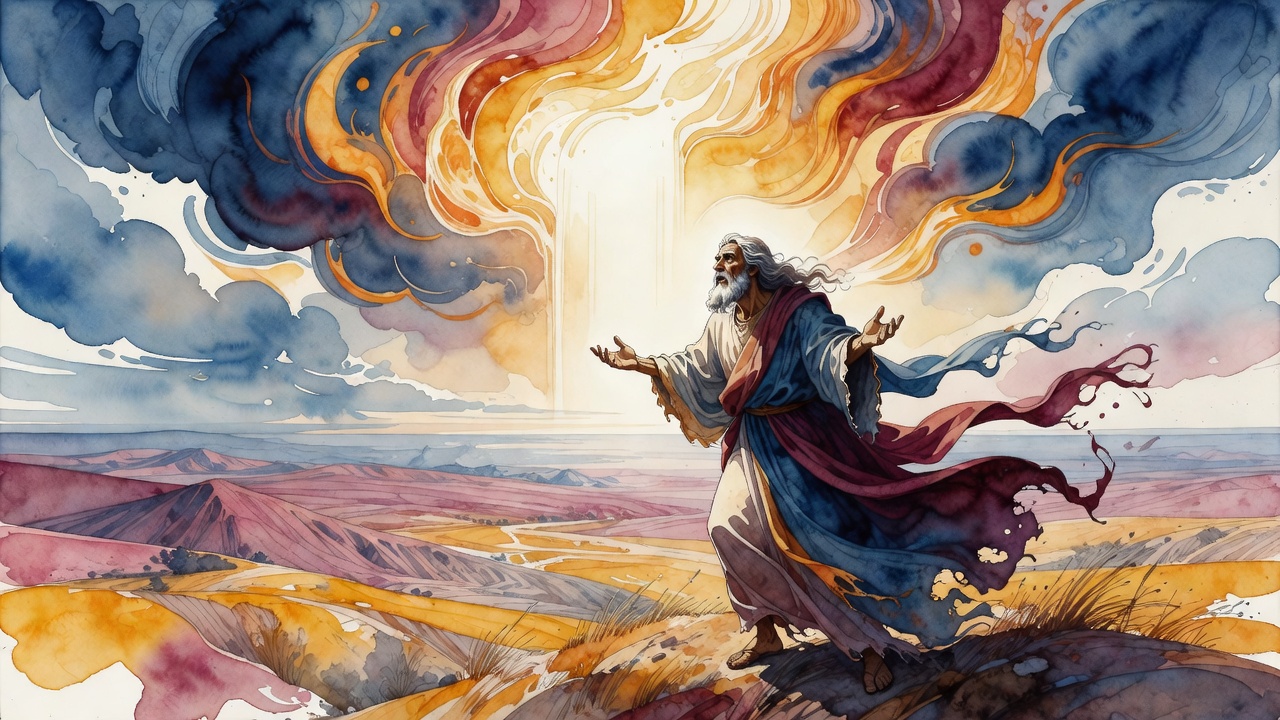
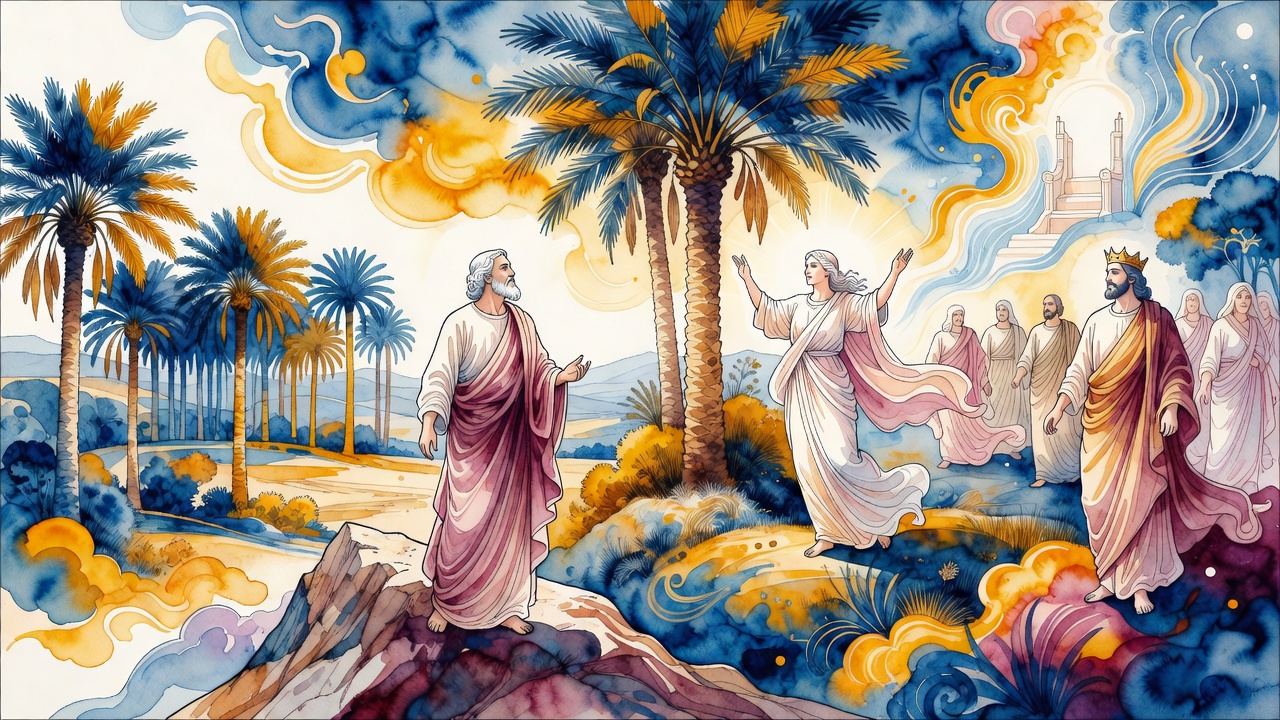
On the mountain's edge Moses watched Jericho's palms, then Deborah under her tree, David crowned, and the righteous strolling in Gan Eden (the Garden of Eden).
Table of Contents
 Click for full size
The Valley Came Up Like a Map
Moses stood where the air thinned and the Jordan glittered far below like a single drawn line. His eyes should have stopped at distance and haze. They did not. The valley of Jericho rose toward him field by field, wheat beside barley, each plot edged as clearly as if he had walked its furrows that morning. He could have named the owners if owners had yet been born.
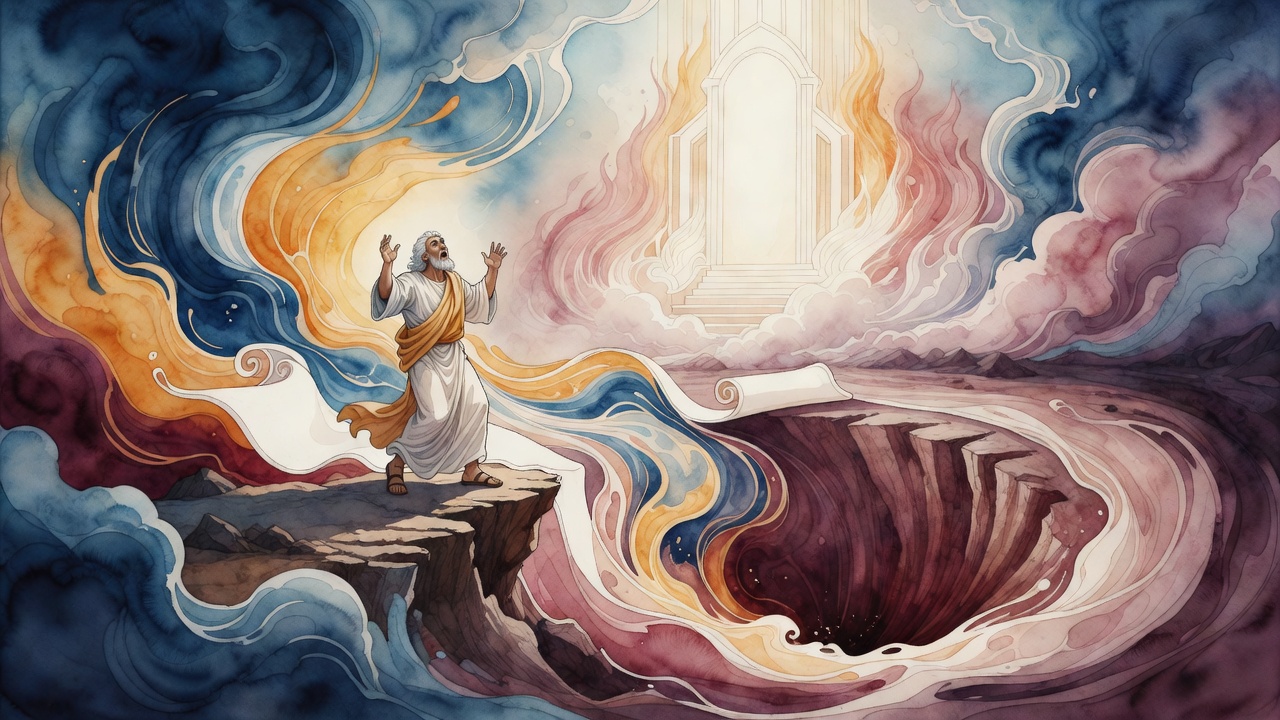
He had asked only to see the land. Heaven opened a wider door.
"City of palms," the vision said without a mouth, and the date trees along the low ground flashed green-gold in a wind that never reached his cloak.
Deborah Under Her Tree
Then the palms shifted. One tree held a woman who sat as if judgment itself had chosen that shade. Deborah the prophetess rested under the date-palm that would carry her name. Israel came to her in the dust of the hill country, and she sent them out with orders that cut cleaner than any sword. Moses watched her mouth move and felt the old ache of leadership answer in his own chest. He would never stand in her court. He still recognized the weight she carried for people who could not carry it alone.
The palm did not wither when she rose. It waited for the next righteous life that would lean against its trunk.
Gideon From the Poorest Thousand
The scene broke sideways into night and terror. Torches flared in clay jars. Gideon ben Yoash of Manasseh moved through Midianite camp like a man who still remembered calling his own house the poorest of the poor. Moses had been shown Manasseh's portion on the map. Now he saw the brother of that inheritance in battle, small against Amalek and Midian, and winning because Heaven preferred a hesitant commander to a proud one.
Moses' hands tightened on his staff. He knew that kind of choosing. He had lived it.
David Over All the Land of Judah
Another turn. Horns. A throne. A shepherd grown into a king whose name already sounded like psalm. David stood in the glory of Judah's house, chosen from his father's line the way the verse would one day say God chose Judah to rule. Moses saw not only soil and boundary stones but the man who would gather the tribes around song and sword. The land was never only dirt. It was the long story of who would stand on it when Moses himself was dust.
He tried to speak a blessing across the centuries. The vision did not wait for his voice.
The Righteous Among the Palms of Eden
Jericho's palms flared again, and behind them another garden opened, older than conquest. Gan Eden (the Garden of Eden, paradise of the righteous) lay bright as first morning. The righteous walked there without hurry, flourishing the way a date-palm flourishes when water finds its roots. Moses understood the second reading of the "city of palms" then. Geography had been the doorway. Reward was the room beyond it. The same clarity that named wheat and barley now named souls.
He blinked once. The mountain returned. The camp of Israel muttered in the ravines below, still unaware that their teacher had just watched their unborn judges, kings, and righteous ones.
Moses set his face toward the place he would not enter. The map stayed burned behind his eyes, field by field, life by life.
A hawk turned once over the rift and vanished into glare. Moses tasted dust and the metallic edge of a vision that would not let him remain only a geographer. He had spent forty years learning the weight of a people on the march. Now Heaven was showing him the weight of a people after he was gone, and the showing hurt in a clean way, the way truth hurts when it arrives too late to change your itinerary.
He watched Deborah's petitioners again in a loop the vision allowed. A woman from the hill country argued a case about stolen oil. Deborah's answer was short. The woman left standing taller. Moses remembered the endless lines outside his own tent and felt no jealousy, only recognition. The palm's shade was a portable Sinai for one generation. His mountain was another.
When Gideon smashed the jars, the night lit in a stutter of fire. Midianite horses screamed. Moses flinched as if the sound could reach the ridge where his body still stood. He whispered Gideon's name and the vision did not correct him for knowing it early. Time, on that overlook, was a scroll unrolled both directions.
David's harp appeared before David's crown. A boy sat among sheep with fingers that already knew how to pull sorrow into order. Then the boy was gone and the king remained, older, scarred, still humming under state business. Moses almost laughed. Of course the land would need a singer. Laws alone had never been enough for Israel, not even when the laws came from fire.
Gan Eden 's (the Garden of Eden) air smelled of water that had never learned drought. A righteous woman brushed her hand along a date trunk and the tree answered with a sound like low bells. Moses wanted to ask her if she had ever been afraid in life. She looked toward him as if she heard the question and only smiled. The smile said fear had been real and had not been final.
Behind him, on the mortal ridge, Joshua waited without knowing why the teacher's shoulders had gone rigid. Below, tribes sorted packs for a morning that would not include entry for Moses. He lowered his staff. The fields of wheat and barley faded last, as if Heaven wanted him to remember the ordinary plots before the extraordinary lives. He turned from the view with the map still burning, and began the slow walk back toward a people who had not yet become any of the futures he had just witnessed.
← All myths