Moses Thanked God for Mercy Across Generations
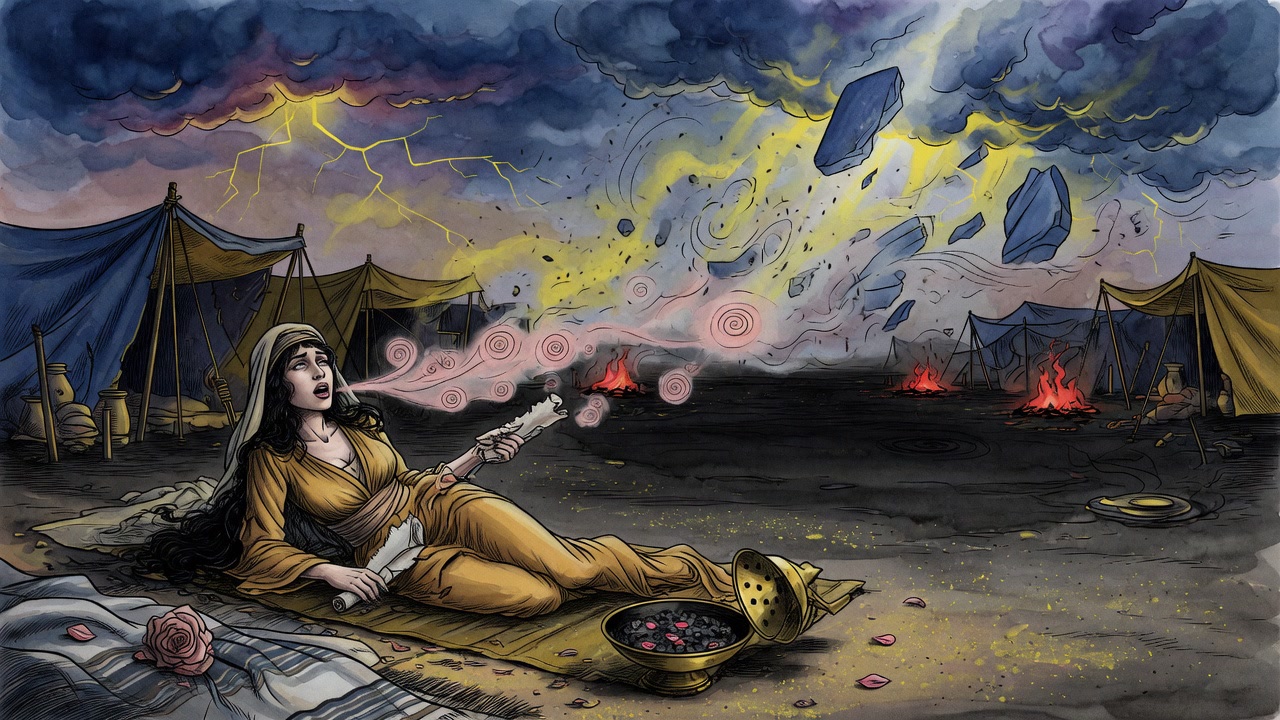
A false oath knocked letters off the shard over the abyss. The angel Yaasriel waited with seventy pencils to write them back.
Table of Contents
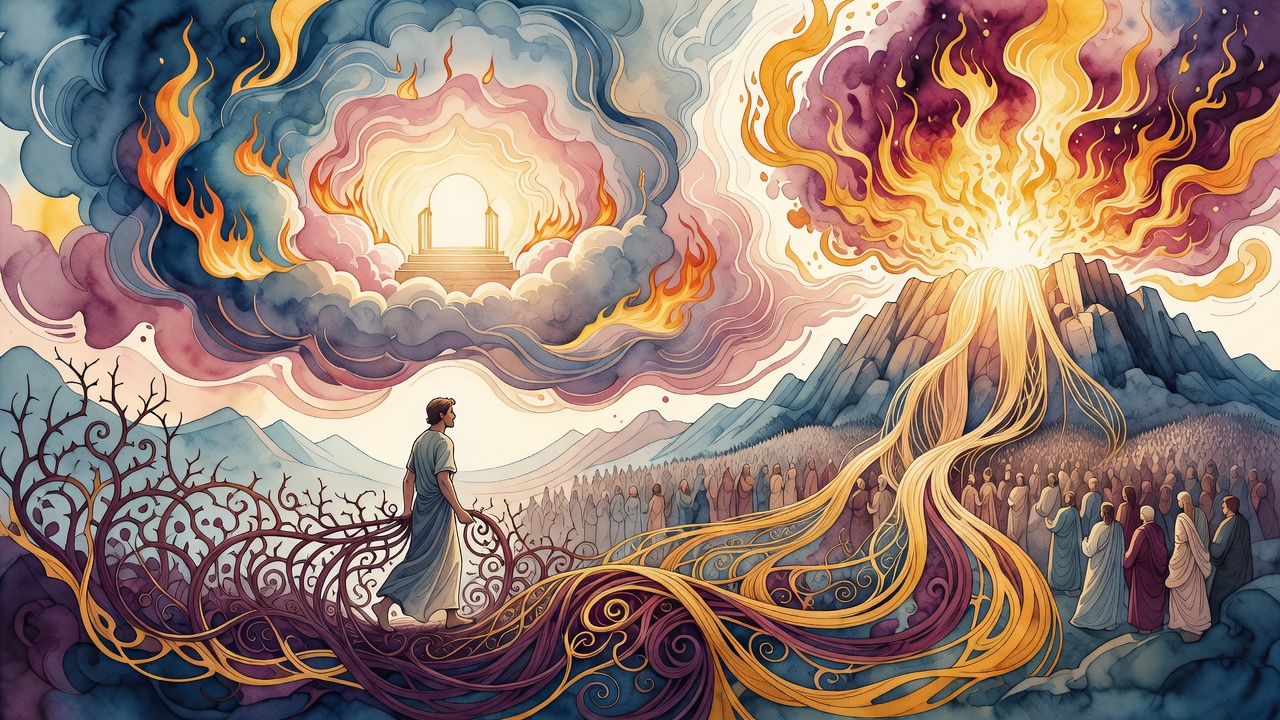
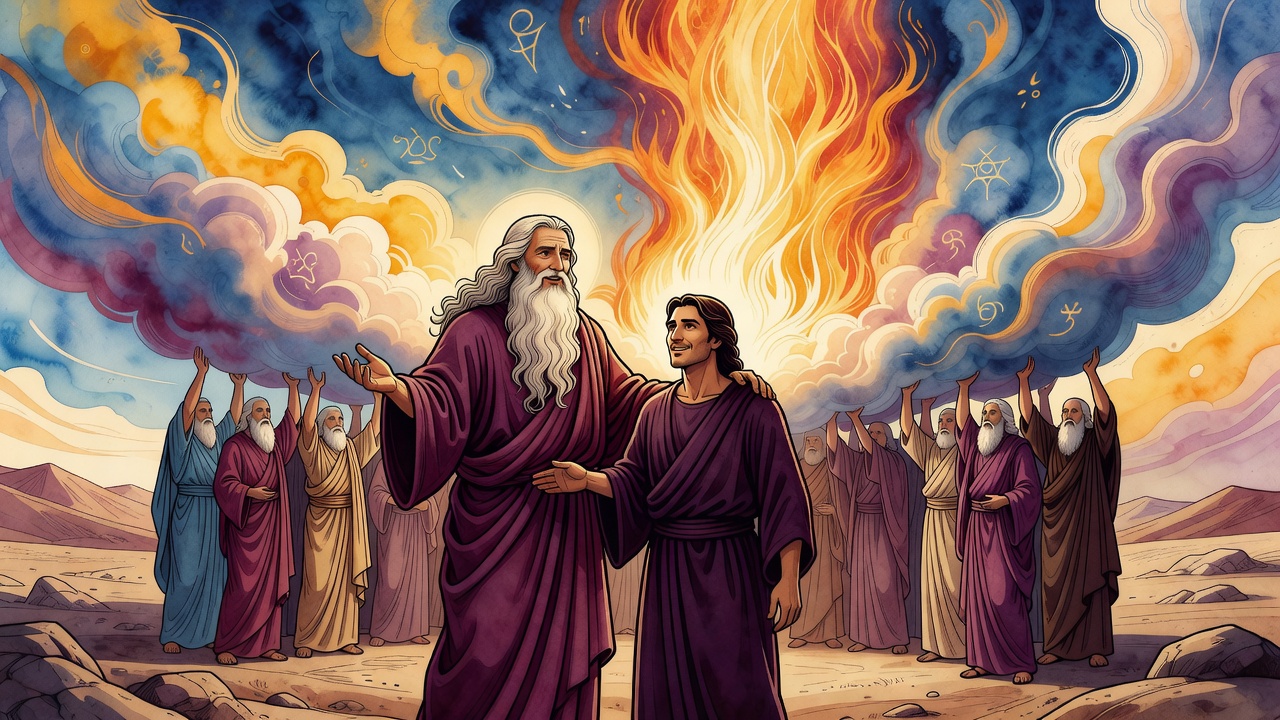
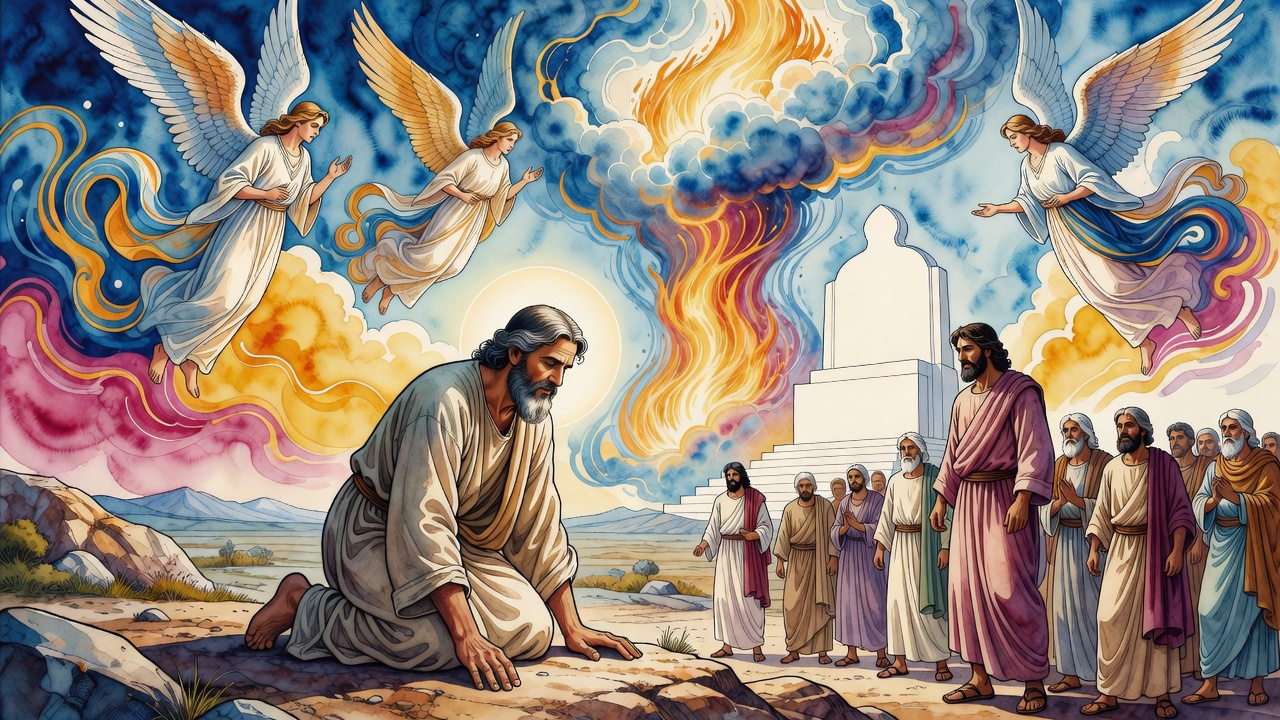
When the third commandment finished speaking, Moses went down to the ground.
 Click for full size
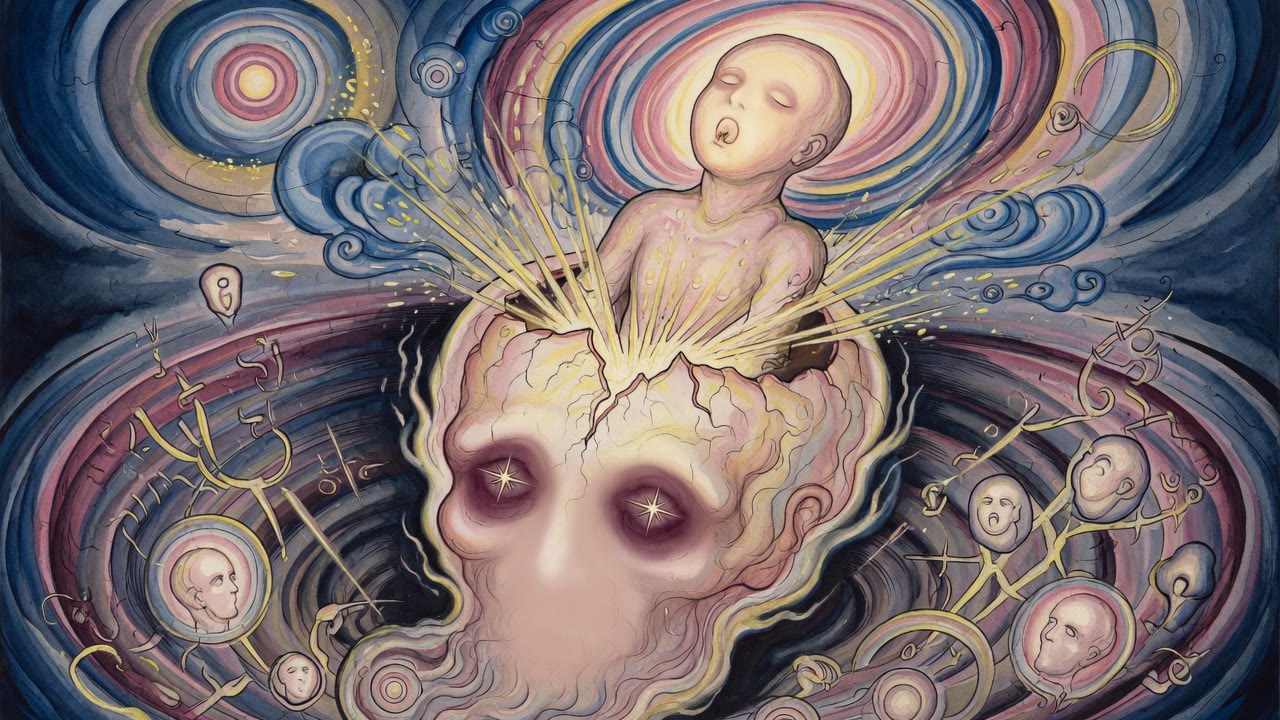
He had heard judgment before. He had stood before fire, plague, sea, and throne. Now he heard a mercy hidden inside the hard words. The sins of parents would be visited on descendants only when the generations followed one another in sin without a break.
Moses Fell When the Words Landed
Moses understood the measure at once. Father, son, grandson. Three lives in a row. Three houses with no one stepping aside, no one tearing the chain, no one turning back toward God.
That had never happened in Israel.
So Moses cast himself down and thanked God. He was not thanking God for sin or for punishment. He was thanking God for the narrow opening built into judgment. A family line could become wounded. A generation could fail. Another could inherit shame. But if one generation broke the run, if one child refused the full shape of the parent's rebellion, the worst decree did not close its hand.
The commandment sounded severe from the outside. From the ground, Moses heard the mercy inside it, mercy that could run across generations if even one of them turned.
Letters Left the Shard
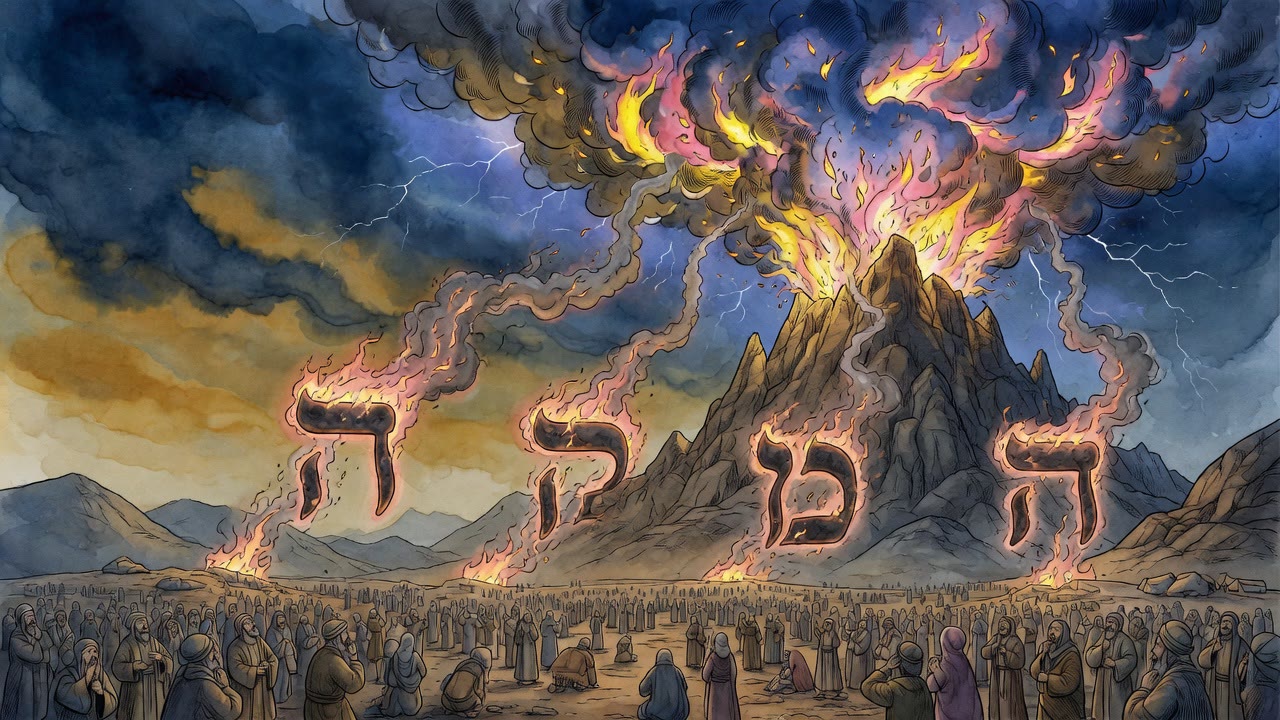
The same commandment carried another terror. No one among Israel was to take God's name in vain. A false oath was not only a lie between two people. It struck the architecture of the world.
At creation, God placed a shard over the abyss. On that shard was engraved the Shem HaMeforash (שם המפורש), the Ineffable Name. Beneath it, the deep pressed upward. The waters wanted release. The shard held them down because the Name held the shard in power.
Then a person swore falsely by that Name. A mouth opened. A lie dressed itself in holiness. Letters flew from the shard.
With each false oath, the restraint weakened. If the Name vanished completely, the abyss would burst through and drown the world from below. Not from storm. Not from sea. From beneath creation's floor.
Seventy Pencils Against the Deep
God did not leave the world to every careless tongue.
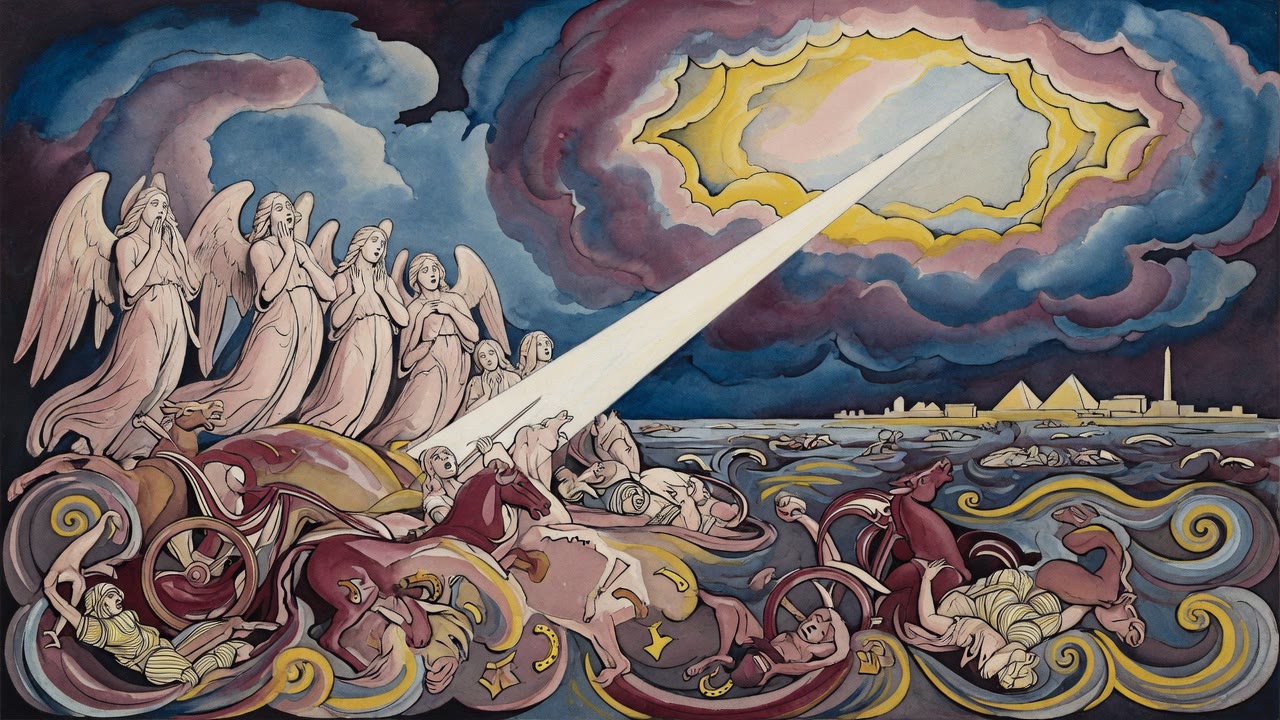
The angel Ya'asriel stood ready with seventy pencils. When letters fled, Ya'asriel engraved them again. Stroke after stroke, the Name returned to the shard. The waters pressed. The angel wrote. Human speech damaged the seal, and heavenly labor repaired it.
The world survives because the holy Name is not allowed to stay erased. Every false oath pulls a letter loose. Every repaired letter keeps the deep in its place. Creation is steady, but not because people are harmless. It is steady because God sends a servant to mend what speech breaks.
Moses had thanked God for one kind of interruption in disaster: one generation that refuses to continue the sin. Ya'asriel showed another. One angelic hand rewriting the Name before the abyss can answer.
Gilgal on a Single Day
Years later, another line broke at the Jordan.
The people crossed the river and entered the land promised to their ancestors. On that same day they stood at Mount Gerizim and Mount Ebal. They came to Gilgal. Stones from the altar were left there. A nation that had wandered forty years placed hard witnesses in the soil.
At Gilgal, Joshua circumcised the males born in the desert. The rough climate and other hardships had kept that command from being done in infancy. Now the wilderness generation gave way to sons marked at the edge of inheritance. The chain was not clean. It was renewed. The mercy Moses had heard on the mountain had a body again: one generation that would not carry the old unmarkedness forward.
Then the manna ended. It had stopped falling at Moses' death, but stored portions had lasted a little longer. At Gilgal the stored miracle ran out. Bread would now come from labor, fields, and daily worry.
Bare Feet Before Michael
Daily worry changed the camp. Once the people had to provide for their needs, Torah study declined. War preparations pressed in. Ritual service lost ground. The danger was not a banner of rebellion. It was neglect, the ordinary erosion that begins when bread becomes heavy in the hands.
An angel came to Joshua and told him to remove his shoes. Bare feet meant mourning. Joshua was to mourn the decline of Torah study as one mourns a death.
The rebuke struck Joshua himself. Preparations for war had interfered with study and service. Neglect of ritual service could be treated with leniency, but neglect of Torah study carried sharper punishment. The land had been entered. The covenant had been renewed. The manna had ceased. None of that excused forgetting the word that held Israel together.
The angel also came with aid. He asked Joshua not to refuse him as Moses had refused another angel's help. The one speaking was Michael. At the beginning of the land, a new leader stood barefoot before an angel and learned that conquest without Torah would already be a kind of loss. Moses had thanked God that a sinful run could be broken. At Gilgal the break had to be guarded, or the next generation would write the chain again.
← All myths