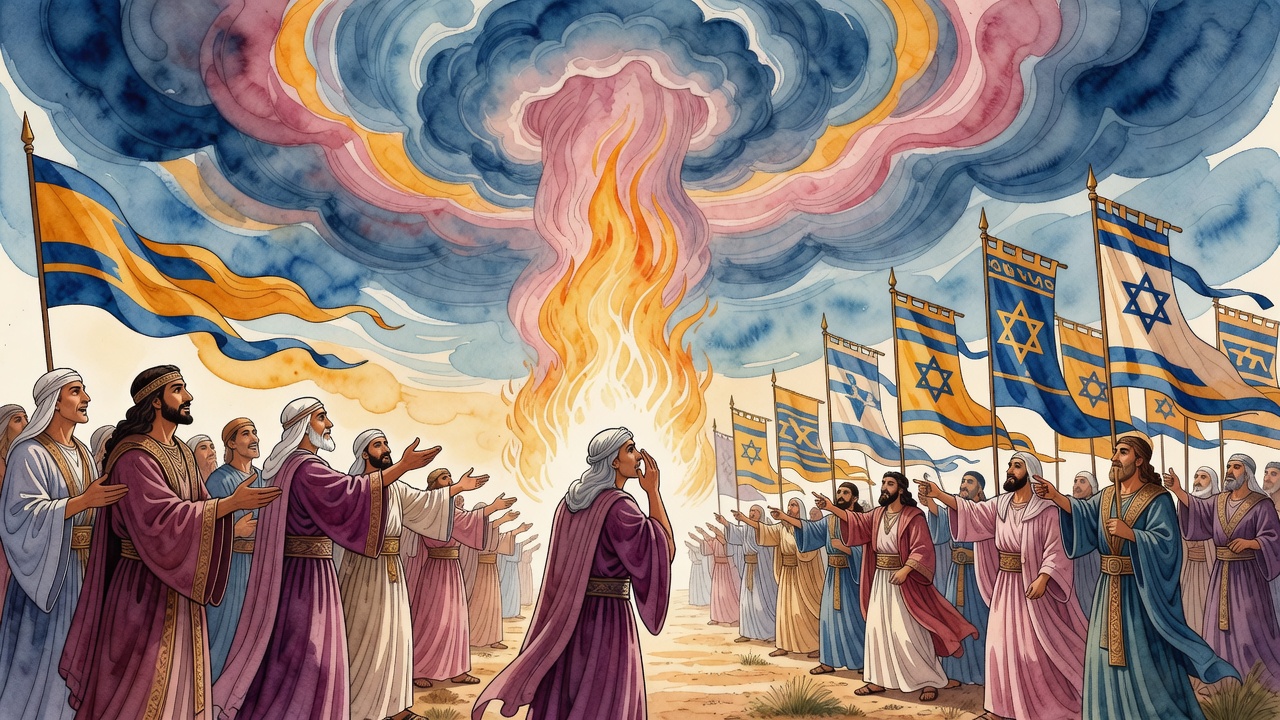
Parshat Devarim5 min read

Moses Waited Until Sichon Fell Before He Rebuked Israel

Israel could have reached the land in eleven days, or three, or one. Moses still waited until Sichon and Og fell before he opened his mouth to rebuke them.

Curated by Arthur · Told by Maggid ·
Table of Contents
  1. Eleven Days, Three Days, One Day, a Hoofprint
  2. Cheshbon as Double Difficulty
  3. Thorns That Became a Prophet
  4. Authority Earned in Public

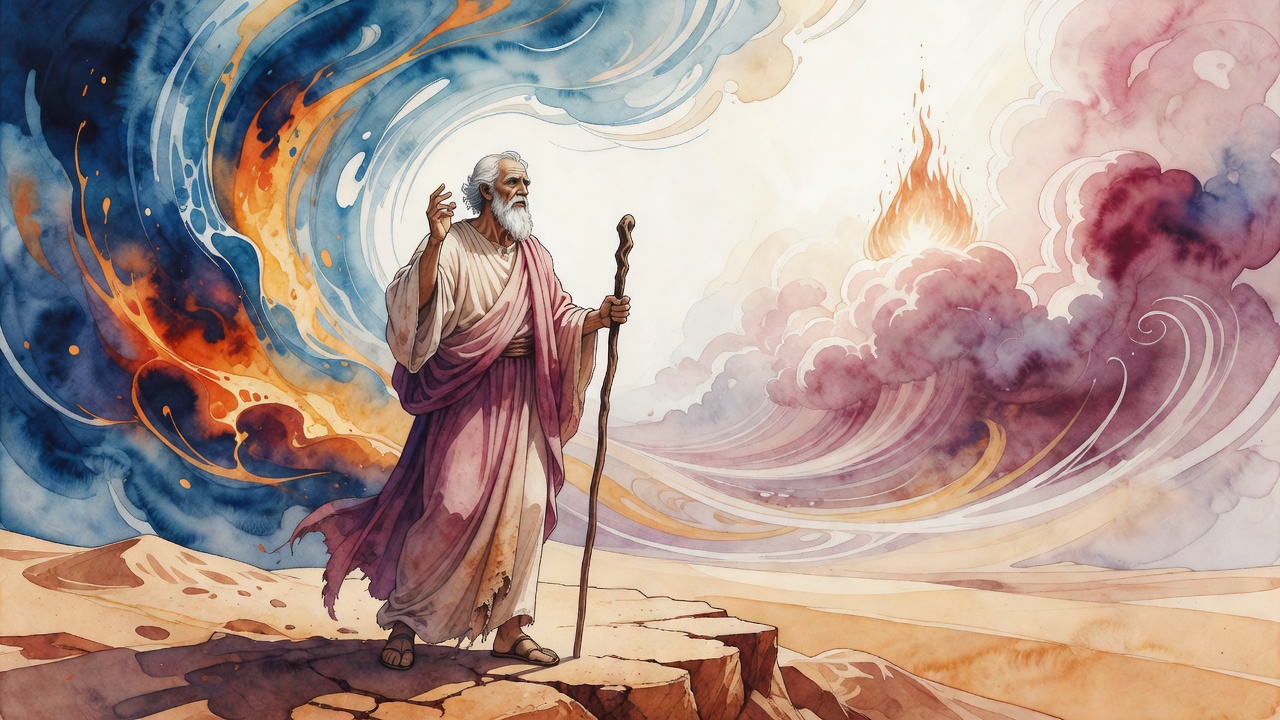
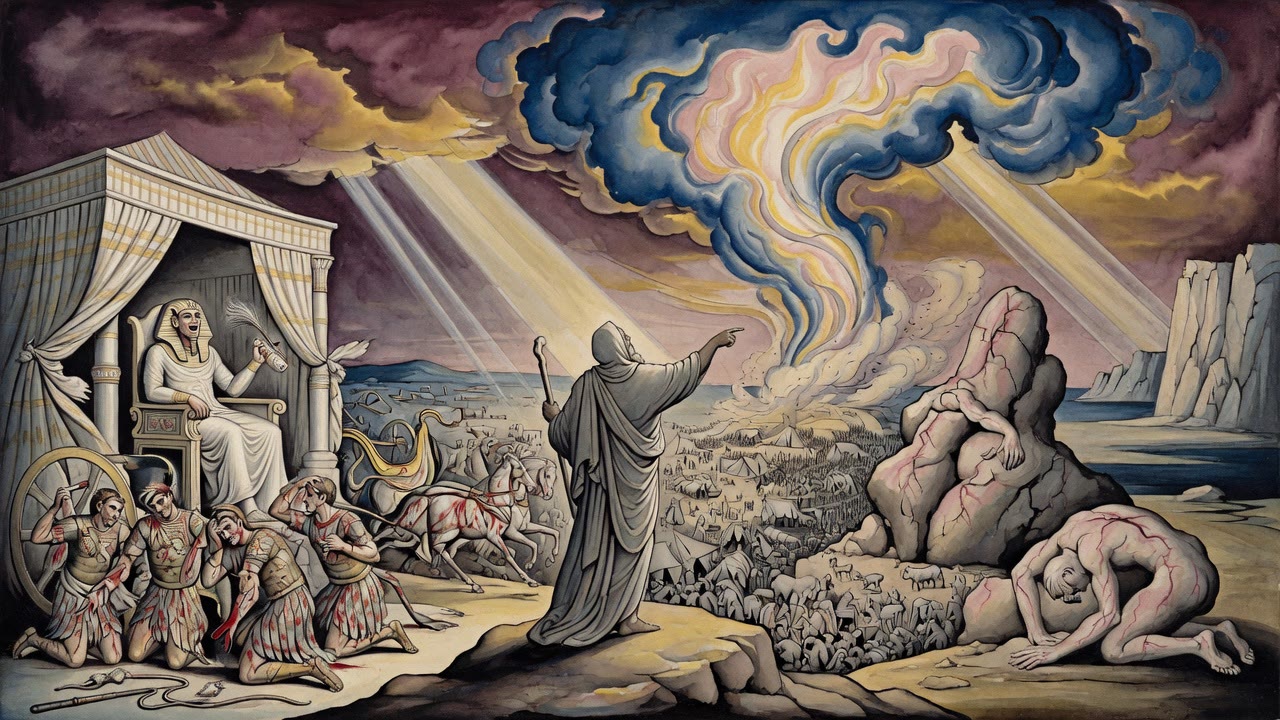
Moses had a speech sitting in his chest like a stone. Israel needed rebuke. He would not throw the stone while they could say he threw it from weakness. "If I rebuke Israel first, they will say, Because he has no strength he rebukes us." So he waited. He waited until Sichon king of the Emori in Cheshbon fell, and Og after him. Strength first. Words second.
Moses Waited Until Sichon Fell Before He Rebuked Israel Click for full size

The land of Sichon was hard even without Sichon. Sichon was hard even without the land. Together they were a lock. Moses broke the lock in sight of the people. Only then did Deuteronomy's long rebuke begin to leave his mouth with authority that could not be laughed off as an old man's bitterness.

Eleven Days, Three Days, One Day, a Hoofprint

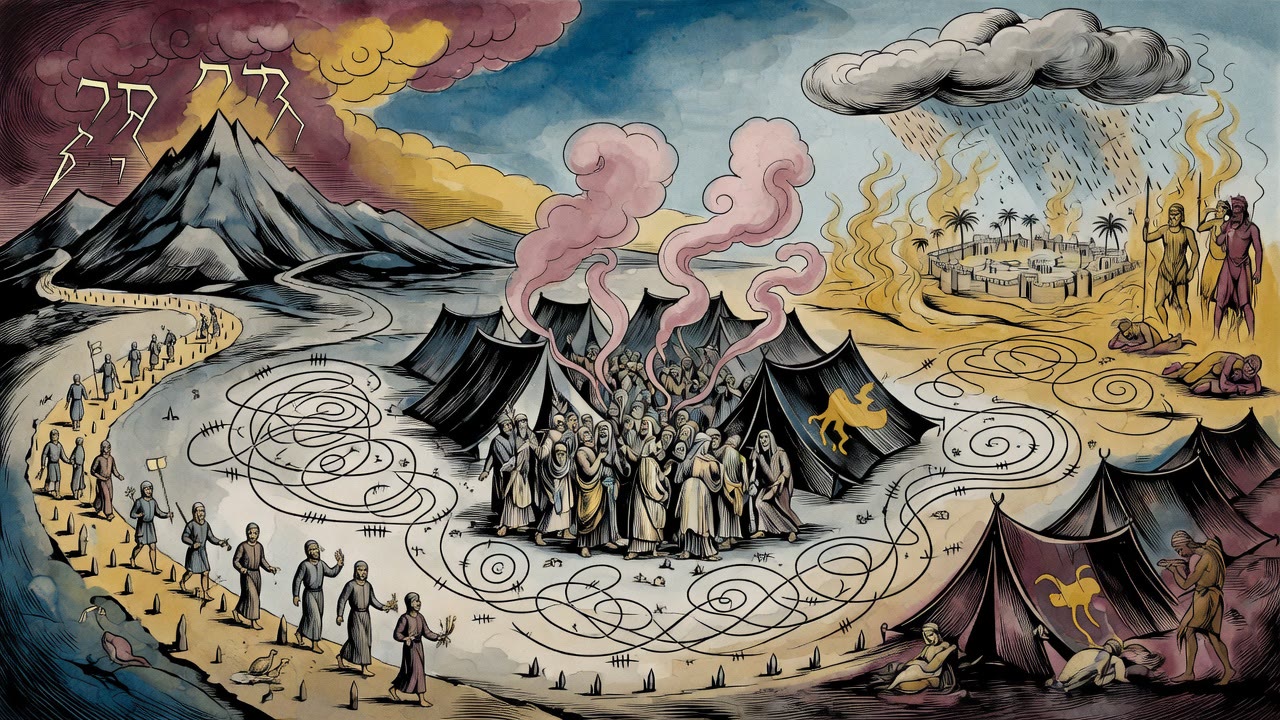
Sifrei Devarim counts the road that might have been. From Horeb to the edge of the land, eleven days, if Israel had been meritorious. They corrupted their ways, and forty years answered forty spy days, a day for a year (Numbers 14:34). Rabbi Yehudah presses further. They traveled from the mountain of the Lord a journey of three days (Numbers 10:33). In three days they covered eleven days' ground. Merit could have made the whole entry a three-day story.

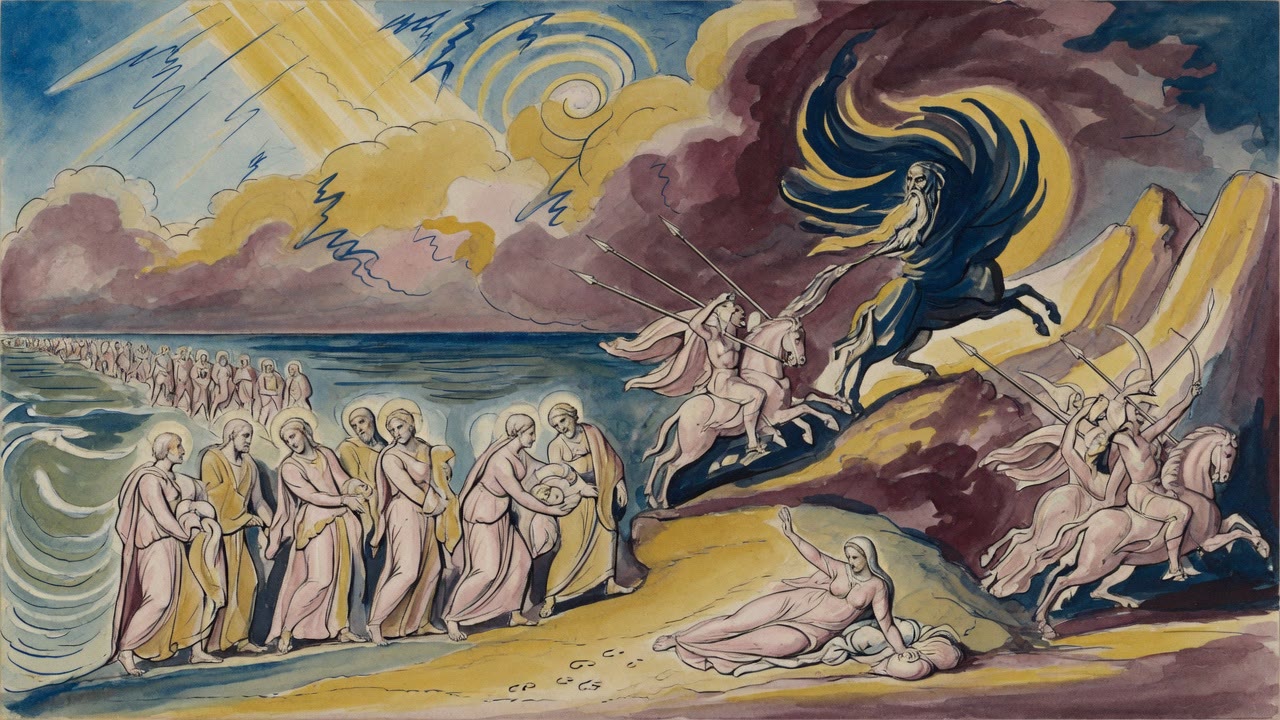
Rabbi B'na'ah hears immediacy in "This day you go out" beside "when the Lord brings you to the land of Canaan" (Exodus 13:4-5). One day. Abba Yossi in the name of Cohein Bardela goes to the limit. If they had been worthy, they would have entered as soon as the horses' hooves came up from the sea (Deuteronomy 1:21). Wet hoof, dry conquest. The midrash stacks counterfactuals until the actual forty years feel like a chosen weight, not a geography problem.

Moses lived inside that weight. He still refused to lecture before victory. Lost time did not license weak timing.

Cheshbon as Double Difficulty

Scripture names Sichon king of the Emori who dwelt in Cheshbon with a fullness the Sifrei opens carefully. Even if the king were soft, the city would be hard. Even if the city were soft, the king would be hard. How much more when both are hard. The victory Moses waited for was not a skirmish for show. It was a demonstration that the generation could break a double bolt.

Og's fall after Sichon doubled the proof. Moses then opened the book of remembrances and failures. Rebuke without recent salvation sounds like scolding. Rebuke after recent salvation sounds like a general still allowed to lead. He chose the second sound.

The people who might have entered in a hoofprint's time now heard their history after watching Amorite walls fail. Shame and pride sat in the same assembly. Moses used both.

Thorns That Became a Prophet

Another midrash sets a later bill on an unfinished command. If Israel does not drive out the land's inhabitants, the remnant will be barbs in their eyes and thorns in their sides (Numbers 33:55). Joshua spared Rahab when Jericho fell (Joshua 6:25). From Rahab's line, the sages say, came Jeremiah. The thorn is not only a soldier in the hills. It is a prophet's mouth.

"The words of Jeremiah son of Hilkiah" (Jeremiah 1:1) open a book of piercing speech. Lineage becomes commentary. Mercy at Jericho grows a voice that will not let Israel sleep through its compromises. Moses' generation heard rebuke after Sichon. Later generations heard rebuke from a thorn the conquest left alive. Both are pedagogies of consequence.

Moses could not see Jeremiah yet. He could see Sichon fall. He timed his words to the fall he could show.

Authority Earned in Public

Leadership, in this telling, is partly theater of competence. Not false theater. Earned sequence. Win the hard city. Then name the old sins. The forty-year delay already proved failure. The Amorite victories proved that failure was not the only truth left in them. Moses spoke into that narrow open window.

Eleven days haunted the march like a ghost schedule. Three days and one day and a wet hoof haunted it more. Against those ghosts Moses set the corpses of two kings and the silence of Cheshbon's broken pride. Then he rebuked. The stone left his chest and became Deuteronomy.

Israel stood between what might have been a short road and what still could be a faithful ending. Moses, having waited long enough to be believed, finally did not wait any longer.

He had shepherded them from Raamses under a moon made for appointed times, a calendar that starts only after the sun knows its setting. The first journey was already a lesson in order. The last speeches before his death were a lesson in sequence. Order the months. Order the battles. Order the rebuke so it cannot be dismissed as the grumble of a man who never won.

Sichon's fall was the credential. Og's fall was the seal. The eleven-day ghost was the grief under both. Moses spoke as the only leader who had seen the sea open and the spies return, who had watched merit evaporate into graves and still refused to waste a hard-won silence. When he finally rebuked, the people could not say he lacked strength. They could only decide whether to hear.


← All myths

From the tradition

Sources

3 sources

The texts behind this telling. Some cards carry a translation of the source; others are our own retelling of it, and each card says which. Every card links out to the original.

Sifrei Devarim 3:3Sifrei Devarim

Retold in our words. Read the original at the link below.Sifrei by Rabbi Shraga Silverstein · CC-BY

He knows they need a good talking-to, a serious reminder of their responsibilities. But he can't just launch into a lecture, can he? Timing, as they say, is everything.

Sifrei Devarim tells us that Moses thought to himself, "If I rebuke Israel first, they will say, 'Because he has no strength he rebukes us!'" It's a fascinating insight into Moses's leadership. He understood the psychology of his people. He knew that if he came across as weak or vulnerable, his words wouldn't carry the weight they needed to.

So what did he do? He waited. He waited until "after they entered the land of Sichon and Og and he defeated them." Only then did he feel the moment was right. Only after proving his strength and leadership could he deliver the necessary rebuke. It's all there in the text: "Thus, 'after he had smitten Sichon, etc.'"

Let's The text doesn't just say "Sichon." It says, "Sichon, king of the Emori, who dwelt in Cheshbon." And that little detail is packed with meaning.

The Sifrei Devarim explains: Even if Sichon were not formidable, but he lived in Cheshbon, it would be difficult to defeat them, the inhabitants of the land being formidable. And even if the land were not formidable, but Sichon dwelt therein, it would be difficult, the king being formidable. How much more so, when both the king and the land are formidable! Cheshbon wasn't just any city. It was a stronghold. A place known for its strength and its people. So, even if Sichon himself had been a pushover (which he clearly wasn't!), taking Cheshbon would have been a challenge.

But Sichon was formidable. He was a powerful king, a force to be reckoned with. So, even if Cheshbon had been a weak and vulnerable city, Sichon's strength would have made it a difficult target.

The combination of the two? That’s what made this victory so significant. It wasn't just about defeating a king or conquering a city. It was about overcoming seemingly insurmountable odds. It was about showing the Israelites – and perhaps reminding himself – that they were capable of great things.

Moses waited for this moment. He waited for the victory over Sichon and Og, a victory that demonstrated not only his leadership but also the potential of the Israelites themselves. Only then could he speak with the authority and conviction necessary to guide them forward.

So, next time you find yourself needing to speak truth to power, or offer some difficult feedback, remember Moses and Sichon. Consider the timing. Consider the context. And make sure you've earned the right to be heard. Because sometimes, the most important thing you can do is wait for the perfect moment to speak your mind.

Full source
Sifrei Devarim 2:2Sifrei Devarim

Retold in our words. Read the original at the link below.Sifrei by Rabbi Shraga Silverstein · CC-BY

Sifrei Devarim imagines the road Israel could have taken: eleven days from Horeb to the edge of the land, if the people had been ready.

If the Israelites had been meritorious – if they had acted in a way that pleased G-d – they could have entered Eretz Yisrael, the Land of Israel, in just eleven days. But because they "corrupted their ways," as it says, the journey was stretched into forty years. This, of course, is based on the verse in Bamidbar (Numbers 14:34): "According to the number of days that you spied out the land, forty days, a day for a year, a day for a year, shall you bear your sins."

It gets even more interesting.

Rabbi Yehudah takes it a step further. He says, wait a minute, did it even take eleven days? Didn't it actually take just three? He points to Bamidbar (Numbers 10:33): "And they traveled from the mountain of the L-rd a journey of three days." Rabbi Yehudah suggests that in those three days, the Israelites covered a distance that would normally take eleven! So, if they were truly meritorious, they could have entered the Land in just three days. He connects this to the idea of finding a "resting place," which Deuteronomy (12:9) equates with the inheritance that G-d gives.

Now, the Rabbis push back. They ask, was it really an eleven-day distance? Wasn't it actually forty days, referencing the story of Elijah in (1 Kings 19:8), who traveled for forty days and forty nights after eating a miraculous meal? It seems like they're highlighting the miraculous nature of both journeys.

But the "what if" scenarios keep coming!

Rabbi B'na'ah claims that if Israel had been meritorious, they could have entered Eretz Yisrael in a single day! He draws a connection between the verse in Shemot (Exodus 13:4-5) stating, "This day you go out, in the month of spring," and the immediate follow-up, "And it shall be, when the L-rd brings you to the land of Canaan." The implication is immediacy, a rapid transition.

And finally, Abba Yossi b. Chanan, quoting Cohein Bardela, offers the most astounding possibility of all: If Israel had been worthy, they would have entered the Land as soon as their horses' hooves came up from the sea! Referencing (Deuteronomy 1:21), "Go up (from the sea) and possess (the land) as the L-rd, the G-d of your fathers has spoken to you.” Instantaneously.

So, what does all this mean? Why these varying timelines?

Perhaps it's less about the literal number of days and more about the potential that was lost. The Sifrei Devarim seems to be highlighting the idea that the Israelites' actions had profound consequences, shaping not just their present but also their future. It's a message that resonates just as strongly today as it did centuries ago. What kind of "promised land" are we delaying access to through our own actions? What could we achieve if we truly acted in a way that was meritorious? It's a question worth pondering.

Full source
Yalkut Shimoni on Torah 787:6Yalkut Shimoni on Torah

Translation of the source text.Torat Emet (Yalkut Shimoni) + Sefaria Community Translation · CC-BY-NC

"And if you do not drive out the inhabitants of the land" (Numbers 33:55). The Holy One, blessed be He, said to Israel: I said, "You shall surely destroy them" (Deuteronomy 20:17), but you did not do so; rather, "Rahab the harlot" and so forth, "he kept alive" and so forth (Joshua 6:25). Behold, Jeremiah comes from her descendants and makes for you words that are like barbs in your eyes and thorns in your sides. Therefore Scripture needed to say, "The words of Jeremiah son of Hilkiah" (Jeremiah 1:1).

Full source