5 min read

Moses Was Hidden in Creation Before the Nile

Moses was hidden in creation before the Nile carried him. The good seen at his birth reached back to the first light of Genesis.

Curated by Arthur · Told by Maggid ·
Table of Contents
  1. The Good Seen in the Baby
  2. The Serpent Was Already Waiting
  3. The Signs at the Bush
  4. The Coffin Carried Out
  5. The Light That Crossed the Generations

When Moses was born, the house filled with light.

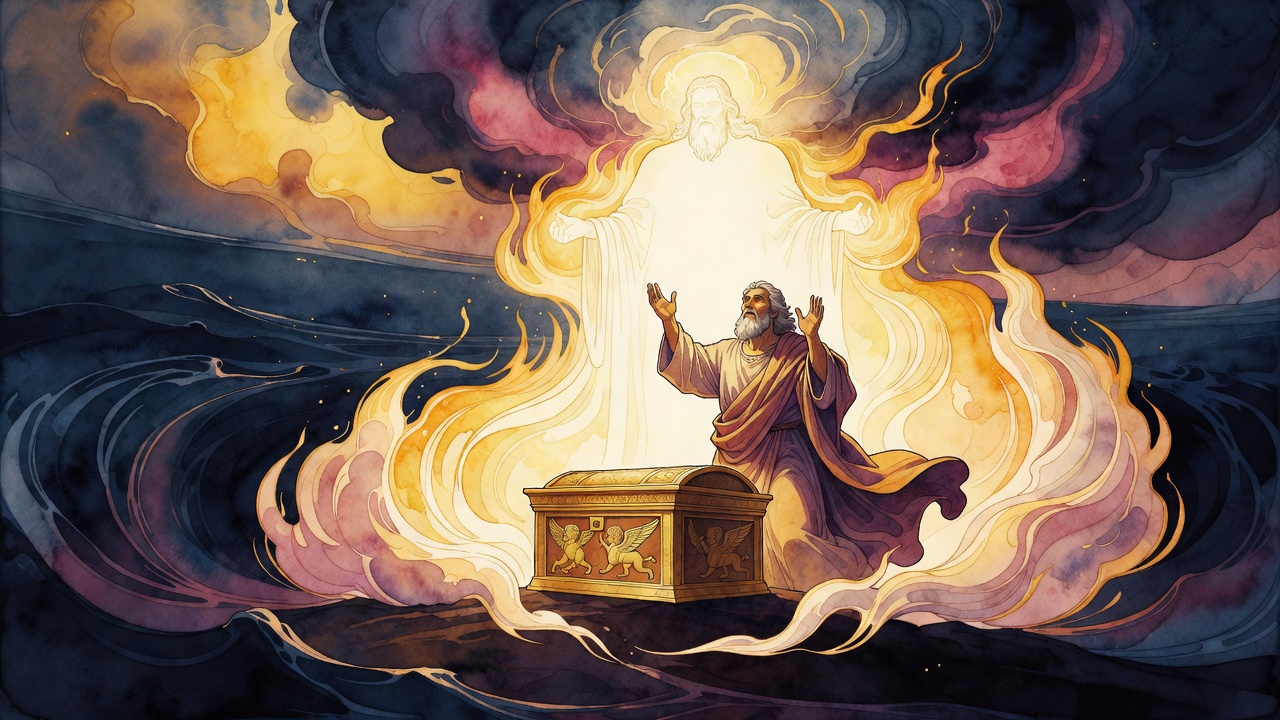
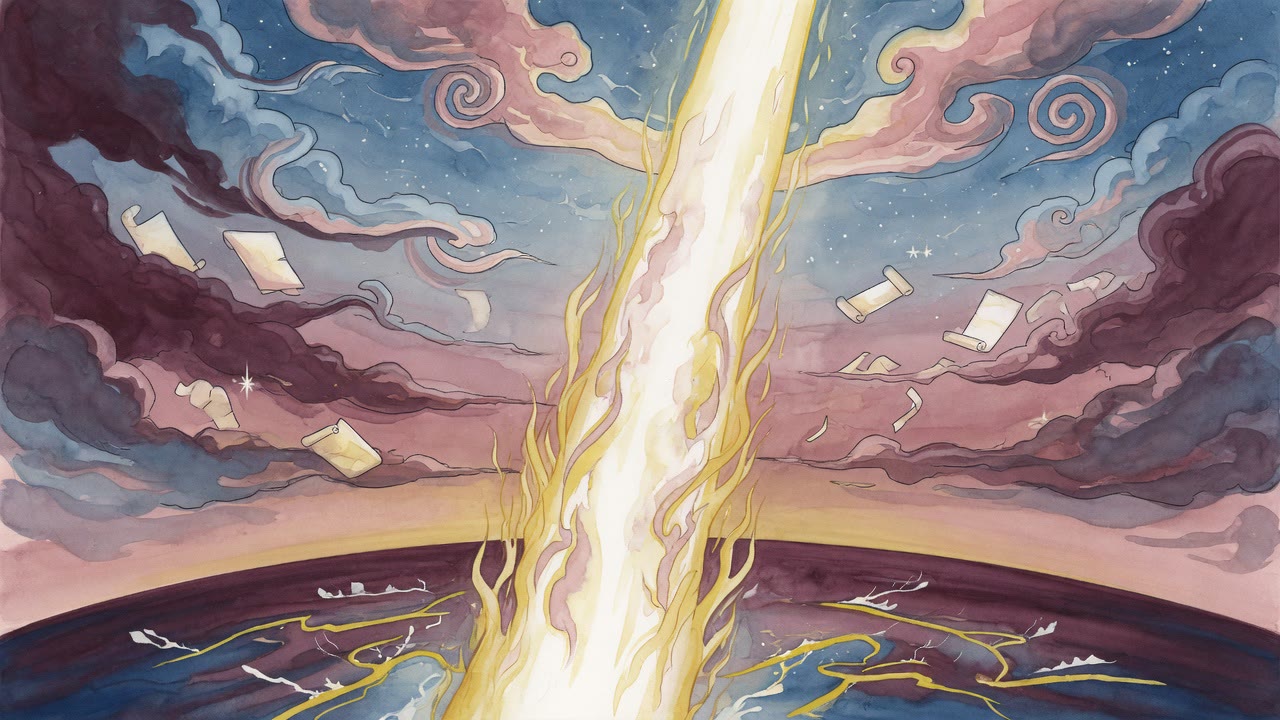
His mother saw that he was good. The word did not belong only to the nursery. It reached back to the first chapter of creation, when God saw the light, and it was good. The baby in Egypt carried a brightness older than Egypt.

Before the Nile held him, creation had already made room for him.

The Good Seen in the Baby

Jochebed did not merely see that her son was beautiful.

Beauty would not have been enough to risk everything. Pharaoh's decree had turned infant boys into hunted lives. A mother hiding a child needed more than tenderness to endure every cry, every footstep outside, every day of danger. She saw good, the kind of good Torah uses for the first light.

That made Moses' birth a creation scene inside a slave house. A small light appeared where Egypt had ordered darkness. The decree said Hebrew boys should vanish into the river. The house said otherwise. It filled with the sign that God had begun again.

For three months, that hidden light had to be guarded like a flame cupped against wind. Every ordinary sound in the house became dangerous because Egypt had made birth itself illegal for sons of Israel. The brightness did not remove the danger. It made the danger worth defying. When the basket finally touched the Nile, it carried more than a hidden infant. It carried the first light into the river Pharaoh had tried to turn into darkness.

The Serpent Was Already Waiting

The struggle Moses would later enter was older than Pharaoh.

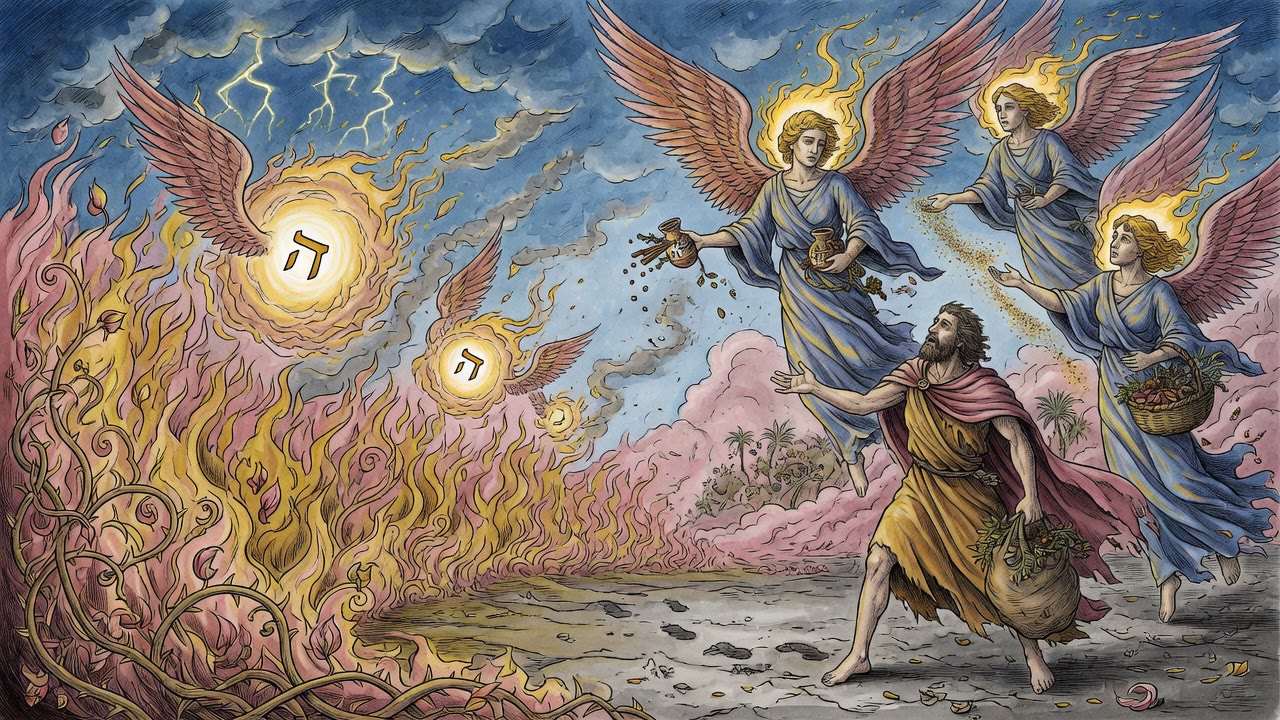
The serpent in Eden had already taught the world how cunning can bend a command. Egypt became another garden turned dangerous, another place where speech was twisted and life was threatened. Pharaoh's decree did not invent the war against the human image. It continued it.

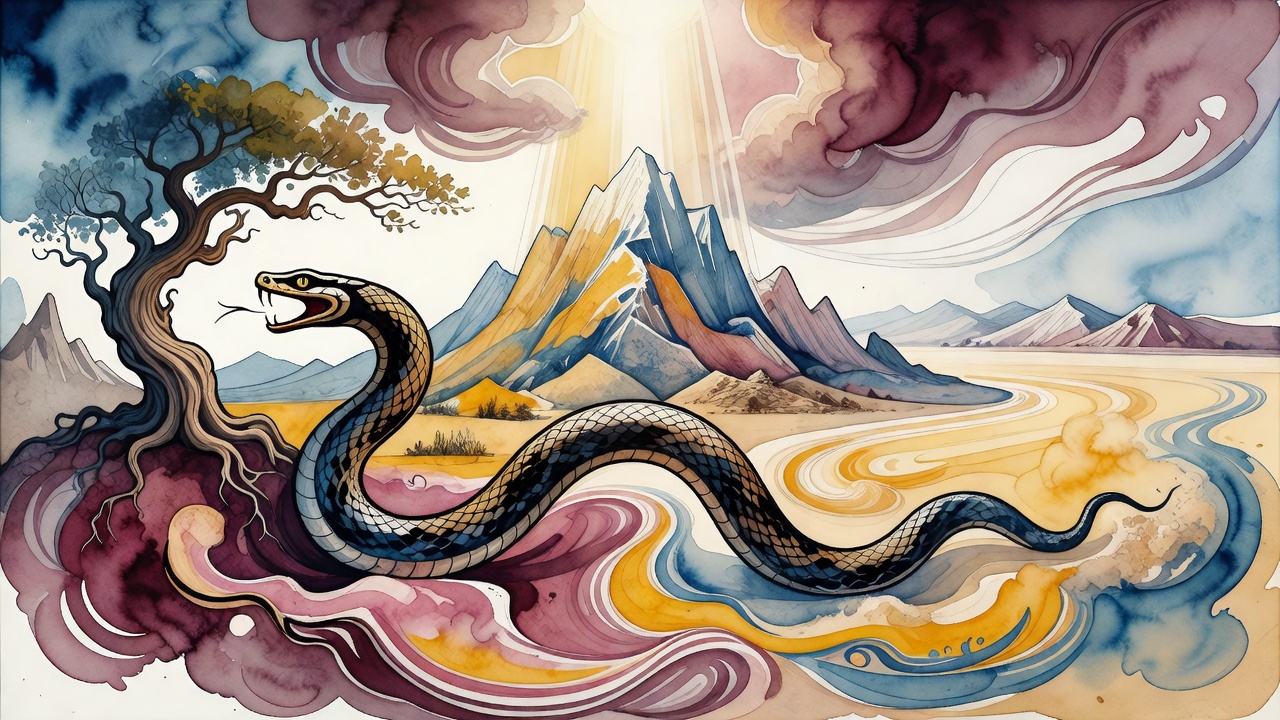
Moses would become the one who answered that old cunning with signs. Staff to serpent. Hand diseased and restored. Water changed before watching eyes. At the bush, God gave him wonders that reached backward into creation's grammar, as if the world itself were being enlisted to undo Egypt's lie.

The Signs at the Bush

Moses did not want to go.

He asked how Israel would believe him. God placed signs in his hands. The staff became a serpent and returned to a staff. His hand turned afflicted and became whole again. Water from the Nile would become blood on dry ground.

Each sign spoke in the language of the first stories. Serpent, body, water, blood, earth. Moses was not given tricks. He was given creation reversed and restored in miniature. Egypt had used water as a grave. God would turn water into testimony. Egypt had tried to make Hebrew bodies disposable. God would show a hand wounded and healed at command.

The Coffin Carried Out

When the time finally came to leave Egypt, Moses remembered the dead.

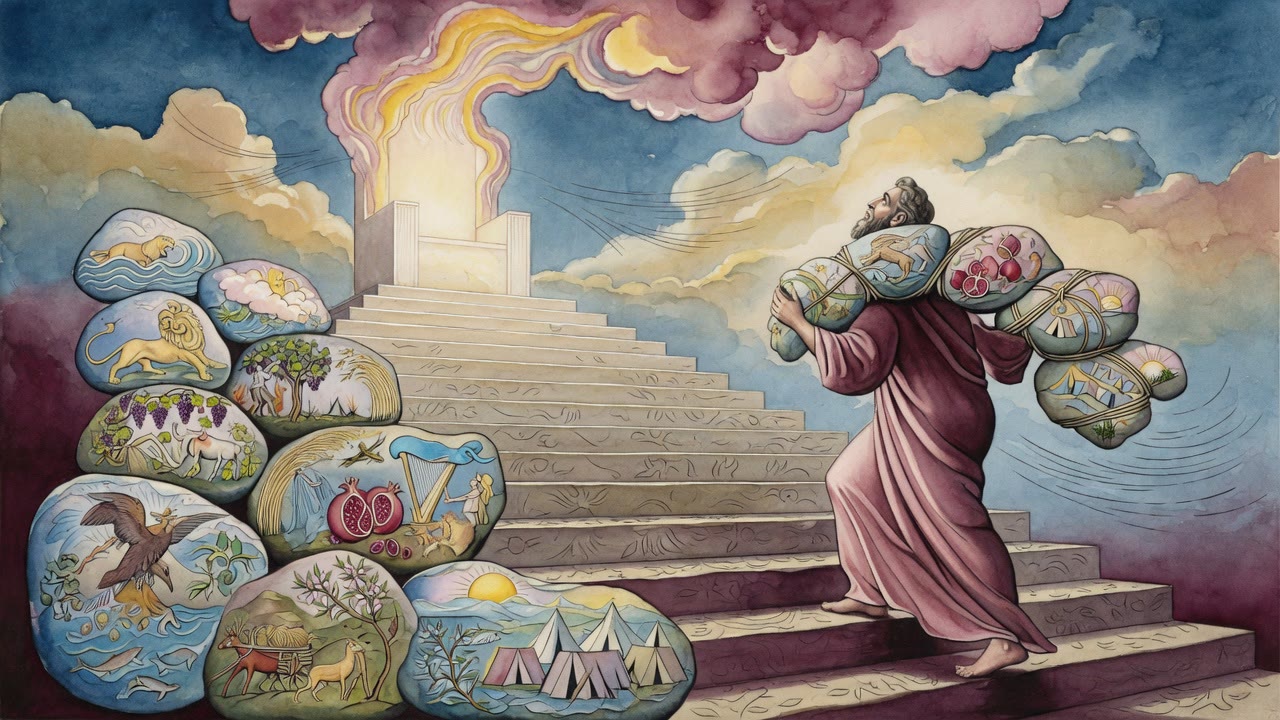
The nation gathered its dough, its children, its fear, its borrowed wealth, and the shock of freedom. Moses went looking for Joseph's coffin. Generations earlier, Joseph had made Israel swear to carry his bones out when God remembered them. The promise had waited under Egyptian years.

Moses found the coffin and brought it with the people. The child whose birth had echoed creation now carried memory through redemption. He did not let the Exodus become only an escape for the living. The dead who had trusted the promise would leave too.

The Light That Crossed the Generations

Moses' life kept joining beginnings to endings.

Creation light shone at his birth. Eden's serpent reappeared in the signs at the bush. The Nile that threatened him became the water he would overpower. Joseph's buried promise rose with the departing slaves. Every stage of his life pulled an older thread into the present crisis.

That is why the good seen in the baby mattered. It was not sentimental. It was diagnostic. Jochebed saw a child whose life had been written into the structure of rescue before he had opened his mouth.

Egypt saw one more Hebrew boy. Heaven saw the man who would carry creation's first light into the house of bondage and walk out with the bones of a promise.


← All myths

From the tradition

Sources

4 sources

The texts this telling draws on, in full. Open a card to read inline, or expand it for a wider, quieter read.

Shemot Rabbah 1:20Shemot Rabbah

The Torah tells us, "The woman conceived and bore a son; she saw that he was good and she hid him for three months" (Exodus 2:2). But what lies beneath that simple verse? The ancient Rabbis, in their wisdom, found layers of meaning.

Rabbi Yehuda, in Shemot Rabbah, points out the juxtaposition of conception and birth. He suggests that just as her conception was painless, so too was the birth. From this, we learn something profound: righteous women, like Moses' mother, were exempt from the decree against Eve – the pain of childbirth. A beautiful evidence of her piety. And then, "she saw that he was tov" – that he was good. What does tov really mean here? Rabbi Meir, in a fascinating interpretation, says his name was actually Tov, meaning "good." Rabbi Yoshiya offers a similar idea, suggesting his name was Toviya, a variation of the same concept. Rabbi Yehuda has yet another idea: that the baby was fit for prophecy right from birth. Some even say he was born already circumcised!

The rabbis offer an even more luminous interpretation. They say that the moment Moses was born, the entire house was filled with light. It echoes the creation itself. As we find in (Genesis 1:4), “God saw the light, that it was good [tov].” The light of creation, the light of Moses’ birth – both described with the same word, tov. A powerful connection, isn't it? It suggests that Moses’ birth was nothing short of a new creation, a beacon of hope for the Israelites.

The verse continues, "She hid him for three months." Why three months? Shemot Rabbah explains that the Egyptians were counting from the moment Moses' parents remarried (after Pharaoh's decree to throw male children into the Nile), but she was already three months pregnant. So, she had a head start, a precious few months to protect her son.

But the time came when “she was no longer able to hide him.” (Exodus 2:3). Why not? What changed? This is where the Midrash (rabbinic interpretive commentary) gets particularly poignant. The Egyptians, cunning and cruel, devised a terrible plan. They would enter houses where they suspected a baby had been born and bring with them a small Egyptian baby. They would make the Egyptian baby cry, knowing that the Israelite baby would hear and cry along with it, revealing its presence.

This image is captured in the verse from (Song of Songs 2:15): "Catch us foxes, little foxes that ruin vineyards…" But Shemot Rabbah offers an alternative reading: "The foxes held little foxes against us in order to ruin the vineyard." The Egyptians, like foxes, used their own "little foxes" – the crying babies – to expose and destroy the Israelite children. The Midrash beautifully compares the Egyptians to foxes, known for their slyness, and Israel to a vineyard, vulnerable and precious.

And so, Moses' mother, in her desperation, takes a fateful step. “She took for him a wicker basket and coated it with clay and with pitch; she placed the child in it and placed it among the reeds on the bank of the Nile” (Exodus 2:3). This is the beginning of Moses' incredible journey, a journey that starts with a mother's love, a hidden light, and a desperate act of faith.

What does this all mean for us today? Perhaps it's a reminder that even in the darkest of times, hope can be found in the most unexpected places – in the birth of a child, in a mother's unwavering love, and in the enduring light of the Divine. And that sometimes, even the smallest among us can become the greatest of leaders.

Full source
The Midrash of Philo 1:1The Midrash of Philo

Why does Moses, in the book of Genesis, specifically call out the serpent as being the craftiest of them all?

That question, in fact, is the very starting point of a fascinating exploration in The Midrash of Philo. Now, before you get intimidated, don't worry! Midrash (מדרש) simply means “interpretation” or "inquiry." It's how ancient rabbis and scholars dug deep into the text of the Torah, searching for hidden meanings and lessons. And Philo? He was a Jewish philosopher who lived in Alexandria, Egypt, way back in the first century CE. He tried to bridge the gap between Jewish tradition and Greek philosophy. So, The Midrash of Philo isn't a midrash in the traditional rabbinic sense, but rather a collection of interpretations and reflections on the Torah, attributed to him.

So, back to our snake. What makes him so darn clever?

Well, The Midrash of Philo doesn't give us a simple, straightforward answer. Instead, it invites us to think critically about the nature of temptation, deception, and the power of persuasive words. Was it simply that the serpent was good at tricking people? Or was there something more profound at play?

Perhaps, the text subtly suggests, the serpent’s cunning lies in his ability to exploit existing vulnerabilities. Maybe Eve already had doubts, questions, or a yearning for something more. The serpent, in this reading, simply provided the nudge, the justification, the seemingly logical argument that allowed her to take the leap. Temptation rarely comes out of nowhere. It usually preys on our existing desires, fears, or insecurities. The truly cunning deceiver isn't the one who invents those feelings, but the one who knows how to manipulate them.

And isn't that a powerful lesson for us today? To be aware of our own vulnerabilities, to examine our motivations, and to be wary of those who seem to offer easy answers or quick fixes. Because sometimes, the most cunning serpent isn't slithering in the garden, but whispering in our own minds.

Full source
Shemot Rabbah 3:13Shemot Rabbah

It's often because the Rabbis, in their infinite wisdom, saw connections we might miss. Take the story of Moses at the burning bush in Exodus, chapter 4. God gives him three signs to convince the Israelites that he's been sent to redeem them. But are these signs just miracles, or is there something deeper going on?

The first sign is the most striking: Moses puts his hand in his bosom, and when he takes it out, it's leprous, "like snow" (Exodus 4:6). A chilling image. But why this particular affliction?

The Shemot Rabbah, a compilation of rabbinic interpretations on the Book of Exodus, offers a fascinating explanation. God tells Moses, "It is just like the serpent who, when he engaged in slander, I afflicted him with leprosy." Remember the serpent in the Garden of Eden? According to the Midrash, the serpent's punishment, "Cursed [arur] are you from all the animals" (Genesis 3:14), included leprous spots. Rabbi Elazar says that those spots on the serpent are leprous marks. Slander, it seems, is a particularly virulent poison.

Why the bosom? The Midrash continues: "It is because slander is typically told in secret." – gossip, lashon hara (evil tongue), thrives in hushed tones, behind closed doors. As it says in (Psalms 101:5), "He who slanders his neighbor in secret, I will destroy [atzmit]." The Midrash connects atzmit to leprosy, citing (Leviticus 25:23): “In perpetuity [litzmitut],” which is translated as completely [laḥalutin]. The passage then references Megillah 8b to show that muḥlat, derived from the same root as laḥalutin, is used in the context of leprosy.

So, Moses's leprosy is a direct consequence of his initial reluctance to accept God's mission. According to Rabbi Yehoshua of Sikhnin, said in the name of Rabbi Levi: From here you learn that anyone who suspects another of something which is untrue of him, is afflicted in his body.

But there's more! God then tells Moses to put his hand back in his bosom, and when he removes it, it's healed (Exodus 4:7). How does this relate to the Israelites? The Midrash offers a powerful analogy: "Just as a leper causes impurity, so do the Egyptians render you impure. And just as he [the leper] is purified, so is the Holy One blessed be He destined to purify Israel."

The leprosy and its healing become a metaphor for the Israelites' experience in Egypt – a period of spiritual impurity and suffering, followed by eventual redemption and purification.

Our Rabbis say that the punishment was delayed until Moses' hand was outside of his bosom, so as to not cast aspersions on Moses’s flesh. However, regarding the healing, it was healed in his bosom. Alternatively, from here punishments are delayed before being exacted upon the righteous, while the [divine] attribute of goodness takes effect quickly.

Finally, there's the third sign: turning water into blood (Exodus 4:9). The Shemot Rabbah connects this to Moses's later sin of striking the rock to bring forth water (Numbers 20:10). The Midrash sees a link between the word vayazuvu ("flowed out") in (Psalms 78:20) and the blood flow described in (Leviticus 15:25). The Midrash suggests that Moses was punished through the water turning into blood, a consequence of his lack of faith.

While the leprosy and the snake were reversed, the blood was not. The first two signs were restored to their original state, but the sign of the blood was not restored to its original state because He did not wish to forgive Moses for the sin of the water.

What does this all mean for us today? Perhaps it's a reminder of the power of our words, the importance of faith, and the cyclical nature of suffering and redemption. Just as Moses's hand was healed, and just as the Israelites were eventually freed from Egypt, we too can find healing and redemption, even in the darkest of times.

These ancient texts invite us to see beyond the surface of the biblical narrative and to uncover the hidden layers of meaning that resonate across generations. It reminds us that even seemingly simple stories can hold profound lessons about human nature, divine justice, and the enduring hope for a better future.

Full source
Shemot Rabbah 20:19Shemot Rabbah

The familiar version gives us about the plagues, the parting of the Red Sea.. but there's a smaller, more personal story woven into the grand narrative of the Exodus. It's a story of loyalty, promises, and a very important coffin.

The Torah tells us, "The children of Israel ascended ḥamushim" – armed, or perhaps, in battle array (Exodus 13:18). But amidst all the preparations for freedom, Moses took on a special task: retrieving the bones of Joseph. "Moses took Joseph’s bones with him, as he had administered an oath to the children of Israel, saying: 'God will remember you; and you shall take my bones up with you from here'" (Exodus 13:19).

Why was this so important? Why risk slowing down the entire Exodus for some old bones?

Shemot Rabbah, a collection of rabbinic interpretations on the Book of Exodus, gives us some fascinating insights. It highlights the contrast: "All Israel were engaged with silver and gold and Moses was engaged with Joseph’s bones." While everyone else was focused on the spoils of Egypt, Moses was focused on fulfilling a promise.

The Holy One, blessed be He, recognized this. He said to Moses, "In your regard, ‘the wise hearted will take commandments’ is fulfilled." (Proverbs 10:8).: Joseph was obligated to bury his father Jacob. But Moses? He had no such familial obligation to Joseph. Yet, he took it upon himself. And because of that, God says, "Likewise, I, who have no obligation to any creature, I will tend to you and bury you, as it is stated: 'He buried him in the canyon' (Deuteronomy 34:6)."

It's a beautiful concept of divine reciprocity. Moses showed selfless dedication, and God, in turn, promised to care for him.

But how did Moses even find Joseph’s bones? Where were they hidden after all those years?

The Midrash offers a few possibilities. Some say Seraḥ, the daughter of Asher, revealed the location. According to Ginzberg's Legends of the Jews, Joseph was buried in the Nile. Moses then cast a shard into the river, inscribed with "arise bull," a reference to Joseph being described as the "firstborn bull" in Moses’s final blessing (Deuteronomy 33:17). This acted like a magical summons, compelling Joseph’s remains to surface.

Another tradition says Joseph was buried in the royal palace, protected by magical golden dogs that would bark and alert everyone if anyone approached. Moses silenced them, fulfilling the prophecy, "But for all of the children of Israel no dog will extend its tongue" (Exodus 11:7).

Then, Moses cried out: “Joseph, Joseph, the time has arrived for what you said: 'The Lord will remember you' (Genesis 50:25)!” Immediately, the coffin began to rock, and Moses retrieved it.

Imagine that scene. The weight of history, the power of a promise, and the faith that even in death, redemption is possible.

The story doesn't end there. Joseph’s bones accompanied the Israelites for forty years in the wilderness. The Zohar tells us that this wasn't just symbolic. The presence of his remains had a real impact. It's even suggested that the "men who were impure by reason of a corpse [nefesh (the vital soul) adam]" (Numbers 9:6) were those carrying Joseph's coffin. Their inability to participate in the Passover offering led to the institution of Pesaḥ Sheni, the "second Passover," a month later. "Thanks to your bones," God says, "they perform the minor Pesaḥ.”

But why the double oath, "as he [Joseph] had administered an oath [hashbe’a hishbia] to the children of Israel"? Rabbi Levi explains that Joseph extracted two oaths: one where he swore he held no grudges against his brothers for selling him into slavery, and one where the brothers swore the same against him.

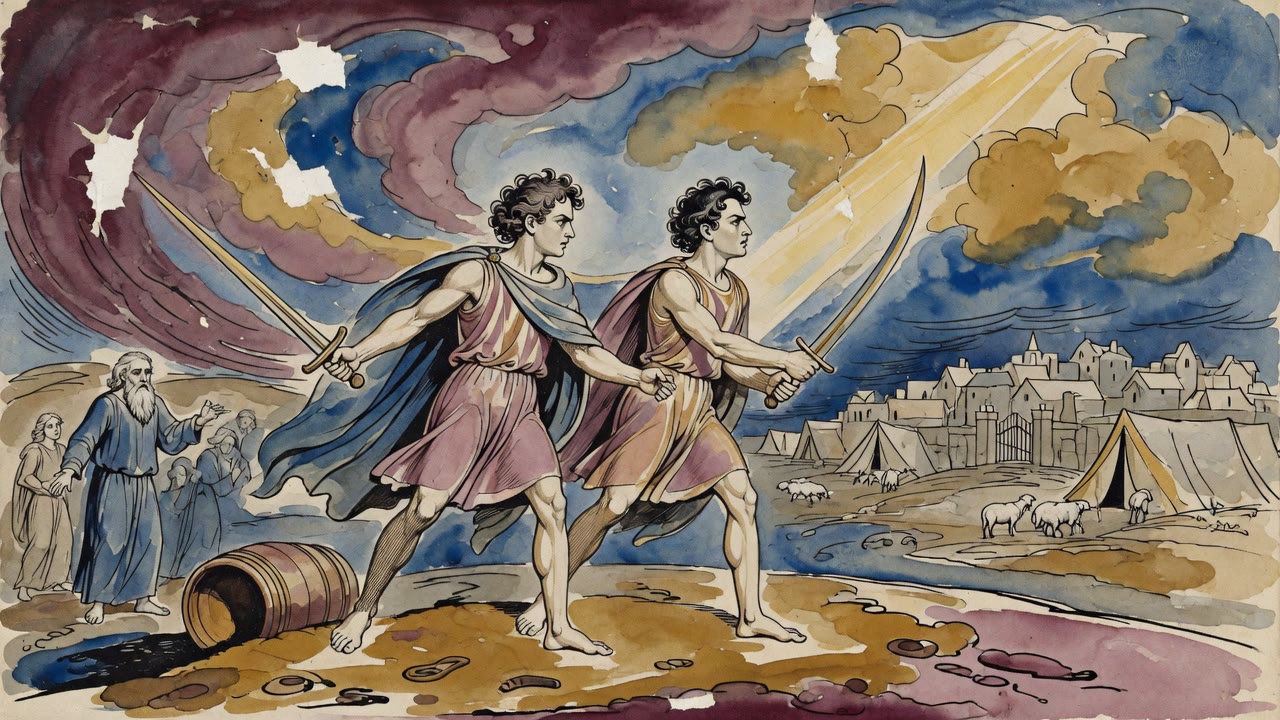
Rabbi Levi offers a powerful parable. It’s like someone who stored wine in a cellar. Thieves stole the barrel and drank the wine. When the owner finds out, he says, "You drank the wine, restore the barrel to its place!" Joseph's brothers abducted and sold him. Now, as he's about to die, he tells them, "Please, my brothers, you abducted me alive from Shekhem, restore my bones to Shekhem." And that's why, as we read in (Joshua 24:32), "The bones of Joseph that the children of Israel took out of Egypt, they buried in Shekhem."

So, the next time you think about the Exodus, remember Joseph’s bones. Remember the power of promises, the importance of loyalty, and the idea that even in the midst of grand historical events, it's the small acts of kindness and dedication that truly matter. They are the things that God sees, remembers, and ultimately, rewards. What "bones" are we being called to carry? What promises are we being called to keep, even when it's difficult?

Full source