5 min read

Moses Will Not Leave the Circle for Miriam

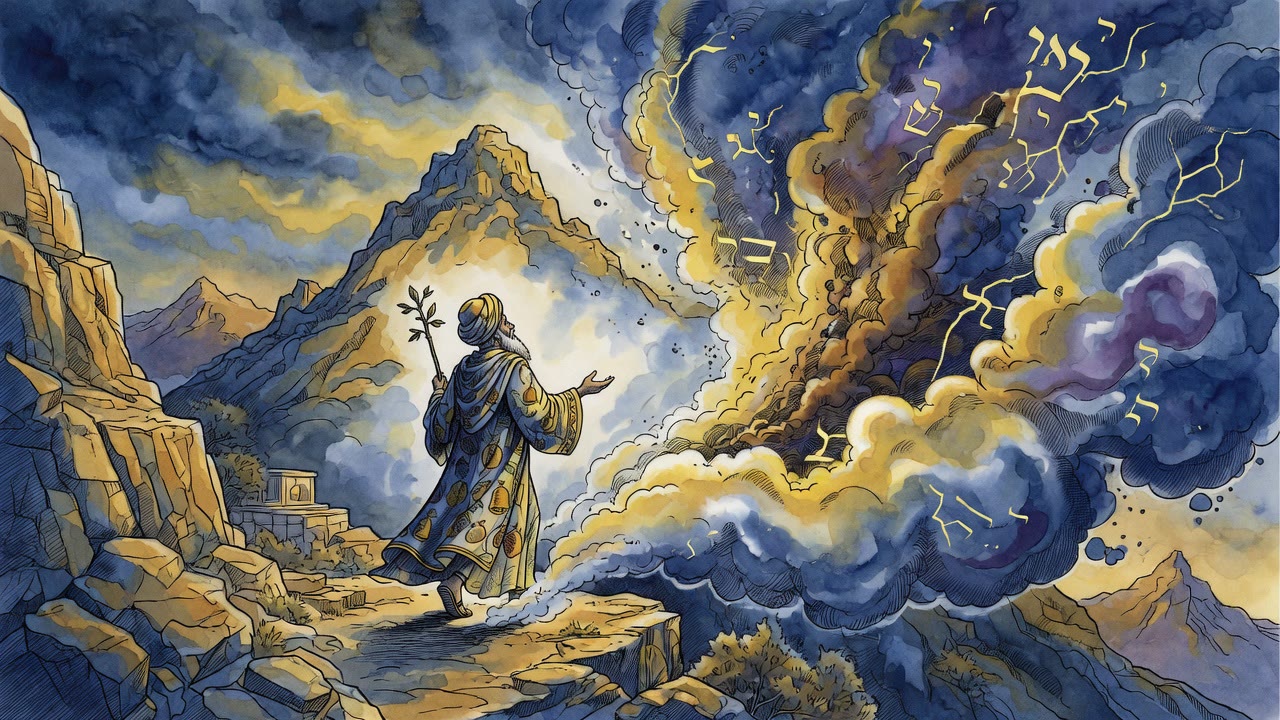
Moses, who once walked the brick yards urging Israel not to break, draws a circle and refuses to step out until God shortens Miriam's shame.

Curated by Arthur · Told by Maggid ·
Table of Contents
  1. The Man Who Walked the Yards
  2. Why Shout So
  3. Seven Days Outside
  4. The Camp Watches the Ring

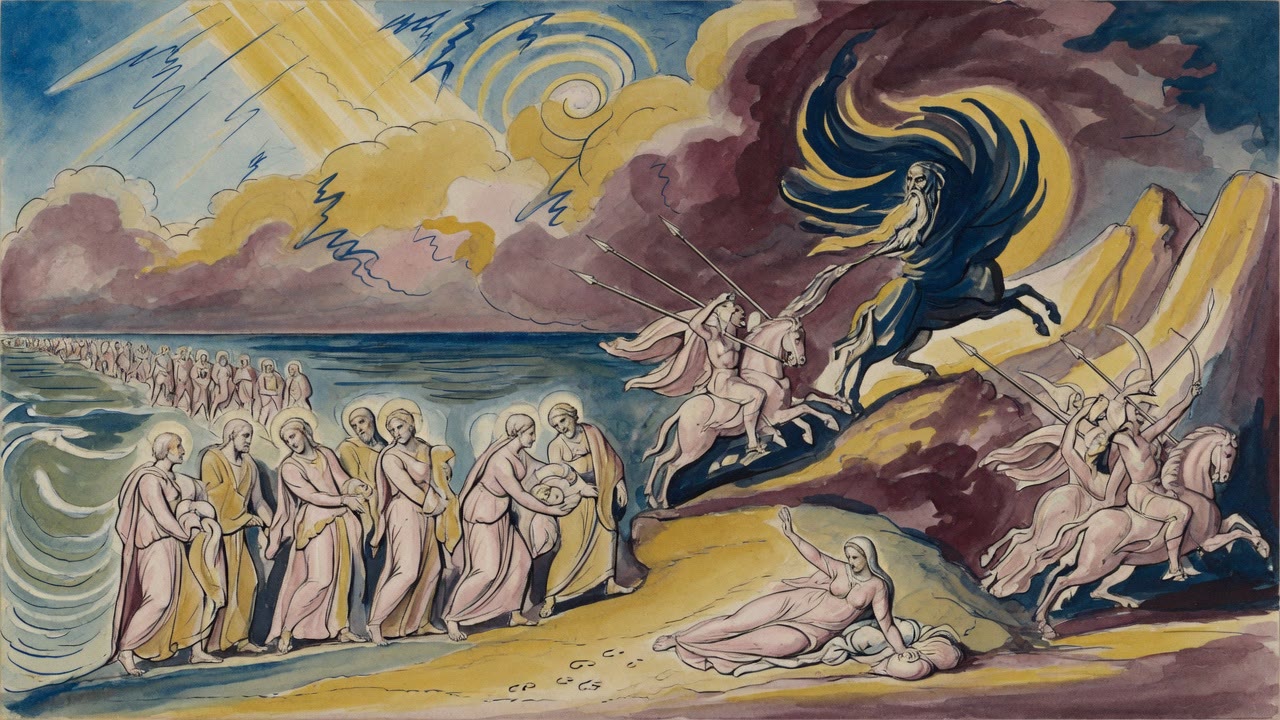
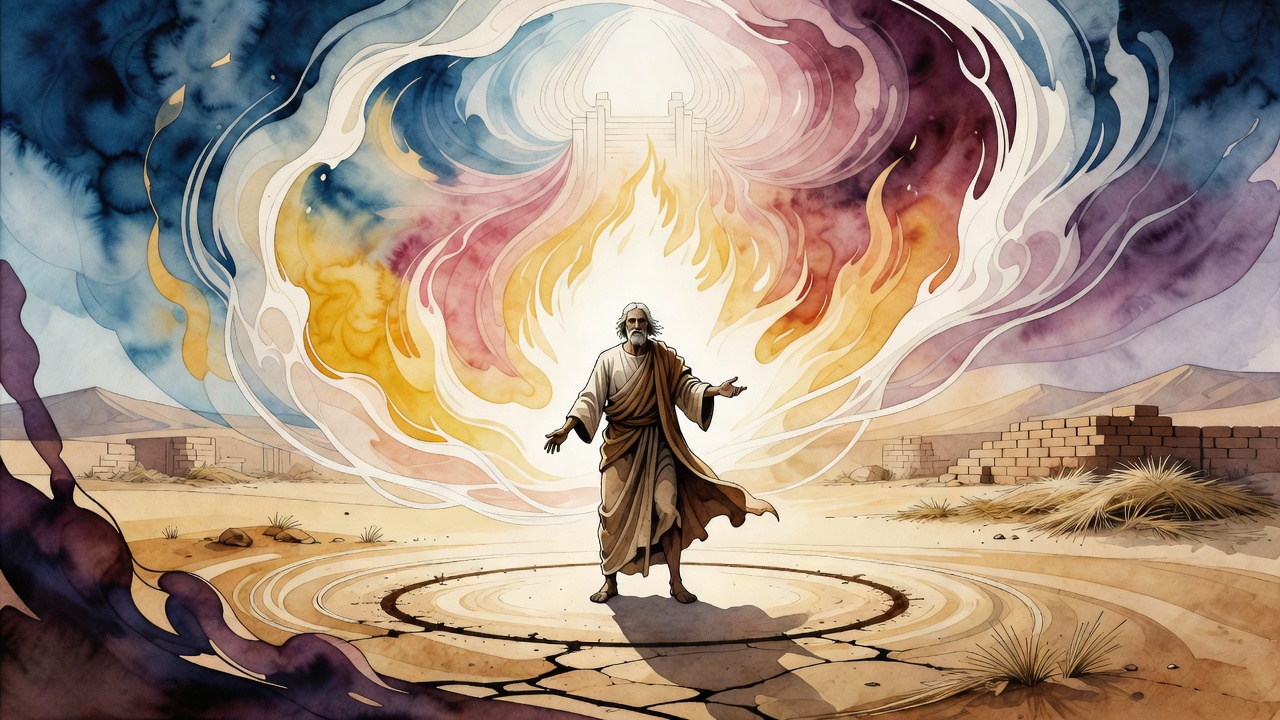
Miriam's skin had turned against her. White patches of leprosy marked her for isolation, and the camp already knew how to step back from a body under that mark. Aaron found soft words. Moses found a place on the ground and drew a circle around his own feet.
Moses Will Not Leave the Circle for Miriam Click for full size

"I will not go from this spot," he said to God, "until Thou shalt have healed my sister."

He kept the prayer short on purpose. Too long, and someone would say he was performing. Too long, and someone else would say he prayed harder for Miriam than for the people. The circle was not theater. It was a vow with dirt under it. His heel scored the line again so no one could claim he had drawn it soft.

The Man Who Walked the Yards

Before any staff of office, Moses had walked Egyptian brick yards with nothing but sentences. He had no plagues yet, no sea split, no mountain fire. He had a people bent under quotas and a mouth that would not stay sealed. He moved from crew to crew while overseers shouted weights and counts.

"My dear brethren," he told them, "bear your lot with fortitude." He did not pretend the lot was light. He told them not to let the spirit grow as weary as the body. "Better times will come, when tribulation shall be changed into joy. Clouds are followed by sunshine, storms by calm. All things in the world tend toward their opposites, and nothing is more inconstant than the fortunes of man."

Those lines did not free a single brick. They kept spines from folding all the way down. Men wiped sweat, nodded once, and lifted the next load. The same man now stood locked in a ring of dust for one sister the way he had once stood among many strangers who shared his blood.

Why Shout So

God answered the circle with a cut. "Why dost thou shout so?"

Moses did not step out to soften his tone. He spoke of Miriam's pain as something he knew in his own flesh, recalling the hour when his hand had turned leprous as a sign and then clean again (Exodus 4:6-7). A leader who had felt the mark on his own skin would not ration his voice when the mark sat on his sister's face.

God answered with a custom sharp enough to sting. "If a king, or if her father had but spit in her face, should she not be ashamed seven days?" Heaven's rebuke counted heavier than a father's spit. Justice asked for a doubled shame, fourteen days shut out from the camp.

Then mercy bent the rule without erasing it. "For thy sake," God said to Moses, "shall seven days be pardoned her, but the other seven days let her be shut out from the camp."

Seven Days Outside

Miriam still had to leave the tents. The camp still had to watch her go. She walked with her face set, white patches catching sun, and children pulled back from the path. Moses's circle had not canceled consequence; it had bought half the sentence off the ledger. Because no priest stood ready to declare her clean under the ordinary procedure, God Himself took the priest's place and would name her restored when the days closed.

Aaron's comfort had been words. Moses's comfort was immobility. He had learned in Egypt that a body under pressure needs a person who will not stroll away when the hour is ugly. The brick-yard speeches had trained the same muscle the circle now used: stay with the sufferer until the fortune of the day turns. He did not break the ring even when the camp's traffic bent around him like water around a rock.

The Camp Watches the Ring

Israel watched the brother who would not lift his foot. Some remembered him as the comforter of slaves. Some remembered him as the man who argued with angels and kings. Here he was smaller and harder to move than either memory, a fixed point while Miriam's isolation clock ran. Dust settled on his shoulders. He brushed none of it off.

When the seven days ended and the mark lifted under God's own declaration, the circle finally meant nothing. Moses could step out. Miriam could step in. The camp closed around her again, not because shame had never happened, but because the man who once told exhausted workers that storms give way to calm had refused to treat his sister's storm as a private inconvenience.

The dust of the ring stayed on his sandals longer than the formal vow. That was the image that remained: a leader who would rather look stubborn than leave a sister under a white mark alone.


← All myths
From the tradition

Sources

2 sources

The texts behind this telling. Some cards carry a translation of the source; others are our own retelling of it, and each card says which. Every card links out to the original.

Legends of the Jews 4:86Legends of the Jews

Retold in our words. Read the original at the link below.The Legends of the Jews by Louis Ginzberg (1909) · Public Domain

Brutal labor, constant oppression, and no end in sight. That's the reality Moses walked into, and his heart broke for his people.

Even in the face of such darkness, Moses became a beacon of hope. He didn't have superpowers, or a divine mandate yet. He was just a man, deeply moved by the suffering around him.

Ginzberg, in Legends of the Jews, paints a beautiful picture of Moses' early efforts. He did everything he could, within his limited power, to ease the burden of his fellow Israelites. But how do you bring comfort to people whose lives are defined by hardship?

Well, Moses used his words. Simple, powerful, human words. He went among them, offering encouragement. "My dear brethren," he’d say, "bear your lot with fortitude!" Think about the resonance of that phrase: "bear your lot." It acknowledges the pain, the unfairness, the sheer weight of their circumstances.

But he didn't stop there. He urged them, "Do not lose courage, and let not your spirit grow weary with the weariness of your body." It’s a reminder that even when our bodies are exhausted, our spirits can still find strength. It's a call to resilience, to inner fortitude in the face of outward oppression.

And then comes the promise, the glimmer of hope: "Better times will come, when tribulation shall be changed into joy." It's the age-old wisdom of cyclical existence. "Clouds are followed by sunshine, storms by calm," Moses tells them. He reminds them that nothing lasts forever, especially not suffering.

"All things in the world tend toward their opposites, and nothing is more inconstant than the fortunes of man." It's a profound statement about the nature of reality itself. A reminder that even in the darkest night, the dawn is always coming. That change is inevitable.

This passage, so simple in its language, is evidence of the power of empathy and the enduring strength of the human spirit. Moses, even before he was Moshe Rabbeinu, "Moses our teacher", was already a leader, a comforter, a source of hope for his people.

What words of encouragement can we offer to those around us who are struggling today? What small acts of kindness can we perform to lighten the burdens of others? Maybe, just maybe, we can all be a little bit like Moses, offering a glimmer of hope in a world that often feels overwhelmingly dark.

Full source
Legends of the Jews 4:83Legends of the Jews

Retold in our words. Read the original at the link below.The Legends of the Jews by Louis Ginzberg (1909) · Public Domain

Miriam, it seems, has fallen ill with leprosy, a skin disease that carries both physical suffering and social stigma. Aaron, ever the mediator, speaks words of comfort, but Moses? Moses takes action. He’s not about to stand idly by while his sister suffers.

Immediately, Moses makes a powerful declaration. He draws a circle around himself – a physical boundary, but also a symbolic one, a space for focused intention. He stands firm and delivers a short, heartfelt prayer. "I will not go from this spot," he proclaims, "until Thou shalt have healed my sister." He even boldly suggests he might heal her himself, drawing upon divine knowledge already revealed to him. But also, imagine the love!

As Ginzberg draws upon various midrashic (rabbinic interpretive commentary) sources and the Talmud, we learn that Moses’s brevity wasn’t accidental. He was keenly aware of public perception. Too long a prayer, and some might accuse him of neglecting his sister in her time of need, while others might grumble that he prayed longer for her than for them. This idea of balancing personal devotion with communal expectations.

Here’s where the story takes a turn. God responds to Moses’s fervent plea, but not quite in the way he expects. "Why dost thou shout so?" God asks. Moses, unwavering, explains that he understands his sister’s suffering, even recalling a time when he himself suffered from a similar affliction. Perhaps this refers to an earlier legend where Moses' hand became leprous and then healed as a sign from God (Exodus 4:6-7).

God’s response is both surprising and insightful. He invokes a social custom: "If a king, or if her father had but spit in her face, should she not be ashamed seven days?" It's a harsh image, but it speaks to the weight of shame and dishonor. God, the King of kings, has metaphorically "spit in her face" through this illness. Therefore, she should be ashamed for twice that time.

However, God tempers justice with mercy. "For thy sake," He says to Moses, "shall seven days be pardoned her, but the other seven days let her be shut out from the camp." She will endure a period of isolation, a time for reflection and healing, but it will be shortened because of her brother’s merit.

And in a final, intriguing detail, because there was no priest available to declare her clean, as the Torah stipulates (Leviticus 13-14), God Himself assumes that role. He declares Miriam unclean for a week, and then, after that period, clean.

So, what do we take away from this story? It's a story about the power of prayer, the complexities of leadership, and the delicate dance between divine judgment and divine mercy. But above all, it’s a story about the unbreakable bond between siblings, and the lengths we’ll go to for those we love. It also highlights the importance of both personal connection and communal responsibility, a balance that continues to challenge us today. As we see in (Numbers 12:15), "And the people did not travel on until Miriam was brought in again." The community waited for her, showing that even in isolation, one is still part of the whole.

Full source