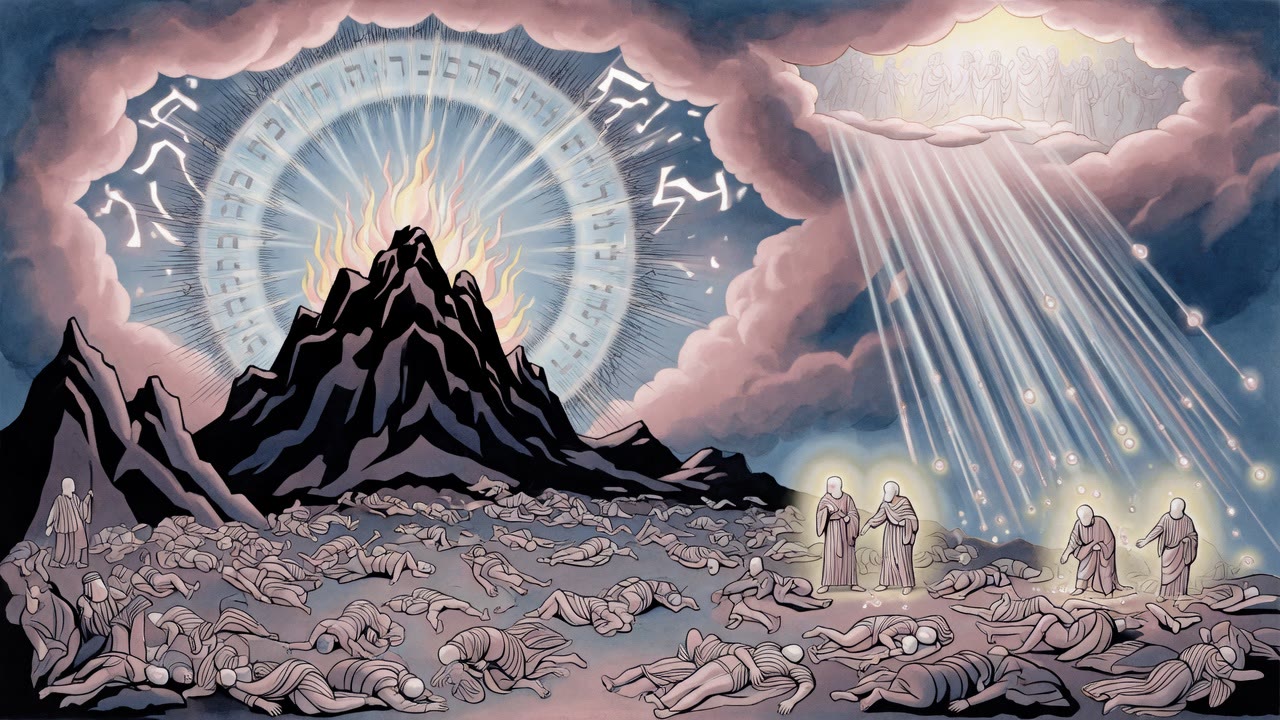
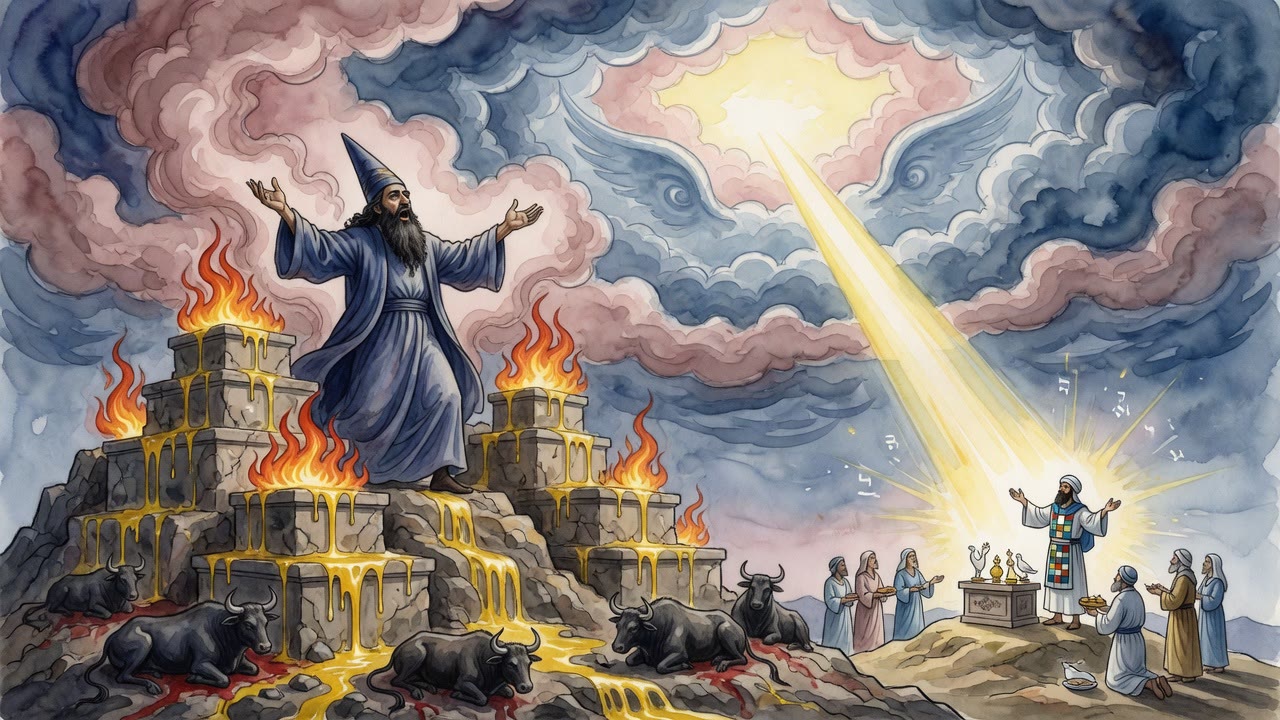
Moses Wrote the Last Eight Verses with Tears
Every Torah scroll ends with Moses dying. The Talmud wrestled with who wrote those final words and how Moses could have done it.
Table of Contents
 Click for full size
The Problem at the End of Every Torah Scroll
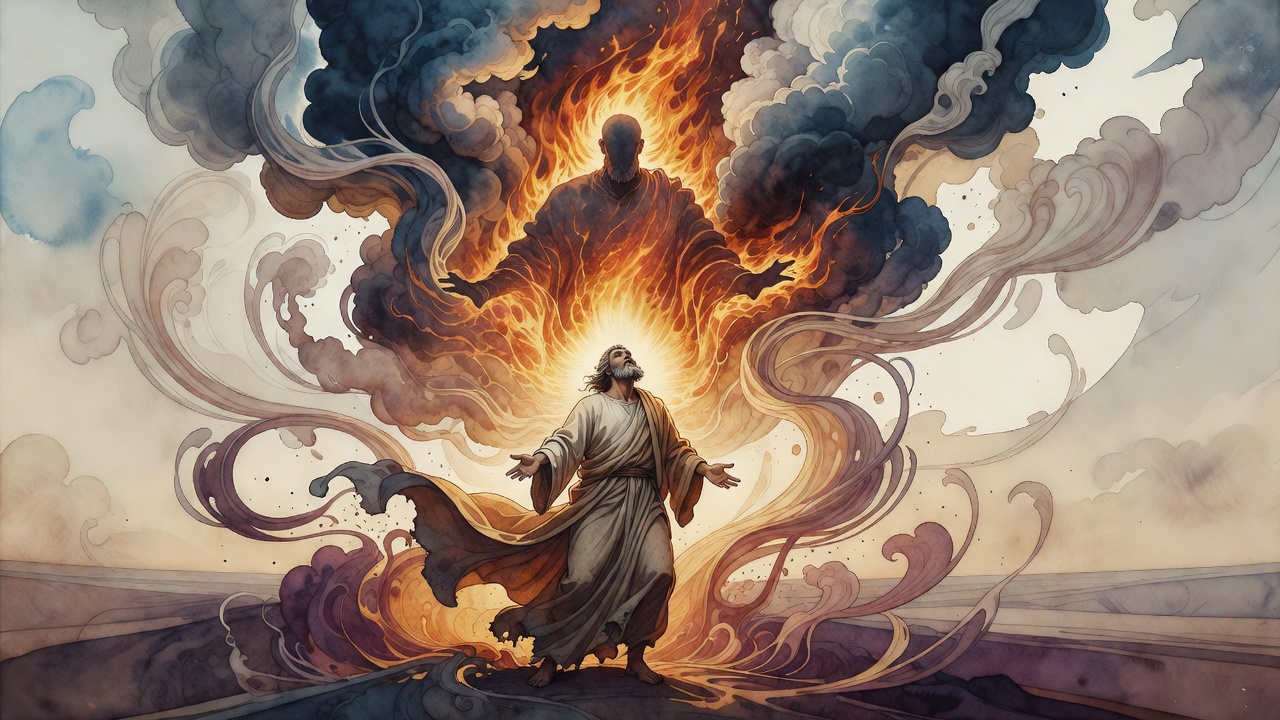
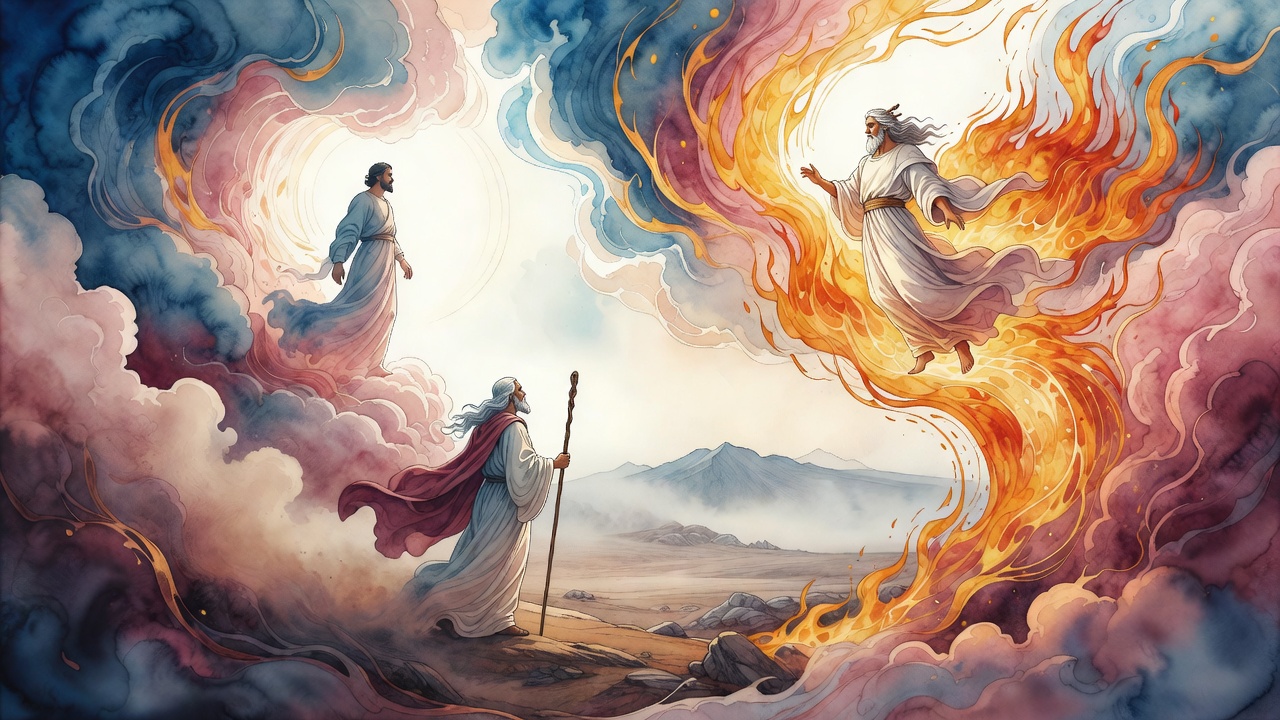
Moses ascends Mount Nebo. God shows him the land from a distance, all of it, from Gilead to Dan, from Naphtali down through Ephraim and Manasseh, Judah to the western sea, the Negev, the valley of Jericho. "I have shown it to you with your eyes, but you will not cross over there" (Deuteronomy 34:4). Then Moses, the servant of God, dies there in the land of Moab. He is buried in an unmarked valley. No one knows the place to this day.
Every Torah scroll ends the same way. And the question that has unsettled readers for two thousand years is the obvious one: if Moses wrote the Torah, how did he write the part where Moses dies?
The Debate in the Academy
The Talmud, in tractate Bava Batra 15a, preserved the debate without resolving it. Two positions, two rabbis, neither comfortable with either answer.
Rabbi Yehuda, and some say it was Rabbi Nehemya, argued that the final eight verses were not written by Moses at all. They were written by Joshua, who succeeded him. The logic was clean: a man cannot write his own death. Moses wrote everything through Deuteronomy 34:4, the last line spoken to him by God, and Joshua completed the scroll. The Torah's final chapter is, on this reading, the first act of the next leader, a eulogy placed at the seam.
Rabbi Shimon rejected this. The Torah is a unified document. Moses was commanded: "Take this Torah scroll" (Deuteronomy 31:26), meaning it was complete at that moment. Not a single letter was missing. For Joshua to have added eight verses after Moses's death, the Torah would have been given incomplete and then amended. That is not the Torah as the tradition understands it.
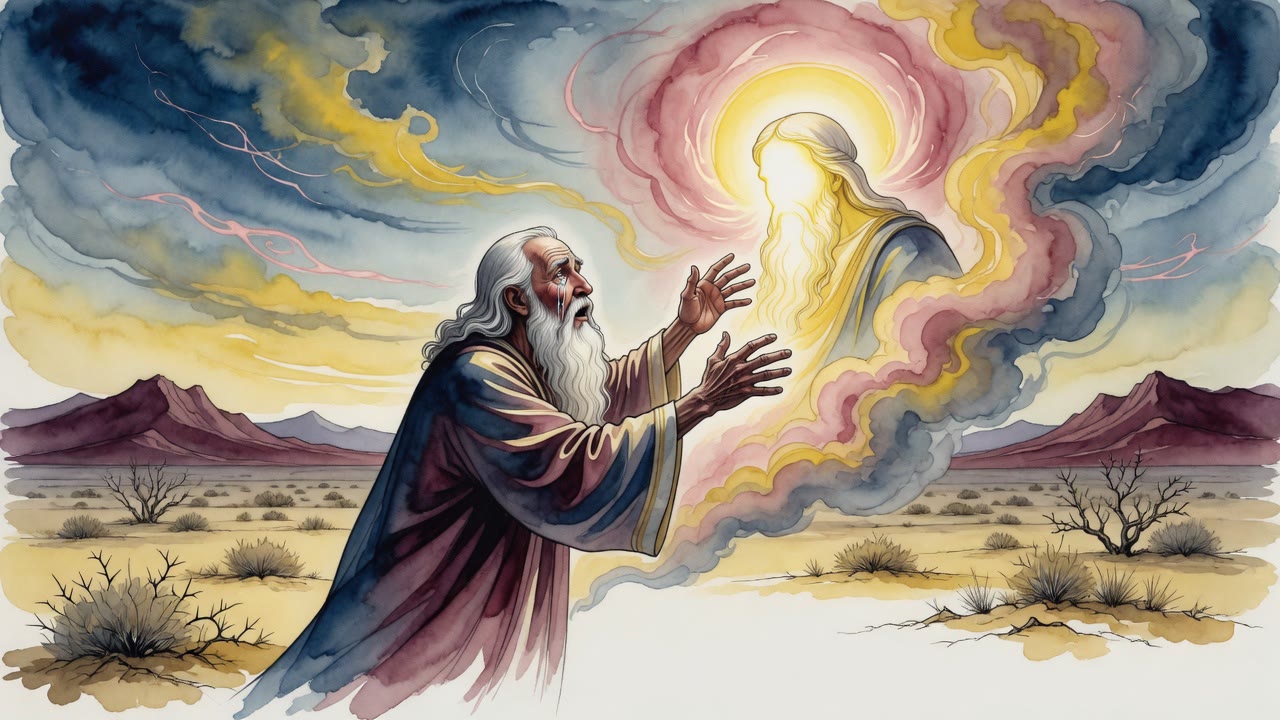
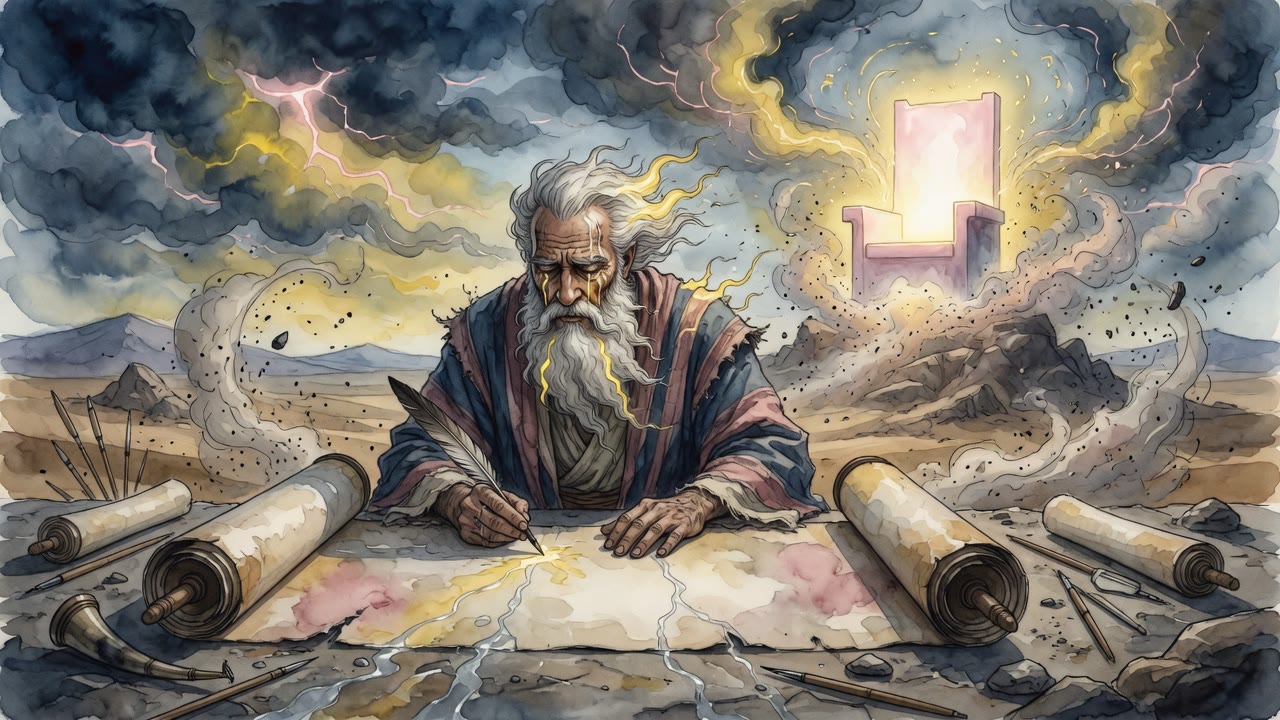
How then did Moses write his own death? Rabbi Shimon's answer is the one that lodged in the tradition: God dictated the final verses, as he had dictated everything else, and Moses wrote them in tears. The ink ran. The letters were formed. Moses wrote what he was told to write, and the anguish of doing it is held inside the words themselves.
What the Aramaic Translation Refuses to Soften
The Hebrew of the final chapter says Moses died "by the mouth of God" (Deuteronomy 34:5). Ancient tradition reads this as a death by divine kiss, God drawing Moses's soul from his body through his mouth, the gentlest possible departure. Targum Onkelos, the authoritative Aramaic translation completed around the 2nd century CE, renders it differently: not "by the mouth of God" but "by the word of God." Not a kiss. A word.
Onkelos strips away the physical intimacy. Everywhere the Torah risks making God too human, Onkelos replaces the body with the voice, the gesture with the utterance. Even in Moses's death, even when the tradition was trying to make his end bearable, Onkelos will not allow God to have lips.
The effect is paradoxical. What sounds like a theological correction ends up being starker and colder. Moses dies not in an embrace but at the command of a word. The abstract God of Onkelos is not warmer than the anthropomorphic God of the plain text. It is more remote.
The View from Nebo
God showed Moses everything. The Aramaic gives the land in its full geographical spread: Gilead to Dan, Naphtali, Ephraim and Manasseh, Judah to the western sea, the Negev, the Kikkar of Jericho. Onkelos translates without alteration. No comfort is added. The scroll of vision is complete and the sentence has already been delivered. The sight of everything you spent your life working toward, given to you only as a view.
The man who split the sea, who argued God out of destroying the entire people after the golden calf, who went back up the mountain a second time and stayed forty days, who spoke with God's face to face as a man speaks with a friend, could not cross a river. And when he died, God buried him personally in a valley that no one has ever found, because God did not want a tomb to become a shrine and a shrine to become an idol.
The final sentence of the Torah is the only sentence in a narrative text that the Torah itself endorses as permanent: there has not arisen since in Israel a prophet like Moses, whom God knew face to face. It is eulogy. It is closure. It reads like something written after the fact, by someone looking back.
Rabbi Shimon says Moses wrote it forward, in tears, while still alive.
← All myths