Nadab Stood Warned While Sinai Still Smoked
At Sinai the warning about priests who draw near already whispered Nadab and Abihu, while Moses came straight down to faces still holding the blush of fear.
Table of Contents
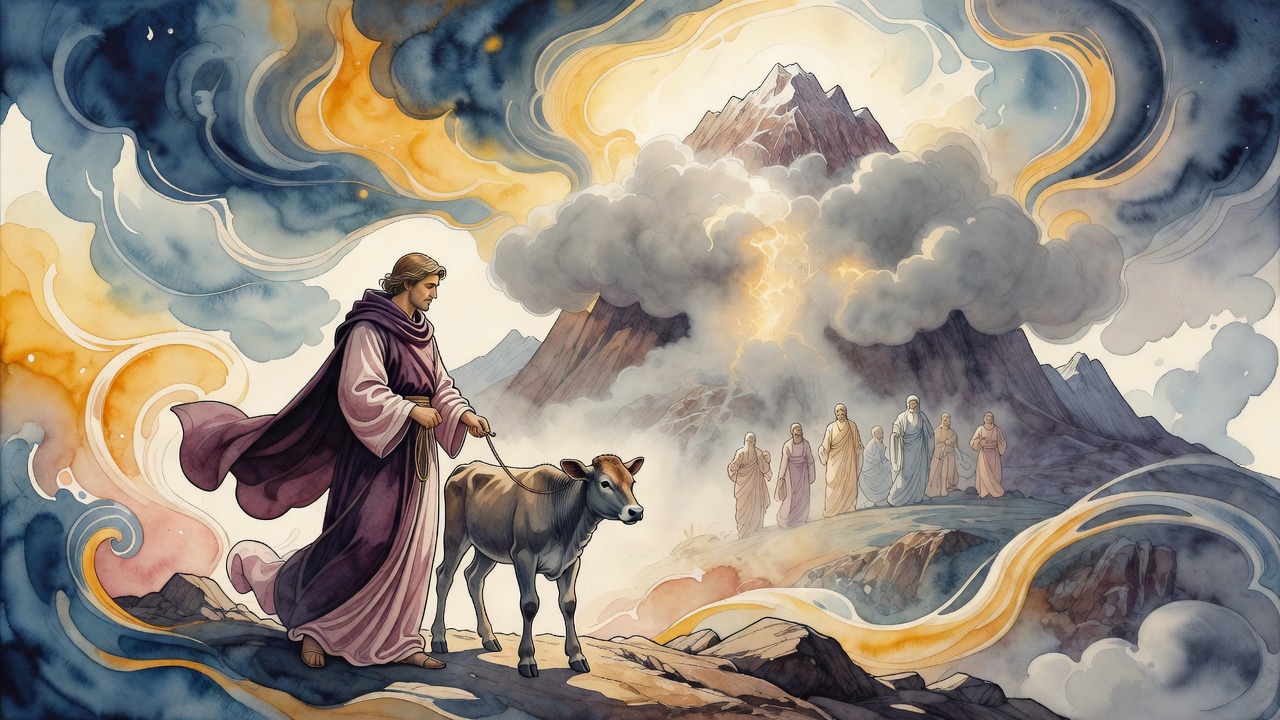
Moses came down the mountain with nothing in his hands but a charge that could not wait, and he did not stop at his own tent. The path ran from stone to people in one motion. Private rest would have been theft. The word he carried belonged to the camp before it belonged to his sleep.
 Click for full size
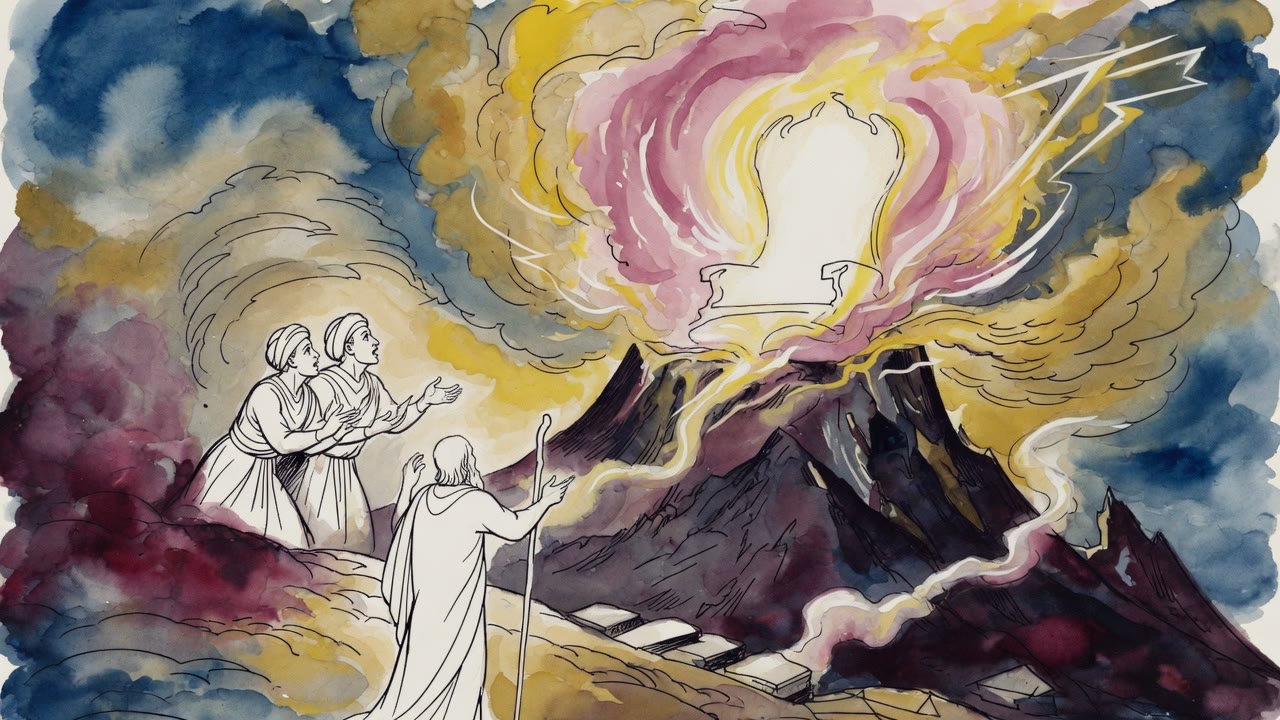
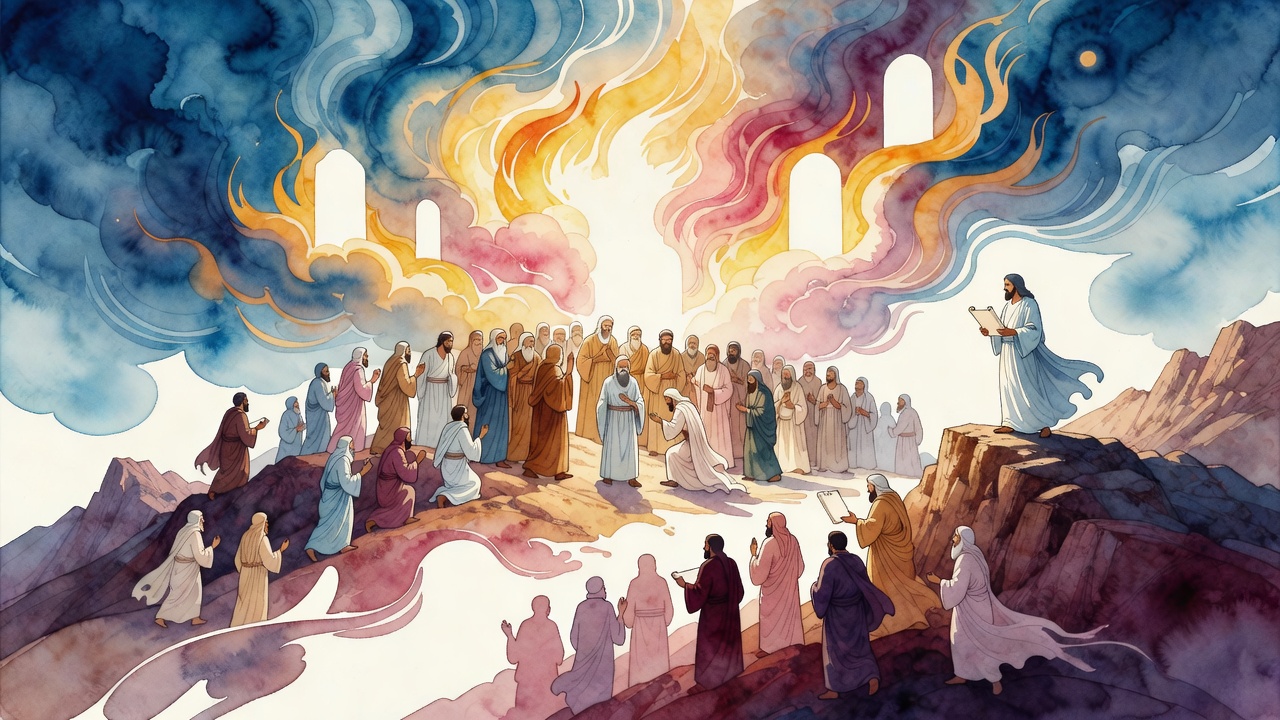
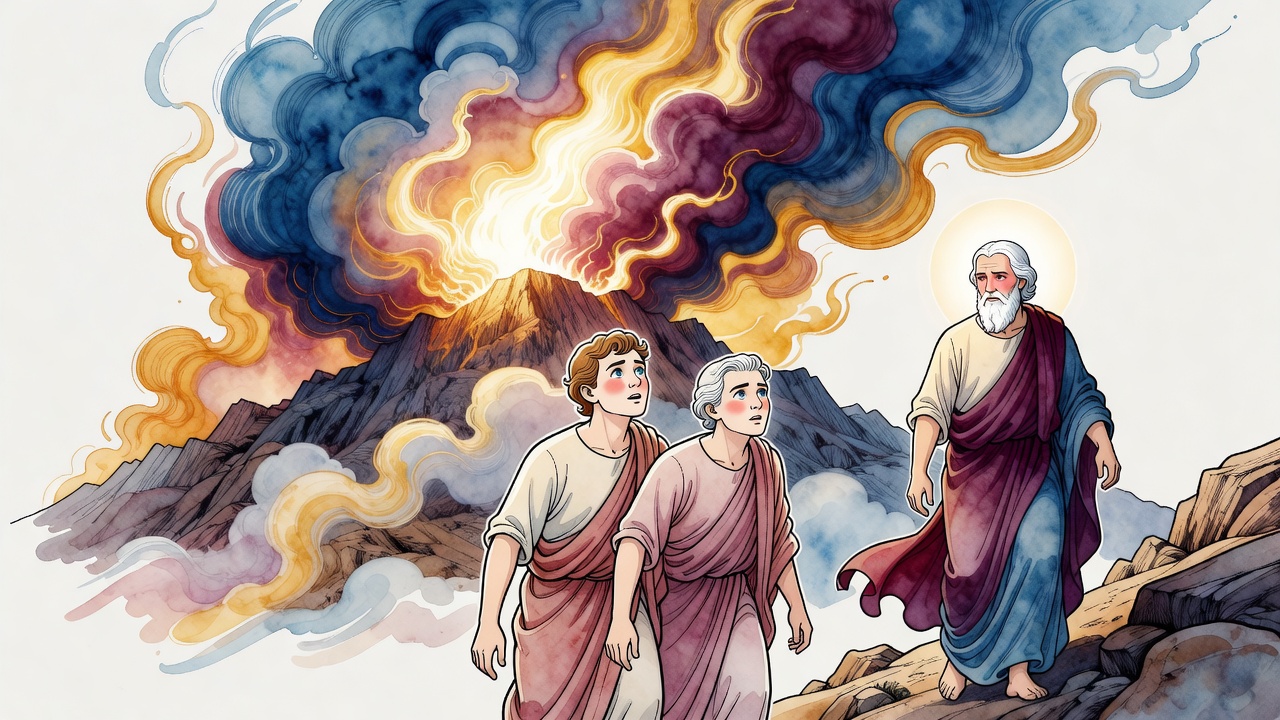
Below him the people still shook. Smoke still marked the place where the voice had pressed against human ears. Among those who stood near the boundary were men who would one day wear linen and die for a fire they were never asked to bring. The warning was already in the air, though few could hear the names inside it.
The Call Before the Word
Climbing had taken the first days. Then God called to Moses before He spoke, a courtesy that frames revelation itself. The call prepares the listener. The word arrives second. "Thus you shall say to the house of Jacob" packed orders into a single "thus": holy tongue, this order, this matter, no adding, no subtracting. House of Jacob named the women first; children of Israel named the men. Covenant speech began with the mothers' agreement.
Moses brought the message down warm. A messenger of God does not sit on the scroll waiting for a softer hour. He said what he had been told at once, and he told them to receive the kingdom of Heaven with joy, not as grim surrender. Yes was to mean yes. No was to mean no. Plain speech for a plain yoke freely taken.
Priests, Firstborn, and a Hidden Hint
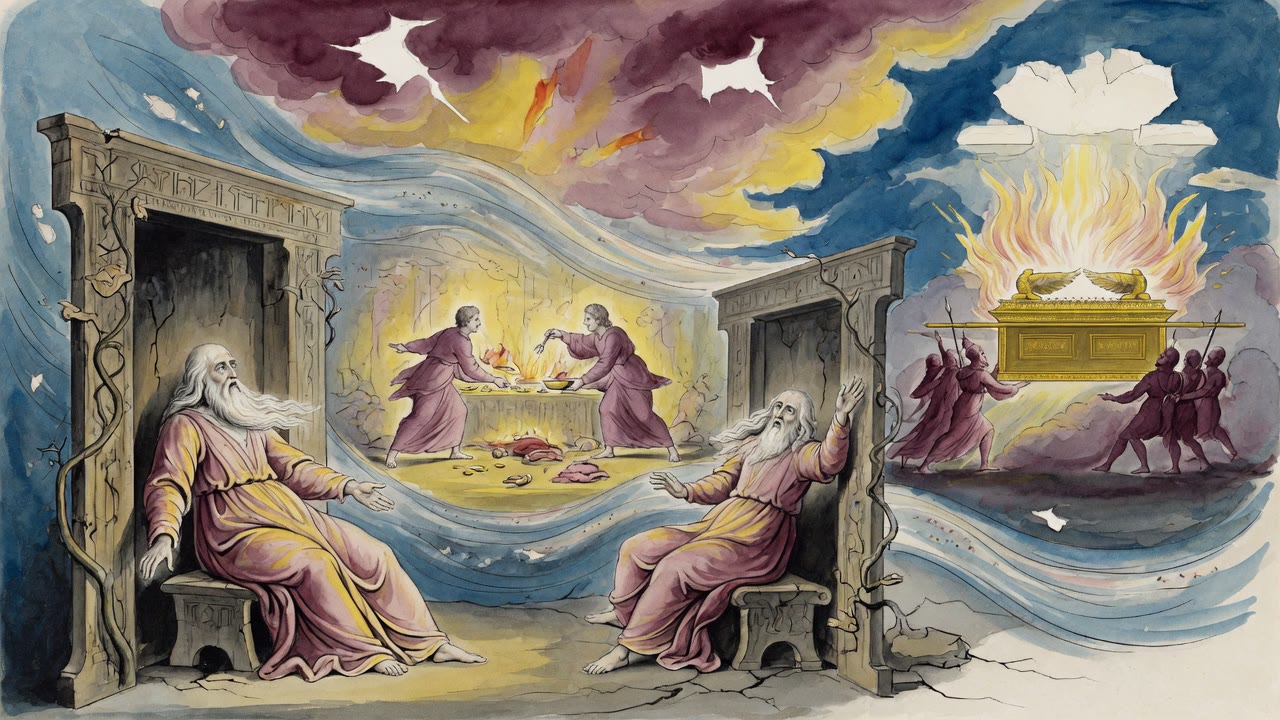
Even the priests who draw near must sanctify themselves, the mountain said. Which priests? Rabbi Joshua ben Korhah heard the firstborn, who served before Aaron's line took the altar. Another reading heard something darker: a quiet warning about Nadab and Abihu, sons of Aaron who would rush later with strange fire and fall silent before the LORD.
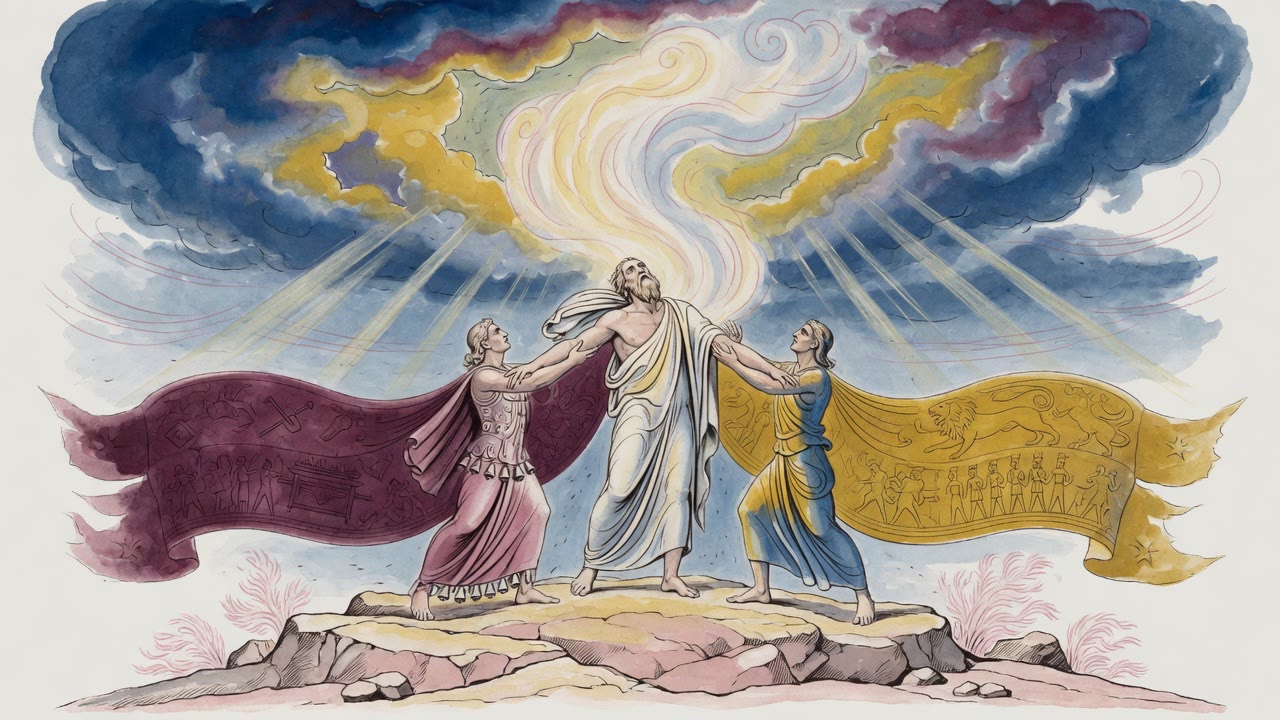
That reading turns a Sinai morning into prophecy. The Holy One hinted at their deaths long before the day, and Moses carried the hint without understanding it until the hour his nephews did not rise. Only when God said, "Through those near to Me I will be sanctified," did the old boundary speech snap into focus. Nearness without the commanded fire is not intimacy. It is a cliff.
Fences at the Foot
Warn a student before he learns, and warn him again before he acts. Moses set a fence for himself. The priests set fences for themselves. The people did not climb at all. Holiness they craved could become the thing that destroyed them if they treated smoke like an invitation to improvise.
When Moses argued a point back, God sometimes conceded so Israel would see their teacher honored, not because the divine mind had stumbled. The double command to descend and ascend kept the boundary firm while still training a leader who could stand between.
Shame as Inheritance
The people trembled. Moses said, "Do not fear," and the feat of steadying thousands with words was itself a kind of wisdom made visible. He also said God came so that fear would rest on their faces. The rabbis read that fear as blush, the flush of shame that holds a person back from sin. A sense of shame is a good sign. One who can still feel the face grow hot at the threshold of wrongdoing carries an inner guard.
Those who no longer know how to blush, the prophet already lamented. Anyone with no shame at all, the sages said, betrays that his ancestors did not stand at this mountain. Shame here is not theater. It is inheritance from revelation, the color on the face that says Sinai still works in the blood.
Moses walked straight from the smoking height into that blushing camp, warning in his mouth, joy in the yoke he offered, and a future funeral for two nephews already folded, unread, into the word "near."
Young men near the boundary felt the heat and mistook it for permission. The mountain had already said nearness has rules. Moses, walking straight into the blushing crowd, carried joy in the yoke and steel in the fence. Receive with gladness. Do not invent fire. Say yes only when yes is true.
Years later, when strange fire answered with silence, the old Sinai sentence would open like a sealed letter. Moses would understand what he had carried without reading. For now the camp only knew smoke, speech, and faces that could still turn red. That redness was the mark the tradition would guard as proof that the mountain still had descendants.
← All myths