Noah Built the Ark Across Fifty-Two Years
God showed Noah the blueprints himself, and the work took fifty-two years so a doomed generation might still turn while the floating city rose.
Table of Contents
 Click for full size
The Blueprints Came from Heaven
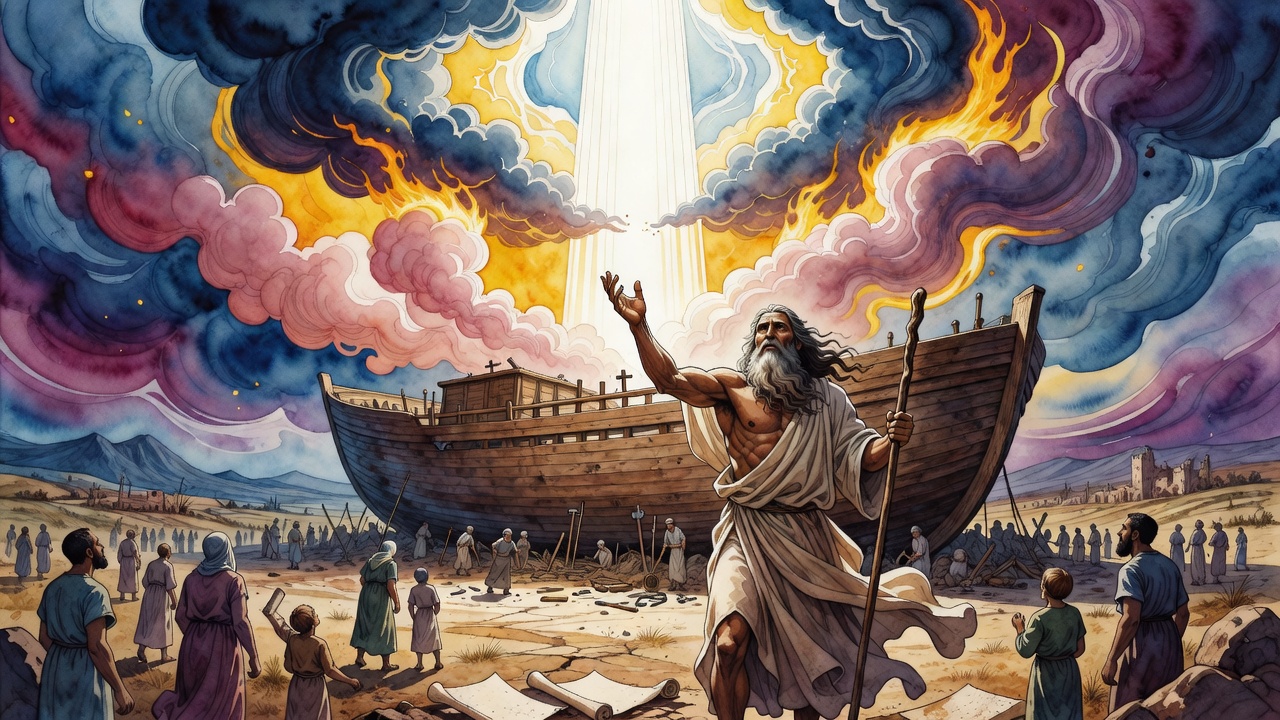
God did not toss Noah a vague command and walk away. "This is how thou shalt make the ark," said the verse, and the sages heard a finger pointing at timber and join. God showed him. Boards. Seams. Measures. Rooms. A man building a floating city needed more than courage. He needed a plan that would hold when the deep cracked open and the windows of heaven answered it from above.
The ark was not a barn with a door. One hundred fifty rooms ran the left length. Thirty-three across the inner width, thirty-three the outer. Ten compartments in the center for food alone, because hunger does not pause for theology. Five protected cisterns on the right, fifty on the left, pipes that opened and closed like throats. Three levels, each laid out the same so that no deck would become a forgotten chaos. Cattle below. Birds in the middle. Reptiles and humans above. Three hundred sixty-six kinds of cattle, of fowl, of creeping things. A number that matched the stories of the boat itself, level for level, as if the architecture were a census written in wood.
Fifty-Two Years of Public Work
Noah did not rush. He built for fifty-two years.
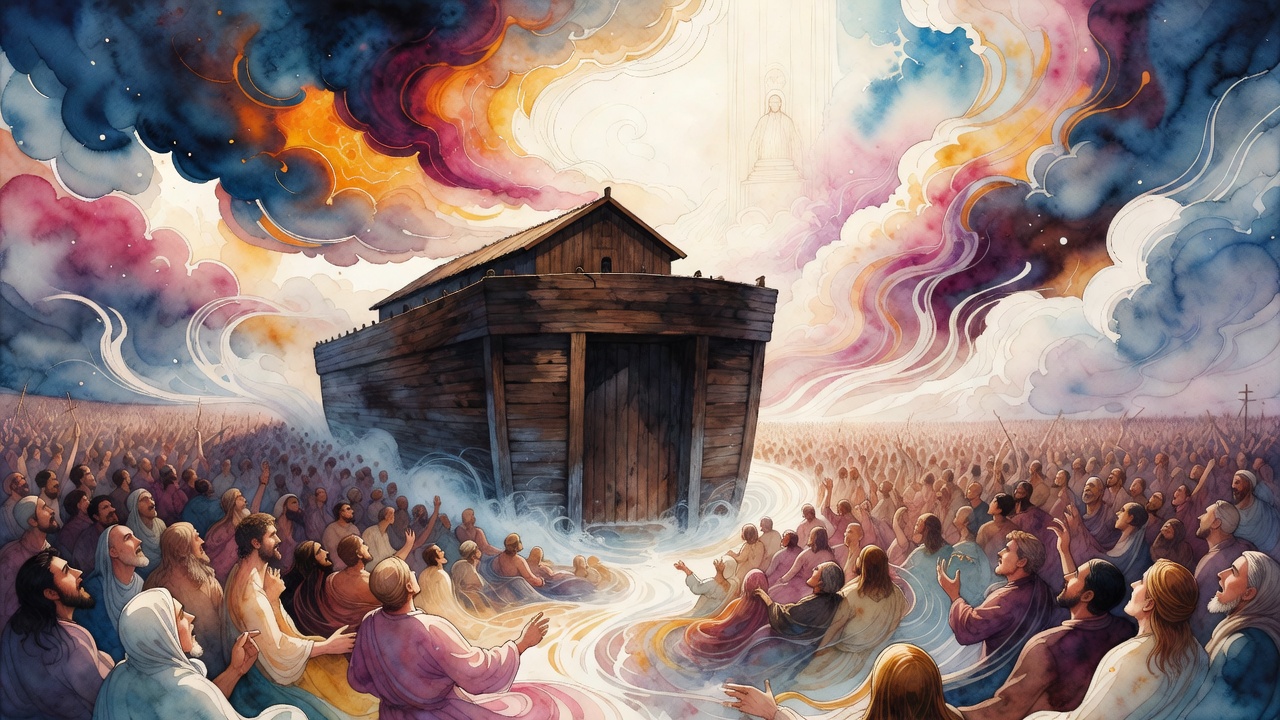
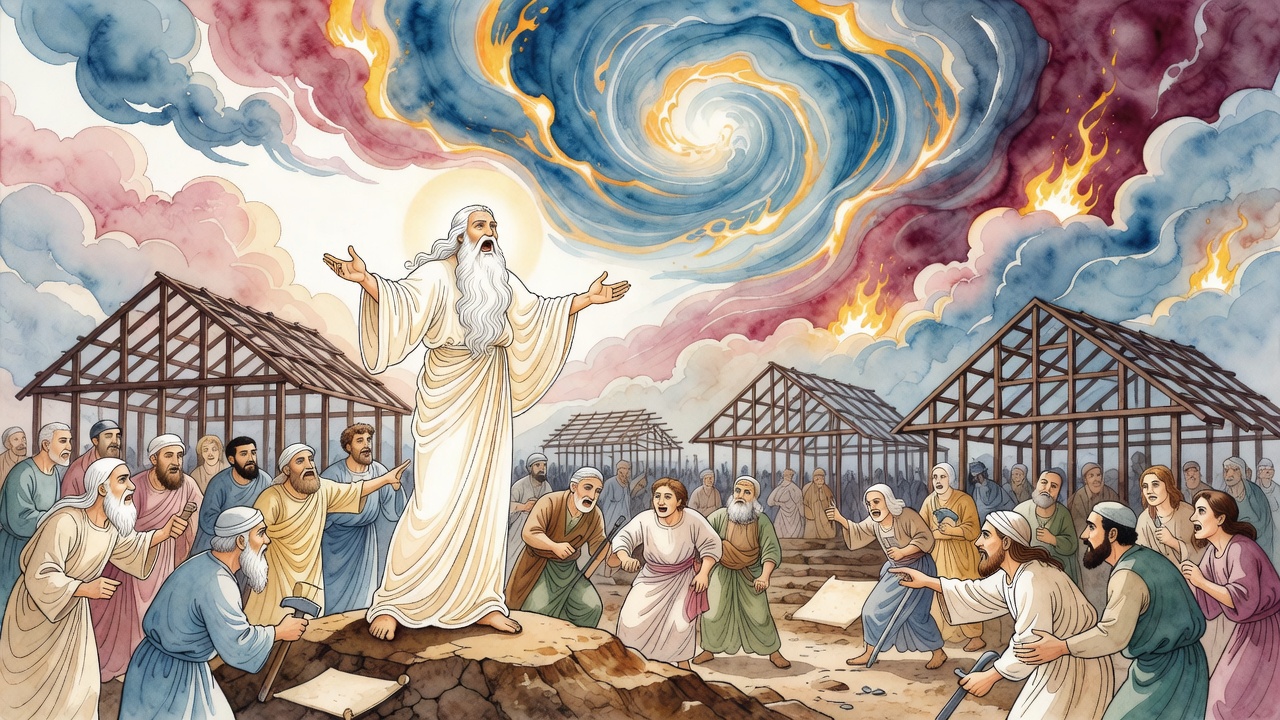
The length was mercy. Every hammer blow was a sermon the neighbors refused to hear. Men passed the rising hull and laughed into their sleeves. Women asked what flood, and went back to baking. Children played in the shadow of a door that would one day close on a world. Noah worked while the earth stayed open. The unclean already outnumbered the clean among the beasts, a mirror of the age that preferred appetite to offering. Still the hull climbed. Still the cisterns were fitted. Still the food rooms received their first dry stores against a rain that had not yet learned to kill.
When the decree finally hardened, God rebalanced the cargo. Seven pairs of the clean. Two of the unclean. Survival was not the only aim. The world after water would need a different proportion of what could be offered on an altar and what could only endure in the mud.
The Door That Waited
Neighbors came on slow afternoons to measure the hull with their eyes and leave jokes behind them like dropped tools. One asked whether Noah planned to sail to the mountains. Another offered to buy the wood back at half price when the sky stayed blue. Noah answered with another board set true. He had been given a schedule measured in years, not moods, and the schedule was the last kindness heaven still owed a generation that would not listen.
Year after year the door stood ready and unused. That was the point. A door closed too soon is a verdict without witnesses. Noah's generation watched a verdict under construction and chose not to change. The wood smelled of pitch. Tools rang in the morning and fell quiet at dusk. Travelers asked the price of the boat and learned it was not for sale. Local wits named it Noah's folly and slept well.
Inside, Noah walked the empty rooms and counted hooks for beasts not yet chosen. He tested a pipe and heard water that was only the memory of water. His sons learned the plan by muscle. His wife learned the sound of a hammer that meant another day the world had not turned.
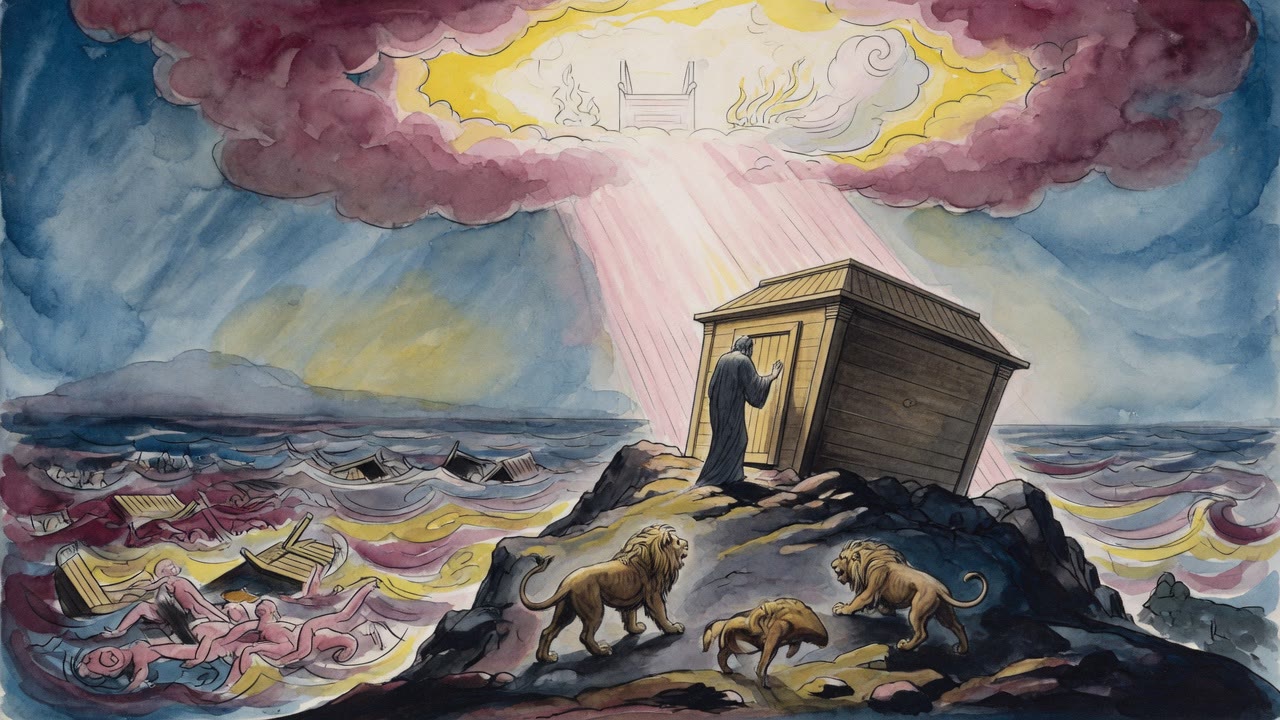
When the first drops came, they were not a surprise to the builder. They were the end of a long invitation. The door that had waited fifty-two years finally had a reason to shut, and the laughter outside became a sound the pitch could not fully keep out.
After the Silence
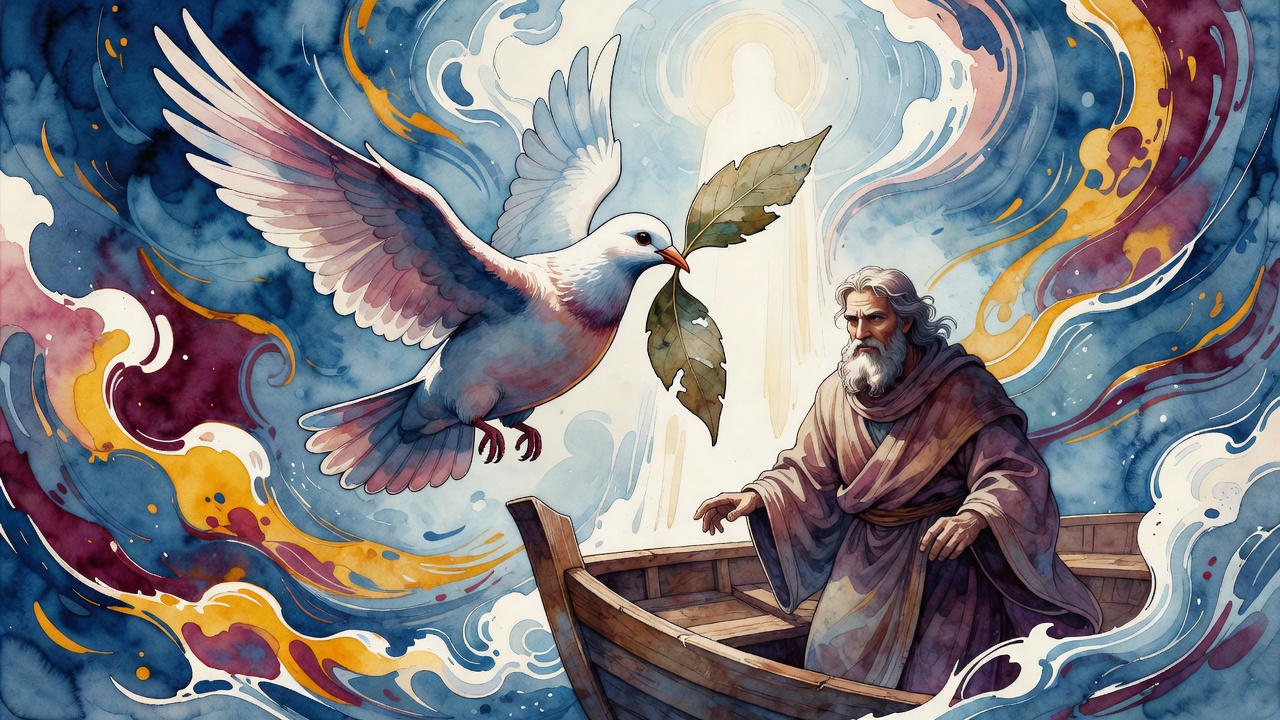
The midrash that measures rooms and cisterns does not linger on every hour of the voyage, but the machine it describes was built for the morning the waters would fall still. Pipes to open. Stores to ration. A world of kinds to release into mud that had been markets and gardens and thrones. Noah's first work after the flood was not a speech. It was logistics written into the boat long before the rain: how to keep clean and unclean from devouring each other in close air, how to keep water sweet when the world outside was only water, how to keep a family breathing in a box while the old earth drowned and forgot its own names.
Fifty-two years of building made one year of floating possible. The neighbors who would not turn became the silence outside the pitch. The rooms that had seemed too many became barely enough. The door that had waited became the last wall between a remnant and a story with no one left to tell it.
← All myths