5 min read

Noah Refused the Exit Until God Spoke Again

The flood generation pressed their own children into the rising springs as stoppers. The water came around the children and kept coming.

Curated by Arthur · Told by Maggid ·
Table of Contents
  1. The Cure They Would Not Take
  2. Fire for the Ones the Water Could Not Kill
  3. Lions Around the Ark
  4. Twelve Months of Girding Up
  5. I Came In by Permission

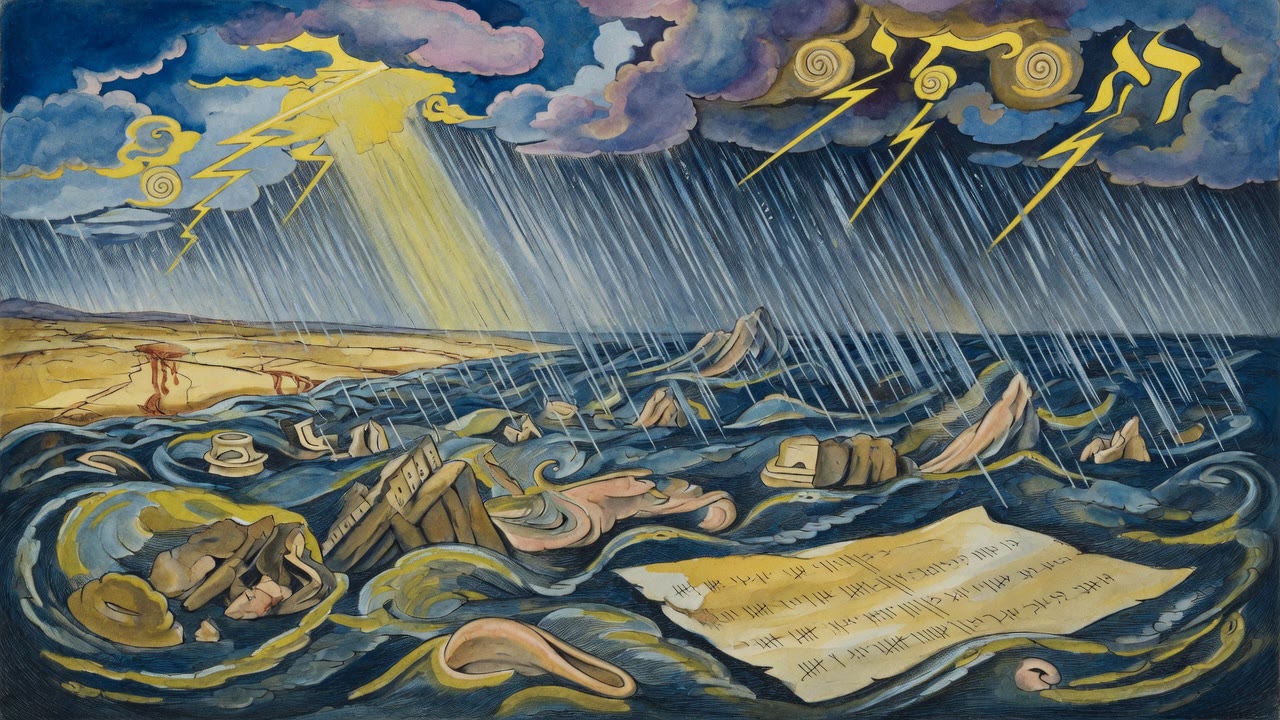
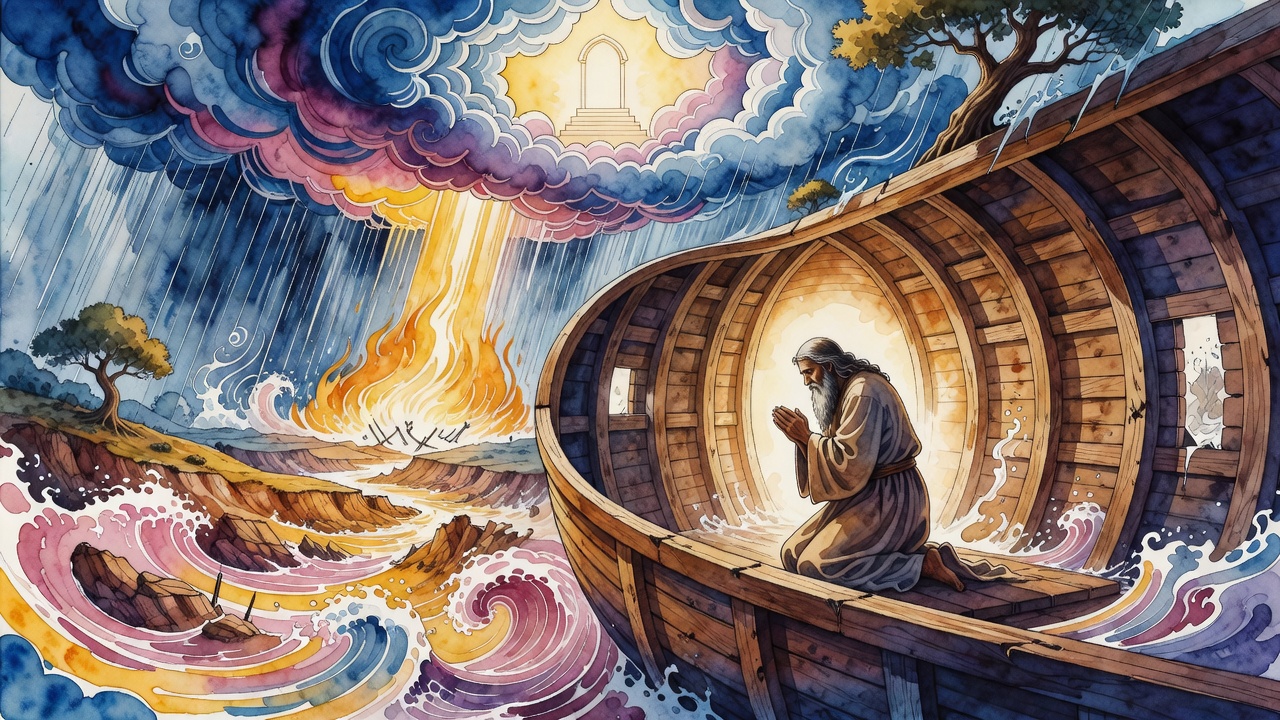
The springs came up before the rain turned serious. Men who had spent their whole lives on high ground stood watching water climb out of the earth in places where no water had ever been.
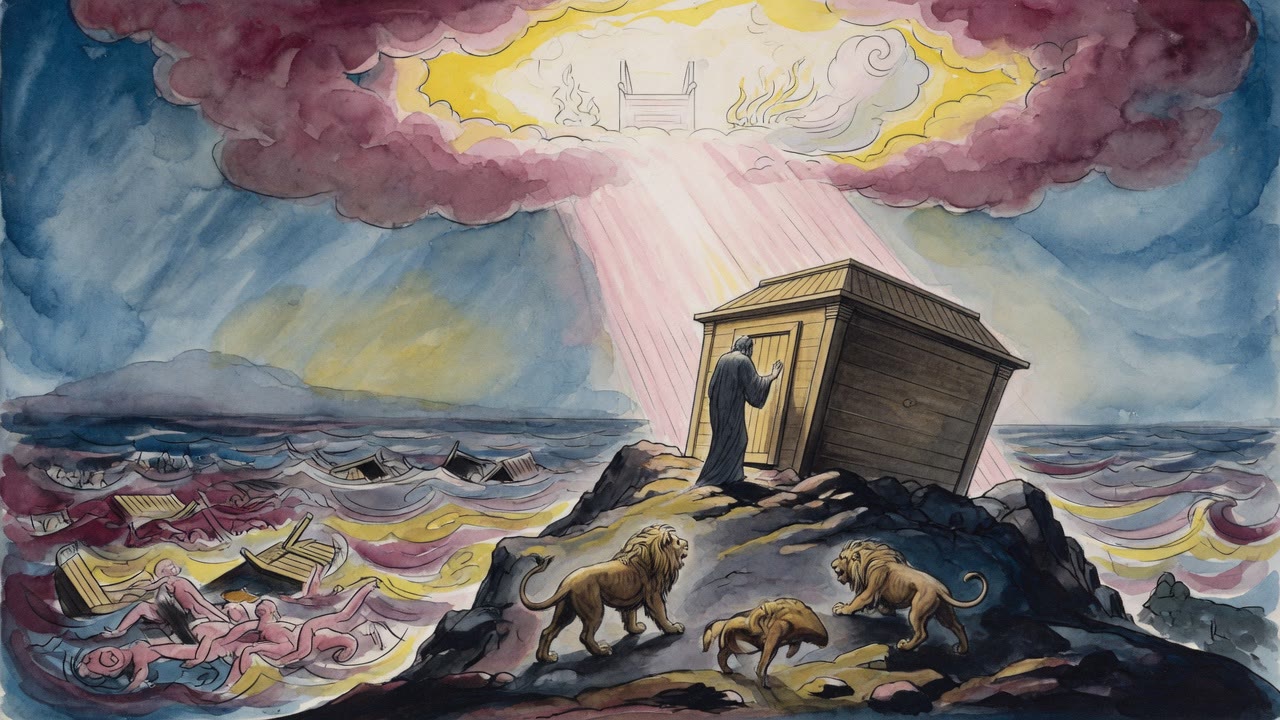
Noah Refused the Exit Until God Spoke Again Click for full size

Each man went and got his son.

They carried the children to the openings and pressed the small bodies down into them, as stoppers, to hold the deep where it belonged. The water rose anyway. It came around the children and kept coming.

The Cure They Would Not Take

There had been a way out of this for years. No wound comes into the world without a cure lying somewhere near it, and the cure for the appetite that turns a man into that kind of father is repentance. Prayer, repentance, and charity break a harsh decree. Some add a change of name and a changed record of deeds. Heaven had been holding the sentence open on this generation, waiting for one turn in that direction, ready to take them back.

They stoppered the springs with their children instead, and the decree closed.

Fire for the Ones the Water Could Not Kill

They were of enormous stature and they were hard past ordinary hardness. Water alone was never going to finish them. Men that size can stand in a flood and argue.

So the fire came down on them from above and burned them where they stood in the rising water. Then the animals turned. Birds came down out of the air, cattle and wild beasts came at them across the shrinking ground, and the creatures they had bred and eaten and driven finished the work the flood had started.

A king of flesh and blood who loses a province to rebellion sends his legions and levels it. He does not stop at any door to ask whether the man behind it is honest. Everyone in the province dies the same way. This was not that. A whole generation had spent itself provoking Heaven, and Heaven went through the water looking for one household and found it.

Lions Around the Ark

When they understood they were finished, they went for the ark.

Not to get in. To turn it over. A crowd of drowning giants put their shoulders under a wooden hull and tried to roll it into the water that was killing them. And the Lord shut him in. That is what the shutting was. A ring of lions stood around the vessel, and the lions ate them.

Years later an angel would come down and hold the mouths of lions closed over Daniel in a pit. The same hand that closed those mouths had opened these.

Twelve Months of Girding Up

Inside, the sons were working.

For twelve months Noah's three sons girded their loins and fed the animals. Every creature in that hull ate on its own schedule, and somebody had to learn all of them, in the dark, on a floor that never stopped moving. There was no daylight to work by and no help coming and nothing to be gained by doing it well, since nobody outside was left to be impressed.

They walked out of the ark on the strength of that. Not on their father's name. On twelve months of hauling feed to animals that could not thank them.

I Came In by Permission

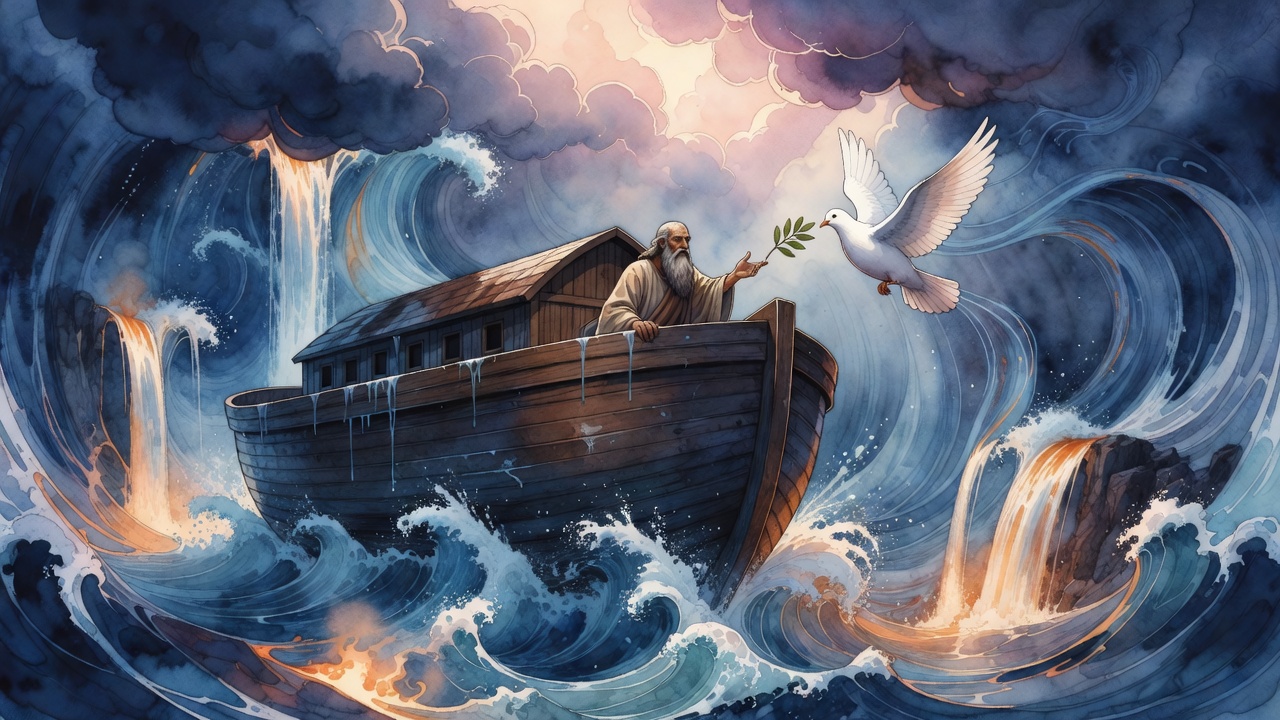
The water rested. The hull stopped moving. Nothing outside was making any noise.

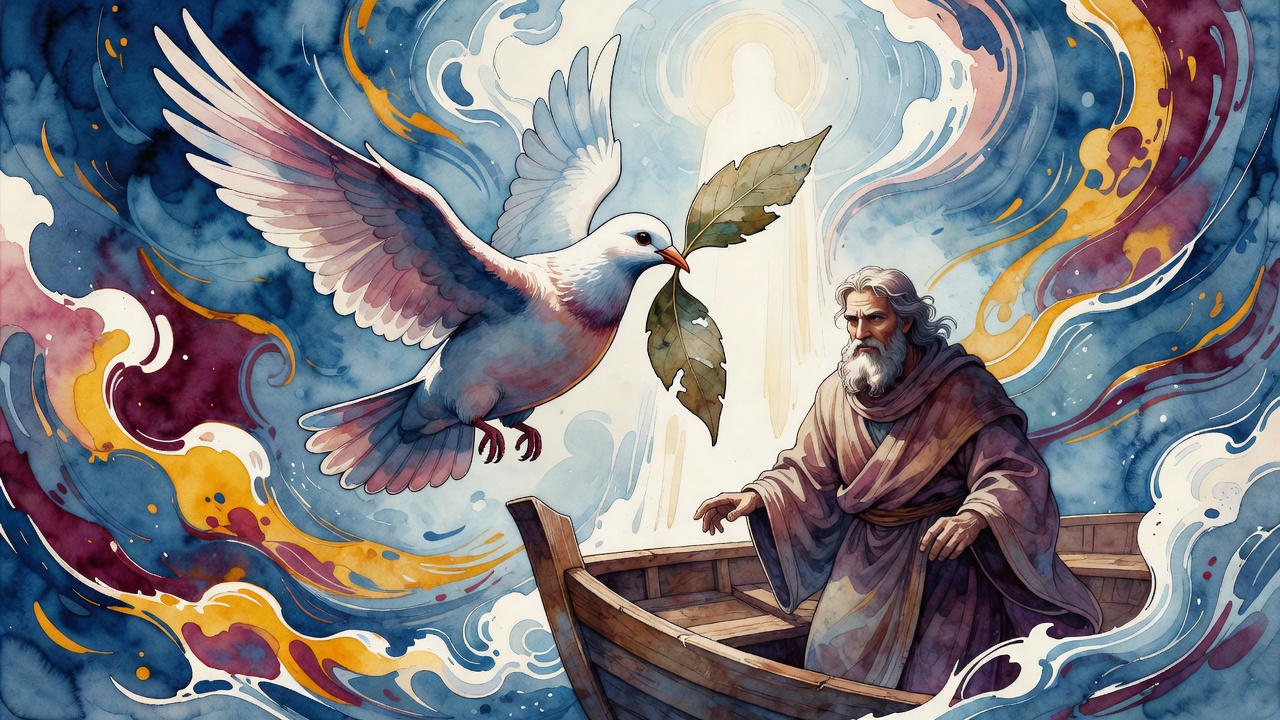
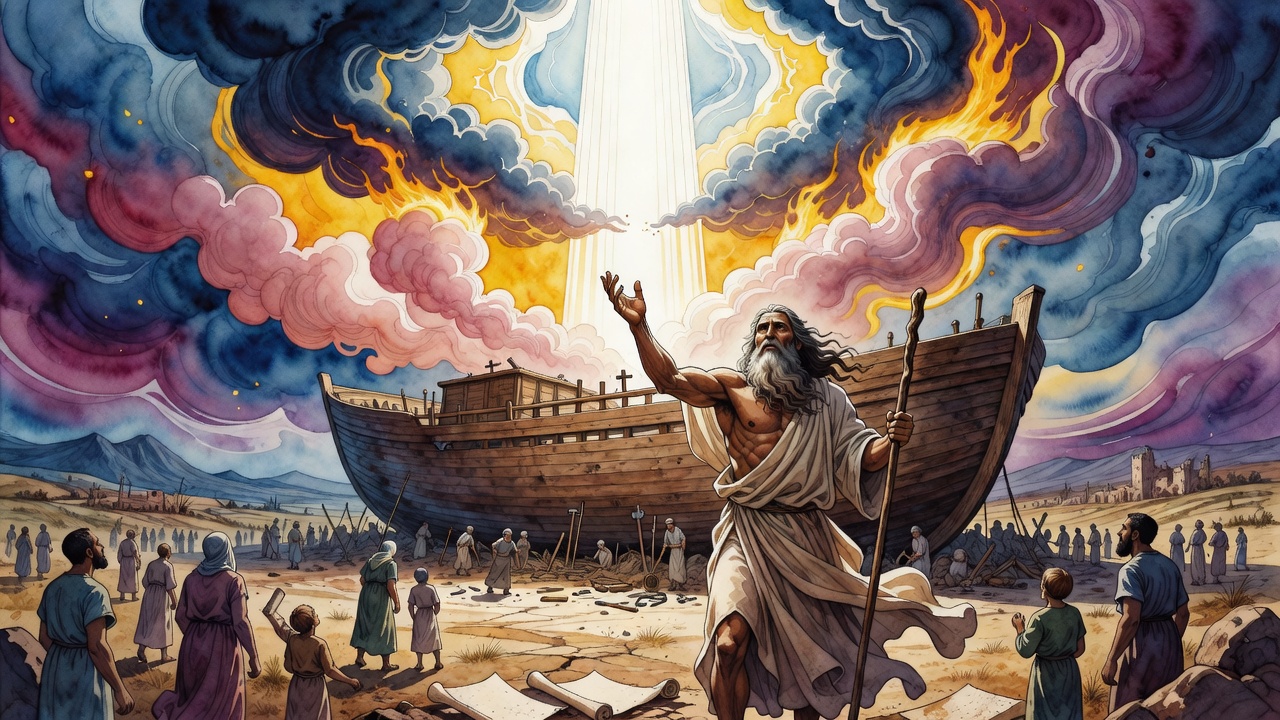
Noah stood at the door and did not open it.

"I came in by permission," he said. "Am I now going to walk out without it?"

The generation in the water had improvised to the last minute, plugging the deep with children, throwing their bodies at a hull. The man inside refused to improvise a doorway. He stood in a sealed box on a drowned world and waited for a word.

Then God spoke again. "Permission you want? Here is permission for you." And then: "Go forth from the ark."

God hung the bow in the cloud after that, and anyone who sees it says the same three things back: that He remembers the covenant, that He is faithful to it, that He keeps His word. Human love does not run that way. A man loves his friend while the friend is alive, and when the friend dies the love goes into the ground with him. Abraham died and the love did not stop. It went straight to Isaac.

Noah walked out with permission in his ears and mud to his ankles. Behind him the water was going down over a country full of stoppered holes.


← All myths

From the tradition

Sources

4 sources

The texts behind this telling. Some cards carry a translation of the source; others are our own retelling of it, and each card says which. Every card links out to the original.

Midrash Tanchuma Buber, Noach 10:1Midrash Tanchuma Buber, Noach

Translation of the source text.Midrash Tanchuma (Buber), Public Domain, on Sefaria · CC-BY-SA

Another interpretation (of Genesis 8:1): "Then God remembered Noah." It is written (Proverbs 12:10): "A righteous one knows the soul of his beast." The Righteous One of the world knows even the soul of His beast, even when He is angry. The attributes of the Holy One, blessed be He, are not like the attribute of flesh and blood. The attribute of flesh and blood: when a province rebels against him, he sends out his legions and destroys it, and he makes the good and the wicked equal as one, and there is no one there to say, "So-and-so is upright, leave him be", rather they kill them all. But the Holy One, blessed be He, is not so. Rather, the whole generation provokes Him, and He is angry with them, yet there is but a single righteous one there, and He saves him. This is the meaning of "A righteous one knows the soul of his beast." And so it says (Nahum 1:7): "The Lord is good, a stronghold in the day of trouble, and He knows those who take refuge in Him."

"But the compassion of the wicked is cruel" (Proverbs 12:10), these are the generation of the flood, who were cruel. Our Rabbis said: At the hour when the Holy One, blessed be He, brought up the deep, and they saw the fountains rising over them, what did they do? They had many children, and each and every one would take his child and set him upon the deep, and the waters kept rising. This is the meaning of "But the compassion of the wicked is cruel." [And whence that they did so?] For Job said of them (Job 24:20): "The womb forgets him, the worm feeds sweetly upon him, he is no longer remembered", his womb, that is, his children. And what did the Holy One, blessed be He, do to them? He brought down upon them a flood from above and shattered them, as it is said (Job 24:20): "And unrighteousness is broken like a tree."

Rabbi Berekhyah said: They were exceedingly hard, and they were of great stature, and had He not exacted punishment upon them from above, the waters could not have prevailed against them. For so Job said (Job 22:20): "Surely our adversaries are cut off, and their remnant the fire has consumed." What is the meaning of this? Since the Holy One, blessed be He, saw that they had not died in the depths below, He brought down upon them fire from above and burned them, as it is said, "Surely our adversaries are cut off," and so forth. And not only that, but He turned the bird and the beast and the wild animal against them, and they made them perish, as it is said (Genesis 7:21): "And all flesh perished," and so forth. When they saw themselves that they were lost, they sought to overturn the ark. What did the Holy One, blessed be He, do? He surrounded the ark with lions, and they devoured them, as it is said (Genesis 7:16): "And the Lord shut him in." What is the meaning of "shut in"? As in the matter of which it is said (Daniel 6:23): "My God sent His angel and shut the mouths of the lions."

Full source
Midrash Tanchuma Buber, Noach 13:1Midrash Tanchuma Buber, Noach

Translation of the source text.Midrash Tanchuma (Buber), Public Domain, on Sefaria · CC-BY-SA

"And God spoke unto Noah, saying: Go forth from the ark" (Genesis 8:15-16). Let our master instruct us: What is the law concerning placing tasteless spittle upon the eye on the Sabbath? Rabbi Hiyya bar Abba said: It is forbidden to place tasteless spittle upon the eye on the Sabbath, for this is like one who heals on the Sabbath.

Come and see that there is no affliction in the world that has no cure. And what is the cure for the evil inclination? Repentance. Rabbi Judah bar Shalom said in the name of Rabbi Eliezer: Three things annul a harsh decree, and these are they: prayer, repentance, and charity. Rabbi Huna son of Rabbi Yose said: Also a change of name and good deeds.

Therefore the Holy One, blessed be He, was hoping for the generation of the Flood, that perhaps they would repent and He would receive them. And since they did not repent, He wiped them away with water, as it is said, "And He wiped out every living thing" (Genesis 7:23). He left over Noah and his sons in the ark.

When the waters rested, Noah needed to go out from the ark. But Noah said: I entered by permission [of the Holy One, blessed be He], as it is said, "Come, you" etc. (Genesis 7:1), and now shall I go out without permission? The Holy One, blessed be He, said to him: Permission you seek? Here is permission for you, [from what we have read on the matter:] "Go forth from the ark."

Full source
Midrash Tanchuma Buber, Noach 19:2Midrash Tanchuma Buber, Noach

Translation of the source text.Midrash Tanchuma (Buber), Public Domain, on Sefaria · CC-BY-SA

Another interpretation of (Genesis 9:18) "And the sons of Noah were." Rabbi Levi said: By the merit of what they did in the ark, they went out from the ark. And why? Throughout all twelve months that they spent in the ark, they were girding their loins and feeding the cattle and the beasts. And by the merit of this, they went out from the ark.

Full source
Midrash Tanchuma Buber, Noach 7:1Midrash Tanchuma Buber, Noach

Translation of the source text.Midrash Tanchuma (Buber), Public Domain, on Sefaria · CC-BY-SA

"Then God remembered Noah" (Genesis 8:1). [Let our master teach us: One who has seen the bow in the cloud, what must he bless? Thus] our masters taught: One who sees the bow in the cloud must recite a blessing. What does he bless? "Blessed is the One who remembers the covenant, and is trustworthy in His covenant, and upholds His word." This, then, is from the Mishnah. From where in the Torah is it derived? Scripture teaches, saying: "I have set My bow in the cloud, and it shall be a sign of a covenant" (Genesis 9:13).

The deed of the Holy One, blessed be He, is not like the deed of flesh and blood. How so? With flesh and blood, all the days that the one he loves is alive, the love is in its place; but if he dies, the love is annulled. The Holy One, blessed be He, however, is not so. Abraham died, yet His love endured for Isaac his son, as it is said: "And it came to pass after the death of Abraham, that God blessed Isaac his son" (Genesis 25:11).

Full source