Noah's Generation Plugged the Deep with Their Children
Abundance made them cruel. When the deep opened they stuffed infants into the geysers, tried to flip the ark, and met fire from above.
Table of Contents
 Click for full size
Ease That Grew Teeth
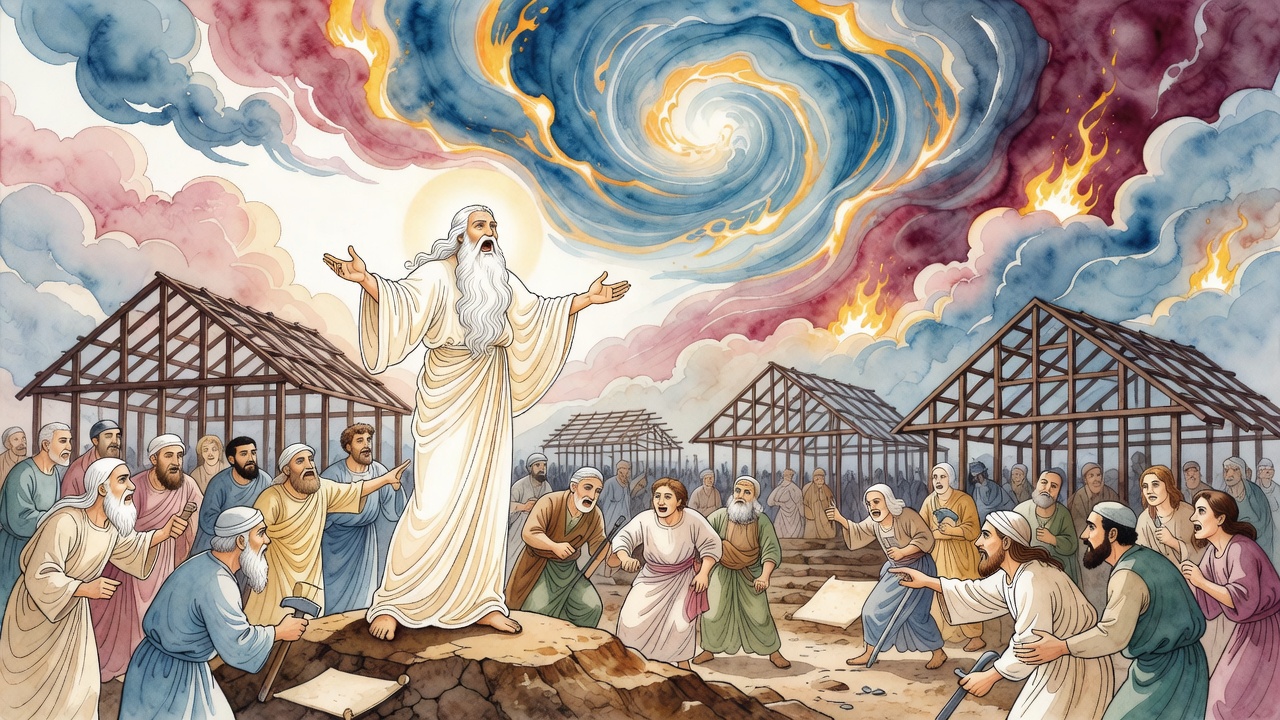
The generation before the water lived in a world too kind for its own soul. One sowing fed forty years. Magic bent sun and moon to private errands. Pregnancies lasted days. Newborns walked and talked while the cord was still a debate at the bedside. A story survives of a baby sent for light who met the king of demons on the path, fought him to a standstill, and traded insults when a rooster crowed the demon home. "Go tell your mother," the infant shouted, "if not for my uncut navel string I would have killed you." Power without gratitude is a slow poison. They rose against God as if abundance were proof they no longer needed a Giver, only more techniques.
Noah watched the weather of morals turn black while the fields stayed green. He delayed marriage until he was four hundred ninety-eight years old because he refused to seed children into a world already marked for erasure. When the Lord commanded him to take a wife, he still hesitated, weighing future graves against present obedience. When he finally married and fathered three sons near the end, heaven limited the number so the ark would not need to swell beyond bearing and so his grief would not multiply if any child chose the generation's wide, easy path into ruin.
He was called righteous because he fed creatures under his care, a title he would share later with Joseph the feeder of nations. Even the animals that entered with him were counted clean of the cross-breeding corruption that had smeared the earth, species climbing into species until creation's grammar broke.
When the Deep Answered
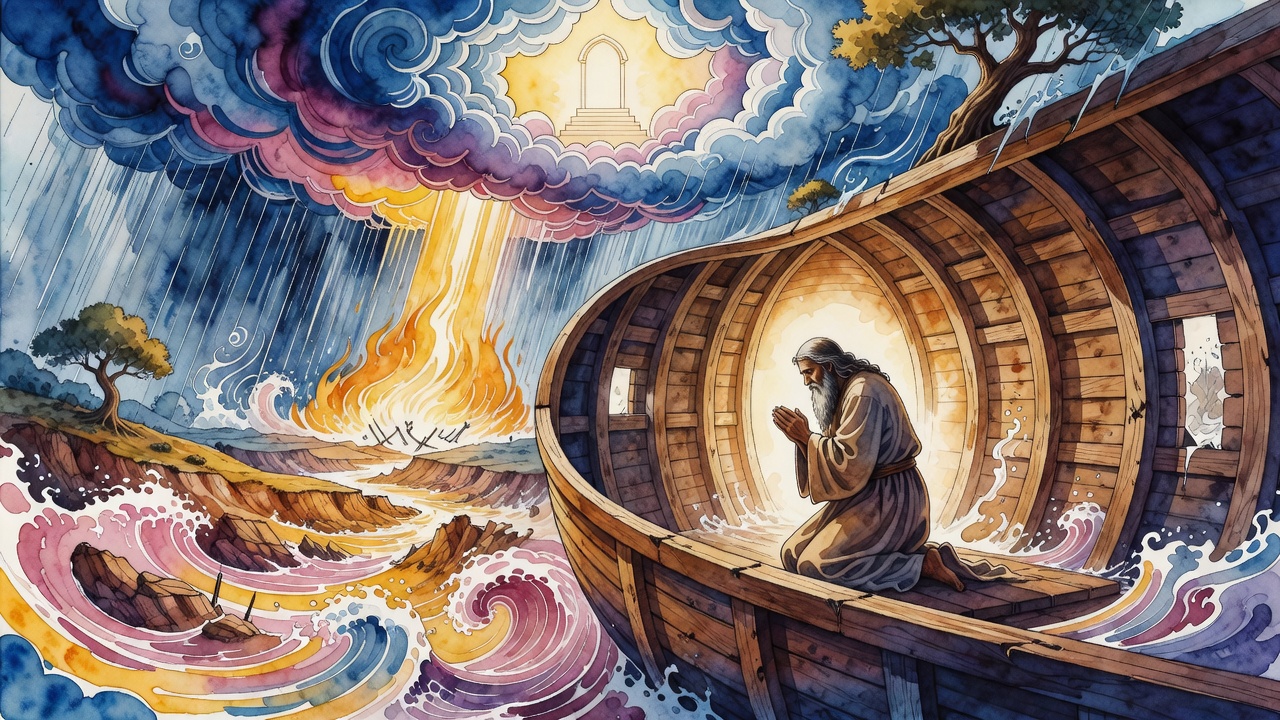
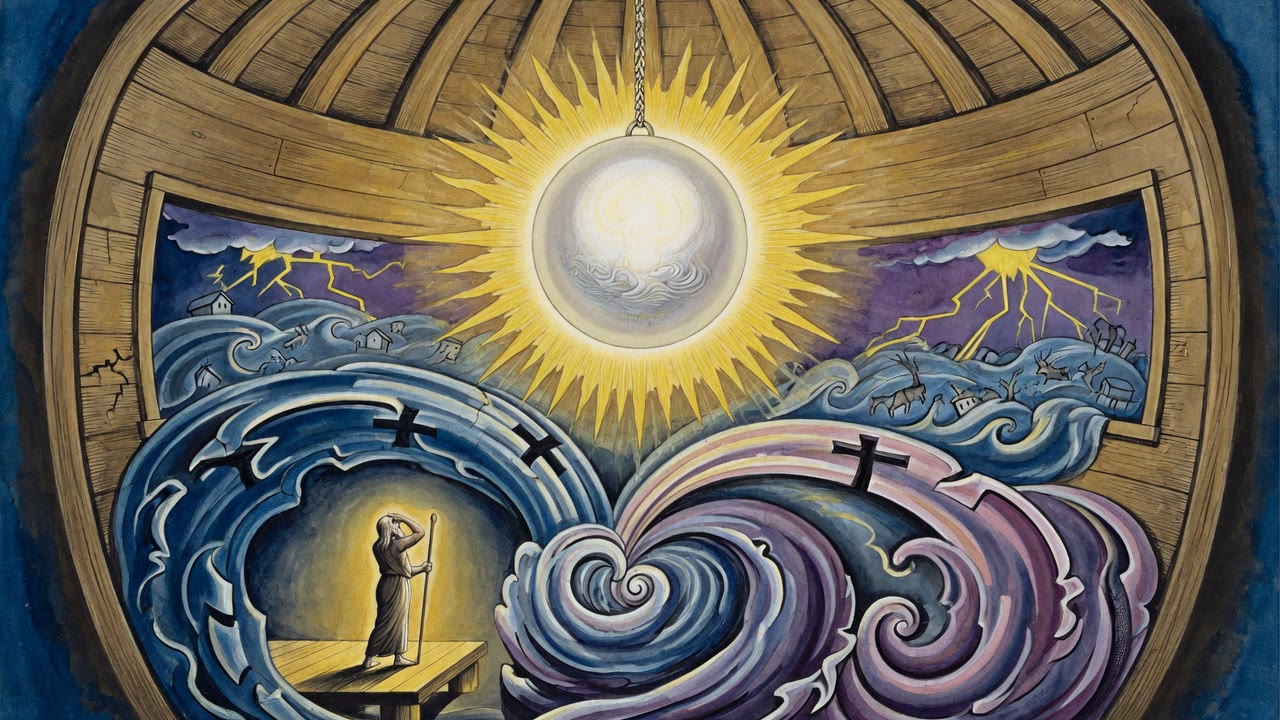
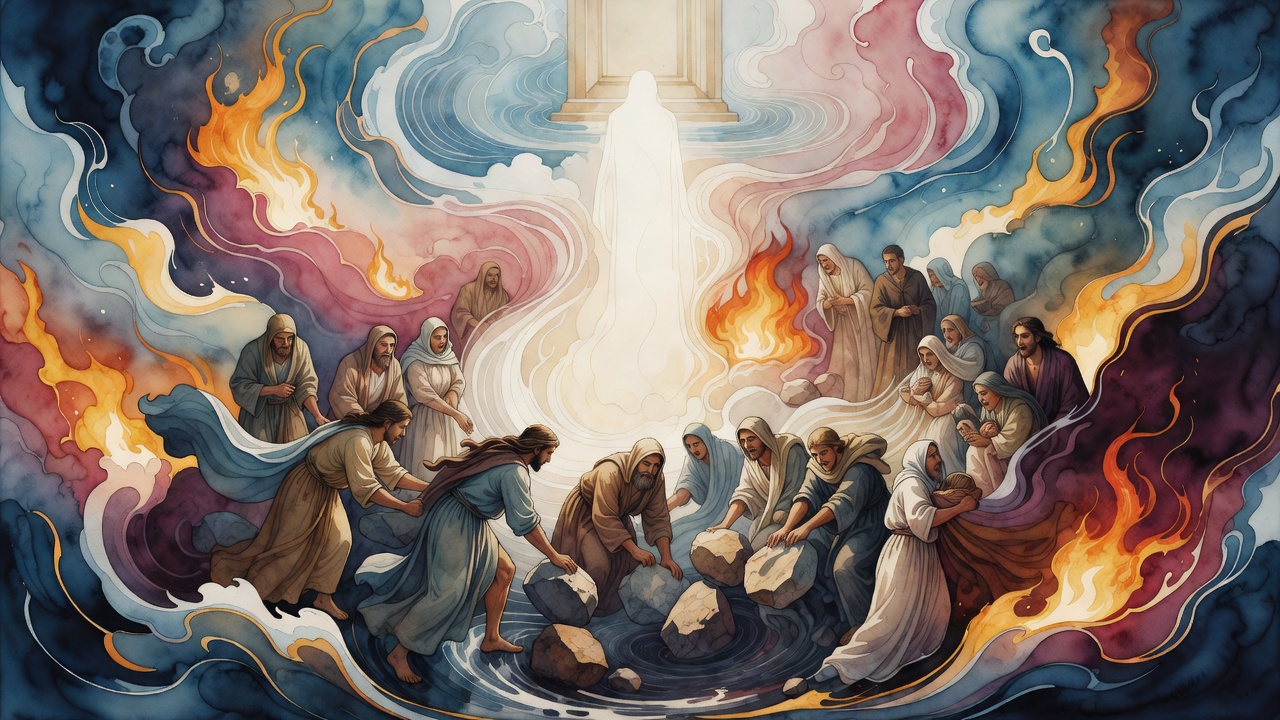
Waters began to gush from below with a sound like the world clearing its throat. The strong men of that age, tall as the boast in Genesis, saw the fountains and reached for the nearest plug their hands could find. They had children the way orchards have fruit, conceived at night and born by morning in the wildest tellings, living to see great-grandchildren while still young enough to run. In their panic they stuffed those children into the crevices of the deep, soft bodies for seals, mercy that was only cruelty wearing a family name and a father's desperate math.
"The tender mercies of the wicked are cruel," the proverb already knew, as if it had been waiting for this illustration. Job's verses are read over their act. The womb forgets. The worm is sweet. Unrighteousness breaks like a tree under a storm it cannot charm. Heaven's answer was not only water rising from the deep. Fire came from above when height mocked drowning and long limbs still stood above the first waves. Birds and beasts turned on the men who had treated them as toys and breeding stock. The world they had used bit back with every mouth it had left.
Hands on the Ark
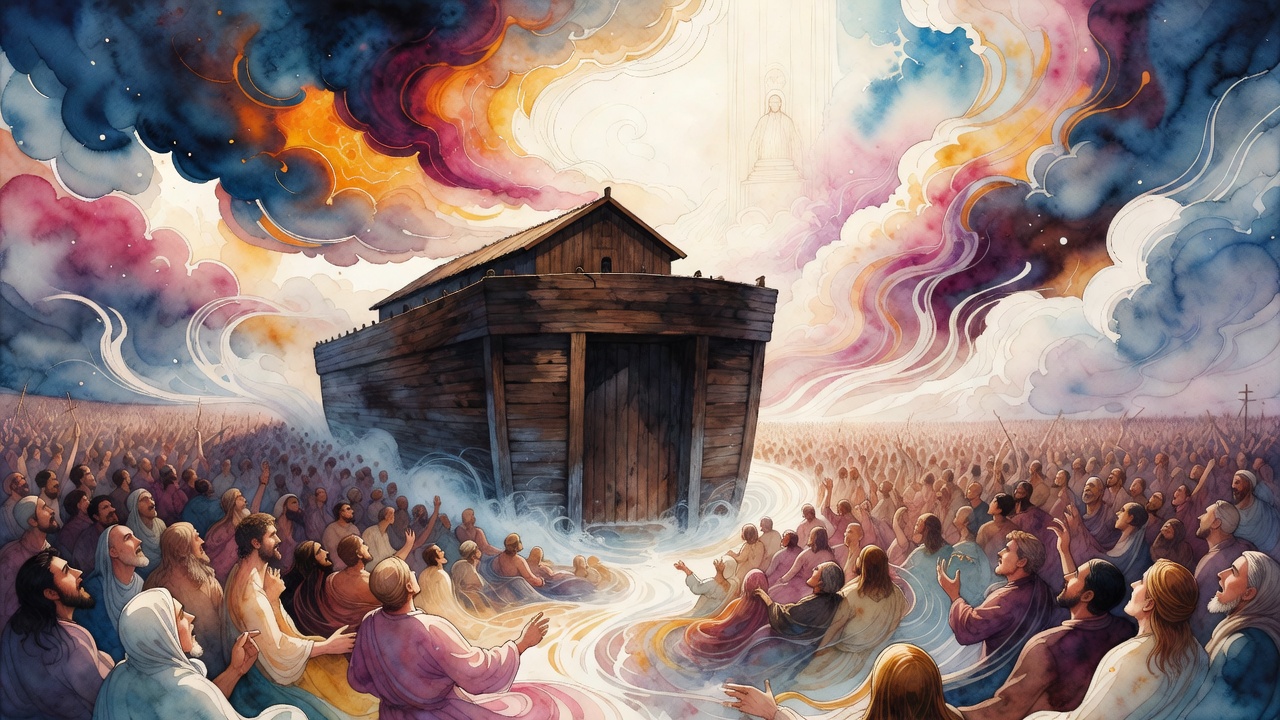
When ruin became obvious even to the arrogant, they tried to overturn the box that held the future, shoulders against pitched wood, rage against a carpenter's math. God ringed the ark so their strength found no purchase, as if an invisible wall had learned their names and refused them. Inside, Noah worked as a steward of species through nights of animal panic and human prayer, righteous in a generation that made righteousness look like a foreign language spoken only in one household. Outside, men who had plugged springs with their own offspring discovered that the deep does not negotiate with murderers and does not honor the strength of giants.
A human king crushing a revolt burns loyal and rebel alike because he cannot see hearts from a chariot. The Holy One, the midrash says, can save one righteous man from a generation of anger without losing the thread of justice. "God remembered Noah" is not a casual note scribbled in the margin of catastrophe. It is the difference between empire and providence, between a flood that is only weather and a flood that is verdict with an exception carved carefully in gopher wood.
The ark rode. The screams thinned into water's wider voice. The world that had walked and talked from the cradle learned the silence after judgment, a silence broken only by rain and the creak of a vessel carrying too much of tomorrow.
The Man Who Saw Three Worlds
Noah's name repeats in one verse because he lived three conditions while still breathing. A filled earth. An erased earth. A refilled earth. Daniel would later see temples rise and fall in a smaller theater. Job would see a household ruined and restored with new children and old scars. Noah saw the whole stage emptied and restocked, continents of people become rumor under waves, then birds returning with green in their beaks.
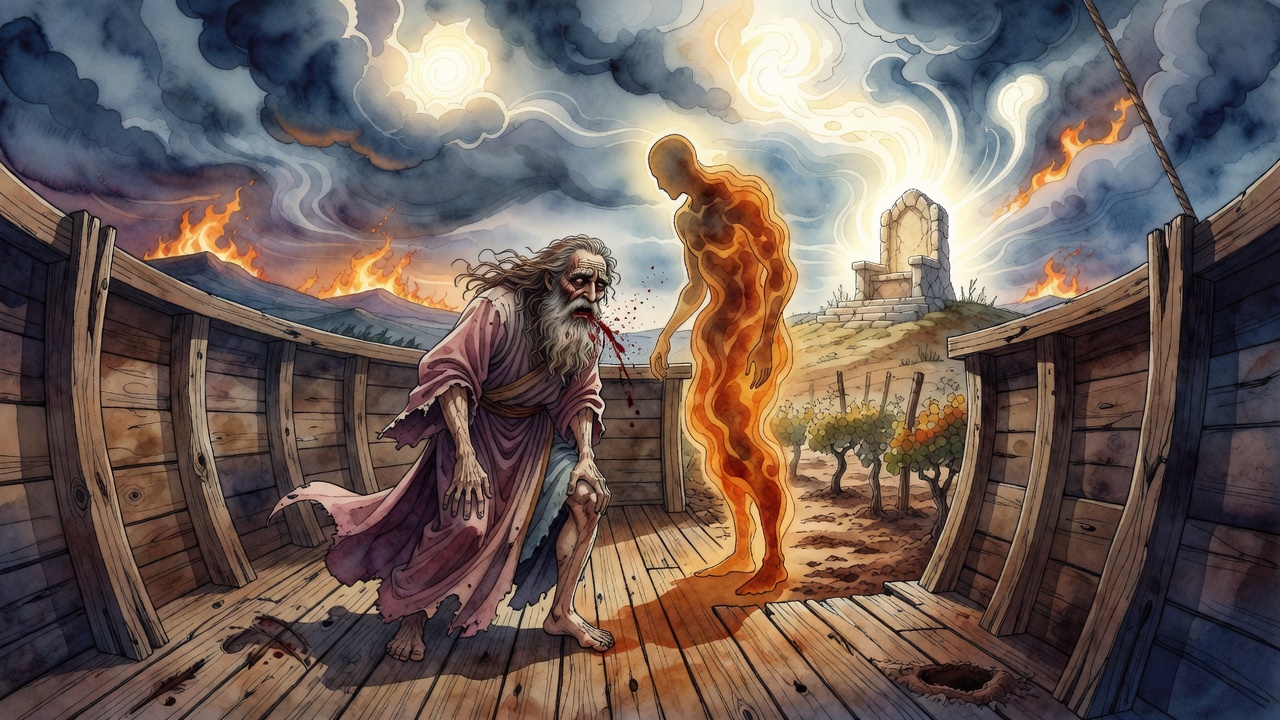
Was he righteous only by comparison with monsters? One sage said a vial of perfume in a dung heap seems strong, yet might vanish among better scents in a clean market. Another said a man fragrant in filth would be only more fragrant in a clean room. The argument never finished, which is honest scholarship. What finished was the water's work, and the olive leaf, and the raw task of planting a vineyard in soil that remembered too much and forgave too little.
He had not wanted children for a doomed world. He received a world that had to begin again with the children he finally risked, Shem and Ham and Japheth stepping onto mud that had been a graveyard. That is not a soft ending. It is the only ending water left him, and he walked it with the stiffness of a man who had heard too many fists on the outside of the ark and too few voices left to answer.
← All myths