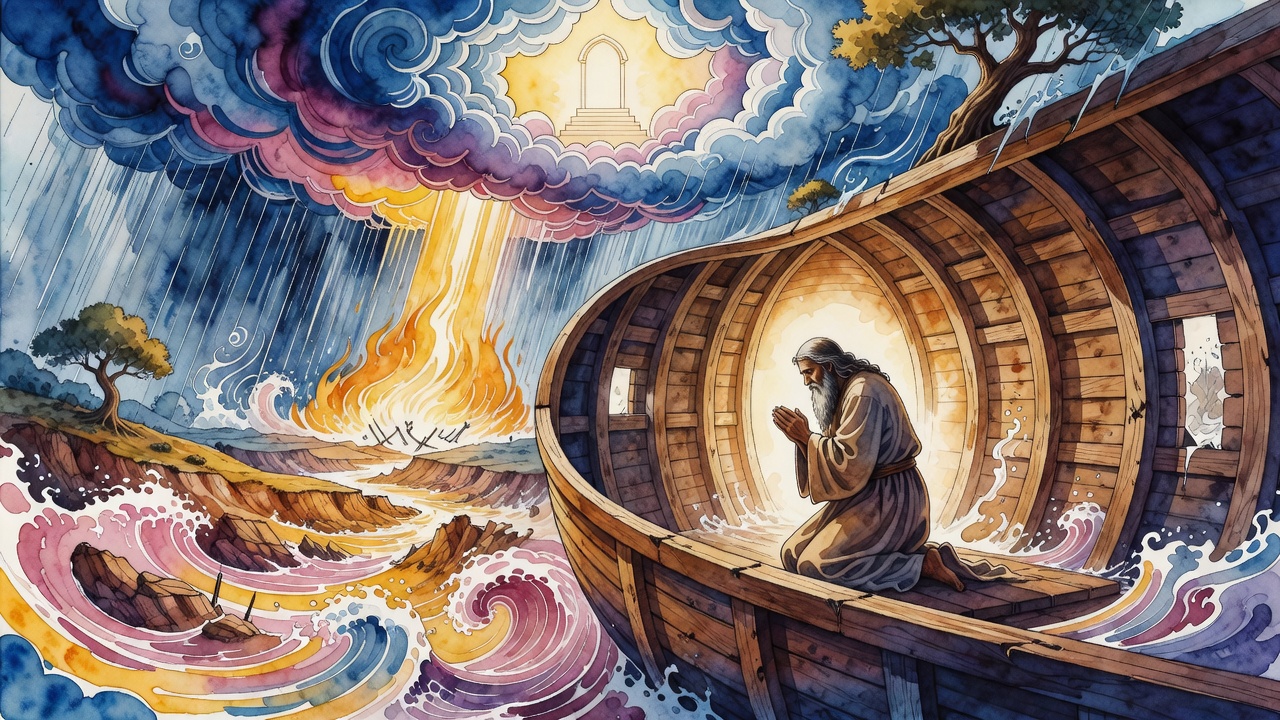
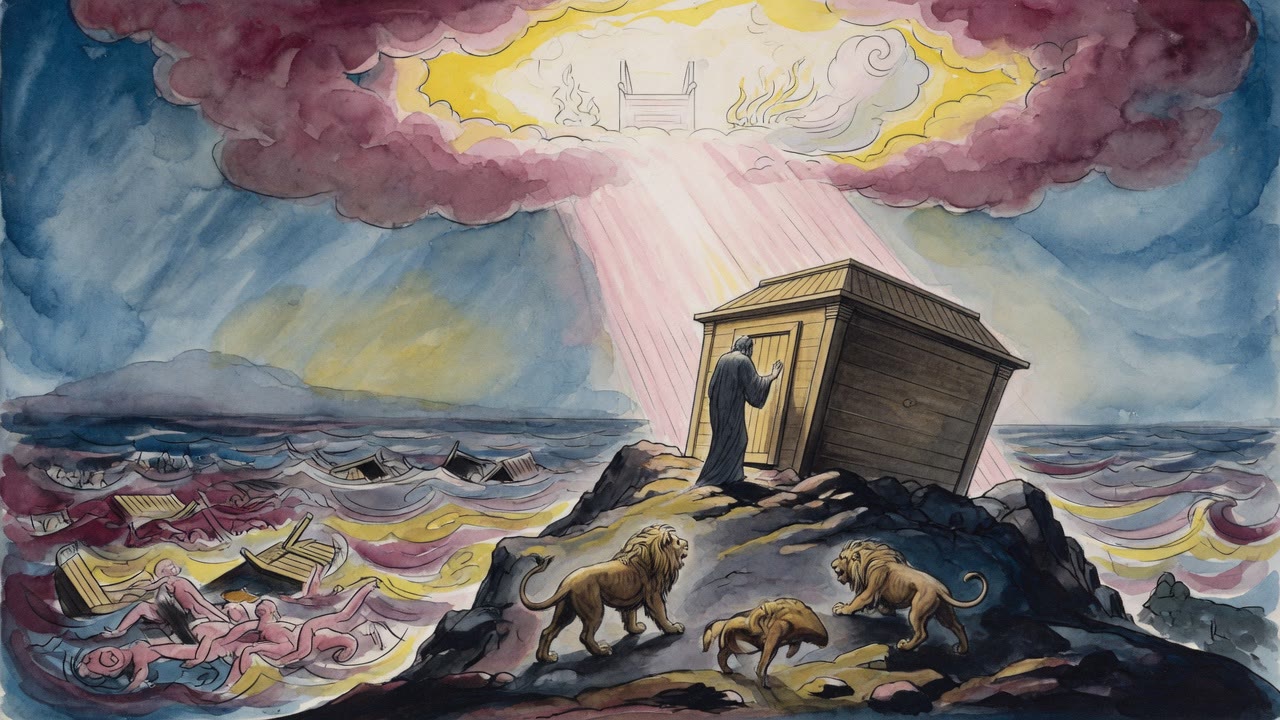
Noah's Stone Lit Night While the World Drowned
The stone dimmed and Noah called it day. Outside, rain was a wall. When the ground took feet again, God promised the water would not.
Table of Contents
Noah hung a jewel in the wood and waited for it to change its mind. Outside, rain was not weather. It was a wall. The sun was gone. The moon was gone. Inside the ark the only clock left was a stone.
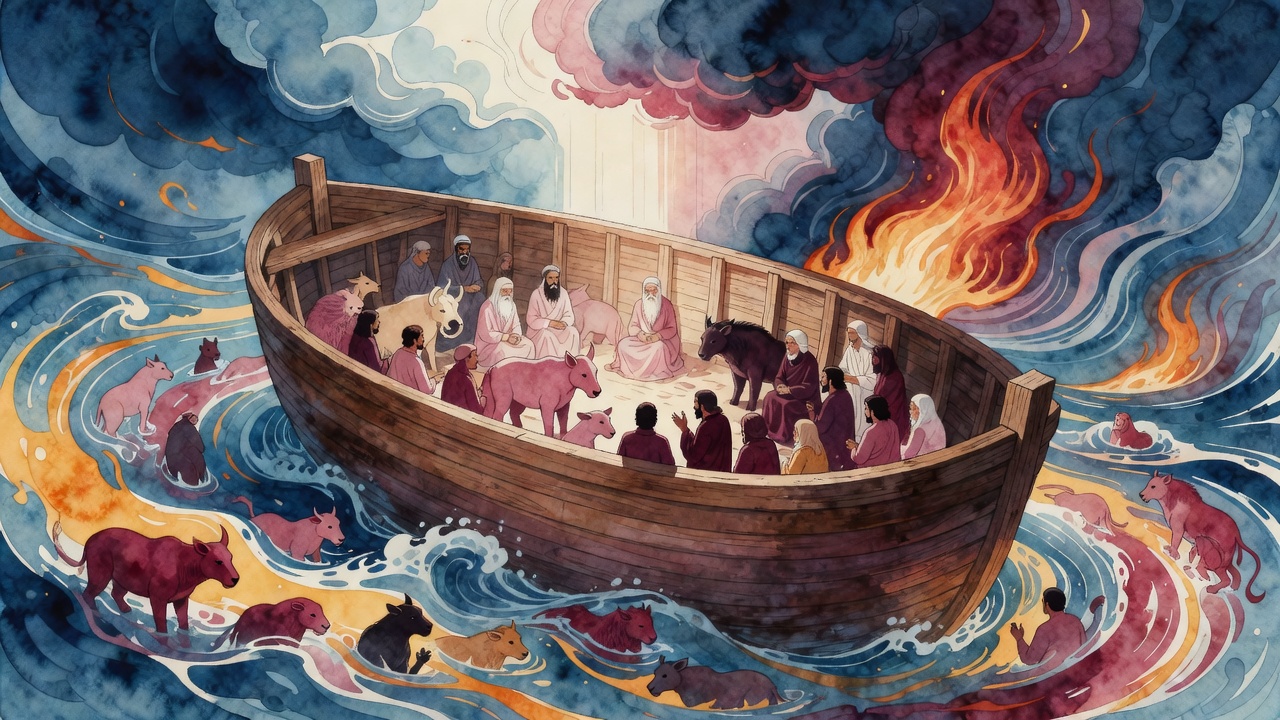 Click for full size
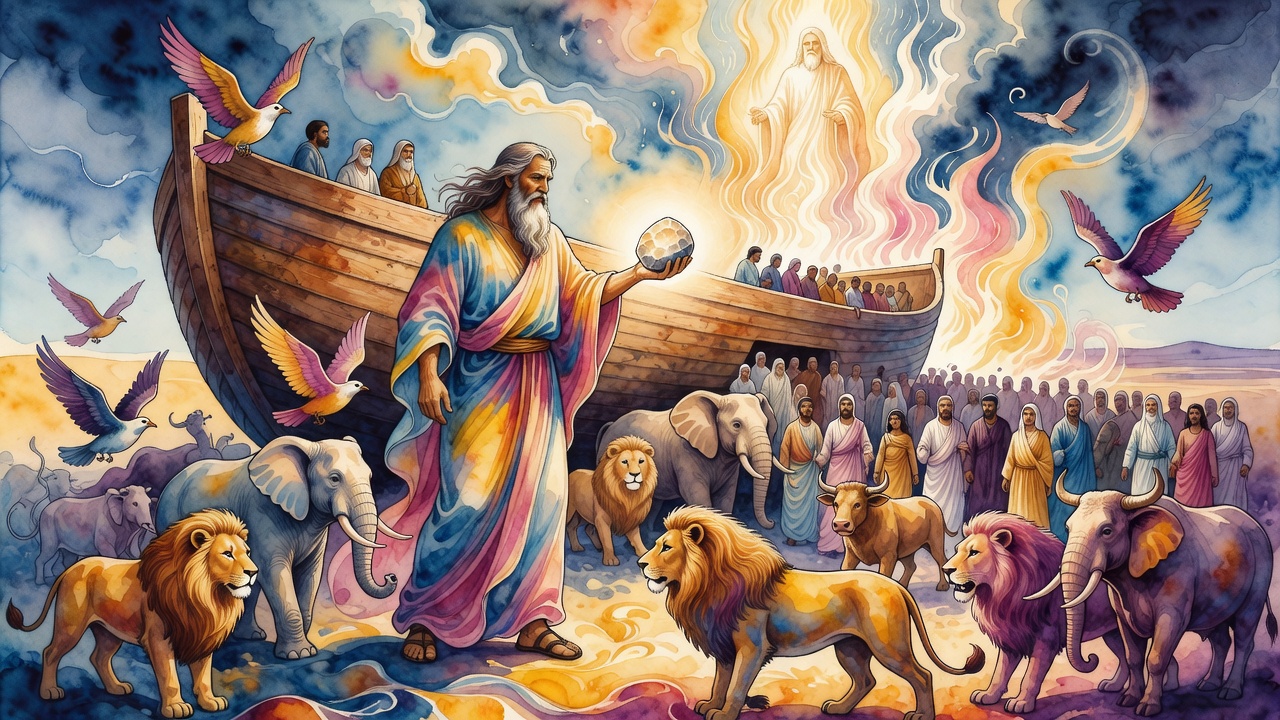
The Torah calls it a tzohar (צהר), a bright thing for the ark. Noah suspended a precious stone. When it dimmed, he knew day. When it blazed, he knew night. For twelve months he needed neither sun nor moon. Time became the stone's mood, and the animals shifted when the light shifted, and hunger followed the blaze the way it used to follow dawn.
He sealed the door. The world outside became sound and weight. No knock would come from a neighbor. Any knock would come from above, or it would not come at all.
Three Hundred Sixty Rooms
The ark was a corridor that floated. Three hundred sixty rooms, each ten cubits by ten, stacked in rows with aisles a man could walk with a staff and a list. Clean here. Unclean there. Feed. Scrape. Carry waste. Keep the pairs from tearing each other in the dark when the stone flared and every creature thought it was time to move.
The roof narrowed as it rose, vaulted, until it finished in a cubit at the top so water would sheet off instead of pooling. Noah pressed his palm to the boards and felt the river testing the pitch he had smeared days before. The entrance sat in the side, not in the face of the storm. A large room needs a door a person can actually use. The Torah had said so, and he had built it that way, and now he lived inside the instruction.
He walked those rooms with a schedule no one outside would ever read. The righteousness that had gotten him a door was now a feeding list. Speak less. Carry more. Do not open the latch because the sound outside has changed.
All Flesh That Moved
Outside, all flesh capable of motion ended (Genesis 7:21). Motion marked the life that stood under judgment. What moved and chose and crushed had filled the earth with violence. The water took the movers. The ark kept a remnant still enough to wait.
Noah did not watch cities go under. He watched a stone. He heard the hull take hits that used to be hills. Animals cried in the stalls when the jewel brightened, and he learned their hunger by sound, because the old sky-clock was dead. A year of that is not a holiday of miracles. It is labor. Feed. Clean. Calm. Wait.
What moved, died. What he kept, breathed. Between those two facts sat the stone, the rooms, and a door he was not allowed to treat as a window onto the drowned.
The Door Stayed Shut
He did not open it when the rain eased. He did not open it when the noise changed. A remnant that opens too early is not a remnant. The stone still ran its private day and night. The stalls still needed him. The world beyond the pitch was not a place for feet.
When the ground at last took weight, the first smell of dry earth came in like a blow after months of wood and breath and dung. Noah stepped onto mud that had been a planet of graves. He did not step into a repaired human heart. He stepped into a silence that still had his family's voices in it, and the animals' voices, and nothing else that used to move.
He built an altar. The offering rose. The Lord smelled it.
God Set a Limit on Water
Then God spoke a sentence that did not pretend the species had improved. He would not again curse the ground for man's sake the same way, though the thoughts of the human heart run toward evil from youth (Genesis 8:21). I will not again proceed to smite all living flesh as I have done.
Noah stood in the smoke and heard a limit placed on Heaven, not on him. The flood would stay unique. The human heart would stay difficult. Total water would not be the regular tool of repair. The jewel that had been his sun could go dark for good. True day was back, thin and washed, through cloud.
He had told time by a stone while the movers of the earth died. Now the stone could rest. History's harder clock began: a bent heart, a restrained flood, a world that had to be lived in without waiting for another total erase. The remnant walked. The vow held the water. Human evil was not gone. Only a second drowning of that kind had been refused.
← All myths