5 min read

One Wound on the Sheep Hurts the Whole Flock

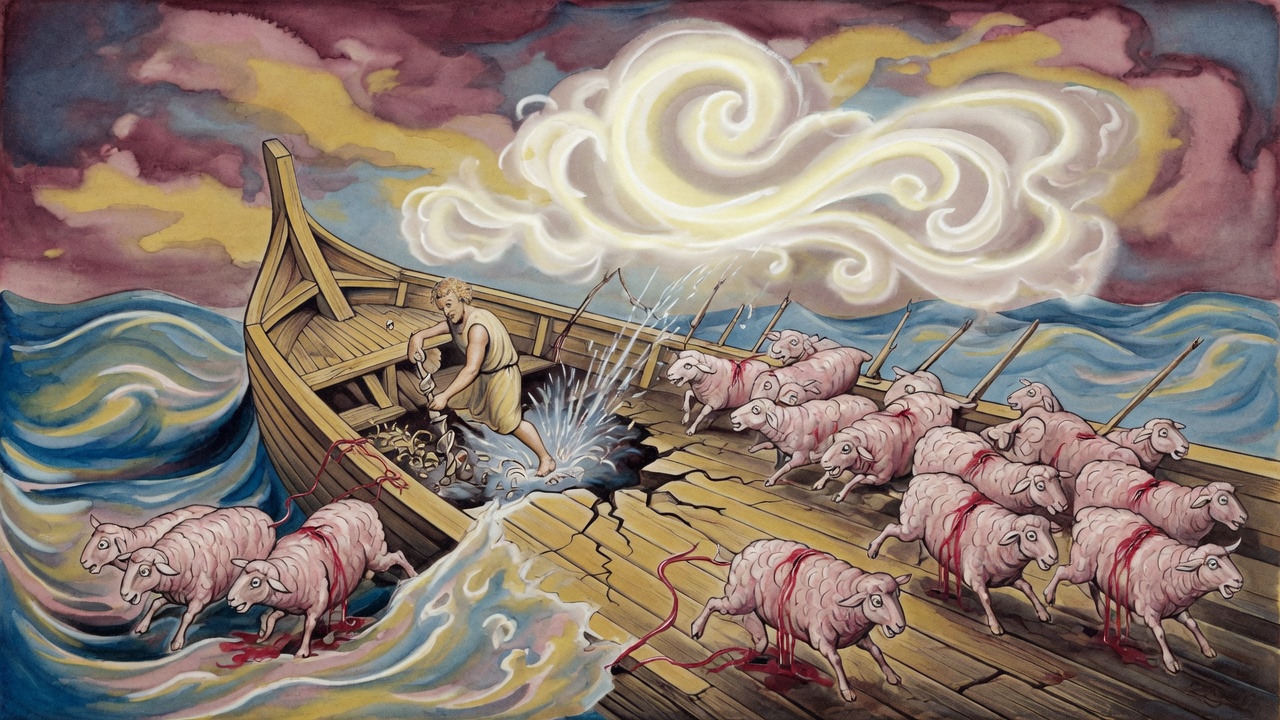
A passenger set a drill to the planks under his own seat. Why do you care, he said to the hands grabbing his arm. Water was already beading at the bit.

Curated by Arthur · Told by Maggid ·
Table of Contents
  1. Scattered Sheep, One Body
  2. The Heel of Babylon
  3. Many Souls, One Soul
  4. Stop the Bit

The plank under his seat was thick enough to hold a man, and he still set the drill against it. "Why do you care?" he told the passengers who grabbed his arm. "I am only drilling under my own place." Water already beaded at the bit. The ship did not agree that any seat was private.
One Wound on the Sheep Hurts the Whole Flock Click for full size

Rabbi Shimon bar Yochai told the scene so no one could miss the shape of a people. One hole is never one hole when the hull is shared. The drillers always sound reasonable. The sea always answers for everyone.

On deck, no one asked whether the wood under his legs was registered in his name. They asked how fast the water would rise.

Scattered Sheep, One Body

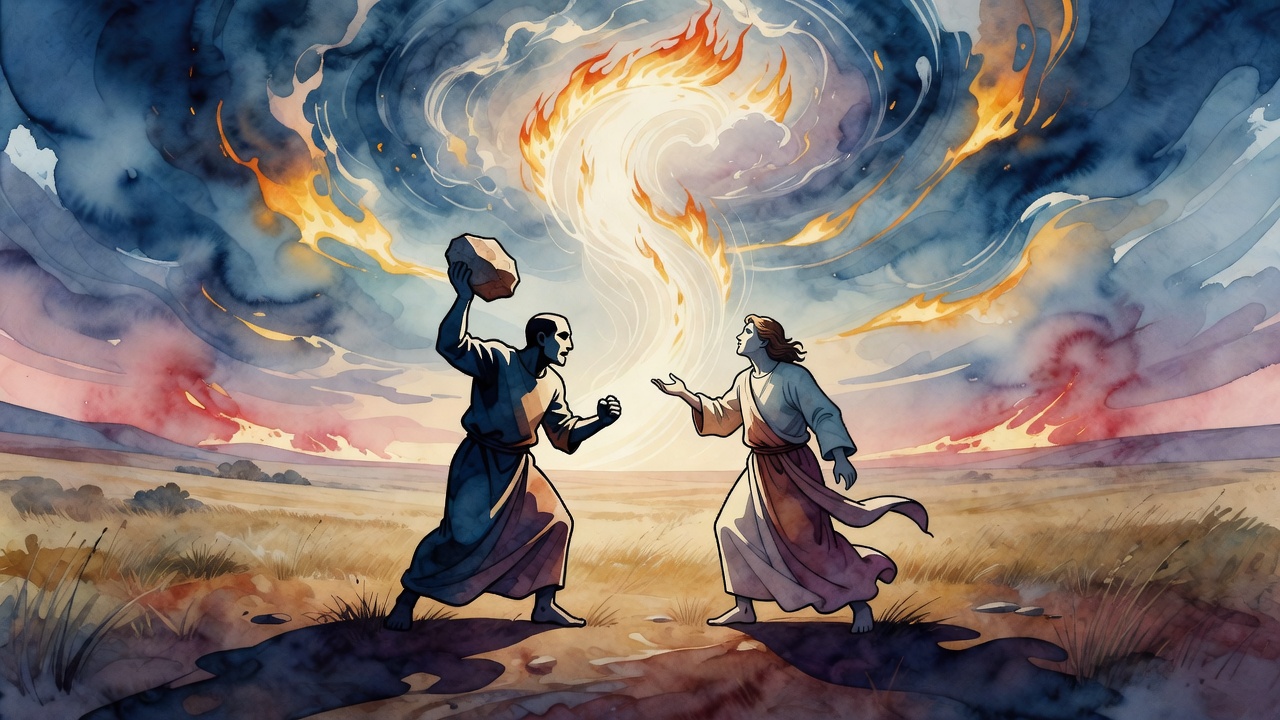
Jeremiah called Israel scattered sheep (Jeremiah 50:17). Hizkiya pressed the image until it hurt: strike a sheep on the head or even on a limb, and the whole flock feels the blow. So with Israel. One person sins, and the congregation tastes the consequence. The Torah itself asks the hard question in the mouth of Moses and Aaron: shall one man sin and You rage at the entire assembly (Numbers 16:22)?

The answer is not that Heaven is careless with individuals. The answer is that a covenant people is a single organism under pressure. A wound migrates. Pride in one tent becomes plague in the camp. Private drilling becomes public drowning.

Job wanted his error to rest only with him. His companions insisted the overflow spreads among us. No one likes that math until the water reaches their own heels.

The Heel of Babylon

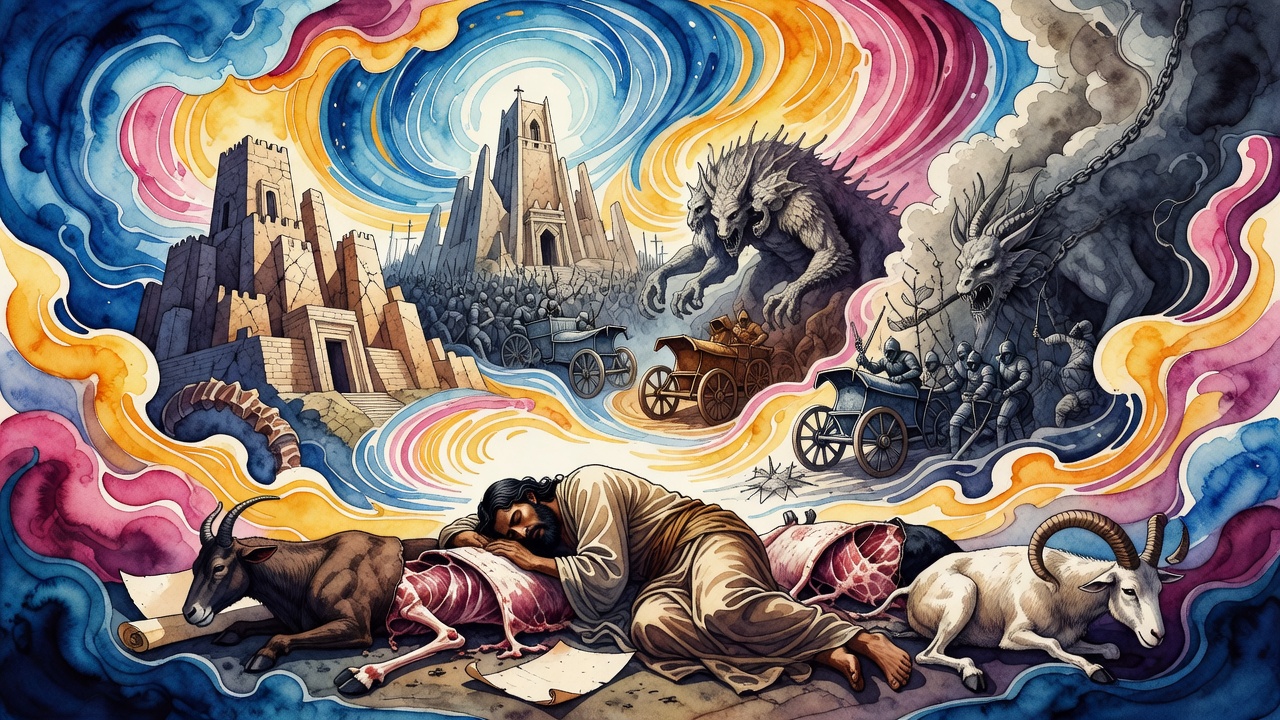
When Nebuchadnezzar ground captives underfoot, Lamentations named the crime without always naming the man: to subdue under his feet all the prisoners of the earth (Lamentations 3:34). The midrash supplies the face. He is the king who besieged Jerusalem, burned the First Temple, and herded Judah into exile. Daniel's dream reading crowns him the head of gold, dominion given over beasts and birds and the sons of man (Daniel 2:38).

A tyrant can trample a people only after the hull has already taken on water from within. Collective fracture invites a boot. The prisoners of the earth under his feet were not an abstract class. They were neighbors who had once argued about seats while the bit turned.

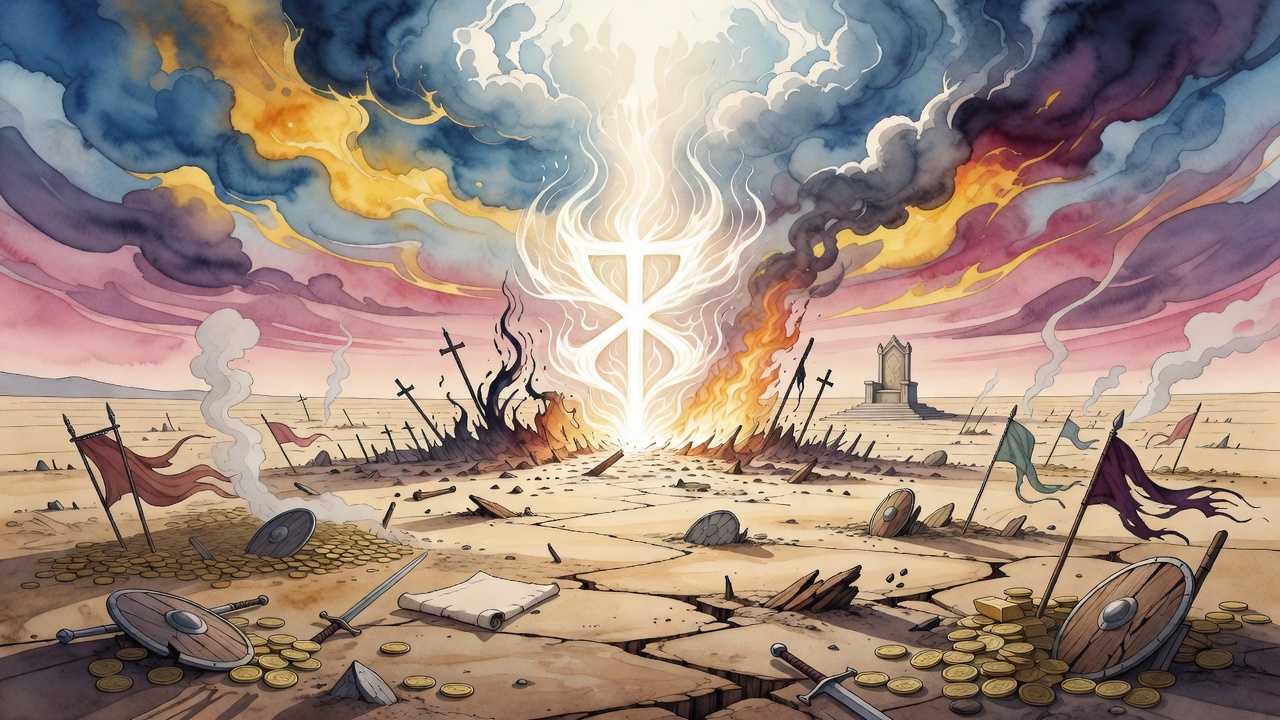
Even the golden head is temporary in Daniel's statue. Kingdoms stack and fall. The midrash refuses to let the oppressor's power look final, yet it also refuses to pretend the flock felt nothing when one limb was struck.

Many Souls, One Soul

A gentile once challenged Rabbi Yehoshua ben Korha: you are few, we are many, why not become like us and bow to many gods? The rabbi asked about the man's children. The man confessed they fought, each serving a different god, even coming to blows. "Before you convert us," the rabbi said, "bring your own house to one mind."

Later he taught the disciples the deeper proof. Esau's household is counted as souls in the plural. Jacob's descendants go down to Egypt as one soul. Many gods scatter a family into competing breath. One God gathers a people into a single living name.

Unity here is not forced sameness of taste. It is shared direction under one fear of Heaven. Without that, majority is only a larger drill team.

Stop the Bit

The man on the ship either drops the drill or learns to swim in a wreck he made for strangers. Israel in every age faces the same choice in quieter tools: a cruel word, a crooked weight, a private exemption from the law that holds the camp together.

Scattered sheep still hear one shepherd if they refuse the fantasy of a private hull. Nebuchadnezzar's heel is not the only threat. The hole under the seat is older and closer. Patch it early. Grab the arm of the neighbor who calls the plank his alone.

When the water is still only a bead, the argument feels abstract. When it is at the ankles, everyone becomes a theologian of shared fate. Better to learn the teaching while the deck is dry: one wound travels. One soul is the name of a people that still knows it.

Set the drill down. The sea does not grade on individual intent.

On the ship the passengers formed a ring around the driller. One wanted to throw him overboard. One wanted a committee. One wanted to ignore the bead of water until it became a stream. The parable does not praise any of those delays. It praises the hand that stops the bit while argument is still cheap.

In exile by the rivers of Babylon, survivors told versions of the same truth without the ship props. A city falls for many reasons. Among them is the quiet permission each household gives itself to weaken the shared wall. Nebuchadnezzar supplies the boot. The hole was dug earlier, under seats that felt private.


← All myths
From the tradition

Sources

2 sources

The texts behind this telling. Some cards carry a translation of the source; others are our own retelling of it, and each card says which. Every card links out to the original.

Vayikra Rabbah 4:6Vayikra Rabbah

Retold in our words. Read the original at the link below.The Sefaria Midrash Rabbah, 2022 · CC-BY

They explored the concept of collective responsibility – how the deeds of one individual can affect the entire group. And what they came up with is The Vayikra Rabbah, a Midrash – a collection of rabbinic interpretations of the Book of Leviticus – explores this very question. Ḥizkiya teaches us, drawing a powerful image from Jeremiah (50:17), that "Israel are scattered sheep." for a second.

He elaborates: Just as if a sheep is struck on the head, or even just a limb, the whole flock feels it, so too with Israel. If one person sins, everyone feels the repercussions. It echoes the question posed in Numbers (16:22): “Shall one man sin, and You will rage against the entire congregation? That our individual actions have such far-reaching consequences.

Rabbi Shimon bar Yoḥai illustrates this with a vivid parable. One of them starts drilling a hole in the bottom. The others, understandably alarmed, ask him what he’s doing. He replies, "Why do you care? I'm only drilling under my seat!" Their response? "Because the water will rise and flood the ship It’s a simple analogy, but it hits home.

Even Job, in his suffering, touches upon this. "If indeed I erred, with me my error rests" (Job 19:4), he laments. But his companions aren't so sure. They counter with, "For he adds transgression to his sin, he extends [yispok] among us" (Job 34:37). In other words, your iniquities spread among us. It's a stark reminder that sin, like that hole in the ship, doesn't just affect the perpetrator.

But how does this work practically? Is there a way to address the issue of diverse beliefs and practices within a community? Rabbi Elasa recounts an encounter between a gentile and Rabbi Yehoshua ben Korḥa that brilliantly tackles this. The gentile, pointing to the Torah's instruction to "Incline after the majority" (Exodus 23:2), challenges the rabbi: "We are more numerous than you. Why don't you become like us and worship idols?"

Rabbi Yehoshua, with remarkable wisdom, asks the gentile if he has children. The gentile replies, lamenting the constant infighting among his children, each worshipping different gods and even coming to blows. The rabbi's response is cutting: "Before you get us to become like you, go and bring your own children to uniformity!"

After the gentile leaves, the disciples question the Rabbi: was that a particularly strong response? What would he really say?

Rabbi Yehoshua then points to a crucial distinction between Esau and Jacob. Genesis (36:6) describes Esau's family using the plural term "nafshot" – souls. Exodus (1:5), however, uses the singular "hanefesh (the vital soul)" – the soul – when referring to Jacob's descendants. Why this difference in language?

The Rabbi explains: Esau's family worshipped multiple gods, hence the multiple souls. Jacob's family, however, worshipped one God, reflecting a unified soul. The key is unity of purpose, a shared commitment to a single ideal. It isn't just about numbers; it's about a shared foundation of values.

Maybe it's a call to be more mindful of our actions and their potential impact. Maybe it's a reminder that we're all interconnected, sailing in the same boat. And maybe, just maybe, it's an invitation to strive for a deeper sense of unity, not through forced conformity, but through a shared commitment to something bigger than ourselves. Something that binds us together, like a single soul.

Full source
Eikhah Rabbah 3:12Eikhah Rabbah

Retold in our words. Read the original at the link below.The Sefaria Midrash Rabbah, 2022 · CC-BY

This teaching from Eikhah Rabbah interprets a line from the middle chapter of Lamentations: “To subdue under his feet all the prisoners of the earth” (Lamentations 3:34). The poet is protesting injustice, the crushing of captives beneath a conqueror’s heel, and the midrash asks who exactly this tyrant is.

The answer the sages give is Nebuchadnezzar, the Babylonian king who besieged Jerusalem, destroyed the First Temple, and dragged Judah into exile. He is the one who literally trampled the prisoners of the earth, herding nations into captivity. To prove that this verse fits him, the midrash turns to the book of Daniel, where the same king is told the meaning of his great dream of the statue. There the prophet declares: “And everywhere the sons of man, the beasts of the field, and the birds of the heavens dwell, He has given them into your hand and set your rule over all of them; you are the head of gold” (Daniel 2:38).

By joining these two texts, the midrash identifies the anonymous oppressor of Lamentations with the named emperor of Daniel. The dominion described in Daniel, rule over every living creature, is precisely the unchecked power that let Nebuchadnezzar grind captives underfoot. Yet the larger arc of Daniel’s vision is that the golden head, however mighty, is only the first and most fleeting of the kingdoms, a reminder that even the conqueror who subdues all prisoners stands under a higher judgment that will one day topple him.

Full source