On's Wife Cut Her Hair and Hid Him From Korah
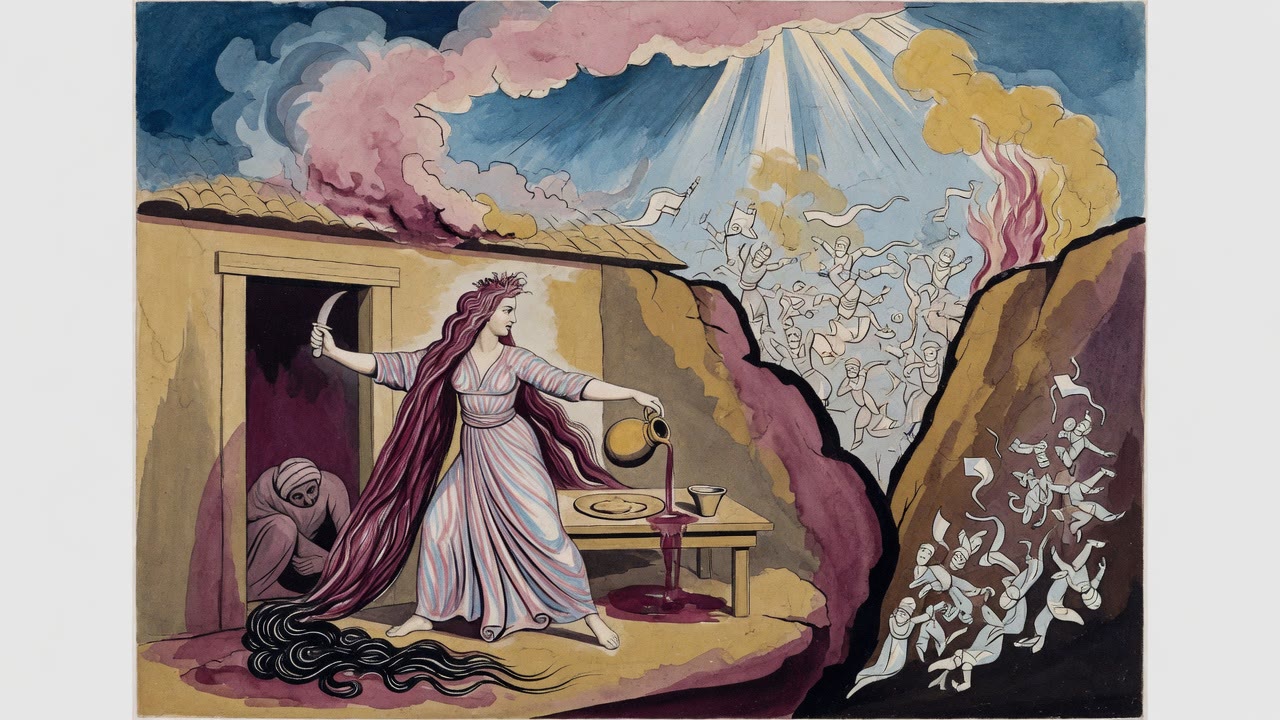
While Korah marched two hundred and fifty princes, On's wife poured wine, unbound her hair, and blocked the door until the earth closed.
Table of Contents
 Click for full size
Wine on the Table Before the March
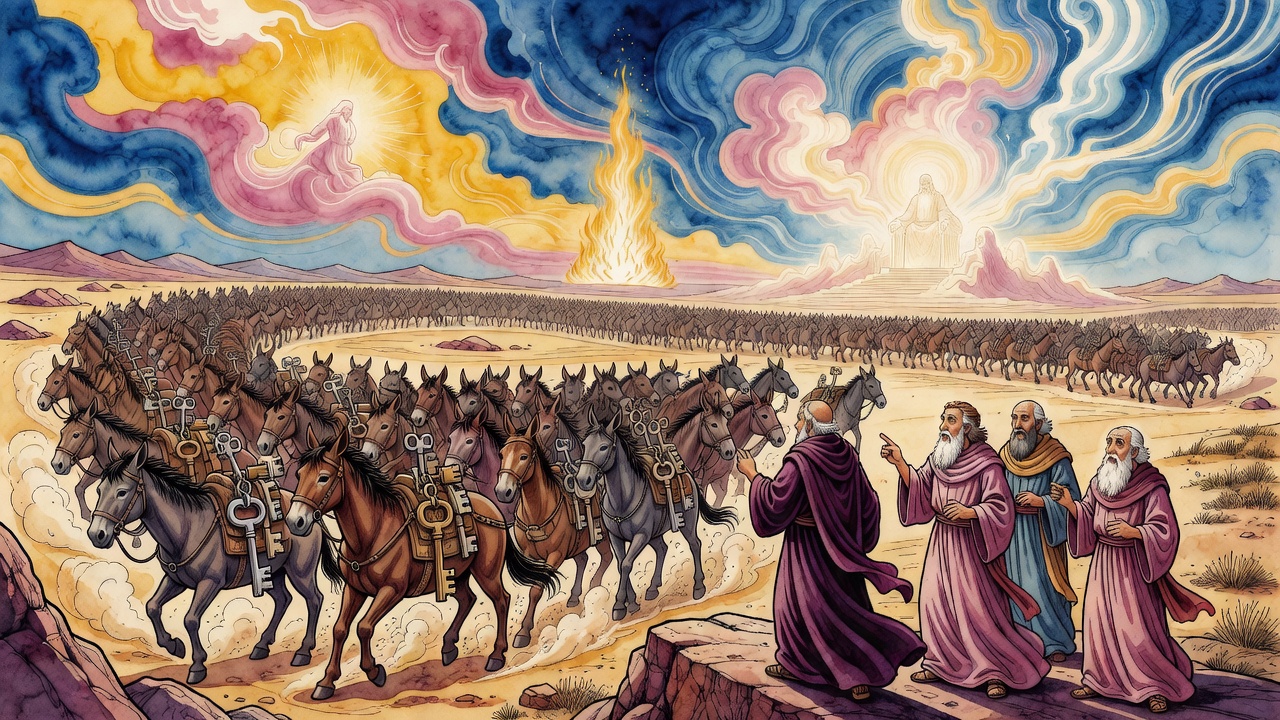
On ben Peleth stood with one hand on the doorpost and the other already half raised toward the camp of Korah. Outside, two hundred and fifty princes of the congregation sorted themselves into ranks, men who could fix the new moons and carry names from one end of the wilderness to the other. Inside, his wife watched the set of his shoulders and decided he would not leave that house alive to the rebellion.
"What is this quarrel to you?" she asked. "If Aaron is high priest, you remain a disciple. If Korah becomes high priest, you remain a disciple. You gain nothing either way." On answered with the slogan that had already filled the tents: the whole community was holy. She did not argue theology with him. She poured wine until his eyes went soft, laid him on the bed, and sat at the entrance with her hair unbound.
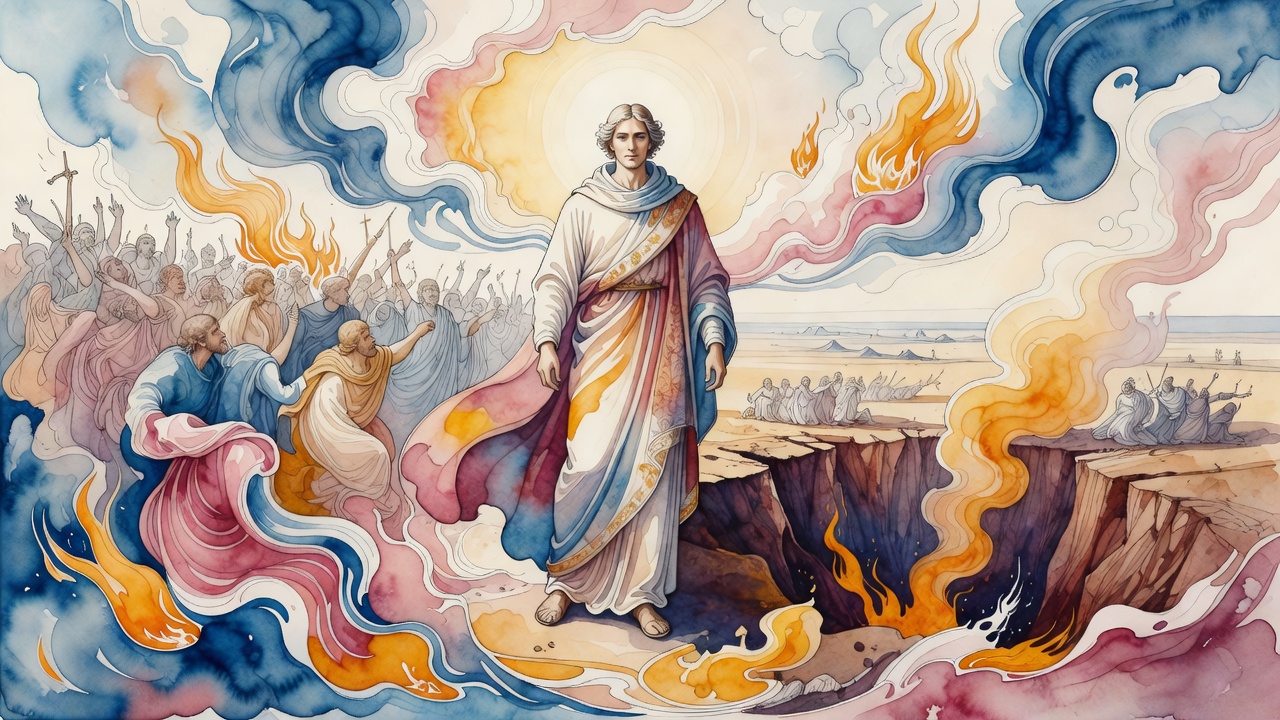
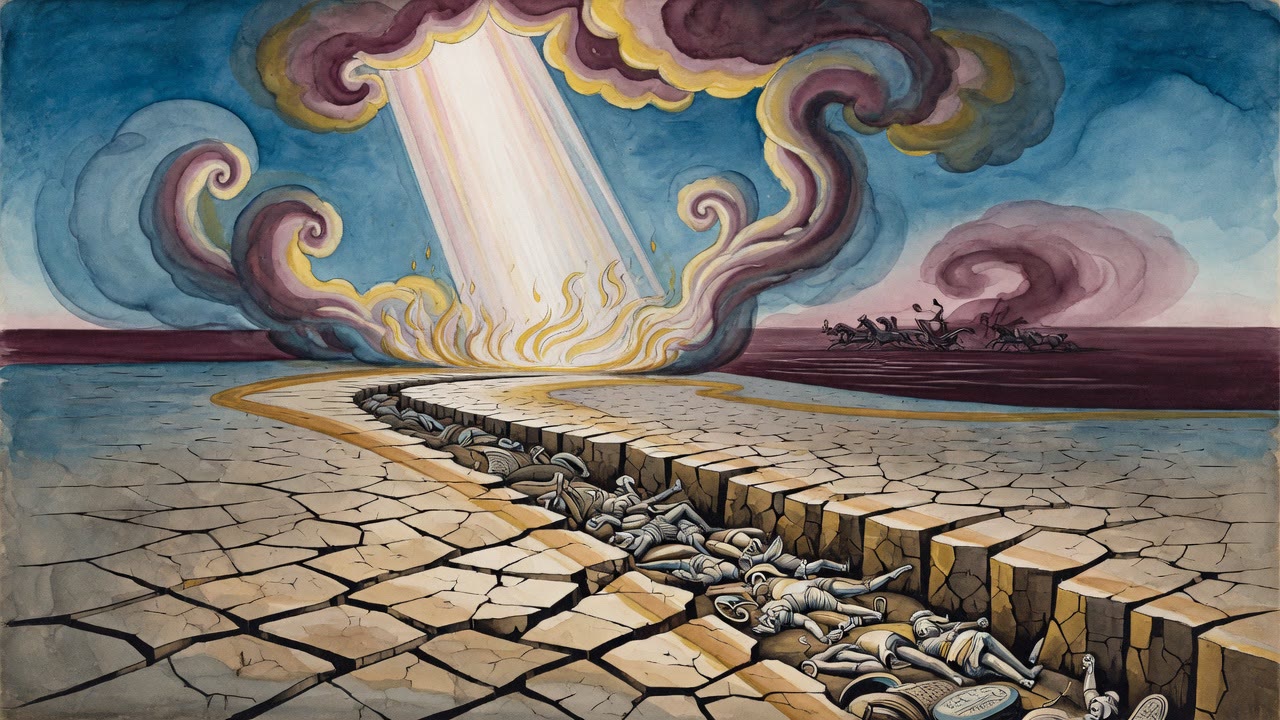
Every man who came for On saw a woman sitting like a warning and turned back. While they turned, the ground opened under Korah and under the men of renown who had risen against Moses. Dust and screaming rose in the same breath. On slept through the moment that would have written his name into the list of the swallowed.
The Name That Stayed Sorrow
They named him On, sorrow, because sorrow stayed with him all his days. Not the sorrow of those who vanished under the earth, but the quieter kind: a man who almost joined a revolt, almost became a memorial of ash, and then woke with a headache and a wife who outthought a nation. His second name, Peleth, carried a different register. The midrash hears in it the miracles done for his line, as if the house that nearly fell still remembered that heaven had once bent for its people.
Moses, when he heard the uprising, fell on his face. The tradition says he heard more than a challenge to priesthood. He heard that the camp had begun to cast suspicion on him with married women, a jealousy so thick it stained every doorway. On's wife closed one doorway against that fever. She did not close it with a speech. She closed it with hair, wine, and the refusal to let her husband be counted among the two hundred and fifty.
When On finally sat up and asked what had happened, the answer had to climb past shame. He had been ready to march for a holiness slogan. She had been ready to look immodest at a threshold so that pride dressed as piety would not own him.
Folly Tears Down Its Own Walls
Proverbs supplies the pair the story needs. "The wisdom of women builds its house" points to On's wife. "Folly tears it down with its own hands" points to the wife of Korah, who pushed her husband deeper into the quarrel until the house itself became a grave. Two women, two thresholds. One made a bed into a shelter. One made a household into a launch for pride.
Korah's company knew how to intercalate years. They could read the calendar of festivals. They could not read the face of a wife who had already chosen which side of the earth she preferred for her husband. The princes of renown walked past a loosened braid and never understood that the braid was a wall. Skill with moons does not equal skill with a marriage at the edge of catastrophe.
The midrash lets that contrast stand without softening it. Wisdom here is not a proverb on a wall. It is a body placed in a doorway, hair down, daring the visitors to decide whether their revolt needs this one more man badly enough to cross her.
Leah Walking Out to the Field
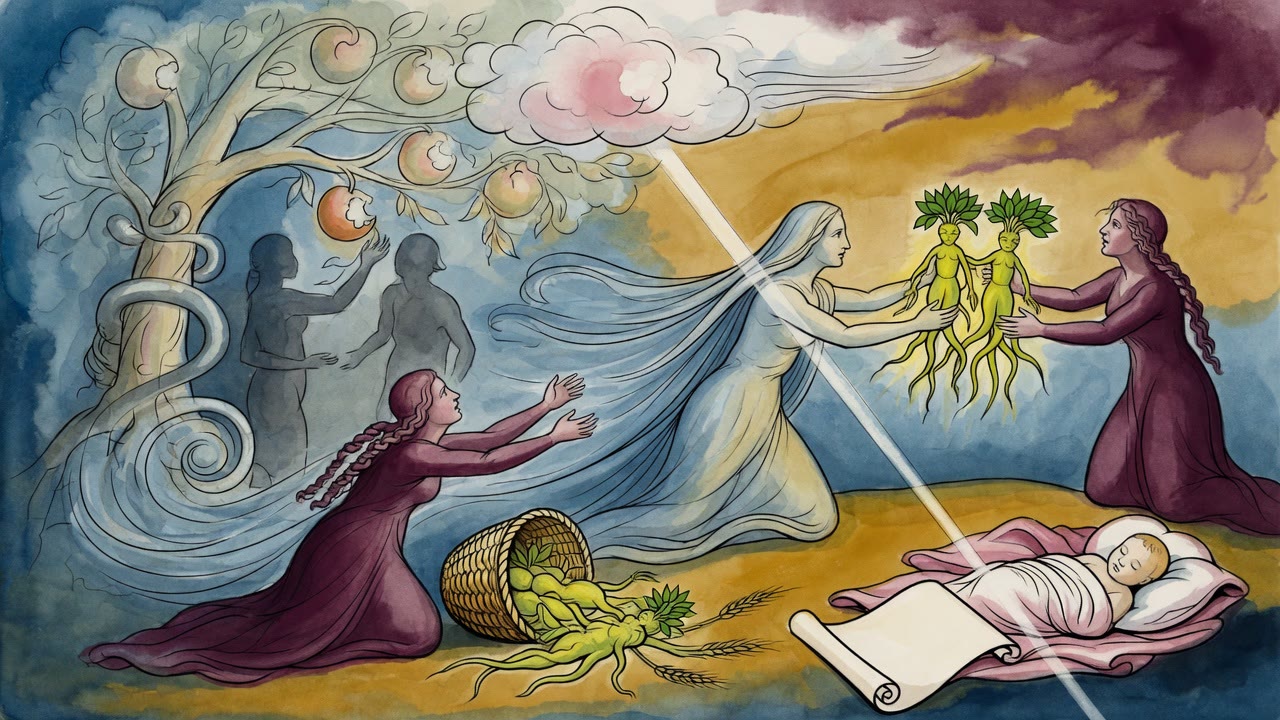
Another woman once walked out into a field and spoke without shame. Leah met Jacob and said plainly that he would come to her. The sages refuse to call that brazen. They call it desire aimed at a future. A wife who reaches toward the holiness of the covenant, they teach, can merit children of a stature even Moses' generation could not fully match.
When Moses later sought leaders who were wise, understanding, and known, the appointments listed only the wise and the known. Understanding of the times, the rare gift of reading the hour, showed up later among the sons of Issachar, Leah's line. The midrash ties that gift back to Leah's open claim. Desire spoken toward a sacred purpose becomes counsel that can steer a people when calendars and seasons must be read correctly for Israel's sake.
On's wife and Leah do not share a plot, but they share a posture. Both refuse to wait for men to finish a bad plan or a hesitant one. One uses a field. One uses a doorway. Both stake the next generation on a single decisive act performed while others are still composing speeches.
What a Disciple Keeps When Priests Fall
On woke to a quieter camp. The men who had come for him were gone into the ground or into silence. He remained a disciple either way, exactly as his wife had said, and the saying was not a taunt. It was the whole point. Status under one high priest or another would not have rewritten his soul. Joining Korah would have rewritten his death and the inheritance of his children.
Israel still tells the story because the rebellion was loud and the rescue was domestic. Heaven swallowed the princes. A woman with a jug of wine and unbound hair kept one man off the list. The camp learned, if it chose to learn, that not every holy slogan is a reason to march, and that wisdom sometimes sits on a threshold and does not move until the danger has passed. When people later count the dead of that day, On's absence is a monument built of restraint rather than stone.
← All myths