5 min read

Ornias Hurled the Seal at Beelzebouls Chest

Solomon put a vampire spirit to work cutting stone at the Temple. Then he handed it his seal ring and sent it to fetch the king of the demons.

Curated by Arthur · Told by Maggid ·
Table of Contents
  1. The Spirit at the Quarry Edge
  2. Solomon Took the Ring Off
  3. Who Is This Solomon
  4. The Old Man Wanted His Son Dead
  5. The Fifth Day
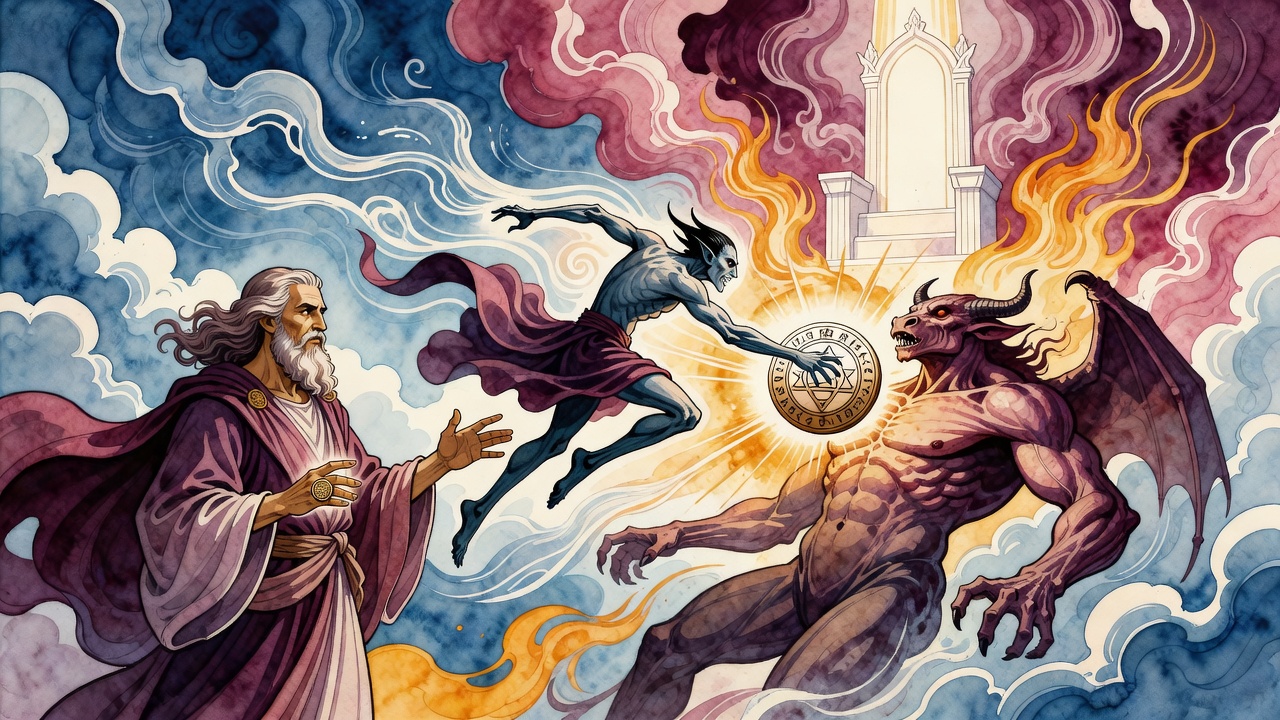
Ornias Hurled the Seal at Beelzebouls Chest Click for full size

The Spirit at the Quarry Edge

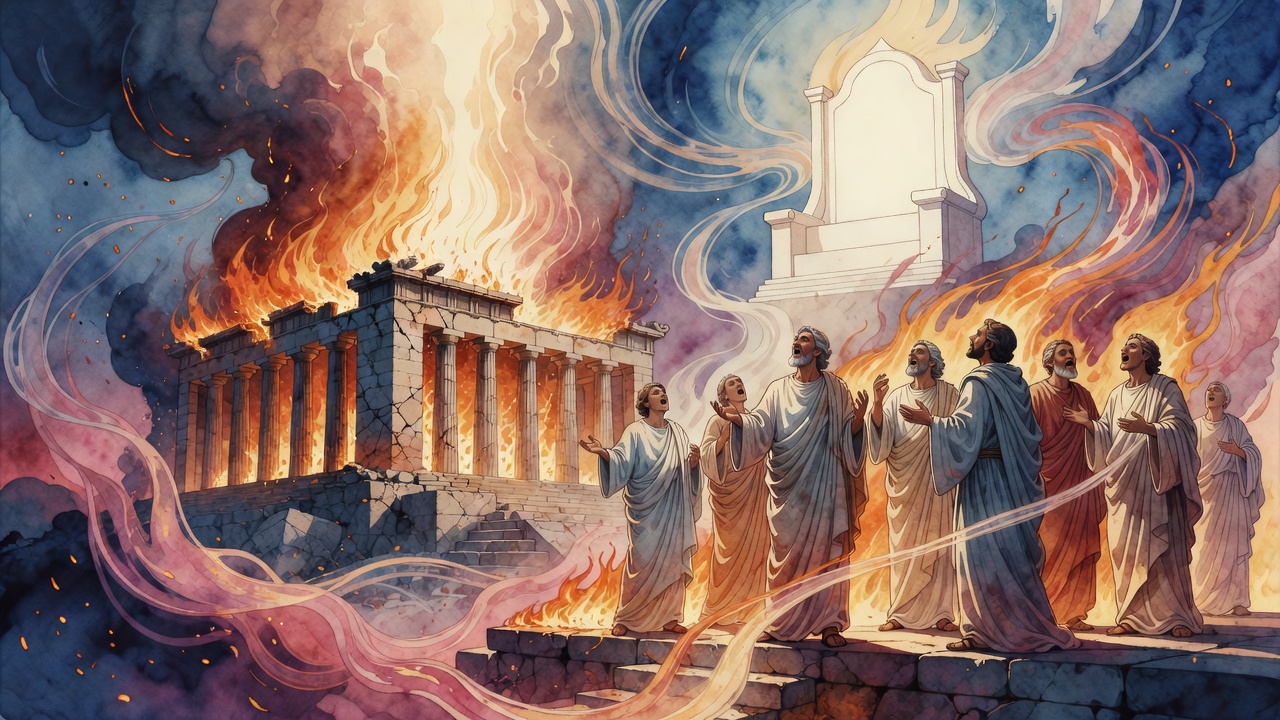
The workman had been losing blood for weeks before Solomon heard about it. Something came for him at the Temple works night after night and left him thinner every morning, and Ornias was a vampire spirit with no reason to take an interest in a man who cut stone for wages, but he had found one and would not let go. So the king went down to the works himself and took him with the seal ring.

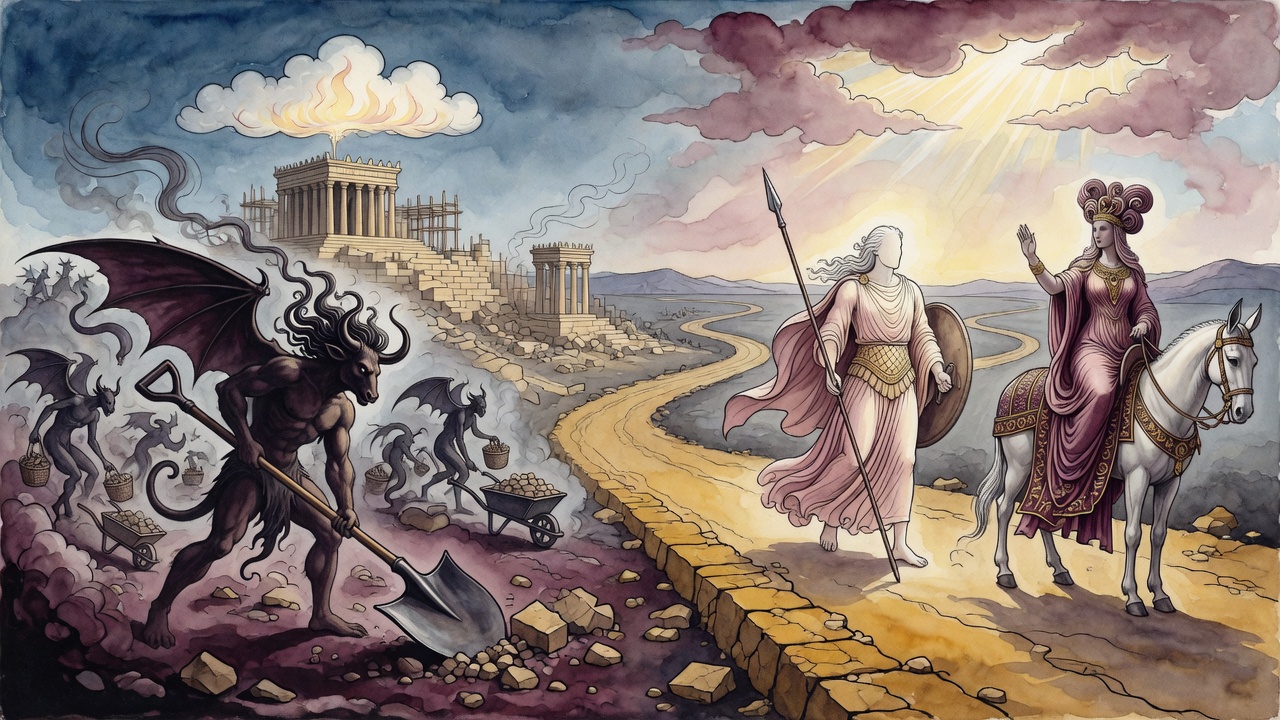
The first sentence Solomon passed on him was not a curse. It was labor. Ornias would cut stone for the house he had been feeding beside, and he cut it, since the ring left him nothing to say about the matter. Chisels rang all day at the quarry edge. Dust settled on hands that were not hands. The workman slept a whole night through, and then another.

But one bound spirit is one pair of arms, and the swarm over the city did not answer a ring it had never been shown. The unclean spirits took their orders from Beelzeboul, who held them the way a general holds a field, and no man could carry a summons into a place like that and walk back out of it.

Solomon Took the Ring Off

So Solomon called over the demon he had just enslaved and put the only thing holding it into its hand.

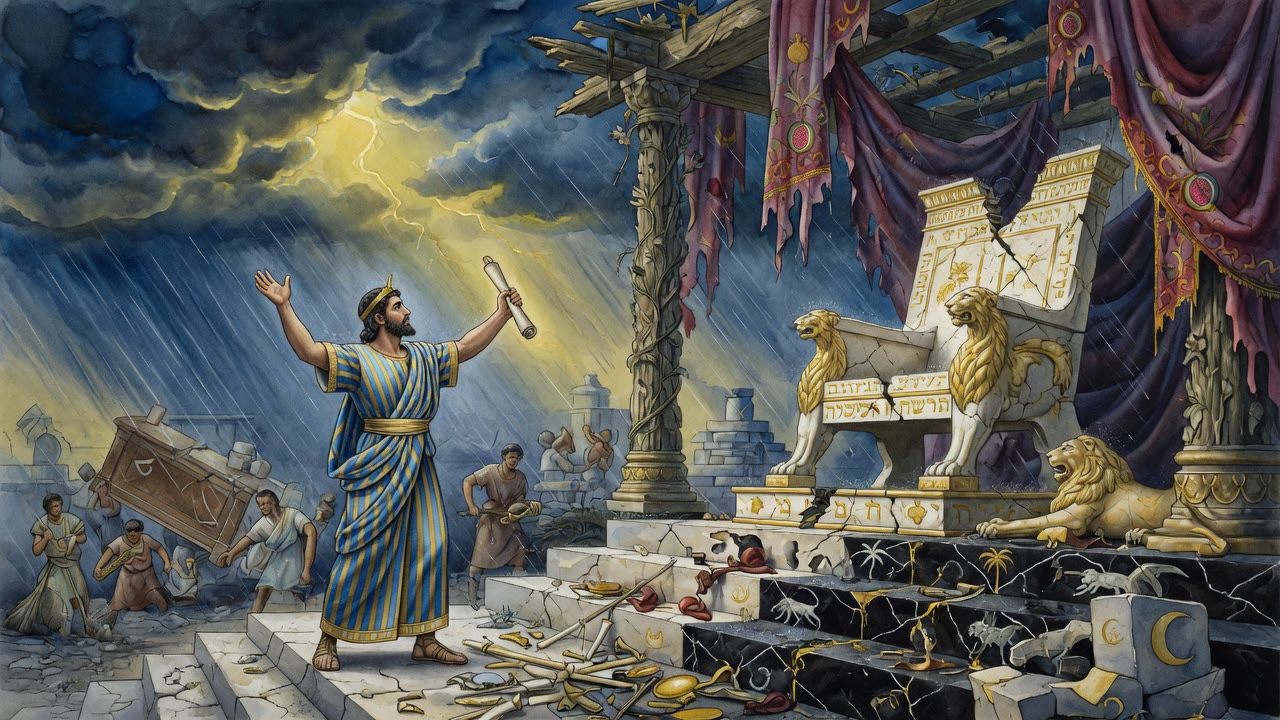
The ring came off his finger. For as long as it took to cross the space between them, the king of Israel was a man standing in a room with a vampire spirit and nothing in his fist, and the spirit knew exactly what he was looking at. Then Ornias closed his fingers on the seal. "Away with you," Solomon said, "and bring me the prince of all the demons."

Ornias went.

Who Is This Solomon

Beelzeboul heard the summons out and did not move. "Tell me, who is this Solomon of whom you speak to me?"

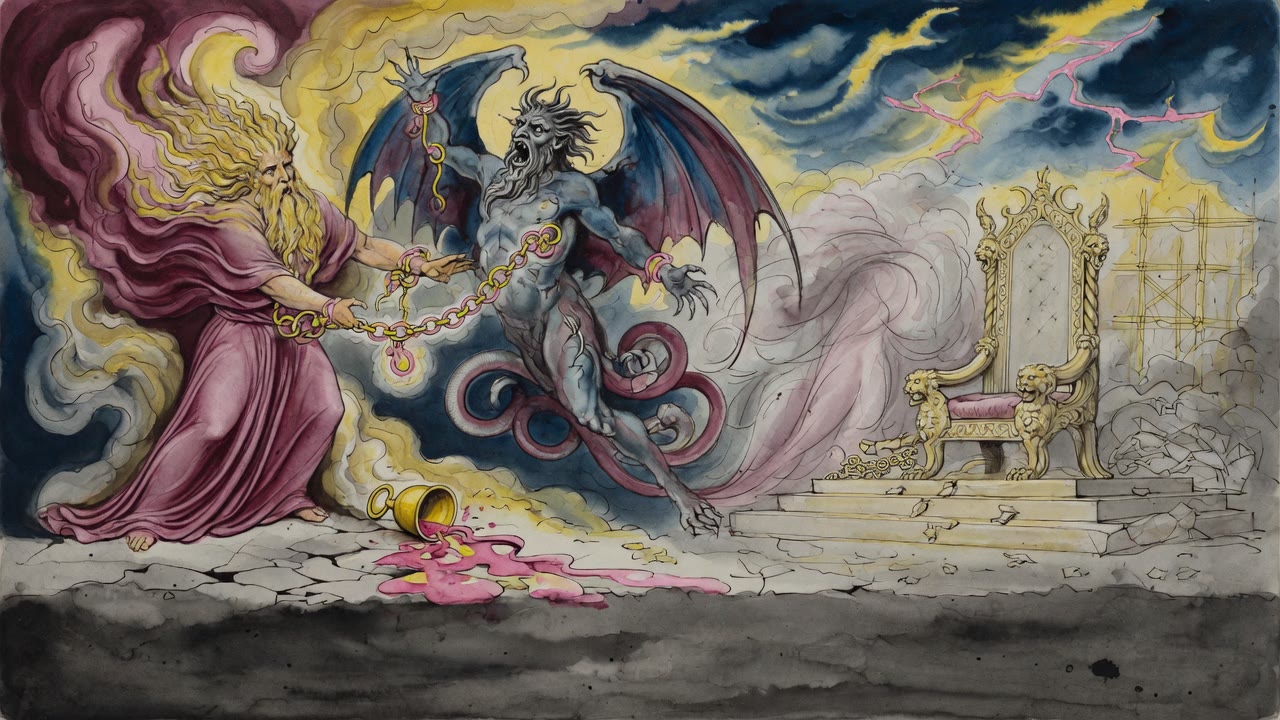
Ornias did not argue rank, because he had no rank to argue from and nothing in his mouth that would have impressed a prince of spirits. He hurled the ring at Beelzeboul's chest. It struck, and the name came with it. "Solomon the king calls you."

Beelzeboul roared, and fire came out of him in a sheet, and the ground around him took a heat that had never been near a forge. None of it mattered. The seal had already closed. He got up and followed a stone-cutter back to Jerusalem like a dog on a short rope, and standing in front of the throne he promised the whole roll of them. Onoskelis came first, wearing the shape of a fair-skinned woman with nothing human under it, and then Asmodeus behind her, and each one had to give an account of what he was and what he could wreck. Solomon listened the way a judge listens when the accused has been made to name his own tools.

The Old Man Wanted His Son Dead

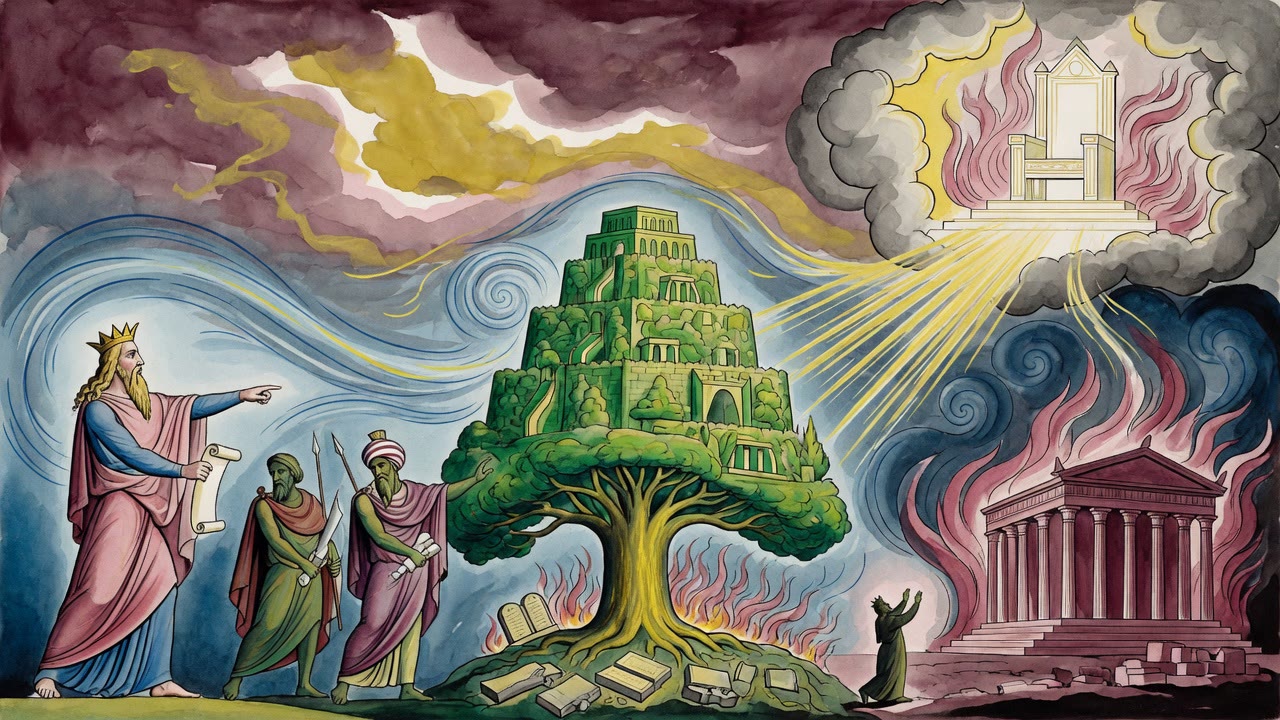
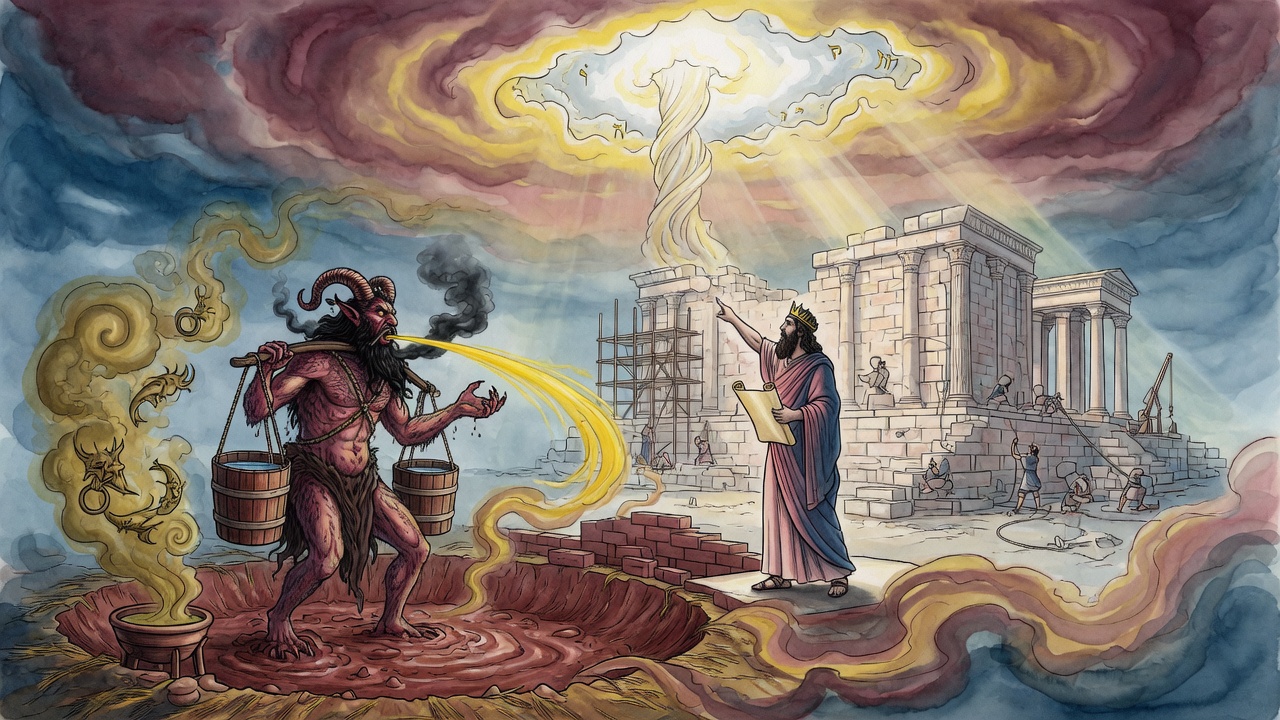
The house went up on demon labor and cedar together, and when it was finished the rulers came from every direction to look at it, the Queen of Sheba among them, a sorceress herself, arriving to find the edge of what Solomon could do and not finding it.

An old man came too, though not to admire anything. He stood in the judgment chamber and accused his own son of striking him, which is a charge that stains a whole house, and the young man denied it with everything he had. The father would not take a settlement or an apology. He wanted the life, and he wanted it under law. Two men were shouting at each other in front of the throne when laughter cut across the room.

It was Ornias. Solomon rebuked him at once, since a bound spirit does not mock the court that binds it, but Ornias answered without flinching. "I pray you, O king, it was not because of you I laughed, but because of this ill-starred old man and the wretched youth, his son. For after three days his son will die untimely, and, lo, the old man desires to make away with him foully."

The Fifth Day

Solomon did not rule. He sent them both home and let the days run, which is a strange thing to do with a capital charge, though the alternative was to take a demon's word or a father's word, and he would not yet take either.

On the fifth day he called the old man back in. The boy was already dead, three days after the laughter, without a hand laid on him and without a sentence from the throne. The father stood in the chamber with his accusation still good in law and nothing left to do with it. A demon had told the truth from the floor of the court, and the only man in the room who had wanted the young man dead was the one who had come asking for justice.


← All myths
From the tradition

Sources

2 sources

The texts behind this telling. Some cards carry a translation of the source; others are our own retelling of it, and each card says which. Every card links out to the original.

Legends of the Jews 5:87Legends of the Jews

Retold in our words. Read the original at the link below.The Legends of the Jews by Louis Ginzberg (1909) · Public Domain

It involved a whole lot of…demons.

In legends, Solomon didn't just command respect from humans; he had power over the spirit world, too. And it all started with a rather unpleasant encounter with a vampire spirit named Ornias. Ornias had been mistreating Solomon’s servant (poor guy!), and that’s when Solomon stepped in. Using his divinely granted wisdom and a powerful seal ring, Solomon subdued Ornias and gave him a new job: cutting stones for the Temple.

Solomon wasn't done there. He commanded Ornias to bring him the big boss, the head honcho of all demons: Beelzeboul (sometimes known as Beelzebub). Ornias, armed with Solomon’s seal ring, approached Beelzeboul with the summons.

Beelzeboul wasn't exactly thrilled. "Solomon?" he scoffed. "Who is this Solomon you speak of?" In response, Ornias chucked the ring right at Beelzeboul’s chest. Apparently, demonic etiquette isn't a thing.

The Zohar, that foundational text of Jewish mysticism, often speaks of the immense power held within sacred objects and names. We see that power in action here, as the ring compels Beelzeboul to acknowledge Solomon's authority.

Enraged, Beelzeboul let out a mighty roar and a burst of flames. But, he couldn’t resist the power of the seal. He arose and followed Ornias to Solomon.

Before the king, Beelzeboul promised to gather all the unclean spirits. Solomon, being the strategic genius he was, clearly understood that controlling the chaos was the key to harnessing its power. Beelzeboul began his roundup, starting with Onoskelis, a demon with a deceptive form – a beautiful woman’s shape but definitely not human. Following close behind was the infamous Asmodeus. Both had to give an account of themselves to Solomon.

Now, why would Solomon want to wrangle all these demons? Was it just about getting free labor for the Temple? Or was there something deeper at play? Perhaps, as some Kabbalistic interpretations suggest, it was about taming the forces of chaos and integrating them into a divinely ordained purpose. By subduing the demonic realm, Solomon was, in a way, bringing order to the universe, mirroring God's creation itself. (Ginzberg, Legends of the Jews)

And sometimes, building something truly magnificent requires facing the shadows head-on.

Full source
Legends of the Jews 5:91Legends of the Jews

Retold in our words. Read the original at the link below.The Legends of the Jews by Louis Ginzberg (1909) · Public Domain

It wasn't just priests and pilgrims who showed up to admire Solomon's handiwork. According to the Legends of the Jews, rulers from all over the world flocked to Jerusalem, drawn by the Temple's splendor and, of course, by the wisdom of King Solomon himself. Among them was the Queen of Sheba, herself quite the sorceress, come to test the limits of Solomon's power (Ginzberg).

The story doesn't end with admiring crowds. Let me tell you about one particular case that came before the wise king.

An old man appears before Solomon, his face etched with grief and anger. He accuses his own son of striking him, a deeply impious act. The son, naturally, denies it vehemently. The father, though, demands justice, even if it means his son's life.

It’s a tense scene. But then, something really strange happens.

Suddenly, a burst of loud laughter echoes through the chamber. Everyone turns to see the demon Ornias, a mischievous spirit, cackling at the drama unfolding before him. Solomon, with his renowned power over demons, rebukes him.

And here’s where it gets truly interesting. Ornias replies, "I pray thee, O king, it was not because of thee I laughed, but because of this ill-starred old man and the wretched youth, his son. For after three days his son will die untimely, and, lo, the old man desires to make away with him foully." (Ginzberg). A demon, essentially predicting the future – and accusing the father of wanting his son dead!

So, what does Solomon do? He doesn’t immediately condemn the son. He delays his verdict. He waits. For five days, Solomon observes, investigates, and ponders. And when he finally summons the old man again, the truth comes out: Ornias was right. The son dies, just as the demon foretold. (Ginzberg).

Was the son destined to die? Did the father, perhaps subconsciously, wish it to be so? And what about the demon Ornias? Was he simply an observer, or did his knowledge somehow influence the outcome?

This story, tucked away in the vast collection of Jewish legends, reminds us that even the wisest of kings, even the most magnificent of temples, exist in a world filled with mystery, where the lines between the human and the supernatural, the destined and the chosen, are often blurred. A world where even laughter can carry a chilling prophecy.

Full source