Passover Knife Wakes While Sabbath Still Holds
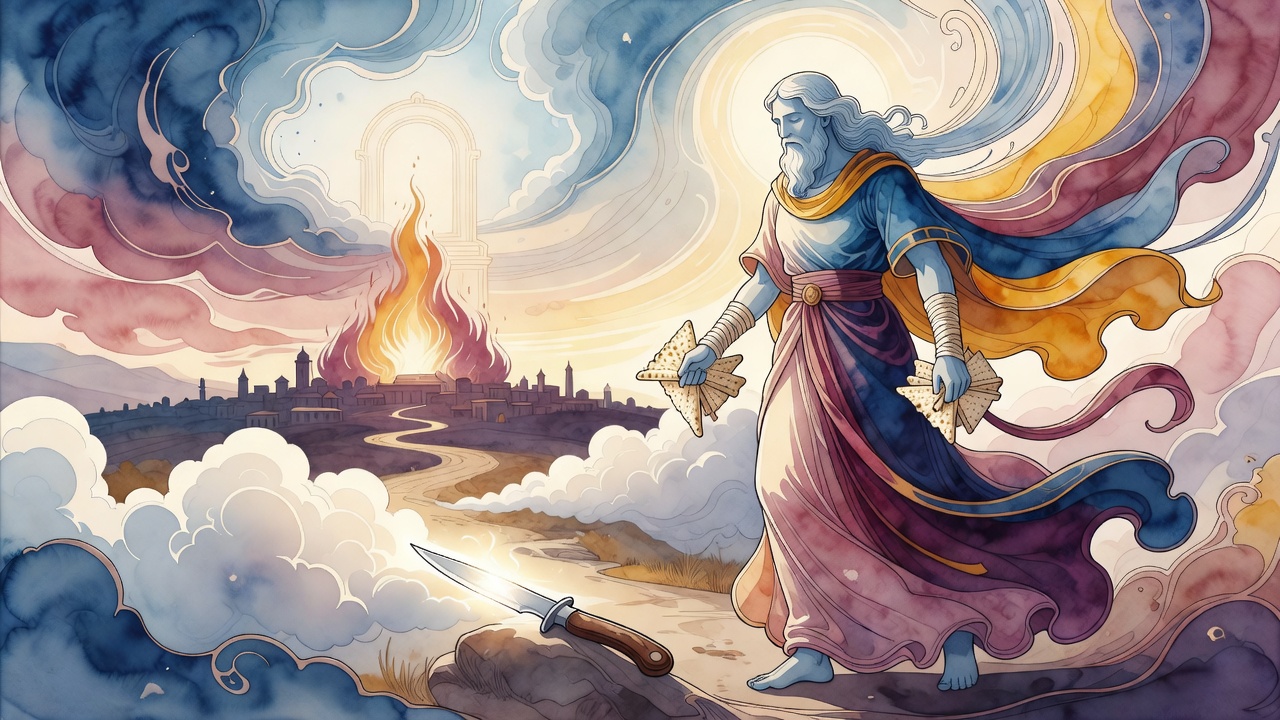
Dawn of the fourteenth falls on Sabbath. The knife still moves. The Shekhinah, the Divine Presence, wears matzah on both hands and walks toward Shiloh.
Table of Contents
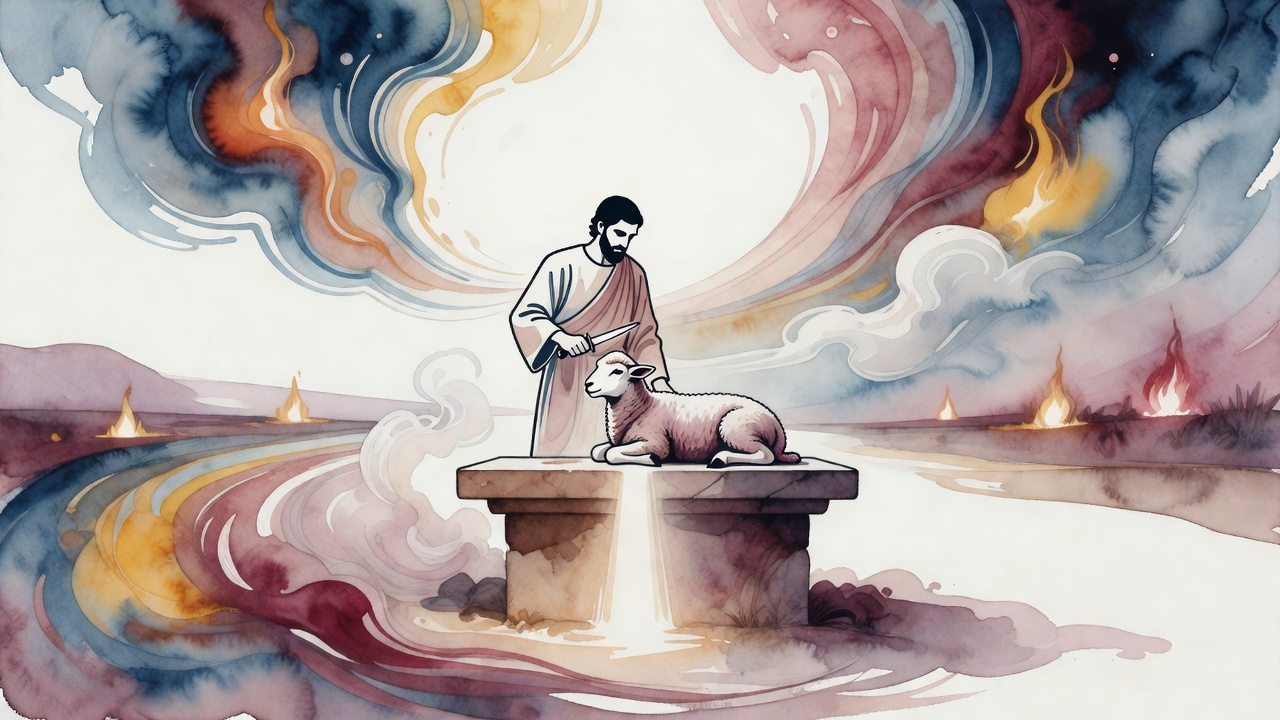
The fourteenth of Nisan woke on a Sabbath, and the knife still had work. Lambs waited. Blood would need bowls. Fire would need wood. Rest owned the day, and the festival owned the hour, and the two claims stood in the courtyard like two officers who both had papers.
 Click for full size
Rabbi Yonatan said they had not yet heard a source that lets Passover push the Sabbath aside. Rabbi Yoshiyah answered with the daily tamid. "In its appointed time" (Numbers 28:2). If that phrase only taught that the continual offering comes on Sabbath, Scripture already says so with the two Sabbath lambs (Numbers 28:9). The extra phrase must lock to another verse that shares the same words. Passover also comes "in its appointed time" (Numbers 9:2). What the tamid may do on the seventh day, the Pesach may do when the calendar drops it there.
The gezeirah shavah is a verbal hinge. Open it, and the knife is legal. Close it, and a generation freezes between two loves, Sabbath and Exodus memory.
Blood on a Day That Forbids Work
Imagine the priest's wrist. He has spent every other Sabbath keeping fire low and tools still. Today the appointed time will not move. Egypt did not free Israel on a convenient weekday of later choosing. The night of watching has a date. When that date is Sabbath, rest learns to make room for a liberation older than any single week's quiet.
Yonatan's protest matters. He will not let custom float without a verse. Yoshiyah's answer matters. He will not leave the offering stranded when the calendar collides with itself. Between them the study house teaches how a people loves two commandments without dropping either on the stones.
Outside, a family checks the lamb's year. Children feel the strange pressure of a festival that will not wait for sundown tomorrow.
She Is Passover From the Right Hand
Tikkunei Zohar speaks of the Presence in festival dress. "She is Passover from the right-hand side. And She is the New Year from the left-hand side." The Shekhinah (the indwelling presence of God) wears the days. Broken matzah leans left, toward the north of judgment, the side Jeremiah hears as the start of evil (Jeremiah 1:14). Complete matzah leans right, toward mercy and wholeness. One table holds both, the fractured and the whole, because exile and healing sit in the same basket of unleavened bread.
Matzah becomes mitzvah (a commandment) through the letter vav, a connector on the Middle Pillar, balance between pulls. Seven weeks of counting rise toward Shavuot, forty-nine days like forty-nine letters breathing through the Shema 's (Hear O Israel) first line. Passover is not a closed door. It is a corridor of days that ends in Torah given, if the counting holds.
On a Sabbath-Passover, that corridor opens with a cut that rest usually forbids. The right hand and the left hand both stay in the story.
Sheep, Cattle, and the Place of the Name
Sifrei hears "sheep and cattle" and refuses a lazy reading. Passover is lambs and kids. Why cattle? Because the festival peace offerings ride beside the Pesach. Mandatory offerings must come from ordinary stock, not from animals already locked into another holiness, so the command stays reachable. Then the place the Lord chooses. Shiloh first, where the Ark rested for long years after the conquest. Later Jerusalem, the house that gathers the Name more permanently.
A people on a Sabbath morning of Nisan is not only holding a knife. It is holding a map. From Egypt's doorposts to Shiloh's courts to the Mount's later stones, the appointed time keeps demanding a body, an animal, a location, a people awake while other work sleeps.
When Two Holinesses Share One Dawn
The hinge-word "appointed time" does not abolish Sabbath. It teaches that liberation's calendar can borrow the day's hands without turning the seventh day into a market. After the offering, rest continues in every other limb of the law. Song may rise. Study may deepen. The delightful exercises of Sabbath still have room once the blood has been dashed and the meat set to roast.
Yonatan and Yoshiyah walk home under the same white light. One demanded a source. One produced a chain of verses. The lambs do not know the debate. They only know the hour.
Shekhinah (the Divine Presence), in the Zohar's dress, is both the broken piece and the whole one on the table that night. The knife of morning makes that table possible even when the day is already holy for another reason.
A child asks why the men are working with blood on a day of rest. The father answers with two loves that will not cancel. We rest because God rested. We offer because God took us out. When the calendar stacks those truths on one dawn, we do not drop either. We find the hinge in the verses and we walk through it carefully, as Yoshiyah walked through "appointed time," as Shiloh once held the Ark until a later house was ready.
By afternoon the meat is roasting and the Sabbath songs find their place again. The knife is cleaned. The debate is filed for the next time Nisan fourteen lands on the seventh day. The Presence, right hand and left, broken and whole, does not leave the table because the legal hinge held.
← All myths