Seven Angel-Priests Opened Seven Heavens at Once
On the Sabbath seven heavenly sanctuaries filled with pure sound. Angel-priests in holy garments sang where no blood fell, and earth tried to match their song.
Table of Contents
The first note was not blood. It was voice.
 Click for full size
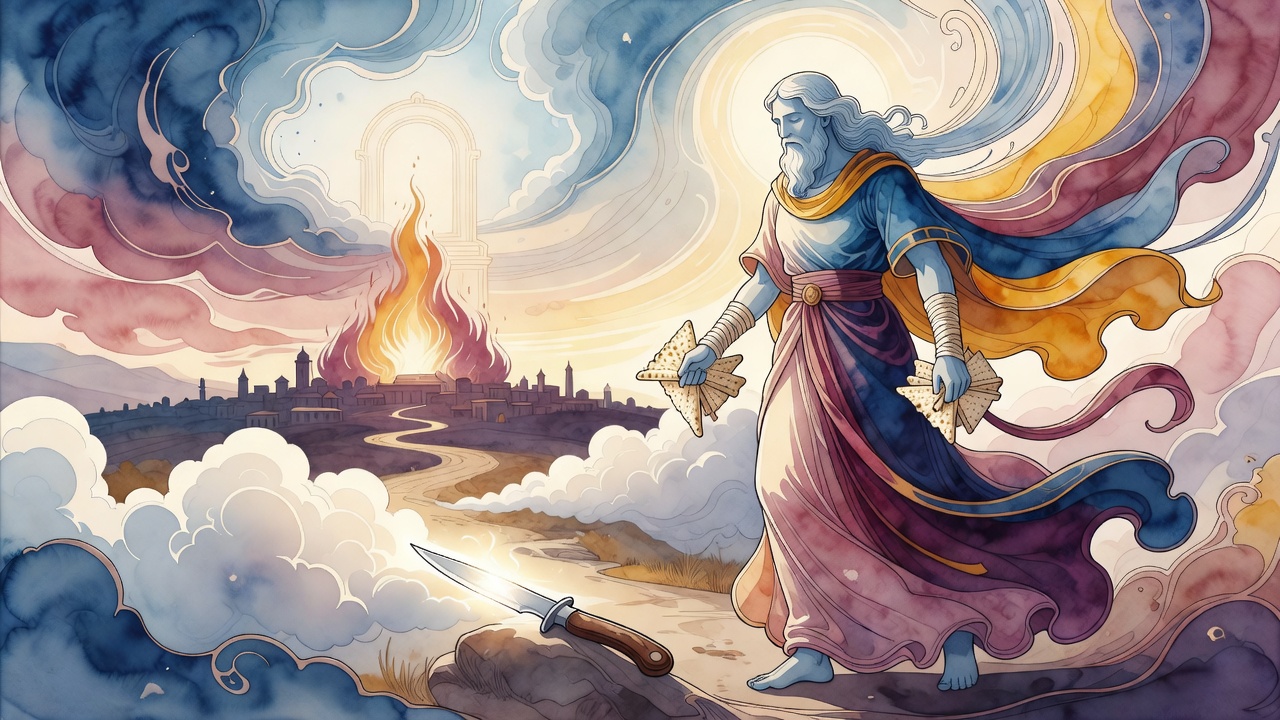
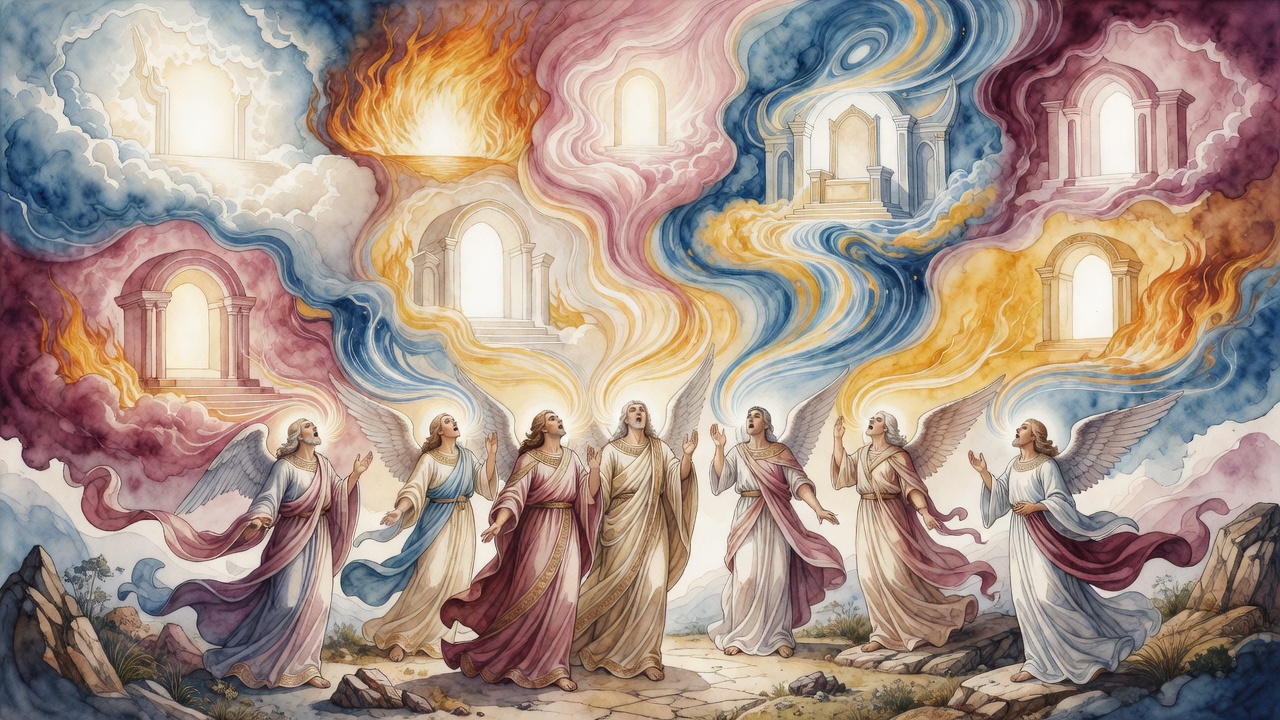
In the upper sanctuaries the elim (אלים), the gods of knowledge, the highest angels, took their places as the Sabbath began. Seven chief angel-priests pulled on garments of holiness the way the earthly High Priest once pulled on linen and gold, and the courts of heaven filled with praise that needed no knife and no fire-pit.
Seven Temples, One Rhythm
Each of the seven heavenly temples held a complete service. Chief priests outranked princes. Princes commanded hosts. The ladder mirrored Jerusalem and then multiplied it: High Priest, ordinary priests, Levites, all raised sevenfold and set spinning in parallel. A human ear, if it could climb, would hear the same liturgy in seven registers at once, never late, never early.
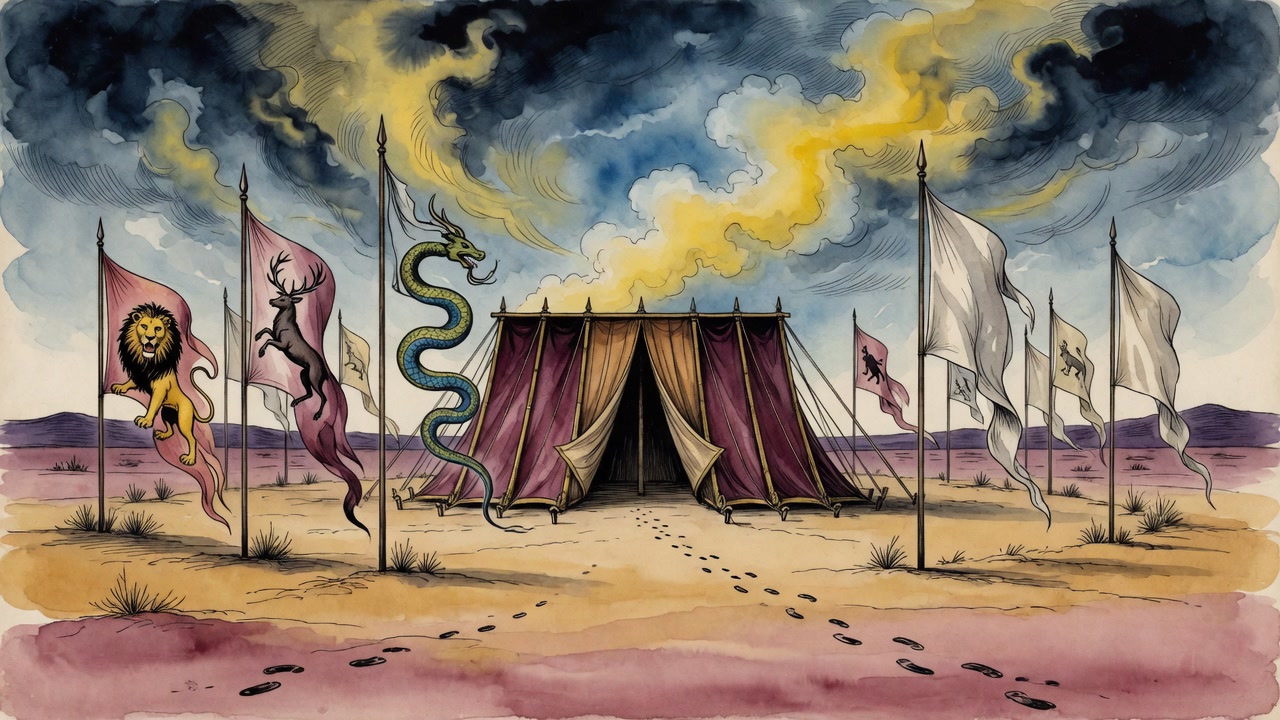
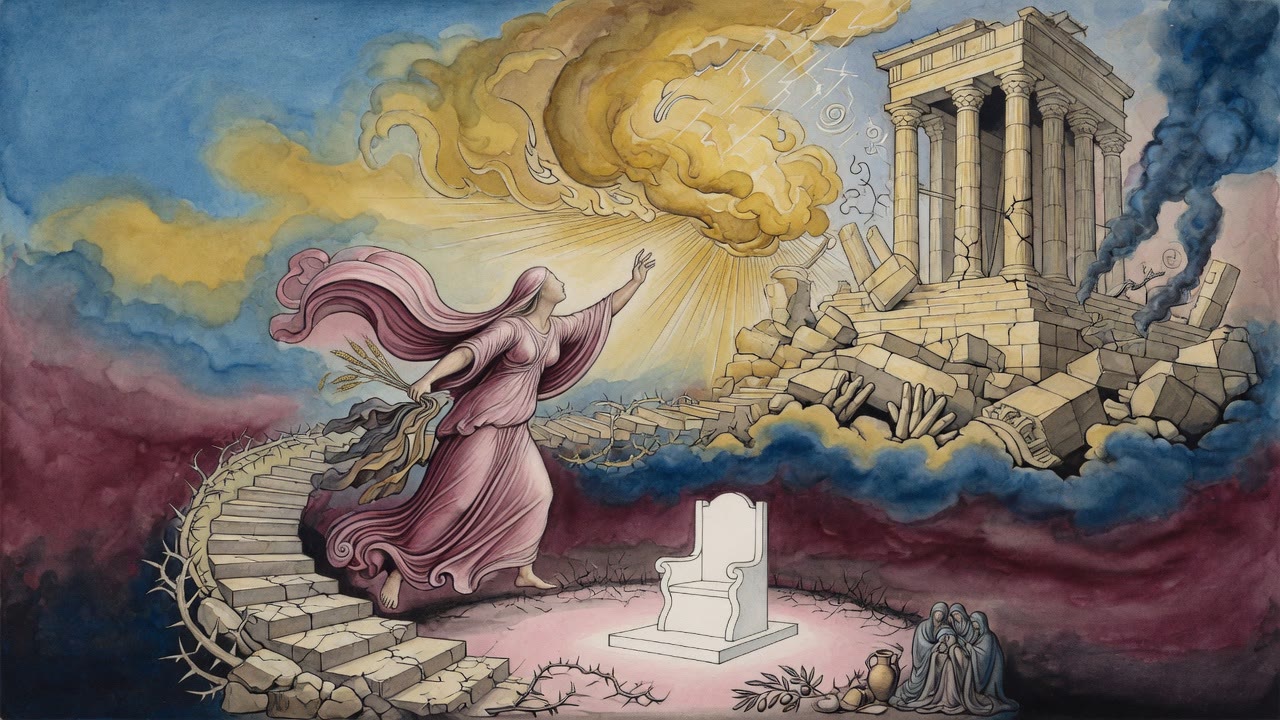
On earth, in a desert encampment far from a Temple some of them no longer trusted, men recited songs that claimed access to the original. They did not need a corrupt courtyard of stone. They stood, they said, among angels in the true sanctuary. Every Sabbath the claim renewed itself: our worship matters only as it mirrors the first pattern above.
No animal screamed in those upper courts. The offering was pure sound, harmony without ash. A young singer in the camp lost his place in the line and felt, for a heartbeat, as if the missing note had been caught and carried by something not human.
The Wick, the Oil, the Candle
Later mystics saw the same light under other names. Jerusalem, they said, would one day be built as a city joined together, not only stones but souls linked in a single structure. Israel is the wick. Torah is the oil. The Shekhinah (God's indwelling presence) is the candle that holds the flame.
Kindle that light and the Song of Songs wakes, the old dialogue between God and Israel rising again when the parts of the world stop fighting each other. Job once spoke of God's candle shining on his head. The image returns as a future of joined courts, upper and lower, when the wick is trimmed and the oil is not withheld.
The seven temples of the Sabbath songs and the joined city of the later midrash are not the same text, but they share a hunger: heaven's service wants an earth that can answer in kind. A wick without oil smokes. Oil without a wick pools and does nothing. The candle without either is only furniture.
Who Enters the King's Chamber
Not every prayer walks all the way in. A teaching on strength, koach (כח), ties that power to the Higher Shekhinah (the Divine Presence), the creative force that stood at the making of the world. Those who are completely righteous enter the chamber of the King. Ordinary people are still heard, but outside. The wicked are turned back, trampling courts they were never invited to fill, as Isaiah's voice still warns about feet that crush holy ground without leave.
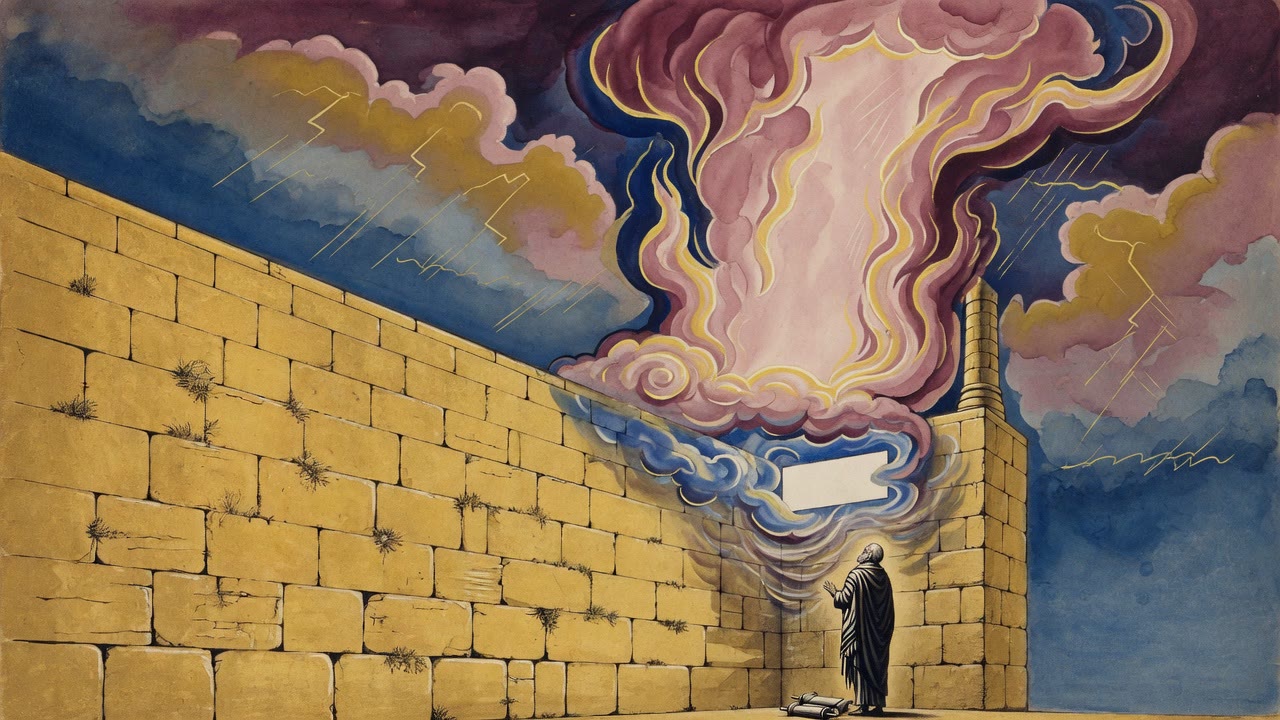
The angel-priests of the seven sanctuaries do not argue that ranking. They simply stand where they were appointed and sing. Humans below feel the distance and the pull. Some nights the chamber feels near. Some nights the door is only a rumor of light under a seam. A man finishes the Amidah (the standing prayer at the heart of the service) and wonders whether his words stopped at the outer court or slipped further in.
The Desert Listens
In the camp the Sabbath comes with sand underfoot and no golden altar. Men lift their voices anyway. They name the elim. They imagine garments of holiness that never fray. They set their small human choir against the sevenfold choir above and hope the notes lean toward each other.
A child falls asleep to the cadence. An elder keeps his eyes open, as if he might catch a flash of a sleeve that is not wool. Wind moves the tent flap in time that almost feels like response. The claim is enormous and quiet at once: we are not abandoned to a broken house of stone. The original still runs.
When the Song Stops
When the Sabbath ends, the upper courts do not empty the way a market empties. They simply pass beyond hearing. The wick on earth smokes a little. The oil must be poured again next week. Someone folds a scroll with care that is almost fear.
Seven temples remain. Seven priests remain. The question of who may stand nearest the King remains. Between them walks a people learning that praise without blood can still be costly, because it asks the body to keep time with heaven when the body would rather sleep.
Night takes the camp. Somewhere above, if the songs are right, a priest of pure sound never needs to wipe a knife. Somewhere below, a human throat is already hoarse from trying to match him.
← All myths