The Patriarchs Walked Israel's Crossroads at Night
In a dream the dead Baal Shem Tov tells his son that Abraham, Isaac, and Jacob walk the roads to learn Israel's troubles before libels strike.
Table of Contents
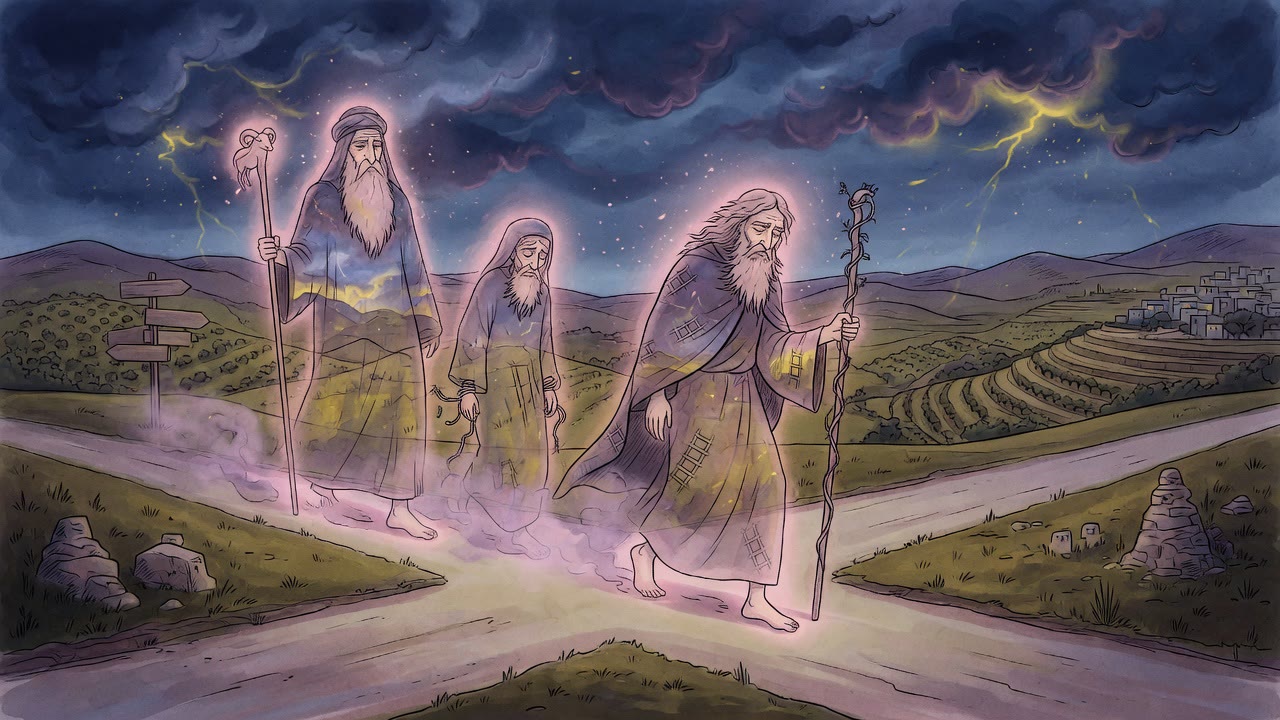
Rabbi Tzvi dreamed his father, the Baal Shem Tov, already dead and already troubled. Debt pressed the living son the way a wet coat presses a traveler. He asked who had told the dead father about a money matter that should have stayed among the living. Those who walk at the crossroads, his father answered, as if the night roads of Israel were a post office for the dead.
 Click for full size
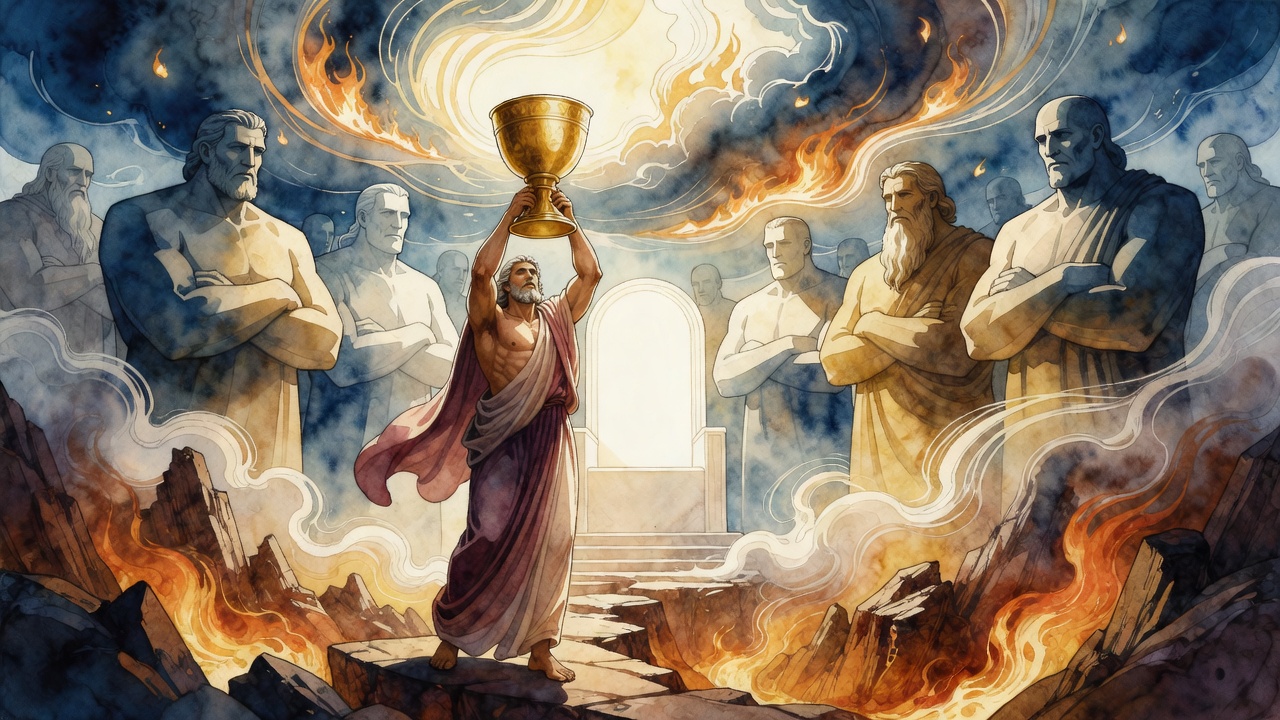
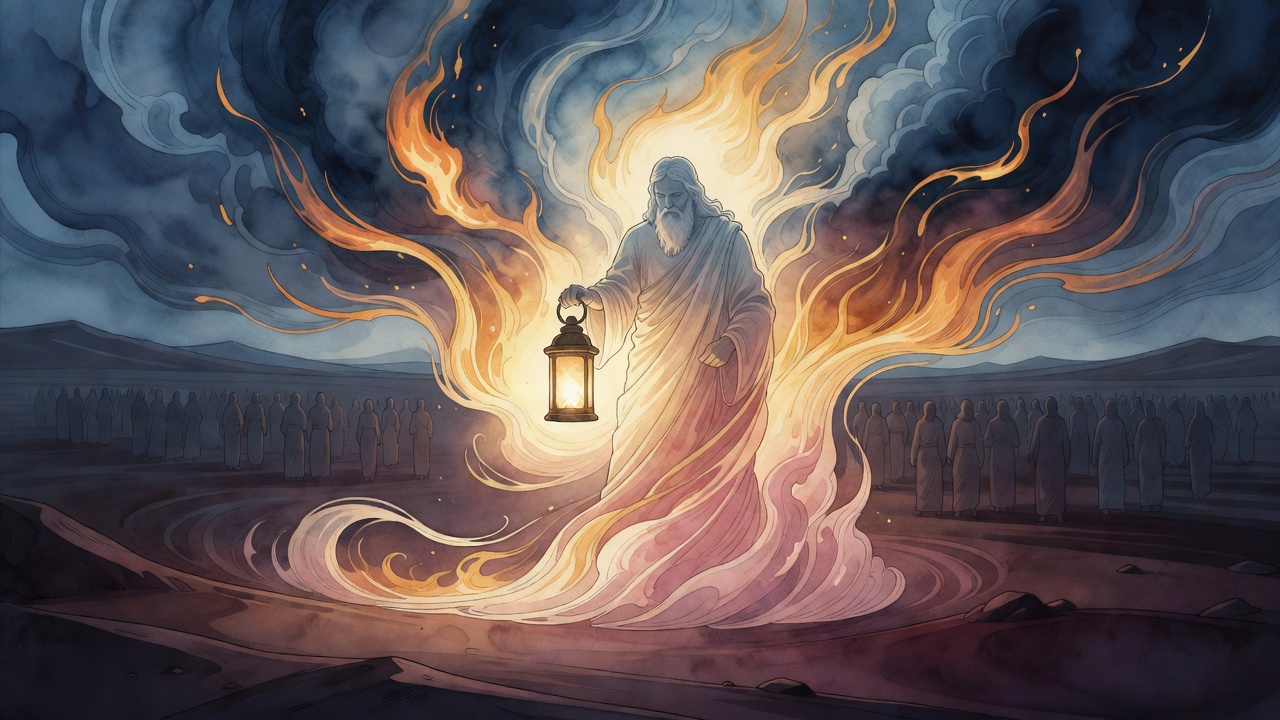
They were Abraham, Isaac, and Jacob. The Patriarchs walked the roads of Israel to learn the people's troubles and carry them to the graves of the tzaddikim (the righteous). The father could not stay to comfort. He had to go annul libels from bandits. The dream ended with motion, not advice. A dead tzaddik still had work on the roads.
Three Weeks Until the Arrests
Three weeks later, at Passover, Jews in Sede Lavan were arrested under a libel. The festival table and the prison cell sat in the same season. On the seventh day of the festival the rabbi led prayer with joy and said the Shekhinah (God's indwelling presence) had rested during the Song. The decree would be canceled. The prisoners came out, blinking into light that still smelled of matzah and fear.
Then about five hundred bandits attacked the villages and pressed against the fortress of Krasniye. The defenders were almost out of powder when soldiers arrived with cannon and the bandits fled. The dream had shown a hidden patrol: Patriarchs at the crossroads, dead tzaddikim at their graves, and a father already moving before danger arrived in the open. What looked like luck to the walls looked like prior work to anyone who had heard the dream.
Angels on the Right, Demons on the Left
The Baal Shem Tov read Jacob's escort as a living order that had not ended with the book of Genesis. Angels walked on Jacob's right, demons on his left. The same escort, the stories say, walked before him on the roads of Podolia and Volhynia. He would not use the angels because they were holy. He would not use the demons because they lied. An escort is not the same as a tool.
Then a widow's lease was threatened. A man was going before the lord to take it from her, and the Baal Shem Tov sent a demon to stop his mouth. The command was narrow: block him, but do not harm him. The demon let the man speak until the lease was signed. Only afterward, on a bridge, did it strike. The Baal Shem Tov ran after it and forced it to leave the man alive. The demon defended itself with the letter of the command. That is why he did not trust them. A force that obeys the words and betrays the intent is worse than open hostility.
Rain That Held a Man Inside Judgment
Rabbi Gershon wanted the Land of Israel, and the Baal Shem Tov told him to watch that desire carefully. Whenever the longing rose sharp and sudden, it meant a city was under judgment and Ha-Satan (the Accuser) was trying to pull him away before he could pray for it. Holy homesickness can be bait. On the road he passed through Sharigrad. He wanted to leave at once, but the horses needed fodder. Then rain began, and the rain held him there through the week like a soft jail with no bars.
By Thursday he understood. If Heaven wanted him there for Shabbat, let the rain stop. It stopped immediately. He spent Shabbat praying for the city. The Baal Shem Tov later laughed because he had seen what happened. The decree could no longer be erased completely, because the heavenly proclamation had already been spoken aloud. But it had been delayed and softened. The city would not burn at once. Judgment would arrive in pieces, with years of mercy stretched between them. Rain had bought time that pure flight would have spent.
A Map Made of Roads and Rain
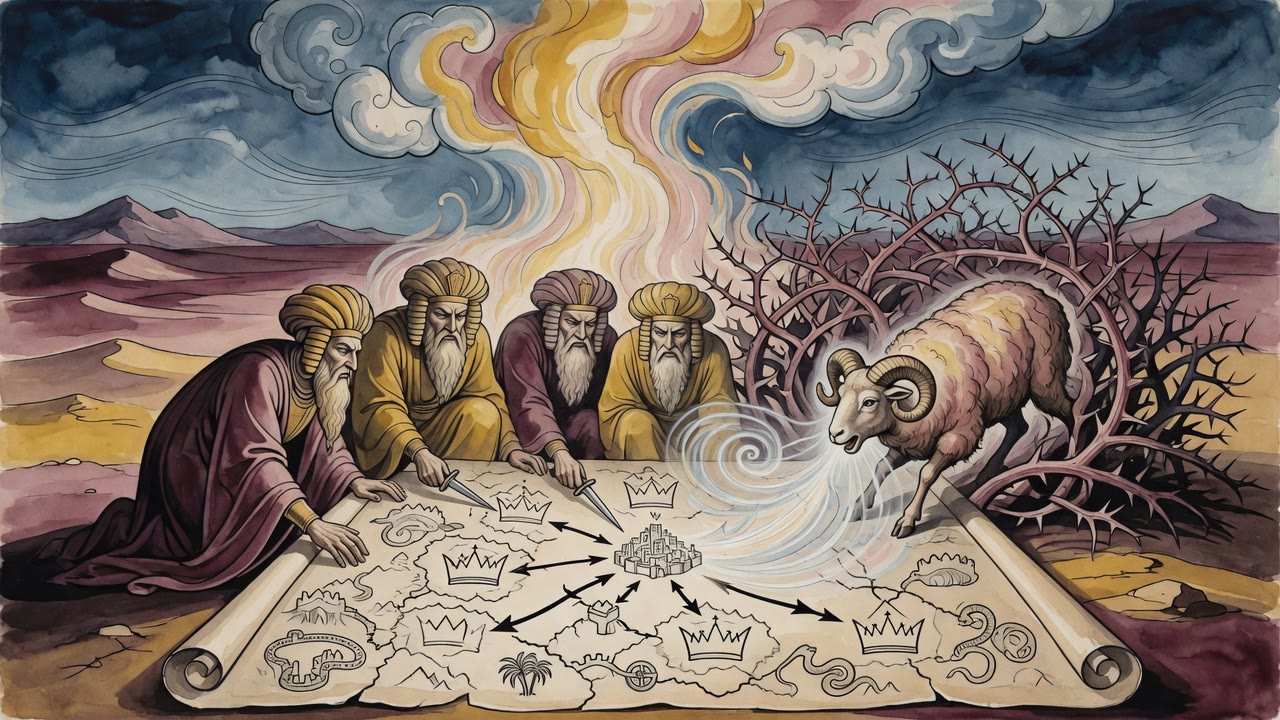
Crossroads, escorts, and weather were not scenery. They were how heaven moved help and delay through a landscape full of libels, leases, and doomed towns. The Patriarchs gathered trouble. Angels and demons pressed from both sides of a walking man. Rain locked a traveler inside a city that still had one Shabbat of prayer left in it. The living who only watched walls and markets missed the earlier patrol.
Rabbi Tzvi woke from the dream of his father and found that the night roads of Israel were already crowded with names older than any bandit band. Debt still pressed him. Danger still moved. But the map under the map had been drawn: fathers at the crossroads, a motherless widow's lease guarded by a force he refused to trust, and rain that knew when a city still needed a guest who could pray.
← All myths