Isaac Ate in Joy Before He Blessed Jacob
Rebekah sent the plate first. She knew the Presence would not sit on a sour heart, and Esau was still out in the field with his bow.
Table of Contents
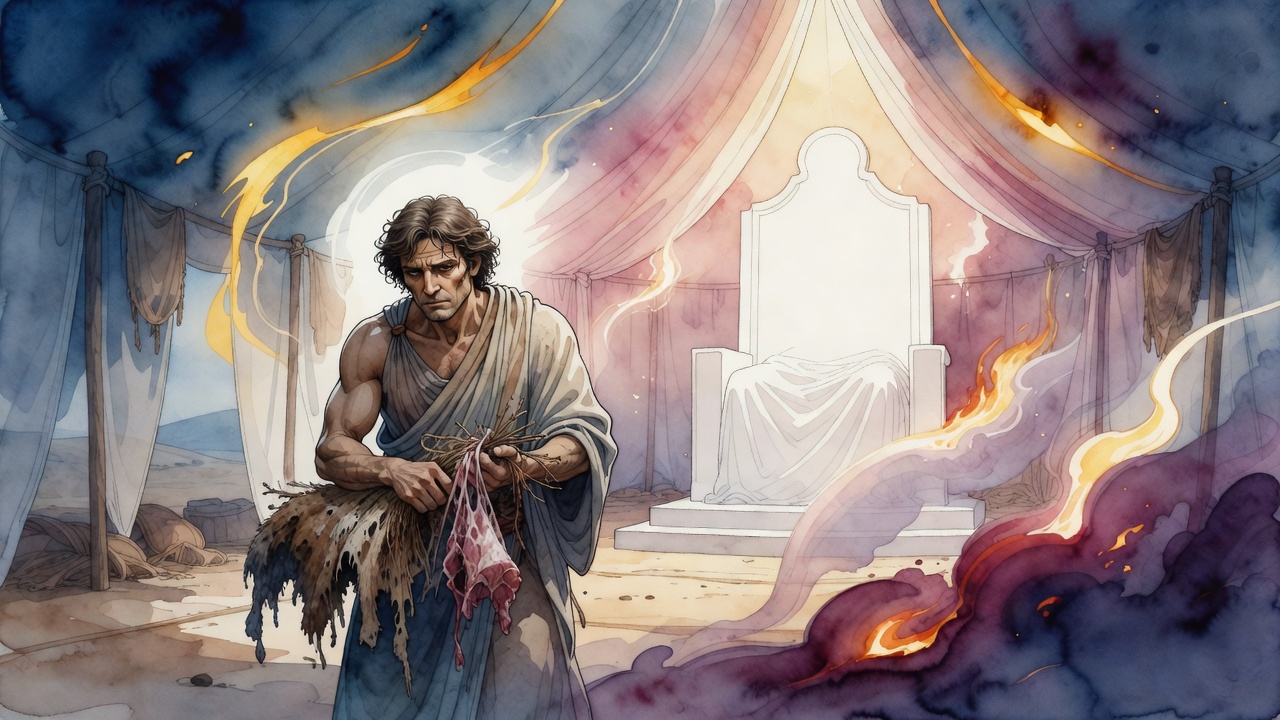
Rebekah did not send her son into the tent with a clever speech. She sent him with food.
 Click for full size
"Bring it to your father," she said. "Let him eat, so that he may bless you." The hunt outside could wait. The table inside had work to do.
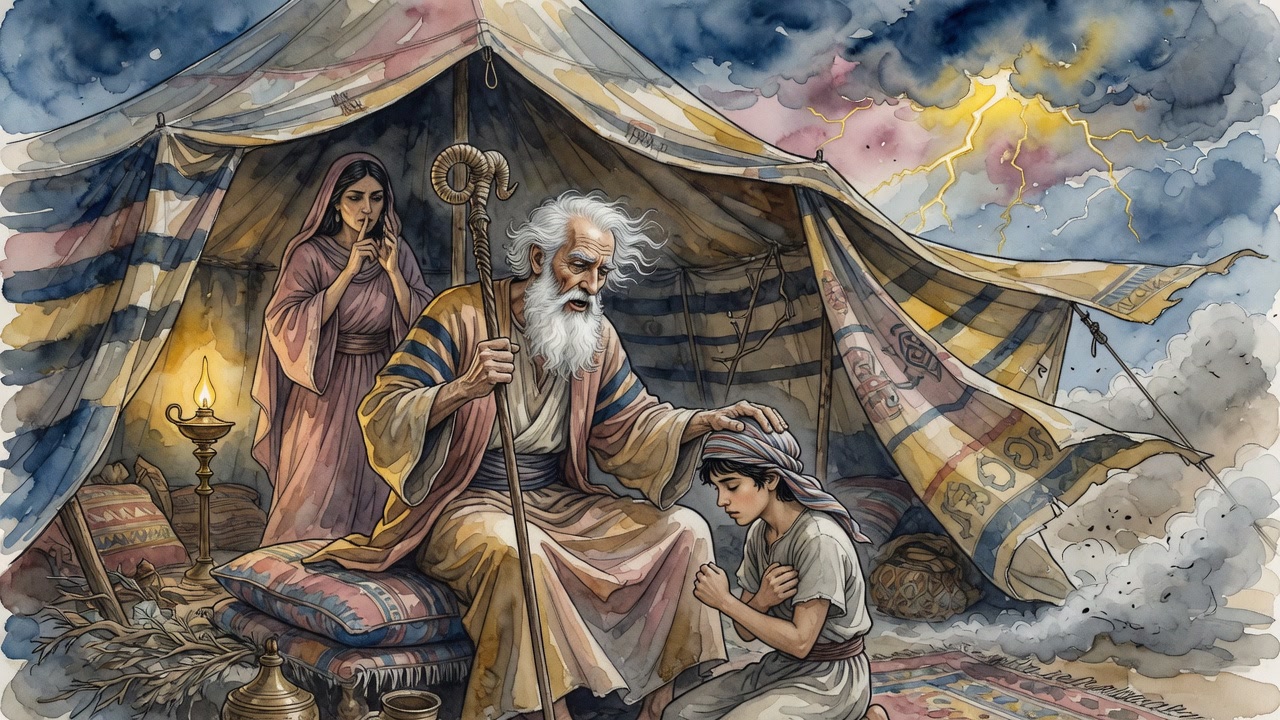
Isaac sat in the dimness of age, his eyes gone, a blessing of weight waiting on his tongue. The Shekhinah (שכינה), the indwelling Presence, does not rest on a heart that is heavy or sour. It rests out of joy. Rebekah knew that. She had known it long enough to cook for it.
She Sent the Plate First
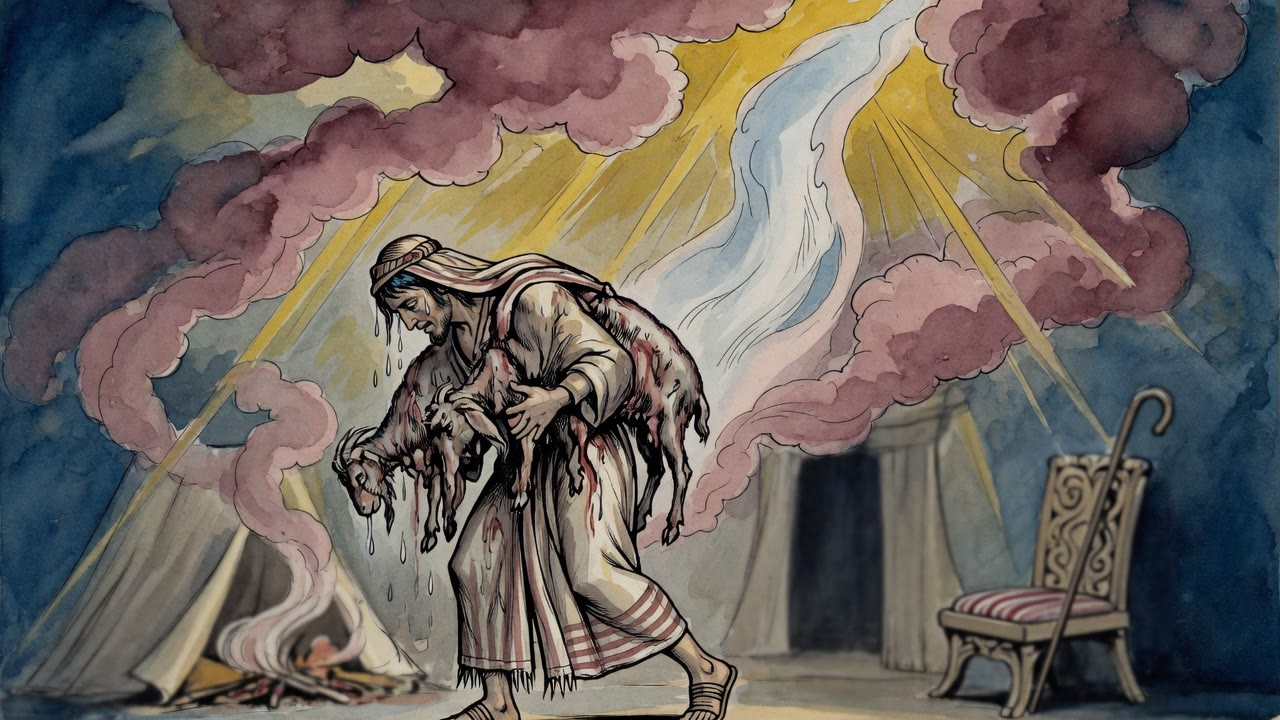
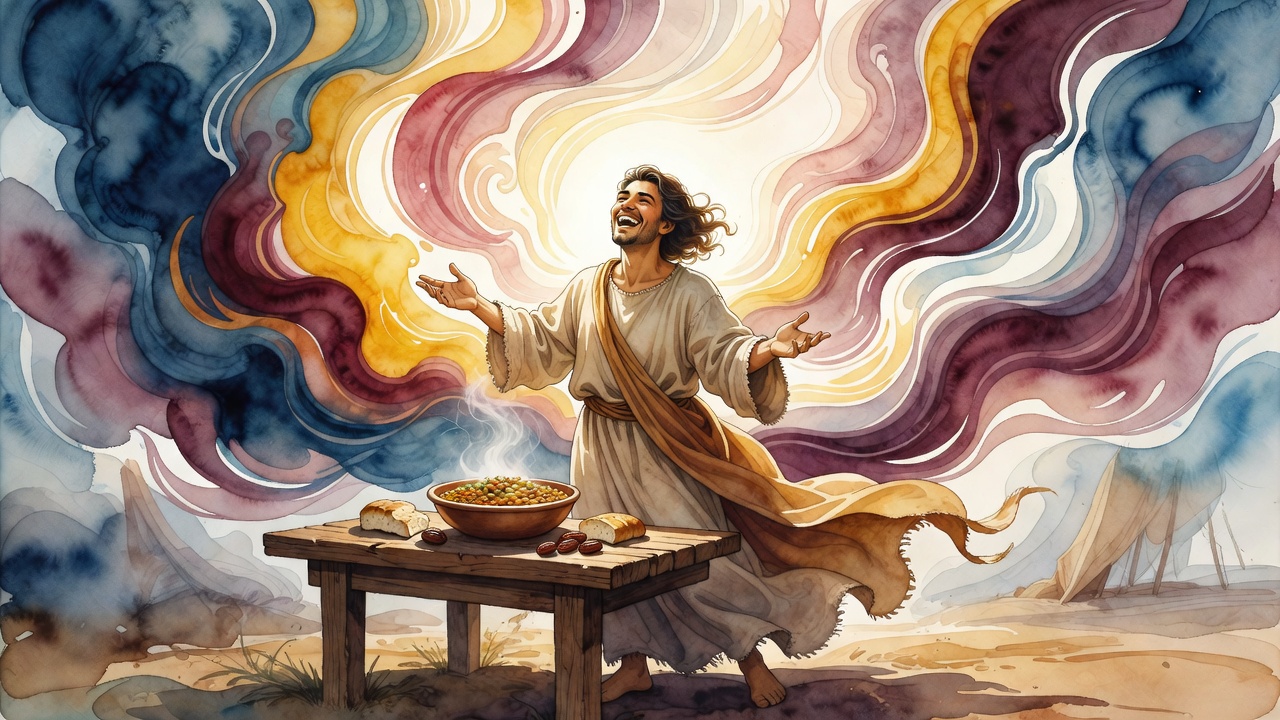
Jacob entered smelling of the field she had prepared for him. Goat, bread, wine. Kidskins on his hands and neck. Isaac, uncertain, still asked for the meal first. Teeth and tongue and the old pleasure of meat done right did their quiet work. The tremor of suspicion did not leave him, but warmth rose anyway, the way heat rises in a room when a fire is fed.
Only then did his hands find the son's head. The words began to pour. Dew of heaven. Fatness of earth. Nations bowing. Brothers serving. A blessing with the force of the priestly sealing, the words by which the children of Israel are marked with peace. A sour heart could not have carried that freight. A glad heart could.
She had learned the secret from a prophet's room. Kings came to Elisha for a word from the Lord, dusty, impatient, wanting an answer before they sat down. He would not pour prophecy at once. "And now bring me a musician," he said. A man came with a stringed instrument. He played. Elisha's face changed. Only then did the hand of the Lord come upon him. Rebekah ran the same law in a kitchen. Let Isaac eat. Let joy settle. Then let him bless, and the Presence will sit on the words.
Esau Came a Breath Too Late
Esau arrived with his own dish while the last of the blessing was still in the air. He had done what his father asked. He had hunted. He had cooked. He stood in the tent with meat in his hands and heard that the words had already left.
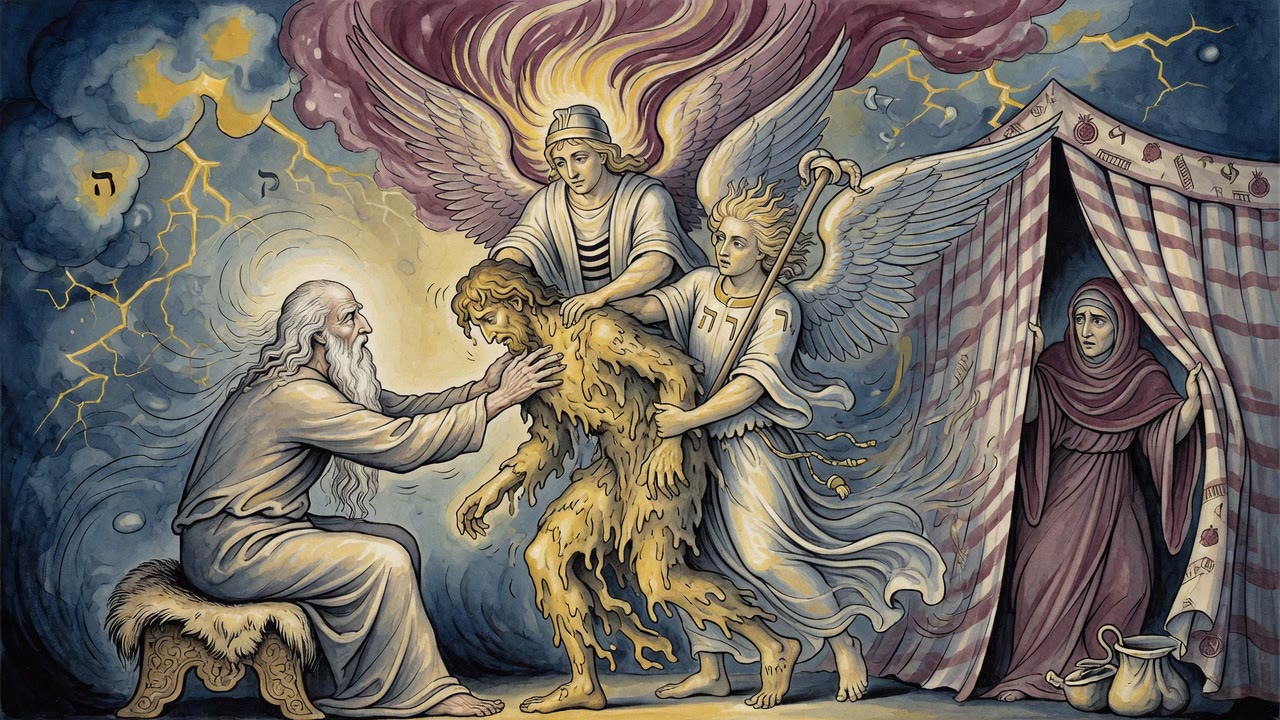
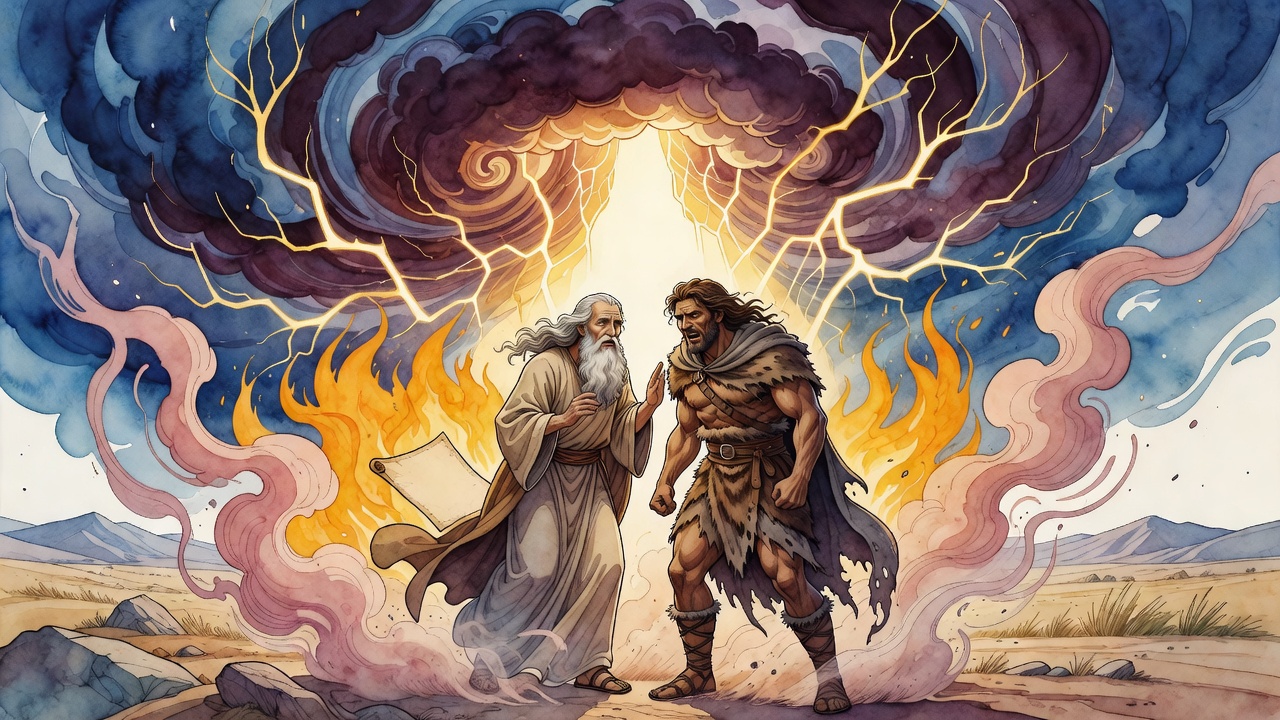
The cry he raised shook the tent. Isaac trembled with a terror larger than a kitchen mistake. The Presence that had rested on the blessing would not be recalled like a loan. What left in joy would not return through rage.
Rebekah's timing had not only fooled a blind man. It had seated heaven at the table before the second plate could arrive. Esau wept. Isaac could not unsay what joy had opened. The fatness of the earth had already been spoken onto another head.
Assemble and Listen
Years on, Jacob could not sit up well. He called the twelve. Reuben through Benjamin filled the tent, different faces, one father. "Assemble and listen," he said. He had once entered his own father's tent with a plate. Now he made a room that could hold a blessing because no son was missing.
His couch was complete. Every one of his sons stood inside the flaps. None cast out. The unity was not sameness. The twelve remained twelve. But they were gathered. He had known the distress of raising children, the fear that a firstborn might go up to a roof and fall, the long work of keeping a house from splitting. He gathered them anyway.
He looked from face to face and did not find a missing son. That was the completeness he had wanted since the night he stood in Isaac's tent with a plate and a lie and a blessing that would not come back. "I will assemble Jacob, all of you." A later voice would use those words for a noisy multitude, sheep in a fold, every exile packed into one room the way these twelve were packed now.
The Name Heaven Speaks First
The children of Jacob fell into trouble, as children do. When the covenant had to be remembered, a verse left heaven and did not open with Abraham. It did not open with Isaac. "And I will remember My covenant Jacob." The youngest of the patriarchs, named first, the name written full.
Isaac needed no reminding. His ashes, bound upon the altar, already stood before the Holy One. Jacob needed the first place because his couch had been complete, and because he had known the pain of raising sons, and because the people themselves wore his name. Even the mothers were folded into the promise. The covenant remembered the whole house.
The boy who brought food into a dim tent became the man whose complete couch of sons justified that first place. A plate. A room. A people willing to stand in one place long enough to be blessed.
← All myths