The Passover Night When Isaac Blessed Jacob
On Passover night Isaac sent Esau to hunt while storehouses of dew opened. Jacob went forced and weeping in royal clothes, and ten blessings crowned him.
Table of Contents
 Click for full size
The Night Dew's Storehouses Open
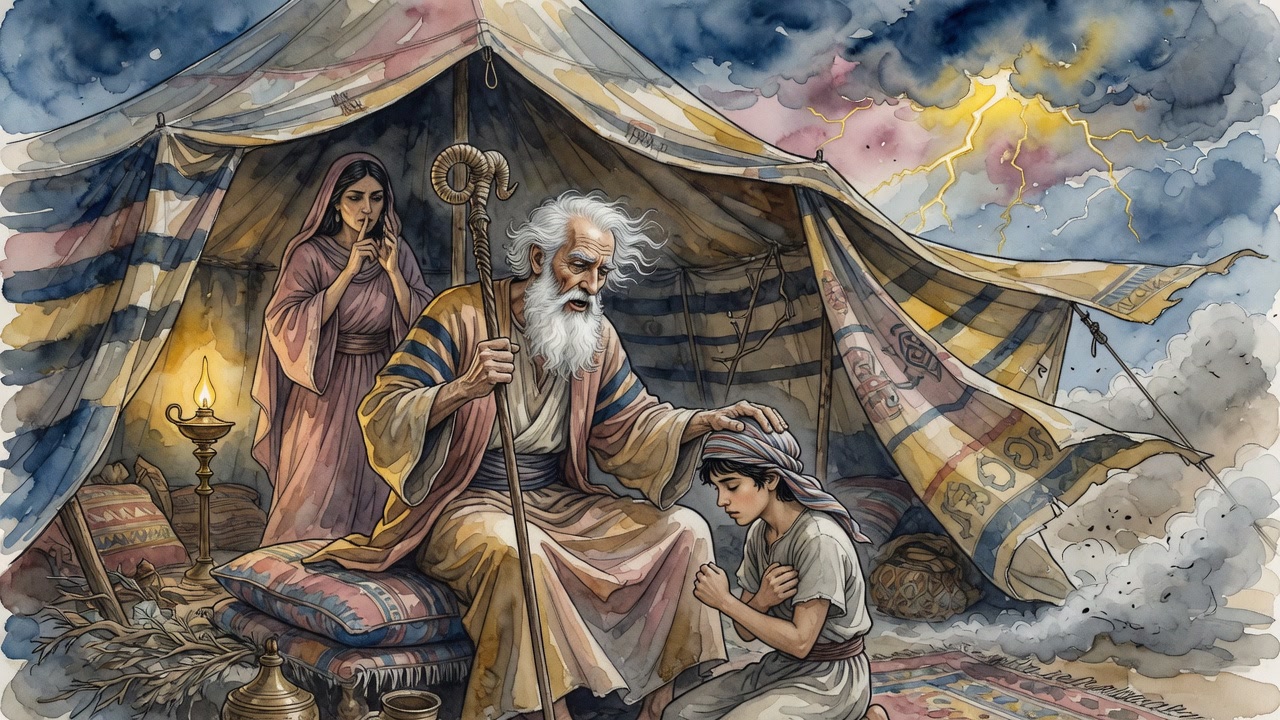
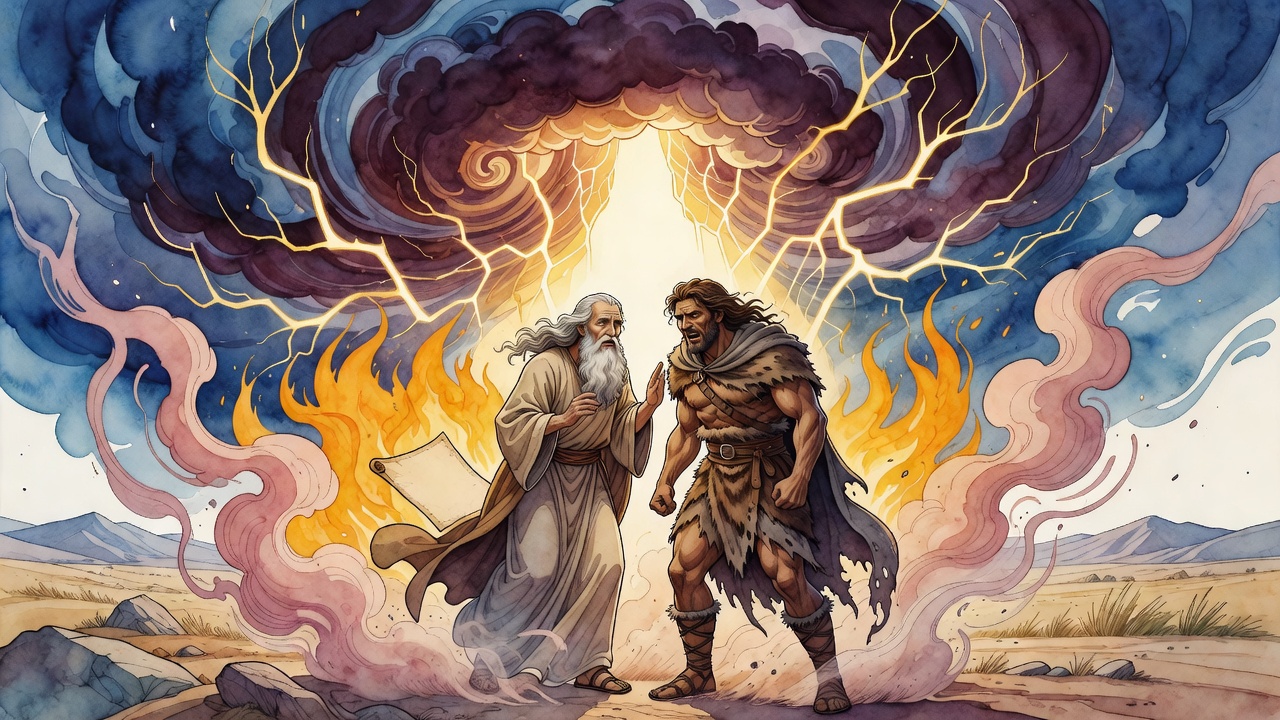
Isaac called for Esau on Passover night, when something holy stirred in the old man's bones. He told his elder son that on this night the heavenly beings sing and the storehouses of dew swing open, and he asked for a hunt and a meal fit for that hour.
Esau's heart was wrong. The Holy Spirit answered with Proverbs' warning not to eat the bread of a grudging eye. So the hunter lingered far off, delayed by more than game. Rebekah understood what hung on the night and moved faster than any deer.
Two Kids and a Son Who Wept
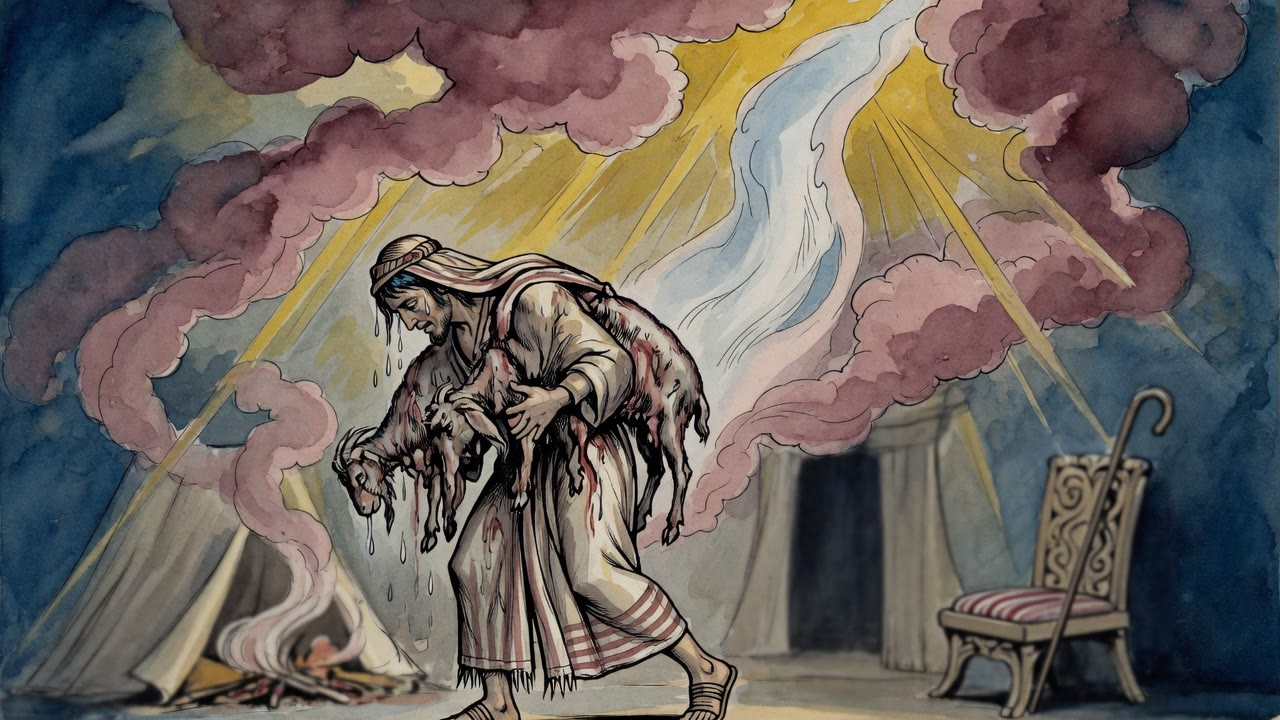
She sent Jacob for two kids of the goats. One would serve as the Passover offering, the rabbis explain, the other as the savory dish his father craved. Jacob hesitated in fear. Perhaps my father will touch me, and I shall seem in his eyes a deceiver. The word he chose for that seeming echoes delusion and idolatry. To wear another man's self felt like a betrayal of truth itself.
He worried a curse might fall instead of a blessing, stripping even the portion meant for him later. Rebekah did not flinch. Upon me be your curse, my son. When the first man sinned, the ground, the mother of all, absorbed the curse. So she would carry whatever fell. Jacob went only under pressure, bent over, weeping. Obedience here looks like grief, not swagger.
Royal Clothes Kept in His Mother's House
The garments she dressed him in were Esau's clothes of service, the ones he wore when he honored Isaac. Rabbi Shimon ben Gamliel admitted that all his days of serving his own father did not equal a hundredth of the honor wicked Esau showed Isaac. Esau tended his father in royal robes, while some pious men save clean clothes for the street and wear soil at home. The irony cuts. The son of blood knew how to dress for a father's eyes.
Why were those garments with Rebekah in her house, not with Esau's many wives? She knew those wives. She kept the precious cloth under her own watch, the way a teacher is trusted with a scoundrel's children because he knows their character. Tonight the robes of honor become the costume of a blessing transferred.
Ten Blessings Like Ten Utterances
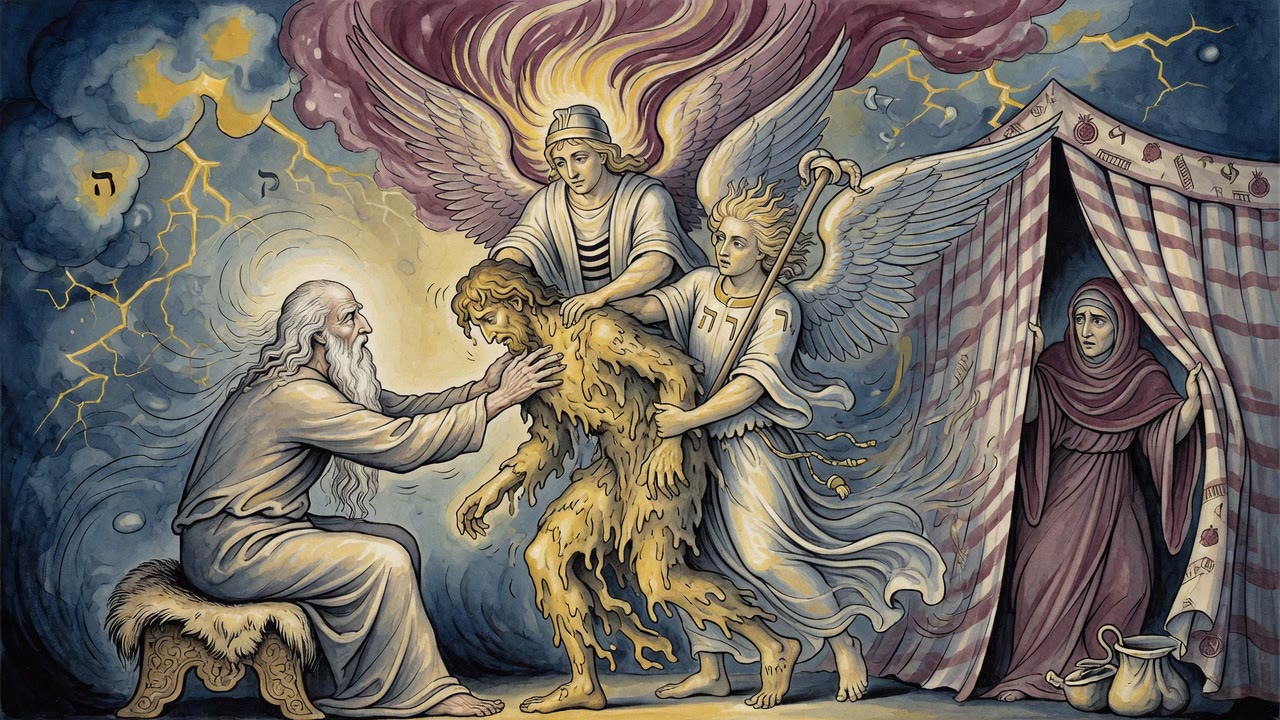
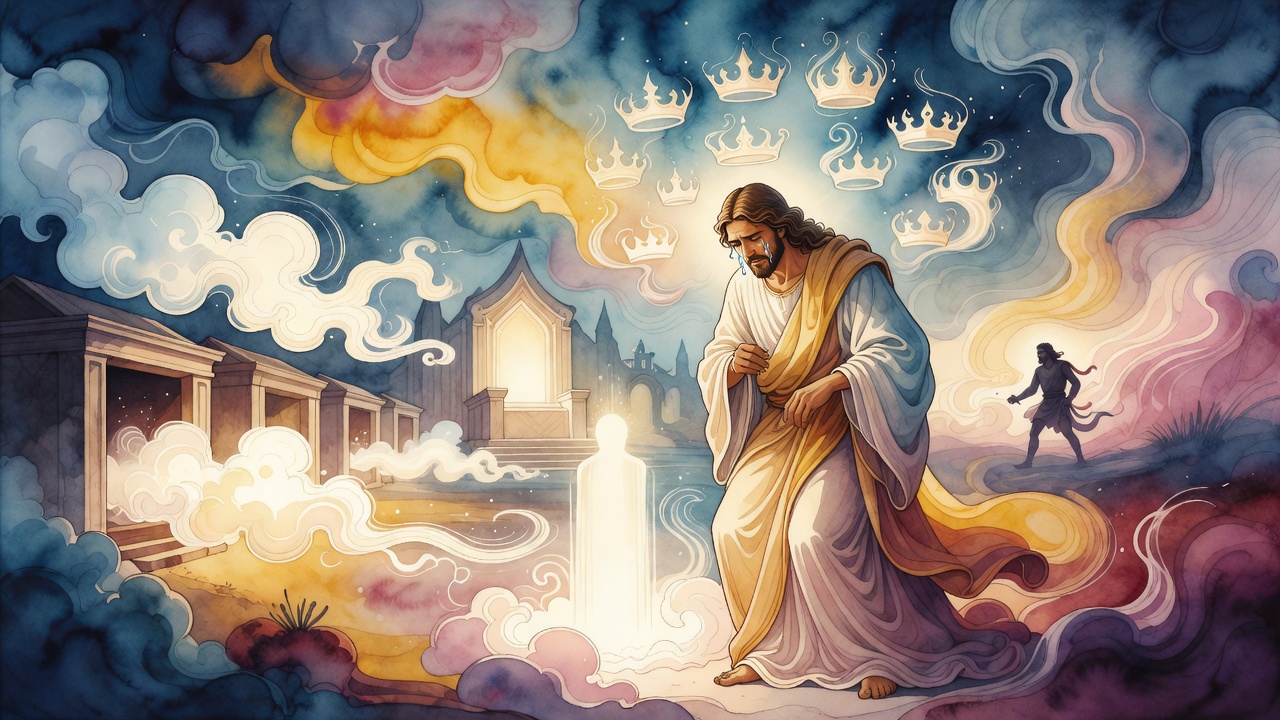
Isaac pronounced ten blessings over Jacob, matching the ten utterances by which the world was spoken into being. When Jacob stepped out he was transformed, crowned like a bridegroom, adorned like a bride, the reviving dew of that Passover night settling on him until his bones grew strong. The voice was the voice of Jacob. That voice, in a wider midrash, is the sound that silences heavenly hosts when Israel says Shema, angels waiting until flesh and blood finish declaring the LORD is one.
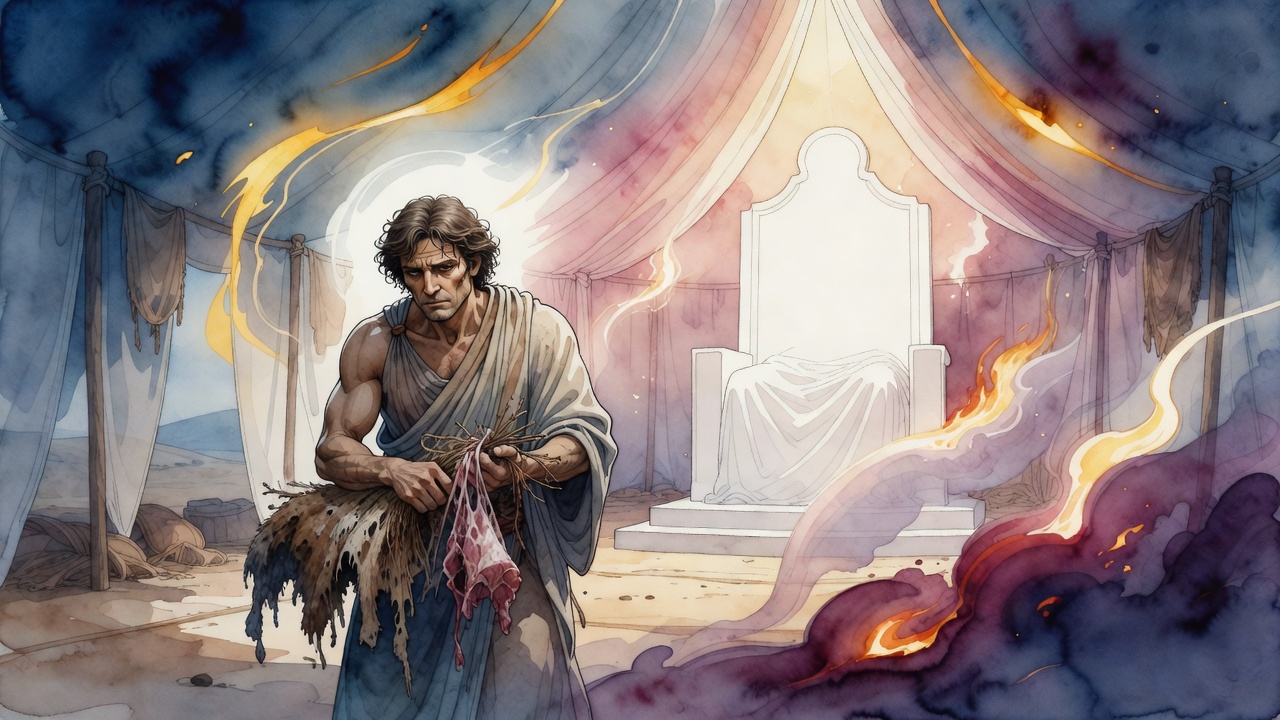
Esau arrived late with meat and a son's claim, and the scream that followed was large enough to shake the tent's poles. The hands had been hairy. The voice had told the truth. Passover's dew had already chosen its direction.
After the Blessing Left the Mouth
Jacob fled with a future he had feared to steal and a mother who had agreed to wear any curse. Esau planned murder and waited for mourning days. Isaac trembled with a recognition that arrived after the words could not be pulled back. The night meant for heavenly song had rewritten the house.
Years of exile would follow for the younger son, but the midrash leaves him in that first hour still shining with dew, still smelling of goat and borrowed royalty, still hearing his own voice as the instrument that opens storehouses the hunter could not reach. Passover remembers liberation. This Passover liberates a blessing from the wrong hands by a weeping trick and a mother's steel.
Isaac's love for Esau's game is not erased by the midrash's Passover setting. The old man still wants the meal his hunter brings. Holy time and human favoritism share the tent. That mixture is the story's realism. Revelation does not always wait for pure motives. Dew can open while a father still prefers the son who smells of the field.
Jacob's weeping on the way in matters for anyone tempted to cheer the trick without cost. He goes bent. He goes forced. He goes afraid that touch will expose him as a lie, and that the exposure will curdle blessing into curse. Rebekah's willingness to wear the curse is maternal steel that later ages will argue over. In the moment it is simply the only door she sees to the oracle she was told when the twins fought in her. The older will serve the younger. She acts as if heaven needs a conspirator.
Esau's honor of Isaac in royal clothes is the detail that refuses cartoon villainy. The same man who can sell a birthright can still dress for his father's dignity better than sages who admit their own shortfall. Wickedness and filial piety can coexist in one skin. That is why the stolen clothes sting. Jacob borrows not only identity but a genuine practice of honor Esau had owned.
When the ten blessings fall, they reorder creation's count around a younger son's head. Voice of Jacob. Hands of Esau. The split becomes the hinge of recognition too late. Outside, Passover night continues for a people not yet born, a night of protection and song. Inside, a family learns that liberation can look like a mother directing a weeping boy in a brother's robe while angels, in the wider teaching, wait for human voices to finish Shema (Hear O Israel) before they dare fold their wings and answer. The hierarchy of sound begins in a blind father's tent on a night of dew.
← All myths