Four Miracles Died When Sarah's Tent Went Dark
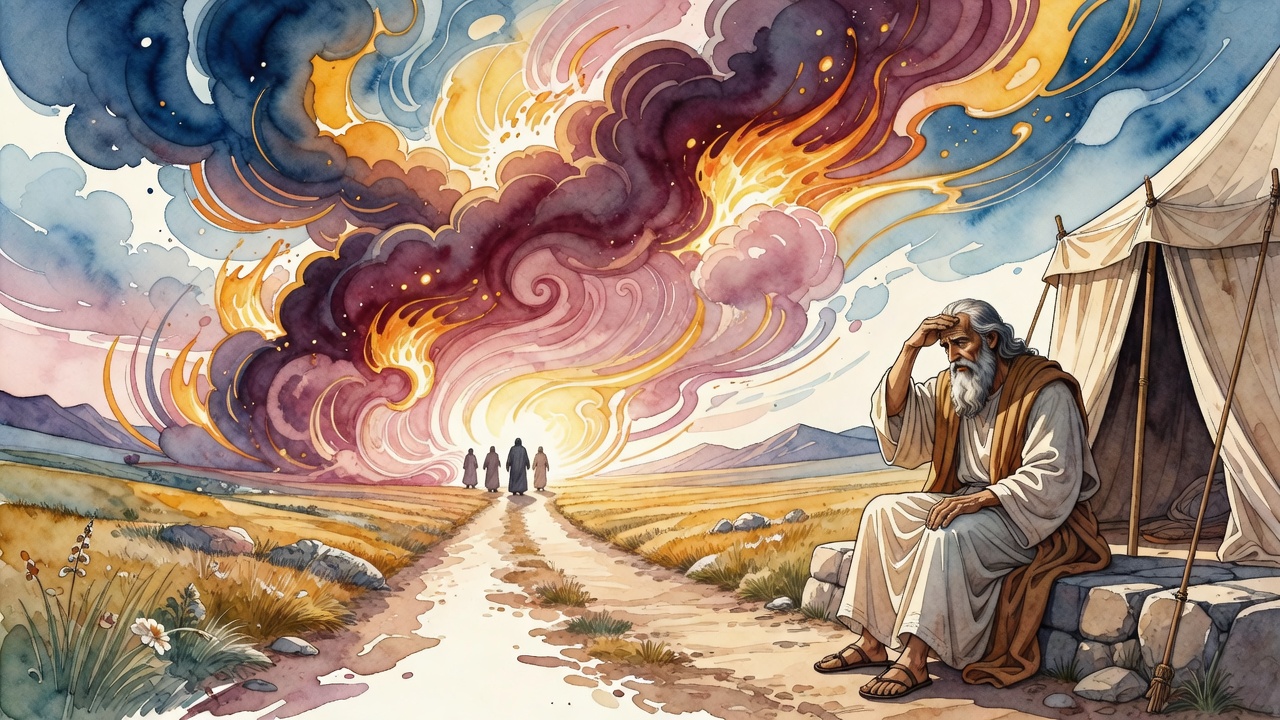
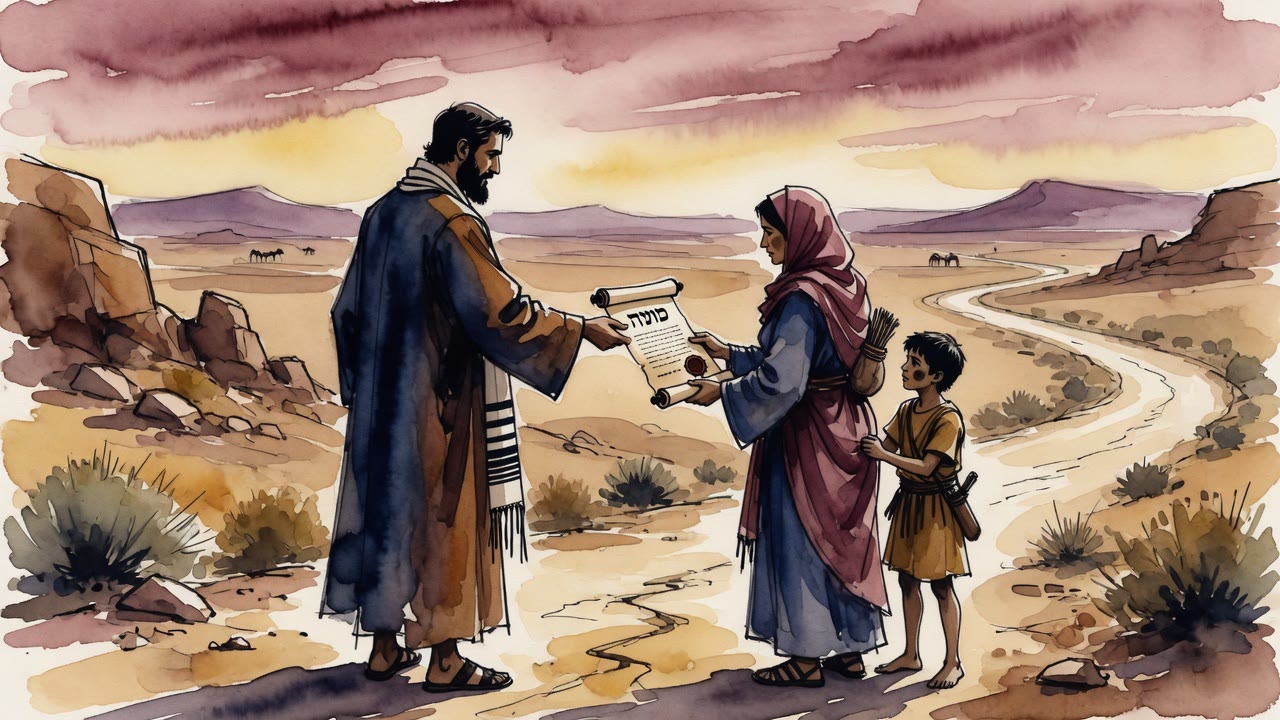
Isaac walked into his mother's tent and found the lamp dead. The cloud at the flap was gone. The dough sat like any other dough.
Table of Contents
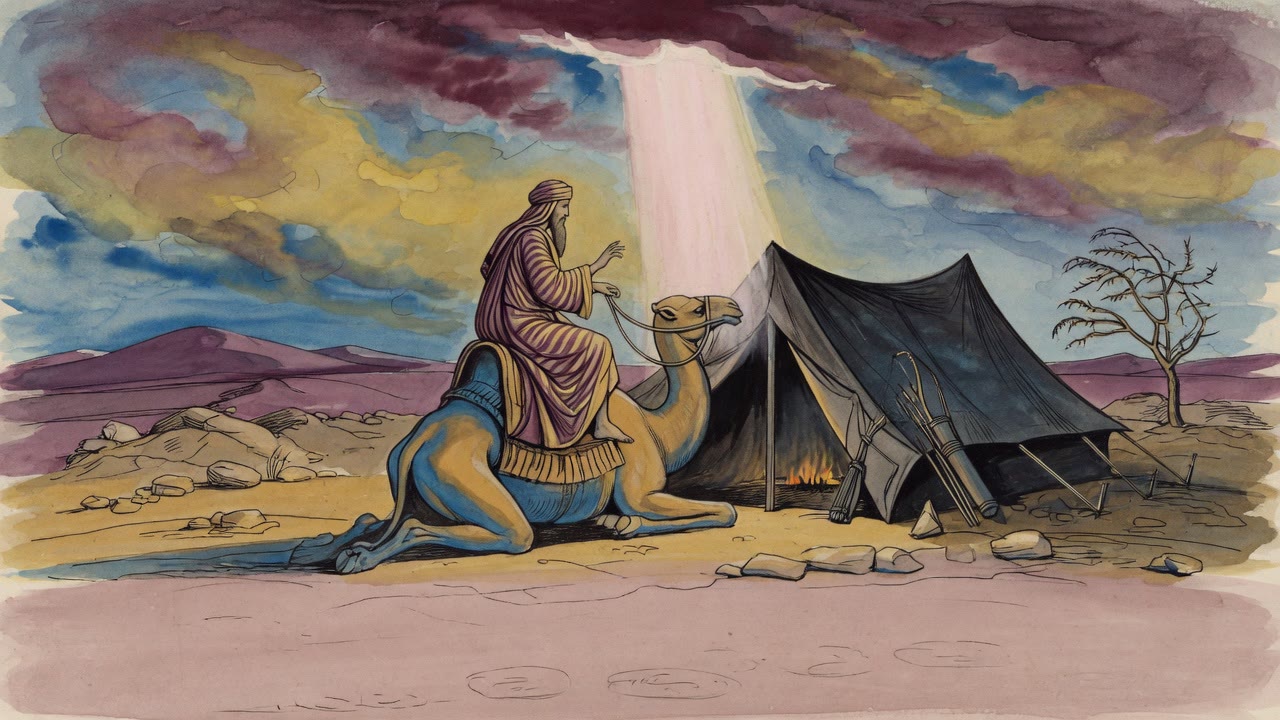
A guest came dusty and found the flap already open. Bread was waiting. The lamp on the post had been burning since Friday dusk, and it was still burning. A cloud sat on the entrance as if the tent had weather of its own.
 Click for full size
Then Sarah died, and Isaac walked into that doorway and found ordinary dark.
The Cloud Tied to the Flap
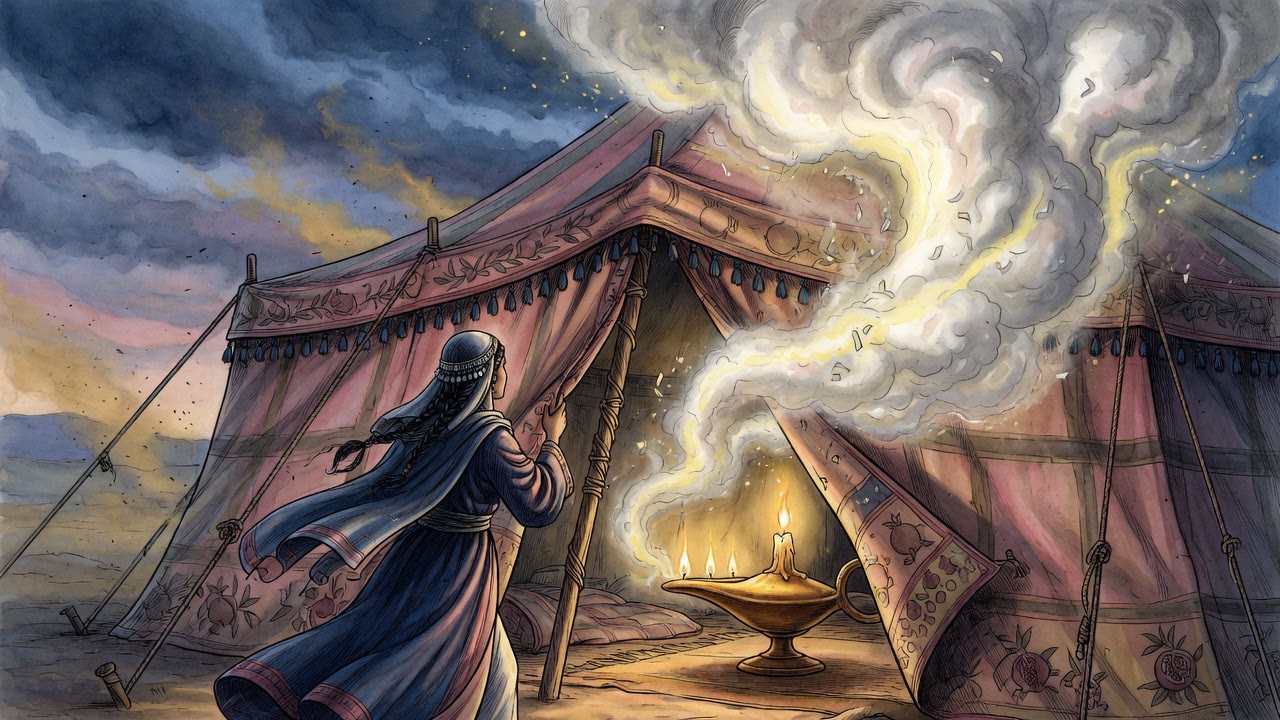
While Sarah lived, four signs kept her company. The Shechinah (שכינה), God's presence, rested at the entrance as a cloud tied to the flap. The doors stood wide for any traveler who needed shade and bread. Her dough rose under blessing, so no loaf failed from her hands. A lamp burned from the eve of Shabbat to the eve of Shabbat, a flame that refused the week.
Guests felt it before they could name it. A tent can smell of goat and dust and still feel chosen. Open doors. Bread that did not run out. Light that did not bargain with darkness. A threshold that behaved like an altar.
A child who woke afraid found the lamp still insisting. A servant who feared famine watched dough behave like a quiet ally. Stepping in was already a small walk toward heaven.
The Tent Forgot Its Habits
When her soul left, the signs left. The entrance went ordinary. The doors forgot their width. The dough returned to yeast and heat, with all the ordinary risks. The lamp that had burned like a second sun went out and stayed out.
Isaac stood among her vessels. The bowls were still there. The weather was not. Bread had to be watched. Oil had to be measured. Doors had reasons to shut.
People said the tent looked the same. He put his hand on the post where the lamp had been. Cold metal. No flame. He did not argue with them. He knew.
Rebecca Crossed the Threshold
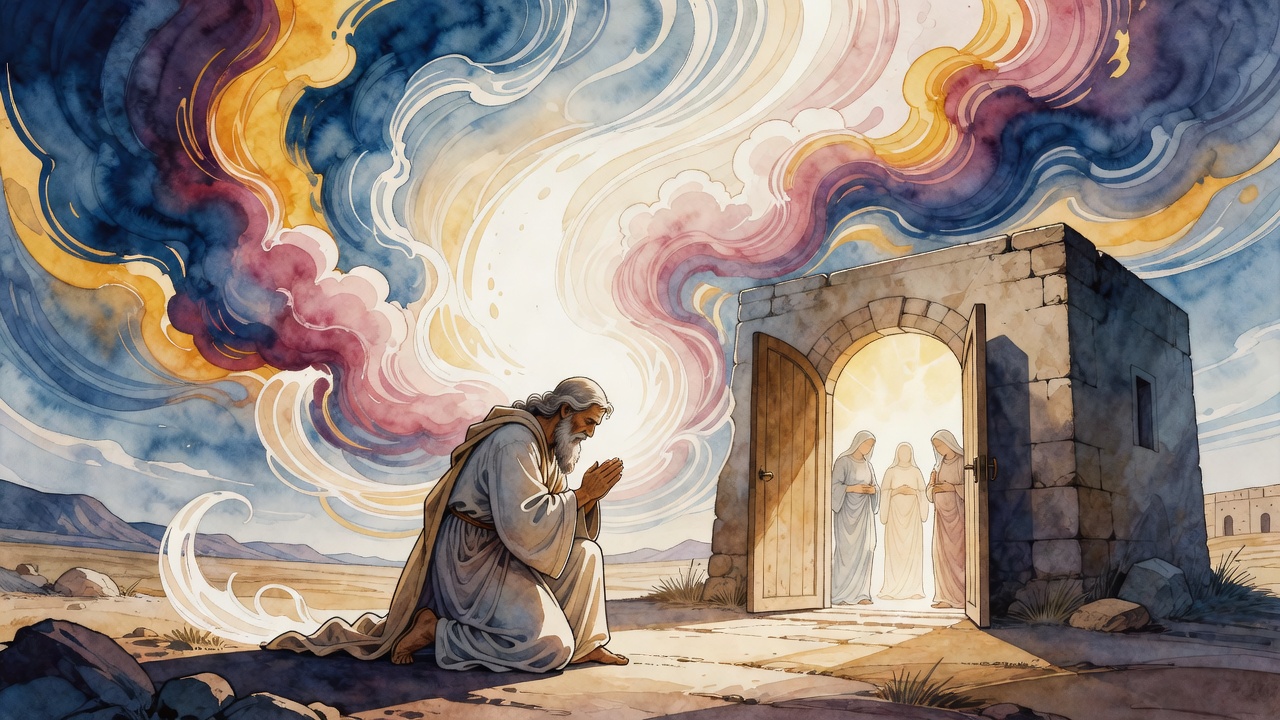
When Rebecca came as Isaac's wife, he watched her take challah in purity and handle dough the way his mother had. He brought her into the tent of Sarah his mother then, not later (Genesis 24:67). He loved her after that, and the love had a door in it.
The cloud gathered at the flap again. The doors opened. The dough blessed. The lamp held from Friday to Friday. The same four, as if the tent had been waiting for a woman whose hands could host what Sarah had hosted.
Isaac could walk toward that doorway and feel that heaven had not permanently left the family business of welcome. Rebecca did not erase Sarah. She resumed a pattern. A new matriarch can keep the same four companions without becoming a copy.
Moses Took the Tent Out of Camp
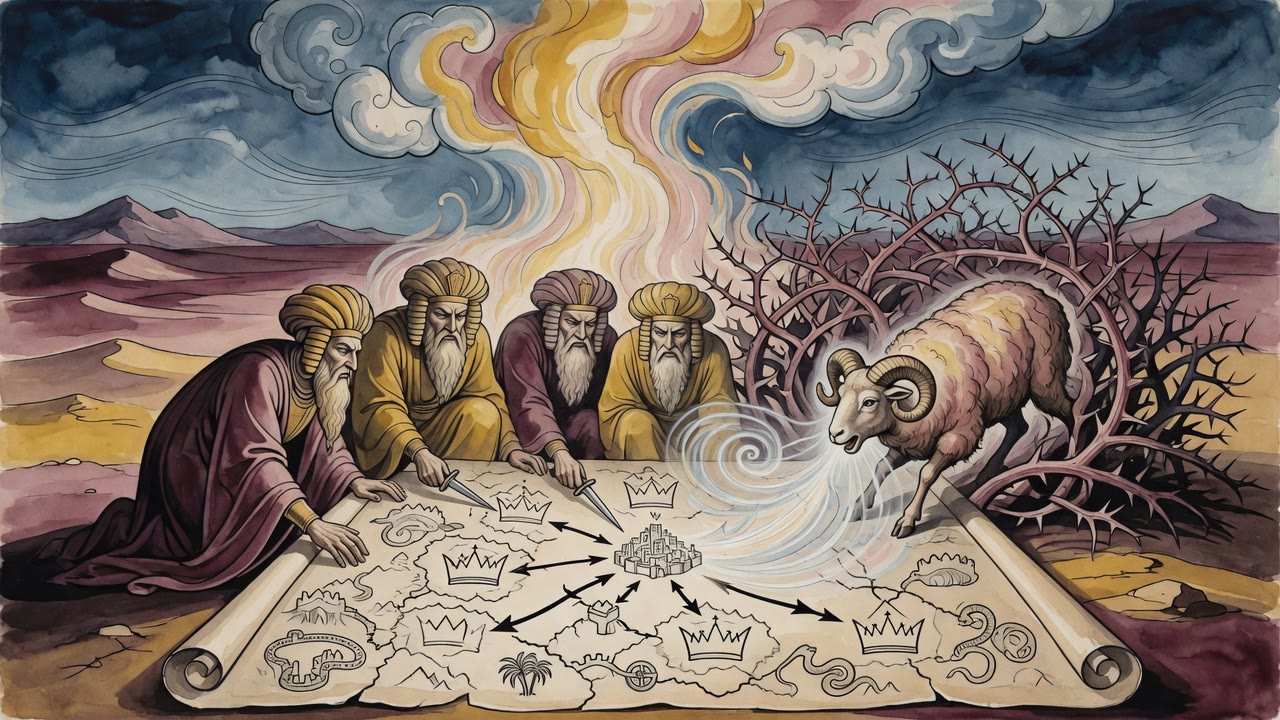
Generations later Israel stripped the ornaments they had worn since Sinai. Moses was angry. He took the Tent of Meeting and pitched it far outside the rows. Anyone who wanted God had to walk away from the camp to find the door.
God left the upper ones and sat with Moses. Ministering angels came to say their hymns and found the Throne already there, in the dust, at a man's tent. The sun, the moon, and the stars came to that flap to bow and to ask permission to go out and light the world. Without that permission they would not have risen.
They asked the holy creatures where the throne of glory was. "Go to Moses," the creatures said. Whoever sought the Lord walked to that door. God spoke with Moses face to face, as a man speaks with a friend. Israel stood at their own tent doors and watched the pillar of cloud descend. They rose and worshiped, each at his own threshold.
God told Moses to return and enter the camp. When your face is angry, Mine will appease yours. When Mine is angry, yours will appease Mine. The tent outside was a door moved until the camp could bear it again.
Isaac had watched a lamp die in a doorway. Moses watched the sun wait at one. The camp, when it was ready, got the tent back. The lamp, once Rebecca's hands were on the dough, burned through the week again.
← All myths