Pharaoh Decreed Death and Israel's Children Grew Out of the Ground
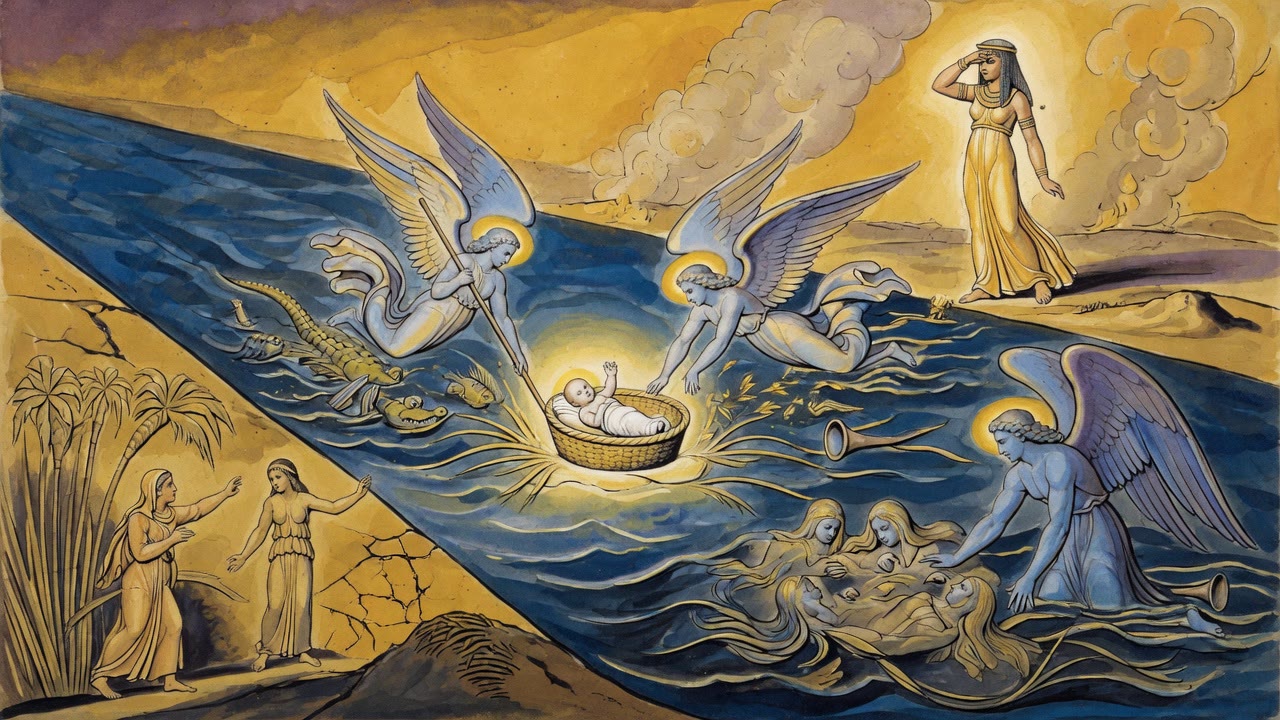
Egyptian soldiers drove oxen across the ground where the infants were hidden. Once the men had gone, the children came up out of the field like grass.
Table of Contents
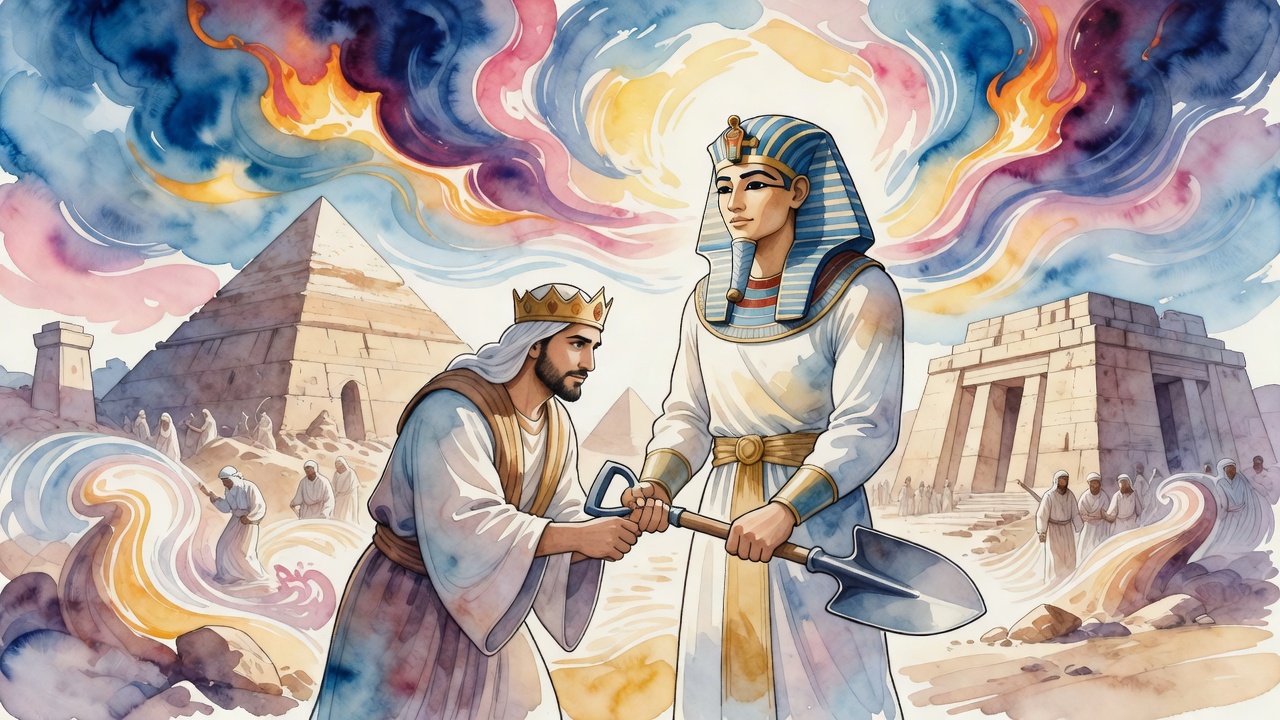
Pharaoh's first decree said nothing about killing anyone. He raised the daily quota and told the taskmasters to press. The taskmasters worked out the rest for themselves and explained it to the men. If you go home to sleep in your own houses, they said, then by the time we come round to gather you in the morning an hour or two of daylight is already gone, and you will not make the count. So the men lay down where they worked, on the ground, night after night, and did not go home.
 Click for full size
He had done the arithmetic. Men who never reach their wives do not father children.
"I told their father Abraham I would multiply his seed like the stars," God said to the Egyptians, "and you are being clever with them so that they will not multiply. We will see whose word stands, Mine or yours."
The Women Went Down to the River With Jugs
The wives went out to draw water, and God put small fish in the jugs, so that what came up was half water and half fish.
They carried the jugs out to the fields. They set two pots on a fire, one with hot water and one with the fish. They washed their husbands and fed them and rubbed them with oil and gave them drink, and then they lay with them there between the two pots, in the open, at the end of a day of bricks. The silver of Egypt would come to them later for what they did between those pots.
Then they carried the pregnancies home and told nobody.
They Gave Birth in the Fields Under the Apple Trees
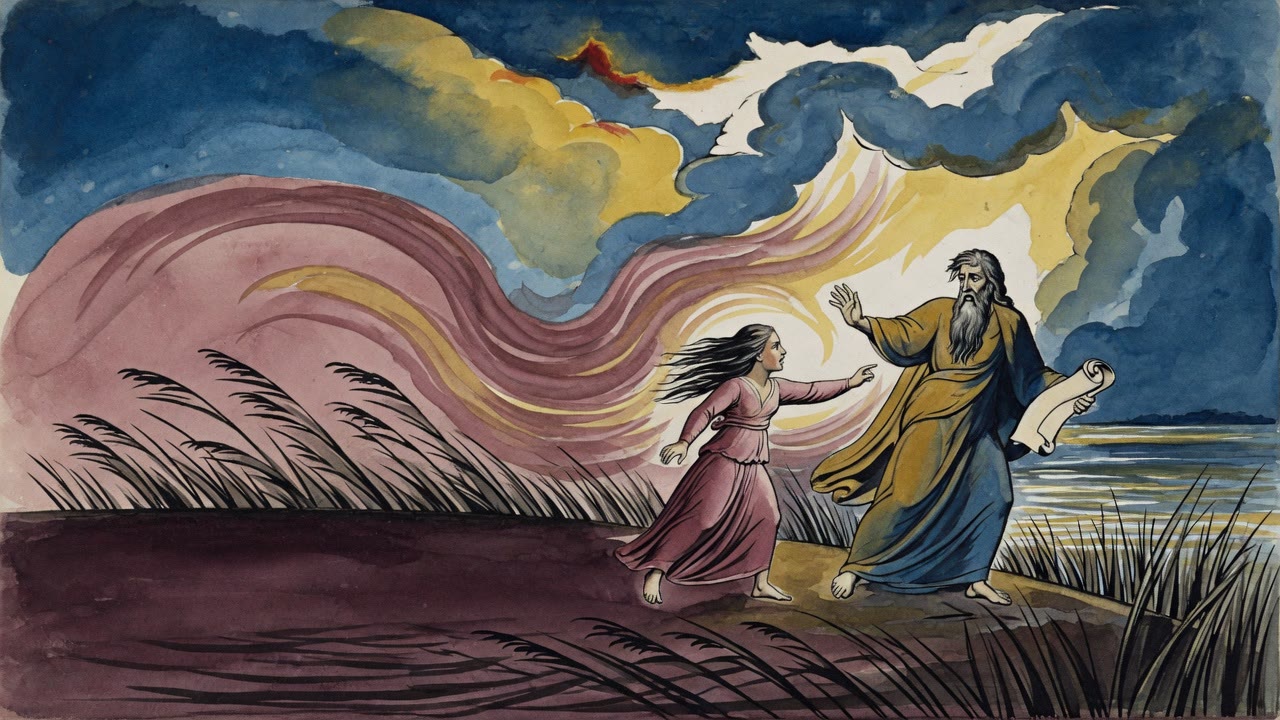
When their time came they went out again, away from the houses and the counting, and gave birth under the apple trees.
Nobody cut the cords. Nobody washed the babies or rubbed them with salt or wrapped them. There was no midwife in that field. An angel came down out of heaven instead and did all of it, cleaning each child and settling it the way an animal settles its young, and leaving two round clay vessels beside every one of them, one filled with oil and one with honey. For as many days as it took, the children fed in the dirt out of clay.
Egypt Drove Oxen Over the Buried Children
The Egyptians found out. They came into the fields hunting for the infants, and the earth opened and took the children in and closed over them.
So the Egyptians brought oxen and plows and worked the ground back and forth on top of them, furrow beside furrow, until the field looked like any other field. Then they went away satisfied.
The children came up out of the soil like grass. They grew where they were and then walked home in herds, whole droves of them coming in off the fields to houses where their mothers had said nothing to anyone about a birth.
Every God in Egypt Melted Except One
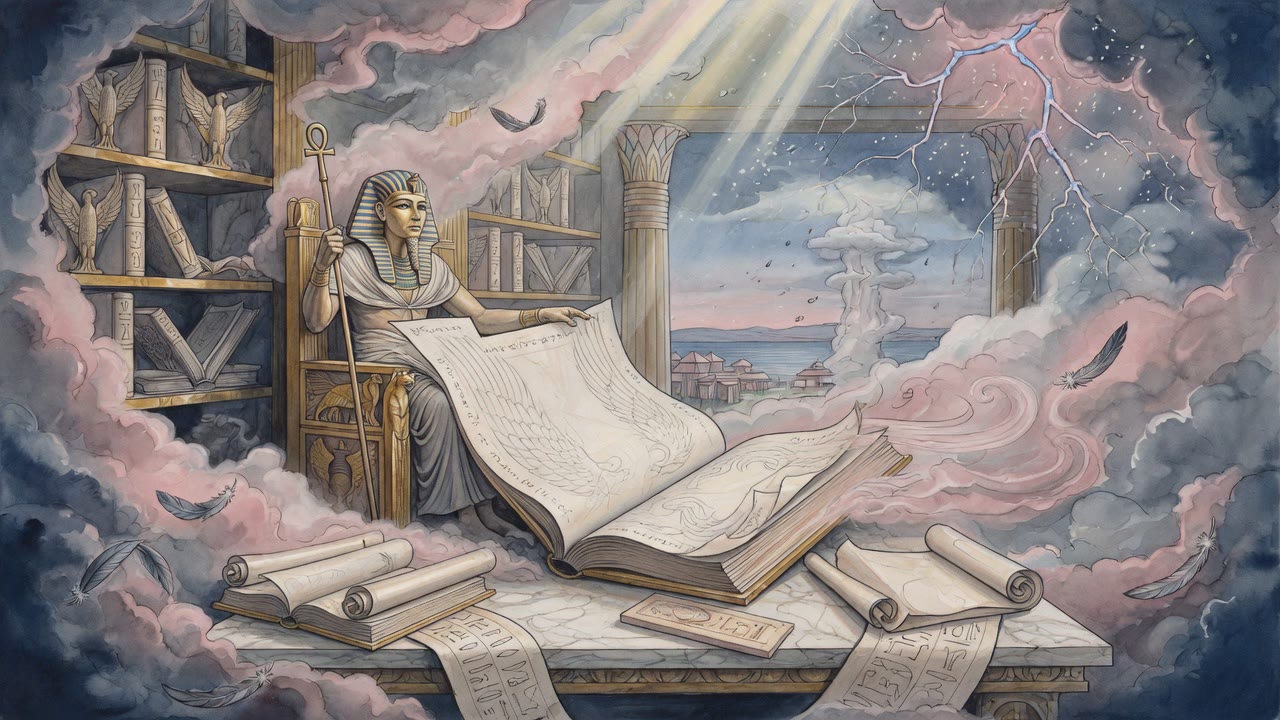
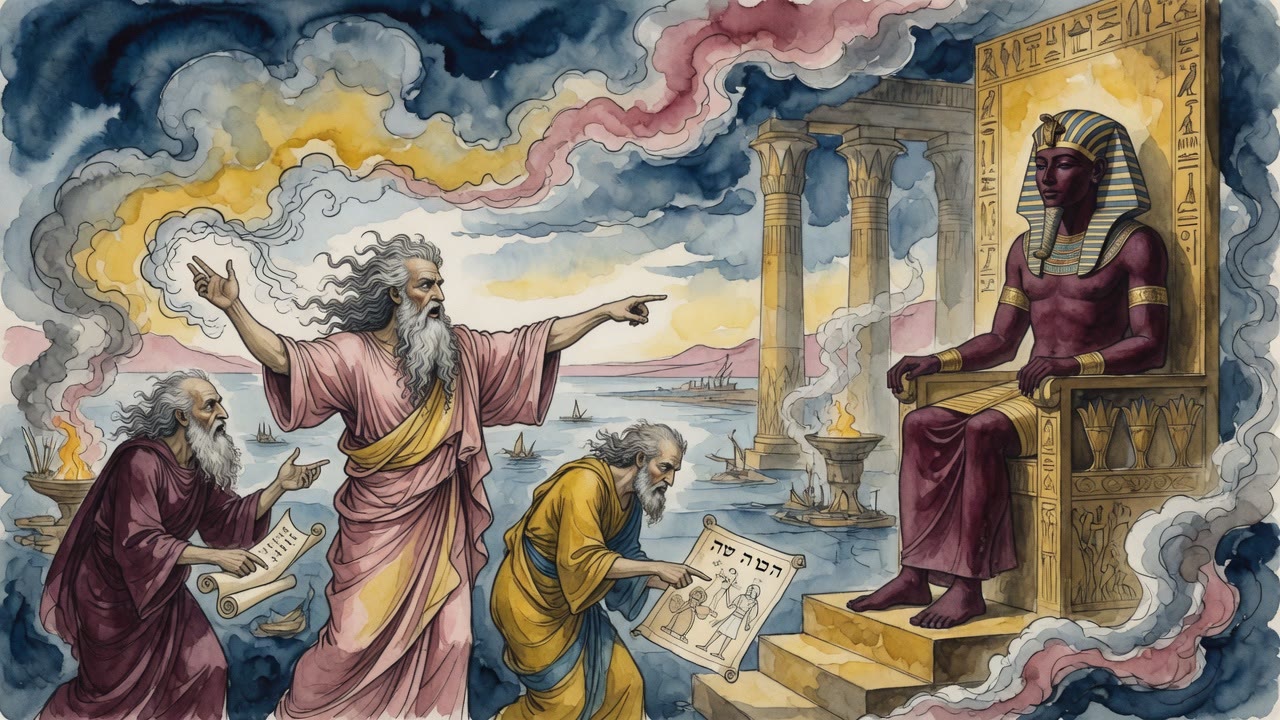
Pharaoh had said, "My river is mine, and I made it for myself." He was the third of four rulers who set themselves up as gods and were taken apart in public for it, after Hiram of Tyre and Nebuchadnezzar, who ended up out in the wilderness eating grass like an ox while he still held the throne.
On the night of the firstborn the Egyptians carried their sons into the temples and hid them among the images. God struck the images with the children still in the room. The wooden ones rotted. The stone ones dissolved. The gold and the silver ran and set again as raw metal. Every idol in the world went that night except one, and Baal Tzefon was left standing on the shore untouched, so that Egypt would trust it.
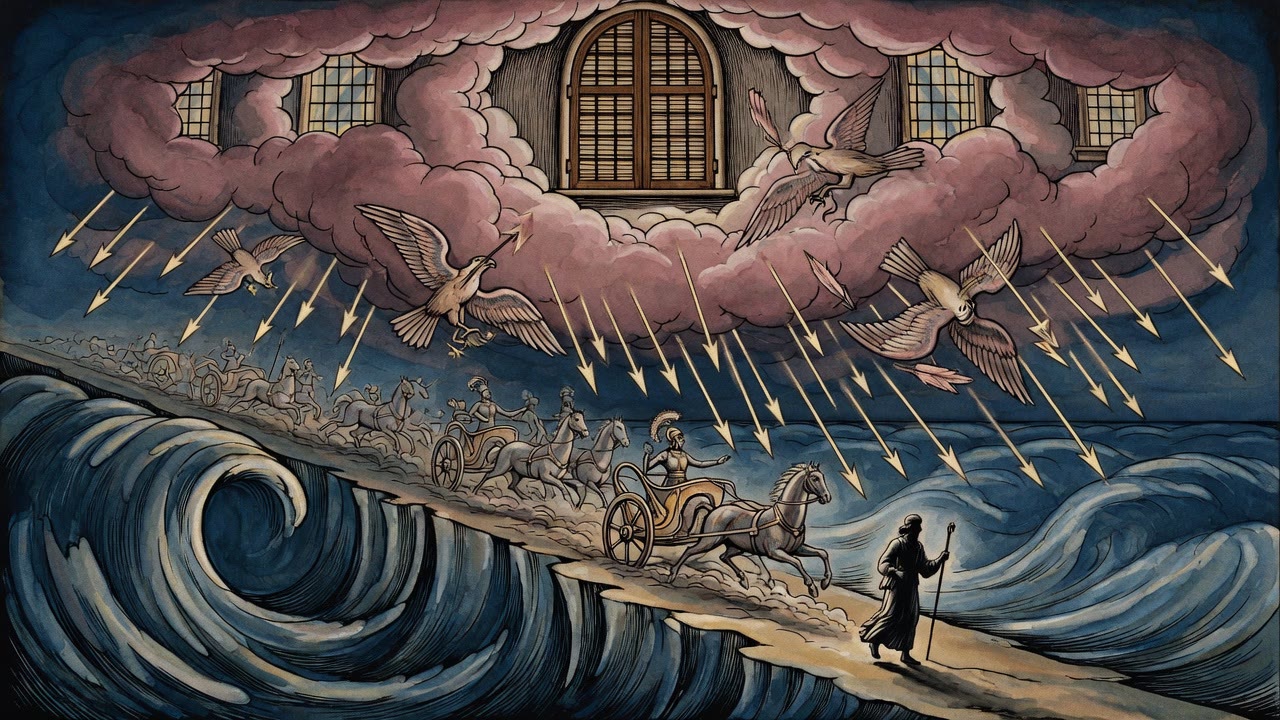
It worked. Pharaoh told his commanders that Baal Tzefon had penned the lions of the wilderness against the Hebrews and shut their mouths. The angel of Egypt came down out of the sky to finish them. Israel saw the chariots behind them and was terrified.
Then the water opened, and Egypt ran the wrong way. Men do not flee toward the thing they are fleeing from, and these men did, driving into the split sea after Israel until the walls came down. God took the angel of Egypt first and drowned him, and the whole army went in after their angel. The last man of Israel came up on the far bank as the last man of Egypt went under.
The Children Knew Him First
When God showed Himself on the sea, the ones who knew Him straight away were the children out of the fields.
They had been washed by that angel and fed out of clay pots in the dirt and pulled under the earth away from soldiers, and they pointed and said, "This is my God, and I will glorify Him." The men who had slept on the ground beside the brick pits took it from them.
Moses asked what Israel was supposed to do while the sea was closing in from four sides at once. God told him not to ask, and put out a hand and lifted them off the water.
It was like a man who sees raiders coming down the road with his son next to him, and picks the boy up in one arm and fights with the other. Afterwards the son said to his father, "Let me never be without these two hands, the one that holds me and the one that kills the men on the road."
← All myths