Pharaoh Sat Crownless Three Months Before He Forgot Joseph
Advisors dragged Pharaoh from his throne for three months until he agreed to forget Joseph. Then Egypt closed its fist.
Table of Contents
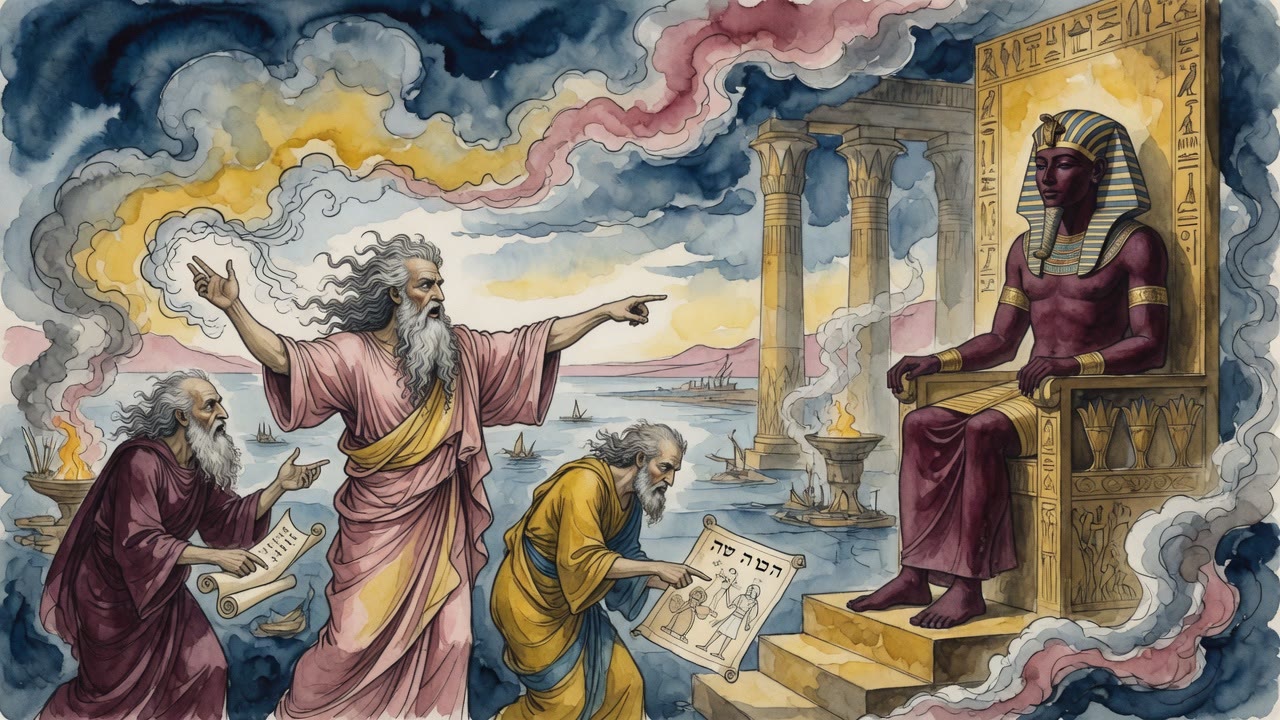
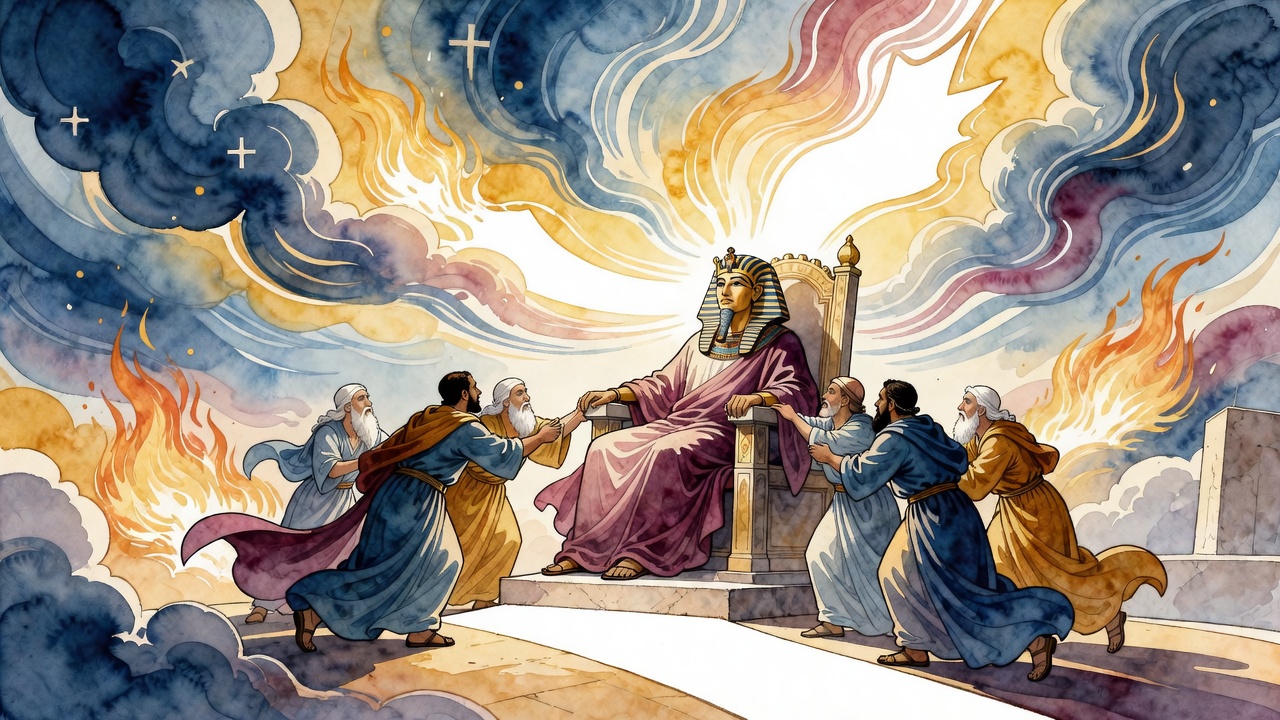
The counselors stood in a ring around the throne and named a single policy. Band together against Israel. Starve the memory of the man who filled Egypt's granaries. Pharaoh flinched.
 Click for full size
"Until now we have lived off what is theirs," he said. "Were it not for Joseph, who fed Egypt in the years of famine, our people would have had no means to survive. And you would have me conspire against the ones who saved us?"
He would not listen. So they acted.
Three Months Without a Crown
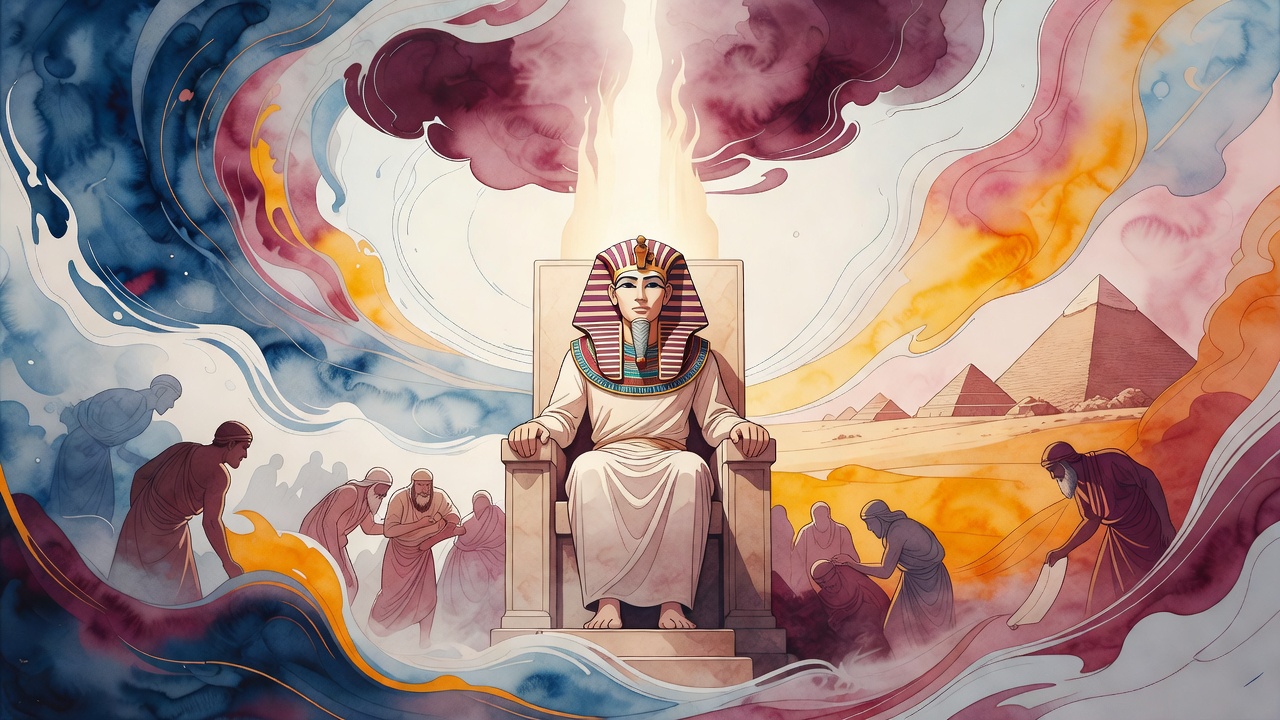
They brought him down from the throne. Not with a knife. With a vote and a shove and a silence that filled the court. For three months the king of Egypt sat deposed, a man without gold on his brow, watching lesser mouths speak in the seat that had been his.
Power tastes sharpest when it is taken away. On the ninetieth day his resolve broke. "In everything you say," he told them, "I will obey." Only then did they restore him.
Scripture would call him a new king who arose over Egypt. He was the same man, risen again, remade in the will of his advisors. Gratitude to Joseph drowned under their counsel like a coin dropped in the Nile.
Who Knew Not Joseph
The verse is blunt. "And there arose a new king over Egypt who knew not Joseph" (Exodus 1:8). He did not know him. He would not know him. All Egypt owed its grain and its life to that Hebrew's hand, and the restored mouth erased the debt.
Rabbi Abbin the Levite told a parable. A man hurled stones at the king's icon, the carved likeness set up in the governor's place. The king said, Seize him and strike off his head. Today he insults my image. Tomorrow he will dare to strike at me.
So with Pharaoh. Today he says, who knew not Joseph. He defaces the memory of the righteous servant. Tomorrow that same mouth will say, I know not the Lord. Contempt for the image is only the rehearsal. The defiance always climbs toward Heaven.
The prophet Hosea had already named the other side of the ledger. Against the Lord they dealt treacherously, for they have begotten alien children, born and left uncircumcised, fathered and never sealed into the covenant. The warning word is written ḥadash, new. Read so, it foretells a new one who would consume them. The new king rose on schedule.
Coming to Egypt on the Day of the Yoke
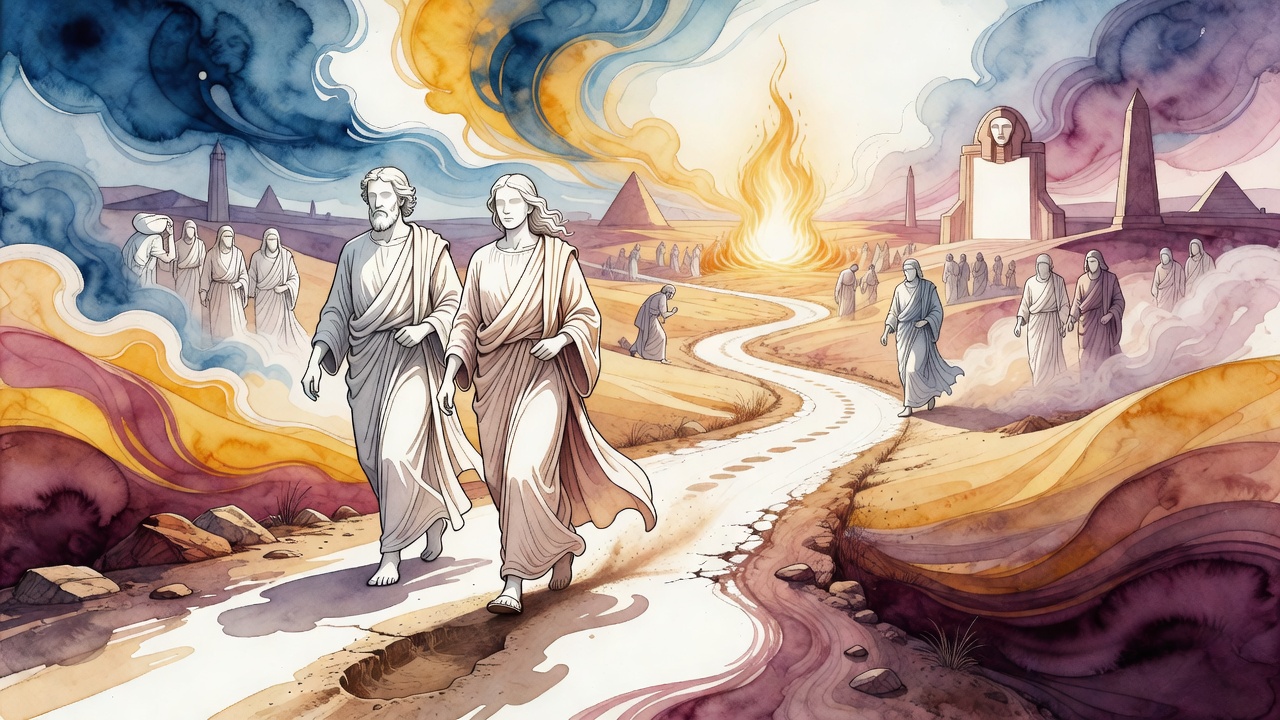
Open the scroll of Shemot and a riddle of grammar greets the eye. "And these are the names of the sons of Israel who are coming to Egypt," coming, present tense, as if Jacob's household were still crossing the border at this very moment. They had dwelled in Egypt for many years already. The descent happened long ago, in the days of the patriarch. Why does the Torah speak as if they are only now arriving?
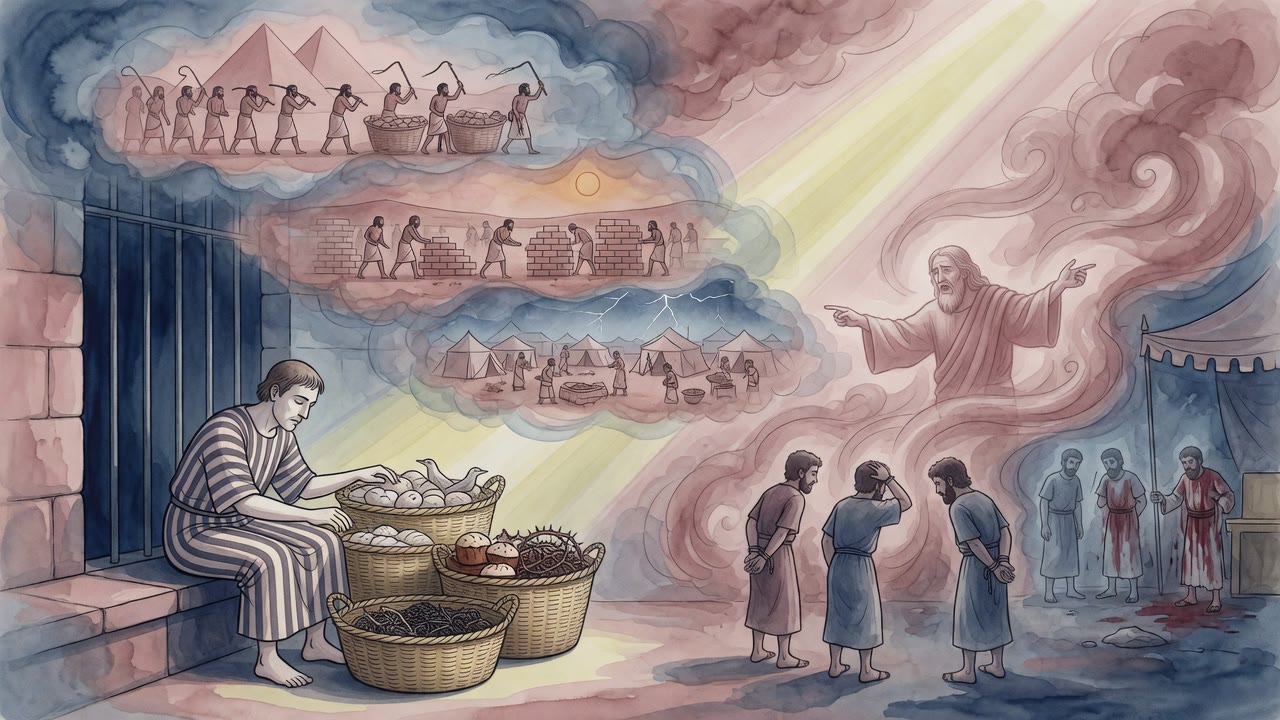
So long as Joseph lived, no burden of Egypt rested upon his brothers and their children. The viceroy's hand sheltered them. The land's yoke never touched their shoulders. They lived in Goshen as guests, not as slaves. It was as though they had never truly entered Egypt at all, for Egypt had not yet closed upon them.
The day Joseph died, the burden of Egypt was set down upon them, the labor, the dread, the bricks not yet imagined. In that instant the verb shifts. Now, only now, are they coming to Egypt. The Torah measures arrival not by the crossing of a frontier but by the descent of a yoke.
The First Gate and the Second
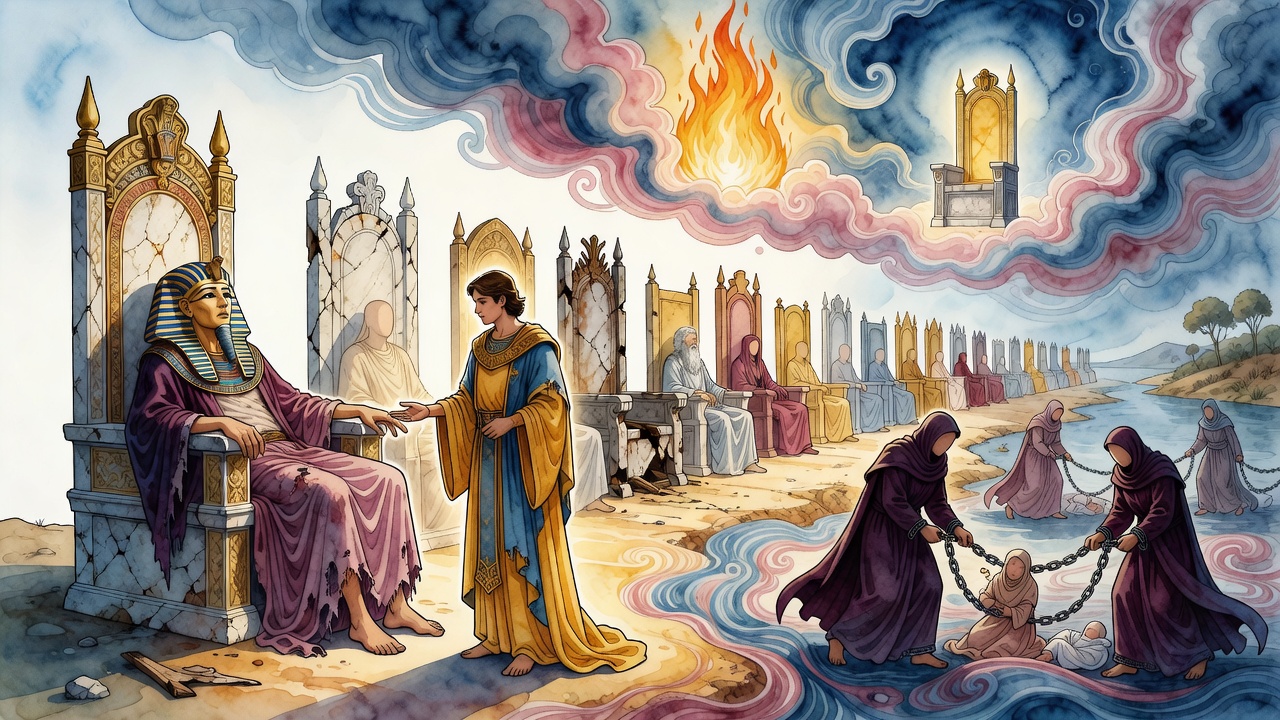
Two gates, then, close on Jacob's house. The first is the grave of Joseph, when shelter becomes absence. The second is the restoration of a king who has learned to forget. Between them the present tense hardens into slavery.
Pharaoh returns to his throne with a new face and an old fear. The advisors have taught him the price of mercy. He will not pay it twice. The people of Israel, still counting themselves guests in Goshen, wake to taskmasters who do not remember the Hebrew who taught Egypt how to store grain against famine.
The crown that sat three months on no head sits again on a man who has chosen amnesia as policy. The icon of the righteous servant lies under the stones of court speech. Tomorrow the same tongue will deny the Name.
What the Court Traded
They thought they were buying safety. A surplus of labor. A nation without a patron. What they bought was a king whose heart could no longer hold a debt of gratitude, and a people whose arrival the Torah dates not from wagons on the road but from the first day the whip found their backs.
Pharaoh sat crownless and learned obedience to cruelty. Israel lived free under Joseph and learned, too late, that a shelter without a heir is only a pause. The new king arose. The old debt died. The present tense began.
← All myths