Pharaoh Was on God's Schedule from the First Insult
Pharaoh sneers at two old Hebrew men and their God. From that moment he is keeping a calendar he cannot read and will not survive.
Table of Contents
 Click for full size
Go Back to Your Burdens
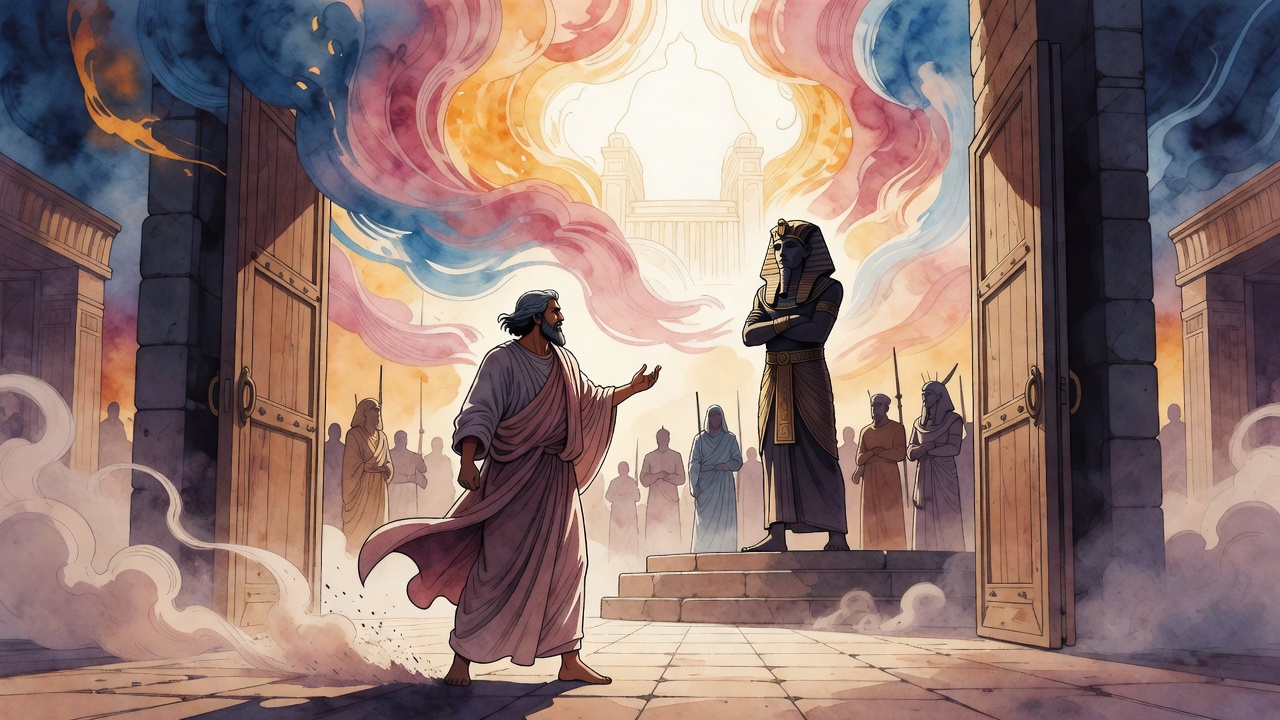
Moses and Aaron worked out the wording before they went in. The threat had to point at themselves and not at the throne: lest he afflict us with pestilence or with the sword. Us. A man owes deference to a king even when he has walked in to take the king's workforce away, so they put the danger on their own side of the sentence and asked for three days in the wilderness.
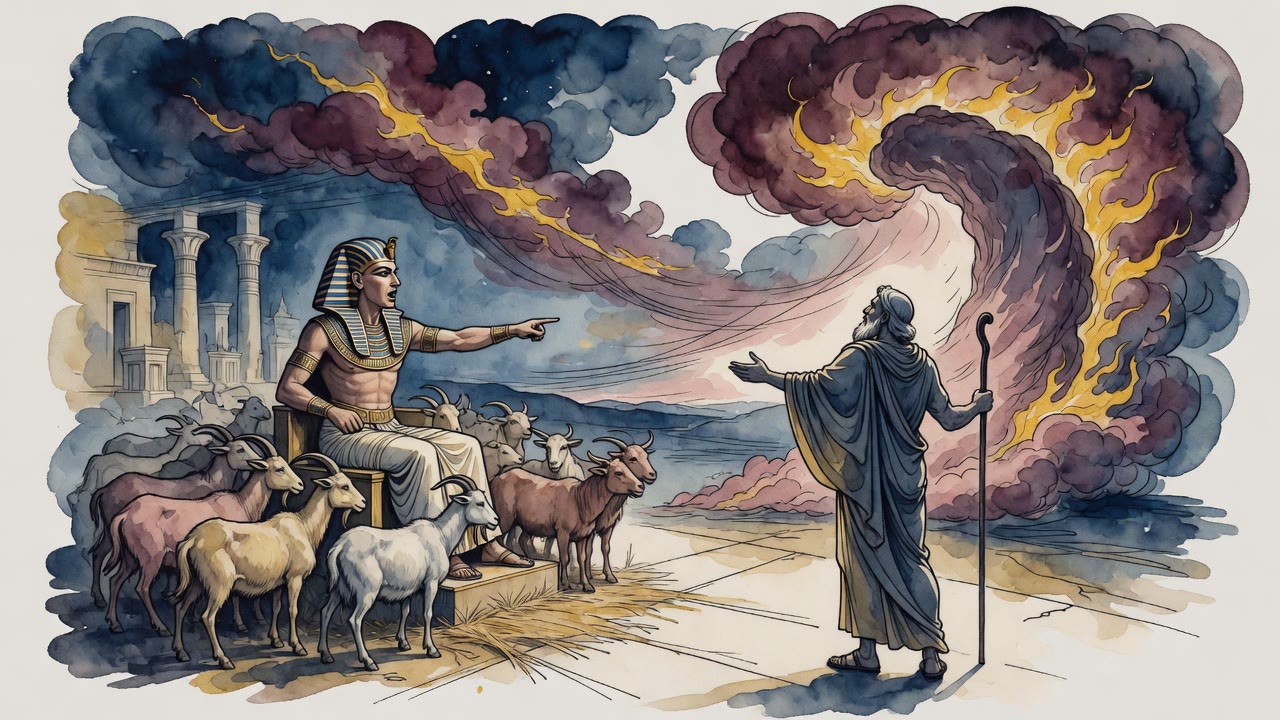
They had already said who sent them, which is why the answer was not a question. Pharaoh was not asking for reasons. He was asking what they were, and what these matters of theirs amounted to, in the voice a large man uses when he does not need to raise it.
Then he found the harder thing to say. The tribe of Levi had never been put on the brick crews, and Moses and Aaron were Levites, so he had them. You are unencumbered, he told them, and that is the whole of it. Men with nothing to carry invent a God to go and sacrifice to. Now go back to your burdens.
The insult worked because half of it was true, and both of them knew that walking out.
The Swarms Went to His House First
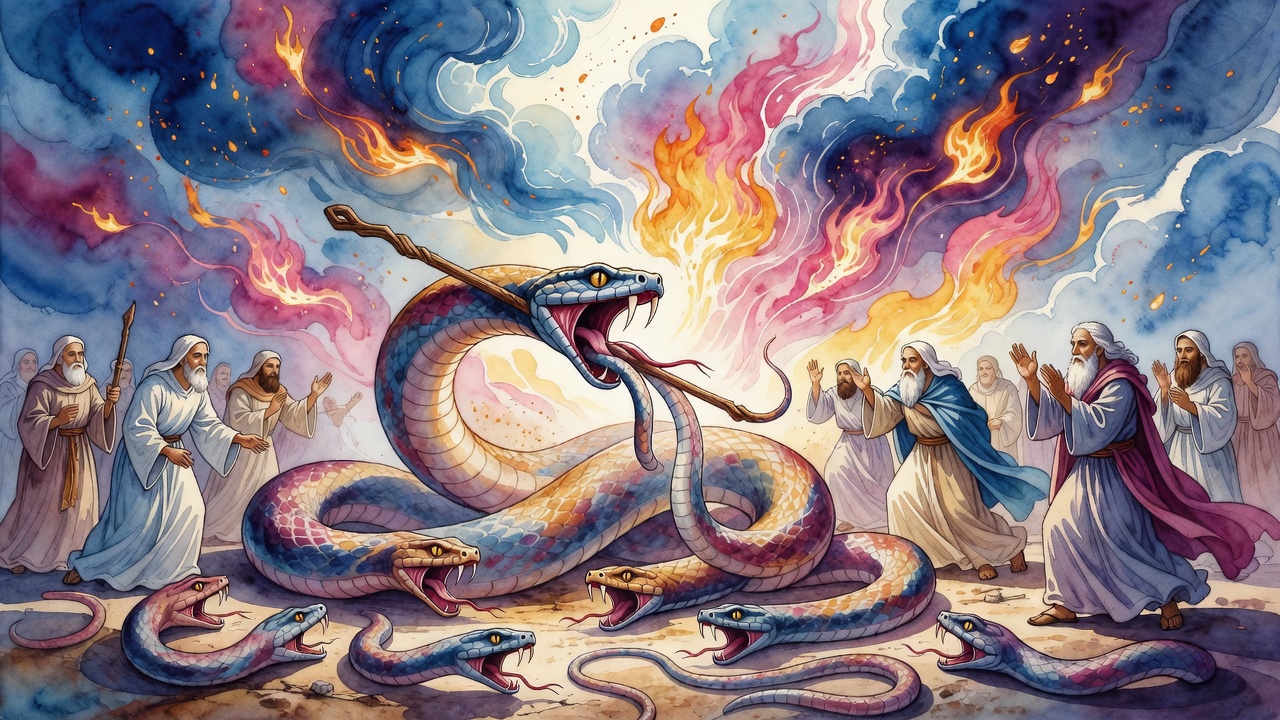
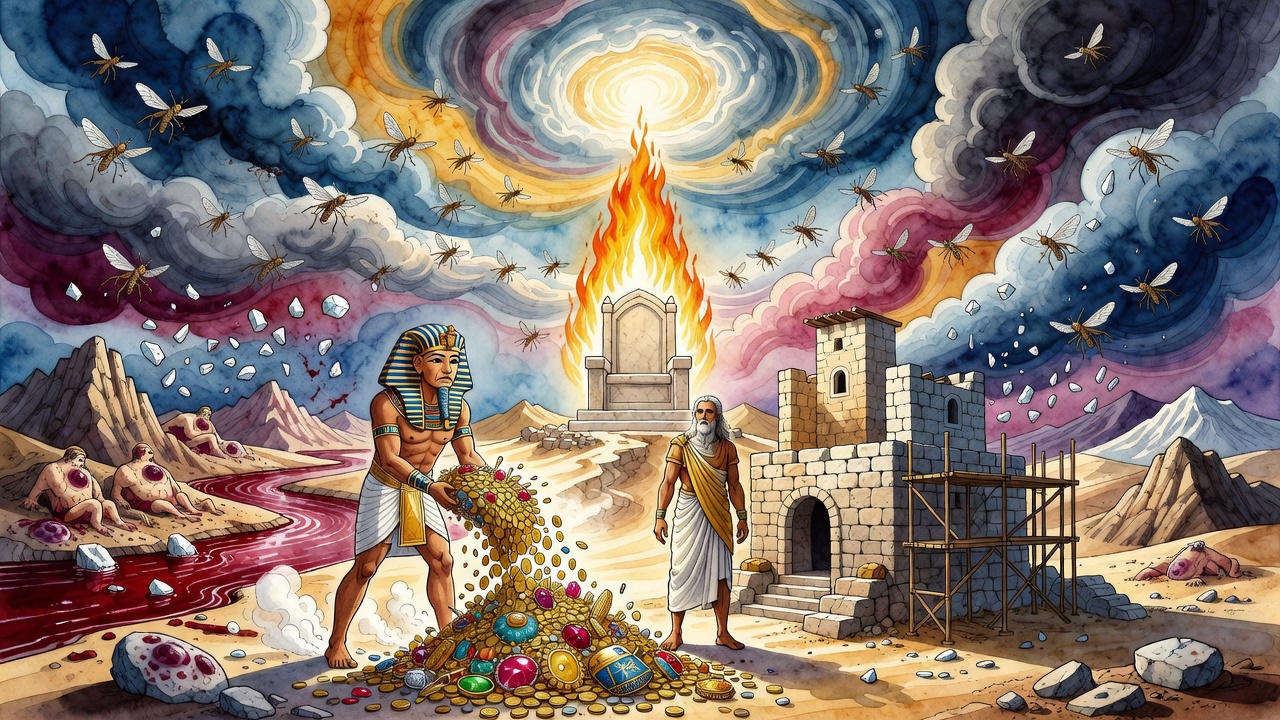
The swarms came in heavy and they came to the house of Pharaoh before they went anywhere else. Then the houses of his servants. Then the rest of Egypt, until the land was ruined by them. The order was not weather. He had given the first order against the Israelites, so he collected first.
Rabbi Yehuda said the swarms were beasts, because the Egyptians had made a practice of sending Israelites out to catch bears and lions and leopards for them, purely to make the work worse, and now the animals came without being fetched. Rabbi Nehemya said hornets and mosquitoes. The proof went to Rabbi Yehuda on a detail about carcasses: the frogs were left dead in the streets, since nothing could be made from a frog's skin, but not one of the swarms was left behind, because hides were worth money and Egypt was not going to be paid for its plague.
Pharaoh called the two of them back in and offered a compromise. Sacrifice here, in the land. Moses would not take it, because the animals in question were animals the Egyptians bowed down to, and slaughtering their gods in front of them would have the crowd throwing stones before the blood was drained. Three days out into the wilderness, then. Pharaoh gave way and then took half of it back in the same breath: go, only do not go very far, and pray for me. Moses said he was leaving him now and would pray at once, and the swarms would be gone tomorrow, only let Pharaoh not deal falsely again. Not one of them remained.
Not a Hoof Will Stay Behind
By the time the darkness lifted, Pharaoh had moved to a different tactic. Go and serve your God, he said, but the flocks and the herds stay here.
Moses did not negotiate the number. Not a hoof will remain, he said, and he meant it at the level of a single hoof: if one animal belonged to an Egyptian but one foot of it belonged to an Israelite, that animal was walking out. Then he explained why the arithmetic could not be done in advance. You are flesh and blood, and a man who disobeys you dies, and that is the end of what you can ask for. We do not know what will be asked of us, or with what we are to serve the Lord until we get there. It could be a sacrifice for every one of the two hundred and ten years.
Do Not See My Face Again
Pharaoh came apart at that. "Until when will you enter here? Go from me, beware, do not see my face anymore."
"You have spoken well," Moses said. "I will not see your face anymore."
He meant it, and then the problem caught up with him while he was still standing on the floor of that hall. One plague was still on the schedule and had not been announced, and an announcement has to be delivered to a face. He had just sworn off the only face there was. Everything he had said in Egypt for a year was going to be measured against those five words.
So God came into the palace. Moses had refused for years to pray inside that city, because of what was standing in its temples, and he would go outside the walls and spread his hands there instead. This time God did not wait for him to get out. He came in and told him there was one more plague coming on Pharaoh, and Moses said it on the spot, out loud, where the court could hear it. About midnight I will go out into the midst of Egypt. And I will not be coming back to you. You will come to me.
Midnight
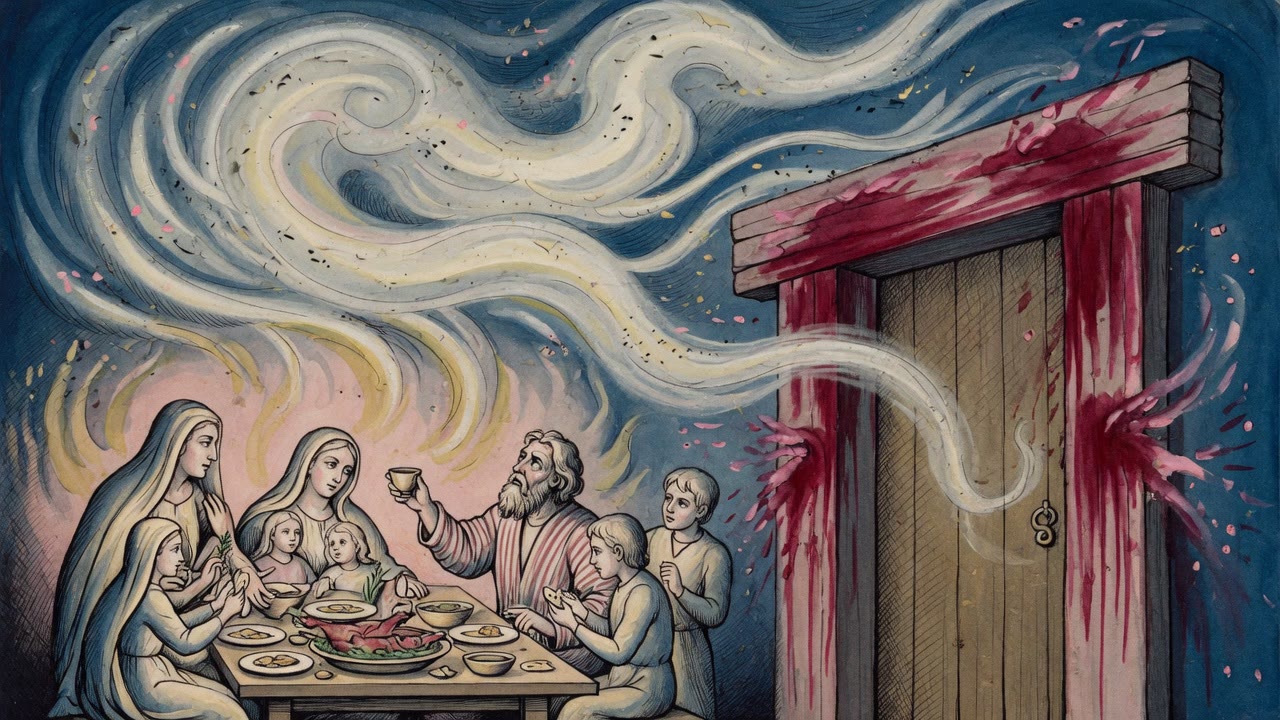
It happened at midnight and not at dawn, when bodies can be counted in daylight and a government can hold a meeting about it. It happened in the dark, so that Pharaoh got up in the middle of the night himself, and his servants got up, and all Egypt got up, and the crying went across the city from house to house, because there was not a house without someone dead in it.
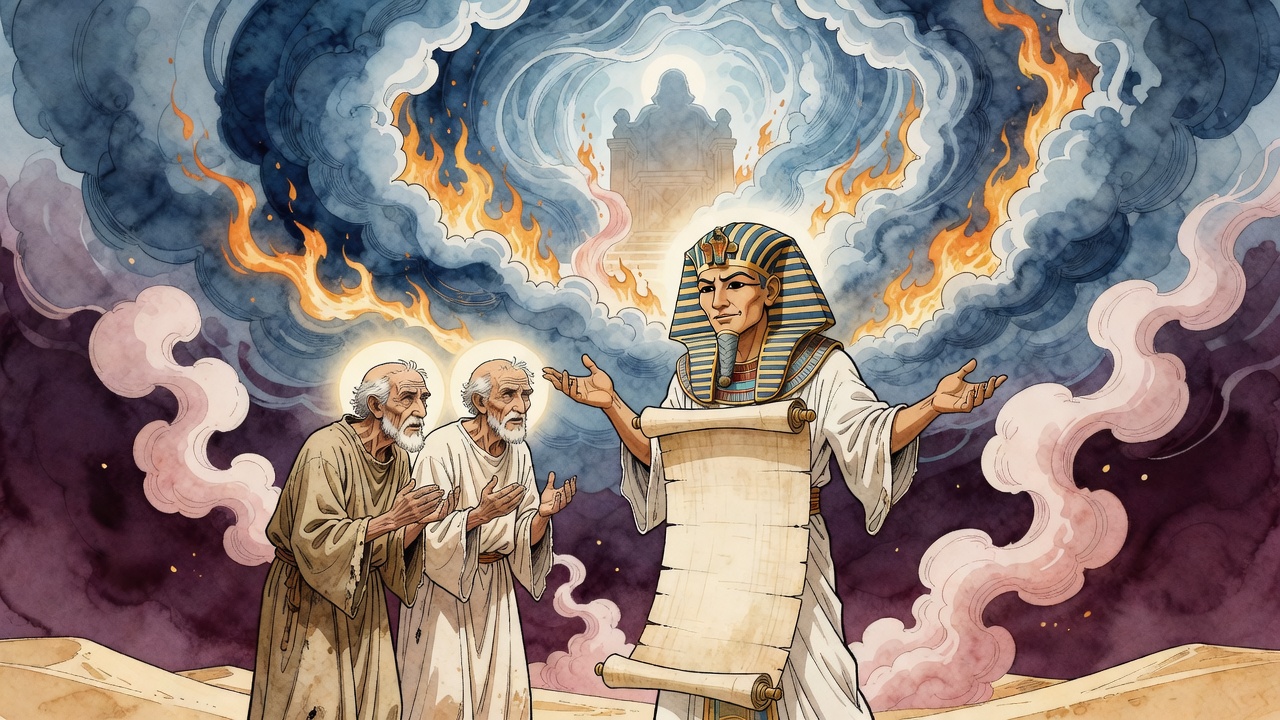
He sent for the two men in the dark. Take your people, take your flocks and your herds, go. Then he stood there in a house with a dead son in it and asked the two Levites with the invented God and the leisure time to bless him on the way out.
Moses did not go back into that hall. Pharaoh had set the terms himself, in front of his own court, and the terms held: neither of them saw the other's face again.
← All myths