Pharaoh's Chariots Rose and Fell Inside the Sea
Two words in the Song at the Sea fight each other. One says God hurled the chariots down. The other says He lifted them. Both are right, in that order.
Table of Contents
 Click for full size
He Asked Who the Lord Was
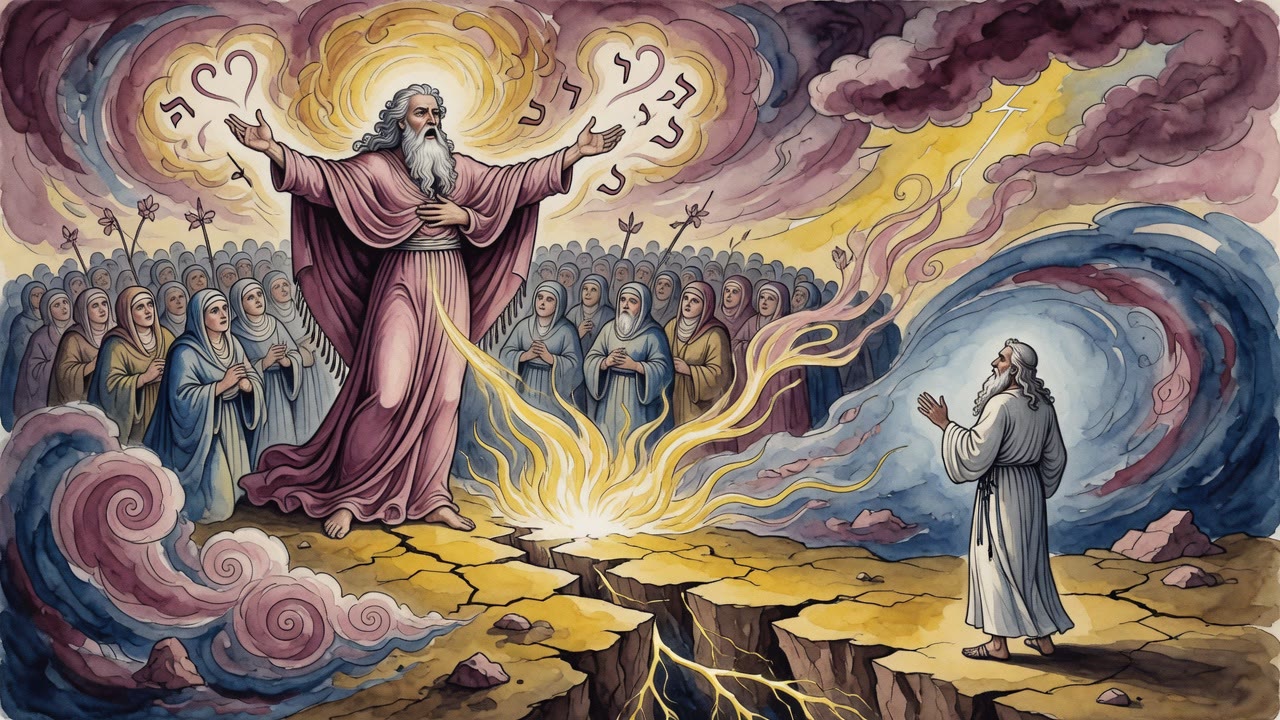
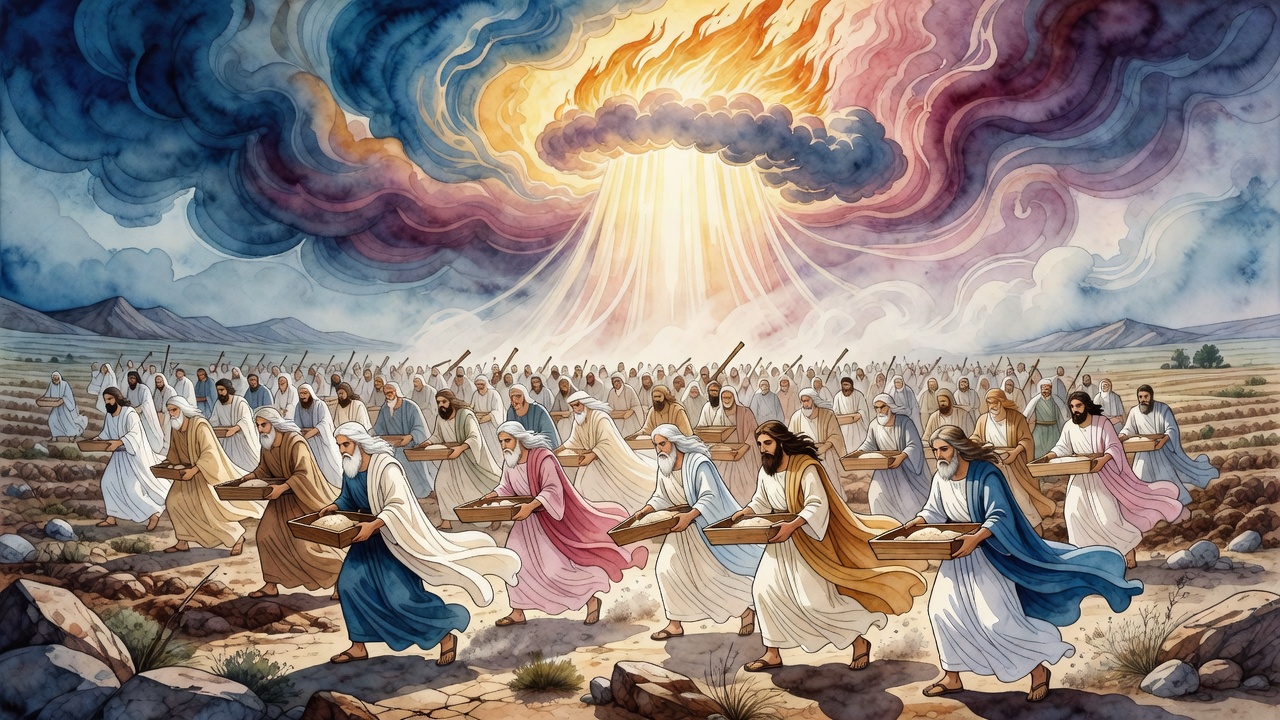
Two shepherds stood in the throne room in Egypt and asked for three days in the desert, and Pharaoh gave them the answer that decided everything after it.
"Who is the Lord, that I should listen to His voice and let Israel go? I do not know the Lord."
He said it in front of his court and went back to work. The order that day was that the slaves would gather their own straw and the brick count would not drop. He had weighed the voice, found it weighed nothing, and got on with the afternoon.
By the measure a man measures out, it is measured back to him. That is not a proverb about fairness. It is a rule about shape. Whatever a man does gets handed to him again in the same form, and the form Pharaoh chose was weightlessness.
The Song Uses Two Words That Cannot Both Be True
When Israel stood on the far bank and sang, they sang two verbs about the same army and the verbs pull in opposite directions.
One of them, yarah, means He cast them down into the sea. Thrown, dropped, sunk. The other, ramah, means He raised them into the sea. Lifted. Sent up.
They cannot both describe a drowning. So they are not describing a drowning.
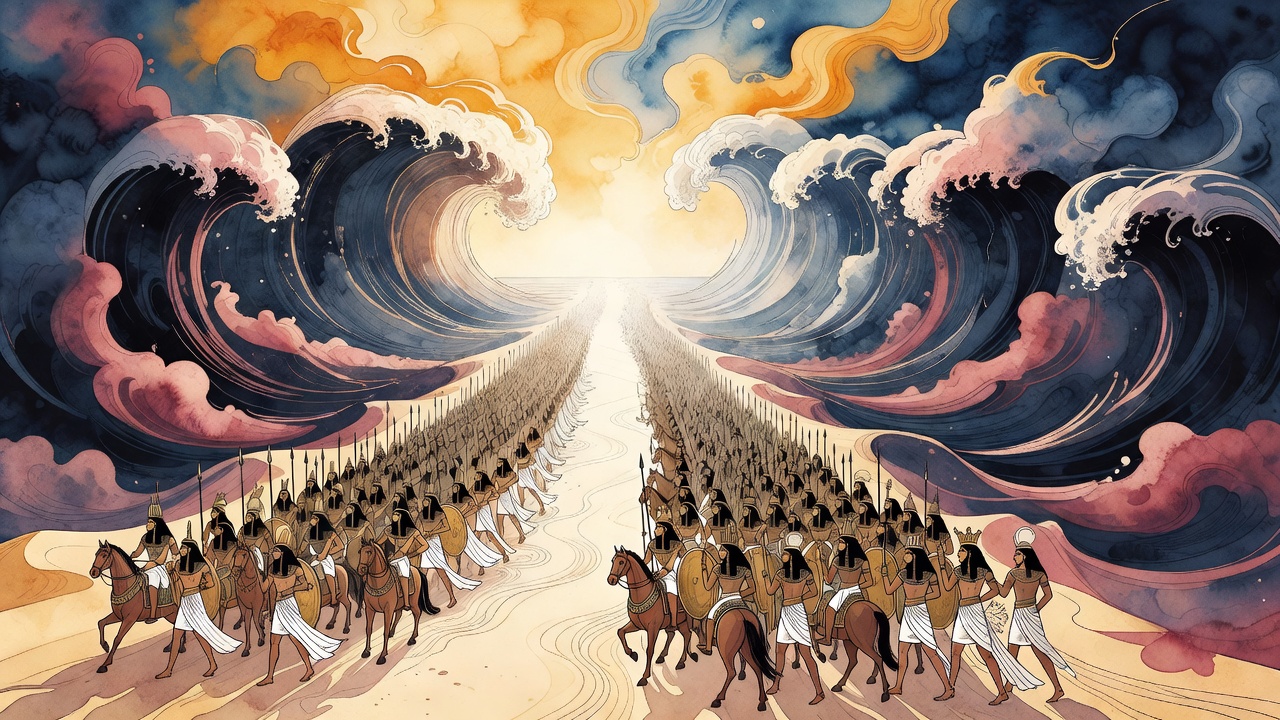
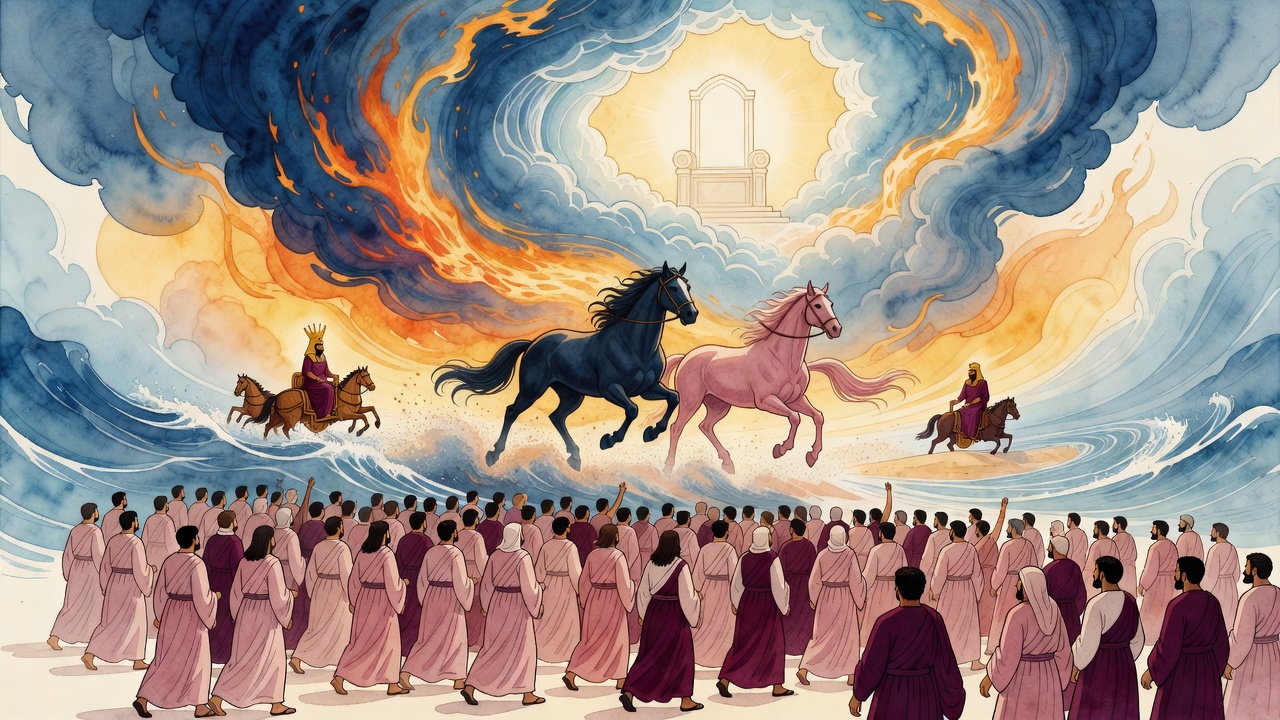
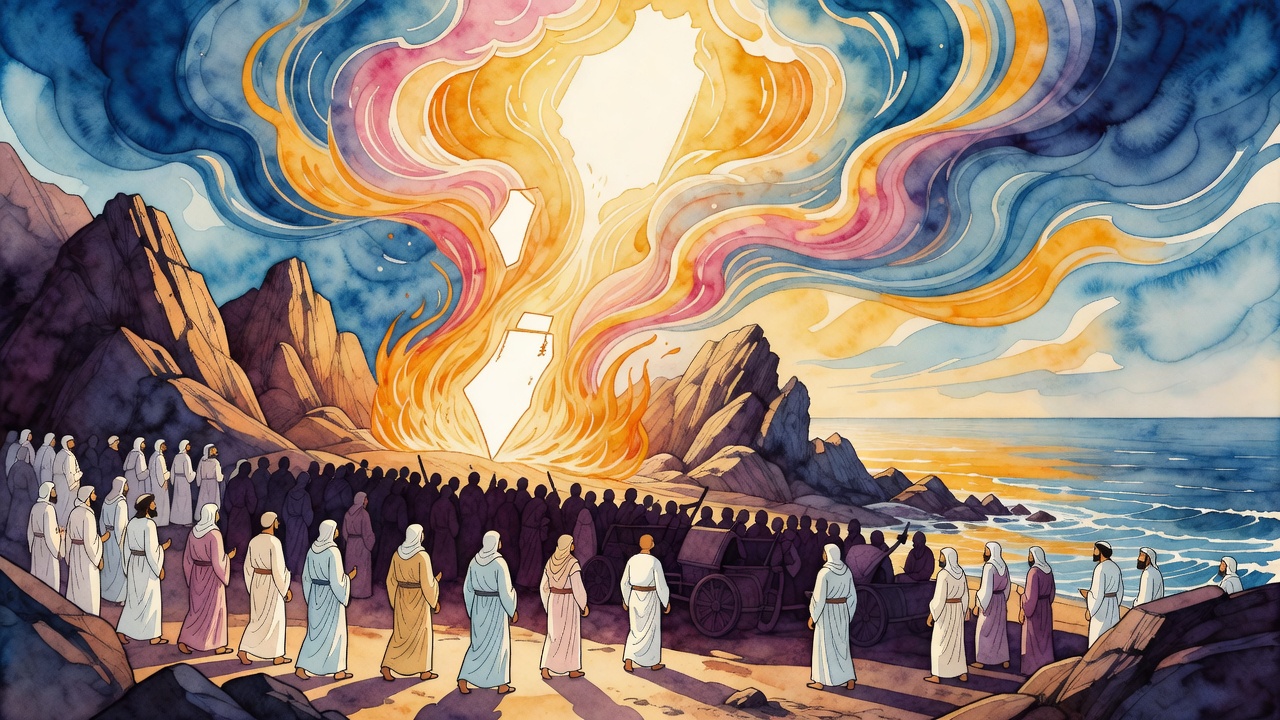
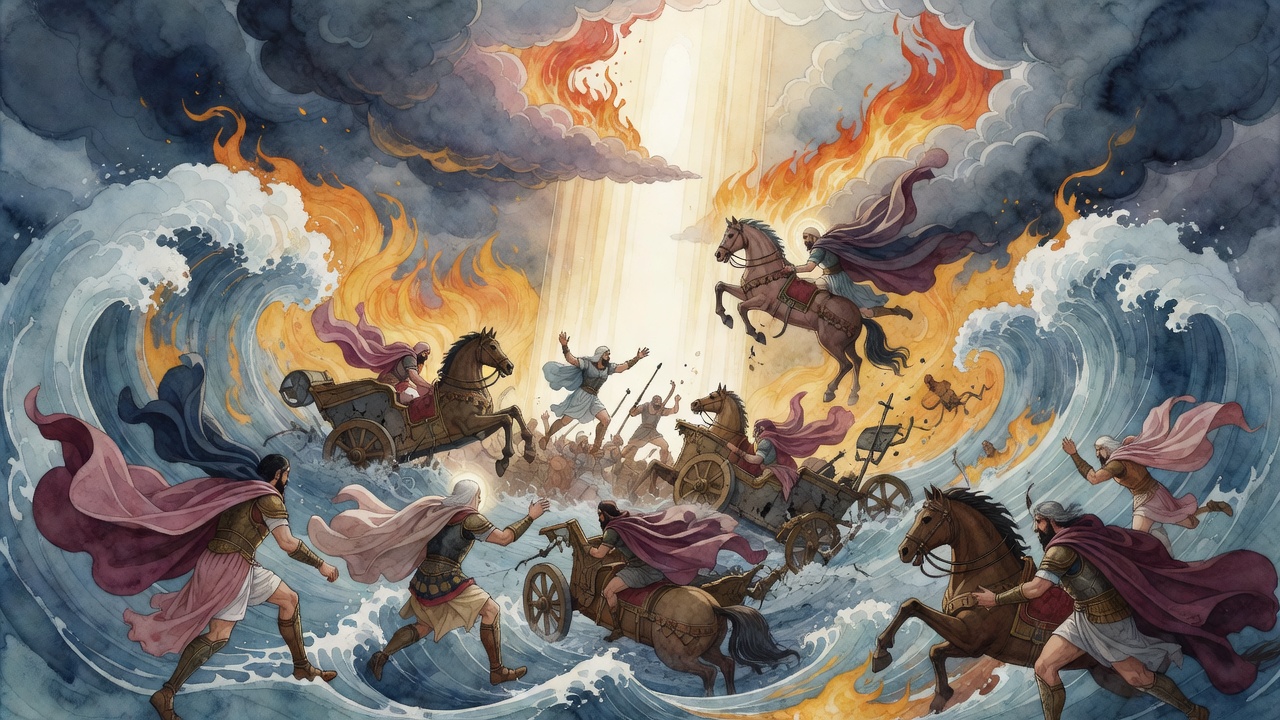
The horses went up first with the traces still buckled to them and the shafts swinging, up over the wall of standing water, and the chariots came up behind them, and the picked officers of Egypt went up out of the surface with nothing under their boots. Then the water took the whole load and drove it down to the floor of the sea. Then it brought them up again. Yarah is how they fell to the floor of the deep. Ramah is how they rose again to the heights. Over and over, until the sea was finished with them.
Egypt's speed, its rank, its six hundred chosen vehicles and the finest men in them, spent their last minutes going up and down like something a child had thrown.
What a Warrior Does When the Blood Is Up
There is a fighting man in a province somewhere who has gone all the way into it.
His rage and his strength have closed over his eyes and he cannot sort one body from another any more. He comes back through his own street with the sword still moving and cuts down his father, and his mother, and whoever of his own blood is standing in the doorway, and afterward he will not be able to say why. That is what happens to power when it is running at full force inside a man.
Not so the Holy One.
The song says the Lord is a man of war, and He was. He fought Egypt at the water and did not hold anything back. And in the same line it says the Lord is His name, and that name is the one He speaks over Himself when He passes by in the cloud: the Lord, the Lord, merciful and gracious. He was at full force against the army in front of Him and had not lost His hold on anything behind Him. The same hour, the same hand.
They Could Not Agree on Whether Pharaoh Died
The verse says the waters came back and covered the chariots and the horsemen, all the army of Pharaoh that had gone into the sea after them, not one of them remained.
Rabbi Yehudah read it flat. Every chariot means every chariot, and that includes the one with the king in it. Pharaoh went under with his men and the sea kept him.
Rabbi Nechemiah refused. All of them except that one, he said, and he had a line to stand on: God had told Pharaoh in Egypt, in the middle of the plagues, that He had kept him standing on purpose, for this very reason, so that His name would be told through all the earth. A man preserved for that is not drowned in a crowd.
Others took a third road, and theirs is the coldest of the three. Pharaoh went down last. The whole force went in ahead of him and he watched every rank of it disappear, and then the horses and the chariots and the riders came into the sea and the Lord turned the waters back over them, and he went too.
Nothing Was Left on the Water
By morning the sea lay flat and there was nothing standing on it.
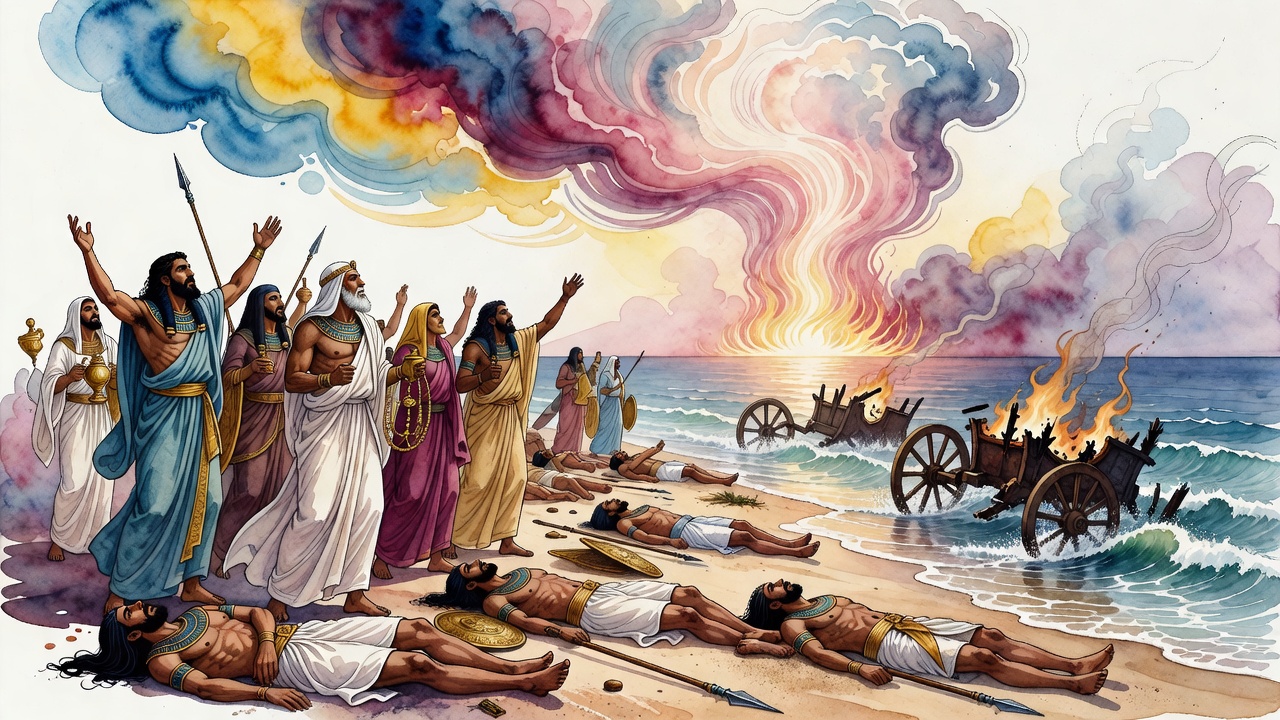
Israel came down to the edge and saw Egypt on the shore, laid out along the sand where the water had put them, the chariots and the harness and the men who had been shouting behind them the day before. The most feared army on the road from the delta to Canaan, delivered back to the beach like driftwood, by a voice its king had said he did not know.
← All myths