Philo Found a Body in the Ark and a Drowning Mind in the Flood
In Alexandria, Philo takes the ark's measurements and finds a human body, then watches the same water rise inside a mind that stopped ruling.
Table of Contents
 Click for full size
The Cubits That Would Not Stay Wood
The lamp guttered twice before Philo stopped copying numbers and started counting rooms.
Three hundred cubits long, fifty across, thirty from keel to roof. Three decks stacked one above the other, pitch smeared inside and out, a window near the top, one door cut low into the flank. That was the vessel Noah had been told to build. Outside, Alexandria kept up its night noise and the sea shoved at the mole.
The measurements would not lie flat on the page.
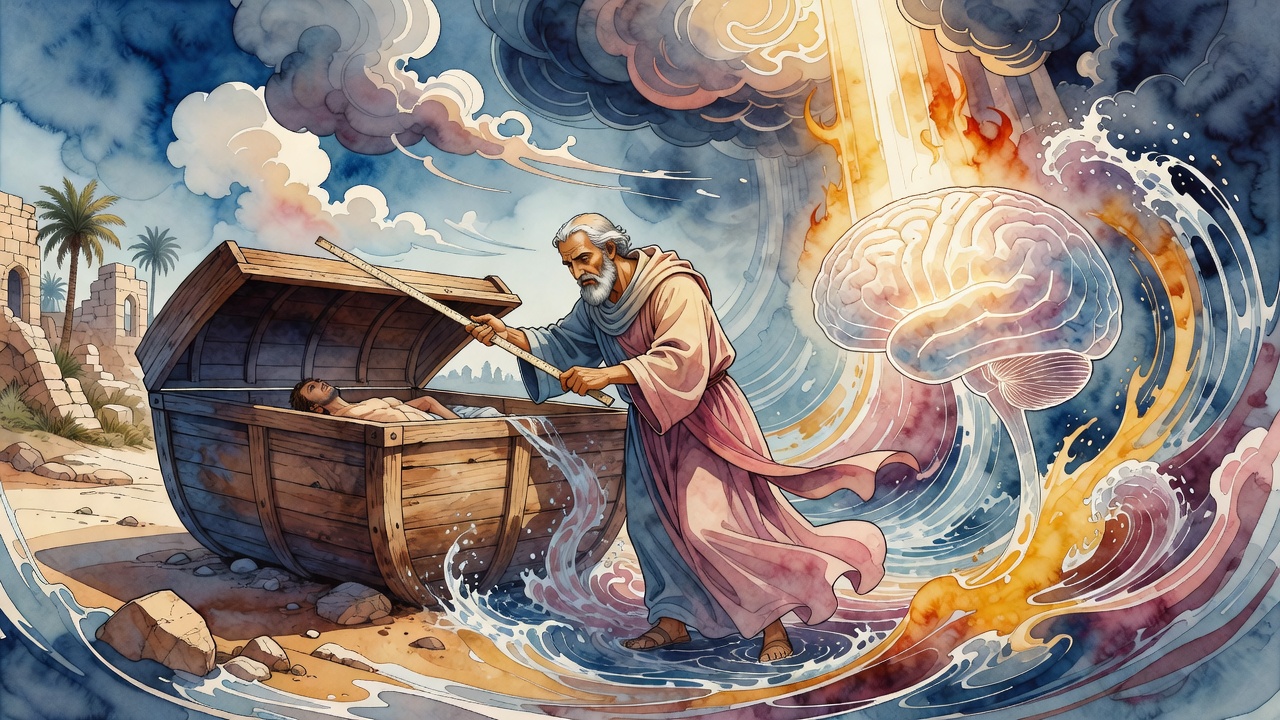
Moses wasted nothing, he had been taught since boyhood, and a number in the Torah is never decoration. So he took the cubits at their word, and in them he found a body. A skull for a roof. Ribs curving into a hull. The window where a man's eyes sit. Chambers below for the appetites, penned so they would not eat one another before morning. And riding the contraption, the one passenger it existed to keep alive.
The Door Cut Into the Side
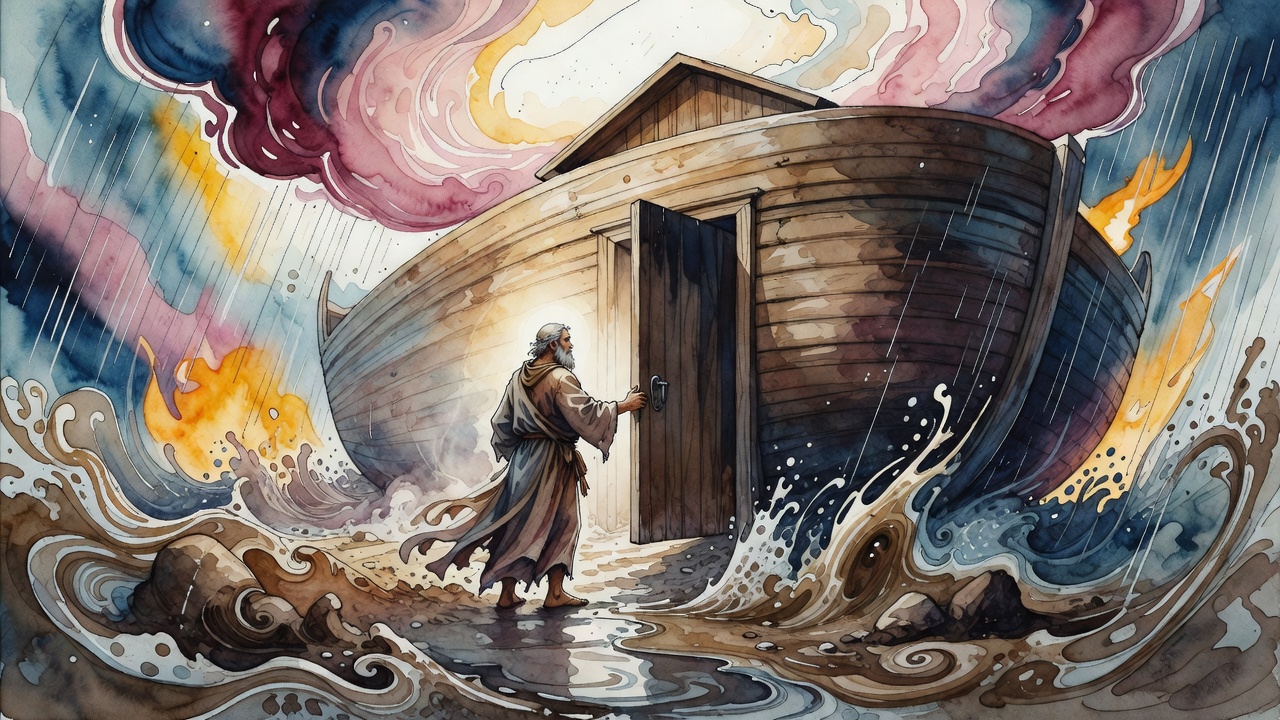
"Thou shalt make a door in the side" (Genesis 6:16). He read it again and stopped.
A window he understood. Light comes down from above and nobody argues with it. A door in the flank is not for light. A door is for traffic, and whatever a man lets in through the wall of his own side does not knock first.
Philo wrote the question down and left it unanswered, the way a builder leaves an opening he has not decided how to hang.
The Eight Rooms of the House He Carried
He turned to the passenger, and the passenger came apart into eight.
One ruled. Mind, reason, the faculty that weighs a thing before reaching for it, seated in the highest chamber like a master over his household. The other seven served, and served badly. Sight, hearing, smell, taste, touch. Then the instrument through which vice gets its voice into the world. Then the power that makes more bodies.
Seven doors, every one of them opening outward, every one liable to swing on its own. Each of the seven kept dragging the master toward whatever stood nearest and loudest, and each of them, Philo wrote, sits close beside the causes of wickedness. Close beside, not made of. He would not give that up. Servants take the shape of whoever commands them.
The Timber That Had Gone Dry
West of the city, dockworkers burned planking off a wreck. Wood left in the Egyptian sun goes up in one sheet of flame.
A soul does that too, Philo decided, once nothing wet is left in it. Mingle wisdom into a man, and justice, and piety, and the virtues that hold their shape under load, and he stays green. Leave them out and he seasons. He dries. He stands there shaped like a tree with no sap moving anywhere inside him.
What came for the dry soul was not fire. It was the overflow of the body, want stacked on want, climbing the way the Nile climbs, slow for weeks and then over the doorsills in a night.
The Water Closed Over the Mind
Philo turned back to the flood, and the flood turned inward.
Rain forty days on the roof of the world, springs of the deep breaking open underneath, water walking up the mountains until nothing on earth had a face. The plain sense was true and he never denied it. Under it lay the sod (סוד), the hidden reading, and in the sod the deluge was not weather at all.
It was a man drowning.
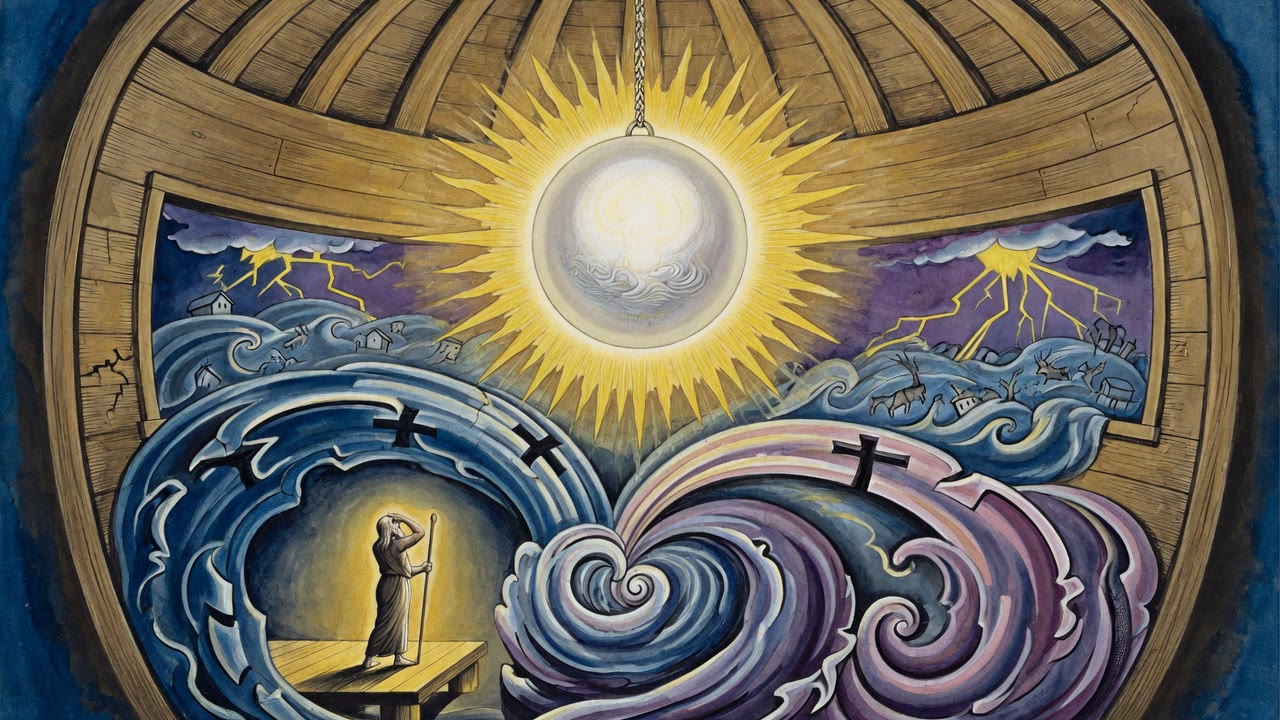
The master, dried out and no longer able to hold a decision, stops giving orders. Foolishness comes up through the floorboards, insensitivity climbs the walls of the high chamber, and the mind drowns inside its own house. That death, Philo wrote, is the only one worth the name. A mind that has quit ruling has died with the ribs still moving. And the seven do not outlive the one. Kill the master and the servants dissolve behind him, the way an army comes apart the instant its standard goes down.
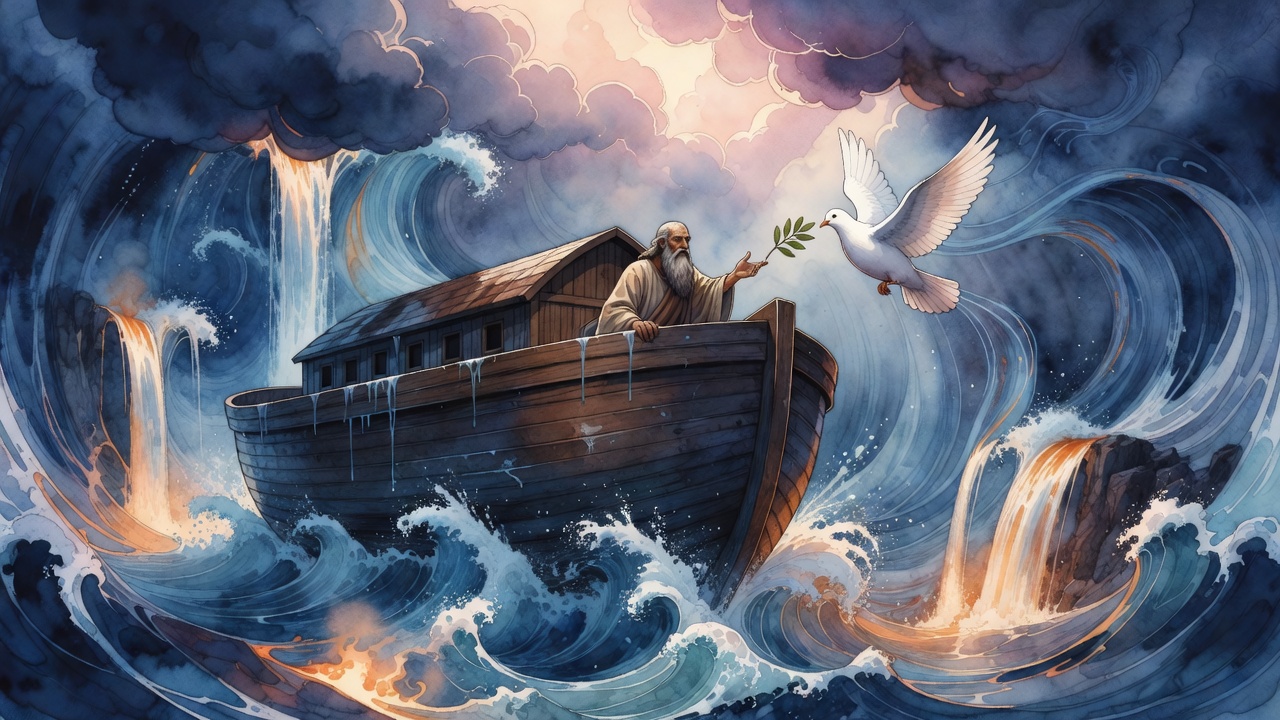
Out in all that water, pitched inside and out and sealed at the seams, one vessel kept floating with a passenger still awake in it.
The Oath That Was Not Sworn as a Man
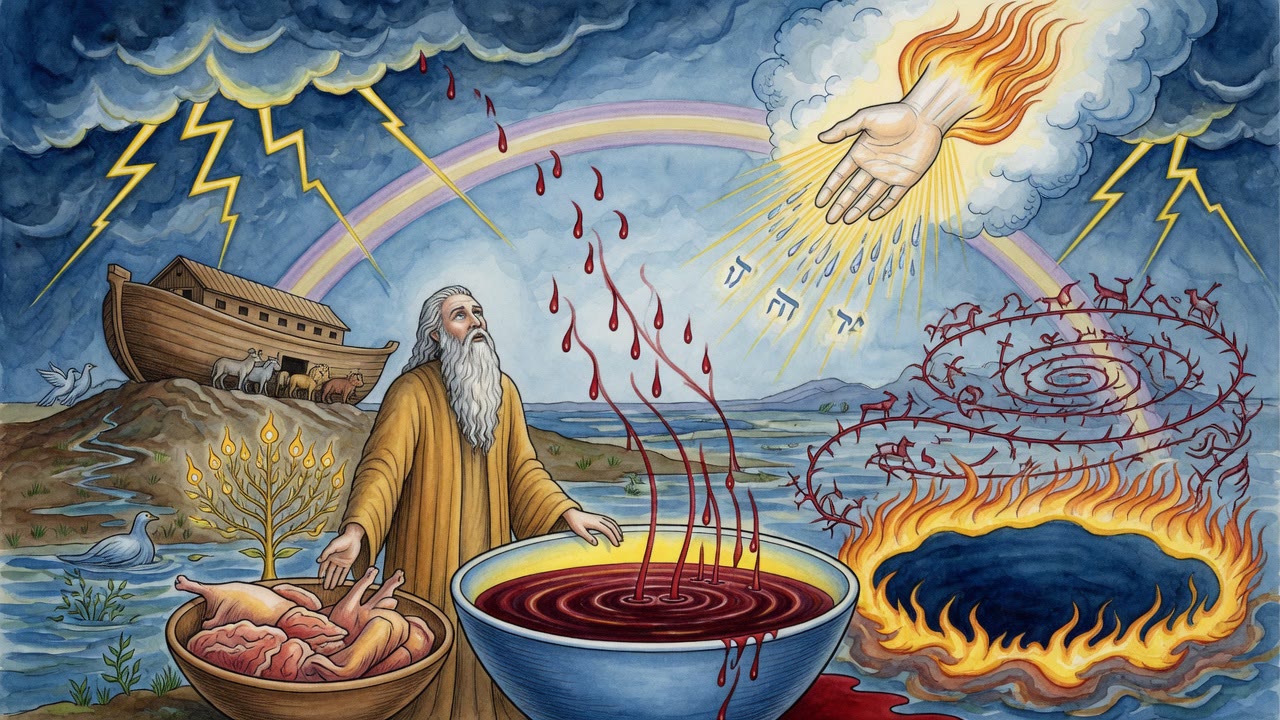
The rain stopped. Noah came down onto ground that stank of everything that had not made it, stacked stones, and burned an offering. The smoke went up, and God swore, "I will not proceed any more to curse the earth," and, "I will not any more smite all flesh" (Genesis 8:21).
Philo held the reed above the page without writing. God had known before the first cloud what humanity was made of, and the wickedness did not drain away with the water. Nothing in the creature had changed. Something in the oath had.
So he set the two grammars of Torah side by side. Not as a man. As a man. The first is the truth of it, that God resembles nobody, not the sun, not the spread of heaven, not blessedness itself. The second is for teaching, because earth-born creatures cannot take a voice without a face on it.
A judge who punishes the same offense twice, Philo wrote, has the disposition of a savage. God had exacted what was owed once and would not reopen the account. Nobody was scouring wickedness out of the race, because that labor is washing a brick: scrub all day and the brick is still a brick, the dirt worked into it from youth. God remembered the design He had drawn in the beginning, and His mind does not drift off it the way a human will.
Philo trimmed the wick. Below in the dark the harbor water rose and fell against the stones, and above the street a man bent over a scroll with the door in his side still open and the roof still on.
← All myths