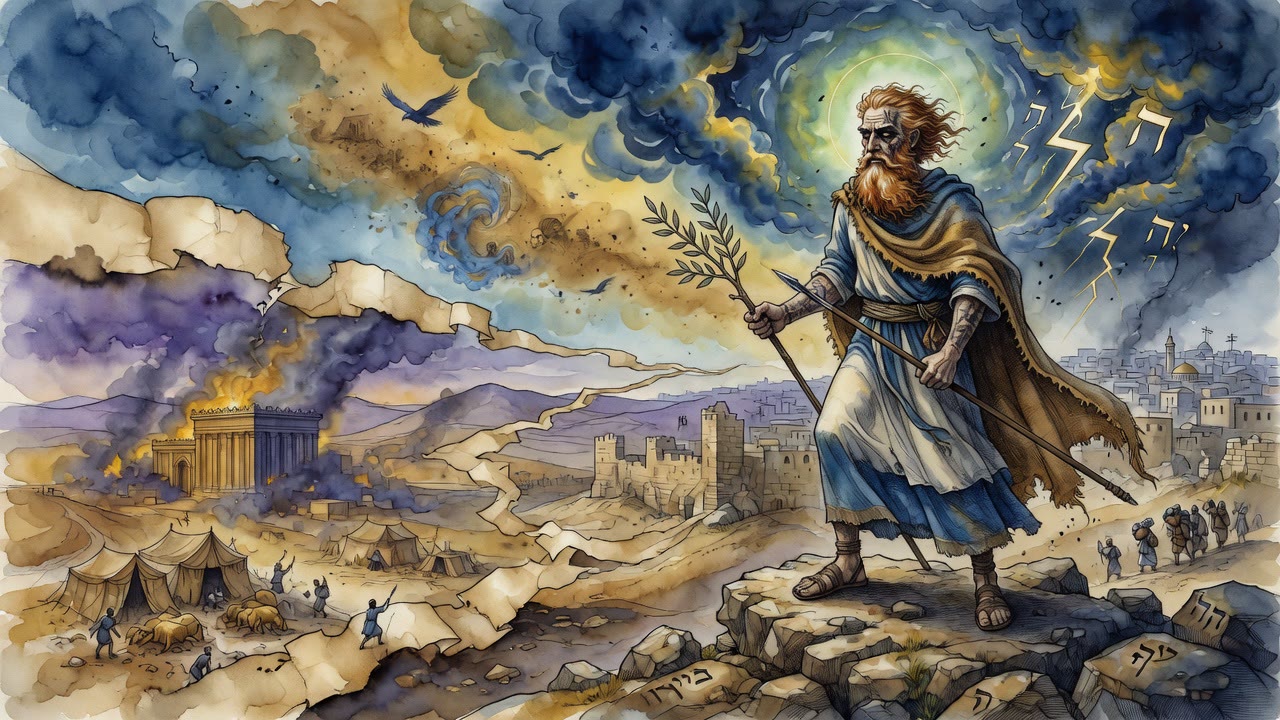
Phinehas Stood at the Breach and the Dying Stopped
Moses was weeping at the tent door. A man walked a Midianite woman through the camp in full view. Twenty-four thousand were already dead.
Table of Contents
 Click for full size
No One Moved at the Tent
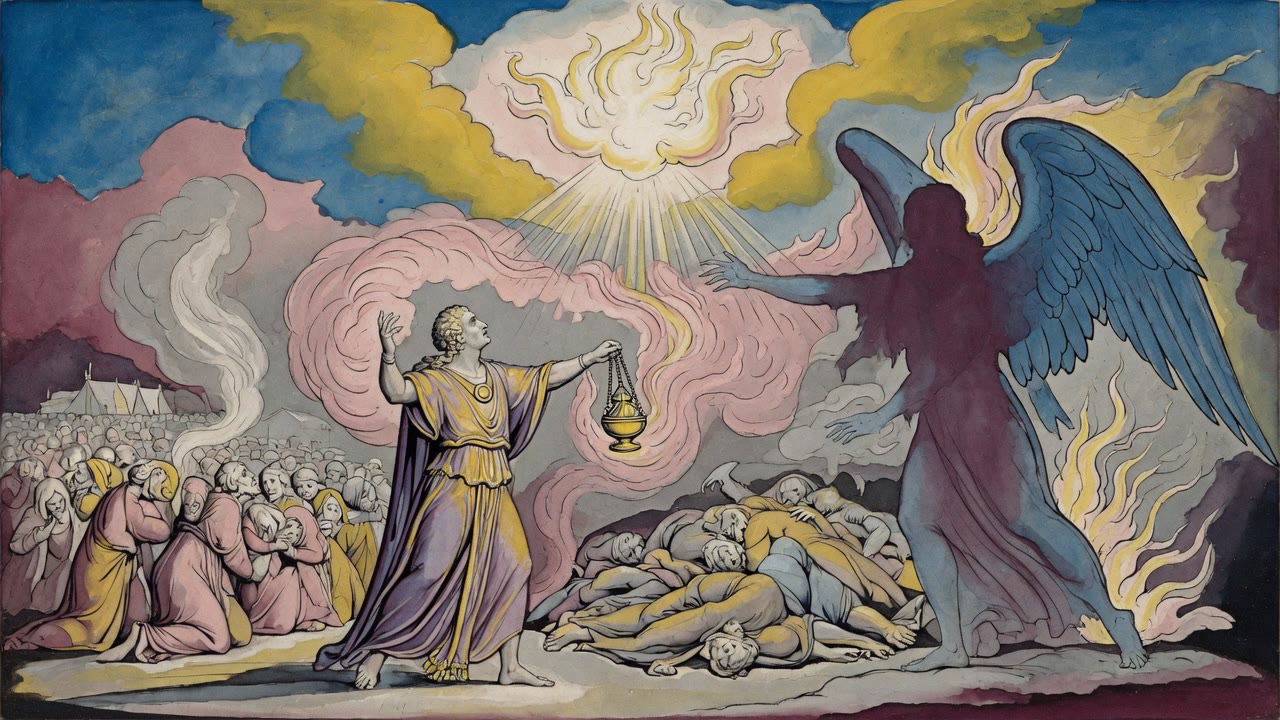
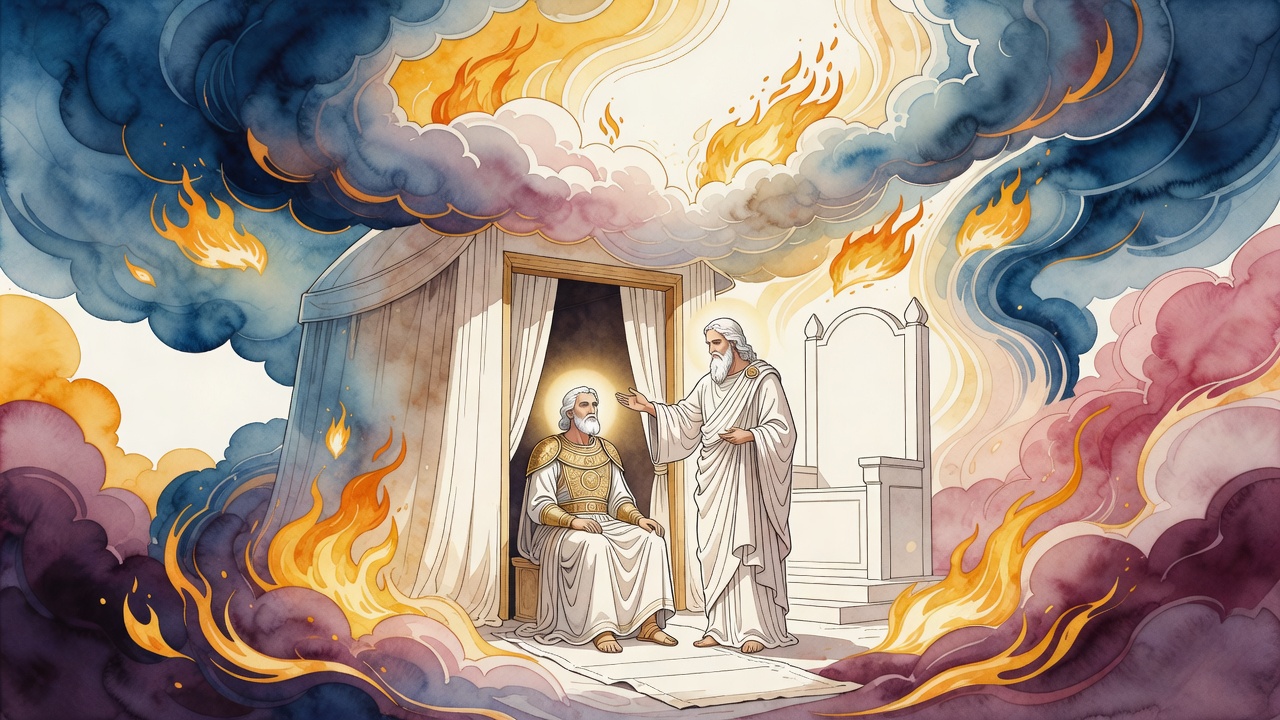
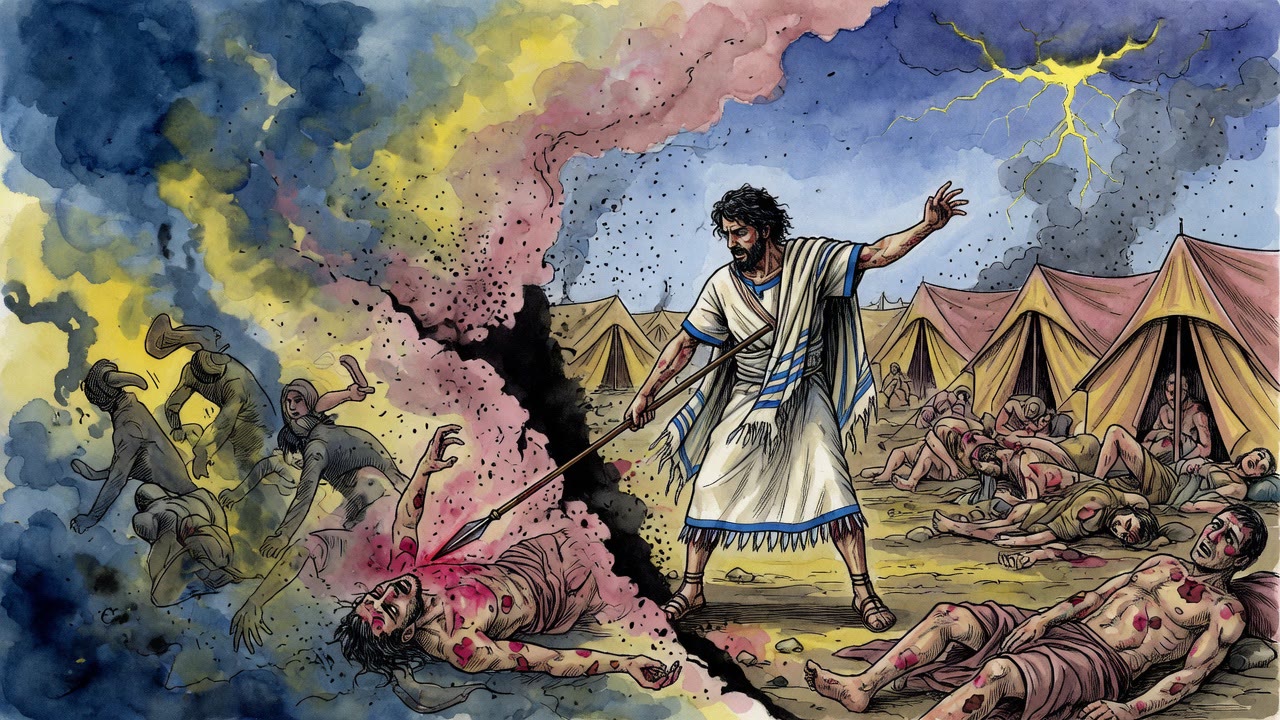
They were dying at the rate of a plague. Twenty-four thousand of them, the Torah says (Numbers 25:9), cut down for what had happened at Shittim. Israelite men had attached themselves to Baal-Peor and joined the sacrificial rites of the Moabite and Midianite women. Moses was weeping at the entrance of the tent of meeting. The elders were there. No one was moving. The judgment was falling and there was no one standing in the gap.
Then a man brought a Midianite woman into the camp in full view of Moses and the entire congregation. The act was brazen. A public catastrophe, and he walked her through it as if the dying were weather.
Bodies already lay in the lanes between the tents. A mother who had gone for water came back to a son who would not rise. The smell of the camp had changed. Still the man came on, and still the woman walked with him, and still the people who should have stopped them stood with their hands empty.
The Spear in the Inner Chamber
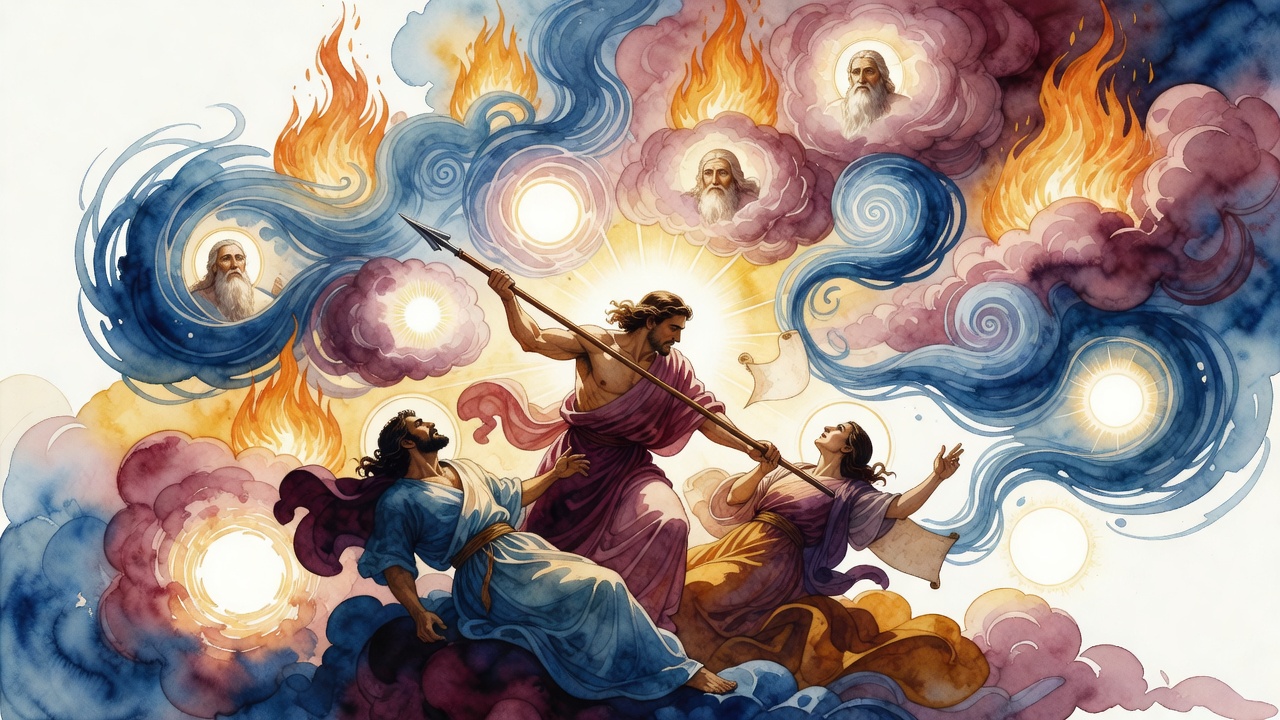
Phinehas, grandson of Aaron the high priest, rose from the congregation. He took a spear. He followed them into the inner chamber. He put the spear through both of them.
The five seconds inside that room were not a speech. The man and the woman had already closed the flap. Phinehas did not wait for a court. He did not wait for Moses to dry his face. He went in after them, and the spear found both bodies at once, and the plague stopped as if a door had been slammed on a wind.
Twenty-four thousand dead, and then no more. The causal chain is stark. The action and the cessation together, with nothing in between. He made atonement for Israel with a priest's body put between the people and what was destroying them. The spear was not a private rage. It was a standing at the breach.
Outside, Moses was still at the tent door. The weeping had not yet finished its work. Then the dying stopped, and the camp heard the quiet the way a lung hears air after a long hold.
Aaron's Fire in the Grandson
What Phinehas did at Shittim did not start in his hand. It started in the fire that had marked Aaron. God had brought a sign to Aaron and consumed him in blazing fire, and in that consuming given him the inheritance of the priesthood. Aaron stood close enough to the divine fire to be marked by it. That closeness was what gave a priest the authority to stand between the people and judgment when judgment was falling.
His inheritance was not land. The Levites received no territory in the division of Canaan, no plot to farm, no portion to pass down through the family. What Aaron received instead was the covenant of the priestly service: the altar, the incense, the daily offering, the standing between the people and God on behalf of the people. The fires of God were his portion. Bread of the Presence. A gift to him and his seed.
Phinehas was third in line for that glory. After Abraham, who received the covenant first. After Aaron, who embodied it in the priesthood. Phinehas received it through the same fire that had marked his grandfather. He was zealous in the fear of the Lord. When Israel turned aside, he stood firm in the good courage of his soul. The fear of the Lord is the frame inside which the spear makes sense. Outside that frame it is only a man with a weapon.
Peace After Blood
God rewarded Phinehas with a covenant, and the covenant was permanent. Not for his lifetime but for his descendants forever. The covenant of peace and the covenant of an eternal priesthood (Numbers 25:12-13). Two gifts, and the pairing is hard: a covenant of peace given to a man who had just killed two people.
The peace was not a denial of what he had done. It was the consequence of what he had done. The violence at Shittim had not been personal aggression. It had been the action of someone standing at the boundary of the covenant, holding the line at a cost ordinary categories do not like to name.
The zeal that kills two people and stops twenty-four thousand deaths is not the same thing as the zeal that kills out of private anger. What made Phinehas's action a covenant rather than a crime was the frame: the fear of the Lord, the inherited priesthood, the standing in for Aaron's function at a moment when Aaron's function was needed and no one else was doing it. Moses had wept. The elders had stood. The grandson went in.
Eagles on Mount Danaben
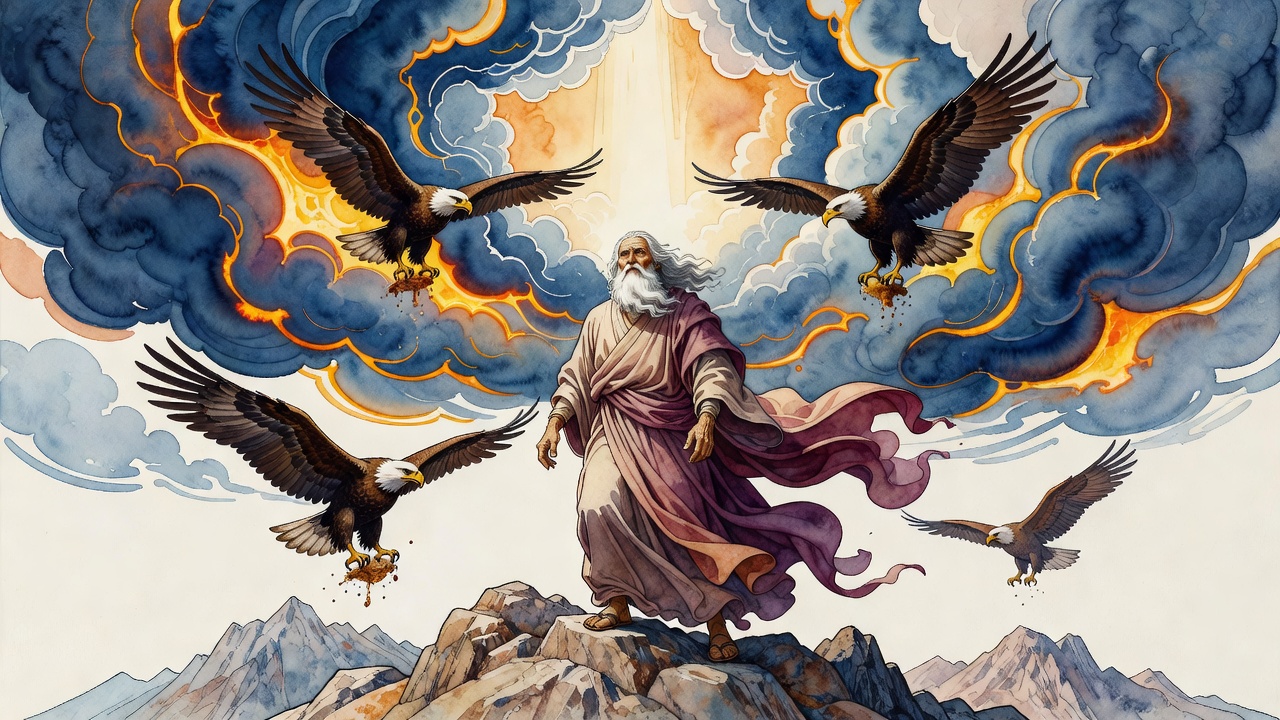
When Phinehas reached the age of one hundred and twenty, God spoke to him again. Go to Mount Danaben and stay there. The eagles will bring you food. You will remain there for many years.
He went. The man who had carried a spear into an inner chamber now climbed a mountain and waited. Eagles came down with food. The clouds were his to lock and open in a time still ahead. He would not return to the camp until that hour, and even then he would be carried to the place of those who were before him, to tarry until God visits the world, and then at last to taste of death.
The covenant of an eternal priesthood does not fit an ordinary lifespan. So the priest who stood at the breach remains, in that telling, on a mountain, fed by eagles, waiting for the moment when someone must stand at the gap again and no one else is moving.
← All myths