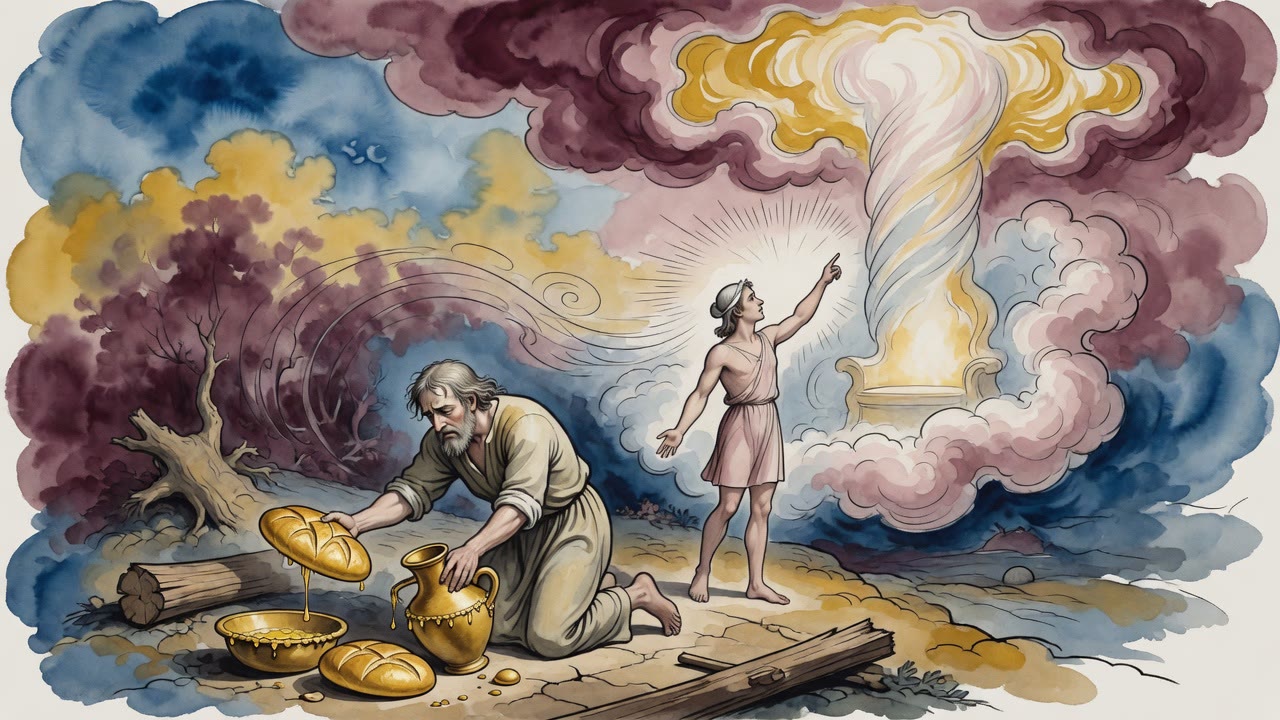
Poor Man Brought Two Birds for Atonement
He paid for two turtledoves and felt the coins leave. The first bird went up. He did not live to watch the second.
Table of Contents
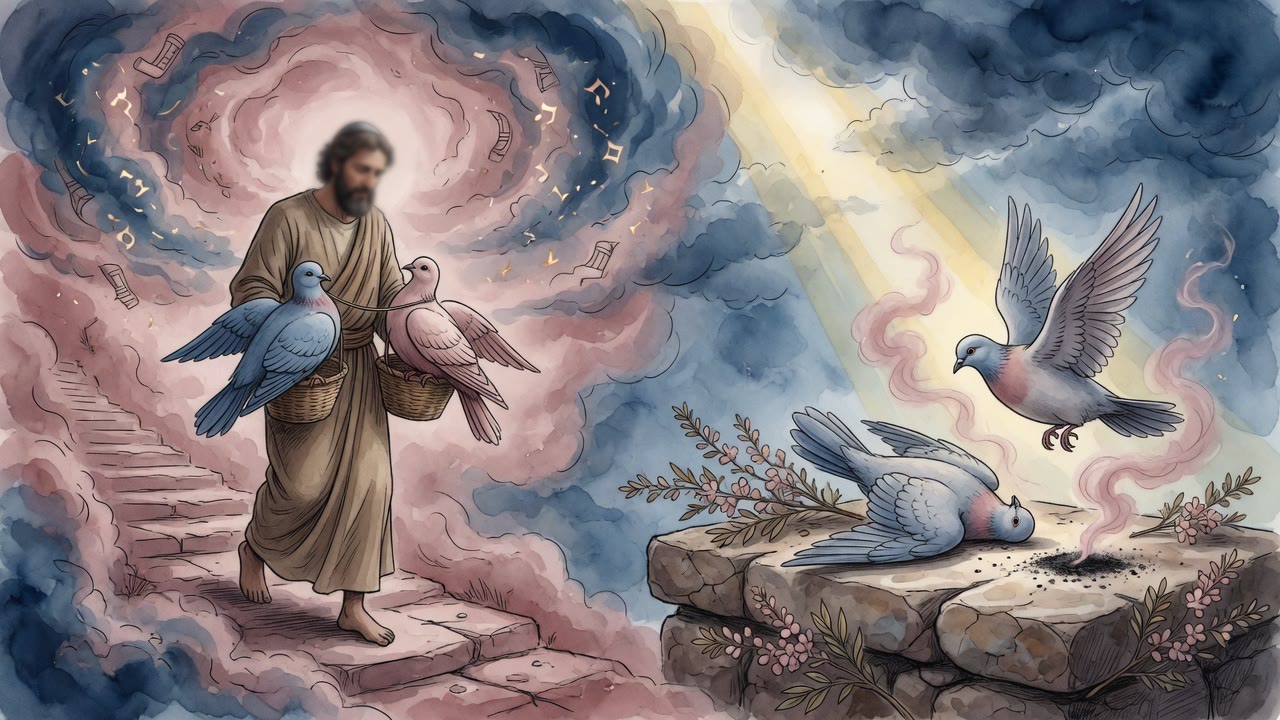
The cage knocked his knee on every stair up the hill. Two turtledoves shifted against the bars, warm and ordinary, nothing like the lamb he could not buy. He had counted the coins three times at the stall. A lamb was a price he could say out loud and then put back down.
 Click for full size
The seller had already shaken his head at one bird.
"Two," the man said. "Same kind. Or nothing the altar will take."
He paid. The coins left his hand. Shame tried to stand in the stall with them. He walked anyway, because a wrong still sat on him, and the House did not take a shrug for a gift (Leviticus 5:7).
Two of One Kind
The priest took the cage and looked. Two turtledoves. Not a dove and a pigeon mixed from two stalls. The pair matched. He turned them once in the light, then nodded.
The poor man almost spoke. One bird had felt like plenty when he left home. The rich bring one animal. A poor man might think one small life is enough. The priest did not bargain.
He set the first bird aside for the sin offering. The second waited in the cage, still alive, still warm. Clearing the wrong came before the gift of drawing close. The priest's hands already knew the order. The man on the stairs was still learning it with his whole body.
The First Bird Went Up
He watched the priest's hands. The sin offering went. Something in his chest loosened by a degree he could not measure. Smoke rose that meant repair, not a feast.
Only then did the priest reach for the second bird, the burnt offering, the one that is all gift and not payment.
The poor man sat down hard on a stone in the court. His legs would not hold. Men from his street caught him under the arms and carried him out before the second bird left the priest's fingers. He tried to turn his head toward the altar. The court tilted. The cage, still in a servant's hand, knocked once against a post and went quiet.
He Did Not See the Second Smoke
He died that night. The house was small. The cage sat by the door with one bird in it, because the first had already gone up and the second had not.
At dawn his son took that cage and walked the same stairs. Grief was still new. He did not go to buy a feeling. He went to close what his father had opened.
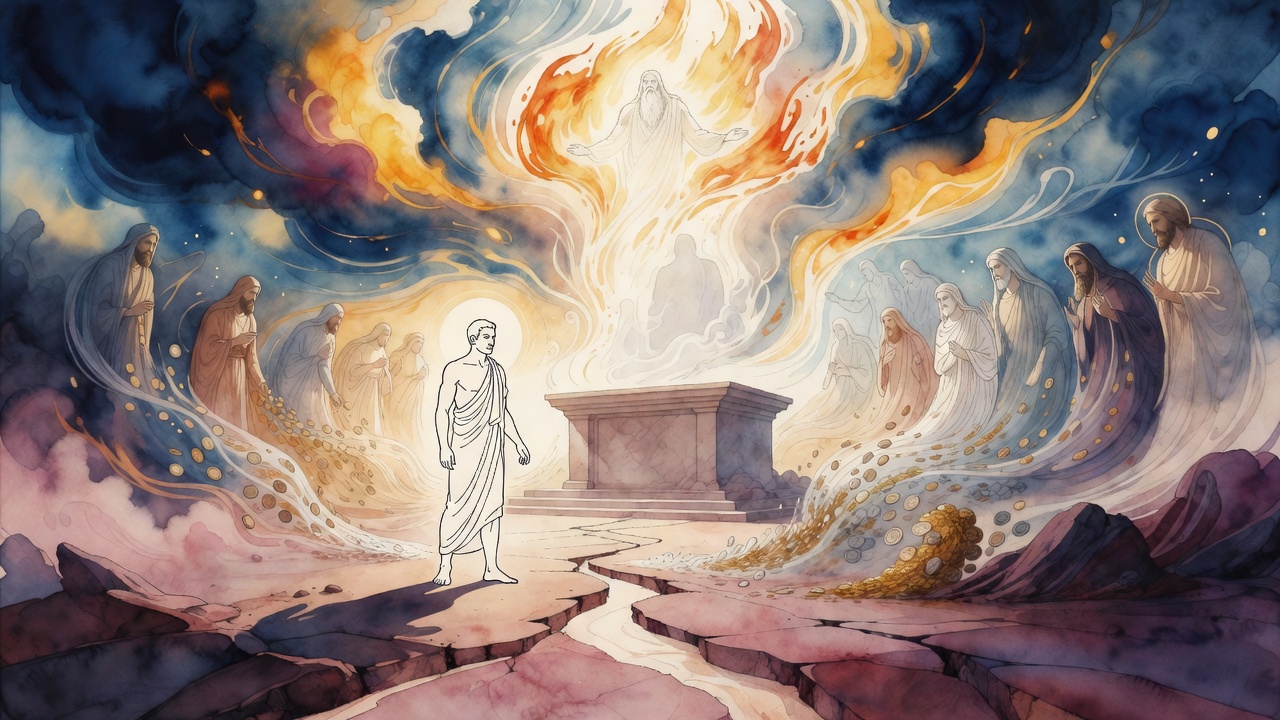
The priest did not ask if the dead man could watch. He took the remaining turtledove. The burnt offering rose. The pair finished.
The son stood in the smoke. His father's work had not ended with his father's breath. What began on the altar had to be finished by the ones who remained.
The Master's Table
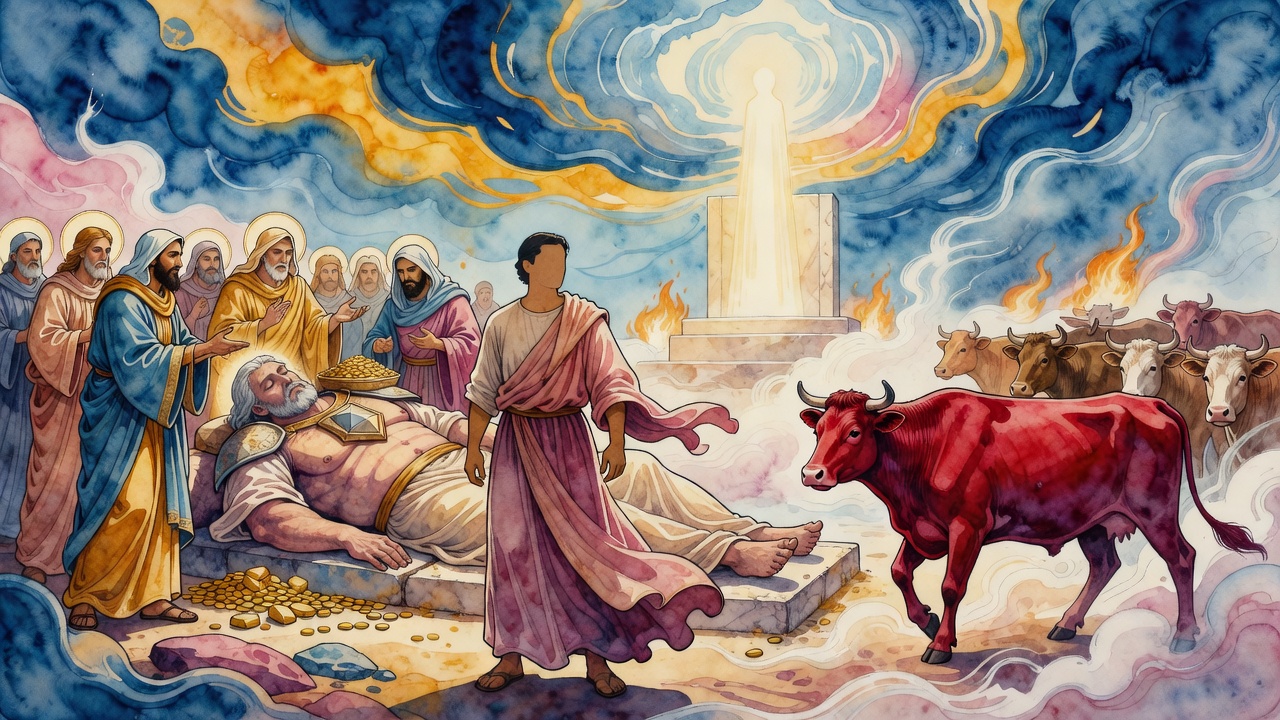
Passover found the son still in Jerusalem. He brought a small festival offering, a chagigah (חגיגה), a peace offering for joy, because the week asked for more than the lamb alone. He could not bring an ox. He brought what his hands could carry.
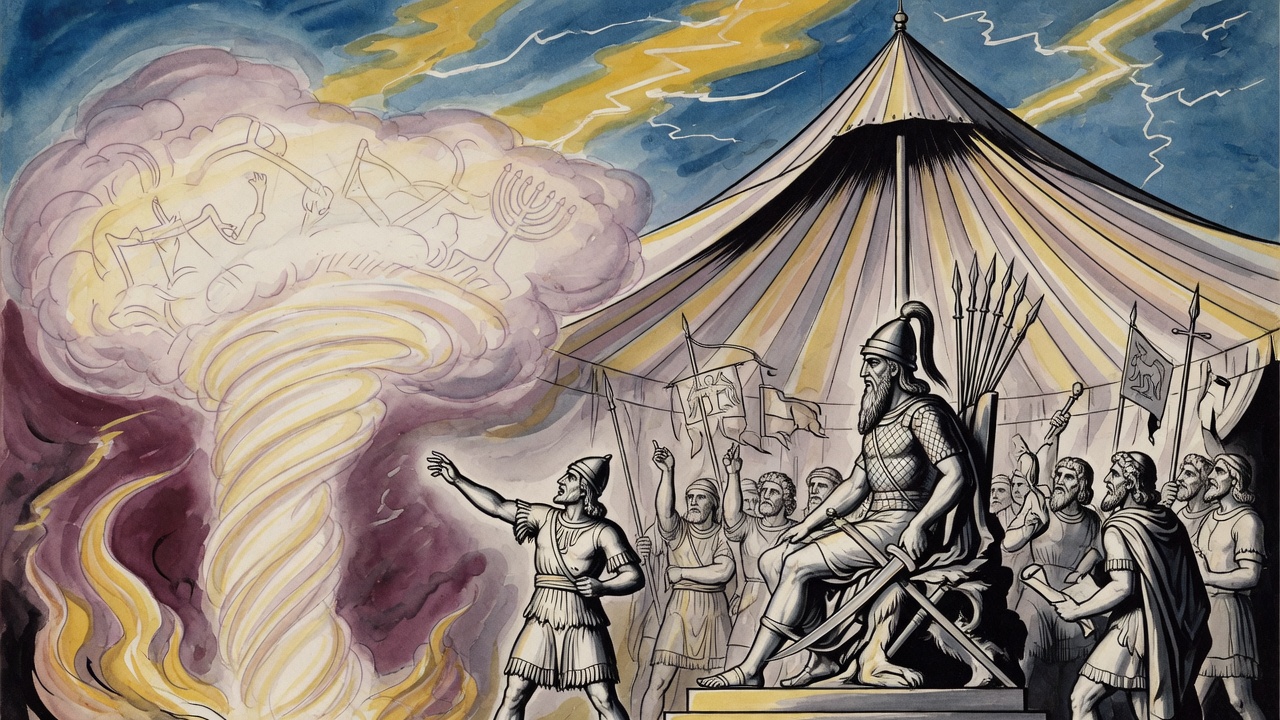
Around him, households with herd animals argued over plates. Some said the meat could be eaten across two days, from the herd or the flock, male or female. Ben Teima bound the festival sacrifice to the Passover's gravity. Roasted only. Flock only. Male only. Eaten by those registered in advance, and gone by morning, like the night's strict lamb.
In the court Shammai's students and Hillel's students raised their voices over what may be brought on the festival day itself. Peace offerings, or burnt offerings too. Whether a person may lay hands on the animal in the holy day, or must do that work before the sun of the festival rises.
Abba Shaul pictured ovens and tables. He said the Master's table must not sit empty while yours overflows. Men who filled their own plates and left Heaven's portion untouched were not rejoicing. They were eating in holiday clothes.
The son ate his small portion and set a piece aside the way a man sets a plate for a guest who does not sit down. He had already learned, on a dawn walk with one bird, what happens when a gift is left half done.
The Cage by the Door
At home the empty cage sat where his father had left it. A child asked where the birds went.
He did not give a speech. He said they went up so a wrong could go down, and so a man could stand near without pretending nothing had happened.
The table was simple. No lamb. No festival ox. Poverty had not barred the gate. It had only changed the animals.
He washed his hands twice, as if water could finish what smoke had begun. Then he set the empty cage by the door and left it there. Night came. The house slept without the specific weight his father had carried in. One cage. Two birds. A son who had finished the second climb.
← All myths