The Priestly Garments Stood Between Israel and Ruin
Without the woven service clothes, the sages said, no remnant of Israel would remain. Cloth and oil held the breach.
Table of Contents
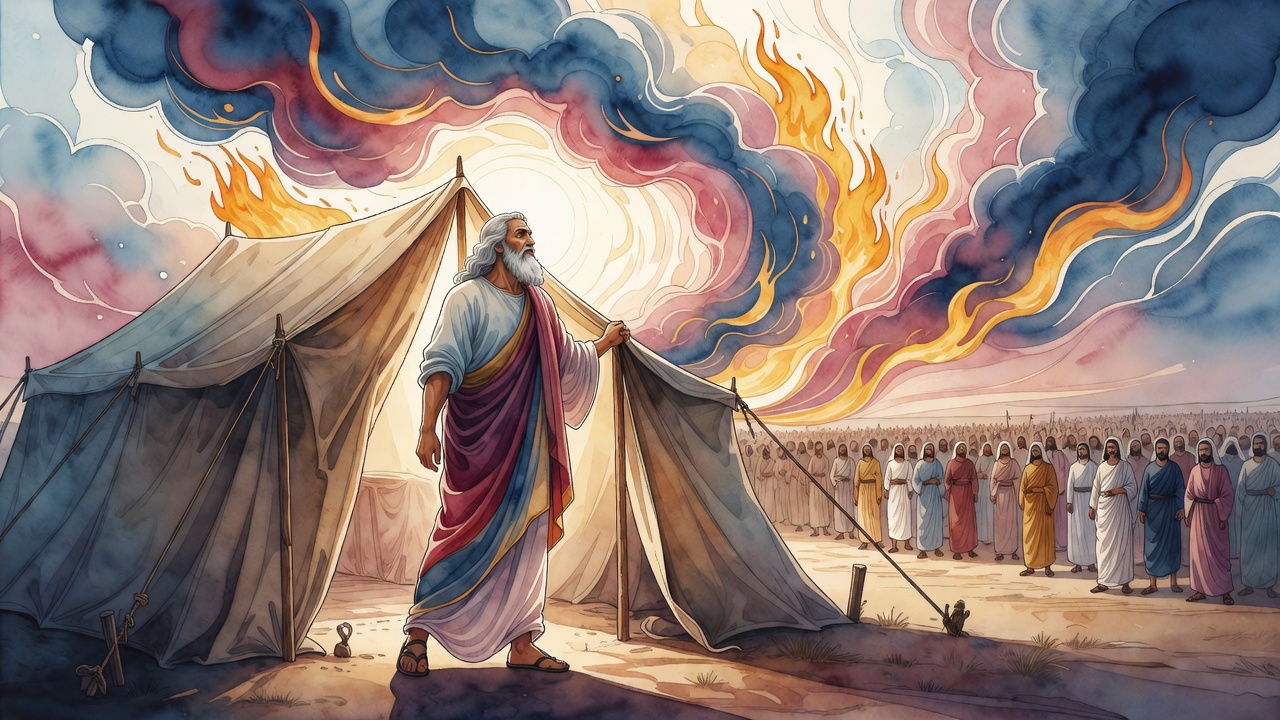
The needle stopped. A measured edge of cloth was left unwoven on purpose, a leftover strip that named the rare word for the service garments. Skilled hands combed raw fiber into finished pieces and still refused to smooth away every end. The garments of the priest were not costume. They were a wall.
 Click for full size
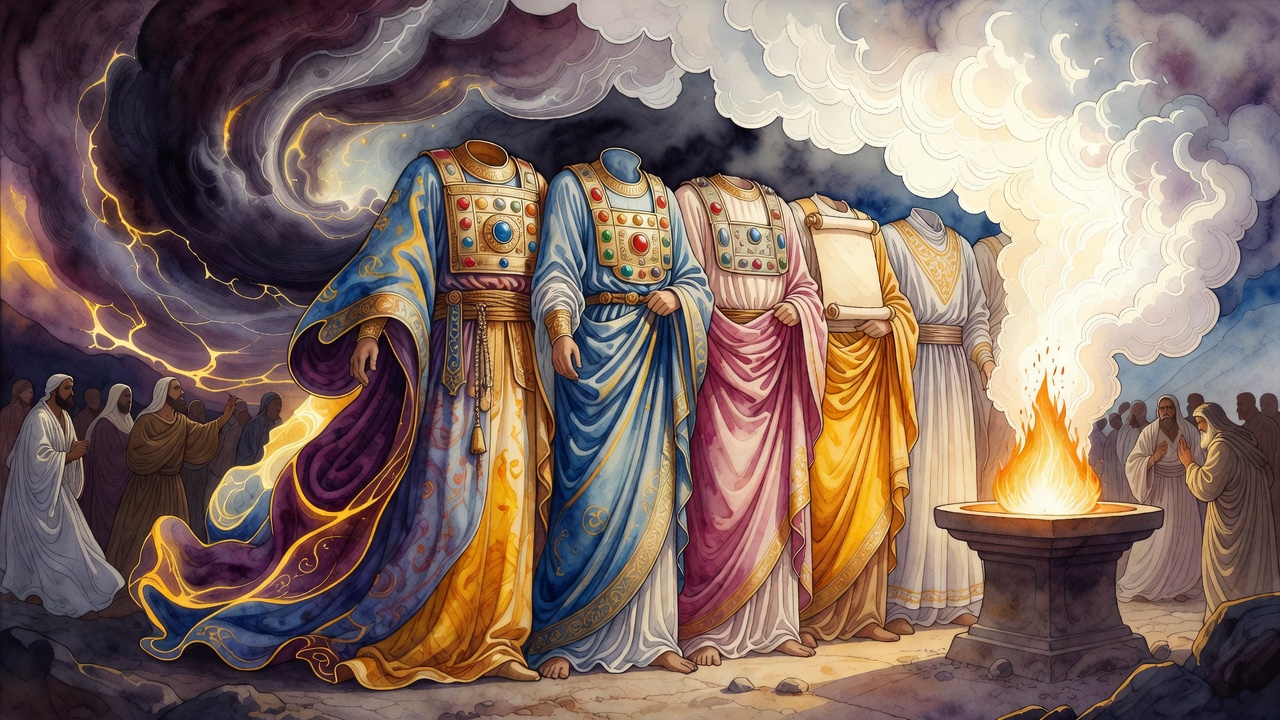
The sages said a guarded, terrible sentence. Were it not for those vestments, not a survivor or remnant of Israel would have been left. They spoke as if quoting enemies, softening the dread, but the meaning was plain. Atonement worn on a human body stood between the people and ruin.
Cloth as Shield
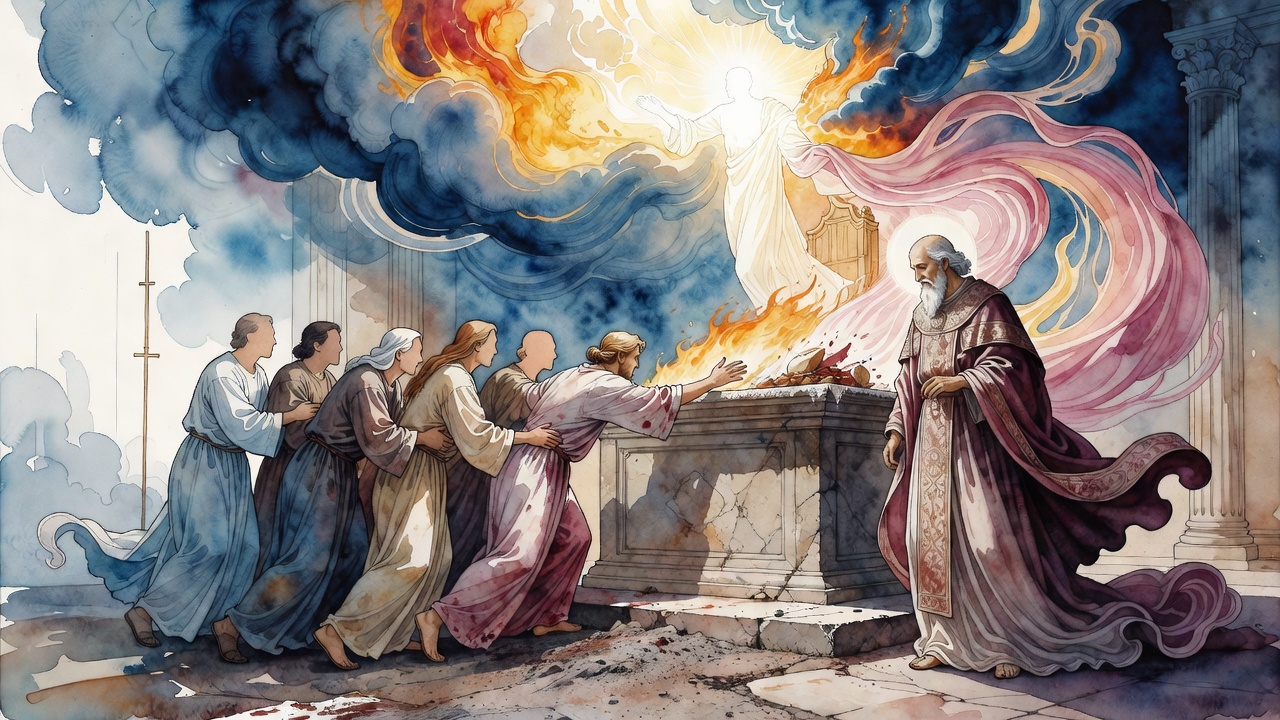
When the high priest put on the woven service clothes, he did not only look the part. He carried the people's standing before Heaven on his shoulders and chest. Stones, threads, bells, the plate on the forehead: each piece worked a kind of covering. Failure still happened. Without the covering, the sages insisted, failure would have finished them.
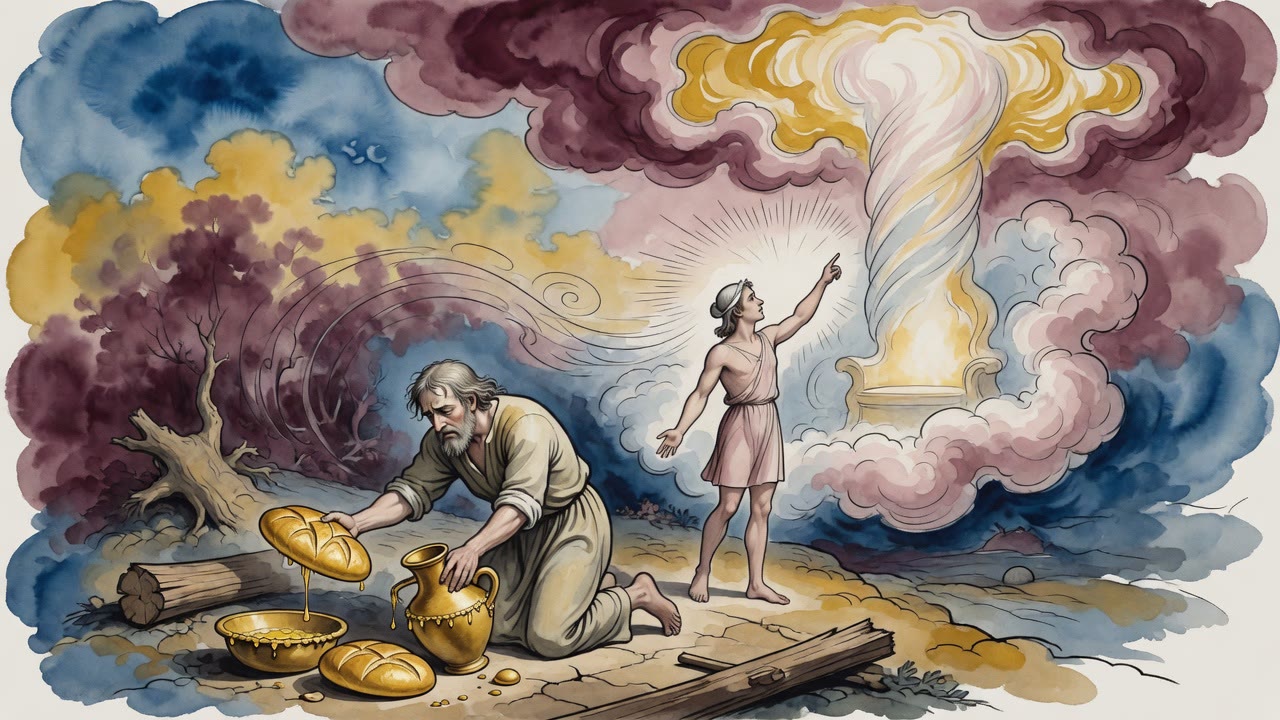
Asher's blessing had already hinted at this destiny. From Asher comes rich bread, and the midrash hears women of Asher marrying into priestly lines so that their sons might wear the eight garments of the high priest. Royal delicacies become sacred cloth. A tribe's oil-rich land feeds a future of white linen and gold.
Boards as Collateral
The Tabernacle boards were framed the same way: not only structure, but guarantee. Craft the boards for the Tabernacle, the verse says, and the midrash hears lemashken, as collateral. If the enemies of Israel, a euphemism when Israel itself goes wrong, deserve destruction, the sanctuary can be seized first. Wood and gold absorb the blow so bodies may live.
Moses asked the harder question. When there is no Tabernacle and no Temple, what then? The answer: a righteous one taken as collateral from among them, atonement carried in a life when it can no longer be carried in a building. Garments and boards and persons form one logic of substitution under mercy.
Half a Log in Each Lamp
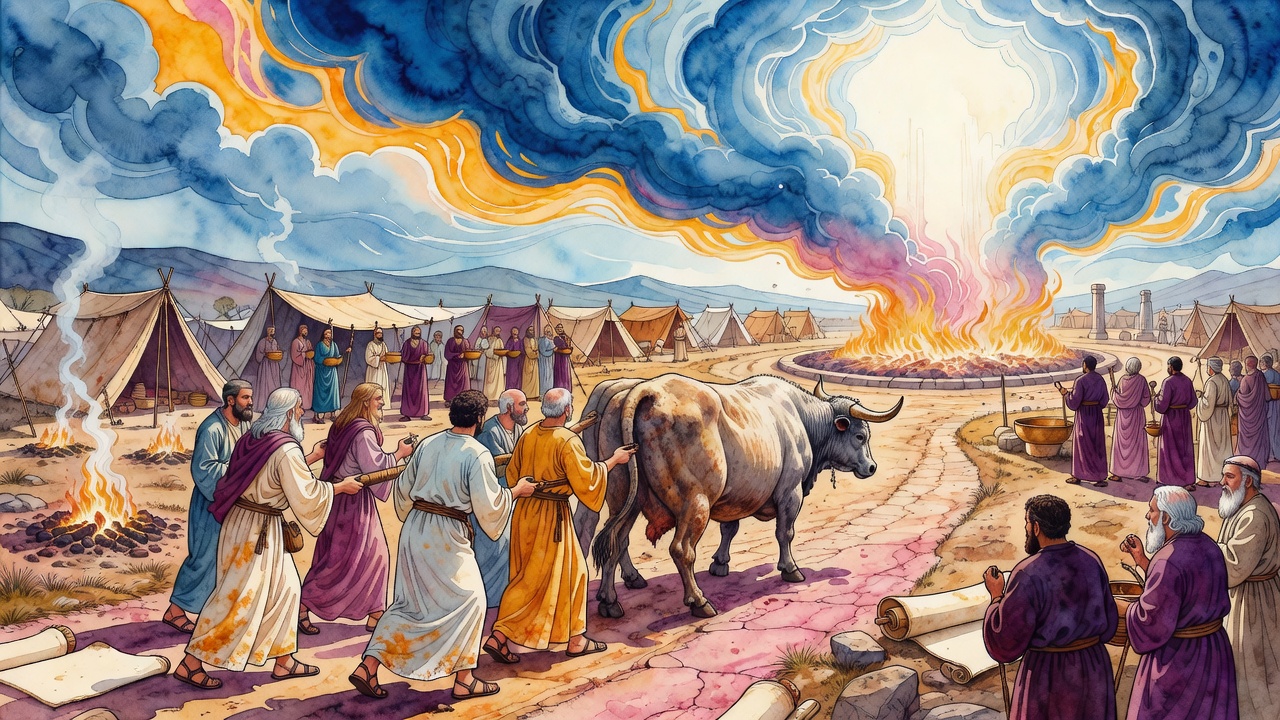
Nightly oil was measured with the same double care. Seven lamps, half a log in each, enough from evening until morning, the one service whose time runs the whole dark. One voice said measure by the longest winter nights, because there is no poverty in the house of a King. Another said measure by the shortest summer nights, because the Torah spares the money of Israel.
Generosity before Heaven and thrift for the people met at the rim of a small cup. The garments that save and the oil that burns both refuse waste and refuse stinginess. Holiness is expensive, and holiness is not allowed to bankrupt the camp.
When the Cloth Is Gone
Empires took the vestments. Fire took the boards. The half-log of pure oil became a memory told in winter windows. Still the structure of the teaching remains. Something must stand in the breach: a garment, a sanctuary, a righteous life, a lamp that does not go out before morning.
A priest who treats the clothes as vanity has already lost the plot. A people who treat the clothes as magic without justice has also lost it. The midrash's shock is ethical as much as mystical. Israel lives, in that reading, because someone wore responsibility in public and because Heaven accepted the wearing.
The Unwoven Edge
That deliberate unfinished strip in the weave is the detail that haunts. Perfection that leaves a mark of process. Strength that remembers how it was made. Israel survives, in this telling, not by seamless pride but by service that shows its work, oil counted cup by cup, boards offered as pledge, cloth heavy with names.
Asher's oil-rich fields and the half-log in the lamp are the same economy of light. Bread fit for royalty becomes, in the midrash's leap, sons fit to wear eight garments. Abundance is not only for feasts. Abundance is drafted into covering. A tribe's fertility is bent toward the day a human body must walk into the Holy Place dressed as a shield for everyone outside.
In the dark after the last lamp, the remnant still breathes. The sages' sentence hangs over every later generation that has neither Temple nor ephod: find the collateral that remains, and wear it without theater. If the cloth is gone, a life of integrity must do. If the boards are gone, a righteous name must stand in the breach. The needle that left an unwoven edge still teaches how to sew a people to survival.
← All myths