5 min read

Priests Broke the Heifer on Bloodless Ground

A corpse between two cities brought blemished priests, a broken-necked heifer, and the memory that God mourns and fathers cover their children.

Curated by Arthur · Told by Maggid ·
Table of Contents
  1. Who May Approach the Bloodless Case
  2. Father Over the Children
  3. Seven Days Heaven Mourned
  4. Glass, Clay, and the Horn
  5. What the Field Kept

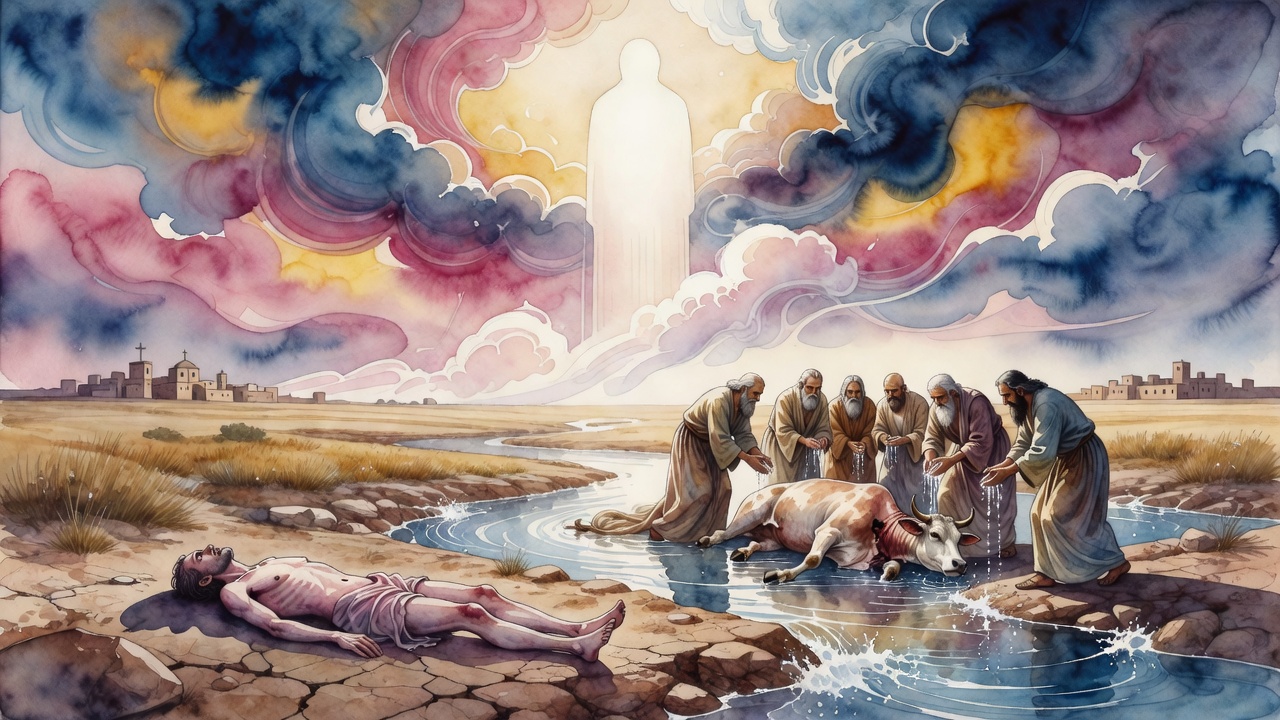
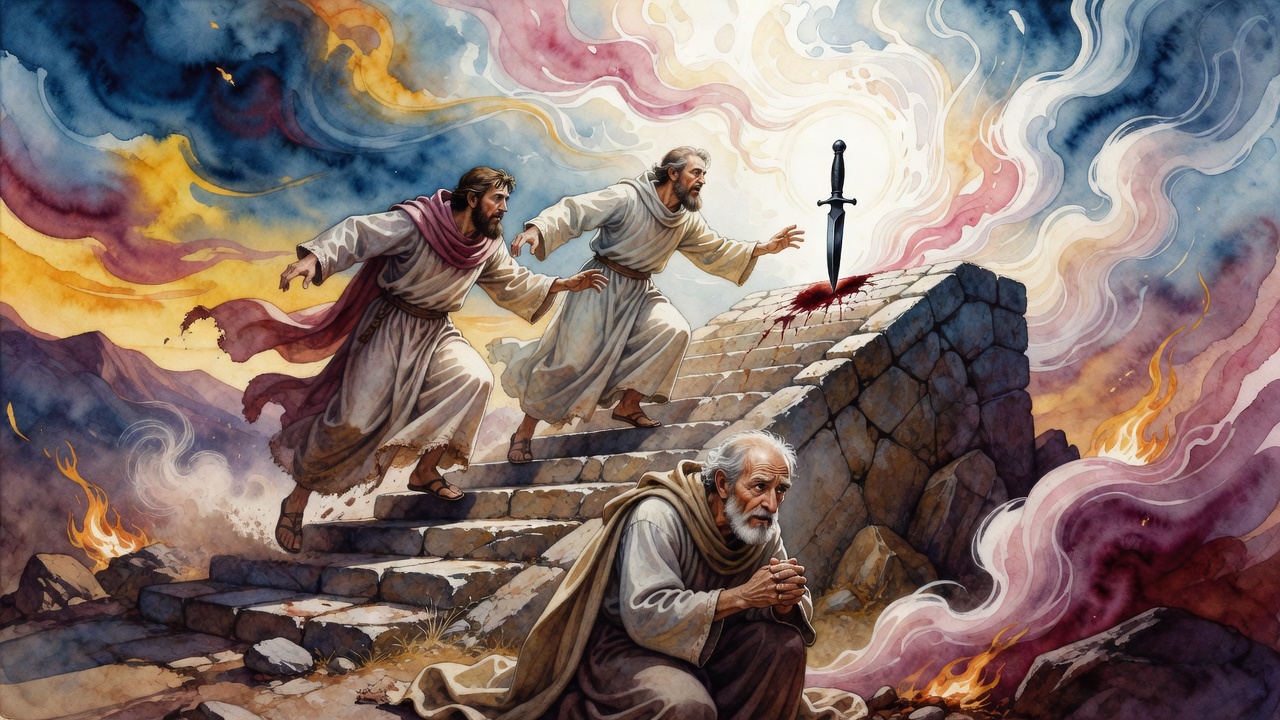
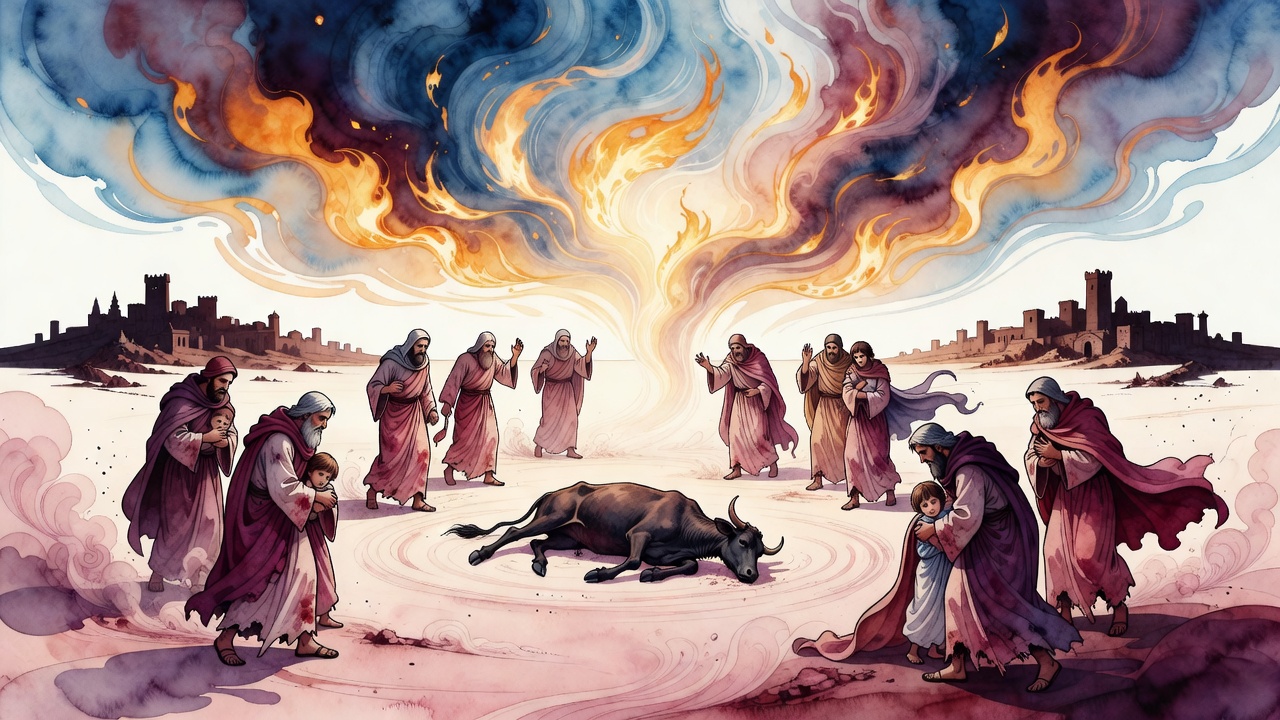
They found the body in a field that belonged to no one's easy map. No witness. No knife left behind. Only a man face-down between two towns, and the land already drinking what it should never have been given.
Priests Broke the Heifer on Bloodless Ground Click for full size

Who May Approach the Bloodless Case

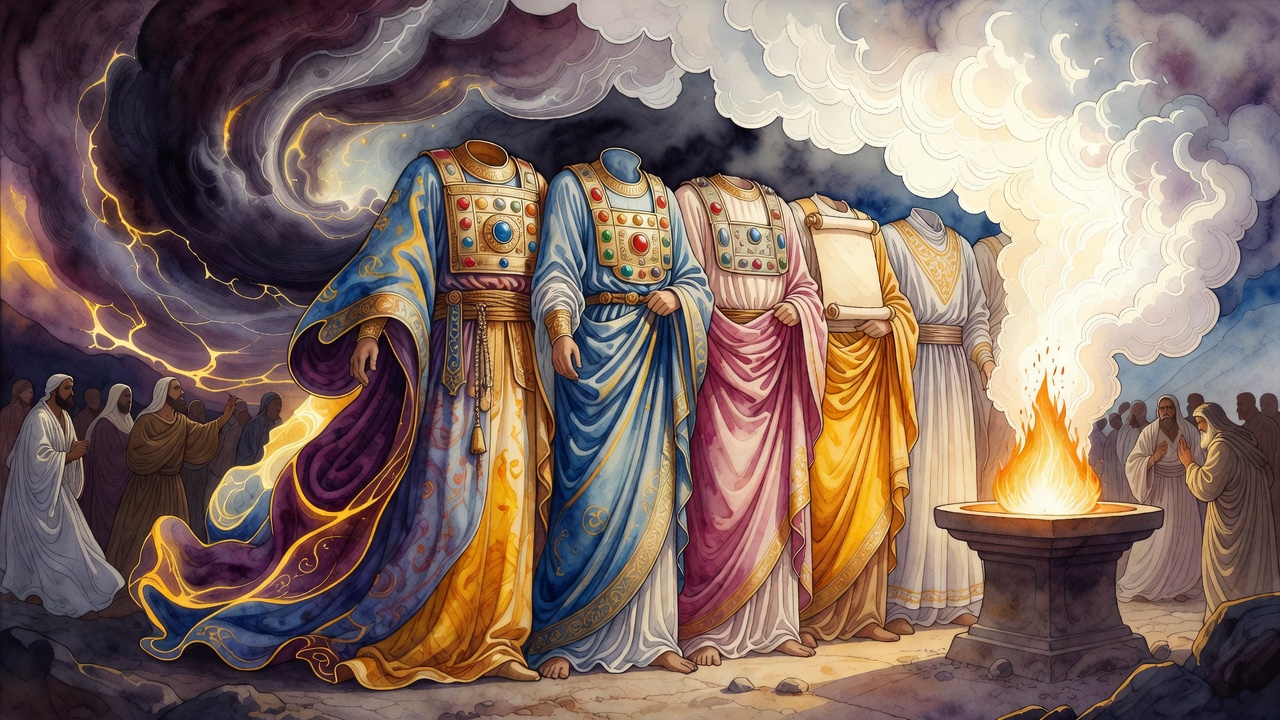
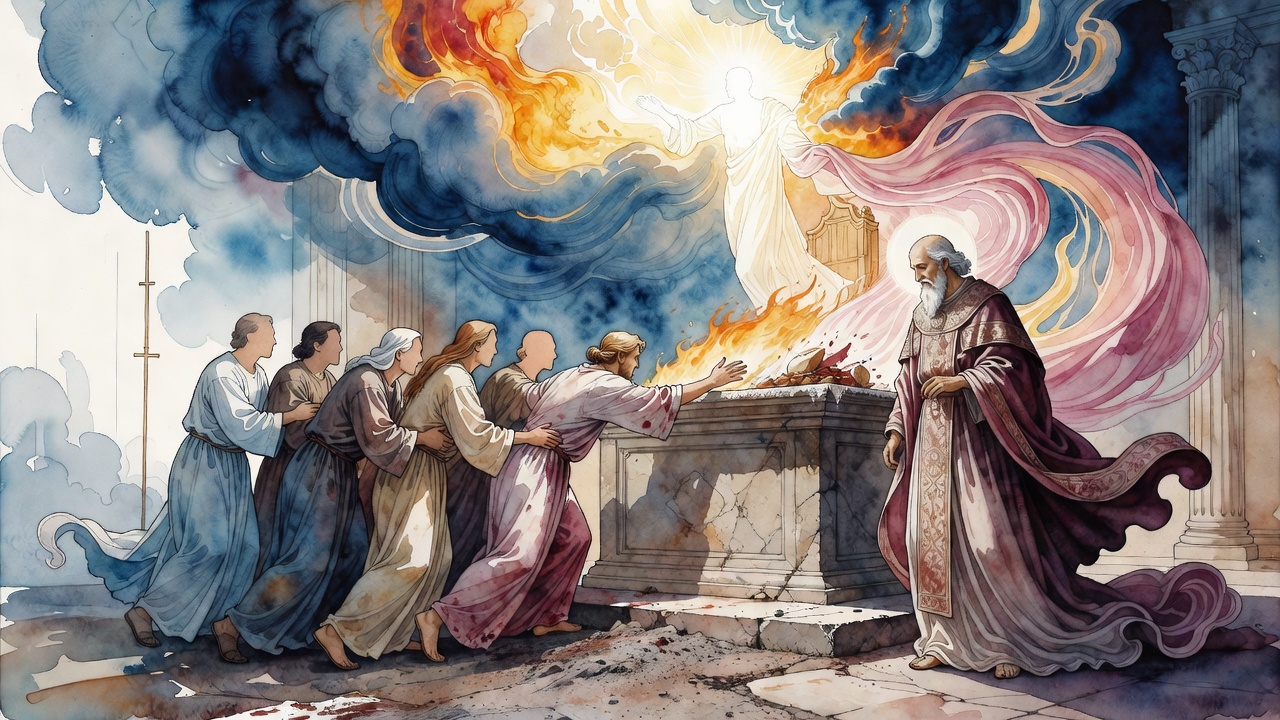
Deuteronomy ordered the priests, the sons of Levi, to draw near. Sifrei Devarim heard the odd wording. Are not the priests already sons of Levi? Why say both? Because another verse says God chose them to serve, and a reader might think only unblemished priests may act, as in many Temple rites. "Sons of Levi" pulls the circle wider. Even Cohanim with blemishes may stand for this ritual, the breaking of the heifer's neck when the killer is unknown.

The land needs a full set of hands, not only perfect ones. Unsolved blood is a public wound. The rite refuses to leave it unnamed because the murderer slipped away.

Father Over the Children

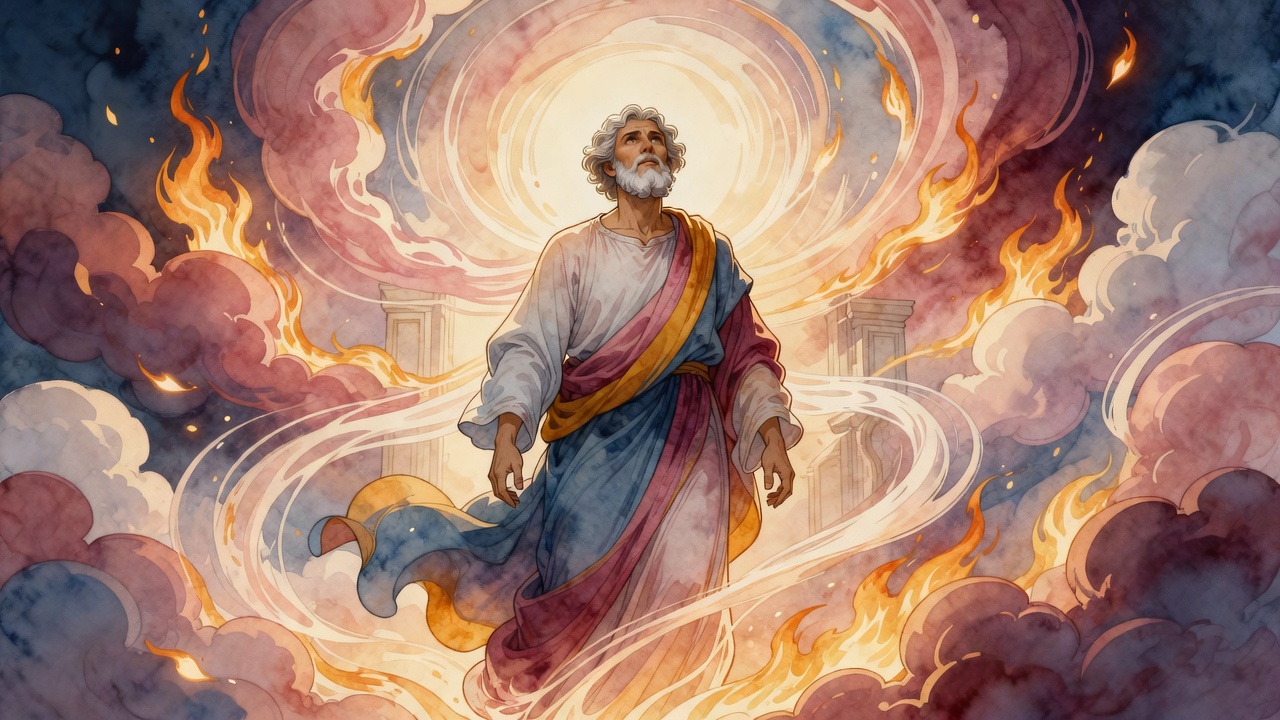
While the heifer's neck is prepared, another image walks the edge of the field. "As a father has compassion for his children, so the Lord has compassion for those who fear Him." Rabbi Yehuda son of Simon heard Abraham in that line, Abraham arguing for Sodom, refusing to let the innocent be swept away with the guilty. Rabbi Berachya heard Jacob crossing ahead of his family toward Esau, placing his own body where the harm might fall. Better me than my children.

Divine compassion is not a soft fog. It has the shape of an advocate and the shape of a shield. The unsolved murder is the opposite shape, a child of the people left without a fathering justice. The heifer rite is the community's attempt to father the land back into speech.

Seven Days Heaven Mourned

Reish Lakish and the company of Bereshit Rabbah asked where seven days of mourning come from. Joseph lamented Jacob seven days. Priests sat seven days at the Tent's entrance. Rabbi Hoshaya and Rabbi Yehoshua ben Levi went further. The Holy One observed seven days for His world before the Flood. God mourned creation before the waters rose. The shivah is not only human custom. It is imitation of a grief older than Sinai's law code.

A corpse in a field without a name still deserves the world's oldest answer to death. Time set aside. Presence. The refusal to rush past blood as if it were weather.

Glass, Clay, and the Horn

Midrash Tehillim tells of a shofar (ram's horn) blower and a dead hunter some called heretic, of oil rubbed into a body and a debate over whether broken things can be repaired. Rabbi Yossi answered with pottery and glass. Clay before firing has no clear existence and can be reshaped; after firing, a break is final. Glass has clear existence even before the fire, and if it breaks it still has a cure. Human beings, in that midrashic logic, are closer to glass than to fired clay. Broken, they may still be mended. The shofar (a ram's horn) that heralds redemption assumes that cure is possible.

The unknown killer may never stand in court. The land still hears a horn somewhere, distant, insisting that not every break is the last word.

What the Field Kept

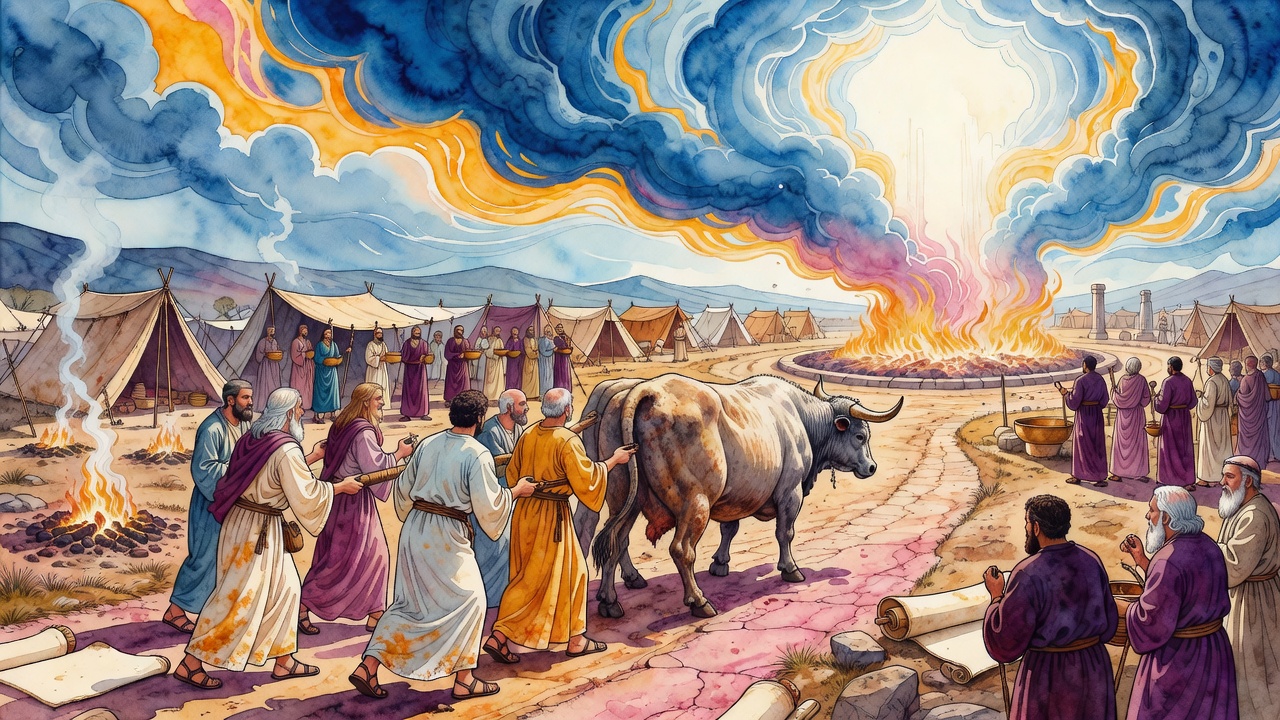
They broke the heifer's neck in the wadi. Priests with scars on their hands stood beside priests without scars. Elders washed and spoke the formula that clears the towns of spilled blood they did not spill. No one pretended the dead man rose. The rite was not magic. It was fathering, mourning, and the stubborn Jewish claim that unsolved evil still obligates the living.

At dusk the field looked empty again. It was not. It held a name spoken by ritual, a compassion shaped like Abraham and Jacob, a seven-day grief older than the Flood, and the thin hope that glass, once broken, can still be heated back into a vessel.

An elder from the nearer town kept wiping his hands on his cloak though no blood had touched him. That is what unsolved murder does. It makes clean people feel marked until speech and rite put the mark in the right place.

Abraham's argument for Sodom and Jacob's body before Esau gave the priests a pattern of fathering under pressure. You do not abandon a field because the killer was clever. You do not protect only the unblemished servants of the altar when the land itself is crying. Compassion here is administrative and fierce. Measure the distance between towns. Bring the heifer. Break the neck. Wash. Speak.

God's seven days of mourning before the Flood sat in the back of at least one sage's mind as they worked. If Heaven can pause over a world about to be judged, a village can pause over one anonymous dead man. Shivah's seven is not etiquette invented by the polite. It is cosmic imitation.

Rabbi Yossi's glass teaching returned when someone muttered that a heretic's death needs no care. Repair remains possible until fire and time say otherwise. The shofar that heralds redemption assumes broken people can still be heated and reshaped. The heifer does not resurrect the victim. It keeps the living from turning into fired clay that can no longer be fixed, a community too hard to admit that unknown blood still obligates them.


← All myths
From the tradition

Sources

4 sources

The texts behind this telling. Some cards carry a translation of the source; others are our own retelling of it, and each card says which. Every card links out to the original.

Sifrei Devarim 208:1Sifrei Devarim

Retold in our words. Read the original at the link below.Sifrei by Rabbi Shraga Silverstein · CC-BY

You stumble upon something like this, from Sifrei Devarim 208, and you think, "Wait, what's going on here?"

It all revolves around a passage in Deuteronomy (21:5) about a very specific situation: when a murder occurs and the perpetrator is unknown. In that case, the Torah instructs us that "Then there shall draw near the Cohanim, the sons of Levi." The Cohanim (singular: Cohen) are the priests, descendants of Levi, one of the twelve sons of Jacob. Okay, makes sense so far.

The Sifrei Devarim asks a pointed question: Isn't it obvious that the Cohanim are the sons of Levi? Why does the Torah need to tell us this seemingly redundant piece of information?

The answer, according to the Sifrei, lies in another verse in that same chapter: "for them did the L-rd your G-d choose to serve Him." Because of this phrase, it first appears that only unblemished Cohanim – those without physical imperfections – are eligible to perform this particular ritual, the breaking of the neck of a heifer (a young cow). After all, we know that in many Temple rituals, physical perfection was a requirement.

But that's where the phrase "the sons of Levi" comes in. It teaches us a crucial detail: even Cohanim with blemishes are eligible for this particular rite. The Torah is making a point to include them. for a second. The Torah is specifically including those who might otherwise be excluded. It's a reminder that even in the most solemn and sacred of rituals, there's room for those who might be considered less than perfect. It’s a powerful idea, isn’t it? It suggests that service to God isn’t limited to a select few who meet a certain standard of physical perfection. It opens the door a little wider.

So, the next time you encounter a seemingly redundant or overly specific instruction in the Torah, remember this passage. It might just be a subtle reminder that inclusion and accessibility are values that run deep within Jewish tradition. And maybe, just maybe, it’s a lesson we can apply to our own lives, too.

Full source
Midrash Tehillim 103:9Midrash Tehillim

Retold in our words. Read the original at the link below.Rabbi Mike Feuer, Jerusalem Anthology · CC-BY

It's an image that's explored beautifully in the Midrash Tehillim, a collection of rabbinic interpretations on the Book of Psalms.

(Psalm 103:13) says, "As a father has compassion for his children, so the Lord has compassion for those who fear Him." Simple. But the rabbis, never content with the simple answer, dig deeper. What kind of father are we talking about? What does this compassion really look like?

Rabbi Chiyah offers a slight tweak, saying, "Like a merciful father." It's a subtle shift, but it emphasizes the depth of God's loving-kindness. But who embodies this merciful father? That’s where it gets really interesting.

Rabbi Yehuda, son of Simon, suggests Abraham. Abraham, arguing with God to spare the people of Sodom and Gomorrah, pleading, "Will You sweep away the innocent along with the guilty?" (Genesis 18:23). He was willing to stand up to the Divine, to advocate for others. That’s some serious parental instinct on display, wouldn't you say? It's a powerful image of someone interceding, willing to take on the weight of the world for the sake of others.

Then Rabbi Berachya chimes in with another perspective. He suggests Jacob, our father Jacob. He points to the verse, "And he passed over before them" (Genesis 33:3), referring to Jacob's return to Canaan and his encounter with his estranged brother, Esau. Jacob placed himself before his children, putting himself in harm's way to protect them. "It is better for me that He should inflict harm upon me rather than upon my children," Jacob essentially says. This is the ultimate act of self-sacrificing love. for a second. Two towering figures in our tradition, Abraham and Jacob, both embodying different facets of this divine compassion. Abraham, the advocate, the one who argues for justice. Jacob, the protector, willing to bear the burden himself. Both driven by a fierce, unwavering love for their children.

"Be compassionate like a father on his children," the Midrash (rabbinic interpretive commentary) concludes. It's not just a nice sentiment. It's a call to action. To be advocates for justice, to protect those in need, and to be willing to make sacrifices for the sake of others.

Remember their unwavering love, their courage, and their willingness to put themselves on the line. And ask yourself: What kind of parent – what kind of person – am I striving to be? What can I do, here and now, to embody that divine compassion in the world? It’s a question worth pondering, don't you think?

Full source
Bereshit Rabbah 100:7Bereshit Rabbah

Retold in our words. Read the original at the link below.The Sefaria Midrash Rabbah, 2022 · CC-BY

Take mourning rituals, for example. The familiar seven-day period of intense mourning, the shivah. Where did that come from?

The Rabbis of old grappled with this very question. "They lamented…there…," the text begins, hinting at the question: how do we know mourning lasts seven days? Rabbi Abba finds a hint in (Genesis 50:10), "He…observed mourning for his father for seven days." He makes a bold claim: we can derive a halakha (a point of Jewish law) from events that happened even before the Torah was given at Sinai!

That's just one opinion. Reish Lakish, quoting bar Kappara, sees the source in (Leviticus 8:33): "From the entrance of the Tent of Meeting you shall not emerge seven days…" The idea is that just as the priests were consecrated for seven days, so too do we mourn for seven days. There's even a variation on this, referencing (Leviticus 10:7), connecting the seven days to the anointing oil and the mourning for Nadav and Avihu.

Rabbi Hoshaya takes a different tack altogether, pointing to (Leviticus 8:35): "At the entrance of the Tent of Meeting you shall remain day and night, seven days…" His interpretation? Just as the Holy One, blessed be He, observed seven days [of mourning] for His world, we too observe seven days for our brothers. Wait, God mourned? Rabbi Yehoshua ben Levi chimes in, saying that God mourned for the world for seven days before the flood, an idea alluded to in (Genesis 7:10)! That God Himself sets the example for mourning.

Then comes Rabbi Yoḥanan, bringing in (Numbers 12:12): "Please let her not be like a corpse…she shall be quarantined for seven days." He draws a parallel between the seven days of quarantine for Miriam and the seven days of mourning. However, one of the Sages shares this with Reish Lakish, who rejects it. Why? Because Reish Lakish argues that Rabbi Yoḥanan elsewhere compares it to confirmed leprosy, where the Torah doesn't explicitly mention a seven-day period. This is a classic example of rabbinic debate, where different interpretations and traditions are weighed against each other.

Rabbi Yirmeya and Rabbi Ḥiyya bar Abba, quoting Reish Lakish, bring in a verse from (Amos 8:10): "I will transform your festivals into mourning." The comparison is direct: just as festivals last seven days, so too does mourning. Rabbi Ḥiyya complicates things slightly by pointing out that Shemini Atzeret, the "eighth [day] of assembly," is a festival in and of itself, lasting only one day. The response? This applies to "distant tidings" – news of a death received long after it occurred, which only requires one day of mourning.

This leads to a discussion of "near" versus "distant" tidings and how long the mourning period should be in each case. Rabbi Abahu, quoting Rabbi Yoḥanan, says that "near tidings" are within thirty days, and "distant ones" are after thirty days. Rabbi Berekhya and Rabbi Yona, quoting Reish Lakish in the name of Rabbi Yehuda HaNasi, break down the mourning periods based on the phrase "The days of weeping of the mourning of Moses concluded." "Days" equals two, "weeping" equals seven, and "mourning" equals thirty. Or, depending on how you transpose it, days equal seven, weeping equals two, and mourning equals thirty.

There's even a discussion about how long a mourner should refrain from work. Bar Kappara says the most intense period of mourning is the first three days. He offers a striking image: for those three days, the soul hovers over the grave, believing it will return to the body. When it sees the face has changed, it departs.

And what about donning tefillin (leather phylacteries worn during prayer)? Rabbi Eliezer says one doesn't on the first day, but does on the second – unless a new person arrives to offer condolences. Rabbi Yehoshua says one doesn't on the first two days, and dons on the third, and a new visitor doesn't change that. The ruling of Rabbi Ze’eira follows Rabbi Eliezer regarding donning and Rabbi Yehoshua regarding removing.

Finally, the text addresses the question of mourning on Shabbat (the Sabbath). Rabbi Yehoshua of Sikhnin, quoting Rabbi Levi, points to (Proverbs 10:22): "The blessing of the Lord, it will enrich, without adding sadness with it." The blessing of the Lord refers to the Sabbath, and the "sadness" refers to mourning. Rav and Shmuel debate the specifics, such as whether it's compulsory or voluntary to turn around a torn garment or put on shoes. The story of Rabbi Meir greeting mourners on Shabbat is used to illustrate that there is no mourning on Shabbat.

So, what do we take away from all this? More than just the source of the seven-day mourning period, this passage reveals the tradition of rabbinic thought. It shows how our ancestors debated, interpreted, and sought meaning in the sacred texts to guide their lives. It's a reminder that our traditions are not static, but rather the product of generations of thoughtful engagement with our heritage. And isn’t that something worth mourning – and celebrating?

Full source
Midrash Tehillim 2:11Midrash Tehillim

Retold in our words. Read the original at the link below.Rabbi Mike Feuer, Jerusalem Anthology · CC-BY

Sometimes, it takes a seemingly simple story to peel back the layers of ancient wisdom.

Our tale begins with a shofar blower from the tribe of Barzel. Now, the shofar, a ram's horn, is a powerful symbol in Jewish tradition, used to herald in the High Holy Days and other important moments. But this story isn't about the shofar itself. It's about a bird hunter, a man some considered a heretic, who met an untimely end.

What happens next? Rabbi Yossi enters the scene. He finds someone tending to the deceased, applying oil and massaging him. Curious, Rabbi Yossi asks, "Why are you doing this?" The reply is fascinating: "Similarly, we wash the utensils in the heavenly fountain before bringing them to the world to come."

The scene. This man believes he's preparing the hunter for the afterlife, cleansing him in a spiritual way. But Rabbi Yossi isn't convinced. "The problem with that man is not his physical impurity," he says, "and I will not defile myself for him." Strong words. He seems to be suggesting that the issue isn't a matter of ritual purity, but something deeper, perhaps a question of the man's actions in life.

Then the other man retorts, quoting scripture, "Some craftsmen glue things back together, but it is not written that way; it is written that they shall be broken like a potter's vessel." He's referencing the idea that some things, once broken, are beyond repair, destined to be shattered like a discarded clay pot.

This is where the story truly comes alive. Rabbi Yossi, ever the sage, counters with a brilliant analogy. "Regarding a potter's vessel," he explains, "it has no clear existence until it is fired, and if it breaks, it can be repaired, but after it is fired, its existence is clear, and if it breaks, it cannot be repaired. However, a glass vessel has a clear existence even before it is fired, and if it breaks, it has a cure." Rabbi Yossi is using the metaphor of pottery and glass to discuss the human condition. A clay vessel, before it's fired, is still malleable, capable of being reshaped. But once fired, its form is fixed; if it breaks, it's usually irreparable. Glass, on the other hand, retains its essence even before being fired and can often be mended if broken.

The other man isn't ready to concede. "Listen to what you say," he challenges, "and what about glass vessels that are made from the blowing of flesh and blood, and if they break, they have a cure?" He's pointing out that even glass, made by human breath, is fragile and can be repaired.

Here comes the powerful conclusion. Rabbi Yossi responds, "A person who is made from the blowing of the Holy One, blessed be He, as it is said, 'And He breathed into his nostrils the breath of life,' how much more so!" (referencing Genesis 2:7). If a simple glass vessel, created by human breath, can be fixed, how much more so can a human being, created by the very breath of God, find healing and redemption?

This entire exchange is found in Midrash Tehillim, a collection of rabbinic interpretations of the Book of Psalms. It's a classic example of how the rabbis used stories and analogies to explore profound theological questions. Rabbi Yitzchak adds another layer to the interpretation, noting, "It is not written here 'a craftsman's vessel' but rather 'a vessel of a craftsman.' Until it is fired, it can be returned." This subtle shift in wording emphasizes the potential for transformation and repair before a person's fate is sealed.

So, what does it all mean? Perhaps the story is a reminder that we are all vessels, shaped and molded by life's experiences. Even when broken, we possess the potential for healing and renewal, thanks to the divine breath that animates us. It challenges us to consider: Are we like pottery, that once fired, is set in stone? Or are we more like glass, capable of being mended, even after shattering?

Full source