5 min read

Rabbi Akiva Bought Tarfon a Town of Living Charity

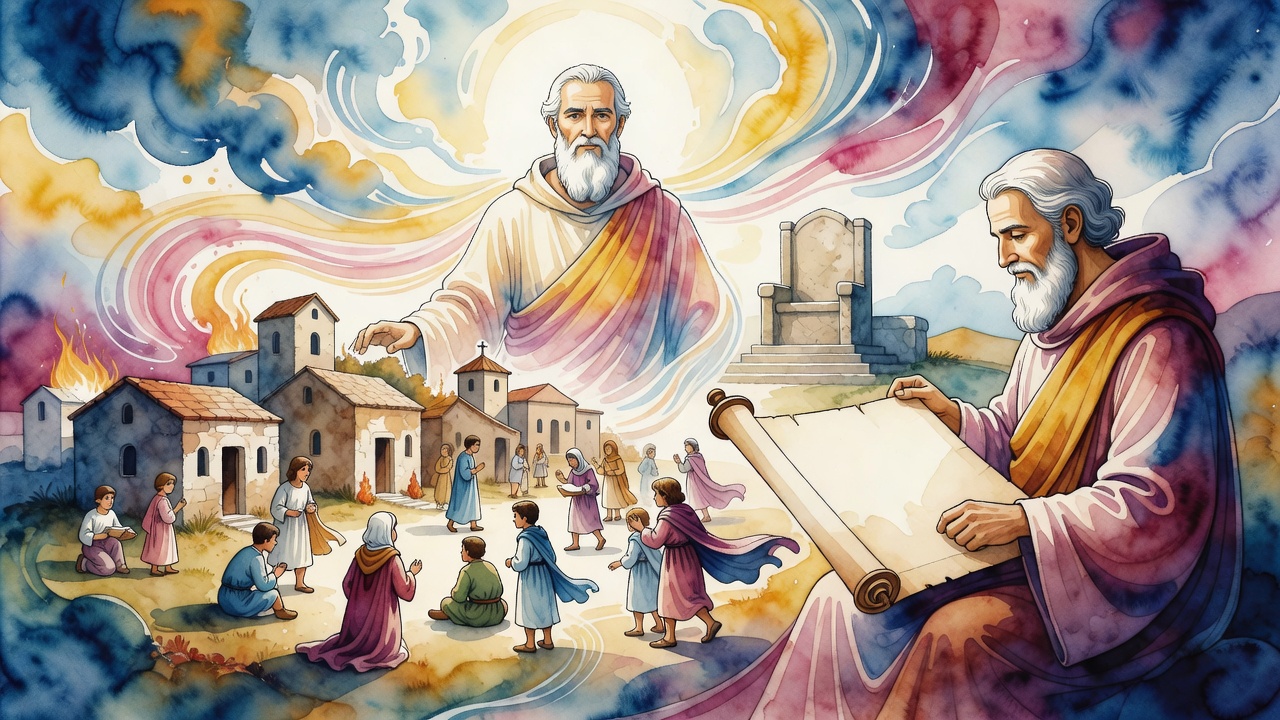
Weeks passed and no deed arrived. When Tarfon demanded his property, Akiva walked him through rooms of children bent over letters and orphans in new cloth.

Curated by Arthur · Told by Maggid ·
Table of Contents
  1. A Town Without Walls
  2. Benjamin and the Empty Fund
  3. Twenty-Four Shadows
  4. What Tarfon Finally Owned

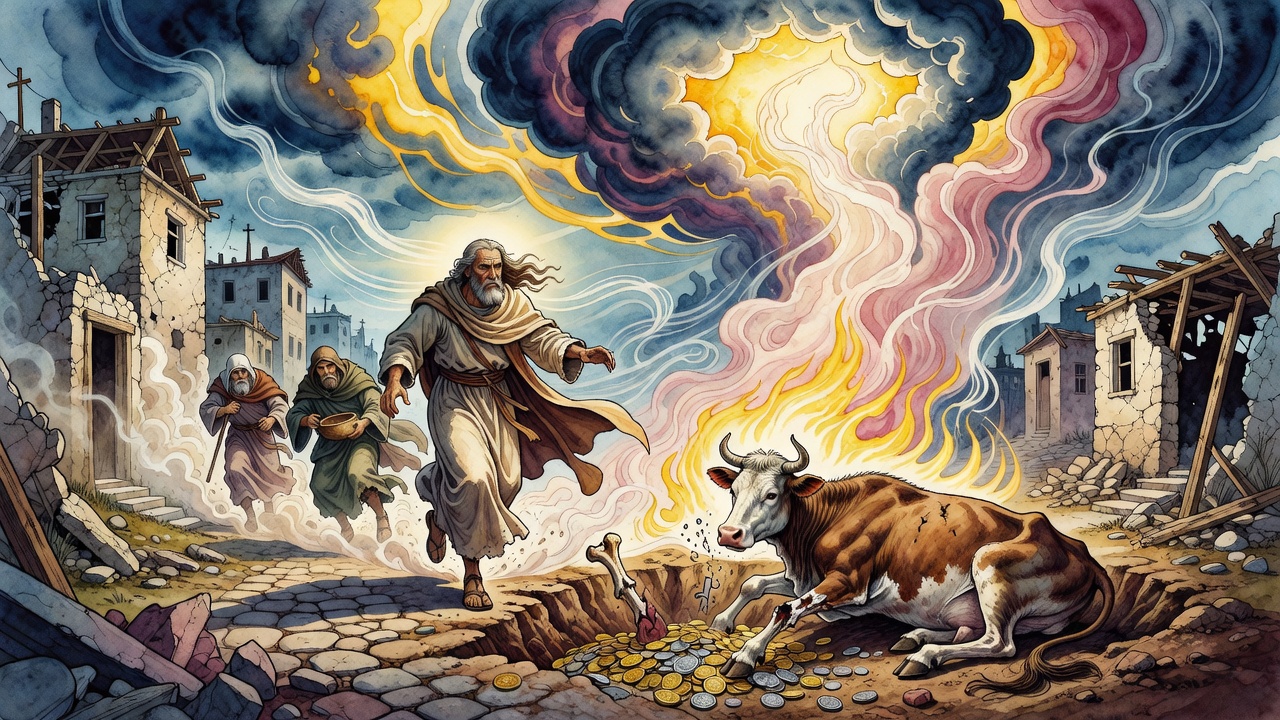
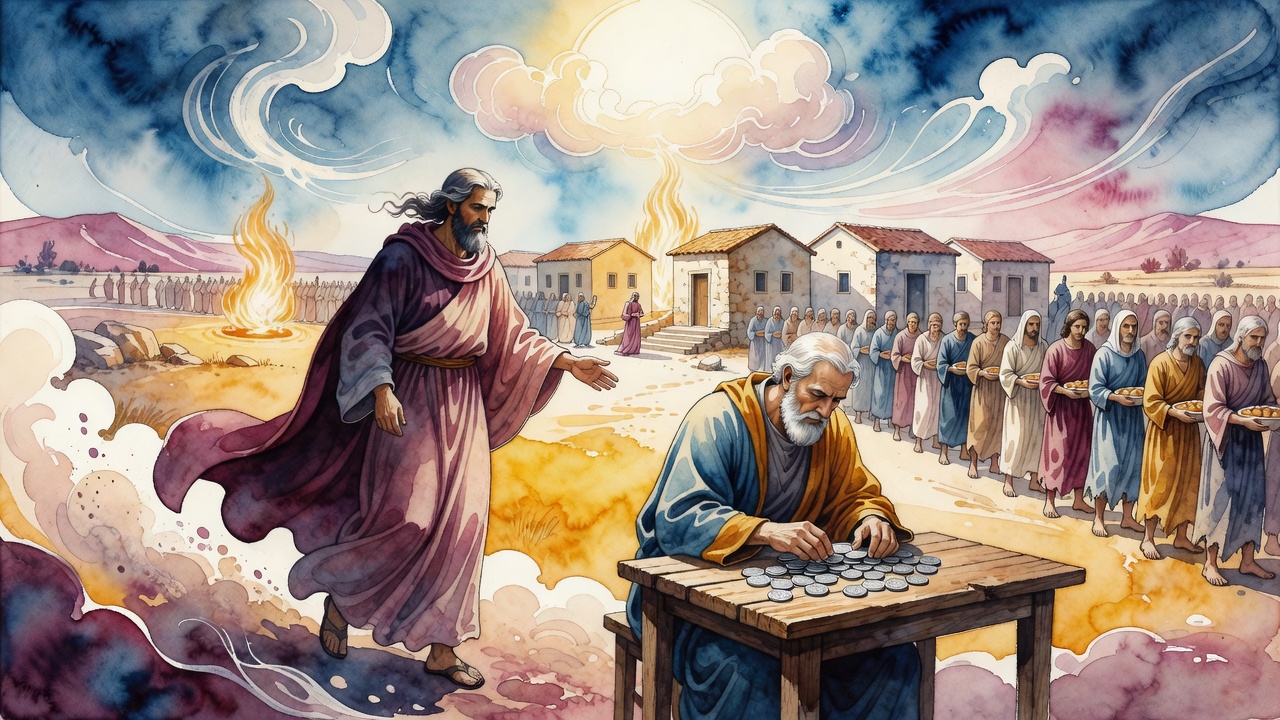
Rabbi Tarfon counted coins until the bag sat heavy on the table, then pushed it toward Rabbi Akiva with the careful pride of a man who knew the price of land. A whole town, Akiva had said. Fields, orchards, houses, rents that would outlast a drought. Tarfon's fingers still smelled of silver. He had studied Torah with fire, kept every commandment with precision, and sat among the great of his generation. Charity was the commandment that stuck in his throat.
Rabbi Akiva Bought Tarfon a Town of Living Charity Click for full size

A Town Without Walls

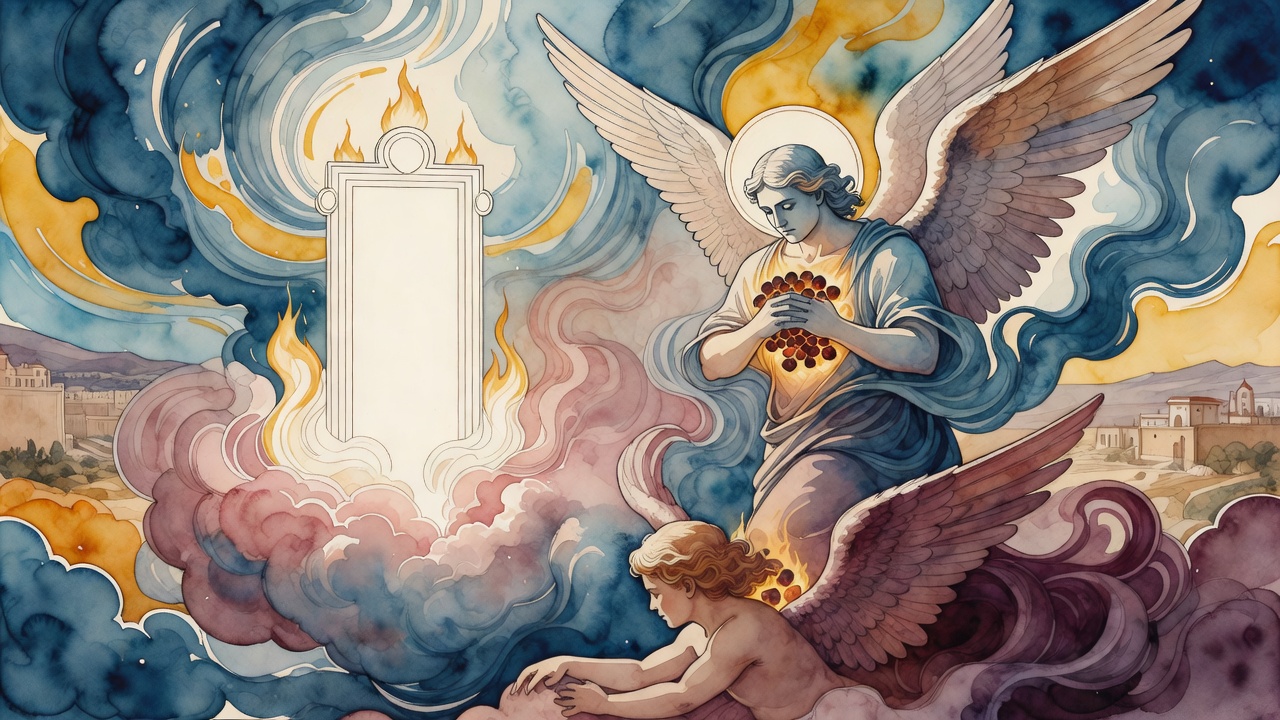
Days passed. Weeks. Tarfon waited for a deed and received only silence. When he finally demanded the town, Akiva did not lead him down a market road or past a granary. He walked him through rooms where children bent over letters, where orphans wore new cloth, where bread moved from hand to hand without a ledger of profit. "This is your town," Akiva said, and opened the book of Psalms. "He has distributed freely, he has given to the poor; his righteousness endures forever" (Psalms 112:9). Tarfon looked at the schools the way a buyer looks at foundations, then he embraced Akiva. From that hour he became one of the most open-handed men in Israel.

Akiva had not cheated him. He had forced him to buy the only property that cannot be seized by a king or eaten by locusts. Real estate is safe until an empire changes hands. A classroom of Torah and a plate of bread keep paying rent in a currency heaven still accepts. Tarfon had wanted walls he could point to from a hill. Akiva gave him names he would hear in every blessing after meals.

Benjamin and the Empty Fund

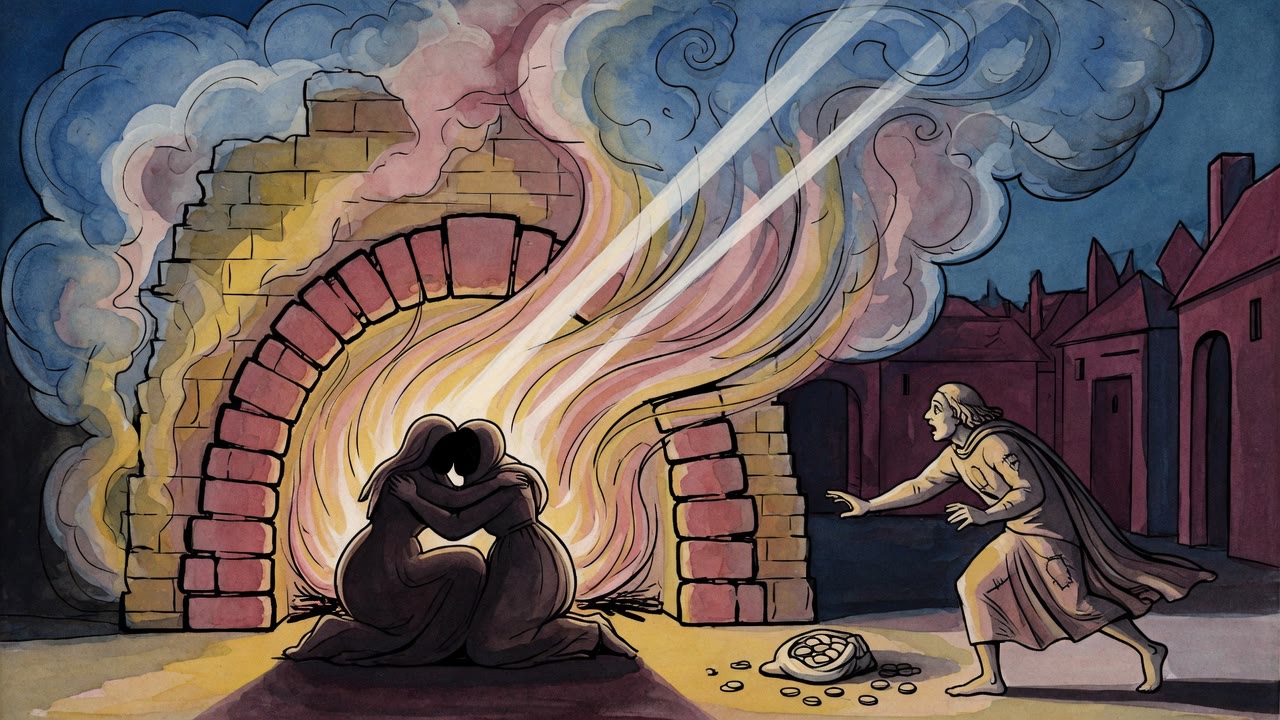
Benjamin the Righteous guarded the community charity chest. Every coin in and every coin out passed through his hands, and the people trusted him as they trusted the lock. One day a widow came with seven children trailing behind her like a frayed rope. "Give me something from the fund," she begged. "My children are starving." Benjamin checked the accounts and shook his head. The chest was empty. The widow turned to leave, and something in Benjamin's own pocket answered before his official office could.

He gave from his private purse. Week after week he fed her household until the fund filled again. Later, when illness folded him toward the grave and physicians said he would not rise, the tradition says the angels argued his case above. Twenty-two years were added to his life, a stretch the sages linked to the twenty-two letters of the Hebrew alphabet, as if heaven rewrote a chapter for a man who had rewritten a widow's winter. Giving from the communal fund is noble. Giving when the fund is empty is the moment the self steps into the breach.

Benjamin could have said the rules forbade him. He could have told the widow to return when donors remembered their duty. Instead he became the donor the fund had failed to be. The children ate because one man refused to let an empty box become a full excuse.

Twenty-Four Shadows

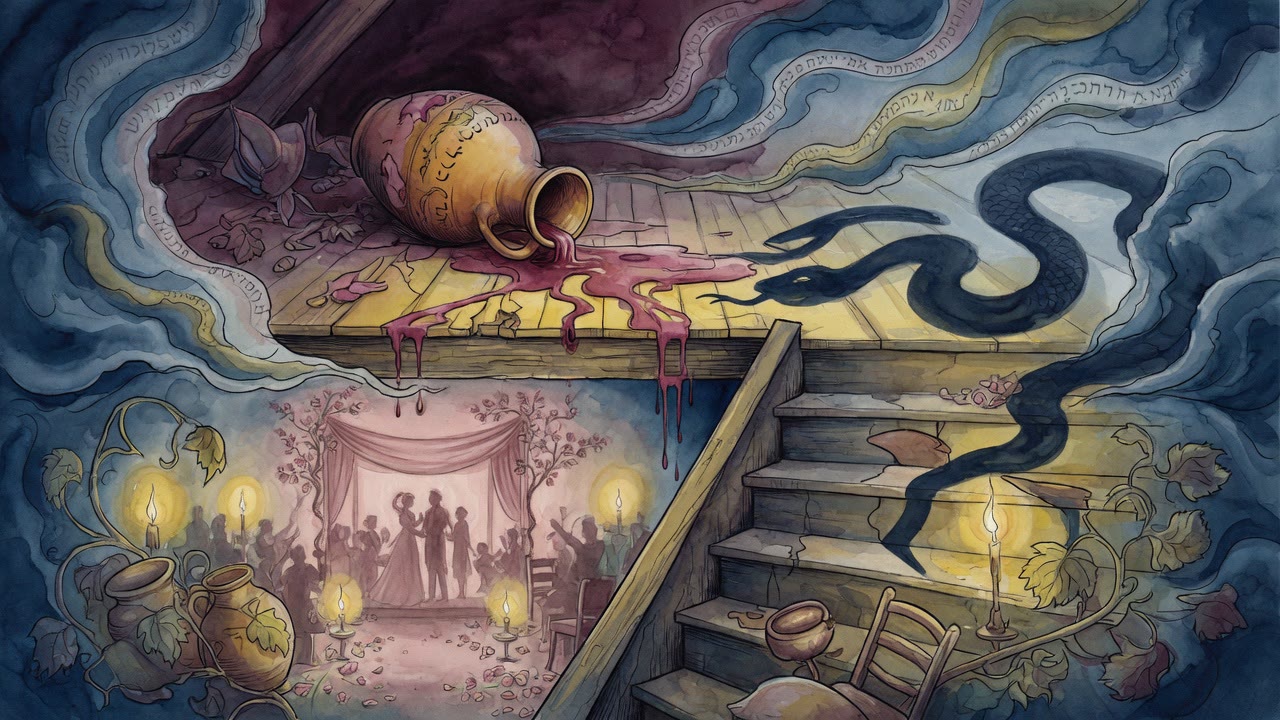
In Vayikra Rabbah, Rabbi Simon in the name of Rabbi Yehoshua ben Levi weighs the other side of the scale. Neglect tzedakah, and twenty-four curses lean in. The midrash reads the grim list of Psalm 109 not as poetry for enemies but as a map of what happens when a person "did not remember to practice kindness" (Psalms 109:16). Days grow short. Children wander. Creditors circle. Kindness leaves the house the way heat leaves an open door.

The same teaching holds out twenty-four blessings for the one who slices bread for the hungry, drawing on Isaiah's demand: "Is it not to share your bread with the hungry?" (Isaiah 58:7). Rabbi Simon notes that the verb sounds as if the bread is already cut. On Rosh Hashanah the measure of a person's wealth is set. What you give the poor is not a hole in your store. It is the portion that was already marked for their mouths. Refuse, and the same sum may leave you as loss, theft, or rot. Give, and the decree walks out wearing the face of mercy.

What Tarfon Finally Owned

Tarfon thought he was purchasing walls and deeds. He received names. Benjamin thought he was breaking a rule of the fund by spending what was his. He received years. The curses and blessings do not wait for a philosopher to define charity. They wait for a bag of coins to leave a closed fist.

Akiva's trick works only on a certain kind of rich man, the kind who already loves Torah enough to fear looking small in front of a colleague. Tarfon could have raged. He could have demanded a refund. Instead he looked at children learning aleph-bet with his money and recognized a better yield than rent. The town he bought had no gates, yet it outlived every fortress of the age. When he later opened his hand without being tricked, the first purchase had already trained the muscle.

Walk through any market and you will find people who can recite laws of property and still starve a neighbor with clean conscience. These stories refuse that split. Study that does not feed is unfinished. Wealth that does not move is already under the shadow of the twenty-four curses, whether or not the owner feels a chill.


← All myths
From the tradition

Sources

3 sources

The texts behind this telling. Some cards carry a translation of the source; others are our own retelling of it, and each card says which. Every card links out to the original.

Exempla of the Rabbis, No. 108Exempla of the Rabbis (Gaster, 1924)

Retold in our words. Read the original at the link below.The Exempla of the Rabbis, Moses Gaster (1924) · Public Domain

Rabbi Tarfon was one of the wealthiest men among the sages, but he was famously reluctant to part with his money. He studied Torah with passion, observed every commandment with precision, and sat among the greatest scholars of his generation. But charity was not his strongest quality.

Rabbi Akiva decided to change that. He went to Rabbi Tarfon with a business proposition. "I have found a town for sale," he said. "A whole town, with fields and orchting and houses. It is an excellent investment. Give me the money, and I will buy it on your behalf."

Rabbi Tarfon was intrigued. Real estate was the safest investment in the ancient world. A whole town? The rents alone would make him richer than he already was. He handed over a large sum of money to Rabbi Akiva and waited for the deed of ownership.

Days passed. Then weeks. Rabbi Tarfon grew impatient. "Where is my town?" he demanded. Rabbi Akiva smiled and took him on a tour, not of fields and houses, but of schools. Everywhere they walked, Rabbi Akiva showed him classrooms full of children studying Torah, poor families fed with bread, orphans clothed and sheltered. He had distributed every coin to the needy and used the rest to build houses of study.

"This is your town," Rabbi Akiva said, opening the book of (Psalms 112:9): "He has distributed freely, he has given to the poor; his righteousness endures forever." Rabbi Tarfon looked at the schools, looked at the children, and embraced Rabbi Akiva. From that day forward, he became one of the most generous men in Israel.

Full source
Exempla of the Rabbis, No. 100Exempla of the Rabbis (Gaster, 1924)

Retold in our words. Read the original at the link below.The Exempla of the Rabbis, Moses Gaster (1924) · Public Domain

100. Benjamin supported a widow with seven children. His teward was that his life was prolonged by 22 years.

Full source
Vayikra Rabbah 34:11Vayikra Rabbah

Retold in our words. Read the original at the link below.The Sefaria Midrash Rabbah, 2022 · CC-BY

Vayikra Rabbah turns to Twenty-Four Curses Descend When You Ignore Tzedakah.

In Rabbi Simon, in the name of Rabbi Yehoshua ben Levi, in Vayikra Rabbah 34, we can't afford to take lightly the mitzvah of giving to the poor. Why? Because failing to do so, they say, can bring about a staggering twenty-four curses! And conversely, fulfilling it brings twenty-four blessings. a bit. The text draws heavily from Psalm 109. It paints a grim picture: "Appoint a wicked one over him…when he is judged, may he be found guilty…may his days be few…may his children be fatherless…may his children wander and beg…may creditors seize all that he has…may there be no one to offer him kindness…may his legacy be cut off…may the iniquity of his fathers be remembered by the Lord…may these be before the Lord continually…he loved curses…may he be clothed in curses." (Psalms 109:6–15, 17–18). A pretty dire list. Why such harsh consequences? The psalm tells us plainly: “For he did not remember to practice [kindness]” (Psalms 109:16).

It's a powerful reminder that our actions, or inactions, have ripple effects far beyond what we might immediately perceive. Choosing not to extend a hand to those in need isn't just a neutral act; it creates a void that can be filled with negativity and hardship.

Don't despair! There's also a flip side: the twenty-four blessings! These blessings stem from fulfilling the act of providing for the poor. The text references (Isaiah 58:7): “Is it not slicing your bread for the hungry?” The subsequent verses in Isaiah then detail the many rewards that come from supporting those in need.

Here's a fascinating nuance: Rabbi Simon points out that the verse doesn't say "Will you not slice [tifros]," but rather, "slicing [paros]." He interprets this to mean that the bread is already sliced [parus]! What does this mean? The text suggests that on Rosh Hashanah, the Jewish New Year, our fate, including our earnings and losses, is already decreed. So, giving tzedakah doesn’t actually diminish what you have. It simply directs where that money was already destined to go. If you don't give it willingly, it might just be lost in some other, less desirable way. It's not just about altruism, although that's certainly part of it. It’s about aligning ourselves with the divine plan, with the natural flow of abundance and compassion. By giving tzedakah, we are essentially participating in a cosmic system of balance.

So, the next time you have the opportunity to give, remember the twenty-four curses and the twenty-four blessings. Remember that your actions have weight, and that even a seemingly small act of kindness can have profound and far-reaching consequences. What kind of world do we want to create? One filled with curses, or one overflowing with blessings? The choice, in many ways, is ours.

Full source