5 min read

He Cast Bread on the Sea Until a Fish Spoke Back

A town banned charity on pain of death. A pious man fed the sea, sank on Yom Kippur eve, and a great fish offered treasure or seventy languages.

Curated by Arthur · Told by Maggid ·
Table of Contents
  1. A Decree Against Open Hands
  2. Yom Kippur Eve and the Laugh
  3. Crows, Roads, and a Dangerous Mouth
  4. Other Bread on Other Waters
  5. What the Fish Bought
He Cast Bread on the Sea Until a Fish Spoke Back Click for full size

A Decree Against Open Hands

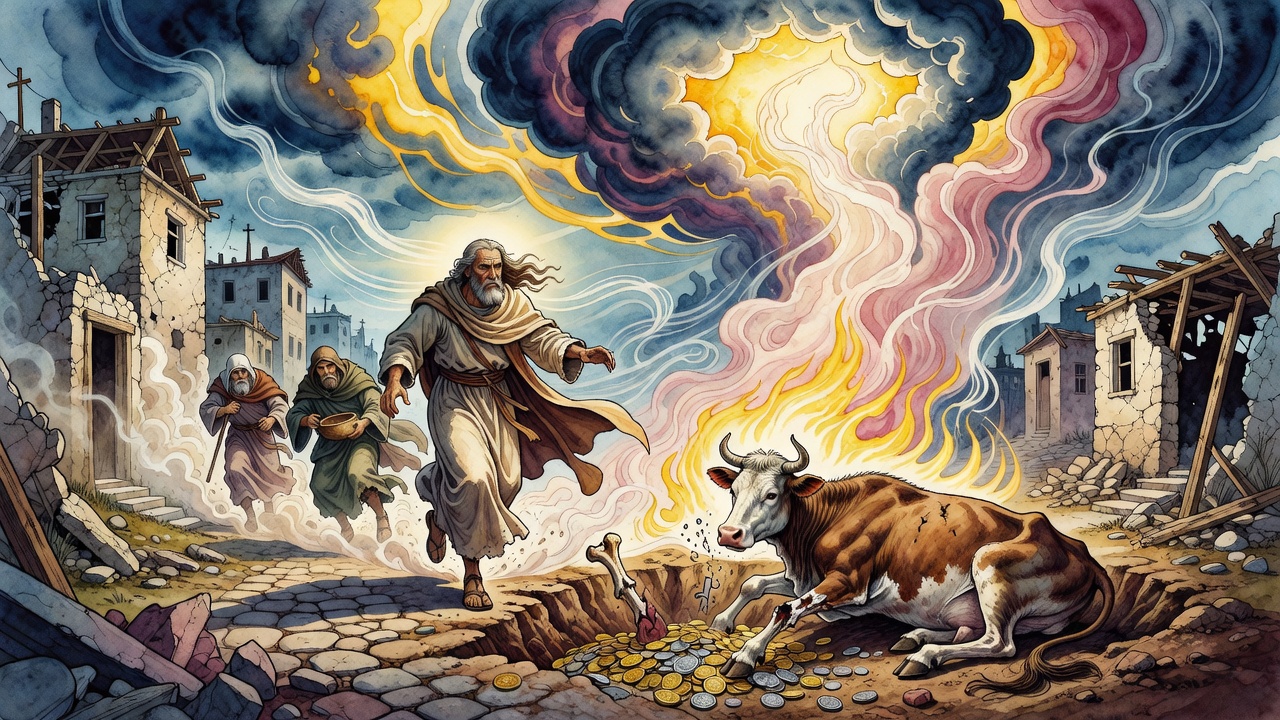
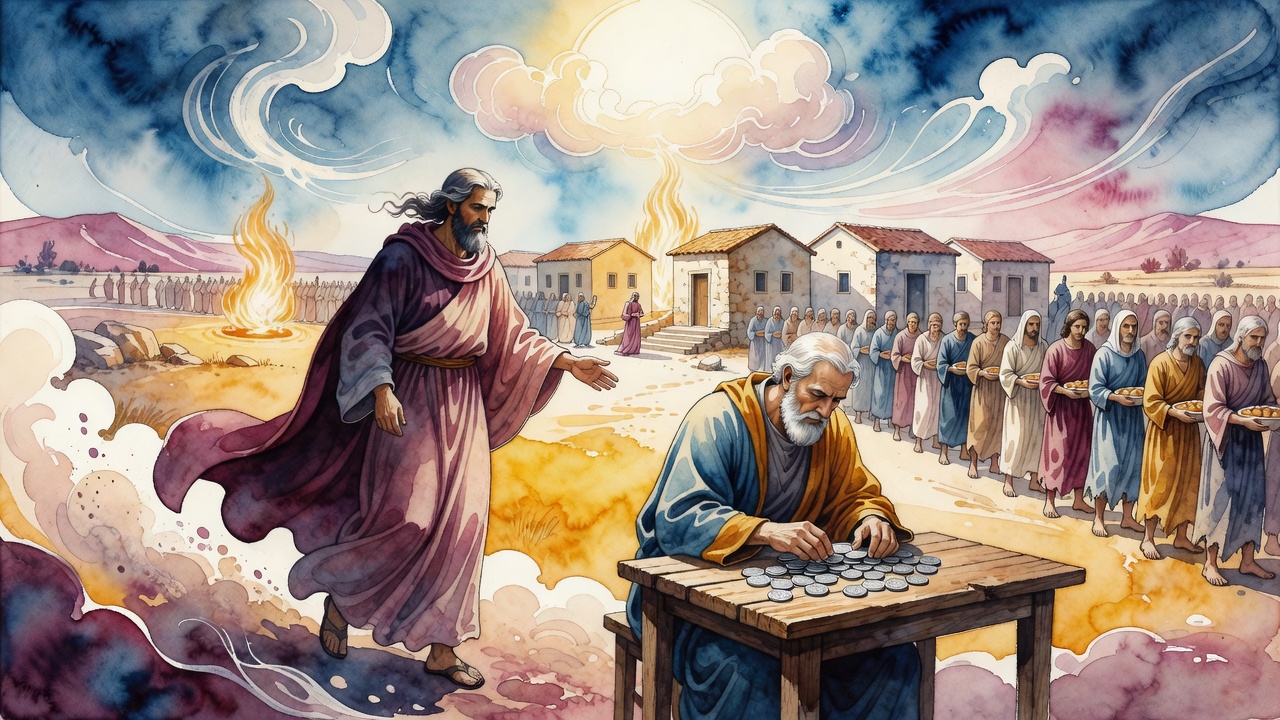
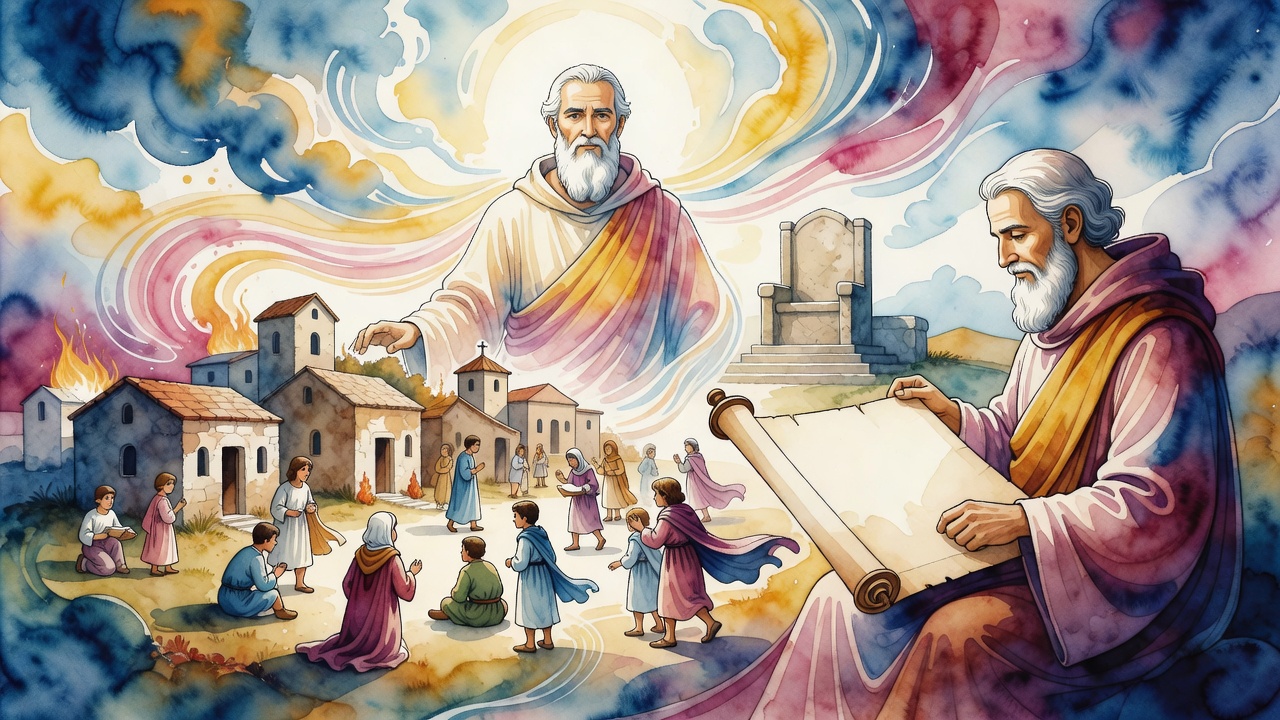
A pious man gave bread every day. The town hated him for it. They passed a decree: anyone who gave charity would be cast into the sea or killed. He grieved. He would not break the commandment to give. So he walked to the water each morning with a loaf and cast it out, reading, "Cast thy bread upon the waters, for thou shalt find it after many days" (Ecclesiastes 11:1).

He fed fish what he could no longer feed the poor. The decree watched human doors. It did not watch the tide. Neighbors who would have reported a coin to a beggar could not fine a man for feeding the deep.

Yom Kippur Eve and the Laugh

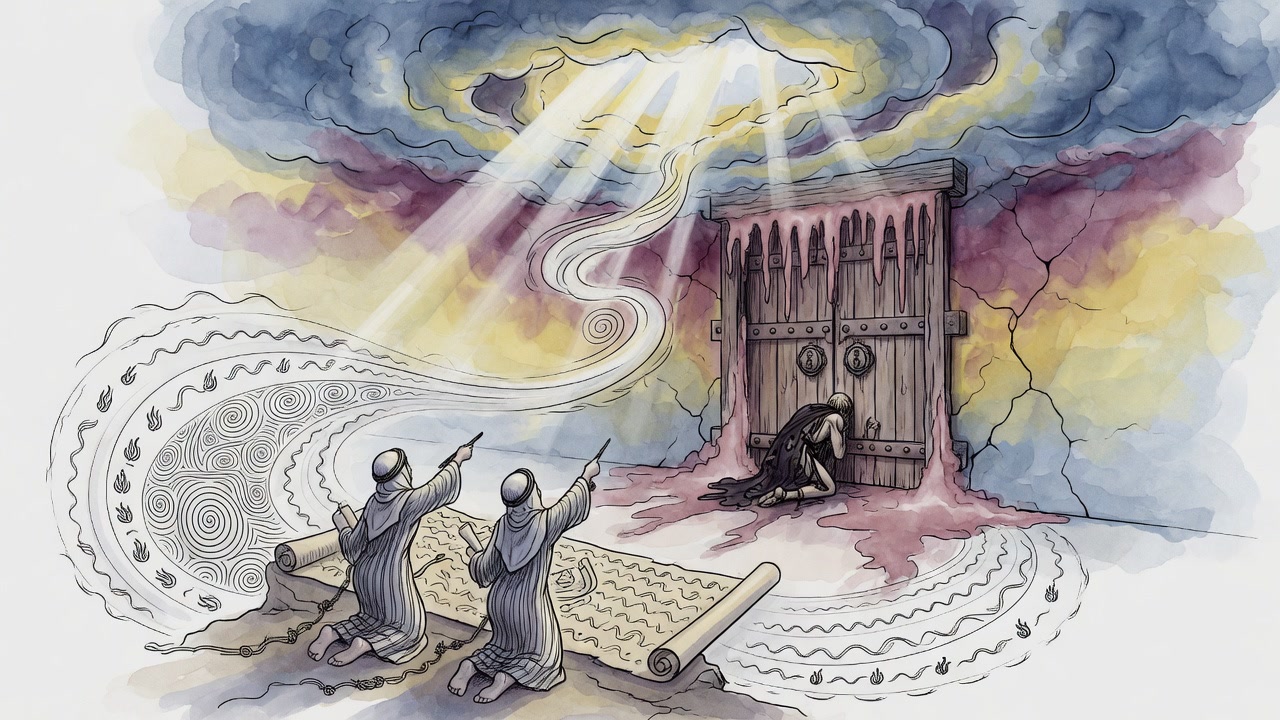
On the eve of Yom Kippur the town went down to bathe. A storm seized the pious man and pulled him under. Neighbors laughed. "Here is the man of good deeds, drowned in his own piety."

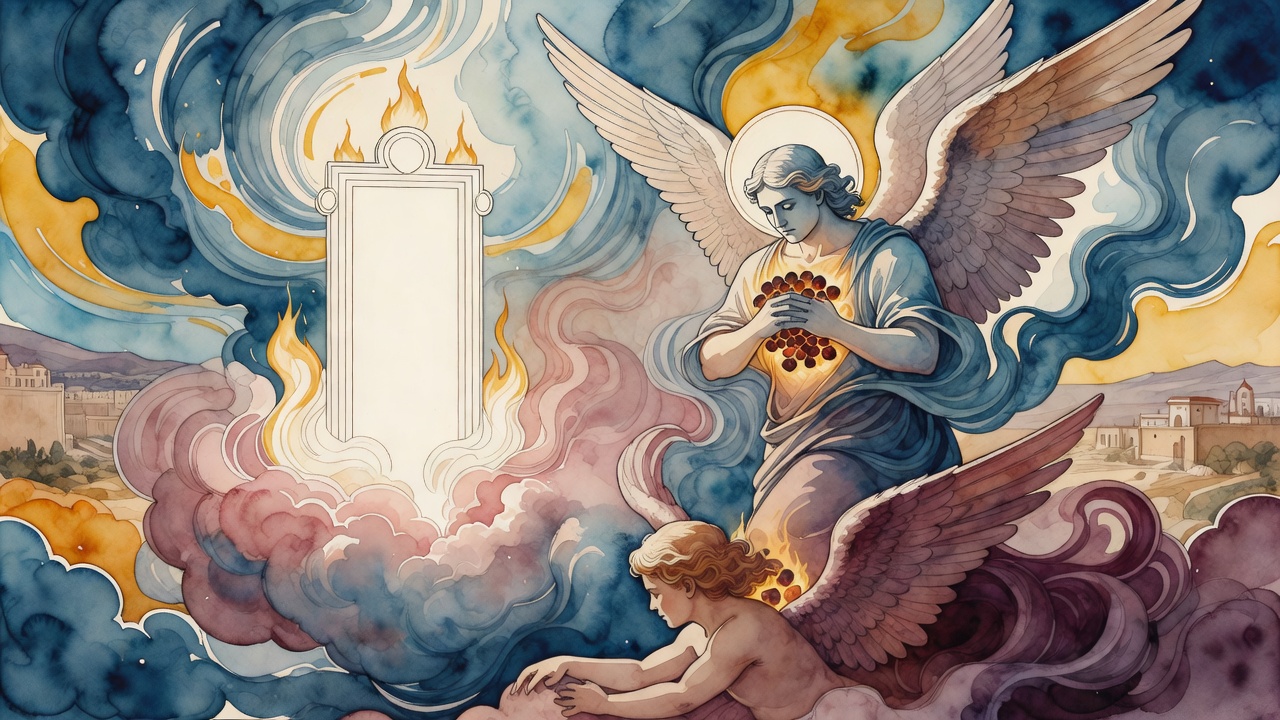
Below, fish gathered. A large one spoke. "This is the man who fed us every day. What shall we do with him?" The others left the decision with the large fish. It carried the man to the ocean floor and showed silver, gold, jewels. "Choose. Treasure, or I will teach you the seventy languages."

He chose the languages. The fish taught him and cast him back to land with a vow not to reveal the source of the gift. Gold would have made the town nod. Speech made him able to hear what birds and beasts already knew.

Crows, Roads, and a Dangerous Mouth

Under a tree he overheard two crows. One wanted his eyes. The other mapped three roads: beasts, buried treasure, robbers. Understanding their speech, he took the middle road, found treasure, and returned home richer in coin and in secret knowledge.

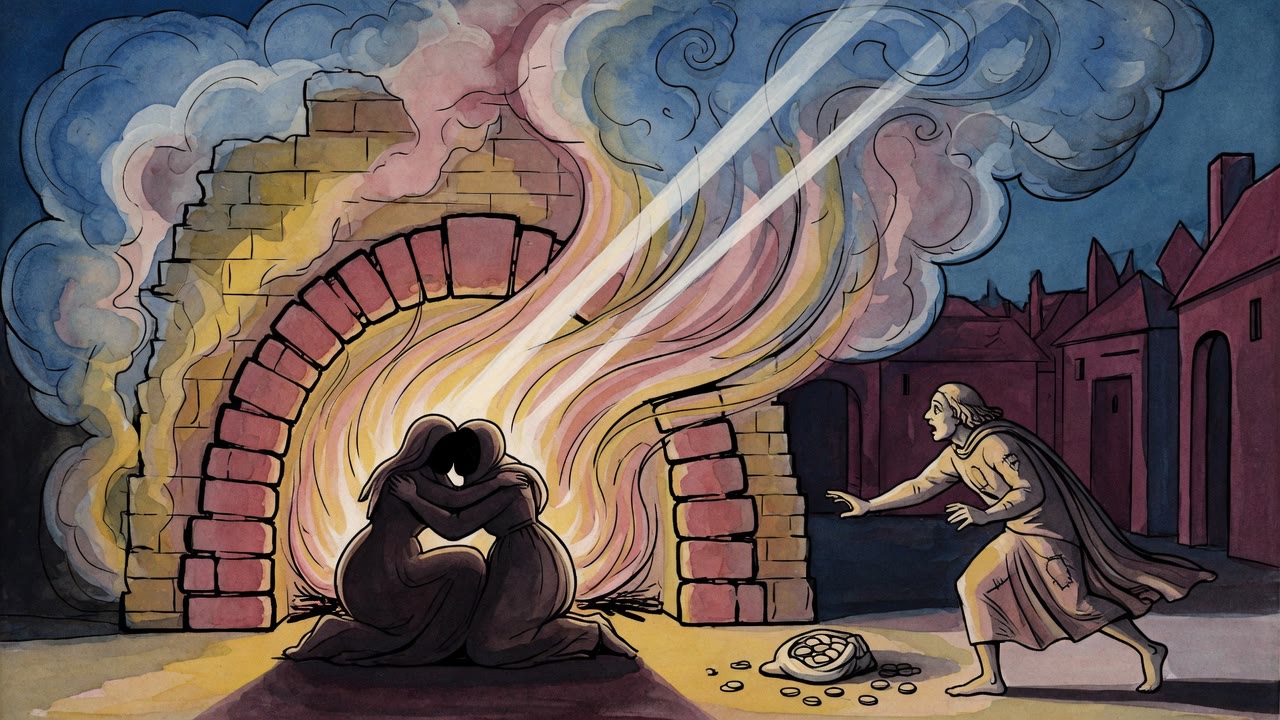
A wife nagged until he told how he had learned the languages. He knew the telling would kill him. Before the end he sent his son to prepare a last meal. An ox, a sheep, and a cock spoke in turn. The cock's counsel cut clean: why die for one wife when divorce can open a path back to life? The son reported. The father divorced and lived. Speech that saves does not always arrive in human mouths first, and a vow broken to please a nagging voice nearly closed the story that the fish had reopened.

Other Bread on Other Waters

Bar Kappara clothed shipwrecked strangers without asking their nation. One rose to power and later repaid the kindness when the community needed an advocate. Another ship in storm lore survived by sharing a single lamb so no passenger would starve while others ate; the shared meat became a floating covenant against panic and against the private hoarding that turns a deck into a court of the strong.

Charity looks wasteful when the ledger is only today. The sea keeps longer books, and so do the men who once shivered on a beach and later held seals of office.

What the Fish Bought

The decree that banned charity could not ban the return of bread. It could only delay the form of the return until a storm and a joke on the shore made the lesson public. Feed when feeding is forbidden. Listen when speech comes from unexpected throats. Keep the vow if you want the gift to stay a gift rather than a story that costs a life.

On the next morning after rescue, the pious man still knew how to throw a loaf. The fish still knew how to remember a feeder. Between them the town's decree looked smaller than a wave.

The town's decree is a portrait of a community that fears generosity more than hunger. They do not merely refuse to give. They criminalize giving. The pious man's answer is almost comic until the storm: if human poor are forbidden, feed the fish and keep the verse alive. Ecclesiastes becomes a loophole and a devotion at once. When the town laughs at his drowning, they think the sea has sided with their decree. The large fish proves the sea kept a different account.

Choosing languages over gold is the story's moral hinge made visible. Treasure would have let him buy safety in a town that hates givers. Languages let him hear the world's side conversations, crows and beasts included, and that hearing almost kills him when a human mouth pries the secret free. The cock's advice is coarse and life-saving. Divorce is not the tale's romantic lesson. Survival after a broken vow is. The fish kept faith; the man nearly did not.

Bar Kappara and the shared lamb return the wonder tale to social ethics. Cast bread, clothe strangers, divide meat on a deck that wants to panic. Each act looks small against empire, decree, and storm. Each act is how Jewish storytelling insists the world is still negotiable. The fish that speaks seventy languages is fantasy. The repayment from a once-shipwrecked official is politics. The tradition wants both on the same shelf labeled charity.


← All myths
From the tradition

Sources

3 sources

The texts behind this telling. Some cards carry a translation of the source; others are our own retelling of it, and each card says which. Every card links out to the original.

Gaster, Exempla no. 449 (Diverse Sources)The Exempla of the Rabbis (1924)

Retold in our words. Read the original at the link below.The Exempla of the Rabbis, Moses Gaster (1924) · PD-US-pre-1929

A pious man in a certain town gave charity every day to the poor. The townspeople hated him for it. They passed a decree that anyone who gave charity would be cast into the sea or killed.

The man grieved over the decree. He could not break the commandment to give. So he began to cast a loaf of bread into the sea every day, reading the verse from Ecclesiastes: "Cast thy bread upon the waters, for thou shalt find it after many days" (Ecclesiastes 11:1). He gave the fish what he could no longer give the poor.

On the eve of Yom Kippur, the whole town went down to the shore to bathe. A sudden storm rose and swept the pious man into the deep water. The townspeople laughed. "Here is the man of good deeds. Now he has drowned in the sea of his own piety." But when he sank, the fish gathered around him. One large fish said, "This is the man who fed us every day. What shall we do with him?" The other fish left. The large fish carried the man down to the ocean floor and showed him treasures of silver and gold and jewels. "Choose," the fish said. "The silver and gold, or the jewels, or I will teach you the seventy languages." The man chose the languages. The fish taught him, and then cast him back up onto land.

Walking home, the man lay down under a tree. Two crows landed above him. One said, "Let us peck out his eyes." The other said, "No. If he wakes, he will catch us. But if he takes the road to the right, wild beasts will eat him. If he takes the middle road, he will find a buried treasure and let us go. If he takes the left, robbers will kill him." The man understood their speech, took the middle road, found the treasure, and returned to his town.

The fish had made him swear not to reveal how he had learned the languages. His new wife nagged him until he told her. He knew it would kill him. Before dying, he asked his son to prepare his last meal. The boy went to slaughter the ox, which greeted him in peace and pleaded its case. He went to the sheep and to the cock. The cock said something the boy found useful: "I rule over many hens. Why should your father die because of one wife? Let him divorce her and live." The boy told his father. The father divorced the wife, escaped the oath's penalty, and lived in peace. The Exempla preserves this long folk tale from diverse Gaster manuscripts, folding charity, teshuvah, and the speech of animals into one long thread whose point is the oldest: bread cast on waters returns.

Full source
Exempla of the Rabbis, No. 300Exempla of the Rabbis (Gaster, 1924)

Retold in our words. Read the original at the link below.The Exempla of the Rabbis, Moses Gaster (1924) · Public Domain

Bar Kappara was walking along the seashore when he encountered the survivors of a shipwreck, strangers, soaked and shivering, with nothing but the clothes on their backs. They had lost everything to the sea: their goods, their money, their provisions for the journey ahead.

Bar Kappara did not ask who they were or where they came from. He did not calculate whether helping them would benefit him. He simply gave. He fed them, clothed them, and provided them with whatever they needed to continue their journey.

The Midrash (Ecclesiastes Rabbah 11:1) records that one of the shipwrecked strangers later rose to a position of great power, some versions say he became a Roman official, others say a ruler of a distant city. When Bar Kappara's community later needed an advocate before the authorities, the man they had once rescued remembered the sage's kindness and repaid it many times over.

A related story tells of Rabbi Eliezer ben Shammua, who similarly helped a shipwrecked Edomite, a member of a nation not particularly friendly to the Jews. The Edomite later became Emperor, and when the Jews needed his protection, he granted it in memory of the sage who had fed him when he was starving on the beach.

The sages quoted the verse: "Cast your bread upon the waters, for you shall find it after many days" (Ecclesiastes 11:1). Charity given to a stranger on a beach may seem like bread thrown into the sea, wasted, lost, irretrievable. But the sea has a way of returning what is cast upon it. The bread comes back. The stranger remembers. And kindness shown in a moment of crisis echoes through decades.

Full source
Gaster, Exempla No. 299The Exempla of the Rabbis (1924)

Retold in our words. Read the original at the link below.The Exempla of the Rabbis, Moses Gaster (1924) · PD-US-pre-1929

A ship full of travelers was crossing the sea when the wind died. The vessel drifted into still, silent waters and stopped. Each day the becalmed ship sat motionless on a surface like glass.

Hunger set in. The travelers counted their provisions and realized that each person's private stash, if consumed alone, would only prolong the suffering. Death was waiting whether they hoarded or shared.

They made a decision. They pooled everything. They would eat together until the food ran out, and then, if that was the end, they would die together too.

As they shared their first meal, a roasted lamb among them, one of them had an idea. They tied the carcass of the lamb to the prow of the ship, out over the water.

A huge sea creature, drawn by the smell, rose from the depths, seized the lamb in its jaws, and pulled. The ship lurched forward. The beast kept dragging its prize, and the ship kept moving with it, until the hull slid out of the dead zone and back into waters that held a current.

The wind returned. The sails filled. The ship sailed on.

This, the Ma'aseh Book says, was their reward, not only for clever engineering, but for their earlier decision to share everything. They had obeyed, without knowing it, the verse in Kohelet: "Shalach lachmecha al pnei ha-mayim, ki b'rov ha-yamim timtza'enu", "Cast thy bread upon the waters, for thou shalt find it after many days" (Ecclesiastes 11:1, Gaster, Exempla No. 299).

They had cast their bread, literally, their lamb, upon the waters. The sea returned it as motion.

The teaching is simple enough to carry on a pocket card: generosity is a current. A group that shares its provisions finds itself moving again, even when the wind will not rise.

Full source