Rabbi Eleazar Ate Every Loaf, Then Set the Drivers' Donkeys on a Roof
His mother kept sliding loaves at the oven. The drivers counted. Then their donkeys stood on a roof and would not come down.
Table of Contents
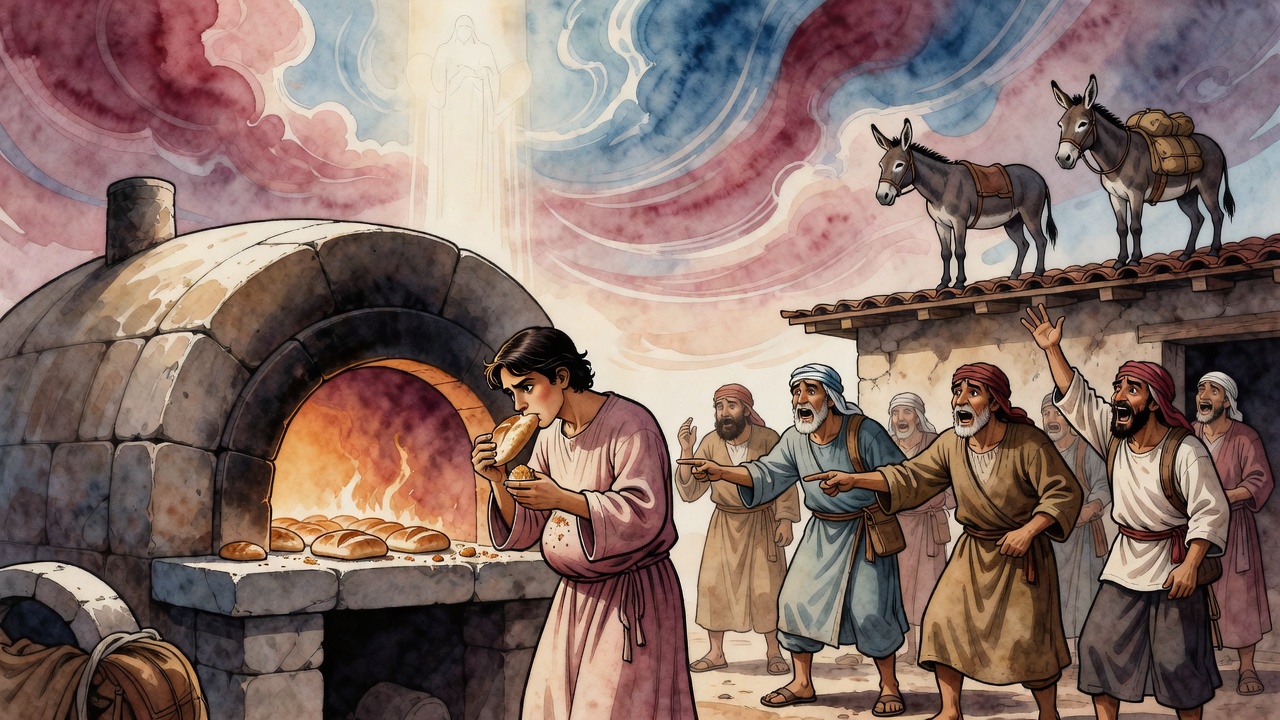
Donkey drivers came into town for grain and found a boy seated by a hot oven as if the world owed him bread. His mother kept handing him fresh loaves. He kept eating. Loaf after loaf disappeared until the whole batch of dough was gone and the oven's mouth looked empty and offended.
 Click for full size
The men stared. Hunger they understood. This looked like greed wearing a scholar's face. One muttered what the others were already thinking. "There must be a wicked serpent living in this fellow's belly."
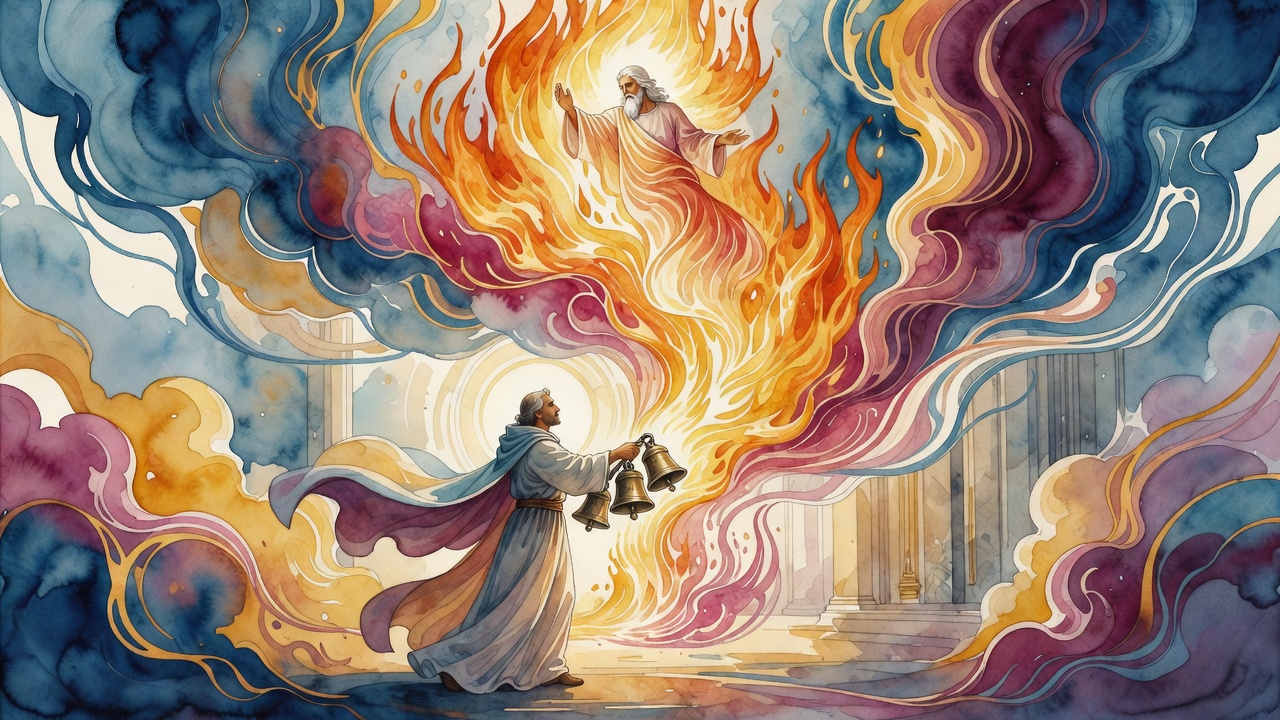
Rabbi Eleazar son of Rabbi Shimon heard them. He did not argue. He walked out to their loaded donkeys, set his hands under the first beast, and lifted.
Donkeys on the Roof
The donkey's weight came into his shoulders. Hooves left the street. He set the animal on the tiles. Then the next. Then the next. The street below filled with the sound of hooves that no longer touched earth. Grain sacks hung in the air. The drivers stood with their mouths open and their hands empty of reins.
They ran to the great Rabbi Shimon. They spilled the story of the oven and the roof. The father asked one question first. "Did you say something insulting to him?"
They repeated the line about the serpent. Rabbi Shimon did not shout. He corrected them with a quiet law of creation. "Maybe he was eating only what belongs to him. The One who created him created his sustenance for him."
Still, a roof full of donkeys is a practical problem. He sent them back in his name to ask his son to bring the animals down. They returned. The second wonder outdid the first. Eleazar had raised the beasts one at a time. He lowered them two by two, as if strength had only been half awake during the prank.
A Lion Beside a Lion
Years later, when Rabbi the Patriarch walked into the study house and saw Rabbi Eleazar, his face would cloud. His own father did not soften the bruise. "That one is a lion, and the son of a lion," he said. "You are only a lion who descends from a fox."
The comparison stuck because it was earned in public. Eleazar's learning carried the weight of a bloodline that had already roared. Rabbi carried greatness and still felt smaller in the doorway.
When Eleazar died, Rabbi sent a proposal of marriage to the widow. Her answer closed like a sanctuary door. "A vessel used for sacred service should not be turned to ordinary use."
Sufferings That Obey
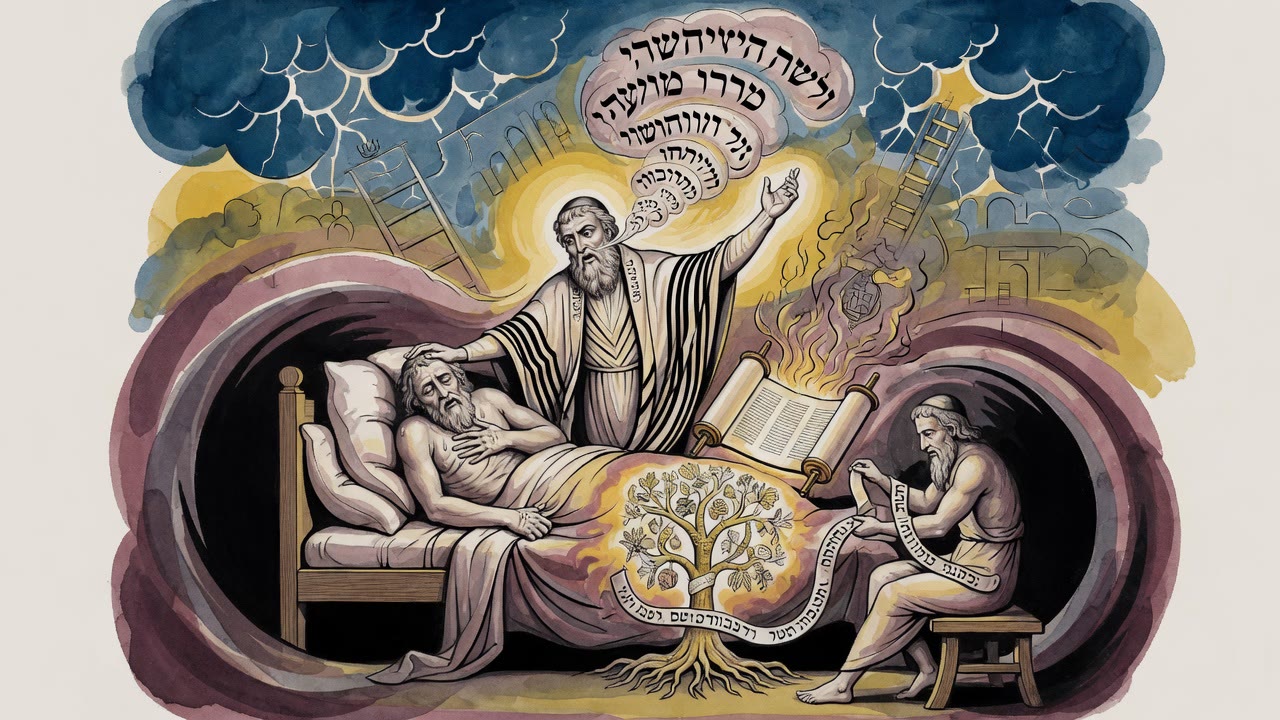
Rabbi pressed her. What had her husband done that he could not match? She told him the private rule of their house. When Eleazar had poured himself empty into Torah, exhaustion would fall on him like sleep, and he would whisper a prayer that still startles. Let the sufferings of all Israel settle on me instead.
The pains came. They obeyed. When it was time to learn again, he dismissed them, each one back to its corner, and they scattered like hired workers paid and released.
Rabbi wanted the same devotion. He summoned the sufferings and they answered. When he asked them to leave, they stayed. For thirteen years, some say, a grinding toothache taught him that not every holy burden can be borrowed. Some vessels are shaped for a weight others cannot set down.
Only Upward
The widow's last word named the law of her refusal. "I have heard that in holiness they raise up, and they do not bring down." Having belonged to such a man, she would not step to a lower rung, even for the Patriarch of Israel.
The donkey drivers had once mocked a boy at an oven. The roof had answered them. The study house later answered Rabbi with a different kind of height. Strength that can park beasts on tiles and pain that comes and goes on command are not the same gift, yet both marked a life that would not be treated as ordinary use.
Between the roof and the toothache years, Eleazar learned in rooms where oil lamps burned low and the text refused to release him. When sufferings came at his word and left at his word, the household learned a second schedule beside the calendar of festivals. Pain had hours. Torah had hours. The two traded places without asking the neighbors for permission.
The serpent the drivers imagined in a belly was only appetite doing its job. The real marvel was a body large enough for bread and for the sufferings of a people, and a will that could sort which guest belonged at which hour. The widow who refused a lower rung had lived inside that authority. She would not trade it for a title, even the highest title in the land of Israel.
← All myths