5 min read

Rabbi Meir Told Rome the Pig Would Return the Kingdom

Rome sent word to the sages: send us one of your torches. The sages argued about what that meant, then sent Rabbi Meir into the room alone.

Curated by Arthur · Told by Maggid ·
Table of Contents
  1. They Asked Him and He Answered
  2. Because It Is Going to Give the Kingdom Back
  3. The Line They Used to Shut Him Up
  4. The Herald Who Called for the Reward
  5. Not a Private Torch

The message from the Roman government was one line long. Send us one of your torches.

Rabbi Meir Told Rome the Pig Would Return the Kingdom Click for full size

In the study house they read it twice. Rome had torches. Rome had whole rooms of torches, and gems, and pearls by the chestful. A government does not write to a conquered people for lamp oil.

They decided it meant a man who could throw light on a point of law. They sent Rabbi Meir.

They Asked Him and He Answered

He went in alone. The officers had made a game of it: a question, then his answer, then another question before the answer had finished landing. They asked and he answered. They asked again and he answered again. Nothing they put in front of him stayed standing long enough to become a problem.

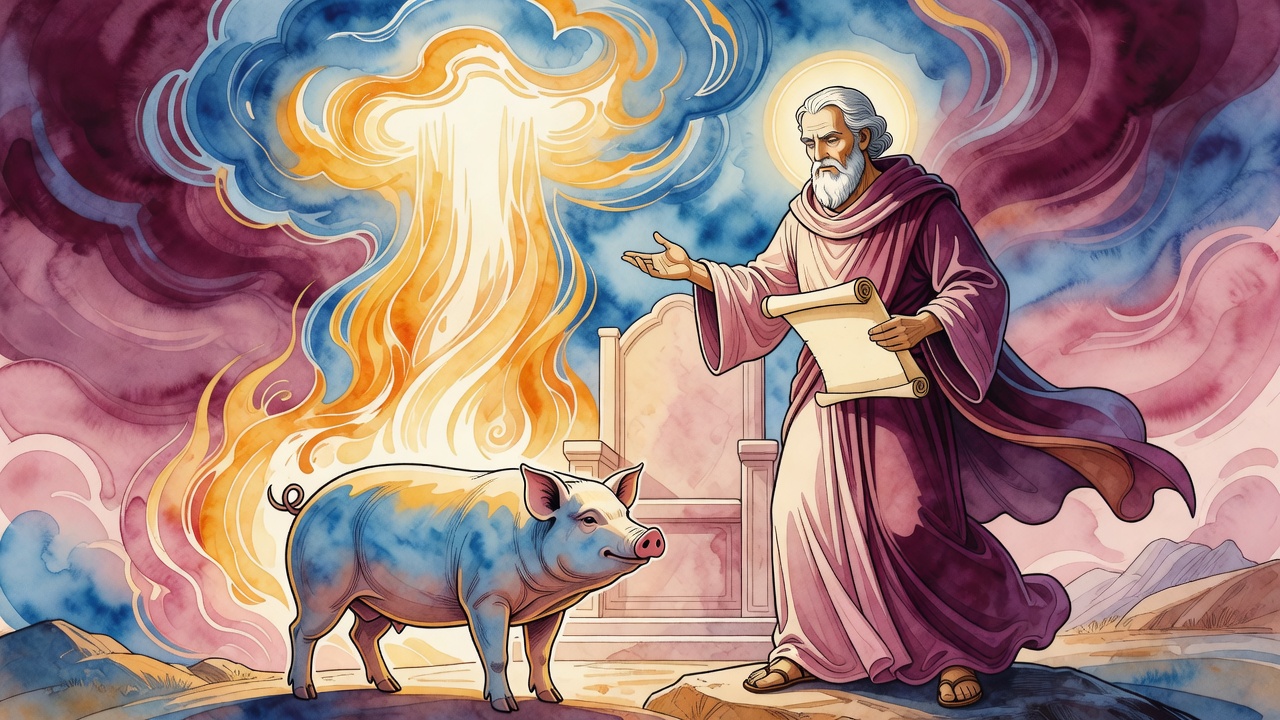
So they went looking for something a sage could not possibly have a use for. Why, they asked, is that filthy animal of yours called hazir?

It was a good trap. The pig is the one creature in the Torah a Jew is not supposed to have an opinion about beyond keeping away from it, and here was a room full of men who ate it.

Because It Is Going to Give the Kingdom Back

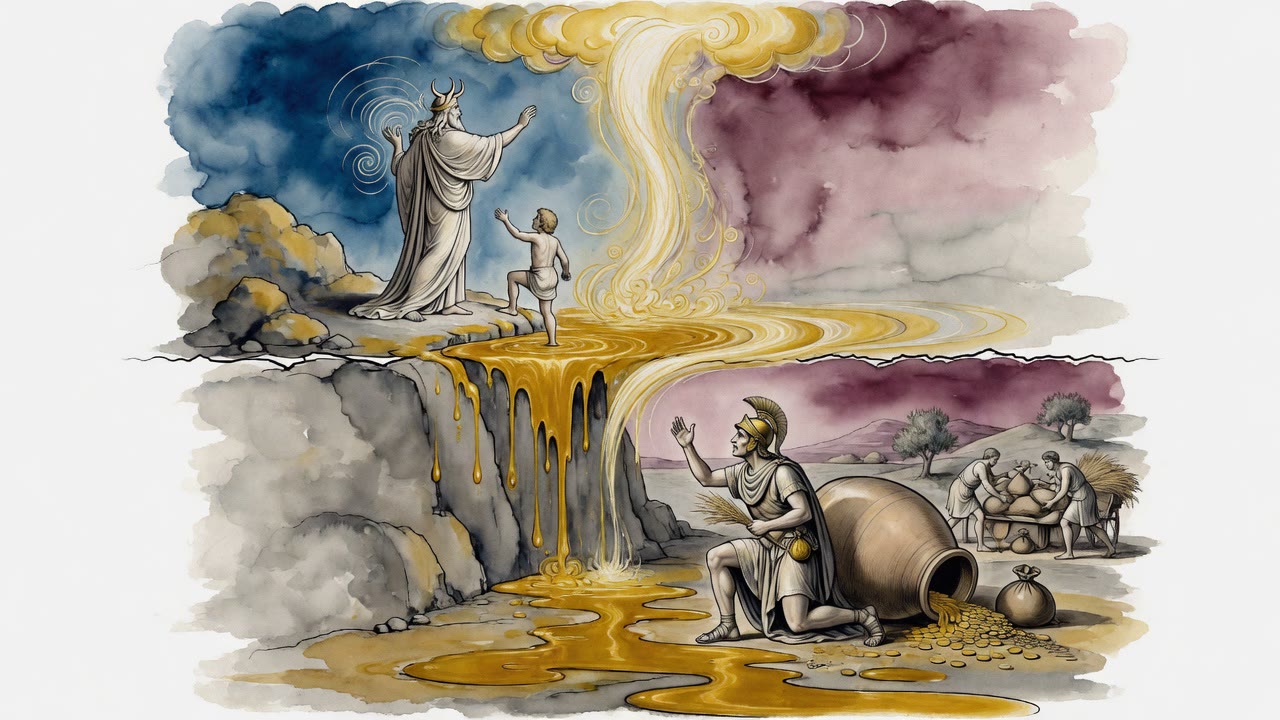
"Because it is destined to restore," Meir said. "Lehahzir. To give the kingdom back to its owner."

He had answered the etymology question and said something else underneath it, in a building where Rome kept its records, in front of men who worked for the government that held the country. The name of the unclean animal, he told them, is built out of the verb for handing back what you are holding.

And then, because he was not finished, he kept going. The wolf, he said, is going to be sheared for fine wool. The dog for ermine. A world flipped over, the animals nobody would touch turned into the furnishings of a palace, and every one of them evidence that the arrangement in the room was temporary.

"Enough, Rabbi Meir," they said. "There is nothing new under the sun."

The Line They Used to Shut Him Up

They had quoted his own scriptures back at him, and they had picked well. What was is what will be. What was done is what will be done. Nothing new.

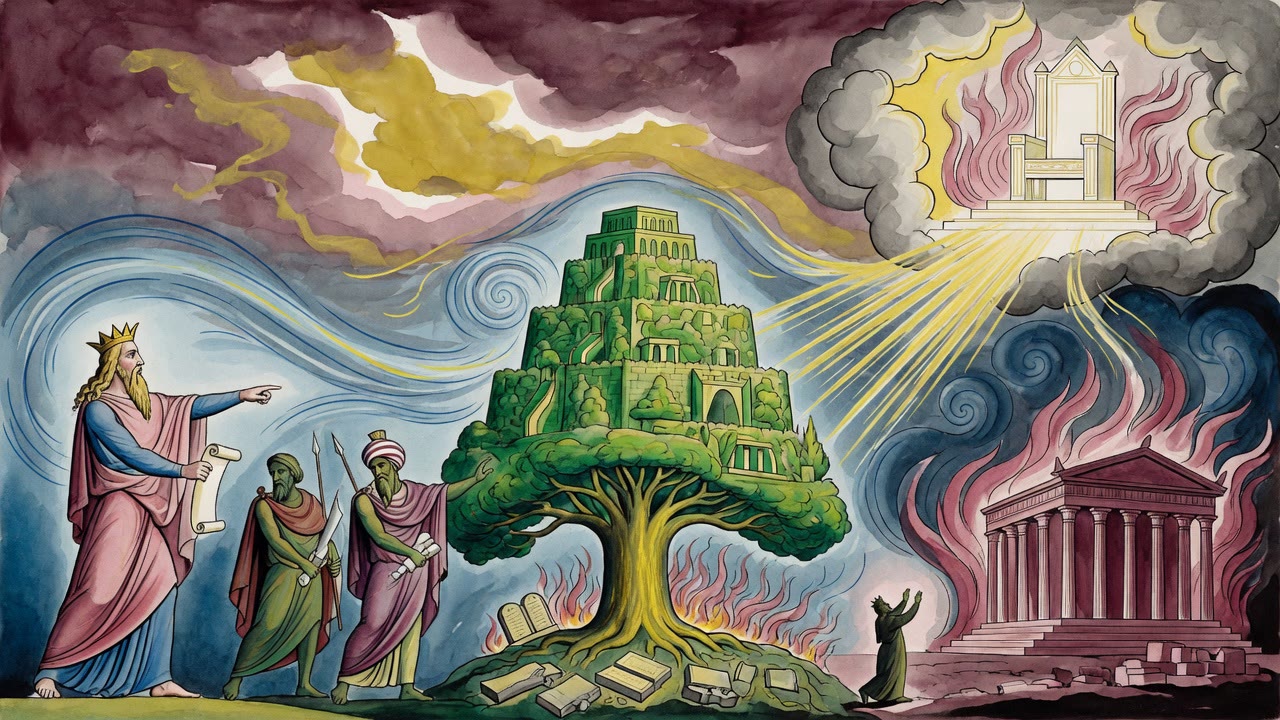
The sages had an answer to that verse, though it was not one Meir could have said out loud in that room. In the days to come the generations will crowd in front of the Throne and ask who gets to sing first. Master of the universe, who recites the songs before You? And the answer comes back that it was only ever Moses and the generation who stood at the sea, and it will be them again, because they already sang the new song and Isaiah is still calling for one. The verse does not forbid anything new. It only forbids the counterfeit.

Which is what the officers had accused him of. Making it up. Getting creative. A pig that hands back a crown.

The Herald Who Called for the Reward

There is a scene the sages told about the end of it, and Meir had been sitting on the front half of it when they cut him off.

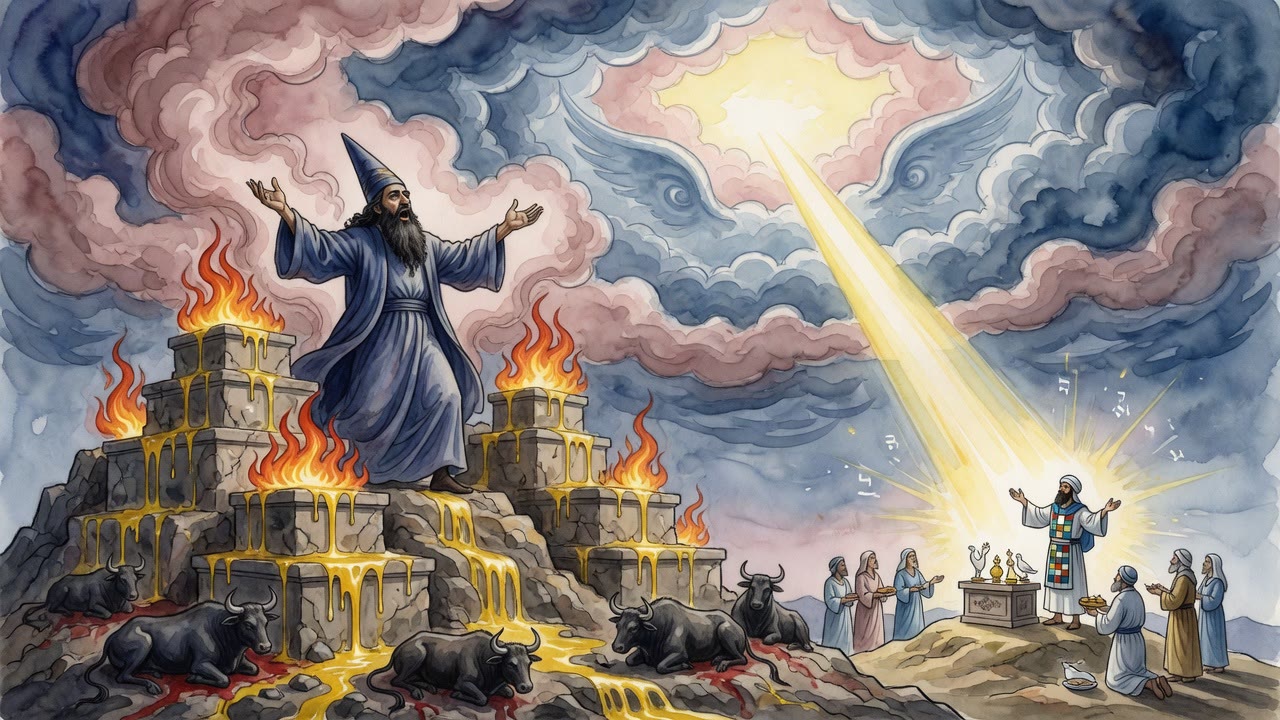
A herald goes out and calls across the whole world: anyone who never ate the meat of a pig, come and collect what is owed you. Crowds of the nations come forward. They never touched it. They want the reward.

And the Holy One says: shall these be paid in two worlds? They took their pleasure in this one. Now they want a share in the world that belongs to My children too?

The herald goes out a second time. Anyone who never ate carrion, or a mauled animal, or a creeping thing, come and collect. The crowd thins. Most of them did not keep that one at home and did not keep it anywhere else either.

So the animal at the center of the whole exchange turns out to be doing exactly what its name says. Handing things back to whoever they belong to.

Not a Private Torch

Rome had asked for one man, and one man had gone, and that is how the story is usually told. But holiness in Israel was never handed down that way.

When the Holy One gave most of His instructions, the wording was ordinary. Speak to the children of Israel. At the section that begins "You shall be holy," the wording changes: speak to the whole congregation. Gather every soul first. Every commandment is folded up inside that section, the honoring of parents, the Sabbath, the refusal of idols, the warning against theft and false oath, the love of a fellow, all of it packed into three words, and a teaching packed that tight does not get murmured to a few clever men.

Meir walked back out of the Roman building with the rest of the midrash still unsaid in his mouth. The sun over the street looked the same as it had that morning, exactly as the officers had said it would. The kingdom was still theirs. The name of the pig had not changed.


← All myths

From the tradition

Sources

3 sources

The texts behind this telling. Some cards carry a translation of the source; others are our own retelling of it, and each card says which. Every card links out to the original.

Kohelet Rabbah 9:1Kohelet Rabbah

Retold in our words. Read the original at the link below.The Sefaria Midrash Rabbah, 2022 · CC-BY

"What was is what will be," it says, "and what was done is what will be done; and there is nothing new under the sun" (Ecclesiastes 1:9).

Is that really true? Are we just doomed to repeat the same old patterns forever? to a fascinating exploration of this verse from Kohelet Rabbah, a collection of rabbinic interpretations on Ecclesiastes.

The Rabbis, confronting this very question, imagine a future gathering before the Holy One, blessed be He. The generations ask, "Master of the universe, who will recite songs before You first?" God's response? Only Moses. Why? Because, as the prophet Isaiah says, "Sing to the Lord a new song" (Isaiah 42:10) – and Moses already sang the ultimate new song at the Red Sea! He set the bar pretty high.

There's a story tucked in here, too, about the Roman government testing the wisdom of the Rabbis. They demanded a "torch," and the Rabbis, understanding this as a request for someone who could illuminate points of halakha (Jewish law), sent them Rabbi Meir.

Rabbi Meir was a brilliant sage. He answered all their questions, until they asked him about the Hebrew name for pig, ḥazir. His response? "Because it is destined to restore (lehaḥzir) the kingdom to its owner." He even went on to expound that the wolf would be sheared for fine wool and the dog for ermine – a vision of a world turned upside down! But his audience, perhaps feeling he was getting a little too creative, shut him down with, "Enough, Rabbi Meir, there is nothing new under the sun!"

Ouch.

The Rabbis then imagine a future scenario where God dispatches a herald, proclaiming that anyone who hasn't eaten pig meat will receive a reward. Many gentiles step forward, eager to claim their prize. But God asks: should they be rewarded in two worlds? They already enjoyed the pleasures of this world, should they also get the rewards of the world to come, reserved for God's children?

So, God sends out a second herald, this time asking about refraining from forbidden meats like carcasses and mauled animals. The implication? Gentiles aren't always so careful about these things, especially outside their homes. This all ties back to the pig, the ḥazir, destined to lehaḥzir, to restore greatness and the kingdom to its rightful owner. It's a complex idea about reward, punishment, and the unique role of the Jewish people.

And what about those mysterious taḥash hides used in the Tabernacle? What were they? Rabbi Yehuda says colored hides. Rabbi Nehemya says ermine. Rabbi Yoḥanan offers a different take entirely: God showed Moses a unique, large beast, used its hide for the Tabernacle, and then… stored it away! Rabbi Avin even gives it a name: keresh. Rabbi Hoshaya adds that it had a single horn on its forehead. It's a fascinating detail, connecting to the verse "It shall please the Lord better than a horned (makrin) and hooved ox" (Psalms 69:32).

The discussion then turns to the nature of the word makrin. Is it singular or plural? The Rabbis explore the grammatical nuances, noting that while it's vocalized as plural, it's actually written in the singular. It’s a deep dive into the intricacies of language and the way the Torah can be interpreted on multiple levels.

Finally, Rabbi Berekhya, quoting Rabbi Yitzḥak, offers another exposition of "What was is what will be." comparing the initial redeemer, Moses, to the ultimate redeemer, the Messiah. Just as Moses rode a donkey (Exodus 4:20), so too will the Messiah (Zechariah 9:9). Just as Moses brought down manna (Exodus 16:4), so too will the Messiah bring abundance (Psalms 72:16). And just as Moses brought forth water, so too will the Messiah bring forth a spring (Joel 4:18).

So, what do we make of all this? Does "nothing new under the sun" mean we're stuck in an endless, monotonous cycle? Or does it mean that the essential patterns of redemption, of struggle and triumph, repeat themselves throughout history, offering us hope and guidance? Perhaps it's both. Perhaps by understanding the past, we can better work through the present and work towards a brighter future. Maybe the "new song" isn't entirely new, but a remix, a reinterpretation, a renewed commitment to the ancient melodies of justice, compassion, and hope.

Full source
Kohelet Rabbah 8:15Kohelet Rabbah

Retold in our words. Read the original at the link below.The Sefaria Midrash Rabbah, 2022 · CC-BY

You're not alone. King Solomon, the wisest of men, grappled with this too. In (Ecclesiastes 8:15), he declares, "I praised joy, as there is nothing better for man under the sun than to eat, drink, and rejoice."

What does that really mean? Is Solomon advocating for a life of pure hedonism? A never-ending feast?

Well, maybe not.

The Rabbis, in the collection of Midrashic (rabbinic interpretive commentary) interpretations known as Kohelet Rabbah, dig a little deeper. They ask a pretty profound question: What kind of "eating and drinking" truly sustains us, not just for a moment, but for a lifetime...and beyond?

Rabbi Tanhuma shares an interpretation from Rabbi Naḥman, son of Rabbi Shmuel bar Naḥman. (And to add to the chain of tradition, Rabbi Menaḥama – or some say Rabbi Yirmeya and Rabbi Meyasha – also chimed in, all in the name of Rabbi Shmuel bar Rav Yitzḥak!). Their collective wisdom suggests something remarkable: every time Ecclesiastes mentions eating and drinking, it's actually referring to Torah and good deeds.

Wait, what? Eating Torah?

Rabbi Yona brings it home. He points to the verse's continuation: "[There is nothing better…than to eat, drink, and rejoice]. That will accompany him in his toil [ba’amalo]" (Ecclesiastes 8:15). Notice that word, ba’amalo? It means "in his toil," but Rabbi Yona cleverly reads it as beolamo, "in his world," meaning this world.

So, this joy accompanies us in this world "during the days of his life" – all the way to the grave. But hold on… are there buffets in the afterlife? Are we taking Tupperware containers filled with brisket and kugel to our final resting place? Probably not.

That’s the point! The Rabbis are pushing us to understand that the "food and drink" that accompanies us even to the grave aren't literal. They represent something far more enduring: the Torah we learn, the mitzvot (good deeds) we perform, the acts of kindness we extend. These are the things that truly nourish us and leave a lasting impact. A delicious meal is wonderful, but its pleasure is fleeting. A moment of joy can be exhilarating, but it fades. But the knowledge we gain from studying Torah, the satisfaction we derive from helping others – these create ripples that extend far beyond our own lives.

So, what does it mean to truly "eat, drink, and rejoice?" It’s not about chasing ephemeral pleasures. It’s about feeding our souls with meaning, purpose, and connection. It’s about engaging with Torah, performing good deeds, and building a legacy of kindness that will accompany us long after we’re gone. It's about finding joy in the things that truly matter, the things that echo into eternity. What will you choose to feast on today?

Full source
Midrash Tanchuma Buber, Kedoshim 3:1Midrash Tanchuma Buber, Kedoshim

Translation of the source text.Midrash Tanchuma (Buber), Public Domain, on Sefaria · CC-BY-SA

"Speak to the whole congregation of the Children of Israel" (Leviticus 19:2). What reason did He see to speak this section in an assembly? Why did He not say, "Speak to the Children of Israel," as in the rest of the sections, but rather, "to the whole congregation"? Because all of the Commandments are included within it. How?

Full source