7 min read

The Judge You Have Now Stands Equal to Moses

A litigant wants the dead giants of Torah. Heaven answers that the court of Gideon and the court of Moses weigh the same when the living judge sits.

Curated by Arthur · Told by Maggid ·
Table of Contents
  1. The Case That Would Not Enter
  2. Courts Weighed Against the Greatest
  3. Nothing New, and Still a Court
  4. The Verdict in the Small Room

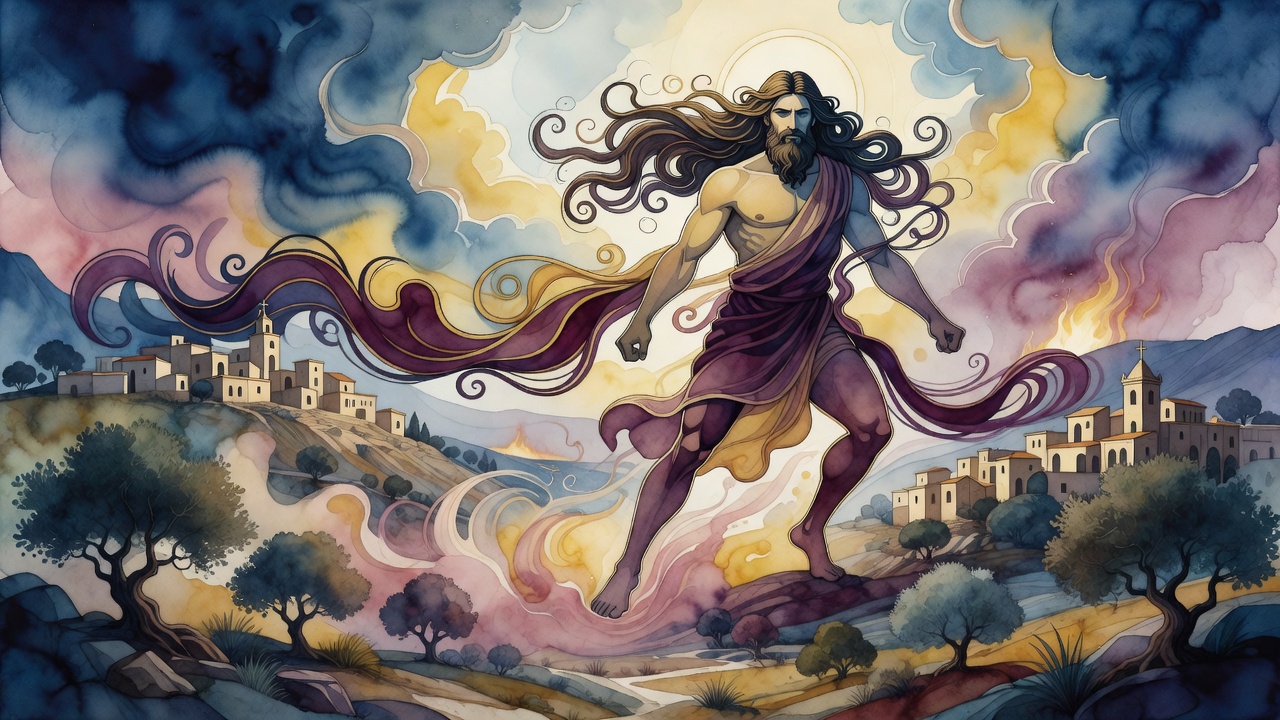
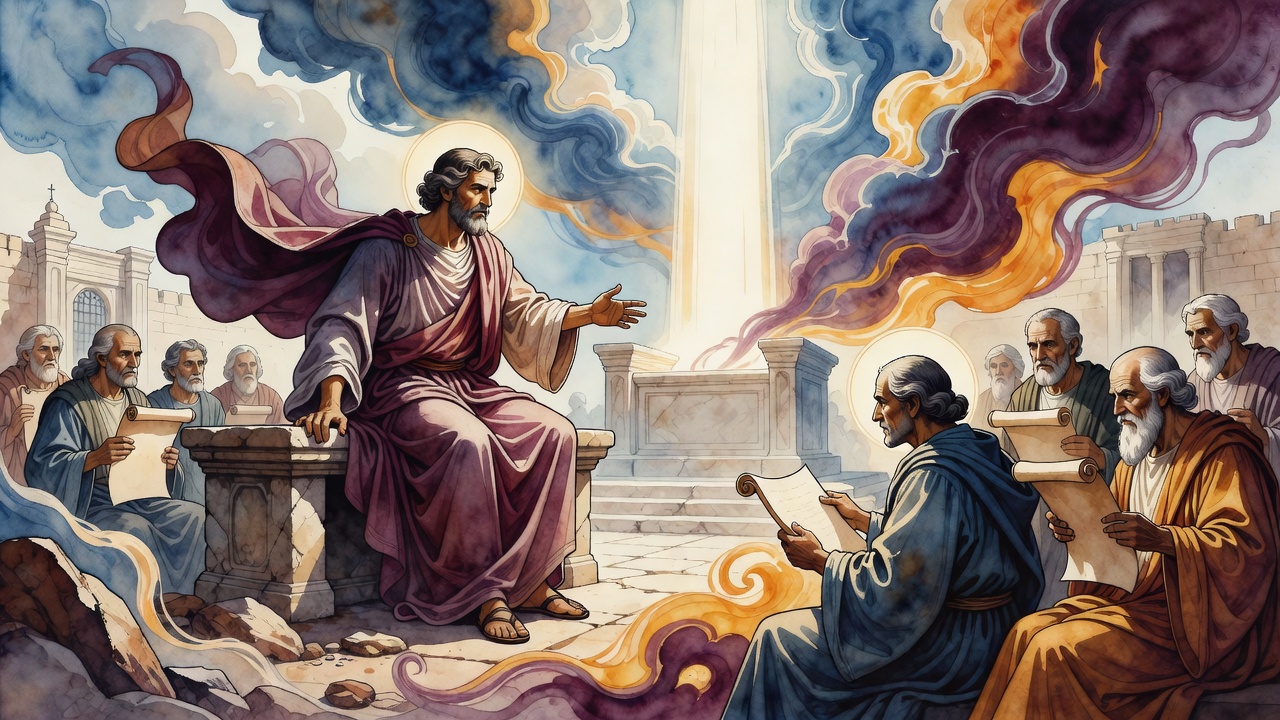
The man with the torn cloak would not sit. He paced the packed earth outside the study house while dust stuck to the sweat at his temples. Inside, the living judge of the town arranged his fringes and waited. The case was ready. Witnesses were ready. The man with the torn cloak kept saying the same sentence under his breath, as if repetition could summon a different century.
The Judge You Have Now Stands Equal to Moses Click for full size

"If Rabbi Akiva were alive," he muttered, "I would bring this before him. If Rabbi Yoḥanan sat here, I would trust the verdict."

The living judge heard him through the open door and did not raise his voice. He had heard the line before. Every generation breeds a mouth that loves the dead academy more than the open docket. A fly walked the rim of the inkwell. The judge did not brush it away. He waited for a living foot to cross the sill.

The Case That Would Not Enter

A widow's boundary stone had been moved in the night. A neighbor's plow had bitten a strip of her field. The facts were plain enough for a child to hold. Still the man with the torn cloak, her own kinsman and spokesman, refused the threshold. He wanted a name that already lay under earth. He wanted the prestige of a vanished court more than he wanted the field restored before the rains.

"Go to the priests, the Levites, and to the judge who will be in those days," the Torah says (Deuteronomy 17:9). Not the judge who was. Not the judge you invent out of grief for a golden past. The judge who is. The man outside the door was trying to edit the verse with longing.

An elder from the bench came out and put a hand on his sleeve. "Sit," the elder said. "The court that sits for you today is the court heaven counts."

The kinsman pulled free. "This is not Moses. This is not Samuel. This is a small room and a small man."

The elder did not flinch. "Then hear how heaven weighs small rooms."

Behind them the widow stood with her hands empty and her mouth shut. Dust filmed the crease of her knuckles. She had not come to win an argument about fame. She had come to keep a strip of earth that fed her.

Courts Weighed Against the Greatest

Rabbi Abba bar Kahana, and in another line Rabbi Ada bar Ḥunya, cut the fantasy clean. Do not say, if Rabbi Akiva were alive I would study with him, if Rabbi Zeira and Rabbi Yoḥanan sat here I would learn Mishnah from them. The sages of the hour you stand in are the sages you are given. Divine wisdom does not clock out when a famous name dies.

Rabbi Yoḥanan brought proof from Samuel's book. Gideon, called Yerubaal, stands in the same ledger as the greatest. Samson, called Bedan, stands there. Jephthah stands there. Scripture sets them beside Samuel, and Psalms sets Moses and Aaron among those who call on the Name with Samuel in their company (Psalms 99:6; 1 Samuel 12:6, 12:11). The court of Gideon was as significant before God as the court of Moses. The court of Samson equaled Aaron's. Jephthah's court weighed with Samuel's.

A leader appointed for the people in his time is not a discount Moses. Heaven does not run a secondary market in authority. The man who judges under a cracked roof can still carry a weight that matches the weight of a prophet's hall, if the people set him there and God does not remove him.

The man with the torn cloak went still. The widow's field still waited. The living judge still sat with his fringes even and his patience thinner than it had been at dawn.

Nothing New, and Still a Court

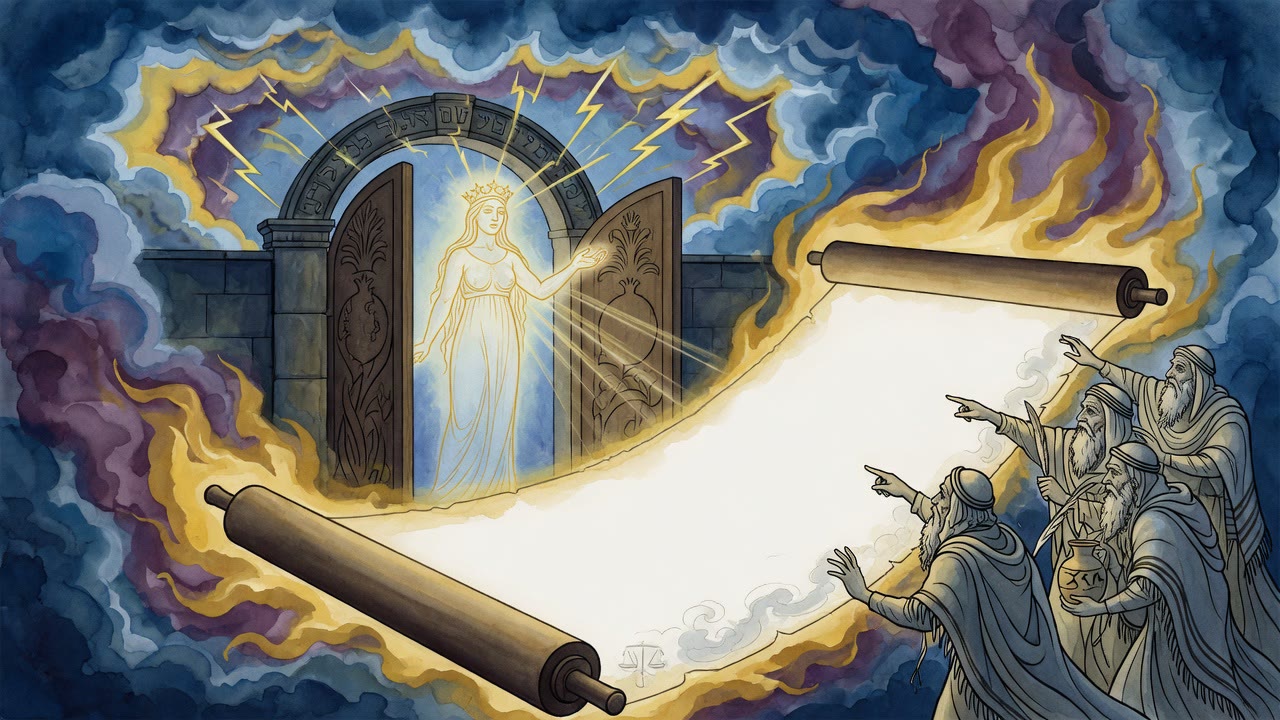
Ecclesiastes says there is nothing new under the sun (Ecclesiastes 1:9). Sages once nearly shut that book for sounding like heresy, as if joy without a roof and toil without profit could unteach a people. The book stayed open because judgment stood at the end of the young man's feast, and because toil under the sun is not the same as toil for Torah. That fight over a dangerous scroll and this fight over a living court share a nerve: whether the present tense still binds.

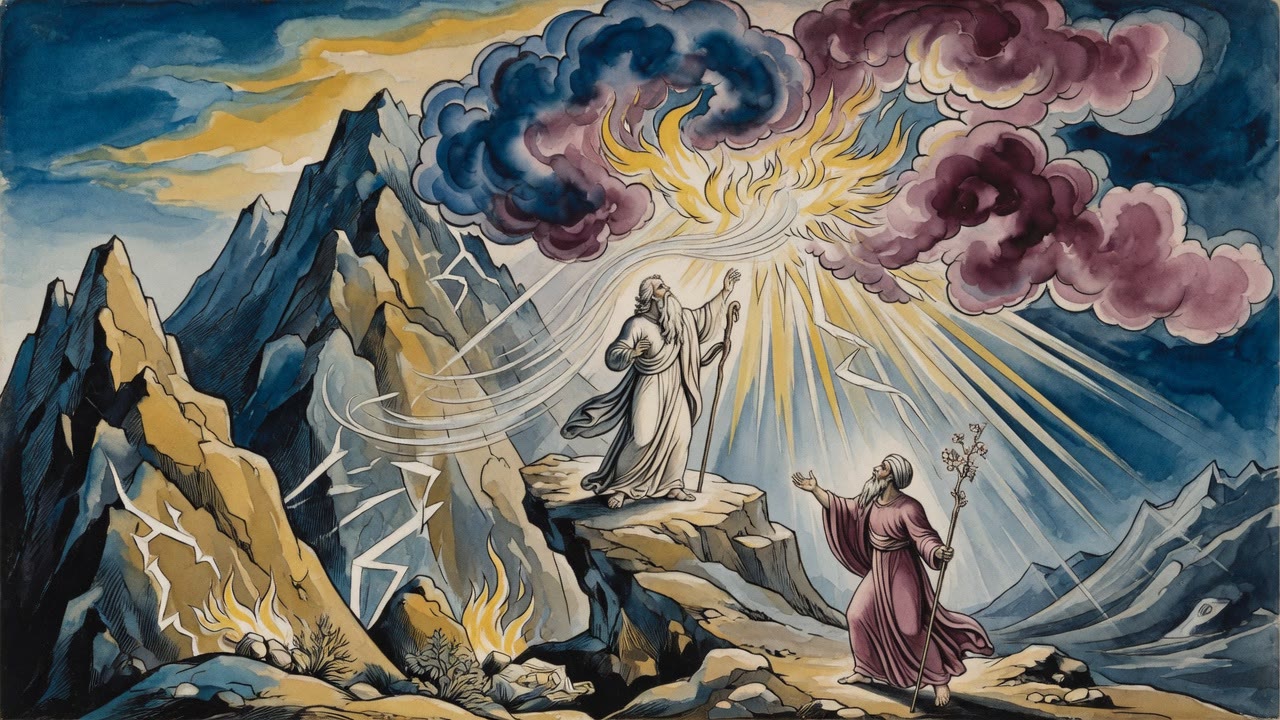
Generations will ask who sings first before God. Only Moses, who already sang the new song at the sea. That unique past does not cancel the docket in a dusty town. Moses owns the song at the end of days. Your living judge still owns this morning's boundary stone.

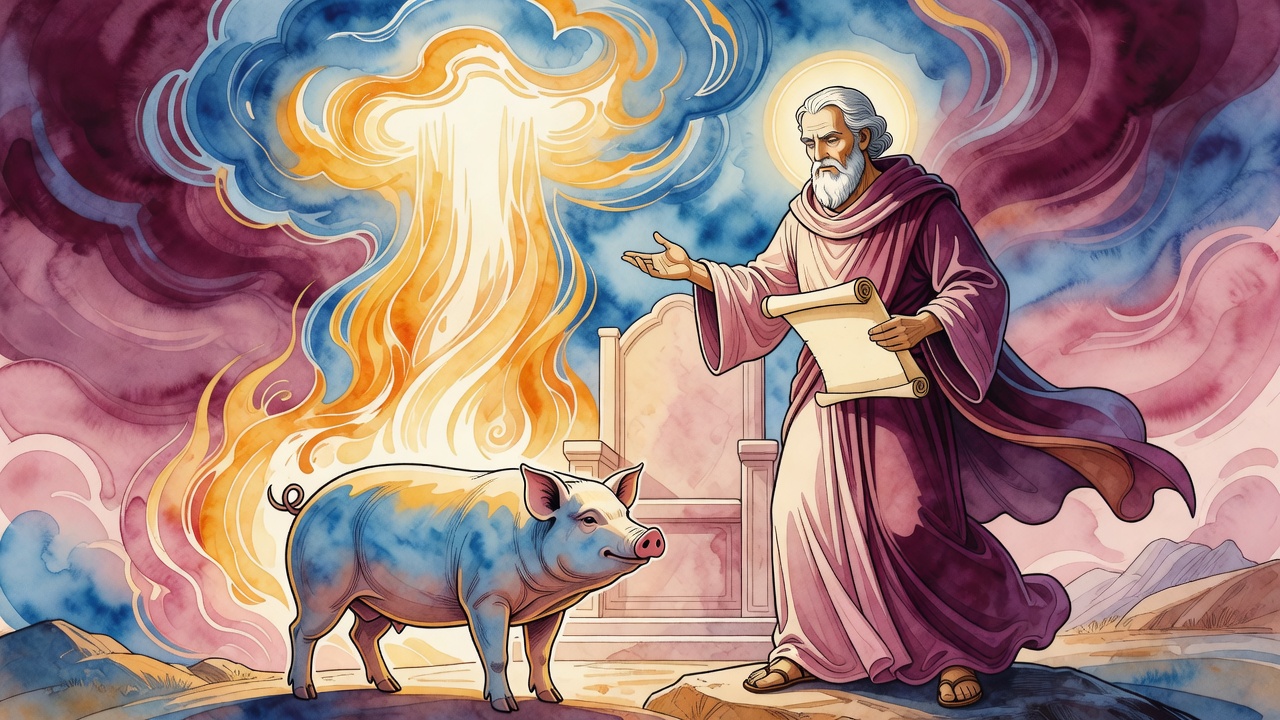
Roman officers once demanded a "torch" from the sages, a mind to light dark points of law. The sages sent Rabbi Meir. He answered until they baited him with the pig's name, ḥazir, and he answered that too: it is destined to restore, lehaḥzir, the kingdom to its owner. They snapped, "Enough, there is nothing new under the sun." Even a brilliant tongue can be shut by men who prefer a slogan to a live ruling. Nostalgia and slogan both starve a court.

The kinsman finally stepped inside. The widow followed. The neighbor who had moved the stone already sat with his jaw locked and dirt still under his nails from the night work.

The Verdict in the Small Room

The living judge heard the witnesses. He walked the strip of earth at noon while heat shivered off the furrows. He set the boundary stone back with his own hands until it seated true, and he named the penalty for moving it again. No fire fell from heaven. No sea split. A dog barked once at the edge of the field and went quiet. The widow went home with her strip intact and her kinsman's pride quieter than his mouth had been at the door.

That night the kinsman told anyone who would listen that the ruling felt too ordinary to be holy. An old woman who sold oil near the gate answered him without looking up from her jars. "If it had felt like Sinai every time," she said, "you would never finish a case. God counts the small room when the small room does the work."

He had wanted Rabbi Akiva's shadow. He received a field, a stone, and a living mouth that heaven refuses to call second-rate. Moses remains Moses. The judge who is in those days remains the judge you must face, or the Torah's command to go to him becomes a plaque on a wall instead of a road under your feet.

Under the sun the arguments recycle. Above the sun the toil of a real ruling still rises. A generation that starves its own courts by fasting for the dead will lose the field before the rains, and then blame the sky for a hunger it chose at the door.


← All myths
From the tradition

Sources

3 sources

The texts behind this telling. Some cards carry a translation of the source; others are our own retelling of it, and each card says which. Every card links out to the original.

Kohelet Rabbah 4:4Kohelet Rabbah

Retold in our words. Read the original at the link below.The Sefaria Midrash Rabbah, 2022 · CC-BY

We look back with nostalgia, imagining that the giants of the past held all the answers. But Jewish tradition challenges that very notion.

The idea that each generation has its own unique wisdom and authority is a powerful one. Rabbi Abba bar Kahana, or perhaps Rabbi Ada bar Ḥunya (the tradition attributes this teaching to both), puts it bluntly: Don't idealize the past. Don't say, "If Rabbi Akiva were alive, I'd study Torah with him," or "If Rabbi Zeira and Rabbi Yoḥanan were here, I'd study Mishna (oral law) with them." The generation you're in, and the sages you have now, are just as valuable as those who came before.

It suggests that divine wisdom isn't confined to a specific time or place.

Rabbi Yoḥanan brings prooftexts from the book of Samuel (I (Samuel 12:6), 12:11), pointing out how seemingly "lesser" figures like Gideon (Yerubaal), Samson (Bedan), and Jephthah (Yiftah) are placed on the same level as Samuel, and even compared to Moses and Aaron, in terms of their significance. As we find in Psalms (99:6), "Moses and Aaron among his priests, and Samuel among those who call His name." What does this mean?

The Midrash (rabbinic commentary) understands this to mean that the court of Gideon was as significant to God as the court of Moses! The court of Samson was equivalent to that of Aaron, and Jephthah's court held the same weight as Samuel's. Even if someone seems insignificant, if they are appointed a leader in the community, they are equivalent to the noblest of predecessors.

This isn't just some abstract theological concept. It has real-world implications. Deuteronomy (17:9) tells us to go "to the priests, the Levites, and to the judge who will be in those days…" Rabbi Yoḥanan asks a simple, logical question: Can you go to a judge who isn't in your generation? Of course not! The very phrasing "who will be in those days" emphasizes that the judge of your time is just as valid as the judges of the past. That's why Ecclesiastes (7:10) warns us, "Do not say: 'How was it that the former days were better than these?'"

Rabbi Shimon ben Lakish adds another layer, advising that we should only listen to the judge of our own time. He brings a verse from Numbers (36:1) about the heads of the families of Gilead, highlighting the different ways the word "fathers" (avot) is used, suggesting that leadership is fluid and changes with each generation.

The Midrash continues with more examples: Rabbi Berekhya interprets a verse in Chronicles (I (Chronicles 12:2)8) to mean that if Aaron had lived in the time of Yehoyada, Yehoyada would have been greater. Similarly, Rabbi Simai suggests that if Aaron and his sons were alive, Tzadok would still be greater because of his position in that era (I (Chronicles 6:3)4).

Rabbi Hillel even points to a verse in Nehemiah (8:17) about the festival of Sukkot (the Festival of Tabernacles), where the name Joshua (Yehoshua) is written in a slightly diminished form (Yeshua), to indicate that Ezra, the leader at the time, deserved even greater honor. And the Rabbis, citing Ezra (7:5-6), suggest that had Aaron been alive, Ezra would still have been considered the chief.

So, what's the takeaway here? It's not about dismissing the wisdom of the past. It's about recognizing that wisdom is constantly being reinterpreted and reapplied to the challenges of the present. It's about trusting the leaders and teachers who are here now, confronting the issues we face today. Each generation builds upon the foundations laid by those who came before, but each also brings its own unique perspective and understanding. Can we fully embrace the wisdom that exists in our own time, trusting that our leaders, our teachers, and even ourselves, have something valuable to contribute to the ongoing story of our tradition?

Full source
Kohelet Rabbah 9:1Kohelet Rabbah

Retold in our words. Read the original at the link below.The Sefaria Midrash Rabbah, 2022 · CC-BY

"What was is what will be," it says, "and what was done is what will be done; and there is nothing new under the sun" (Ecclesiastes 1:9).

Is that really true? Are we just doomed to repeat the same old patterns forever? to a fascinating exploration of this verse from Kohelet Rabbah, a collection of rabbinic interpretations on Ecclesiastes.

The Rabbis, confronting this very question, imagine a future gathering before the Holy One, blessed be He. The generations ask, "Master of the universe, who will recite songs before You first?" God's response? Only Moses. Why? Because, as the prophet Isaiah says, "Sing to the Lord a new song" (Isaiah 42:10) – and Moses already sang the ultimate new song at the Red Sea! He set the bar pretty high.

There's a story tucked in here, too, about the Roman government testing the wisdom of the Rabbis. They demanded a "torch," and the Rabbis, understanding this as a request for someone who could illuminate points of halakha (Jewish law), sent them Rabbi Meir.

Rabbi Meir was a brilliant sage. He answered all their questions, until they asked him about the Hebrew name for pig, ḥazir. His response? "Because it is destined to restore (lehaḥzir) the kingdom to its owner." He even went on to expound that the wolf would be sheared for fine wool and the dog for ermine – a vision of a world turned upside down! But his audience, perhaps feeling he was getting a little too creative, shut him down with, "Enough, Rabbi Meir, there is nothing new under the sun!"

Ouch.

The Rabbis then imagine a future scenario where God dispatches a herald, proclaiming that anyone who hasn't eaten pig meat will receive a reward. Many gentiles step forward, eager to claim their prize. But God asks: should they be rewarded in two worlds? They already enjoyed the pleasures of this world, should they also get the rewards of the world to come, reserved for God's children?

So, God sends out a second herald, this time asking about refraining from forbidden meats like carcasses and mauled animals. The implication? Gentiles aren't always so careful about these things, especially outside their homes. This all ties back to the pig, the ḥazir, destined to lehaḥzir, to restore greatness and the kingdom to its rightful owner. It's a complex idea about reward, punishment, and the unique role of the Jewish people.

And what about those mysterious taḥash hides used in the Tabernacle? What were they? Rabbi Yehuda says colored hides. Rabbi Nehemya says ermine. Rabbi Yoḥanan offers a different take entirely: God showed Moses a unique, large beast, used its hide for the Tabernacle, and then… stored it away! Rabbi Avin even gives it a name: keresh. Rabbi Hoshaya adds that it had a single horn on its forehead. It's a fascinating detail, connecting to the verse "It shall please the Lord better than a horned (makrin) and hooved ox" (Psalms 69:32).

The discussion then turns to the nature of the word makrin. Is it singular or plural? The Rabbis explore the grammatical nuances, noting that while it's vocalized as plural, it's actually written in the singular. It’s a deep dive into the intricacies of language and the way the Torah can be interpreted on multiple levels.

Finally, Rabbi Berekhya, quoting Rabbi Yitzḥak, offers another exposition of "What was is what will be." comparing the initial redeemer, Moses, to the ultimate redeemer, the Messiah. Just as Moses rode a donkey (Exodus 4:20), so too will the Messiah (Zechariah 9:9). Just as Moses brought down manna (Exodus 16:4), so too will the Messiah bring abundance (Psalms 72:16). And just as Moses brought forth water, so too will the Messiah bring forth a spring (Joel 4:18).

So, what do we make of all this? Does "nothing new under the sun" mean we're stuck in an endless, monotonous cycle? Or does it mean that the essential patterns of redemption, of struggle and triumph, repeat themselves throughout history, offering us hope and guidance? Perhaps it's both. Perhaps by understanding the past, we can better work through the present and work towards a brighter future. Maybe the "new song" isn't entirely new, but a remix, a reinterpretation, a renewed commitment to the ancient melodies of justice, compassion, and hope.

Full source
Kohelet Rabbah 3:1Kohelet Rabbah

Retold in our words. Read the original at the link below.The Sefaria Midrash Rabbah, 2022 · CC-BY

That question, that nagging feeling, is at the heart of the Book of Ecclesiastes, or Kohelet in Hebrew. And it’s a question the Rabbis grappled with deeply.

The opening verse of Kohelet asks, “What profit is there for man in all his toil that he toils under the sun?” It's a powerful question that challenges the very meaning of our existence. According to Kohelet Rabbah, the Sages even considered suppressing the entire book! Why? Because they worried it sounded like heresy.

Rabbi Binyamin, as quoted in Kohelet Rabbah, explains that the Sages were concerned that people might misunderstand Solomon’s wisdom and think that all toil is pointless, even the toil of studying Torah. But, the Sages clarified, Solomon wasn’t talking about all toil, only “his toil” – the toil of worldly pursuits. Torah study, on the other hand, does bring profit.

Rabbi Shmuel ben Rabbi Yitzḥak adds another layer to the Sages' concerns. They took issue with Solomon's seemingly carefree advice: “Rejoice, young man, in your youth; and let your heart cheer you in the days of your youth, and walk in the ways of your heart, and in the sight of your eyes” (Ecclesiastes 11:9). This seemed to contradict Moses' warning: “Do not stray after your heart and after your eyes” (Numbers 15:39). Was Solomon suggesting that restraint was out the window? That there was no divine justice?

Thankfully, Solomon clarifies himself, adding, “But know that for all these, God will bring you to judgment” (Ecclesiastes 11:9). This reassurance, according to Kohelet Rabbah, satisfied the Sages.

But the question of profit and toil lingered. Rabbi Huna and Rabbi Aḥa, citing Rabbi Ḥilfai, offered a beautiful distinction: Our toil under the sun may seem fruitless, but there's a treasure waiting for us above the sun. Rabbi Yudan echoed this, saying that we don't reap rewards under the sun, but we do above it. In other words, physical toil might not bring lasting profit, but spiritual toil definitely does.

Rabbi Levi and the Rabbis then explore what benefit righteous people receive for accumulating mitzvot (commandments), good deeds. Rabbi Levi suggests it is enough that God shines light upon them. The Rabbis expand on this, interpreting the phrase “under the sun” as “in exchange for.” They say that the reward for the righteous is that God will renew their faces and cause them to shine like the sun, as it is written: “But those who love Him are like the sun emerging in its might” (Judges 5:31).

The text then uses vivid imagery to illustrate God’s generosity. Rabbi Yannai describes the effort we put into cooking a simple meal. But God? God provides everything – the winds, the clouds, the rain, the plants – and all He asks in return is the omer, a small offering of barley. Rabbi Pinchas builds on this, adding the image of laundry in the rainy season, all the work it takes to dry clothes, while God provides everything.

Rabbi Berekhya even uses the analogy of a chef who isn’t allowed to taste his own cooking! Rabbi Yehoshua of Sikhnin, quoting Rabbi Levi, adds that God is our guard, yet we don’t even give Him a taste of what He guards.

Rabbi Elazar then asks, “Oh, wicked ones, do you no longer need Me?” referring to God's provision of rain and harvest. He reminds us that God preserves the appointed weeks of the harvest, protecting us from heatwaves and harmful dews. As David says in (Psalms 68:10), “A bounteous [nedava] rain You will bring, God.”

Then, Rabbi Abba shifts our focus to the omer offering itself, noting the great care and effort involved in bringing it. As the text describes, emissaries of the court would carefully harvest the sheaves with great fanfare. Rabbi Levi emphasizes that God allows us to plow, sow, reap, and gather, but if He didn’t provide the wind for winnowing, we’d be stuck! Yet, we often don't even acknowledge this gift.

The text concludes with a fascinating anecdote about Rabbi [Yehuda HaNasi] and bar Kappara. Rabbi threw a wedding feast for his son but forgot to invite bar Kappara. In response, bar Kappara wrote on Rabbi’s gate: “After all your rejoicing there is death; and what is the profit in your rejoicing?” Rabbi, realizing his mistake, invited bar Kappara to a second feast. But bar Kappara then proceeded to distract everyone with endless parables, preventing them from enjoying the food. When Rabbi asked him why, bar Kappara explained that he wanted to show he wasn’t just there for the feast, but because he had been slighted.

This story, according to Kohelet Rabbah, illustrates Solomon's point: “What profit is there for man in all his toil that he toils under the sun?” It’s a reminder that even our greatest joys are fleeting.

The Sages in Kohelet Rabbah acknowledge that life under the sun can feel pointless at times. But they also offer a powerful message of hope. By shifting our focus from the material to the spiritual, by recognizing God’s constant presence and provision, we can find lasting meaning and profit in our toil. Even in the face of inevitable loss and change. So maybe the point isn’t what we get from our toil, but who we become in the process.

Full source