Samson's Hair Rang Like Bells Between Two Towns
A potter set down a wet jar and forgot the rim. Dust rose in two towns at once. Between them a Nazirite's hair began to ring.
Table of Contents
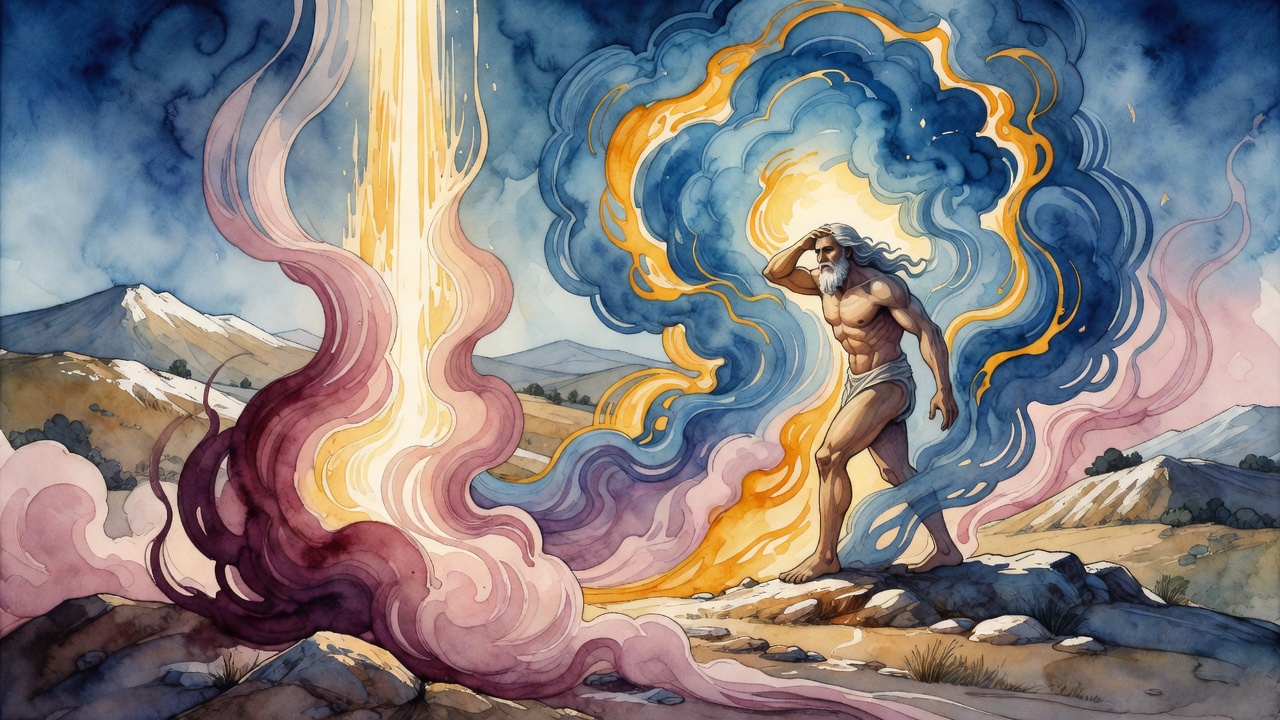
The camp of Dan lay between two towns that shared the same dry wind. Samson walked that strip when the spirit of the Lord began to move him (Judges 13:25). Dust rose in two places at once. Dogs barked late. A potter set down a wet jar and forgot to finish the rim.
 Click for full size
The spirit did not begin as a private mood. It rearranged the map under one man's feet.
One Step Between Two Towns
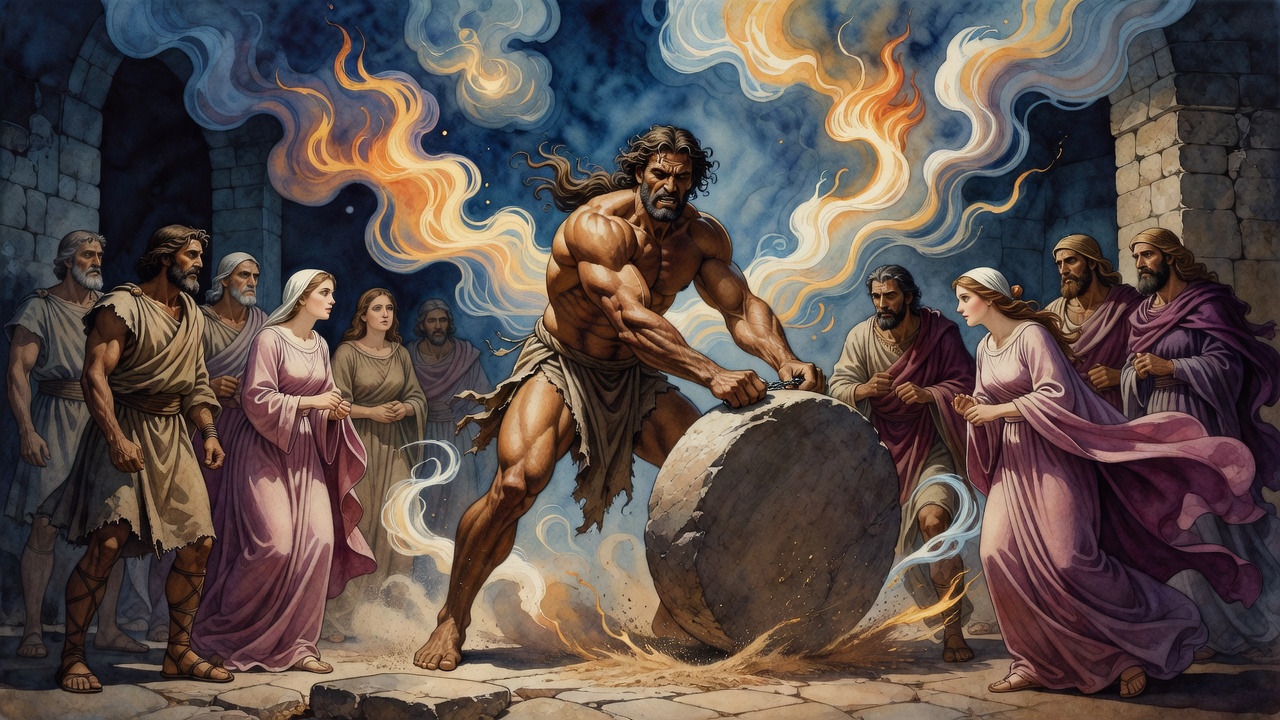
Rabbi Yehudah chose the stride. In one step, he said, Samson crossed from Zoreah to Eshtaol, two miles and more. One foot in a street of one town, the other foot planted where the second town began. Children would have seen a man cover ground the way a shadow covers a wall at evening, sudden and wrong for ordinary legs.
A woman at the well stopped mid-sentence. A Philistine scout on a far ridge felt the hair on his own arms lift without understanding why. The camp of Dan learned to live with weather made of a judge's walk.
Hair That Sounded the Alarm
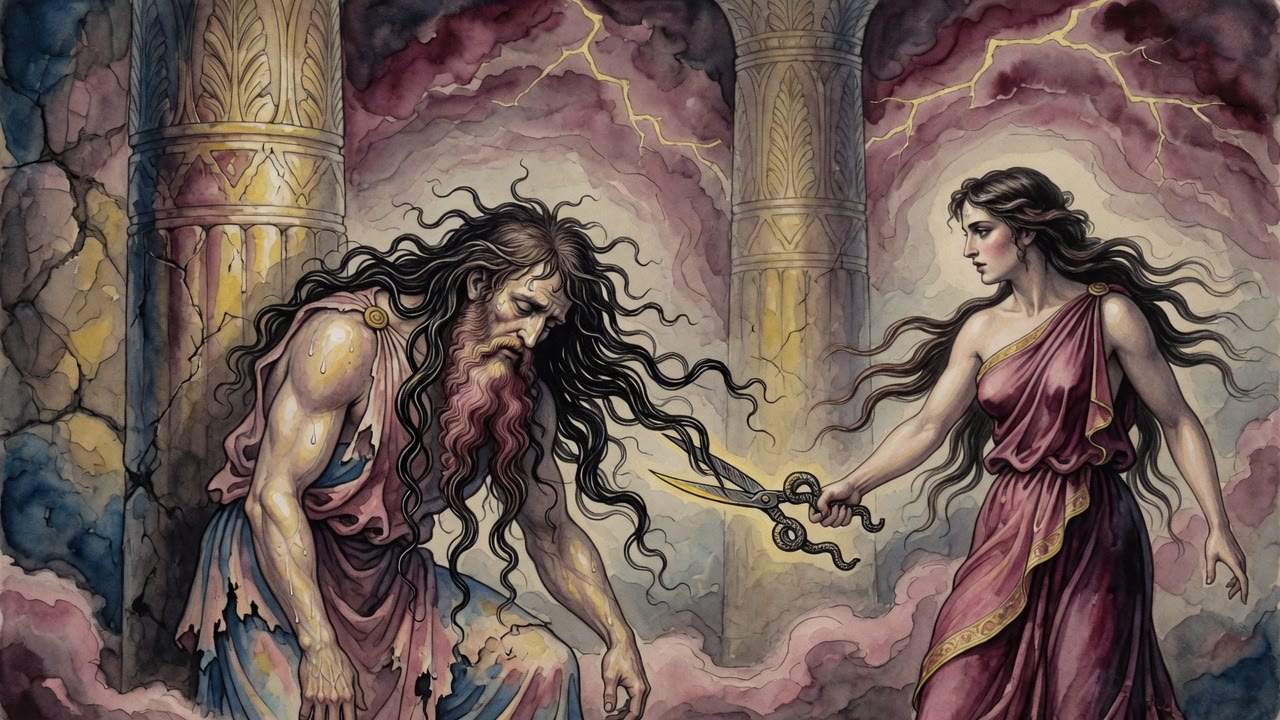
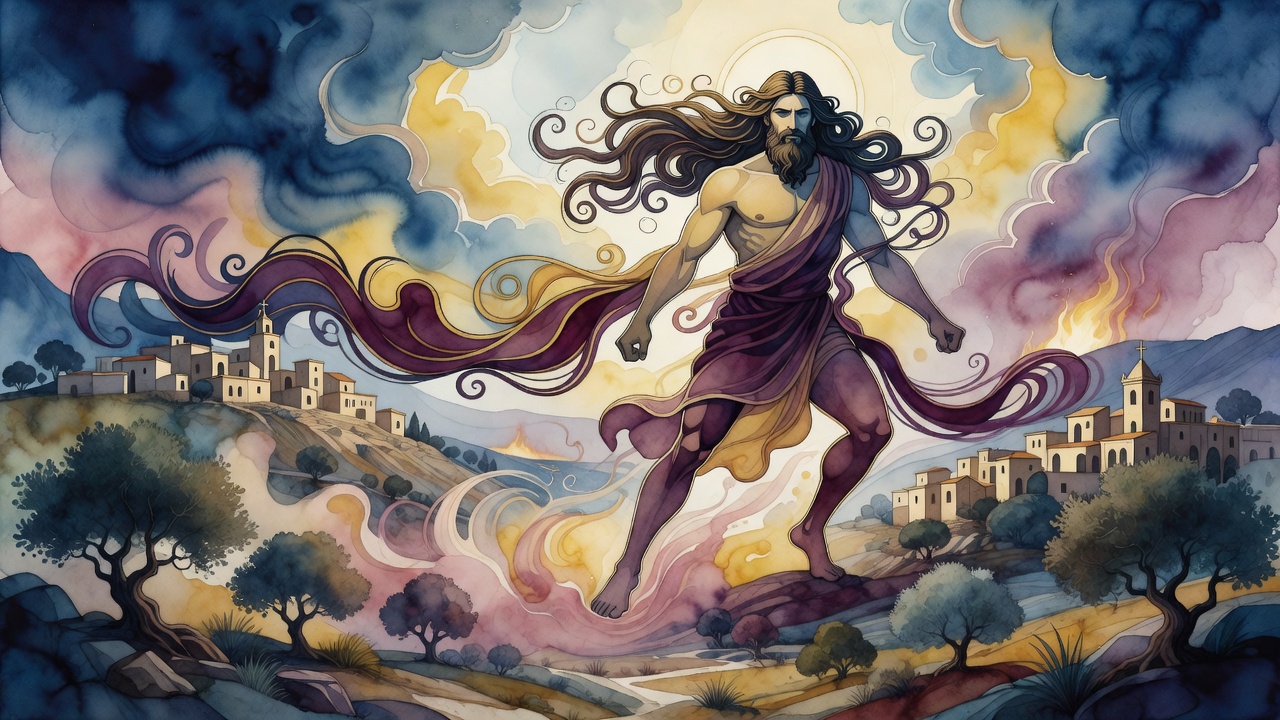
Another reading chose the ring. When the spirit rose, the Nazirite locks that had never met a razor lifted at their roots. Hair struck hair. The sound carried like a row of hanging bells. From Zoreah to Eshtaol people heard the tinkling and knew the judge was stirring. No messenger ran. The man's own head became the trumpet.
Women at the well set their jars down. In the camp, a boy tried to count the rings the way one counts blasts of the shofar. He lost the number and kept only the feeling that the air had changed. Mothers taught children to hear the difference between ordinary bells and that brighter clash.
A father told his son, "When you hear that ringing, stay off the high road."
The son asked if the sound was holy or dangerous.
"Both," the father said. "That is how judges arrive."
The Court That Equaled Aaron's
Later, in a study hall far from Dan, a student said what students still say. "If only Rabbi Akiva were alive, I would study Bible before him. If Rabbi Zeira and Rabbi Yochanan were alive, I would study Mishnah before them."
Rabbi Yochanan would not let the wish stand. "The generation that comes in your lifetime, and the sage that is in your lifetime, are the equivalent of the generation that passed," he said. "You do not get Moses on demand. You get the judge who is in those days" (Deuteronomy 17:9).
He opened Samuel. The Lord sent Yerubaal, Bedan, Yiftah, and Samuel (I Samuel 12:11). Yerubaal is Gideon. Bedan is Samson. Yiftah is Jephthah. Then he opened Psalms. Moses and Aaron among His priests, and Samuel among those who call His name (Psalms 99:6). Gideon's court is as great before the Holy One as Moses's court. Samson's court is the equivalent of Aaron's. Jephthah's court is the equivalent of Samuel's.
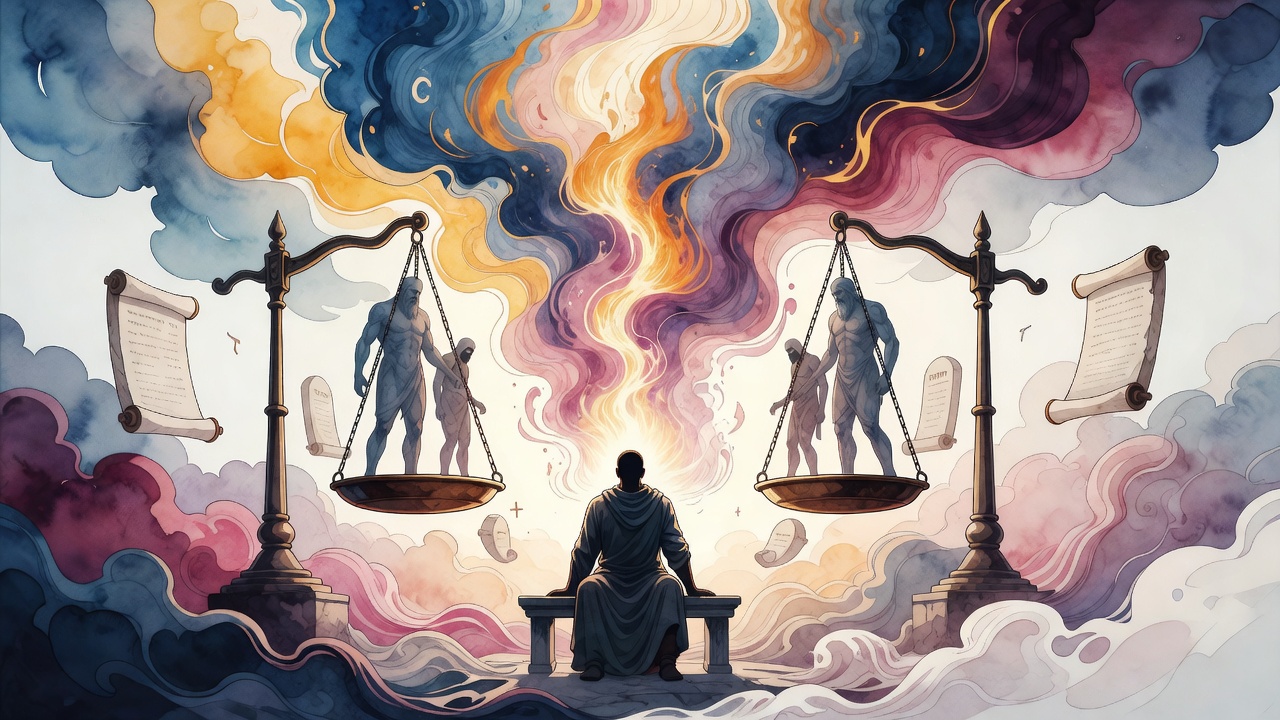
A leader appointed for his hour is not a lesser coin. That claim lands harder beside the bells. Samson is not only muscle. He is a court with jurisdiction over a strip of Danite ground. His authority arrives as noise and stride before it arrives as verdict.
The Strip of Land That Listened
Philistine borders pressed. Israel needed more than a quiet inspiration in a young man's chest. Either the ground shortens under his feet, or the air fills with the clash of consecrated hair. Neighbors between the towns live inside that public effect. They measure danger and rescue by whether the bells have gone quiet.
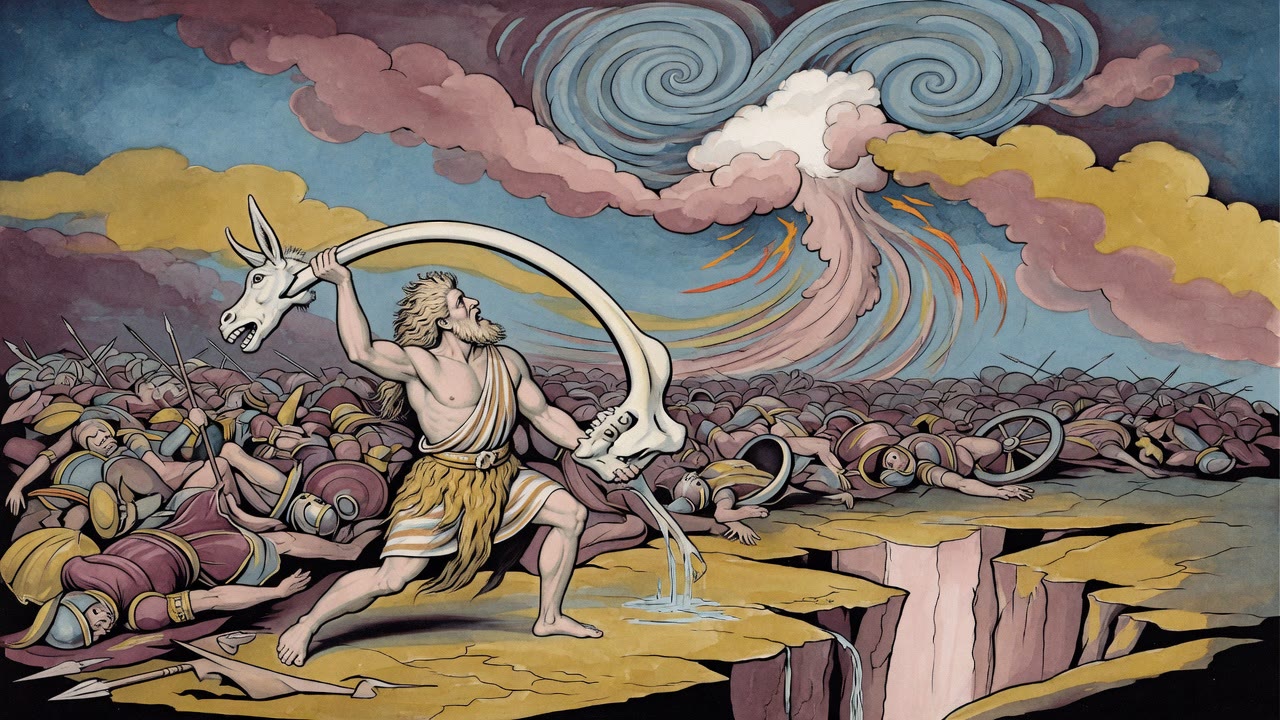
Samson will later fail in ways the Book of Judges does not hide. The early stirring still matters. Before Delilah, before the mill, before the pillars, there is a young Nazirite whose body announces heaven's pressure. The spirit does not begin as tragedy. It begins as sound and span.
Dusk between Zoreah and Eshtaol. A woman sets down a water jar. A far ringing starts, too bright for sheep bells, too ordered for wind in dry brush. She does not need a sermon. The judge is moving.
Years after the man was gone, shepherds still argued whether the sound had been hair or metal wind-chimes hung by some forgotten hand. The argument itself kept Samson in the valley. A judge whose head rang like bells does not leave quietly. He leaves a frequency the land keeps trying to hear again whenever trouble gathers between two towns that share the same dry wind.
← All myths