The Shekhinah Rang Like a Bell Ahead of Samson
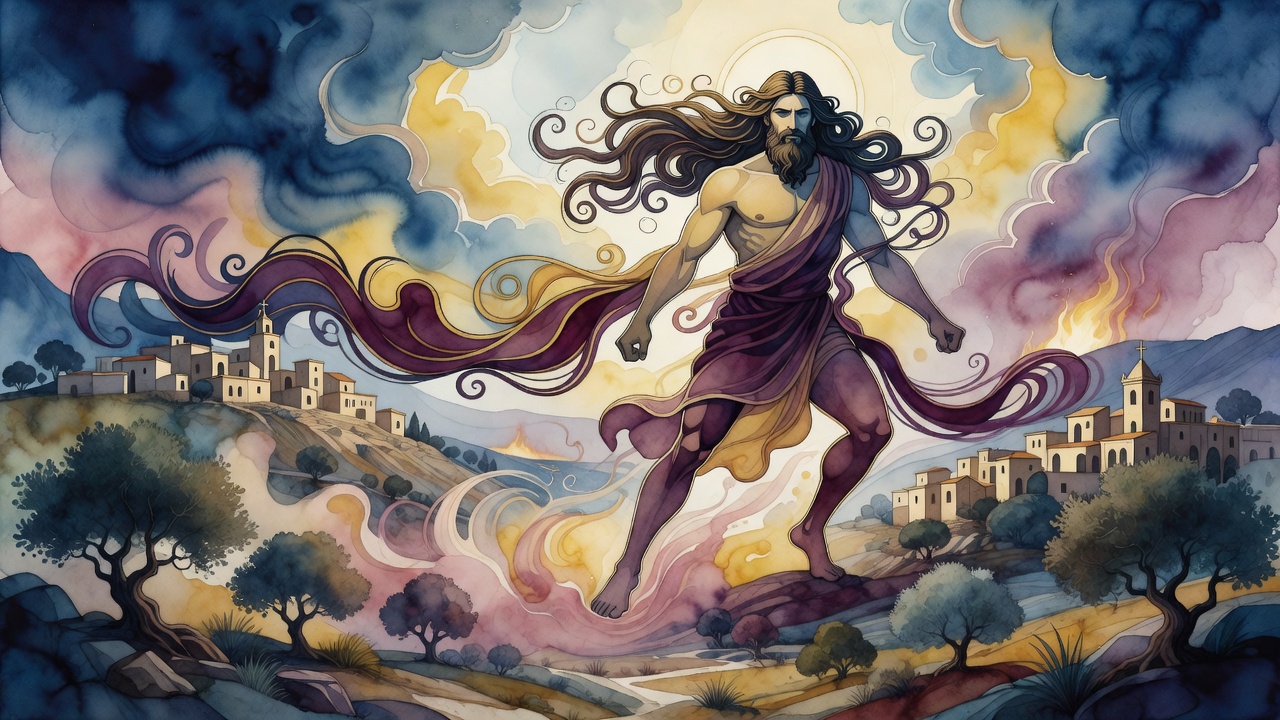
The spirit seized him between two mountains. He tore them loose and ground them together. A bell went ahead of him through the camp of Dan.
Table of Contents
 Click for full size
Between Zorah and Eshtaol
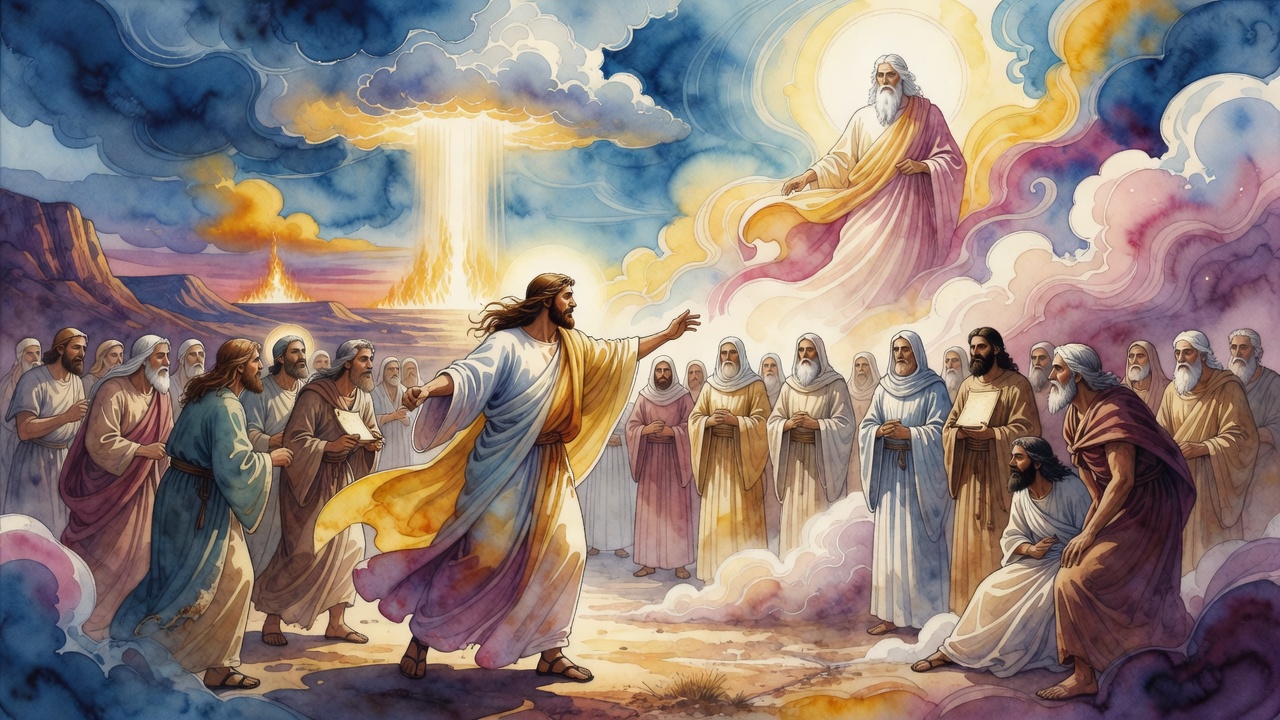
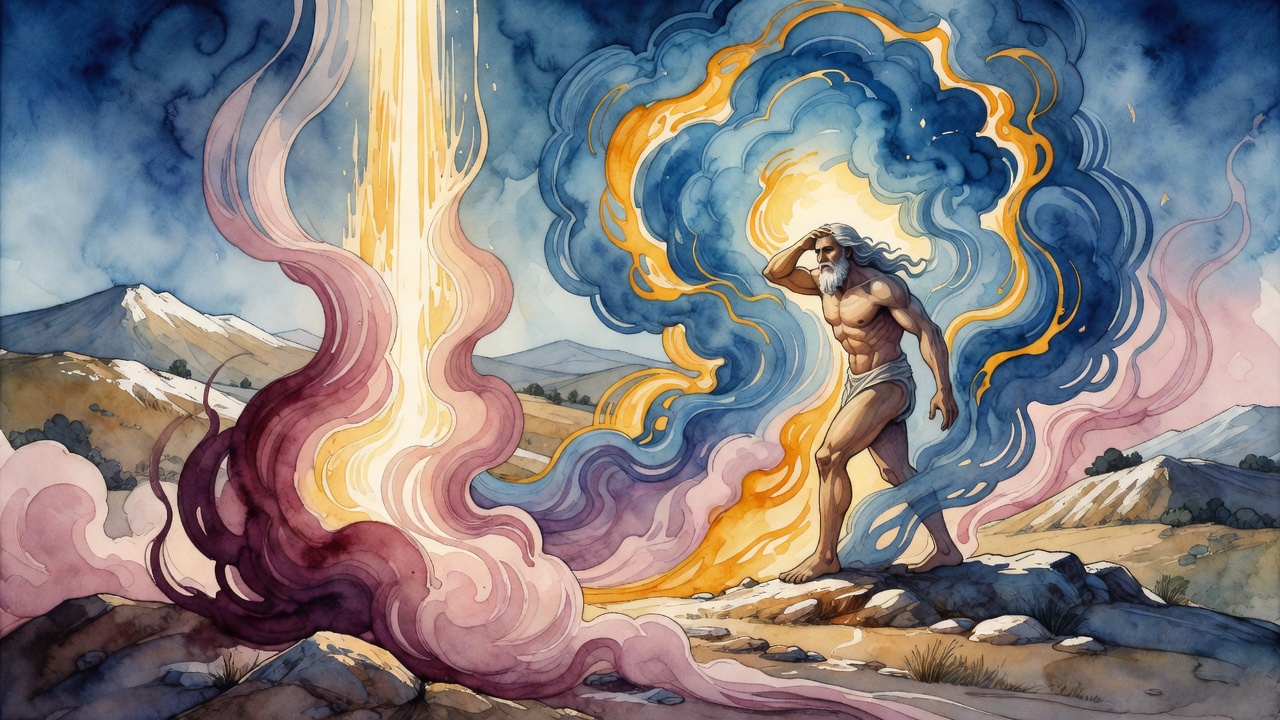
The spirit of the Lord began to stir in Samson, and the Shekhinah (שכינה), the Divine Presence, rang like a bell ahead of him as he walked among the camp of Dan. Not a metaphor soft enough to ignore. The same ringing word that rides the bells on the High Priest's robe went before him on the road.
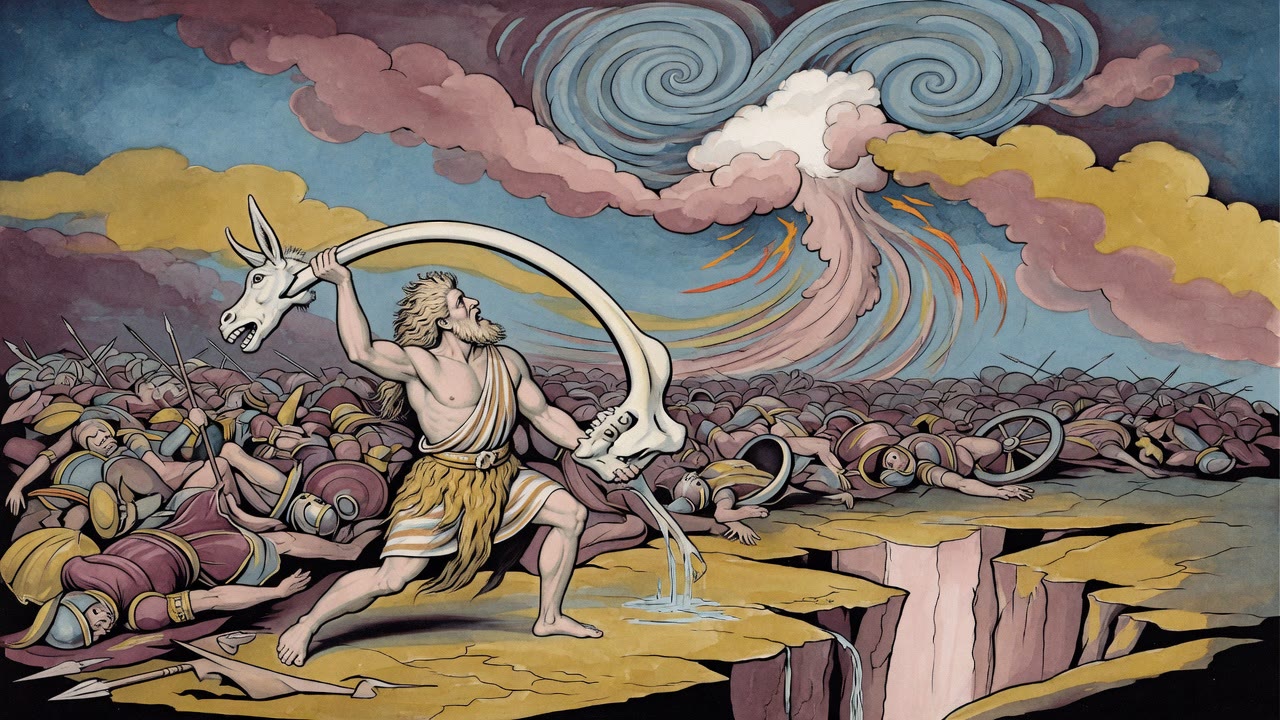
Jacob had once blessed Dan as a serpent by the way. Centuries later a Danite finally wore that blessing like a storm. Between Zorah and Eshtaol, Rav Ashi says, the spirit seized Samson so hard he tore the mountains free and ground them against each other.
Rabbi Yochanan goes further. Samson judged Israel as their Father in heaven judges, alone, answerable to no human court, and his name patterned after God who is called a sun and a shield. As God shields the world, Samson shielded Israel by force. The same teacher notes the flaw sewn into the prophecy. Where Balaam limped on one foot, Samson, the horned snake of Dan, was lame in both. Strength and damage shared one body.
Hair, Vow, and the Short Leash
The Nazirite crown on his head was not fashion. It was a walking contract. Every uncut strand said the force in his arms belonged to a purpose larger than appetite. He spent years on riddles and revenge anyway. The bell still rang. The leash shortened.
When Delilah's scissors found the vow, the bell did not invent a new theology. It simply stopped going ahead of a man who had spent the lease on private wars. They put out his eyes. They bound him in bronze. They set him to grind in the prison house like an animal that had once torn mountains.
The nations would not understand how a man can be both instrument and warning. Israel had a shield that walked on two damaged legs, and then it had a prisoner who could not walk the road between the mountains at all.
Dew Stored for a Last Cry
Isaac had said, "May God give you of the dew of heaven" (Genesis 27:28). Jacob earned dew because he labored in Torah, which is likened to water. "Give you" doubles in the hearing: give what is yours, and give what was held back, even power reserved for the day of real need.
That store waited. Samson, blind and chained, cried to be remembered and strengthened once more. He drew on the very dew Isaac locked inside the blessing. Dew becomes manna in another age. Fatness becomes a well. Grain and wine become young men and women of Israel. A harvest blessing turns out to be a people-blessing, and one of its late withdrawals is a crushed man pulling down a temple of enemies on his own head.
The bell rang ahead of him when he could still walk. The dew answered when walking was finished.
When the Voice Fails, Hands Return to Esau
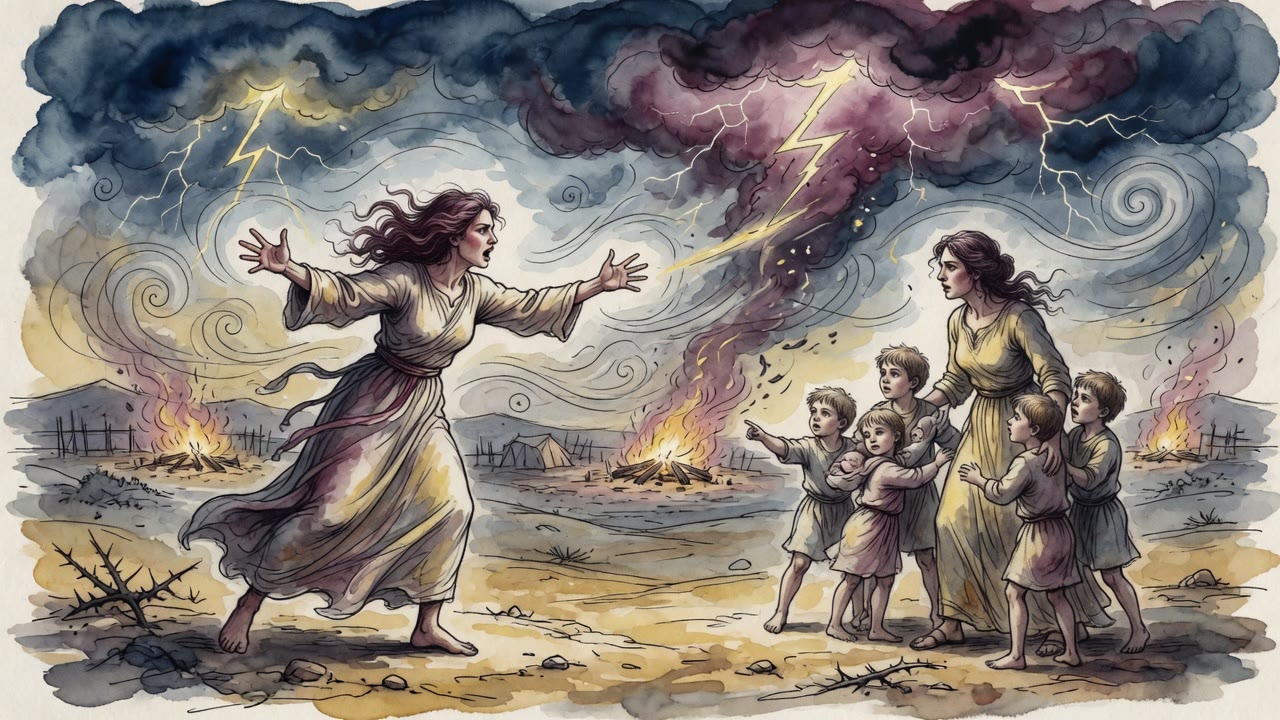
Thunder and rain belong to the voice of Jacob. The roar of the storm and the rush of water fall in the merit of Israel's study and prayer. Waste that voice on empty chatter and the protection collapses. The hands revert to being the hands of Esau. At Rephidim the people asked, "Is the Lord among us or not?" and in the next breath Amalek came. No gap. When the proper voice goes quiet or cynical, the enemy is already at the door.
Samson lived under that rule even when he was not in a study hall. His strength is not a private muscle cult. It is leased power, tied to Nazirite hair, to a people's need, to a blessing spoken over a grandfather's sons. When he spends himself on riddles and revenge, the bell still rings, but the leash shortens. When he finally speaks from the dark with a clean petition, the stored dew spends itself in one act that is both judgment and funeral.
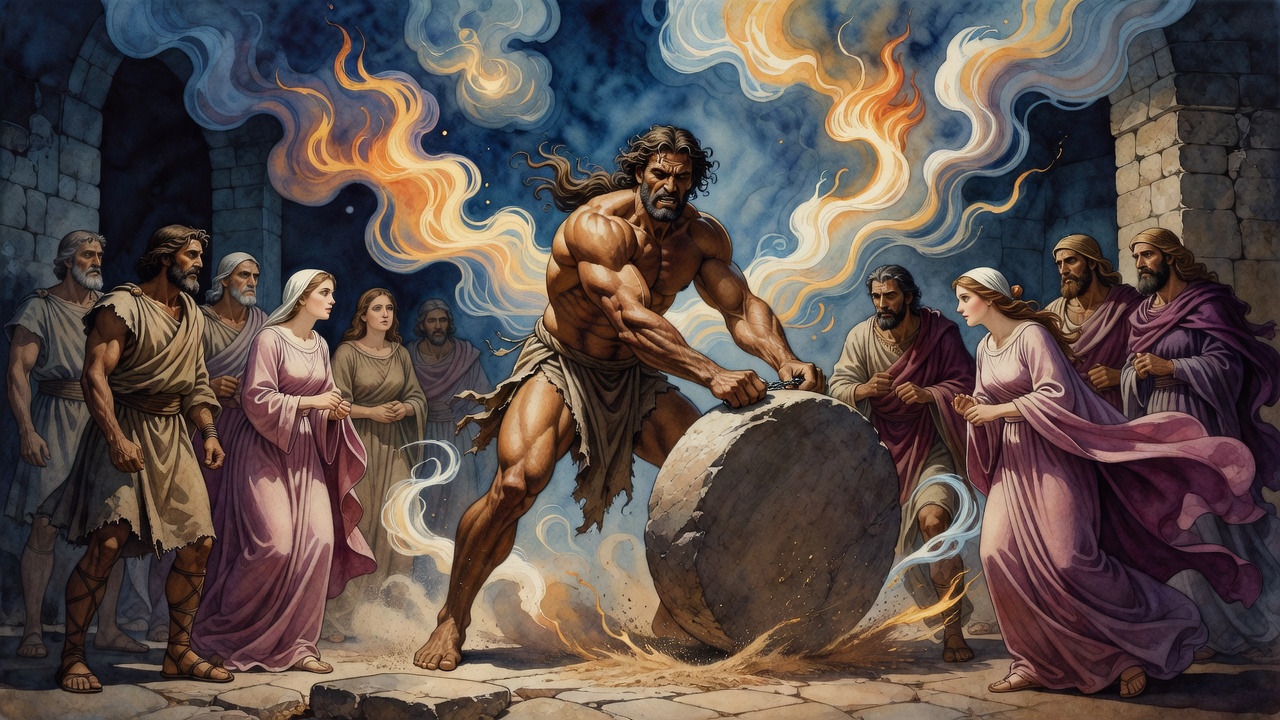
He put his hands on the two middle pillars. He pushed. He pulled. He asked to die with the Philistines. The house fell on the lords and on the people, and on him. The last clean sentence in the dark was the first time in a long while that Jacob's stored dew heard a voice worth answering.
The Road After the Bell
He stood on the road between Zorah and Eshtaol before the haircut, before the prison, before the boy who led him to the pillars. The Presence goes ahead like metal sounding on metal. Mountains feel temporary under his hands. Israel has a shield that walks on two damaged legs.
Jacob's voice still pulls rain. Jacob's dew still waits for the hour of need. Dan's serpent still watches the path. Samson is where those lines cross until they burn.
After the temple came down, no bell went ahead of anyone on that road. The dew was spent. The hair would not grow back in time. A people that had been shielded by one lame man had to find another voice, or the hands of Esau would come through the door the way Amalek came at Rephidim, with no gap at all.
← All myths