Rabbi Yehoshua Pointed to the Worlds Center
In Alexandria philosophers set riddles to trap a Jewish sage, and he pointed to the ground under his feet, then left their pride without a rope to measure him.
Table of Contents
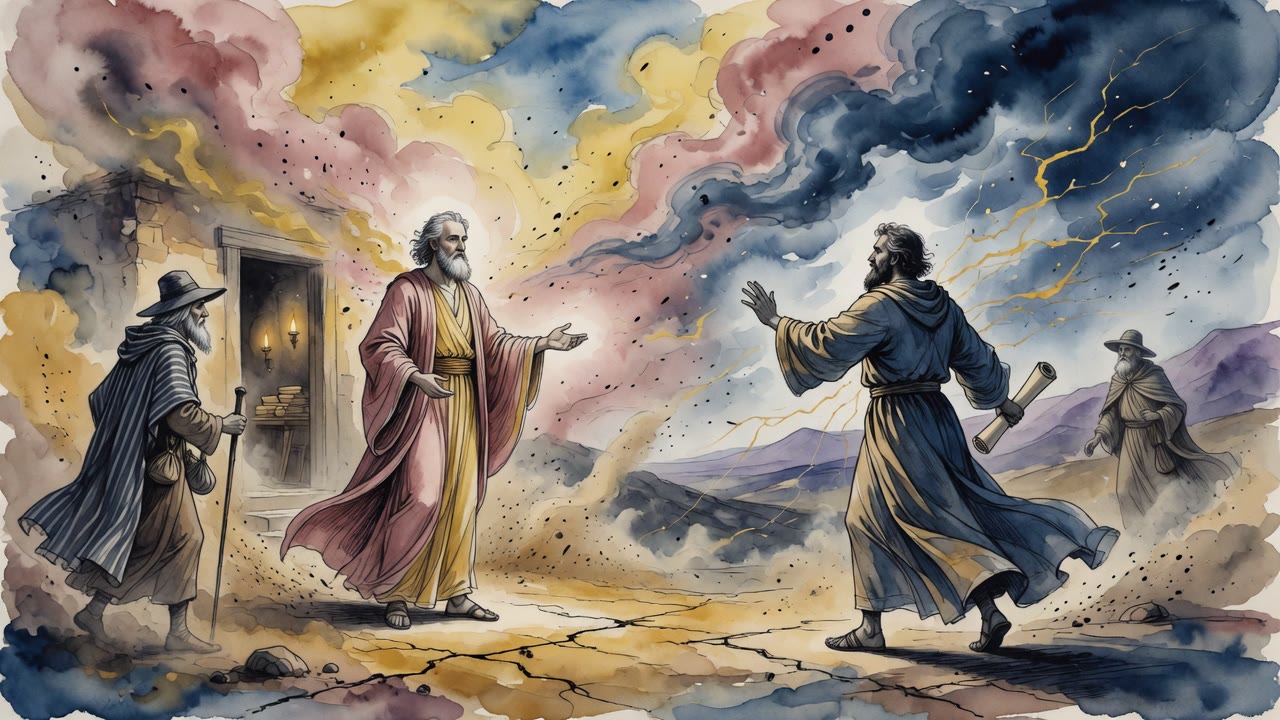
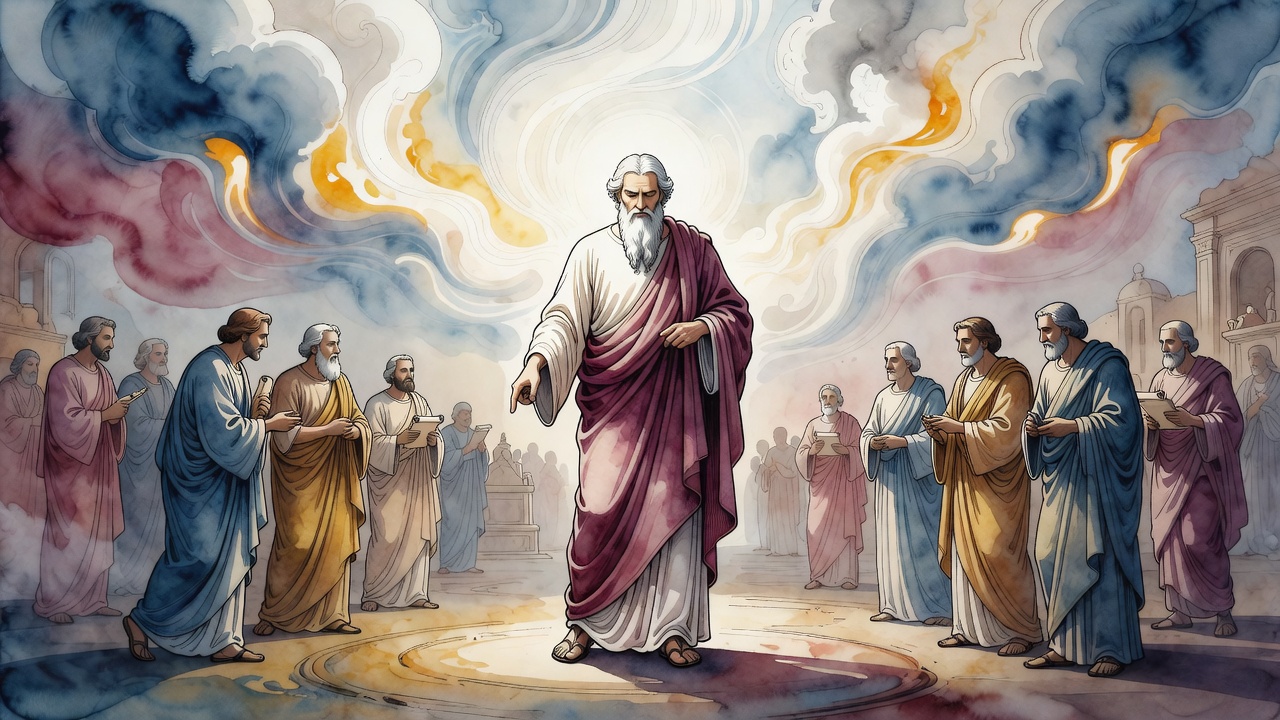
The philosophers of Alexandria were ready when Rabbi Yehoshua ben Hananiah arrived. They lived on logical traps and the sport of humiliating any thinker who could not match their polish. They asked where the center of the world was, expecting a flounder or a myth they could mock.
 Click for full size
He pointed his finger at the ground under his feet. "Right here."
"Prove it," they said.
"Bring ropes and measure," he answered. The burden of disproof sat on them. The room that had come to watch him fail had to watch the trap refuse to close. No map of theirs could unmake a point until someone actually measured.
Chicken, Egg, and the Rest
What came first, the chicken or the egg? He answered without the panic the question was built to produce. Each riddle met a response either logically sealed or so cleanly deflected that pursuit died in the mouth of the pursuer. The exchanges were kept not as entertainment alone but as proof that Torah wisdom could stand in the city most famous for cleverness and leave undefeated.
The Greeks had logic. The Jews had Torah. The sages believed Torah held logic inside it and reached dimensions philosophy could not map. Rabbi Yehoshua did not win by becoming more Alexandrian than Alexandria. He won by answering from a different intelligence, one that saw through the surface of a riddle to the ground that still had to be measured.
A paradox designed to humiliate becomes, in his hands, a homework assignment for the humilators. Bring ropes. Do the work. Stop treating clever questions as victories before the labor begins. The study hall in Judea would have recognized the move. Make the challenger carry the burden he tried to dump on the sage.
The Honor of a Teachable Mind
Philo of Alexandria, writing in that same city's long Jewish night of Greek speech, named a different victory. True honor, he said, belongs to the docile mind, the mind that stays teachable. Progress in learning must not swell into presumption or rebellion. The danger is the wordcatcher and the caviller who twists knowledge toward a private whim instead of toward truth.
Knowledge used to win rooms is not the same as knowledge used to prove what is real. Philo wants the seeker who remains open after he has gained ground, not the man who turns every new fact into a shield for his own pride. The reward he names is worthiness to behold wisdom's presence free of favoritism and free of reproof.
Alexandria produced both the trap-setters and the Jewish philosopher who scolded trap-setting as a spiritual disease. The city is large enough for both. The tradition chooses which one to crown when a sage walks into the portico and leaves with his head still his own.
Two Alexandrias in One City
Rabbi Yehoshua walks into the philosophers' circle and refuses their terms without refusing their challenge. Philo sits inside Greek language and still scolds the arrogant student. Both refuse the same disease. Cleverness that exists to dominate is not wisdom. Cleverness that stays hungry for truth can share a table with Torah and not choke it.
The center of the world under a sage's sandal is a joke with a spine. It says every place a human stands under Heaven can be the measure-point if the measurers will bring their ropes. Pride wants a center far away, preferably one that flatters the school that named it. Humility points down and waits.
Riddles love infinity and no. Torah answers often sound like enough and here. The collision is the whole story of that visit. The philosophers wanted a sky they owned. He gave them dirt they had to measure.
What He Carried Home
Rabbi Yehoshua returned from Alexandria without a defeat on his record. The philosophers had thrown their best. He had answered. Not because he was more skilled in their discipline than they were, but because he would not let their framing own the field. Philo would have recognized the posture. A mind that can answer without swelling is the mind that still deserves to see.
The city of riddles keeps producing new traps. The answer that still works is older than the traps. Point to the ground. Invite the ropes. Stay teachable after the room applauds. Leave pride without a throne in the study hall or the philosophers' portico. Carry home the knowledge that Torah does not need to borrow Alexandria's swagger to survive Alexandria's questions.
He left them with an unmeasured center and a set of answers that refused to perform panic. That is a kind of conquest quieter than any siege and harder to reverse. The sandals that pointed to the center walked home still dusty with the same earth.
Dust on a sandal can still be the center of a world if the mind that points stays free of the need to win every room it enters.
← All myths