Parshat Vayetzei6 min read

Rachel Hands Leah the Wedding Signs in Laban's Dark Tent

Jacob gave Rachel secret signs so no veil could fool him. Then Laban bought a town's silence, and Rachel handed the signs to Leah.

Curated by Arthur · Told by Maggid ·
Table of Contents
  1. Laban Buys a Town's Silence
  2. Rachel Counts the Cost
  3. She Hands Over the Keys to Her Own Name
  4. Morning, and the Wrong Face
  5. Two Beams Across the World

Seven years of grass and dust and a flock that smelled like home, and to Jacob the years had passed like a handful of days, because he loved her (Genesis 29:20). He had counted them the way a man counts coins he is glad to spend. Now the last day had burned down to its evening, and the wedding was set, and somewhere in Laban's house the woman he had served for waited behind a veil he would not be allowed to lift until the dark closed the tent.
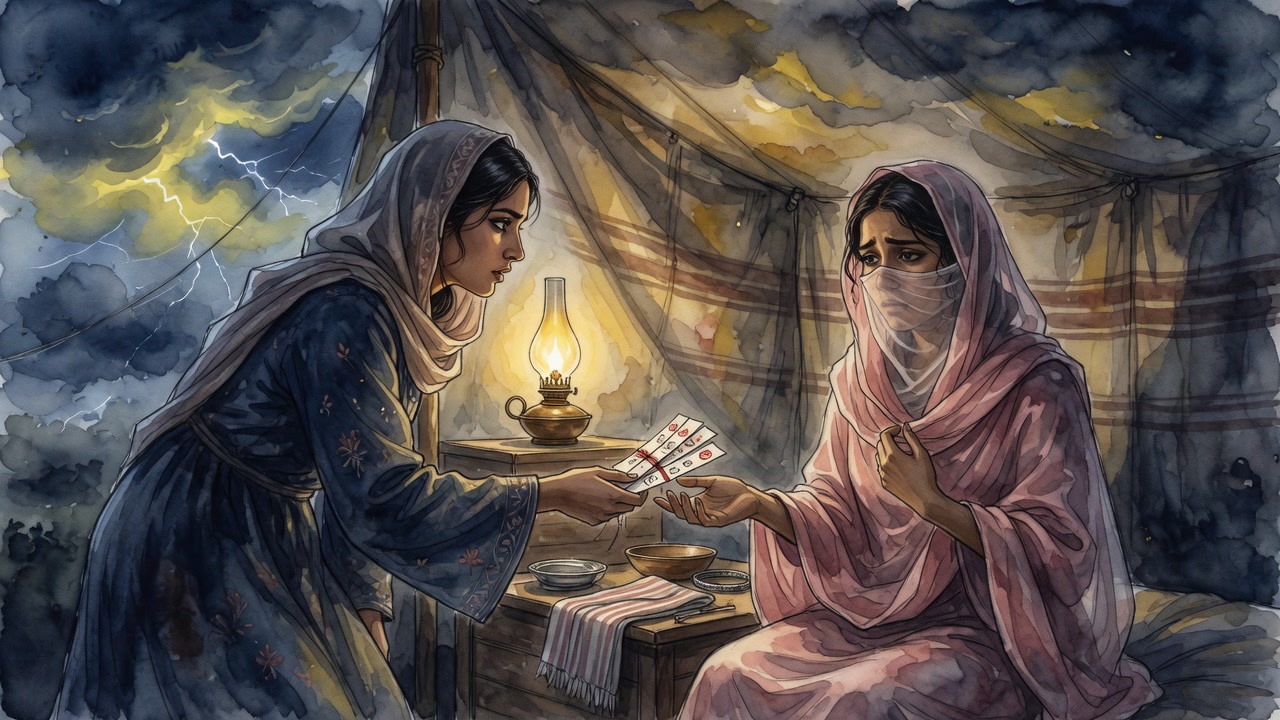
He was not a fool. He knew his uncle. So Jacob had done a careful thing in the weeks before. He had gone to Rachel and given her signs, private tokens between the two of them, small sayings and motions and a thing or two of cloth, so that even in a tent with no lamp, even under a veil, even in a silence engineered to deceive, he would know her by the touch of an agreed word. A man can be cheated by his eyes. Jacob meant to marry by something his eyes could not be talked out of.

Laban Buys a Town's Silence

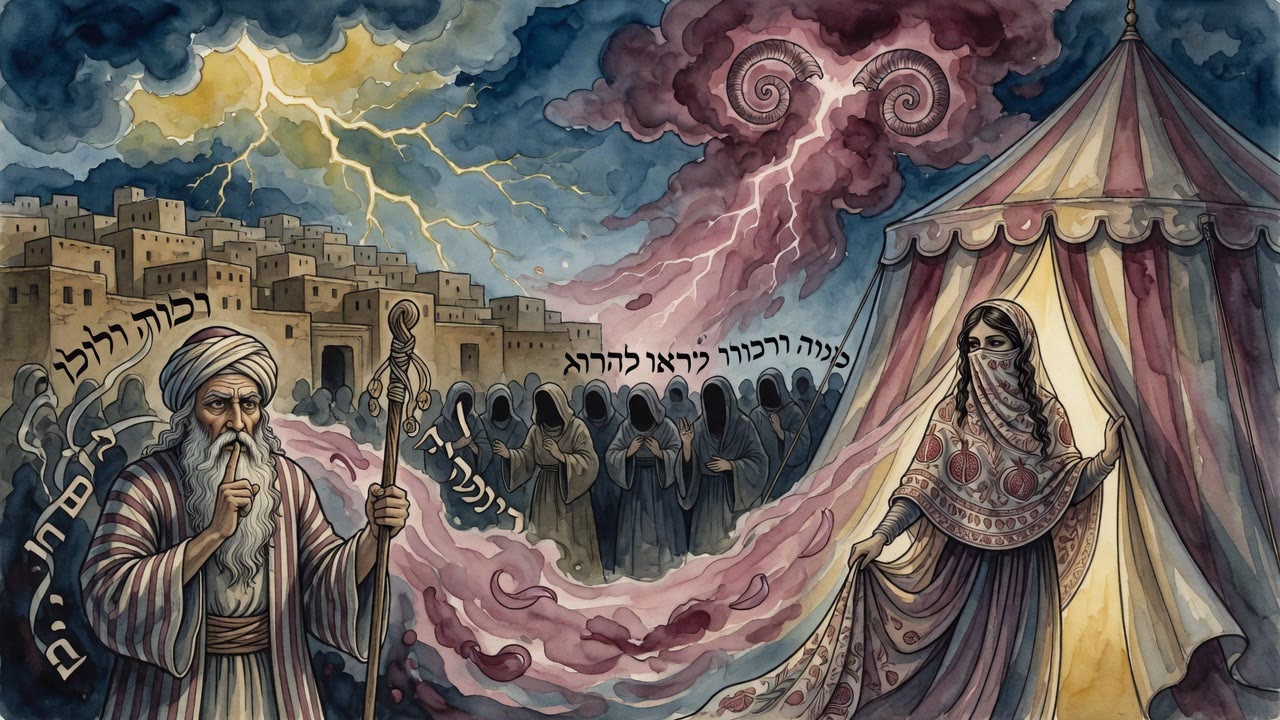
Laban had a feast to throw, and he threw it the way a man throws a net. He gathered the residents of the place and set out wine and bread and meat (Genesis 29:22), and when their faces were warm and their cups were full he spoke to them low, not as a host but as a partner in something.

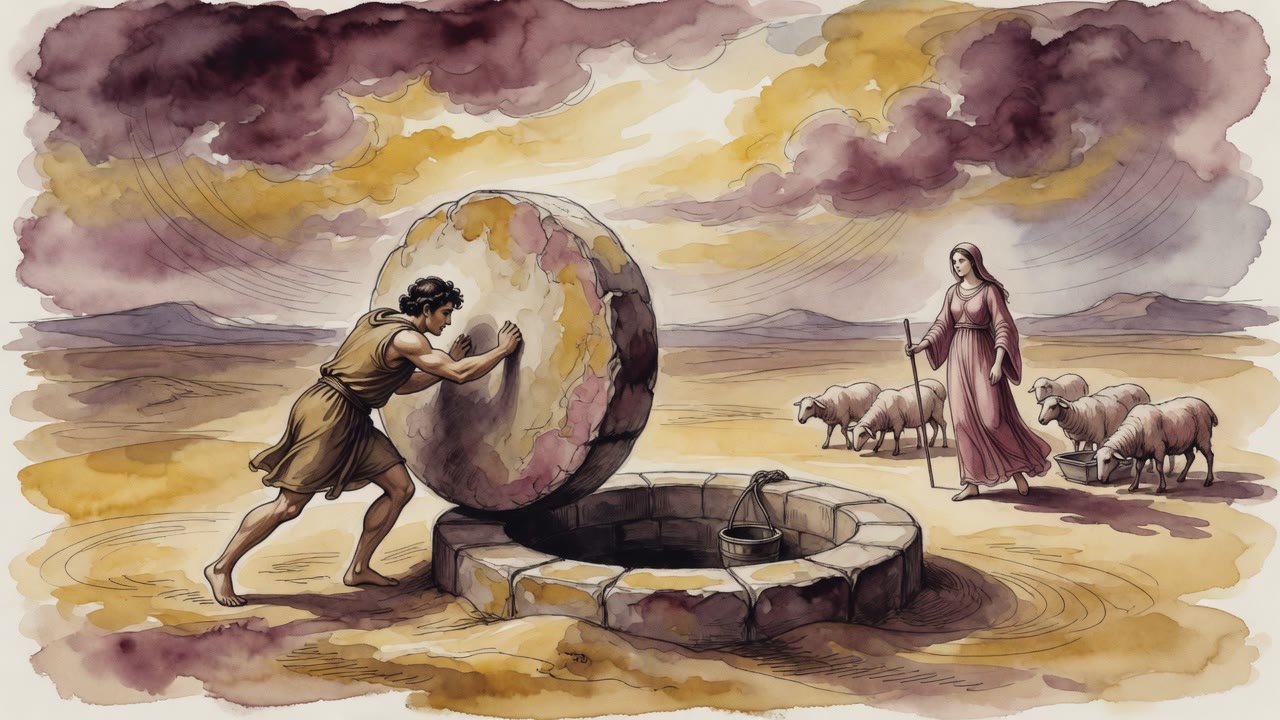
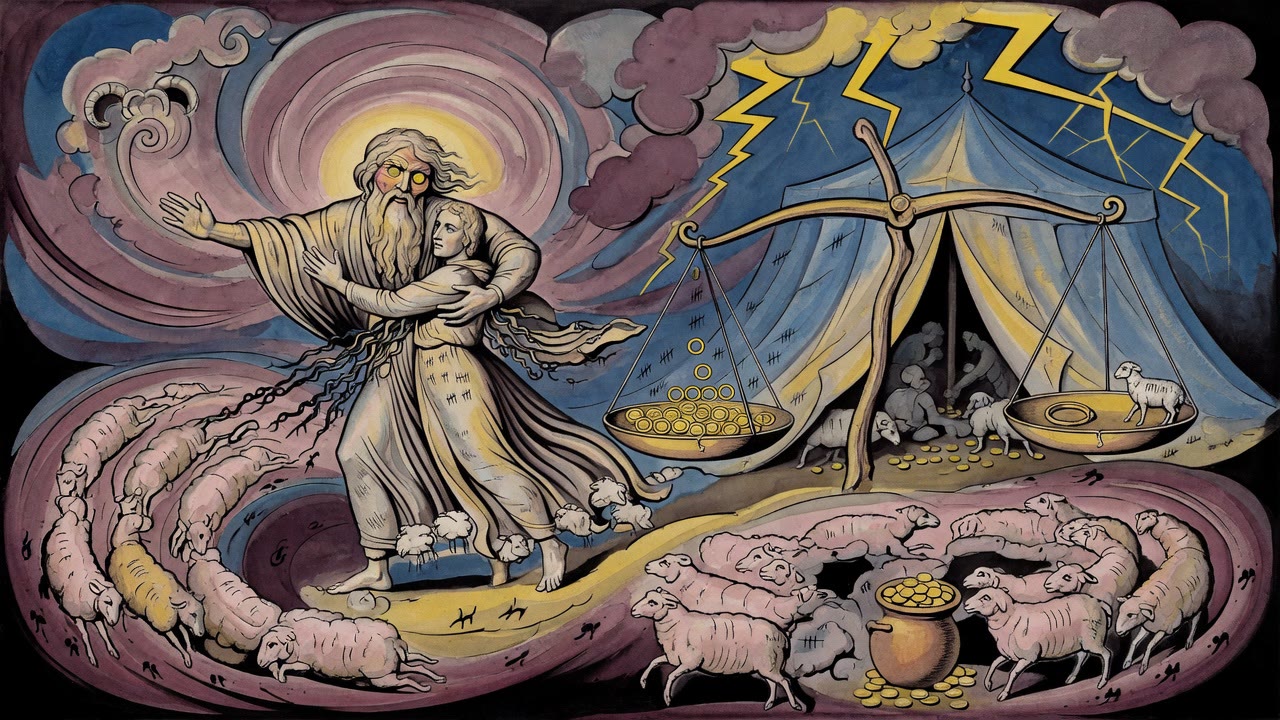
"Think on it, he told them. Seven years this man has been among us. The wells run sweeter, the flocks come back fat, the luck of Haran has thickened since the day he rolled the stone from the mouth of the well with his own two arms. And now he means to take Rachel and walk east, and what walks with him? Our blessing, that is what. So tonight you will eat, and you will sing, and you will hold your tongues. Whatever you see, whatever you guess, the bride is Rachel until the sun comes up. Say nothing."

And the town said nothing. They took the bread from his hand and they took the lie with it. The deception did not begin in the bridal chamber. It began at the tables, in a circle of full mouths that had decided a stranger's ignorance was worth a harvest. Laban had supplied the plan. Haran supplied the hush.

Rachel Counts the Cost

Rachel knew. A daughter of that house could read her father like weather, and she had read what he meant to do to her sister and to the man she had waited for. Leah was the elder. Leah would be the one carried to the tent in the dark, draped and silent, sent in to a husband who thought he was getting someone else. And in the morning the veil would come off, and Jacob would reach for the signs, the private words, the tokens, and Leah would have none of them, and she would be exposed there under the canopy as a thing smuggled in by night. The shame of it would follow her the length of her life.

Rachel had the signs. They were hers, the keys to her own face, the only thing in this house that her father could not buy or barter. She had earned them across seven years of watching Jacob serve. She was the bride he had labored for, and no one would have faulted her for letting the trick collapse at dawn, for letting Jacob find the wrong woman and storm and break the whole arrangement open.

She Hands Over the Keys to Her Own Name

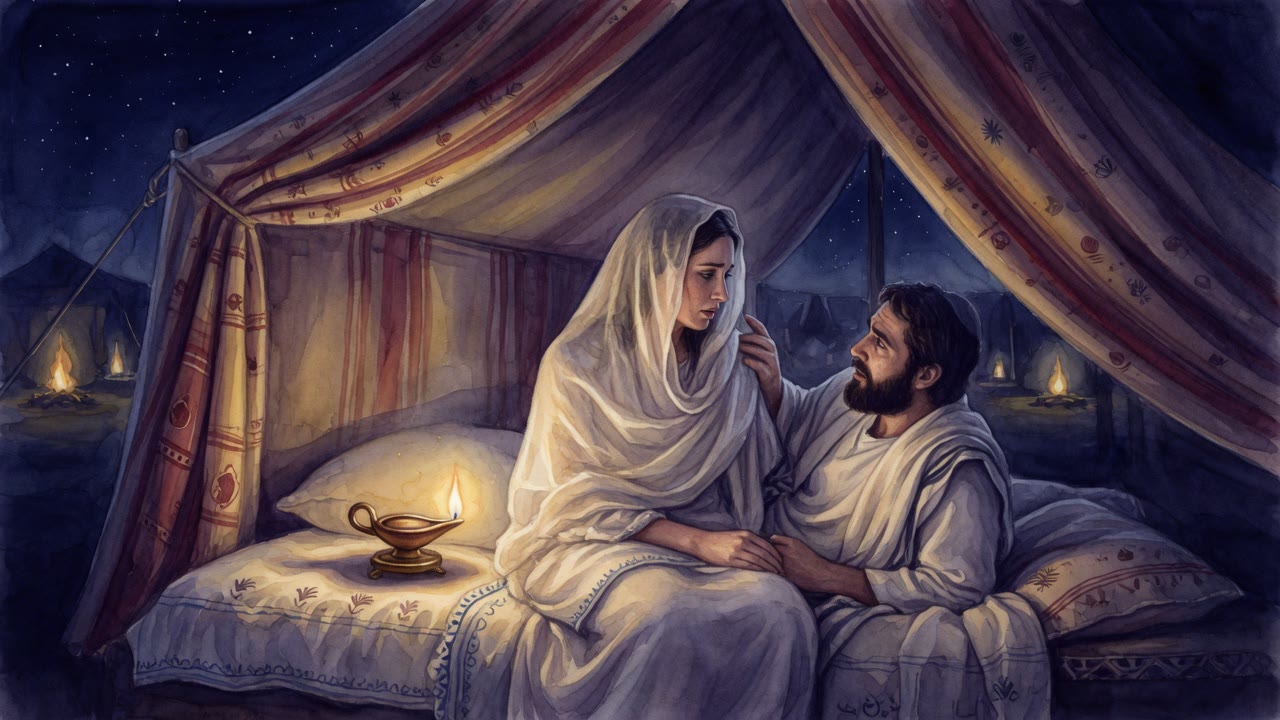
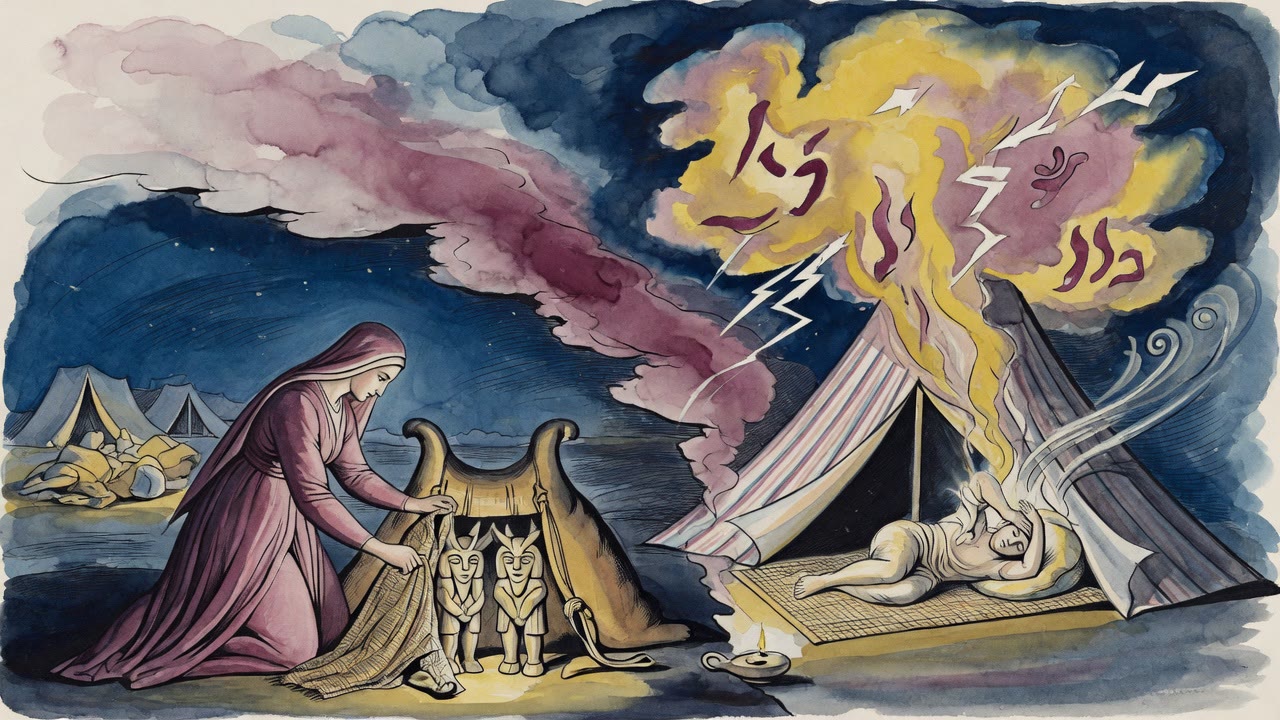
She went to Leah in the dark before the tent. And she gave her the signs. All of them, the words and the tokens and the small agreed gestures that Jacob had trusted to one woman alone, Rachel delivered into her sister's hands so that Leah would not be humiliated under the canopy. She handed over the very thing that proved she was Rachel, knowing it would buy another woman her wedding.

So when Jacob came into the dark and spoke the secret word, the right answer came back to him in Leah's mouth. When he reached for a token, the token was there. Every test he had built to guard against exactly this, Rachel had quietly disarmed from his own side, not to ruin him but to spare her sister the cruelty of being found out. He married by signs that were true, given by a woman who was not the one who had agreed them.

Morning, and the Wrong Face

The light came up gray through the goat-hair walls, and Jacob turned, and behold, it was Leah (Genesis 29:25). He sat up into a morning that had rearranged itself around him. The voice had been right. The signs had been right. The face was wrong.

He went out and found Laban and the words came rough. "What is this that you did to me? Did I not serve you for Rachel? Why have you deceived me?" (Genesis 29:25). And there was no clean answer, because the deception had too many authors. The uncle who sold the night. The town that ate and stayed quiet. And the sister who had given away the keys to her own identity so that no one would laugh at Leah in the daylight.

Two Beams Across the World

These were not two ordinary girls passed back and forth in a dim tent. They were two beams that reached from one end of the world to the other, two wellsprings out of which whole lineages would pour. From Leah, the one carried in by night, the one Rachel refused to shame, would come the chieftains and the kings and the lion-killers, David among them, out of the tribe of Judah, a son of Leah.

The whole later weight of it rested on that one act in the dark, a woman handing her sister the proof of her own name. Laban thought he was trading a daughter for seven more years of labor. He had no idea what he was setting in motion when he gathered the town and told them to keep still.


← All myths
From the tradition

Sources

4 sources

The texts this telling draws on, in full. Open a card to read inline, or expand it for a wider, quieter read.

Bereshit Rabbah 70:19Bereshit Rabbah

Jacob certainly had that experience. The familiar story is this: from Genesis 29: Jacob, working for his uncle Laban, falls head-over-heels for the younger daughter, Rachel. He agrees to work seven years for her hand in marriage. Seven years! That's a serious commitment. But when the wedding night comes.let’s just say things don’t go according to plan.

"Laban gathered the residents of the place and made a feast," the verse says. (Genesis 29:22). And then, under the cover of darkness, Laban pulls a fast one. He substitutes Leah, the elder daughter, for Rachel. Imagine Jacob’s surprise the next morning! “It was in the morning and, behold, she was Leah; he said to Laban: What is this that you did to me? Did I not work with you for Rachel, and why did you deceive me?” (Genesis 29:25).

The story, as told in Bereshit Rabbah, a collection of rabbinic interpretations of Genesis, takes us behind the scenes. It reveals just how elaborate Laban’s deception truly was.

In Midrash, (rabbinic interpretive commentary), Laban gathers the people of the town and says, "You know that we were hard-pressed for water, but once this righteous man came here, the water was blessed." He’s playing on their gratitude towards Jacob. Then he proposes his scheme: "If you wish, I will deceive him, and give him Leah, as he loves this Rachel greatly, and he will spend another seven years with you." And the townspeople? They're in on it! They agree, providing Laban with collateral – wine, oil, and meat – to ensure their silence. That is why, the text says, “he is called Laban the Aramean; because he deceived [sherima] the people of his place." He didn't just trick Jacob; he tricked his own community too.

The Midrash paints a picture of a raucous, deceptive celebration. All night long, they praise Jacob, celebrating his "kindness." As night falls, they bring the bride and cover the lamps. Jacob, confused, asks what's going on. The townspeople brush him off, saying, "What, do you think that we are rams like you?" They're suggesting they're more modest than him, subtly hinting at his public display of affection for Rachel. All night, Jacob calls out "Rachel," and Leah, complicit in the deception, answers him.

Can you imagine the sheer shock and betrayal Jacob felt when morning arrived? “In the morning, and behold, she was Leah.” He confronts her: “What, you are a deceiver, daughter of a deceiver, did I not call you Rachel at night and you answered me?” Leah's response is equally fascinating. She retorts, "Is there a barber without disciples? Who can cut his hair?" It’s a proverb, meaning, "I learned it from you!" She reminds him that he, too, had answered to his brother Esau's name when deceiving their father, Isaac. Ouch! The student has become the teacher, in a twisted way.

So, what's the takeaway?

First, we see how deeply ingrained deception can be in a community, embodied by Laban. He arranges a complex scheme, involving everyone, for his own gain.

Second, the story highlights the complexities of family dynamics. Jacob is tricked by his uncle, and Leah is complicit in the deception. Yet, as we see, Jacob himself has a past filled with deception. It seems that in this family, trickery is almost a twisted form of inheritance.

Rabbi Yaakov bar Aḥa offers another interpretation, drawn from Laban's excuse: "So will not be done in our place, to give the younger before the elder… Complete the week for this one." (Genesis 29:26-27). He suggests that "one does not mix joy with joy." In other words, you can't immediately follow one celebration with another. There needs to be a period of separation, a recognition of the individual event.

This story from Bereshit Rabbah reminds us that appearances can be deceiving. It's a cautionary tale about the dangers of manipulation, the complexities of family, and the importance of looking beyond the surface to see the truth. It also makes you think… are there times in our own lives when we’ve been part of a deception, even unintentionally? And what responsibilities do we have when we realize we’ve been fooled?

Full source
Bereshit Rabbah 70:15Bereshit Rabbah

Bereshit Rabbah turns to Leah, Laban at the Dawn of Creation.

Take Laban, for example. You remember Laban. Jacob's wily uncle and father-in-law. (Genesis 29:16) simply states: "Laban had two daughters; the name of the elder was Leah, and the name of the younger was Rachel." Simple enough. But Bereshit Rabbah, the classic collection of rabbinic interpretations of Genesis, sees something much grander in this simple statement. It imagines these two sisters as "two beams that reach from one end of the world to the other." What does that even mean?

Well, the Midrash (rabbinic commentary) proceeds to unpack it. It's not just about two sisters; it's about two wellsprings of influence, two lineages that would shape the destiny of the Jewish people.

From Leah would come chieftains, kings, and "lion-killers," as the Midrash poetically puts it. Think of David, from the tribe of Judah, a son of Leah. According to Ginzberg's retelling in Legends of the Jews, these "lion-killers" are figures of immense strength and bravery. Prophets, judges, and conquerors of lands would also spring from Leah's line – Moses himself, from the tribe of Levi, who conquered the lands of Sihon and Og (Numbers 21:21-35).

And from Rachel? The same! Chieftains, kings, lion-killers like Samson (Judges 14:5-6), prophets, judges, conquerors like Joshua, who hailed from the tribe of Ephraim, a son of Joseph, son of Rachel.

The Midrash continues, drawing these incredible parallels. From Leah comes Moses, who distributes land, and from Rachel comes Joshua, who also distributes land. The offering of King Solomon, a descendant of Leah, overrides Shabbat, as we see during the dedication of the Temple (Etz Yosef on Bereshit Rabba 35:3). Similarly, the offering of Elishama ben Amihud, a prince of the tribe of Ephraim and a descendant of Rachel, also overrides Shabbat (Bemidbar Rabba 14:1).

Even war finds echoes in both lines. The war led by Joshua, a descendant of Rachel, to conquer Jericho, overrides Shabbat, as noted in Bemidbar Rabba 14:1. And David's war in Ke'ila, from Leah's line, does the same (Eiruvin 45a).

Then comes a fascinating detail: "two nights were given to this one, and two nights were given to that one." For Leah, the night of Pharaoh, when the firstborn were struck down, and the night of Sennacherib, when his army was miraculously defeated outside Jerusalem (II (Kings 19:3)5). For Rachel, Gideon's night, when he bravely attacked the Midianite camp (Judges chapter 7), and Mordechai's night, the night when King Ahasuerus couldn't sleep, leading to the salvation of the Jews in the Purim story – "on that night, the king’s sleep was disturbed" (Esther 6:1).

Finally, the Midrash touches on a key distinction. "The name of the elder [hagedola] was Leah" – greater [gedola] in her gifts, in the eternal priesthood and eternal kingship that would flow from her line. "Judah will be inhabited forever" (Joel 4:20), and "This is My resting place forever" (Psalms 132:14). "And the name of the younger [haketana] was Rachel" – lesser [ketana] in her gifts. The leadership that came from her line, like Joseph, Saul, and the sanctuary at Shilo, was ultimately temporary. "He rejected the tent of Joseph and did not choose the tribe of Ephraim" (Psalms 78:67).

What does this all mean? It's a powerful reminder that history isn't just a series of isolated events. It's a weaving from the threads of generations, influenced by the choices and legacies of those who came before us. And it all starts with seemingly simple beginnings, like two sisters named Leah and Rachel.

Full source
Targum Pseudo-Jonathan on Genesis 29:25Targum Pseudo-Jonathan on Genesis

The morning after the wedding, Jacob discovered that the bride under the veil had been Leah, not Rachel (Genesis 29:25). The Targum Pseudo-Jonathan explains how the deception had been possible.

Jacob had apparently given Rachel private signs, tokens, sayings, maybe items of clothing. So that on the wedding night he would know his true bride even in the dark. Rachel, knowing her father's plan, made an astonishing choice. Rahel had delivered to her all the things with which Jakob had presented her.

Rachel handed her own signs to Leah.

Think about the cost. Rachel had waited seven years. She had watched Jacob serve her father for seven years of her life. She was the bride he had worked for. And on the wedding night, she quietly transferred the keys of her own identity to her older sister so that Leah would not be humiliated under the canopy. Rachel chose her sister's dignity over her own wedding.

When Jacob saw Leah in the morning light, the Targum reports his stunned confrontation: What is this that thou hast done to me? Was it not for Rahel that I served with thee? Why hast thou deceived me? His rage is directed at Laban, not Leah, because Jacob understood quickly that Leah had not orchestrated this. Leah had been placed in the bed by her father.

late antique tradition (Bava Batra 123a) says that Rachel's sacrifice was remembered in heaven for centuries. When Israel was exiled and the patriarchs pleaded for mercy, it was Rachel's tears, the tears of the woman who had given up her wedding night, that moved God to promise the return (Jeremiah 31:15–17).

The takeaway: Rachel's greatest act was not marrying Jacob. It was the moment she let her sister marry him first.

Full source
Targum Pseudo-Jonathan on Genesis 29:22Targum Pseudo-Jonathan on Genesis

The wedding in Haran was not a simple celebration. The Targum Pseudo-Jonathan on (Genesis 29:22) reconstructs the conversation Laban had with the men of the town.

Laban gathered all the local men and threw a feast. Over the cups, he made his pitch. Behold, seven years since Jakob came to us the wells have not failed and the watered places are multiplied. For seven years, the moment Jacob arrived in Haran, every well in the area had begun flowing at the brim. The harvest had improved. The flocks had thickened. Laban knew exactly whose presence was responsible.

So he proposed a conspiracy. Now come, let us counsel against him cunning counsel, that he may remain with us. The men of the town agreed. They gave him cunning counsel that he should take Leah to him instead of Rahel.

Read that again. This is not Laban's private trick. This is a civic conspiracy. The whole town had a material interest in keeping Jacob trapped in Haran. If Rachel married Jacob, the contract ended. But if Jacob unknowingly married Leah, he would have to serve seven more years for Rachel. And the wells would keep flowing for seven more years.

The feast, in other words, is a public ceremony for a private fraud. Every man in Haran ate Laban's bread and drank Laban's wine while knowing that a Jewish stranger was about to be deceived. The blessing the wells gave to the town was paid for in the moral currency of its own men.

The takeaway: some communities buy their prosperity with the deception of a single righteous person. The wells rose for Haran; the price was Jacob's heartbreak.

Full source