Parshat Yitro6 min read

Rav Sheshet Carried a Second Soul Until Its Debt Was Paid

A blind sage in Mahoza shouted his joy across the benches for a listener no one else could hear, and a second soul answered from inside his body.

Curated by Arthur · Told by Maggid ·
Table of Contents
  1. The Blind Sage Who Was Called Full of Light
  2. The Guest Who Came In Through Sleep
  3. Two Wills Wearing One Face
  4. The Verse Read as a Sentence Rather Than a Curse
  5. The Night the Ledger Closed
Rav Sheshet Carried a Second Soul Until Its Debt Was Paid Click for full size

The Blind Sage Who Was Called Full of Light

Rav Sheshet found his bench by counting paces and listening for the breathing of other men. He had been blind for years. The students in Mahoza had a phrase for it that sounded like praise and landed like an accusation. They said he was full of light. So full that none of it could get out through the eyes.
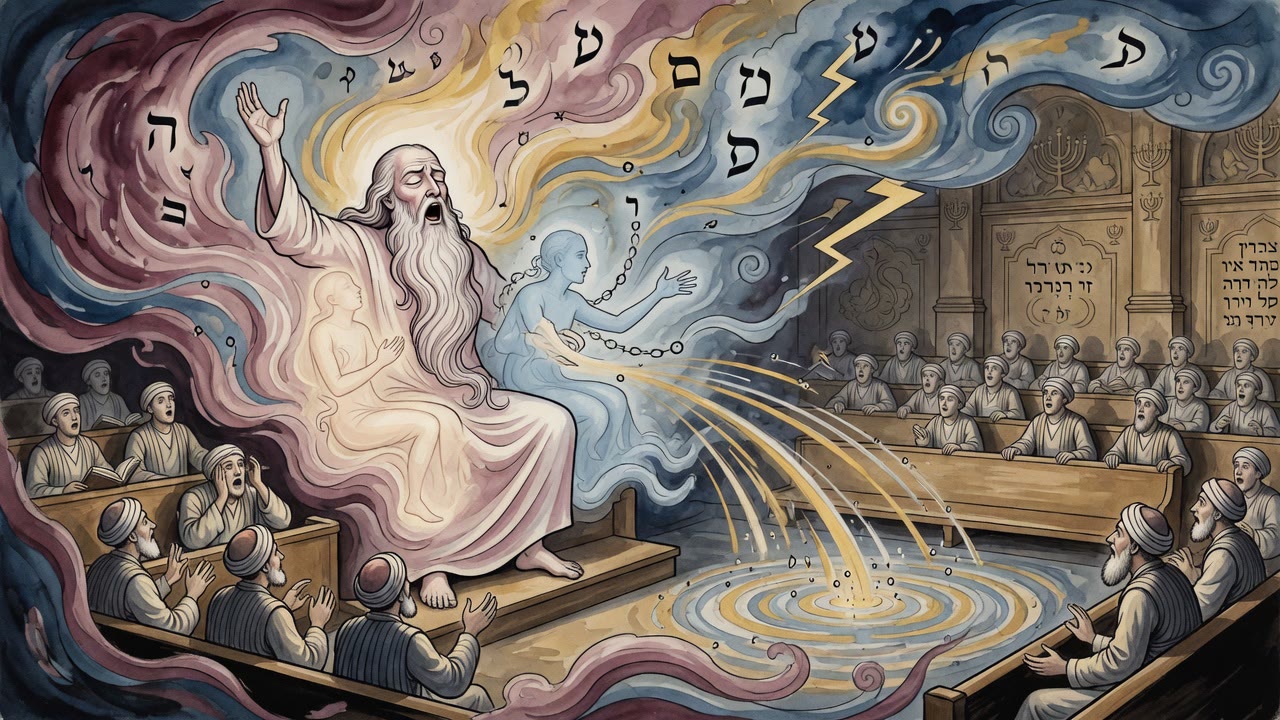
The dark did not trouble him. The silence did. A room could empty while he was still speaking, and he would go on speaking to nobody.

Then the learning would take hold of him and he would say the thing that made the younger men glance at each other over their books. "Chadai nafshai," he called across the benches. "My soul rejoices. For you I read. For you I study."

Forty men sat in that room. Not one of them was the one he meant.

The Guest Who Came In Through Sleep

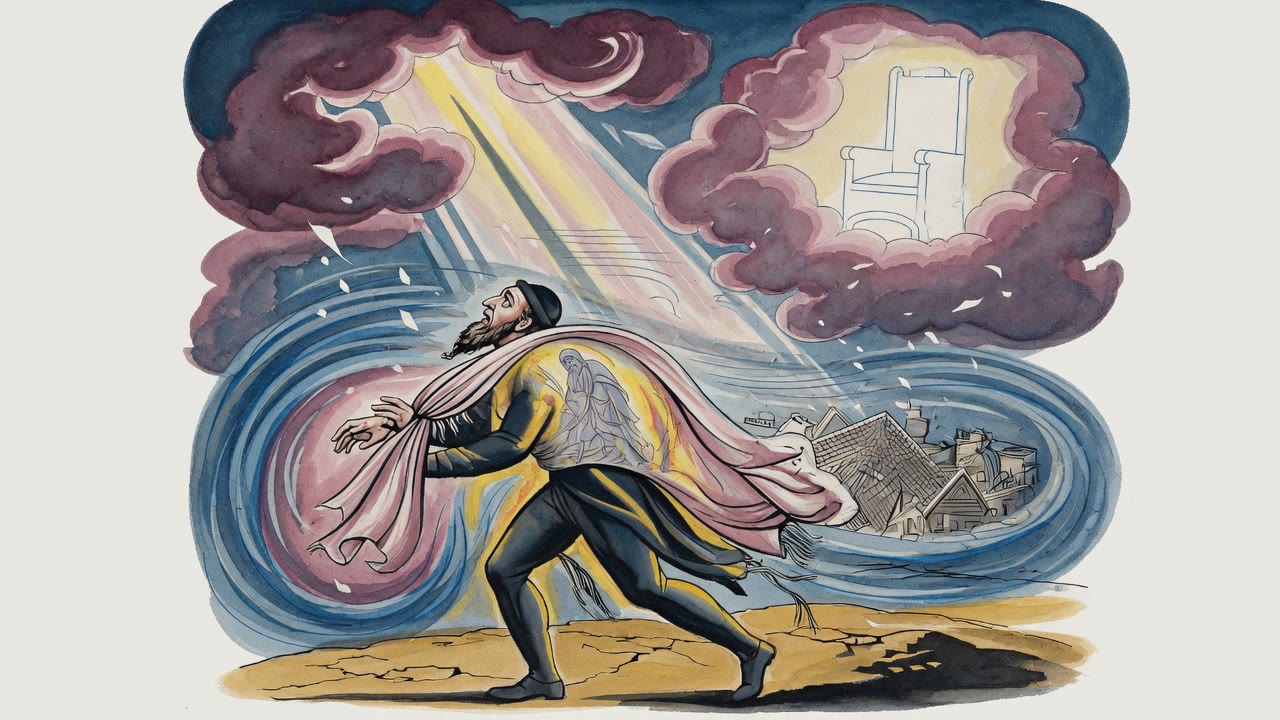
Every night, before the lamp went out, Rav Sheshet handed himself over. "B'yadecha afkid ruchi," he said into the dark. "Into Your hands I entrust my spirit." The words were not a formality. His nefesh, the vital soul, slipped its housing and climbed to the Upper Well, the Be'er ha-Elyon, and the body left on the mat lay like a swept house with the door standing open.

Something had been waiting outside that door a long time.

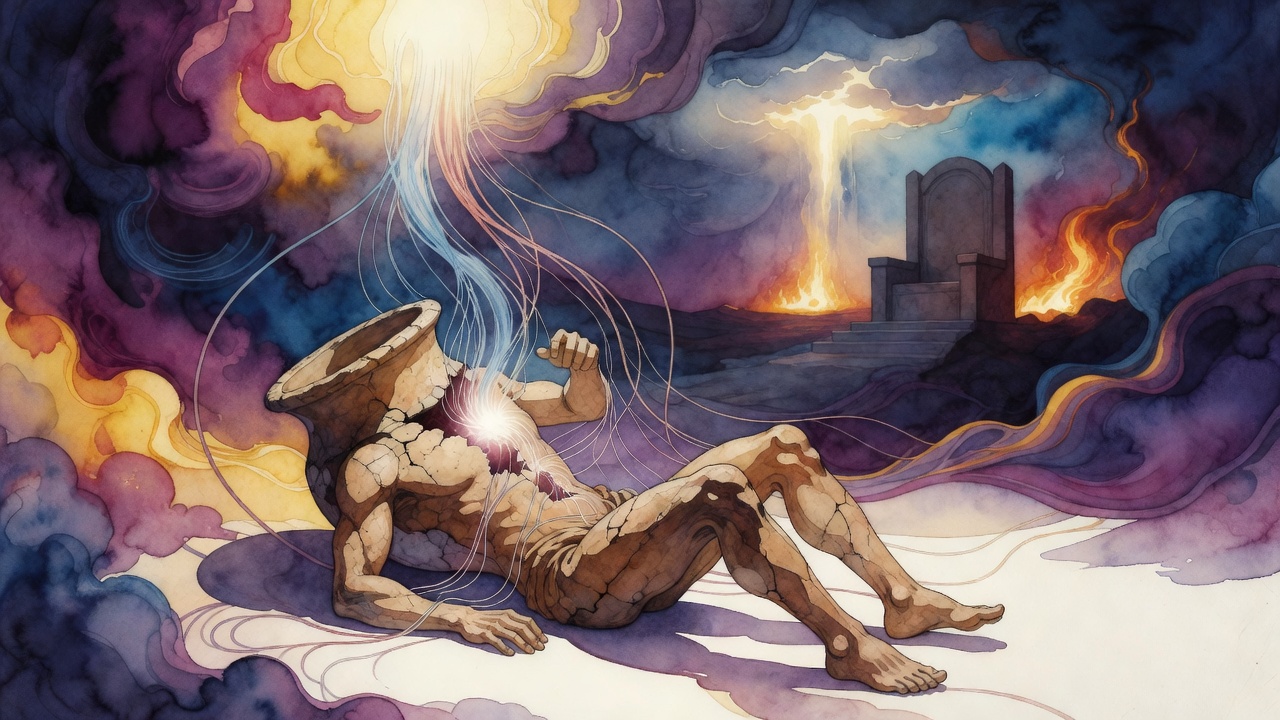
It had worn a body once, then a second, then a third. In the first it sinned and damaged itself and went out of the world with the account still open. Two more lives were granted for the repair, and across both it managed one coin pressed into a beggar's hand on a road it could no longer name. One coin was enough. A nefesh (the life-soul) that repairs nothing across three lifetimes is cut off, karet, severed from the nation as though never counted in it. A single mitzvah (a commandment) holds that blade back. This soul had bought itself the right to keep returning for a thousand generations, and it had nowhere left to return to.

The house was open. It went in.

Two Wills Wearing One Face

Rav Sheshet woke heavier than he had lain down.

He blamed his age, then the damp. Within a month the excuses ran out. He reached for a tractate he had finished arguing twenty years earlier and found himself starving for it, and the hunger was not his hunger. Objections he had not chosen arrived in his throat fully formed, in an order he would never have used.

One afternoon he stopped in the middle of a sentence to see what would happen. The sentence finished itself behind his teeth, pressing the way a held breath presses. He laid his palm flat on the table.

"Who is with me," he said.

Nobody answered. But the joy came up through him like heat off a stone, so much of it that he laughed out loud in front of his students, and the words came with the laughter. "For you I read. For you I study."

He stopped asking after that. He was learning for wages he would never draw, and he carried the man he could not name, and he turned the pages anyway.

The Verse Read as a Sentence Rather Than a Curse

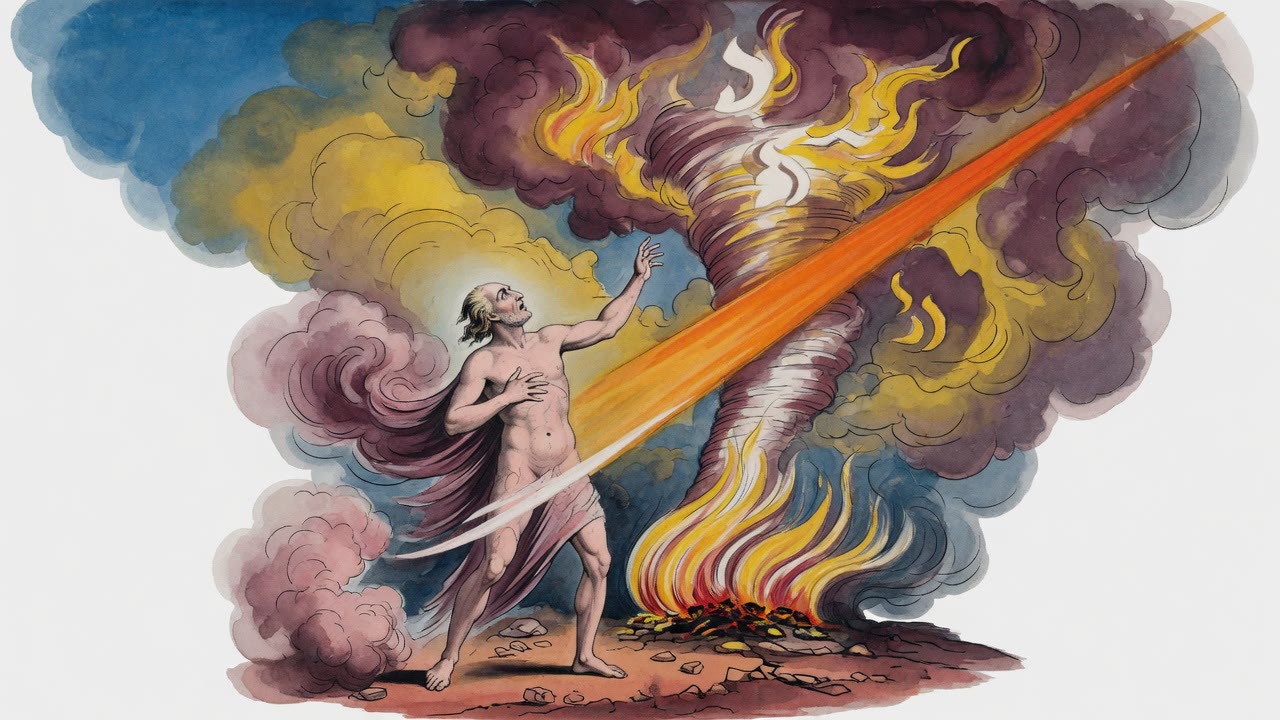
More than a thousand years later, in a stone room in Safed, Hayyim Vital waited with a pen over the page while Isaac Luria paced and worked a line out of Sinai. "Poked avon avot al banim," he said. "He visits the sin of the fathers upon the children, upon the third and upon the fourth."

Vital had been taught it as inherited punishment. A man sins, a grandson pays, and heaven calls that justice. Luria took the verse apart. No child pays here for a father. The fathers and the children are one nefesh, sent back into the wreckage it made, given its first life and then three more attempts at the same debt. Upon the third. Upon the fourth. After that the account closes.

"How many can stand in one body," Vital asked.

"Three that have come back," Luria said, "and one new soul with them. Not four that have come back. The body will not carry it."

Then he named Rav Sheshet and said the blind man's cry had a listener. A second nefesh was bound into him, living off the merit his learning threw, and the two had been paying down one debt without ever being introduced.

The Night the Ledger Closed

In Mahoza the last of the debt was paid, and there was no sign at all. That was the cruelty of it.

Rav Sheshet said the words over the lamp as he had every night for years, gave his soul into the hands that had held it since he was a boy, and slept. In the morning he woke light. Lighter than he had been since the winter it started. He lay with his hands folded and did not want to rise, because he already knew.

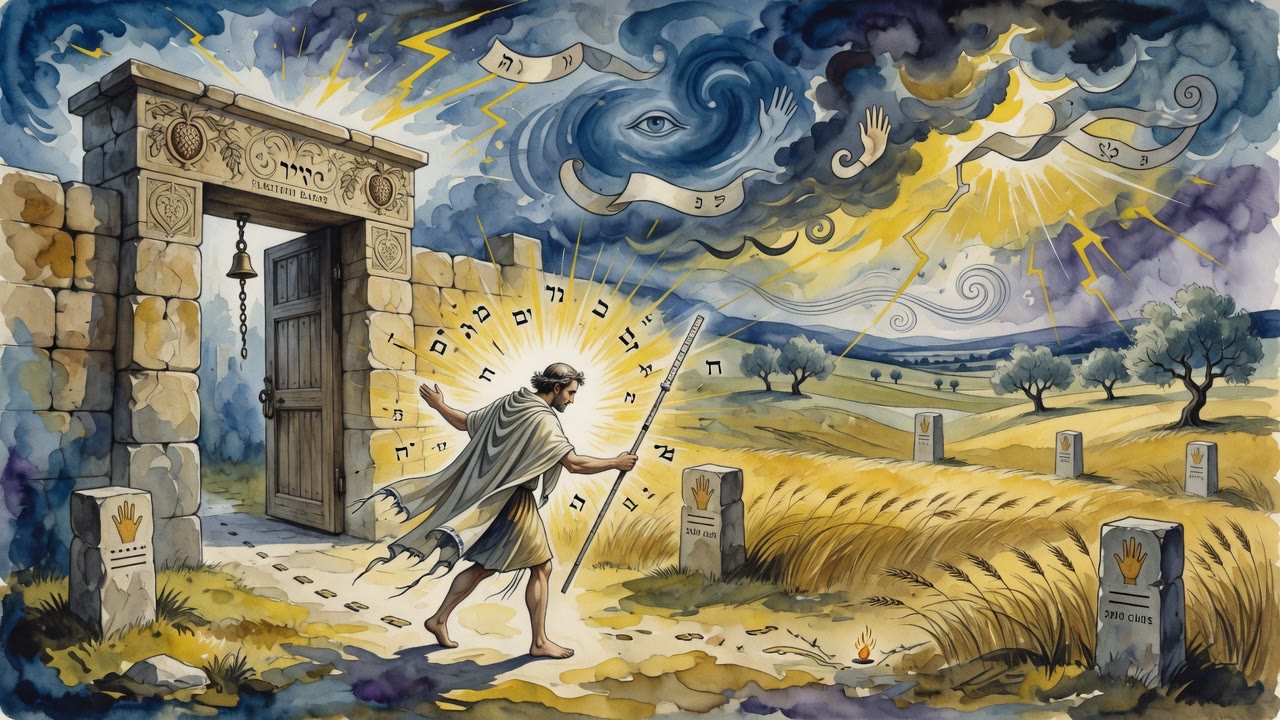
He rose. He counted the paces to the study house and got the number right. He took his bench, opened his mouth on a passage of Berakhot, and the words came out flat and correct and entirely his own. Nothing pressed behind his teeth.

He said it anyway.

"Chadai nafshai. For you I read. For you I study."

His voice went out across the benches and nothing came back. The students heard what a blind sage always said and bent again to their books.

Rav Sheshet sat in the dark he had sat in for years, alone in it now for the first time, and began the passage over from the top.


← All myths
From the tradition

Sources

4 sources

The texts behind this telling. Some cards carry a translation of the source; others are our own retelling of it, and each card says which. Every card links out to the original.

Sha'ar HaGilgulim 4:9Sha'ar HaGilgulim

Retold in our words. Read the original at the link below.Sefaria Community Translation · CC-BY

Jewish mystical tradition, particularly in the teachings of the Kabbalah, explores this fascinating idea through the concept of gilgul (reincarnation). And within gilgul, there's an even wilder notion: gilgul kaful – a "double gilgul." Sounds crowded. Sha'ar HaGilgulim ("The Gate of Reincarnations"), a key text attributed to the great 16th-century Kabbalist Rabbi Isaac Luria Ashkenazi (the ARI), delves deep into these mysteries. And that's where we find a particularly intriguing case: the gilgul of Rav Sheshet.

Rav Sheshet was a well-known Talmudic sage. A brilliant mind. One small detail, though: he was blind. The text phrases it delicately, calling him "full of light," hinting that his physical blindness might have been connected to a deeper, spiritual vision.

When Rav Sheshet was immersed in his Torah studies, he would become incredibly happy. In these moments of joy, he would exclaim, "Chadai nafshai, lach krai, lach tanai…" – "My soul rejoices, for you I read, for you I study…"

Okay, so he's happy. He's studying Torah. What's so special about that?

The question, as the text points out, is this: who is this "you" that Rav Sheshet is referring to? Who is he dedicating his learning to? Why does he feel this intimate connection?

The ARI's teachings in Sha'ar HaGilgulim suggest that Rav Sheshet's words are a clue. They point towards the possibility that he was, in fact, a case of gilgul kaful – a double gilgul. That another nefesh (soul) was intertwined with his own. This other soul was the “you” to whom he directed his learning and joy.: two souls, each with their own unique history and purpose, sharing a single physical vessel. Perhaps this other soul needed the merit generated by Rav Sheshet's Torah study. Perhaps they were working together to complete a shared mission, fulfilling a tikkun (repair) from a previous lifetime.

We often think of ourselves as singular entities, but what if the boundaries of our identity are more fluid, more porous than we imagine? What if we are, in some way, connected to others across time and space, carrying fragments of their stories within our own?

And it invites us to consider: who are we really doing things for? Whose stories are we carrying within us? Whose tikkun are we helping to complete? Maybe, just maybe, we’re all a little bit like Rav Sheshet, our lives echoing with voices and purposes beyond our immediate understanding.

Full source
Sha'ar HaGilgulim 3:11Sha'ar HaGilgulim

Retold in our words. Read the original at the link below.Sefaria Community Translation · CC-BY

The Kabbalists certainly thought so, exploring the fascinating concept of gilgulim (the reincarnation of souls) (the reincarnation of souls), or reincarnation. But what if you didn't need multiple lifetimes to achieve that rectification? What if you could do it all in one?

That's what It explores the intricate pathways of the soul and its journey toward wholeness.

Let's In Kabbalah, it's often described as having three primary parts: the Nefesh (the vital life force, the most basic level of the soul), the Ruach (the spirit, encompassing emotions and moral character), and the Neshama (the higher soul, connecting us to the Divine). Think of them as layers, each needing its own refinement.

Sha'ar HaGilgulim suggests something remarkable: it's possible for someone to rectify their Nefesh, Ruach, and Neshama – all three! – in a single gilgul, a single lifetime. Imagine that – no need for countless reincarnations to get it right! This happens when a person manages to complete all three parts of their soul in a single lifetime.

But how does that work?

The text explains that when a person is reincarnated – let's say after having blemished their Nefesh, Ruach, and Neshama in a previous life – they're initially given only a Nefesh. It's like starting with the foundation. If they then manage to completely rectify that Nefesh, the Ruach can't immediately join it. Why? Because the Ruach still needs its own fixing.

Here's where it gets really interesting. There's a technique, a spiritual practice, that can help. When this person sleeps, they consciously give their Nefesh into God's hands. As we say in the bedtime prayer, "B'yadecha, afkid Ruchi" – "Into Your hands, I entrust my spirit." It’s a nightly surrender, a release.

This allows the Nefesh to ascend and cling to the "Be'er haElyon" – the "Upper Well" – in the secret of "Mayin Nukvin," which refers to the ascent of feminine waters, a concept explored in Sha'ar haTefilah, the "Gate of Prayer."

So, what happens when they wake up? Instead of the Nefesh simply returning, the Ruach alone can enter the body. It's like being "reincarnated" again within the same body! This allows the person to then focus on rectifying their Ruach. Once the Ruach is fully corrected, the Nefesh can return, joining the already-rectified Ruach. Now the Ruach clothes itself over the Nefesh, and the Nefesh becomes a Merkava – a chariot – for it.

And it doesn't stop there.

If the person continues to merit and rectifies the Ruach completely, both the Nefesh and the Ruach can leave the body each night during sleep, remaining above. Then, upon waking, only the Neshama enters. The individual then focuses on rectifying and completing the Neshama. Once that's done, the already-rectified Nefesh and Ruach return, and all three – Nefesh, Ruach, and Neshama – are united in the same body. The Nefesh and Ruach then become a Merkava for the Neshama.

The result? This person no longer needs any further gilgulim. They've achieved wholeness, spiritual completion, in a single lifetime.

This idea, drawn from Sha'ar HaGilgulim, offers a powerful message of hope and potential. It suggests that even with past mistakes and imperfections, we have the capacity for profound transformation within our current lives. It’s a reminder that spiritual growth isn't necessarily a linear, multi-lifetime process, but a dynamic journey that can accelerate with intention, dedication, and a willingness to surrender to the Divine.

Perhaps it starts with a conscious effort to rectify our own Nefesh, Ruach, and Neshama, one layer at a time, with intention and prayer.

Full source
Sha'ar HaGilgulim 4:6Sha'ar HaGilgulim

Retold in our words. Read the original at the link below.Sefaria Community Translation · CC-BY

Maybe there's a reason for that. Jewish mystical tradition, particularly in the teachings of gilgul (reincarnation), offers a fascinating perspective on how we evolve, correct mistakes, and ultimately, connect to something greater than ourselves.It speaks about the journey of the Nefesh (the vital soul), often translated as "soul," as it navigates the cycle of life, death, and rebirth. What happens when that soul stumbles? What if it doesn't quite get it right the first time around?

The Sha'ar HaGilgulim (the reincarnation of souls) explains that when a Nefesh enters this world for the first time and unfortunately sins, damaging itself in the process, it needs another shot. It needs to reincarnate into a new body to rectify that damage. This second life is referred to as its first gilgul.

What if that second chance doesn't quite do the trick? Well, the soul gets another opportunity, a second gilgul. And if necessary, even a third. Now, The text suggests that after three lifetimes without any rectification, that Nefesh faces a severe consequence: it's said to be karet, cut off from the nation, completely.

That sounds pretty final. But don't despair! There's a crucial nuance. This "cutting off" only occurs if there’s absolutely no rectification in any of those three lifetimes. If, at any point, the Nefesh manages to do even one small good deed, one mitzvah, then it’s NOT cut off. Relief!

Instead, that Nefesh can continue to return and work towards its rectification, potentially for thousands of generations if necessary. Think about the weight of that statement. The potential for endless opportunities to learn, grow, and repair.

Well, it suggests that our actions, even the smallest ones, have profound consequences. Someone in their first life who doesn't rectify at all is called a rasha, or wicked person. But if they rectify even a tiny bit through performing mitzvot, they are then called a Tzaddik, a righteous person, and can continue reincarnating, completing their rectification.

We are all works in progress. We’re all somewhere along this incredible journey of gilgul. This concept offers us comfort, hope, and a profound sense of responsibility for our actions, knowing that even the smallest act of kindness can ripple through lifetimes. So, what kind of ripples are we creating?

Full source
Sha'ar HaGilgulim 5:2Sha'ar HaGilgulim

Retold in our words. Read the original at the link below.Sefaria Community Translation · CC-BY

Jewish mystical tradition, specifically the teachings on gilgul (the reincarnation of souls), or reincarnation, delves deep into this very idea.

The idea we're unpacking revolves around the verse, "poked avon avot al banim" (פוקד עון אבות על בנים), "He visits the sins of the fathers upon the children" (Exodus 20:5). What does this mean in the context of reincarnation? The Sha'ar HaGilgulim (the reincarnation of souls) explains it in terms of nefashot (נפשות), which we can think of as aspects of the soul.

The text suggests that a nefesh (the vital soul) gets three opportunities to rectify itself. In its first incarnation, a fresh, new nefesh can enter a body from birth. But The text hints that there could even be instances of four nefashot together in one body. It refers to "al revi'im," על רבעים, which could mean "upon fourths." This might allude to the four lifetimes, the initial one and the three reincarnations, granted to a new nefesh to perform mitzvot (good deeds) before it's considered to have failed and becomes cut off from kedusha (holiness).

This concept ties into the idea of "three times to overcome." the verse says, it's possible for up to three nefashot to reincarnate into a single person, essentially a new nefesh layered with three others. But, importantly, the text emphasizes that more than three nefashot cannot simultaneously reincarnate into one body.

Now, before you imagine crowdsourced souls, know that there are many possible combinations. The text clarifies: a single nefesh can reincarnate alone. Or, a nefesh can reincarnate alongside a new nefesh. Two nefashot might reincarnate together. You might even find two reincarnated nefashot joined by a new one. And, as we discussed, three nefashot can reincarnate together, or three nefashot can be joined by a new one.

These complex arrangements, according to the Sha'ar HaGilgulim, represent the boundaries of what's possible. It's a fascinating glimpse into the intricate mechanics of how souls return to this world, carrying with them the echoes of past lives and the potential for growth and repair.

What does all of this tell us? Perhaps it highlights the immense value placed on each individual's journey. The idea of multiple chances, of souls working together to achieve tikkun (spiritual repair) olam (repairing the world), offers a powerful message of hope and resilience. It suggests that even when we stumble, the universe provides opportunities for redemption and growth, not just for ourselves, but potentially for generations to come.

Full source